
-
Sant Ravidas (1450–1520): Visionary Bhakti Poet of Equality, Begampura, and Dharmic Unity
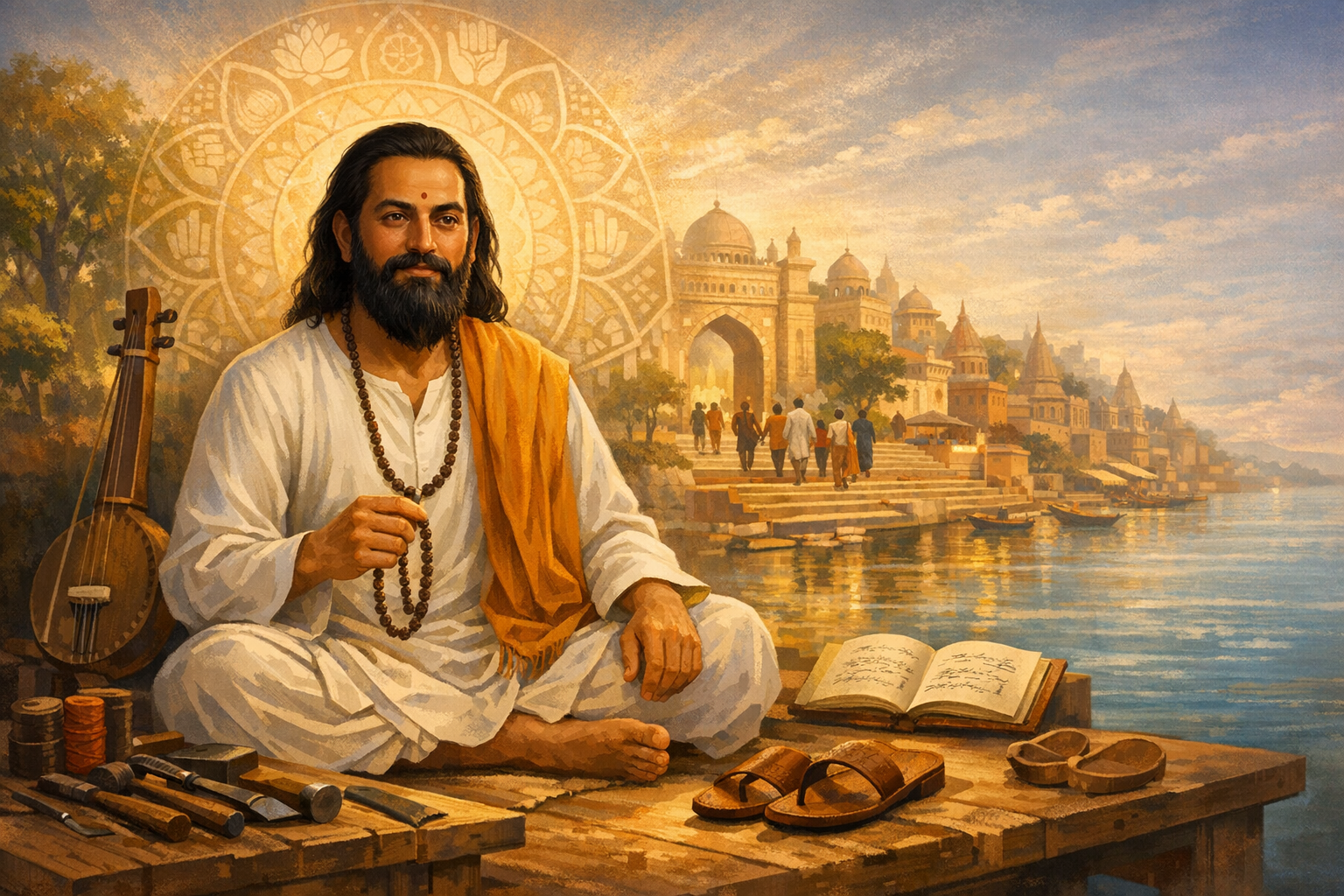
Sant Ravidas (c. 1450–1520) emerges as a central voice of the North Indian Bhakti movement, uniting deep nirguna bhakti with an uncompromising ethic of social equality. Born near Varanasi in a community deemed “untouchable,” he transformed everyday labor into a field of devotion and taught that divine grace recognizes no caste or status. His hymns,…
-
Sacred Goat in Hinduism: Daksha Prajapati’s Goat-Head and Agni Dev’s Mesha Vahana Explained
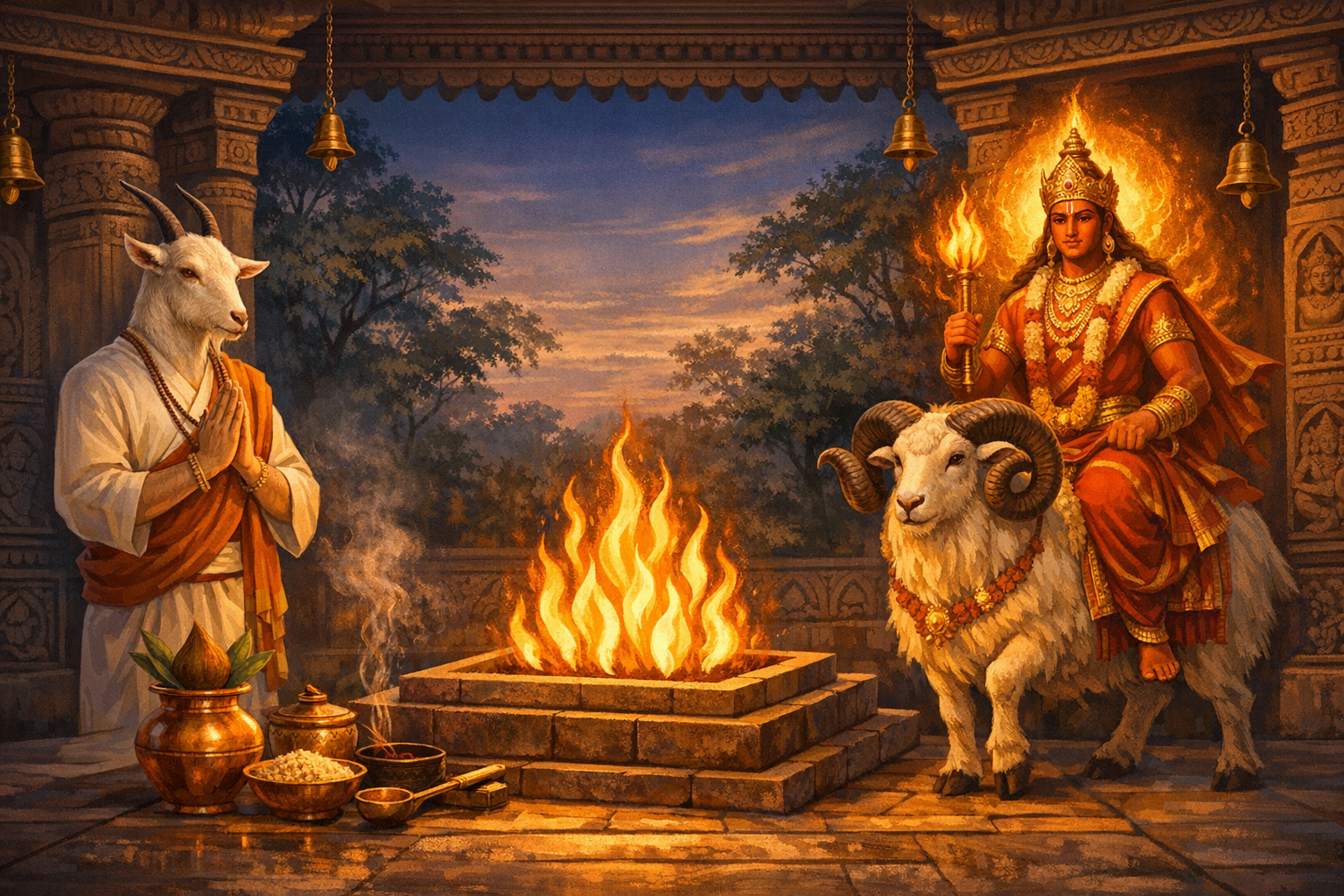
This in-depth exploration clarifies why Agni Dev’s classical vahana is a ram (mesha) even as popular retellings sometimes call it a goat, tracing both animals’ proximity to Vedic fire ritual. It analyzes the Daksha Prajapati narrative, explaining how the goat-head (aja-śira) signifies humility, restored cosmic order, and ethical governance of ritual power. The discussion grounds…
-
Pratyaksha in Nyaya Darshana: Mastering Direct Perception as the Bedrock of True Knowledge
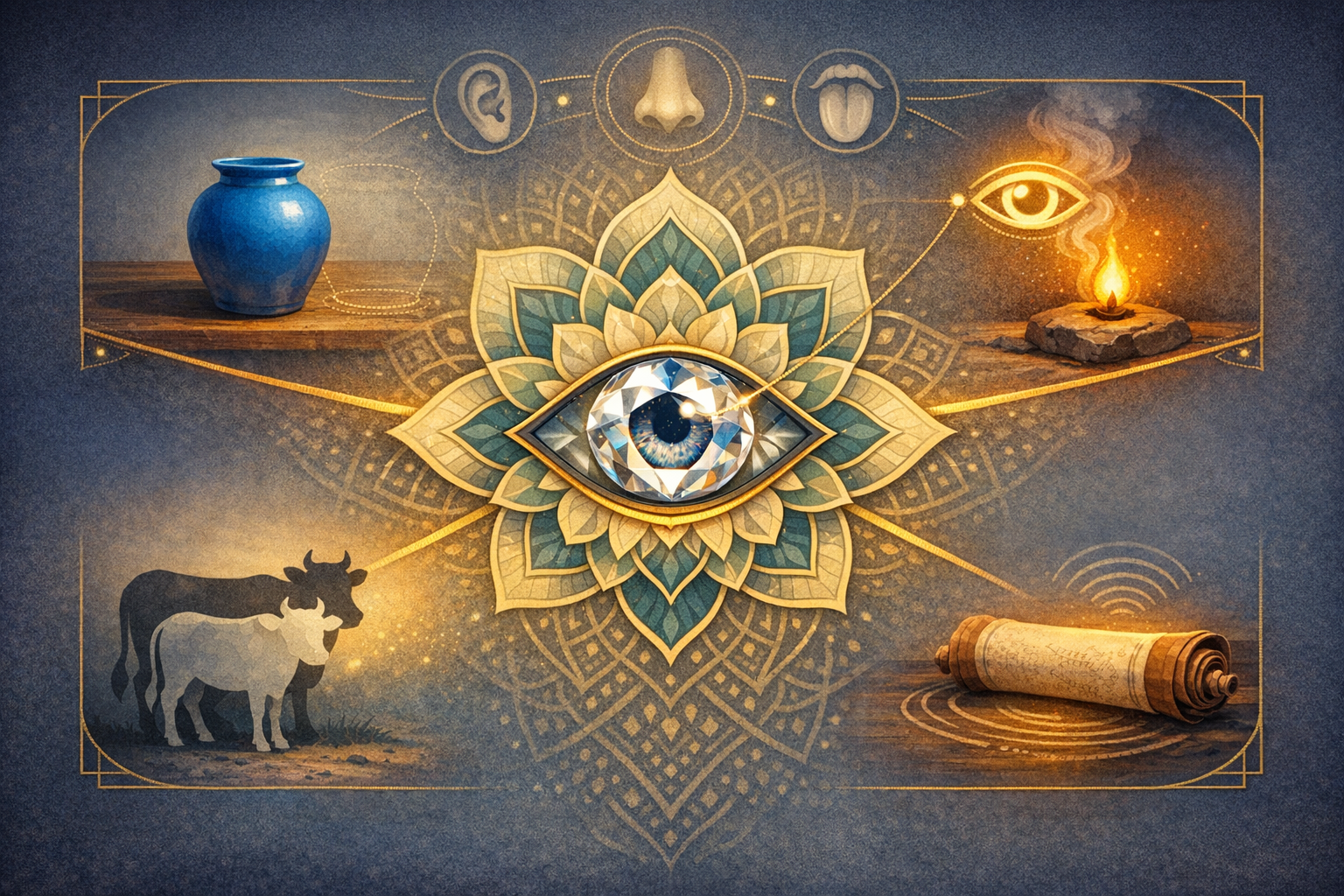
This long-form, research-driven overview presents pratyaksha (direct perception) in Nyaya Darshana as the foundational pramana that grounds inference, analogy, and testimony in Indian epistemology. It clarifies Nyaya’s definition of valid perception, its two-stage phenomenology (nirvikalpa and savikalpa), and its fine-grained analysis of sense–object contact and extraordinary forms such as samanyalakshana, jnanalakshana, and yogaja pratyaksha. Readers…
-
Beyond Starships: Vedic and Dharmic Pathways for Safe, Effortless Journeys to Other Worlds
Modern fascination with interplanetary travel reflects a timeless philosophical impulse to understand creation and its inhabitants. Vedic literature, supported by Srimad-Bhagavatam, Sri Isopanisad, and the Bhagavad-gita, offers a complementary research program to empirical science via testimony and disciplined practice. Rather than relying on fragile material instruments, the Vedic model proposes bhakti-yoga as a safe, replicable…
-
Why Hinduism Has No Commandments: Dharma’s Liberating, Context-Sensitive Ethics

Hinduism’s ethical core is not a fixed list of commandments but the dynamic, context‑sensitive framework of dharma. Drawing on the Vedas, Upanishads, the Bhagavad Gita, and the Dharmashastra tradition, it integrates personal virtue, social responsibility, and a vision of the highest good. This article explains sadharana and vishesha dharma, Mimamsa hermeneutics, and yogic disciplines such…
-
Nyayamrita of Vyasatirtha: A Dvaita Masterpiece of Logic, Metaphysics, and Pluralist Dialogue
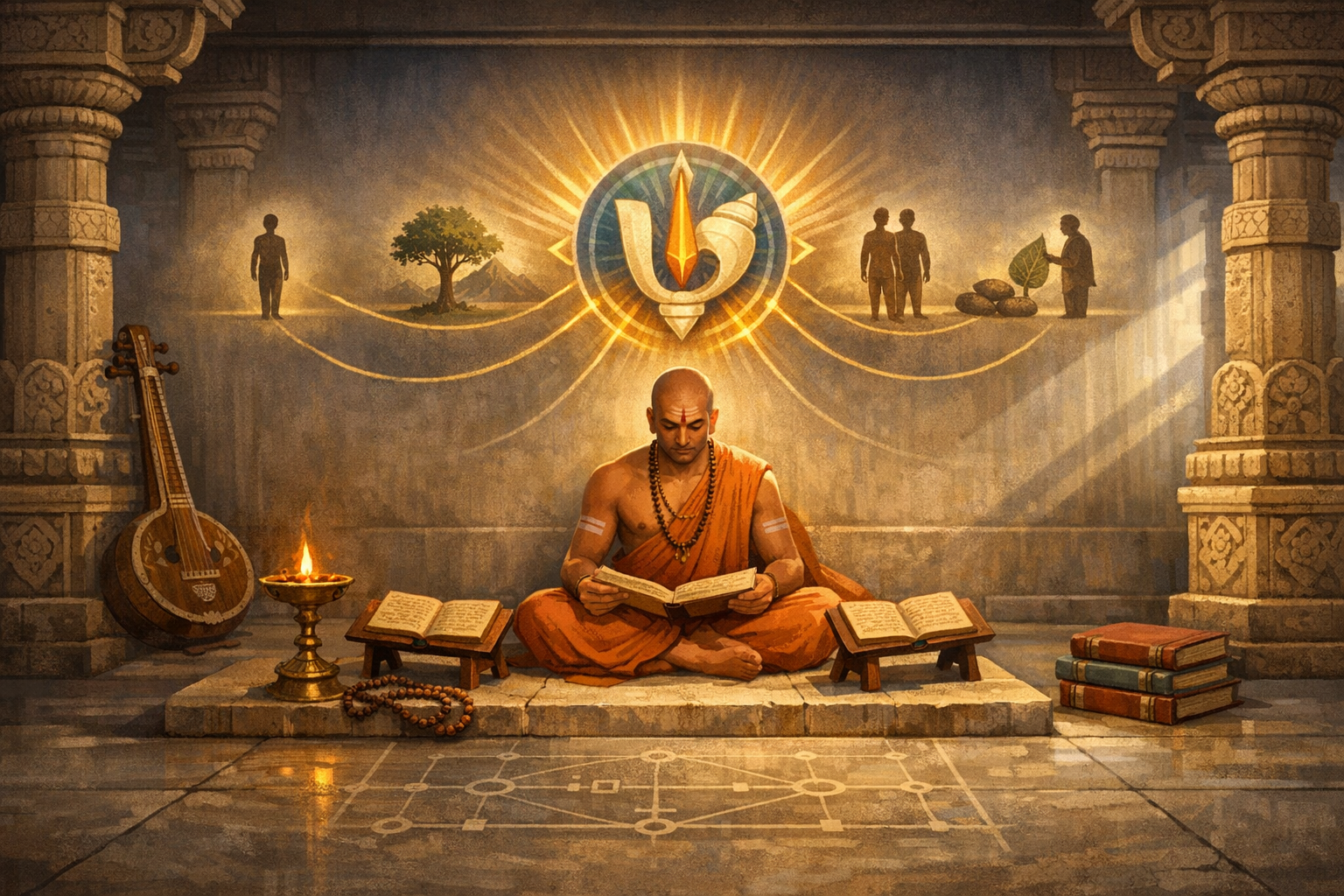
Nyayamrita by Vyasatirtha is a landmark of Dvaita Vedanta that combines rigorous logic, careful scriptural exegesis, and a living devotional ethos. Composed in the Vijayanagara milieu, it clarifies Madhvacharya’s realismaffirming the fivefold difference and the integrity of bhaktiwhile engaging Advaita Vedanta with analytical precision. The work challenges the anirvachaniya status of the world, probes the…
-
Mahāpātakas in Hinduism: Decoding Heinous Sins, Dharma, and Their Urgent Modern Relevance
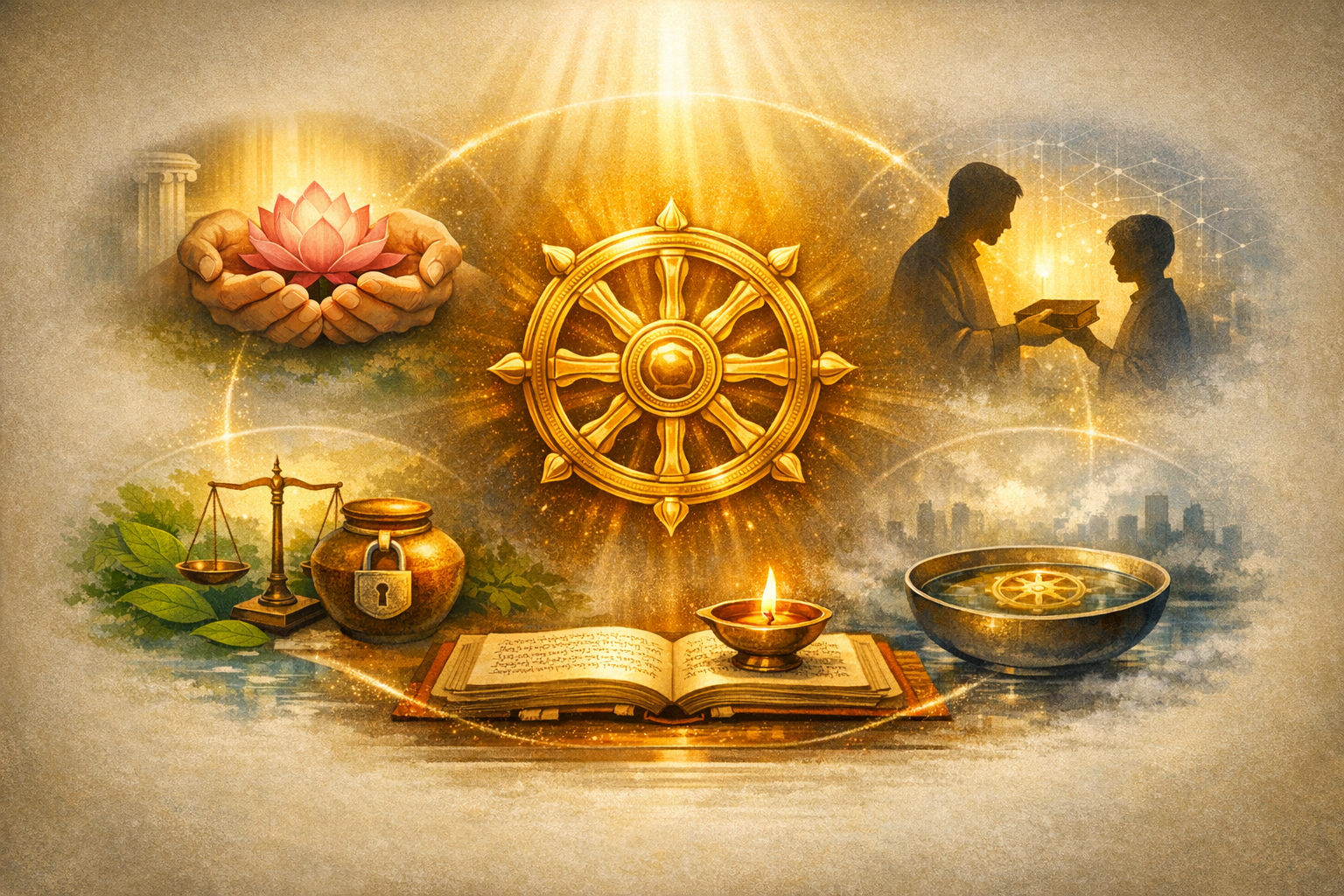
Mahāpātakas, the “heinous sins” in Hindu ethics, delineate acts that rupture the very fabric of dharma by attacking life, trust, truth, and sound judgment. Grounded in the Dharmashastras, these categories are interpreted here through a principle-first lens that fits modern lifeworkplaces, digital spaces, and public institutions. The analysis explains how intention, participation, and reparability shape…
-
Stop Buying What the Mind Sells: A Dharmic Art of Witnessing for Lasting Inner Freedom

A tireless inner salesmanfear, regret, desire, anxietyconstantly pitches stories and urges. This long-form analysis presents the dharmic antidote: the art of witnessing across Hinduism, Buddhism, Jainism, and Sikhism. Drawing on Patanjali’s Yoga Sutra, Sankhya, the Bhagavad Gita, Vedantic discernment, Buddhist mindfulness, Jain samayik, and Sikh simran, it explains why the mind’s pitch works and how…
-
Unveiling the Serpent Divine: Rigorous Comparison of Hindu Nagas and Ancient Greece’s Glycon

Serpent deities crystallize a universal human intuition about healing, protection, and moral order. This rigorous, evidence-based comparison places Hindu Nagasplural, ecologically integrated, and cosmologically centralalongside the Greco-Roman Glycon, a historically bounded healing and oracular cult. Drawing on the Mahabharata, Puranas, and living festivals such as Naga Panchami and Nagula Chavithi, it shows how Nagas unify…
-
Akshaya Tritiya: Sacred Charity, Timeless Seva, and Dharmic Unity Across Traditions

Akshaya TritiyaVaishakha Shukla Tritiyacelebrates inexhaustible merit through charity, seva, and study across the Dharmic traditions of Hinduism, Buddhism, Jainism, and Sikhism. This guide explains the festival’s astronomical timing, its standing as a Sade-Teen Muhurat, and its plural mythic associations, including Parashurama Jayanti and the Mahabharata’s transcription. Readers gain a practical ritual grammar and a dana-first…
-
Indra Parameshwari, Lion-Seated Sovereign: Awe-Inspiring Shakta Theology and Iconography
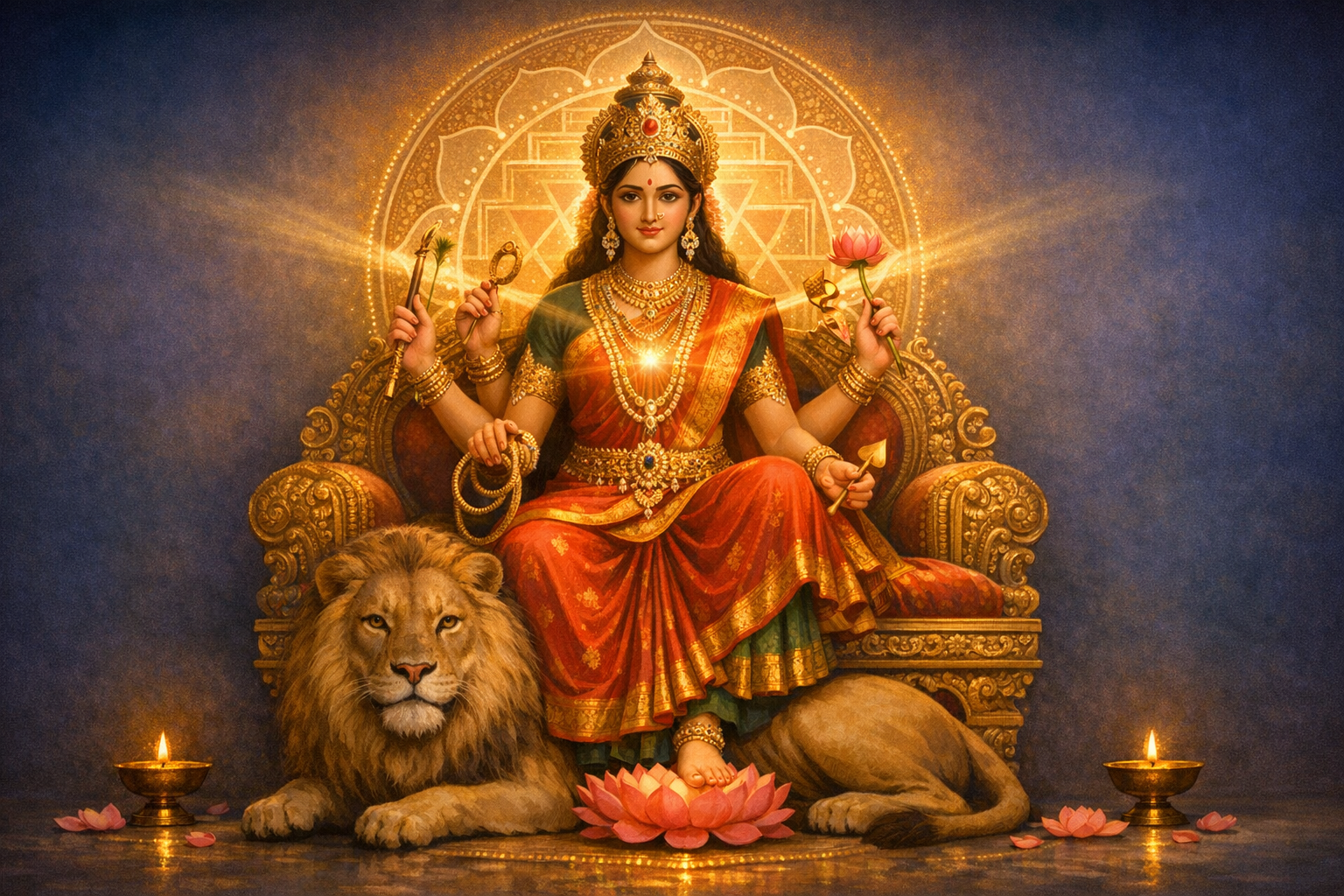
Indra Parameshwari identifies the Goddess as the supreme, lion-seated sovereign of Shakta theology, where indra functions as a superlative for lordship and Parameshwari declares the Supreme Lady. Grounded in Vedic and Upanishadic insights and elaborated by the Devi Mahatmya and Sri Vidya traditions, this study unpacks the title’s philology, metaphysics, and iconography. The lion-throne (simhasana)…
-
Unveiling Nāga Kanyā: A Research-Backed Guide to Hinduism’s Boundless Serpent Guardian

Nāga Kanyā“the virgin serpent”is a pan-Indic guardian archetype whose maidenly autonomy and serpentine potency protect thresholds, waters, and life. This research-grounded overview situates Nāga Kanyā in Hindu scriptures and art (Jaratkaru, Ulūpī, Hoysala and Chola sculptures) while clarifying that “virgin” signifies self-sovereignty, not social status. It explains how nāga-kanyā symbolism converges with festivals such as…
-
Unmasking Anavamala in Shaivism: Break the Ego Illusion and Reclaim Shiva-Nature

Anavamala, the primordial contraction in Shaivism, explains how the jiva falsely identifies with the body–mind and forgets its Shiva-nature. This long-form exploration clarifies its etymology, its role within the triad of malas, and how different Shaiva traditionsShaiva Siddhanta and Kashmir Shaivismdiagnose and remedy this subtle veiling. The discussion distinguishes ontological contraction (mala) from cognitive error…
-
What Hurts and Why: A Dharmic, Science-Backed Exploration of Pain and Inner Peace
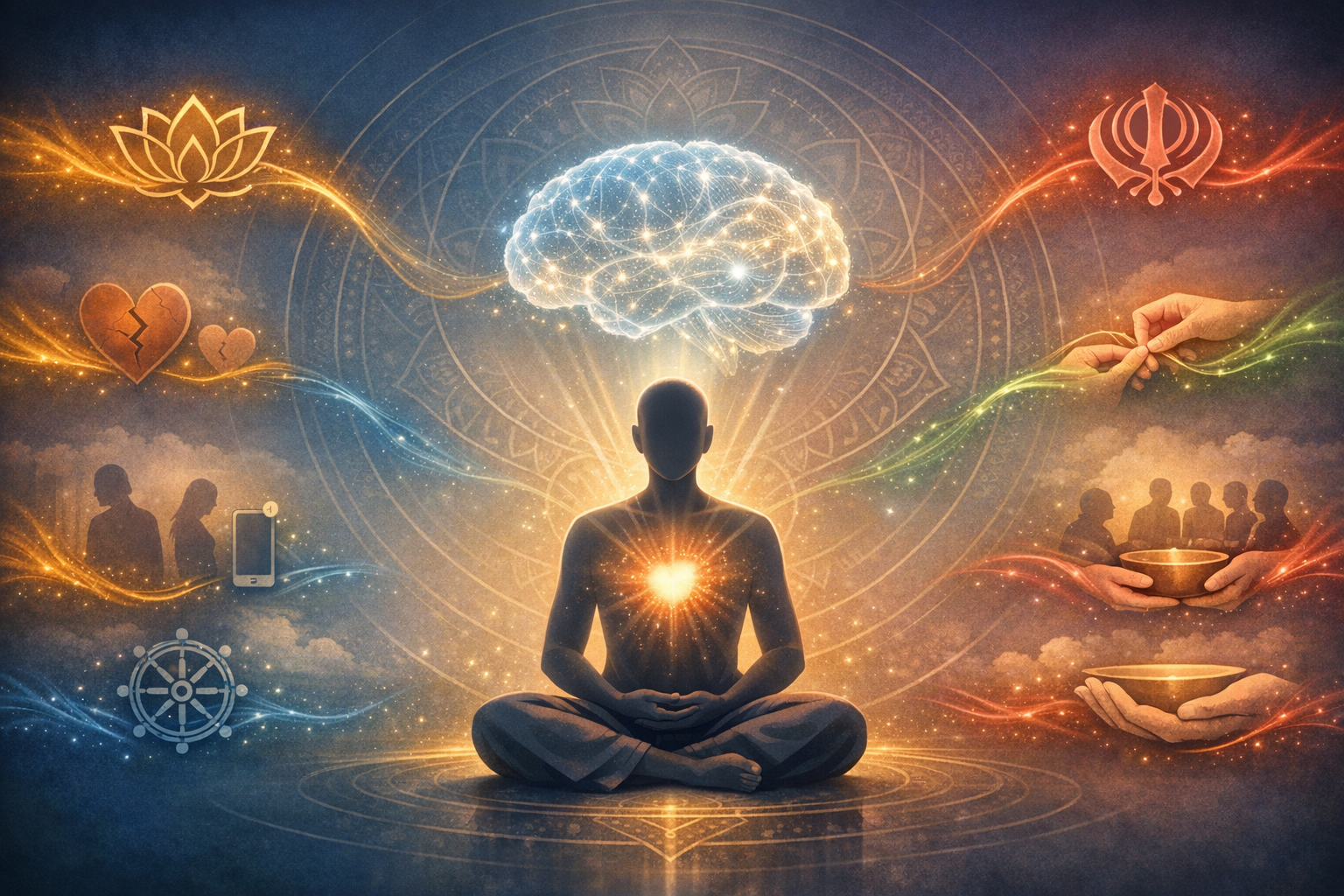
Hurt is experienced through many private definitions, which often escalate conflict and fragment peace. A dharmic, science-supported lens shows how this plurality can be honored without dividing communities. Drawing on Hinduism, Buddhism, Jainism, and Sikhismalongside modern psychology and neurosciencethis piece explains why appraisals shape pain and how regulation, reappraisal, and repair reduce suffering. It offers…
-
Beyond Degrees: Reclaiming Education’s Purpose to Awaken Spiritual Identity and Shared Dharma

Modern education excels at producing skilled professionals, yet it risks losing its soul when detached from deeper purpose. This article proposes a rigorous, plural approach that integrates scientific excellence with dharmic insights from Hinduism, Buddhism, Jainism, and Sikhism. Drawing on frameworks like pañcakośa, UNESCO’s four pillars, and NEP 2020, it outlines research-aligned methods to cultivate…
-
The Conscious User: Mastering AI with Jain, Buddhist, Hindu, and Sikh Wisdom

Artificial Intelligence is now a household reality; the challenge is using it without losing clarity, agency, or ethics. This essay outlines a dharmic frameworkrooted in Jainism and harmonized with Buddhism, Hinduism, and Sikhismfor human-centered, responsible AI. It translates anekantavada, syadvada, and nayavada into concrete practices for uncertainty handling, multi-metric evaluation, and context-aware decisions. Ahimsa informs…
-
Science of Sacrifice: Dharmic principles to practice tyaga, seva, and everyday yajna wisely

Sacrifice in a dharmic sense is intelligent, freely chosen renunciation that serves a higher, shared good. This comprehensive guide defines tyaga in relation to dana, tapas, seva, and yajna, and shows how sattva, rajas, and tamas shape the quality of any offering. It unifies insights from Hinduism, Buddhism, Jainism, and Sikhismlinking loka-sangraha, dana, Aparigraha, and…
-
Shroud of Turin DNA and the ‘Indian Jesus’ Meme: History, Evidence, and Dharmic Unity

A viral ‘Indian Jesus’ meme has reignited debate about the Shroud of Turin and the possibility of Indo-Mediterranean links. This analysis clarifies what the 2015 mitochondrial DNA study actually foundheterogeneous contact with many populationswhile noting the 1988 radiocarbon dating that points to a medieval linen. Legends placing Jesus in India remain unsubstantiated, yet they reflect…
-
Unlocking the Hidden in Hindu Philosophy: Arthapatti and the Power of Postulation in Mimamsa

Arthapatti (postulation) is a distinctive Mimamsa pramana that posits an unperceived fact when established data would otherwise be incoherent. Classic examples such as the stout Devadatta who does not eat by day illustrate how explanatory necessity (anyathā-anupapatti) drives this cognition. The article clarifies how arthapatti differs from ordinary inference, outlines its two forms (drshtārthapatti and…
-
Five Sacred Trees of Tantra: Living Altars for Deep Meditation and Inner Awakening

Tantric practitioners across the dharmic traditions purposefully select five sacred treesAśvattha (Peepal), Nyagrodha (Banyan), Bilva, Nimba (Neem), and Āmalakī (Amla)to create a stable, lucid environment for deep meditation. Each species contributes a distinct blend of scriptural symbolism, ayurvedic energetics, ecological benefit, and subtle-body alignment. The Peepal supports clarity and uplift; the Banyan grounds long sittings;…