
-
Reva Khanda in Skanda and Vayu Puranas: Narmada’s Timeless Power, Sacred Myths, and Pilgrimage

The Reva Khanda, preserved in the Skanda Purana and Narmada-focused sections aligned with the Vayu Purana, is a comprehensive tirtha-mahatmya of the River Narmada (Reva). It integrates mythic origins, sacred geography, and rigorous codes of pilgrimage, mapping an ethical and devotional journey from Amarkantak to the sea. Readers gain a clear view of how the…
-
From Reactivity to Freedom: Dharmic Wisdom on Maya, Attention, and Inner Mastery

Modern life conditions people to react incessantly; dharmic traditions explain this reflex as a misperception of appearancesMaya in Hinduism, avidyā and dependent origination in Buddhism, mithyātva and kashāyas in Jainism, and the pull of Maya away from Naam in Sikhism. Rather than denying experience, these lineages teach methods to recalibrate perception and lengthen the gap…
-
Is Any Indian Scripture Equal to the Quran or Bible? A Definitive Guide to Dharmic Canons

Is any Indian scripture equal to the Quran or Bible? In the dharmic world, authority is polycentric rather than centralized in one book. Hinduism distinguishes Sruti (the Vedas, as apex authority) from Smriti (Itihāsa, Purāṇa, Dharmashastras, and Agamas), with the Bhagavad Gita serving as the most accessible synthesis for general readers. Sikhism centers on a…
-
Asitanga Bhairava Unveiled: Iconography, Mantras, and the Sacred Power of the Golden Lord
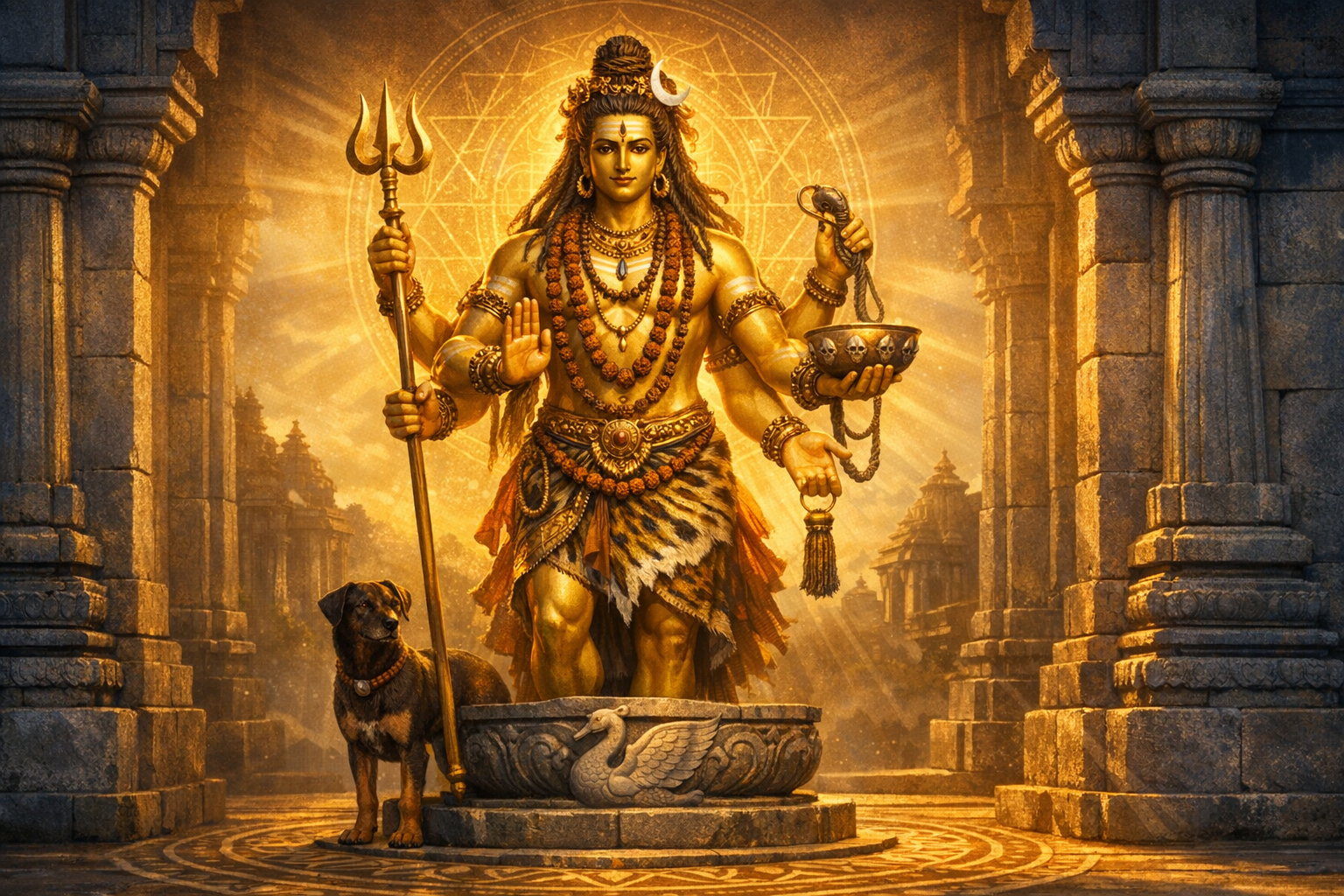
Asitanga Bhairava, the Golden Lord of the First Octet, embodies a luminous, eastward guardianship that unites protection with awakening. This long-form exploration decodes his iconographygolden hue, trident, drum, skull-bowl, and threshold placementso readers can recognize and interpret the form in temples and texts. It clarifies how attributes map to disciplined practice, turning weapons into inner…
-
Samiti and Sabha Unveiled: Vedic Roots of Democracy in Ancient Hindu Civilization
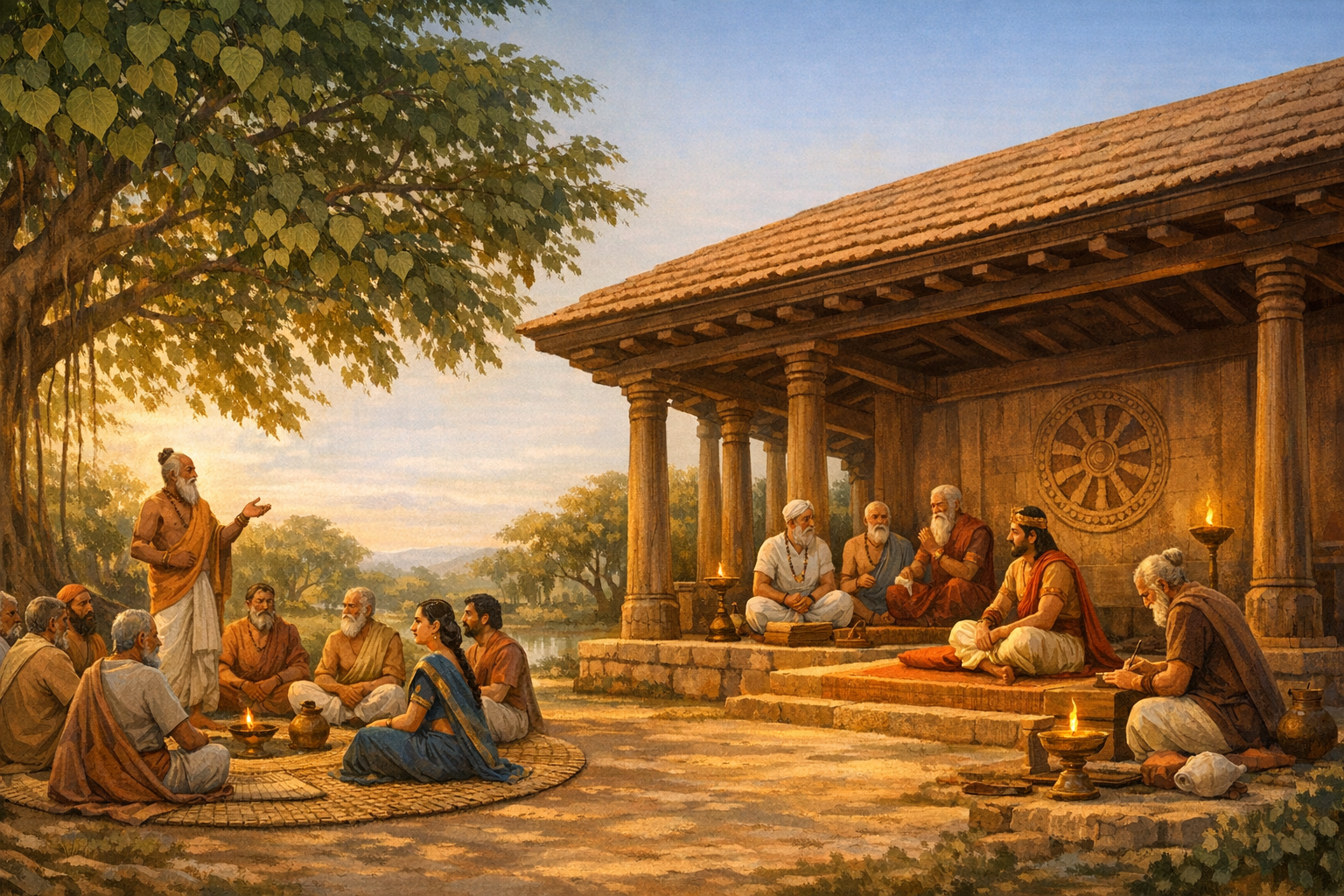
Ancient India’s Vedic tradition preserved two hallmark assembliesSamiti and Sabhathat balanced public participation with expert counsel. The Rigveda and Atharvaveda reference these bodies, which anchored governance to dharma and prioritized consensus, accountability, and communal welfare. Over time, their logic resonated through gana-sangha republics cited in Buddhist sources and through administrative codifications visible in medieval South…
-
Agneyas among the Gandharvas: Timeless Insights into Kubera’s Celestial Musicians
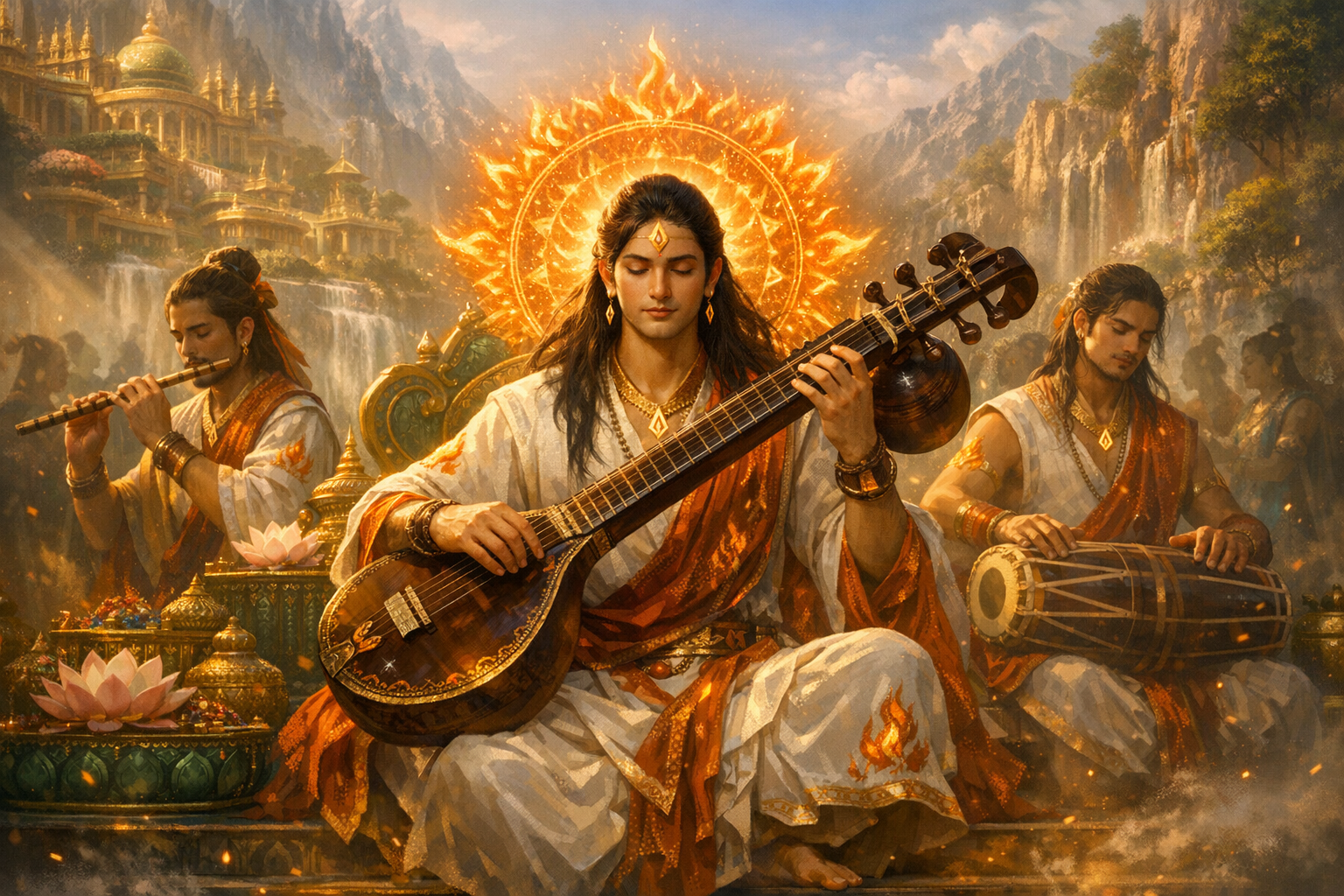
This article examines the Agneyas as a Gandharva collective in Hinduism, drawing on Puranic and allied textual traditions to clarify their identity as celestial musicians and attendants in divine courts. It explains how several narratives place the Agneyas in the orbit of Kubera (Vaiśravaṇa), the god of wealth and guardian of the northern direction, where…
-
Dashabhujeshwara Decoded: Five-Faced, Ten-Armed ShivaIconography, Mantras, Ritual Power
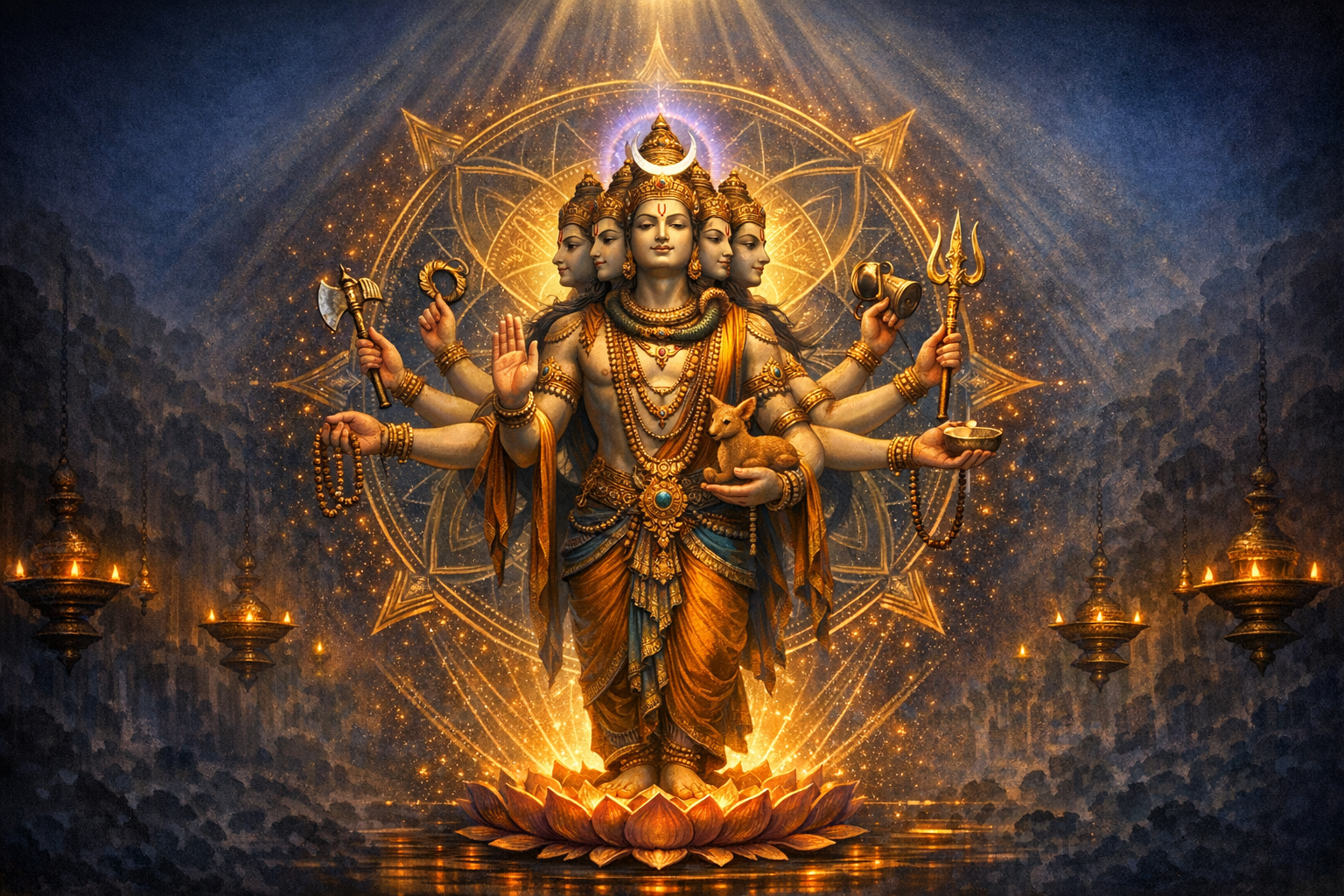
Shiva’s Dashabhujeshwara formfive-faced and ten-armedembodies the Pañcabrahma theology in which one Absolute performs five cosmic acts: creation, sustenance, dissolution, concealment, and grace. Drawing on the Śiva Purāṇa, Āgamas, and Śilpa-Śāstras, this explainer clarifies how each face (Tatpuruṣa, Aghora, Vāmadeva, Sadyojāta, Īśāna) aligns with directions, mantras, and meditative practice. It decodes the ten arms as sovereignty…
-
The Eleven Forms of Goddess Kali: Fierce Compassion, Iconography, and Living Devotion
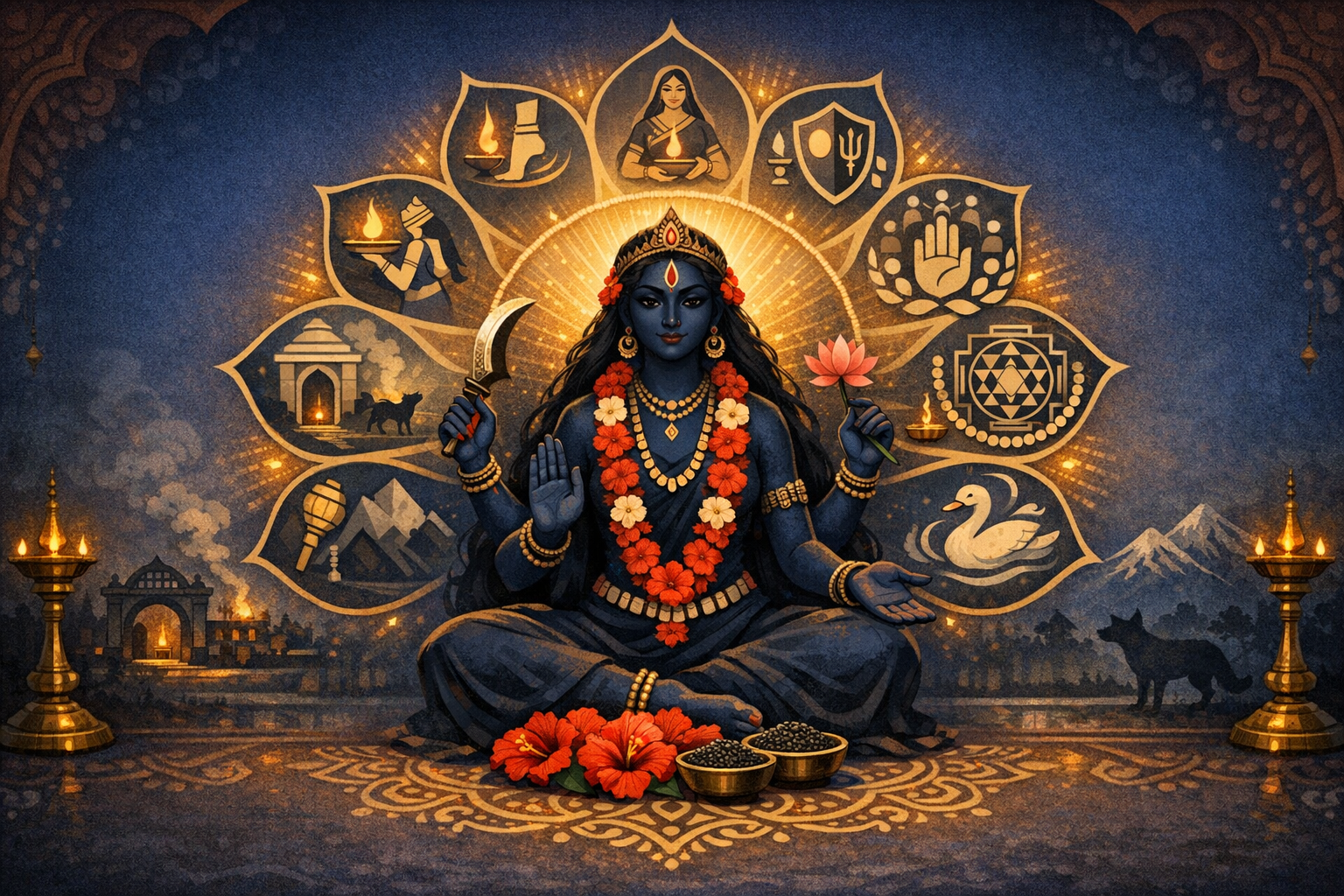
This article explores the eleven forms (Ekadasha) of Goddess Kali as preserved in Bengali and eastern Indian Shakta traditions. It situates each formAdya, Dakshina, Shyama, Bhadra, Smasana, Raksha, Siddha, Guhya, Hansa, Bhima, and Chamundawithin clear iconography, ritual practice, and philosophical meaning. Readers learn how the Goddess embodies both gentle reassurance and fierce compassion, guiding household…
-
Beyond Policing: Evidence-Backed Sankirtana and Dharmic Chanting for Crime Prevention

Laws deter but do not transform the inner impulses that fuel crime. Drawing on dharmic psychology and contemporary behavioral science, this article explains how Sankirtanacollective devotional chantingdirectly trains attention, calms arousal via vagal pathways, and strengthens social bonds that underpin community safety. Unified across Hindu, Buddhist, Jain, and Sikh traditions, chanting circles cultivate ahimsa, empathy,…
-
Prakamya Siddhi Explained: How Focused Intention Turns Inner Vision into Tangible Reality

Prakamya Siddhi in Hinduism is the disciplined capacity by which a clear, dharma-aligned inner intention becomes an outward result. Distinguished from mere desire or casual “manifestation,” it integrates ethical foundations, focused attention (samyama), embodied action, and surrender. Classical yoga, Vedanta, tantra, and bhakti converge to present prakamya as a lawful and ethical maturation of will,…
-
Swarnakarshana Bhairava: Guardian of Gold, Prosperity, and Dharma in Kali Yuga
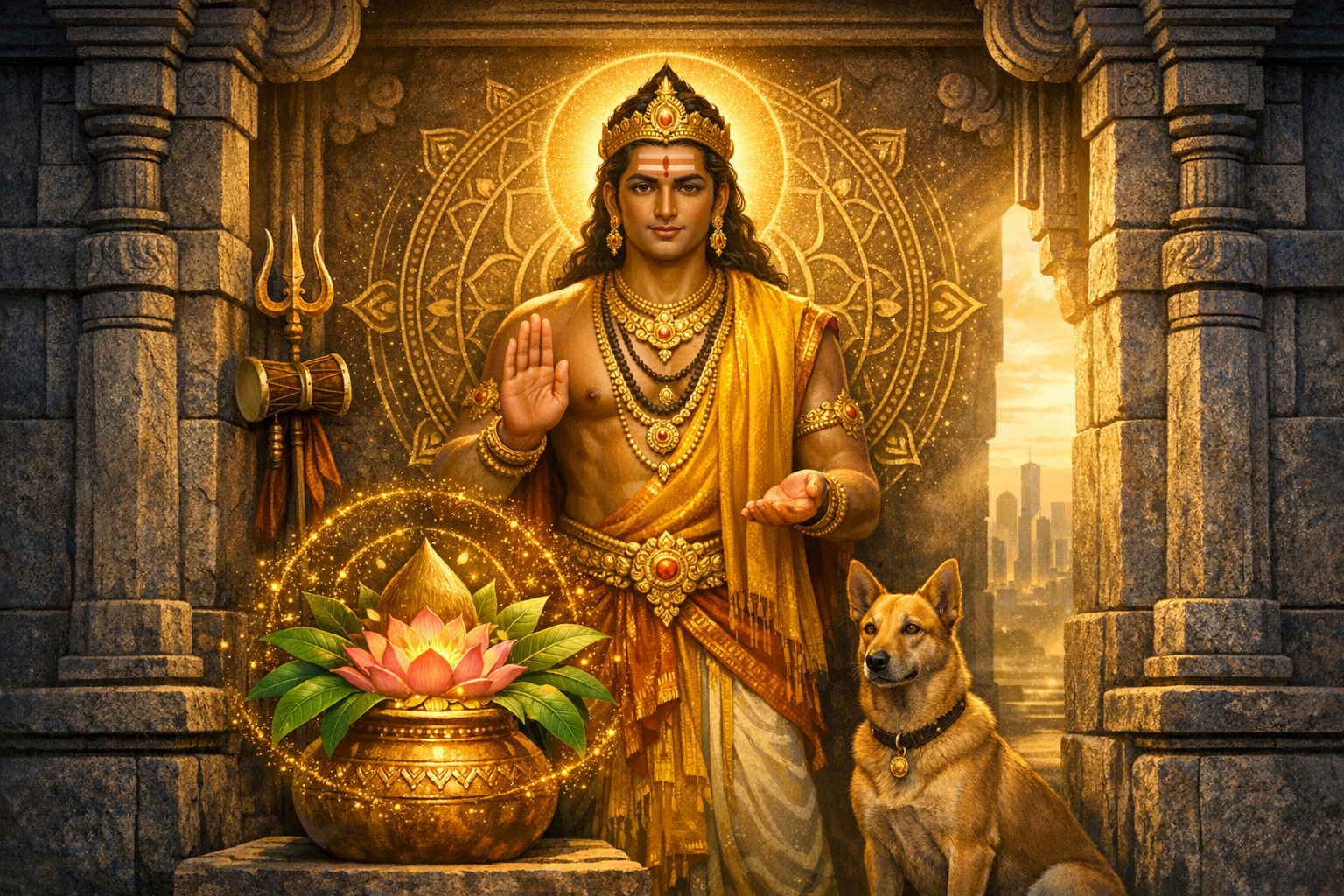
Swarnakarshana Bhairava“the one who draws gold”is a Shaiva Tantric form that links prosperity to disciplined guardianship, especially relevant in Kali Yuga. The iconography, often golden and protective, signals plenitude anchored in vigilance and ethics rather than greed. Textual and ritual traditions frame this Bhairava as a kṣetrapāla of resources, aligning wealth with dharma, responsibility, and…
-
Chosen People or People Who Choose? A Dharmic Analysis of Free Will, Karma, and Grace
This long-form, comparative analysis reframes the classic debate over predestination and free will by drawing on Hindu, Buddhist, Jain, and Sikh philosophies. It explains how dharmic traditions balance karma (conditioning causes), meaningful choice (puruṣārtha), disciplined practice (dharma, śīla, simran, seva), and grace (kṛpā/nādar) where affirmed. Rather than privileging an exclusive elect, these frameworks uphold universal…
-
Rakshasas Reconsidered: Three Orders, Genealogies, and Dharma Across Hindu Scriptures

Rakshasas in Hindu scriptures are not a single moral type but a spectrum of beings whose actions and destinies illuminate dharma. A threefold interpretive modelsattva-, rajas-, and tamas-aligned Rakshasasmaps consistent patterns across the Ramayana, Mahabharata, and Puranic genealogies. Vibhishana, Ravana, and figures such as Khara and Kirmira exemplify distinct ethical orientations that readers can recognize…
-
From Jamun to Jambudvipa: Sacred Dark Hues, Divine Cosmology, and Bharata’s Enduring Soul

Jamun’s deep purple hue, Jambudvipa’s sacred geography, and the dark complexions of Divine iconography converge to reveal a unifying civilizational vision of Bharata. Drawing on Hindu Puranas, Buddhist Pali sources, and Jain cosmography, the analysis shows how Jambudvipa frames Bharata-varsha as a moral and spiritual habitat rather than a mere map. The essay connects sacred…
-
Sharpening the Inner Compass: Trusting Intuition on the Dharmic Path with Clarity and Courage

Trustworthy intuition in Hinduism is not impulse but disciplined, dharma-aligned insight that integrates perception, reason, and sacred testimony. This article clarifies how the inner compass relates to Atman, the Upanishads, and the Bhagavad Gita, while showing convergences with prajñā in Buddhism, anekāntavāda in Jainism, and hukam in Sikhism. Readers learn practical tests for discernmentahiṃsā, satya,…
-
Pradhanikarahasya on Mahalakshmi’s Supremacy: Unveiling the Primordial Shakti of Creation
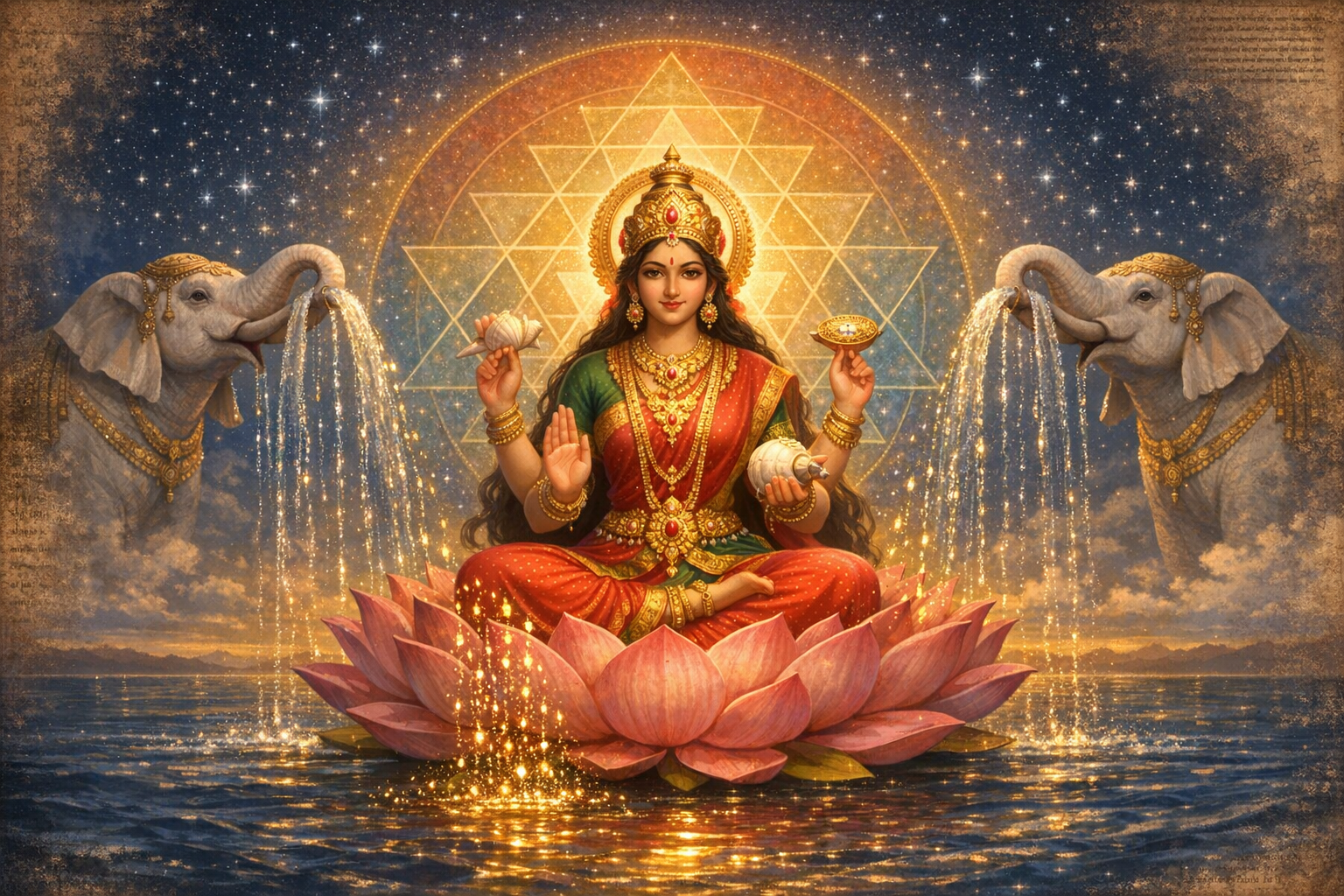
Pradhanikarahasya, an annex to the Devimahatmya (Durgasaptashati), presents a rigorous Shakta theology in which Mahalakshmi is the primordial source of creation. It integrates Vedic and Upanishadic insights to show how Shakti is both nirguna and saguna, aligning non-dual metaphysics with living devotion. The text decodes the Devimahatmya’s three episodes through the three gunas, offering a…
-
From Envy to Compassion: Dharmic Ethics of Bhakti, Ahimsa, and Unity Across Traditions
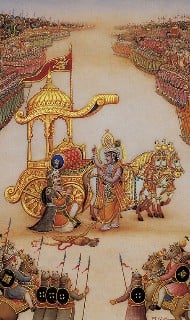
Non-envy is presented as a defining criterion for authentic religion across Hinduism, Buddhism, Jainism, and Sikhism, aligning with A.C. Bhaktivedanta Swami Prabhupada’s emphasis within Krishna consciousness. The article clarifies envy versus jealousy and shows how dharmic ethics reject both as inner violence that fractures community. It integrates scriptural insightsBhagavad Gita, Śrīmad-Bhāgavatam, Dhammapada, Jain vows, and…
-
Decoding the Dashagvas: Swift Angirasa Sages of the Rigveda and Their Living Legacy
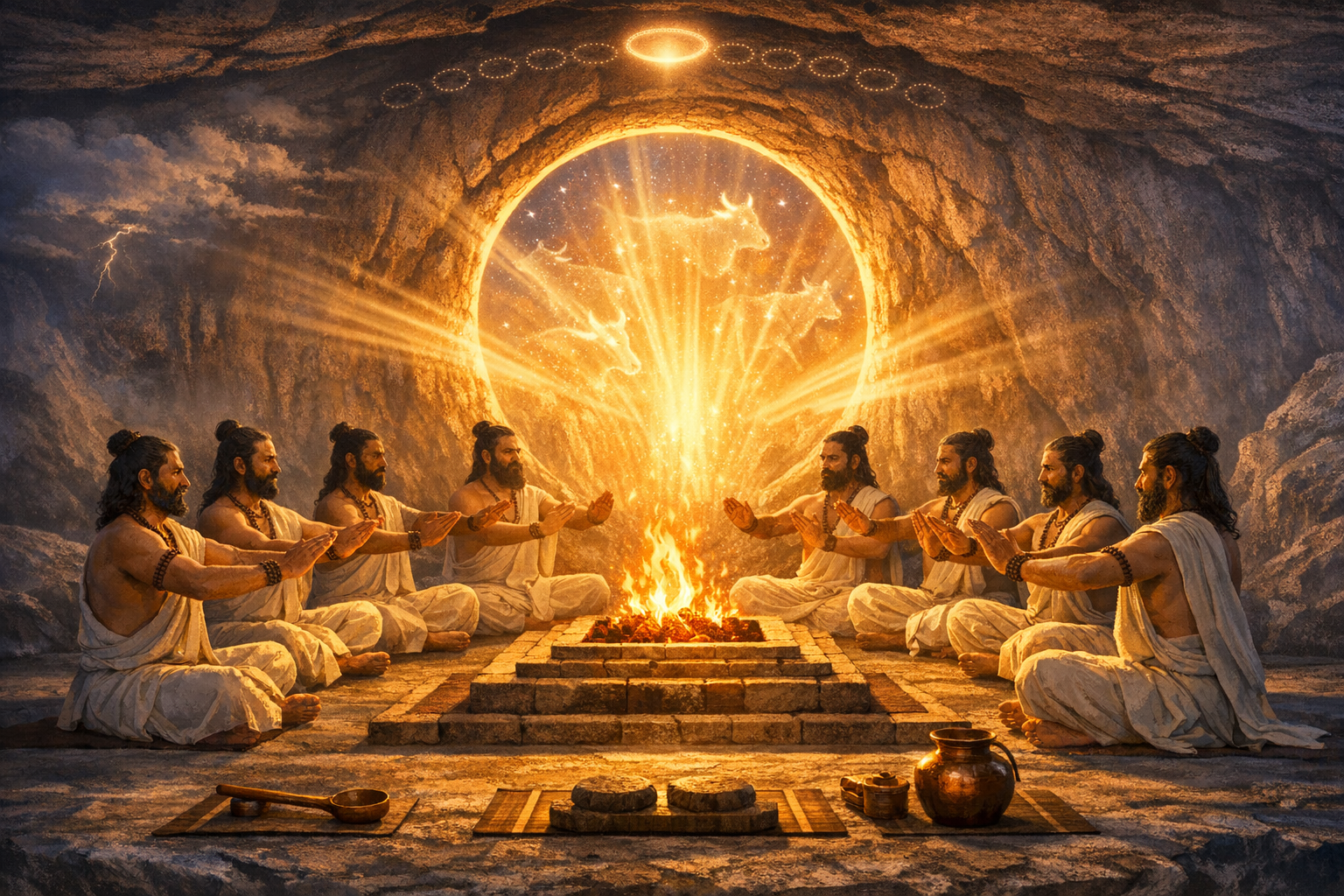
The Dashagvas, remembered in the Rigveda as Angirasa-aligned priests, exemplify the Vedic fusion of disciplined speech, precise timing, and communal practice. Tradition pairs them with the Navagvas and links their names to nine- and ten-month sacrificial cycles that culminate in the release of light symbolized as cows and dawns. Rather than celebrating haste, their famed…
-
Choose Mental Fuel, Not Noise: Dharmic Wisdom to Protect Self‑Respect and Clarity
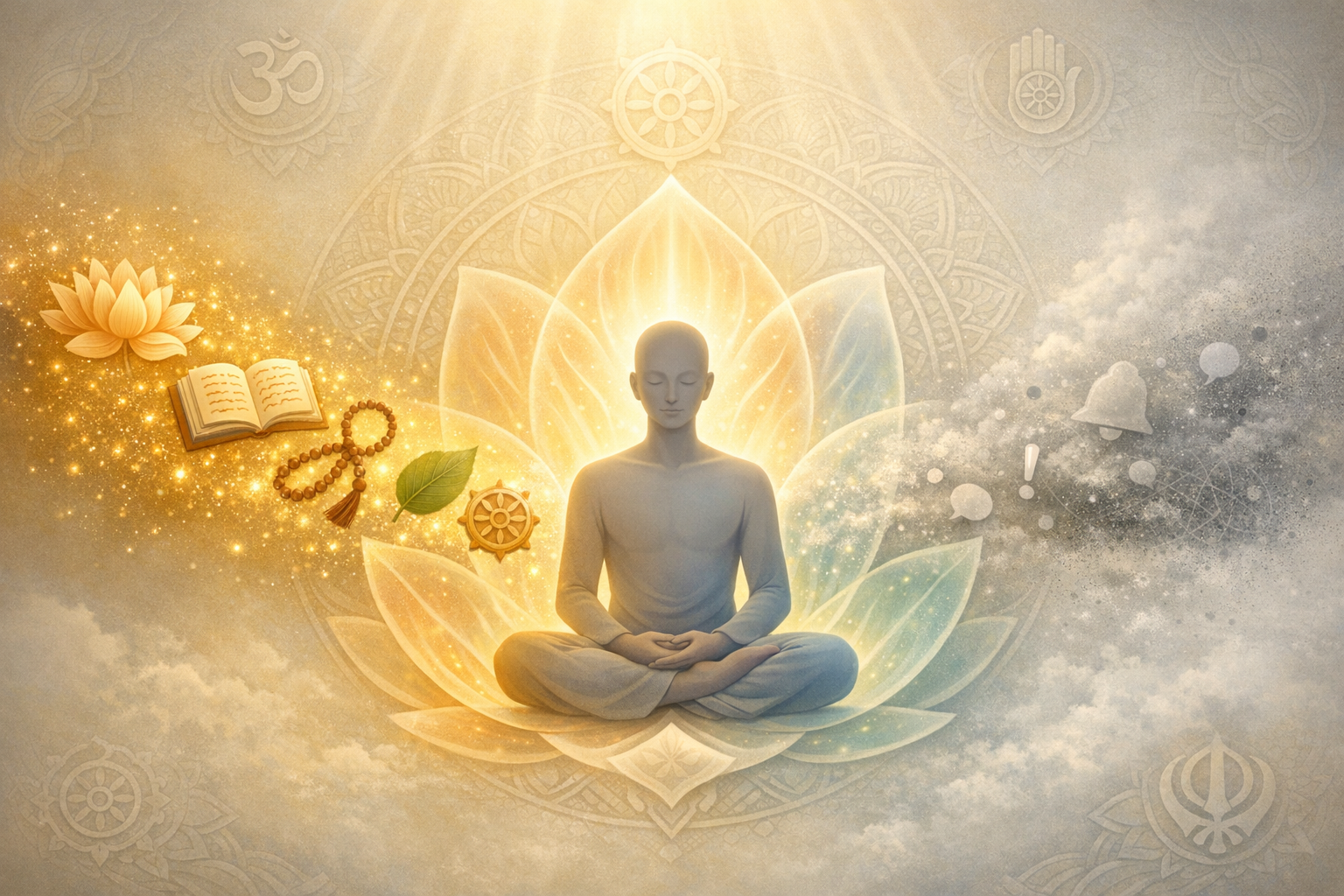
This essay presents a rigorous, dharmic framework for curating a nourishing “mental diet” that protects clarity and self‑respect in an age of digital distraction. Drawing on the Upanishads, the Bhagavad Gita, and Yoga Sutra, it explains how sattva, abhyasa–vairagya, and pratyahara translate into concrete media habits. Buddhist thought contributes the four nutriments and wise attention;…
-
Beyond Rivalry: Why a True Vaidika Honors Tantra and a True Tantrika Reveres the Vedas

Vedas and Tantra are not adversaries but complementary avenues to the same truth, a reality long recognized across authentic lineages. This article traces their historical interdependence through the Agamas, Pancharatra, temple praxis, and Vedantic metaphysics to clarify why both are indispensable. It explains how mantra, yantra, mudra, nyasa, and Kundalini sadhana can integrate seamlessly with…