Tag: hinduism

  • Tula, Karma, and Dharma: The Sacred Weighing Balance in Hindu Icons, Rituals, and Cosmology

    Tula, Karma, and Dharma: The Sacred Weighing Balance in Hindu Icons, Rituals, and Cosmology

    The weighing balance (tula) is a rare yet profound Hindu symbol that encodes a civilizational ethic: weigh intentions, actions, and outcomes in the light of karma and dharma. Rather than relying on frequent iconographic depictions, the symbol operates powerfully across ritual (tulābhara), philosophy (samatā in the Bhagavad Gita), and astrology (Tula Rashi’s emblem of parity).…

  • Unlocking the Treasure Within: Chandogya Upanishad and a Dharmic Map to Self-Realization

    Unlocking the Treasure Within: Chandogya Upanishad and a Dharmic Map to Self-Realization

    A classic image from the Chandogya Upanishada person seated on a hidden treasure yet beggingcaptures a pervasive human error: mistaking instruments for essence. Vedanta clarifies this through pañca-kośa, three-body, and Mandūkya analyses, pointing to the Self as Sat–Cit–Ānanda and the core of Tat tvam asi. Related insights appear across Buddhism’s luminous mind, Jainism’s jīva purified…

  • Kumari vs Kaumari in Shakta Tantra: Unmasking Virgin Consciousness and the Warrior Mother

    Kumari vs Kaumari in Shakta Tantra: Unmasking Virgin Consciousness and the Warrior Mother

    Kumari and Kaumari are frequently conflated in Shakta and Tantric worship, yet they refer to distinct realities. Kumari primarily denotes a ritual and contemplative statevirgin consciousness invited into a pre-pubescent girl during Kumari Pujawhile Kaumari is a canonical Hindu goddess, a Matrika linked to Skanda and characterized by peacock vahana and spear. Clarifying this difference…

  • When Bonds Must End: A Dharmic Guide to Karma, Duty, and Unsalvageable Relationships

    When Bonds Must End: A Dharmic Guide to Karma, Duty, and Unsalvageable Relationships

    Not every relationship can or should be saved. A dharmic lensgrounded in Hinduism’s concepts of dharma, karma, and sambandhaclarifies when compassionate separation is ethically warranted. Drawing on the Bhagavad Gita, Dharmashastra, and resonances with Buddhism, Jainism, and Sikhi, this article offers a structured decision framework: prioritize non-harm, truth, responsibility, and long-term growth. It outlines concrete…

  • Bhutappa in Karnataka: The Fierce Threshold Guardian Powering Folk Justice and Sacred Ecology

    Bhutappa in Karnataka: The Fierce Threshold Guardian Powering Folk Justice and Sacred Ecology

    Bhutappa in Karnataka stands at the village threshold as a fierce kshetrapala and sentinel of the goddess, where sacred geography flows beyond the sanctum into lived community life. The shrine’s placement under a jackfruit canopy reflects an intentional blend of ritual efficacy, social order, and ecological care. Historically a keeper of folk justice, Bhutappa supports…

  • Beyond Ego: The Profound Hindu Teaching that the Divine Is the True Doerand How to Live It

    Beyond Ego: The Profound Hindu Teaching that the Divine Is the True Doerand How to Live It

    This long-form exploration clarifies the Hindu teaching that the Divinenot the individual egois the true doer, situating personal agency within a larger moral order. Drawing on the Bhagavad Gita, Upanishads, and allied dharmic perspectives in Buddhism, Jainism, and Sikhism, it reconciles responsibility with non-attachment. Readers gain a practical framework for Karma Yoga, Bhakti, Jñāna, and…

  • Narasimha, Vishnu’s Fiercest Grace: The Most Personal and Shortest Avatar Explained

    Narasimha, Vishnu’s Fiercest Grace: The Most Personal and Shortest Avatar Explained

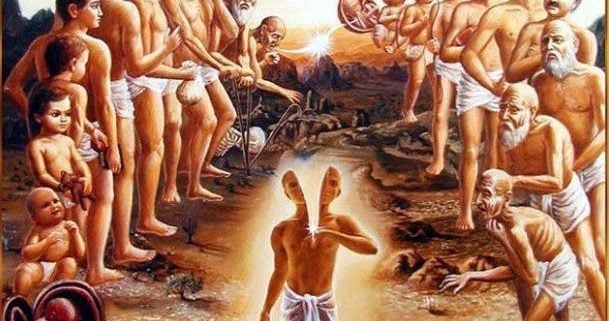
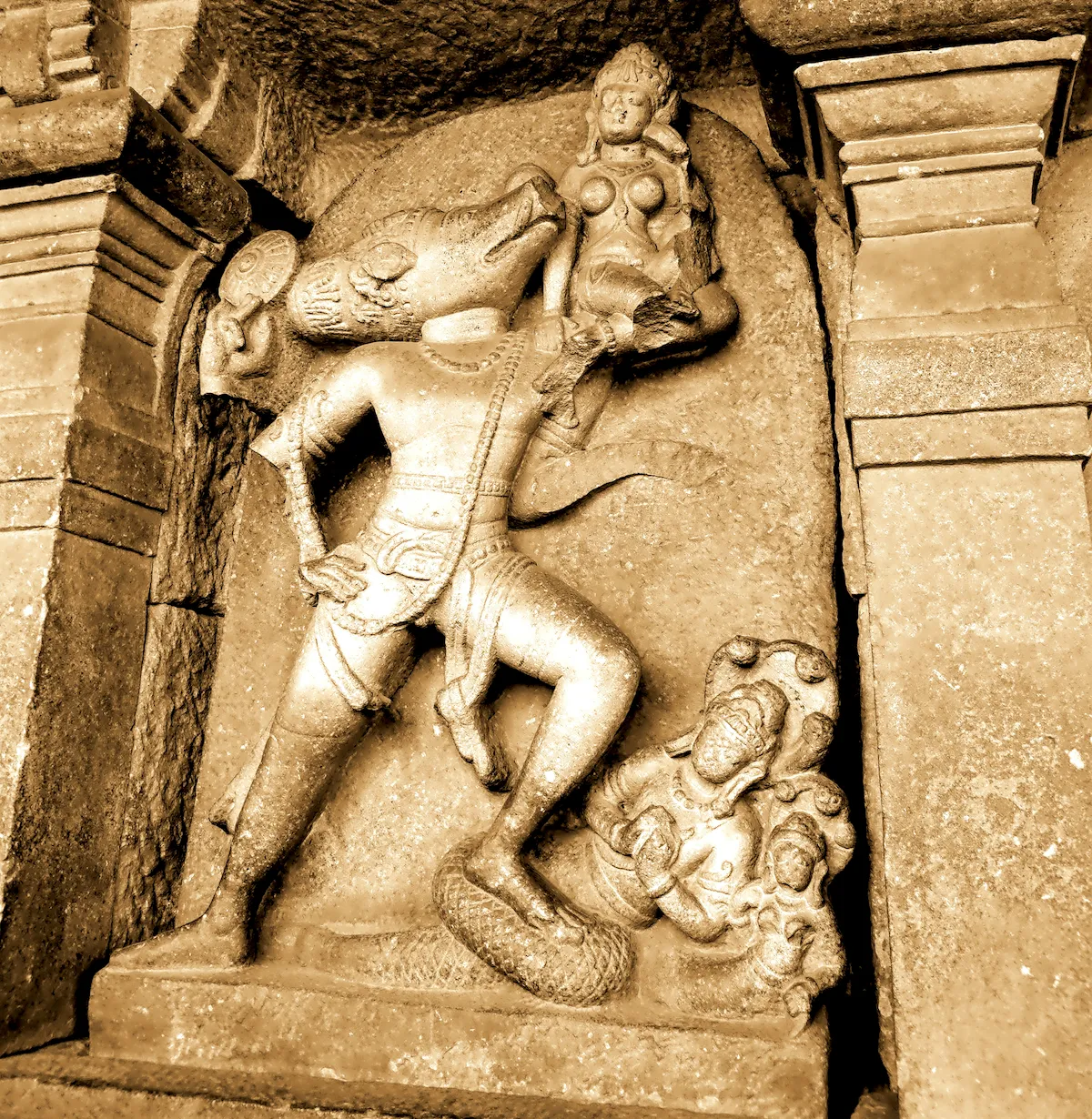
    This article examines why Narasimha is revered as both the most personal and the shortest of Vishnu’s Avatars. Drawing on the Bhagavata Purana and related sources, it explains how Narasimha’s liminal theophany at dusk fulfills Dharma while honoring Brahma’s boon to Hiranyakashipu. It unpacks the theologydevotion’s efficacy, justice’s precision, and compassion’s primacyand explores the iconography…

  • In Kali Yuga’s Shadow, Karuṇā Shines: The Dharma of Empathy for Collective Survival

    In Kali Yuga’s Shadow, Karuṇā Shines: The Dharma of Empathy for Collective Survival

    Kali Yuga accentuates speed, scarcity, and social fragmentation, making empathy not just virtuous but vital. Drawing on Hinduism, Buddhism, Jainism, and Sikhism, this essay frames karuṇā as strategic dharmaethically right and instrumentally wise. It grounds empathy in the Bhagavad Gita, Anekantavada, Brahmavihāra practice, and Sikh seva, aligning with the civilizational ideal of Vasudhaiva Kutumbakam. Contemporary…

  • Layayoga in Hinduism: A Powerful Path to Dissolve Mind into Brahman via Nada and Kundalini

    Layayoga in Hinduism: A Powerful Path to Dissolve Mind into Brahman via Nada and Kundalini

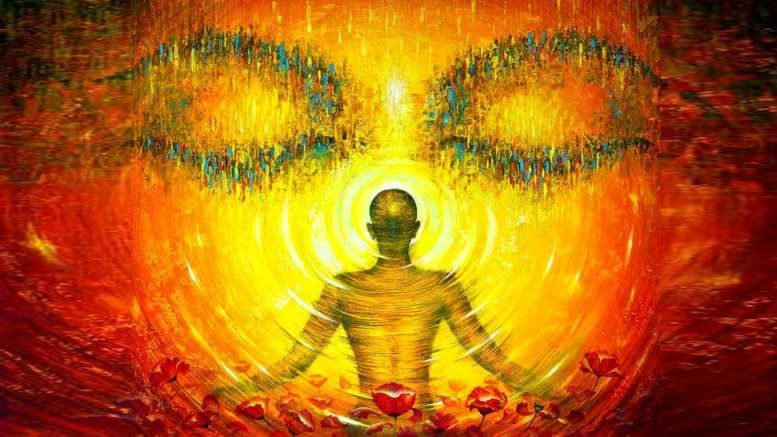
    Layayoga, the yoga of dissolution, offers a rigorous pathway in Hinduism to absorb sensory, mental, and energetic activity into subtler awareness until the nondual identity of atman and Brahman is self-evident. Rooted in the Yoga Upanishads, Hatha Yoga, and Raja Yoga, it employs pratyahara, refined pranayama, mantra, and inner sound (nada) to stabilize attention in…

  • Beyond Dates and Dynasties: Why Dharmic India Chose Timeless Truth over History

    Beyond Dates and Dynasties: Why Dharmic India Chose Timeless Truth over History

    Ancient India developed a distinct historiography that privileged timeless truth over exhaustive chronologies. Rather than ignoring the past, Hinduism, Buddhism, Jainism, and Sikhism embedded history in genres like Itihāsa, Purāṇa, and Śāstra to illuminate Dharma and guide conduct. Epigraphy, coins, and temple records demonstrate rigorous documentation when it served justice, patronage, and community welfare. Examples…

  • Before the Beginning: The Profound Self-Awakening of Consciousness in Sanatana Dharma

    Before the Beginning: The Profound Self-Awakening of Consciousness in Sanatana Dharma

    Sanatana Dharma advances a radical thesis: creation is Consciousness awakening to itself, not an external fabrication. Drawing on the Upanishads, Bhagavad Gita, Advaita Vedanta, Kashmir Shaivism, and Samkhya–Yoga, this essay explains how the Absolute (Brahman) both pervades and transcends the cosmos. It maps macrocosm to experience via the Mandukya’s four states and clarifies cyclical timesṛṣṭi,…

  • Trauma Dumping to AI: Evidence-Based Risks, Real Benefits, and Dharmic Design Principles

    Trauma Dumping to AI: Evidence-Based Risks, Real Benefits, and Dharmic Design Principles

    More people now confide in AI systems during moments of distress, a shift that brings both promise and risk. This analysis defines trauma dumping to AI, explains how large language models simulate empathy, and outlines what current evidence actually supports. It details privacy safeguards, safety triage, and cultural-linguistic competence, with particular attention to South Asian…

  • Decoding SB 1.2.6: The Power of Ahaitukī Bhakti in Villa Vrindavana’s Global ISKCON Satsang

    Decoding SB 1.2.6: The Power of Ahaitukī Bhakti in Villa Vrindavana’s Global ISKCON Satsang

    Streamed from Villa Vrindavana (ISKCON Florence), this deep-dive into Srimad Bhagavatam 1.2.6 explains why selfless (ahaitukī) and uninterrupted (apratihatā) devotion is presented as the supreme dharma for all. The article clarifies each Sanskrit term, situates the verse in its original narrative, and links its insights to practical disciplineshearing, chanting, service, and studyin a digitally connected…

  • Beyond the Flood: Decoding Matsya–Manu vs Noah’s Ark with Dharmic Depth and Clarity

    Beyond the Flood: Decoding Matsya–Manu vs Noah’s Ark with Dharmic Depth and Clarity

    Scholars and readers often conflate the Hindu Matsya–Manu narrative with the Biblical story of Noah’s Ark, but the two emerge from distinct cosmologies and theological aims. The Puranic account unfolds within cyclical timekalpas, manvantaras, and yugaswhere avataric guidance preserves seeds, sages, and Vedic knowledge through pralaya. Genesis, by contrast, frames a one-time moral judgment and…

  • Three Who Saw Krishna’s Infinite VishvarupaArjuna, Sanjaya, Akrura: Evidence and Insights

    Three Who Saw Krishna’s Infinite VishvarupaArjuna, Sanjaya, Akrura: Evidence and Insights

    This long-form study examines the three principal witnesses to Krishna’s viśvarūpaArjuna, Sanjaya, and Akrurausing the Bhagavad Gita, Mahabharata, and Bhagavata Purana as primary touchpoints. It clarifies how divya cakṣuḥ (divine sight) conditions the experience, why Arjuna’s battlefield vision is pedagogically unique, and how Sanjaya’s Vyasa-given perception mediates revelation to a wider audience. Akrura’s Yamuna theophany…

  • Father’s Passing in Vedic Astrology: Bhavat Bhavam, Karakas, Dashas, and a Compassionate Method

    Father’s Passing in Vedic Astrology: Bhavat Bhavam, Karakas, Dashas, and a Compassionate Method

    This article presents a rigorous, compassionate framework for studying indications related to a father’s passing in Vedic astrology using Bhavat Bhavam (house-from-house), the 9th house, the Sun as karaka, and the Dwadashamsha (D12). It details how to evaluate strength and affliction, identify derived maraka houses for the father, and synchronize Vimshottari Dasha with Saturn and…

  • How Mindful Communication Rewired Her Life: A Dharmic, Research‑Backed Relationship Guide

    How Mindful Communication Rewired Her Life: A Dharmic, Research‑Backed Relationship Guide

    This article traces how mindful communication, guided by dharmic principles shared across Buddhism, Hinduism, Jainism, and Sikhism, transformed a life previously marked by passive-aggression and anxiety. It shows how grief catalyzed a disciplined search, leading to meditation, right speech, and an intentional practice of honesty, kindness, and clarity. A practical Pause-to-Right-Speech protocol is introducedpause, ground,…

  • Sant Kabir’s Enduring Bridge: How Nirgun Bhakti Shaped Sikh Thought and Dharmic Unity

    Sant Kabir’s Enduring Bridge: How Nirgun Bhakti Shaped Sikh Thought and Dharmic Unity

    Sant Kabir’s nirgun devotion offers a rigorous, unifying grammar for Bhakti and Sikh thought, anchoring spiritual life in naam, ethical conduct, and interior transformation. Set in fifteenth–sixteenth-century North India, his bani engages Vaishnava Bhakti, Sufi mysticism, and the Upanishadic, Jain, and Buddhist legacies without erasing real doctrinal distinctions. The Guru Granth Sahib’s inclusion of Kabir’s…

  • From Curse to Liberation: Why Beings Become Trees or Animals in Hindu Scriptures

    From Curse to Liberation: Why Beings Become Trees or Animals in Hindu Scriptures

    Hindu scriptures use the motif of beings cursed as trees or animals to teach karma, responsibility, and grace within a unified, living cosmos. Narratives like Nalakūvara and Maṇigrīva’s arjuna-tree curse, Gajendra Moksha, and King Nṛiga’s transformation into a lizard show curses as pedagogical interventions, not mere punishments. These stories integrate legal, ethical, and contemplative insights:…

  • Become the Witness: Rise Above Matter and Realize Consciousness with Timeless Dharmic Wisdom

    Become the Witness: Rise Above Matter and Realize Consciousness with Timeless Dharmic Wisdom

    This long-form, academically grounded essay explains why over-identification with matter creates volatility and how dharmic traditions teach a precise, trainable alternative: witness-consciousness (sakṣi-bhāva). Drawing from Sāṅkhya–Yoga, Advaita Vedānta, the Bhagavad Gītā, Buddhist mindfulness, Jain anekāntavāda, and Sikh practices such as Naam Simran, it shows the deep unity of Hinduism, Buddhism, Jainism, and Sikhism. Readers gain…