
-
After Nerul Meet, 25 Navi Mumbai Temples Adopt Dress Code to Preserve Sanctity and Inclusion

Trustees representing 25 Navi Mumbai temples resolved in a Nerul meeting under the Maharashtra Mandir Mahasangh to introduce a dress code aimed at preserving sanctity while enhancing devotee comfort and dignity. The move aligns with dharmic norms across Hindu, Buddhist, Jain, and Sikh spaces, where modest attire signals reverence and inner readiness for darshan. Constitutionally,…
-
Char Dham 2026: BKTC Safeguards Sanctum, Reassures Access for All at 47 Uttarakhand Temples

BKTC has clarified that, ahead of Char Dham Yatra 2026, non-Hindu visitors are restricted only from the sanctum sanctorum at 47 Uttarakhand temples, while remaining fully welcome in outer halls, courtyards, and public service zones. The decision preserves Agama-defined ritual sanctity at the altar without imposing a blanket ban on temple access. Readers will find…
-
Decoding Garuda’s Sacred Footwork: Awe-Inspiring Iconography in Hindu Temple Sculpture
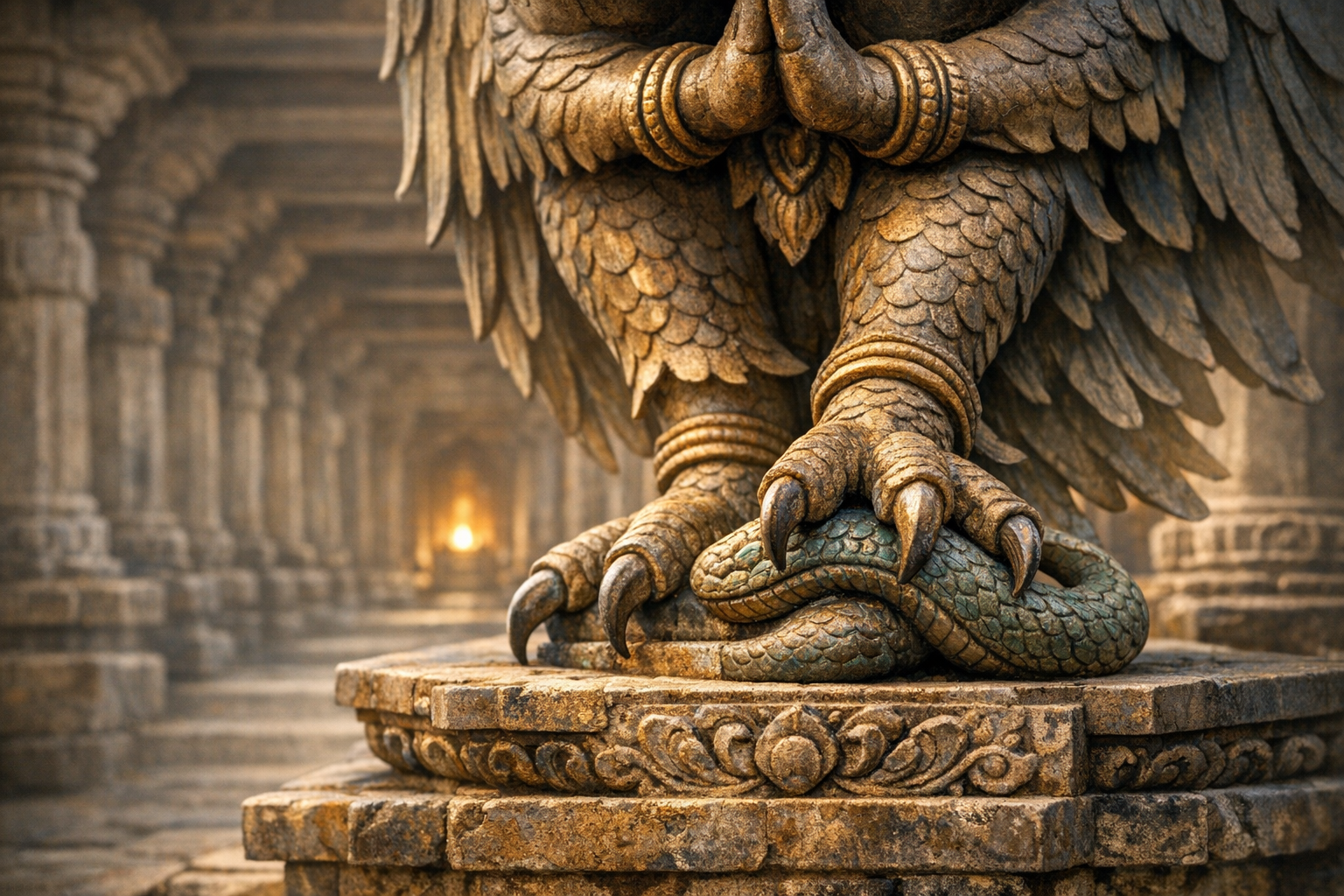
Garuḍa’s distinctive footwork in Hindu temple sculpture is a concentrated language of devotion, protection, and poised service. Guided by Śilpa-śāstra canons and Nāṭya-śāstra foot positions, sculptors use soles, arches, and talons to encode humility before Viṣṇu, readiness for action, and sovereignty over nāgas. Regional workshopsfrom Chola bronzes to Kalinga stone and Hoysala carvingstranslate these themes…
-
Peterborough’s Bharat Hindu Samaj Temple Wins Early Court Relief: Due Process and Pluralism

Peterborough’s Bharat Hindu Samaj Temple has won early court relief against a proposed council disposal to a Muslim community group, pausing the sale while the Administrative Court examines whether legal and equality duties were met. Readers gain a clear map of the UK public-law framework governing disposals, including section 123 of the Local Government Act…
-
Mehandipur Balaji Temple’s Sacred Threshold: Why Devotees Don’t Look Back When Called
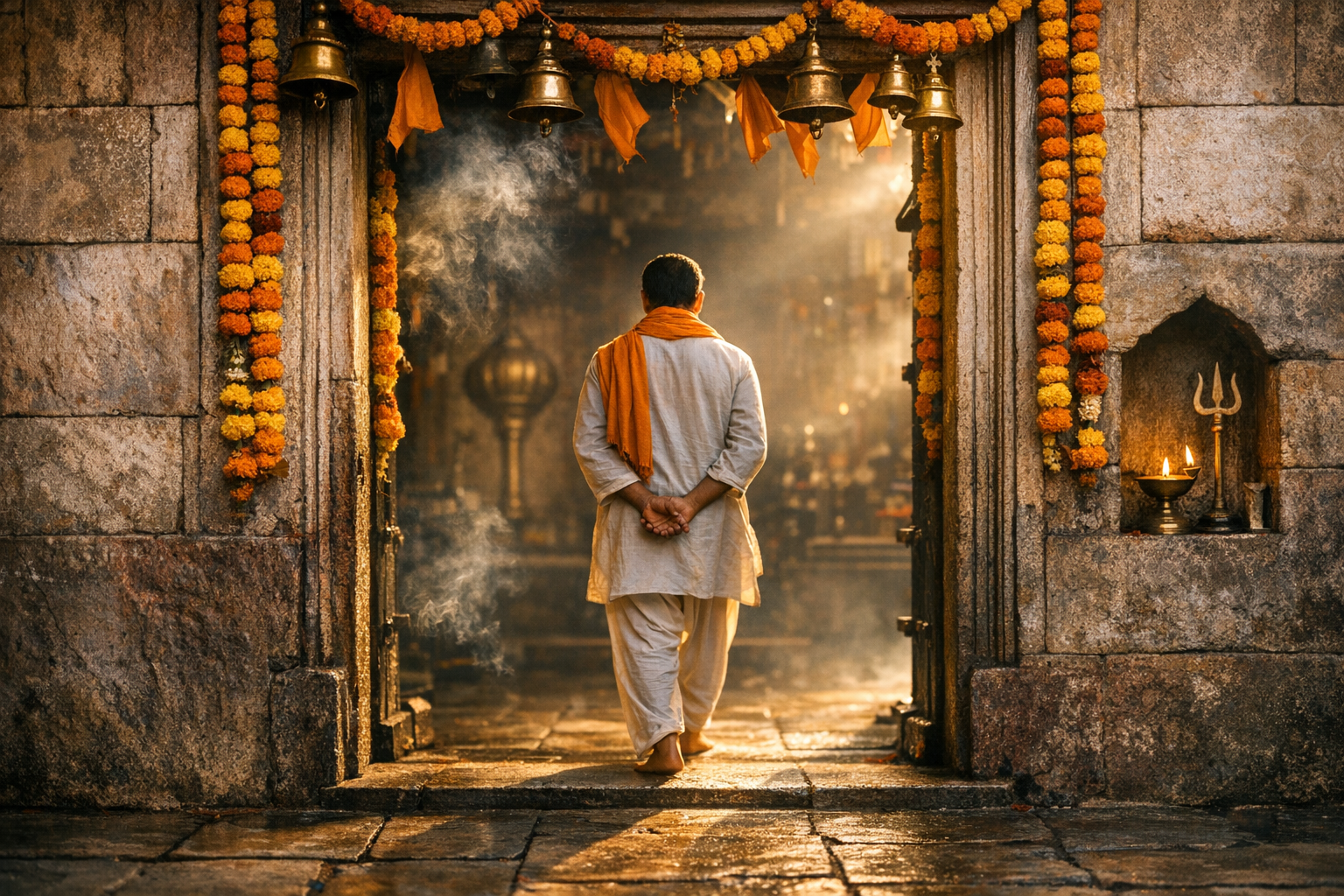
The Mehandipur Balaji Temple in Rajasthan is renowned as a living center of protection and ritual healing, where a distinctive exit normdo not look back if someone callsplays a crucial role in sealing vows and safeguarding attention. Framed as a threshold ethic, this guidance supports closure after darshan, reduces suggestibility in crowded spaces, and aligns…
-
Tirumala Koil Alwar Tirumanjanam, 17 Mar 2026: Sacred Cleansing & Darshan Guide for Ugadi
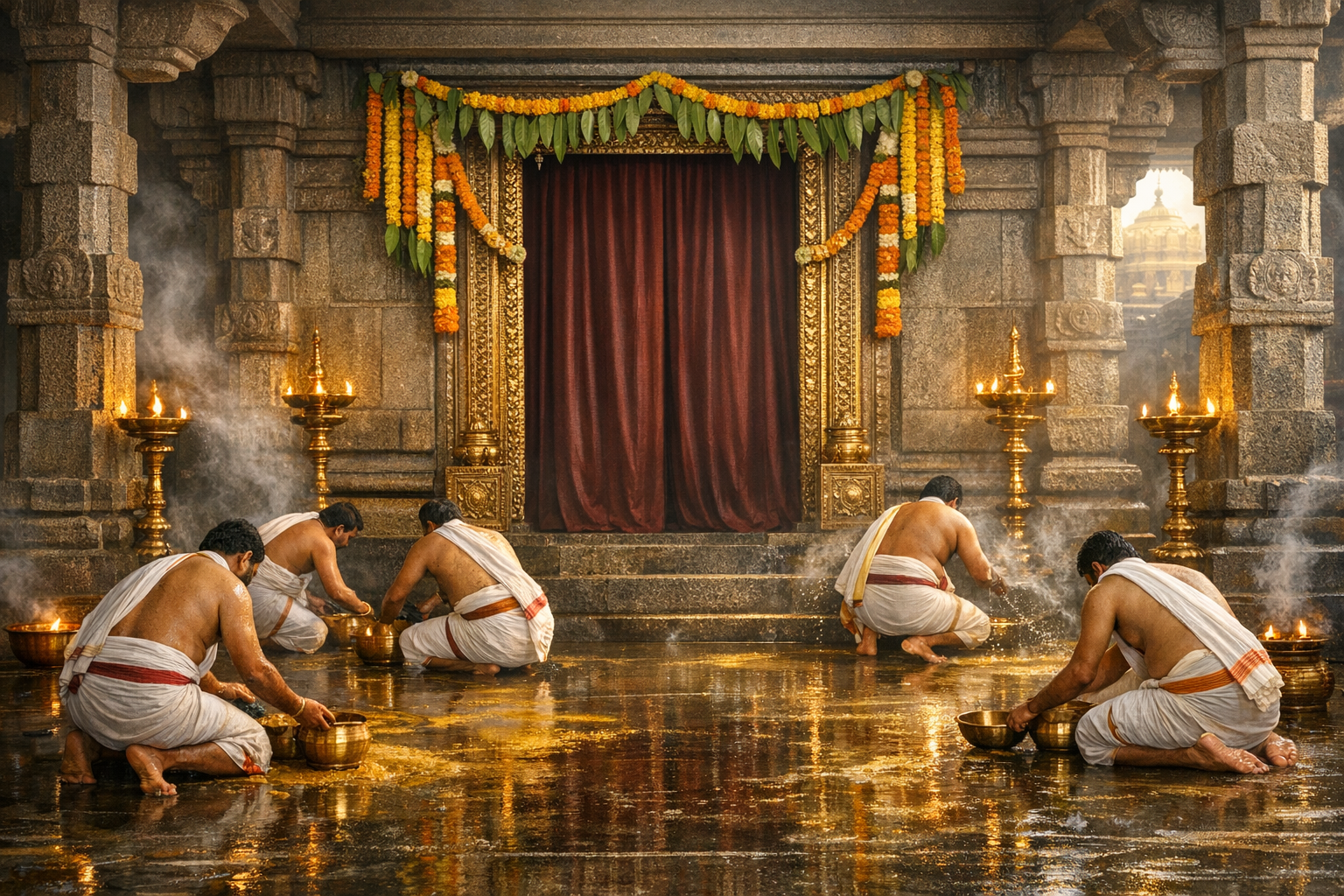
Koil Alwar Tirumanjanam will be performed at Tirumala Sri Venkateswara Swamy Temple on Tuesday, 17 March 2026, as the traditional temple-cleansing rite preceding Ugadi Asthanam on 19 March. Rooted in the Vaikhanasa Agama, the ritual purifies the sanctum, sub-shrines, and prakaras using a traditional Parimalam preparation, restoring the shrine’s ritual fitness and serene ambience. In…
-
Sacred Blossoms: Pushpayagam at Srinivasa Mangapuram Kalyana Venkateswara on 15 March 2026 (TTD)
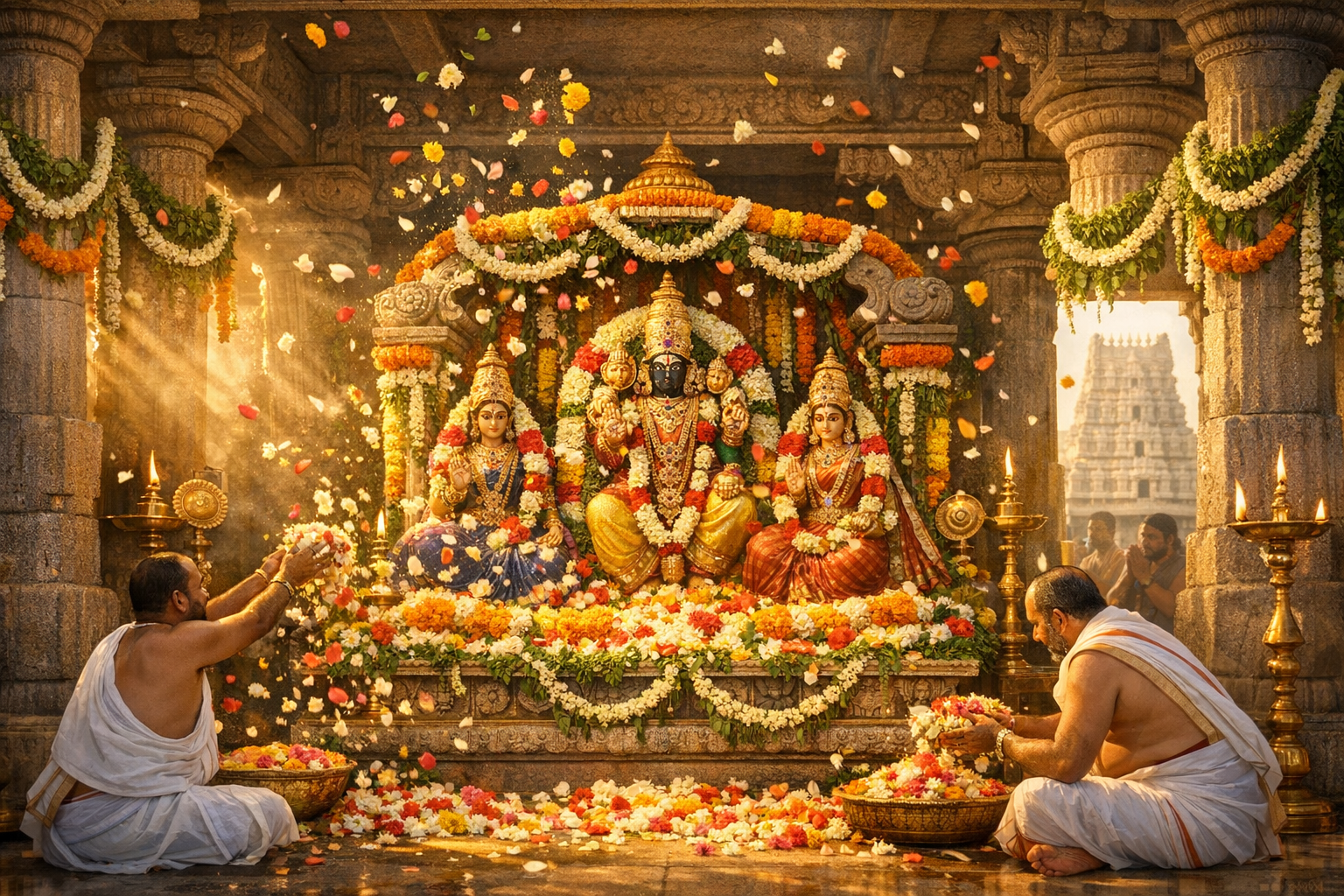
Tirumala Tirupati Devasthanams (TTD) will conduct Pushpayagam at Sri Kalyana Venkateswara Swamy Temple, Srinivasa Mangapuram, on 15 March 2026, with Senadhipati Utsavam and Ankurarpanam on 14 March from 6:00 PM to 8:00 PM. Grounded in Vaishnava Agama, this annual dosha-parihara utsavam offers floral worship to the Utsava Murthis as a thanksgiving rite for communal welfare…
-
Nagarkot Mata Mandir of Kangra: Shakti Peeth legacy, Pandava vision, Mahabharata ties

Nagarkot Mata Mandir (Brajeshwari/Vajreshwari) in Kangra, Himachal Pradesh, stands among the most revered Shakti Peeths, where Puranic cosmology and regional lore meet. Local tradition holds that the Pandavas established or restored the shrine at the Devi’s command, embedding Mahabharata memory within Himalayan sacred geography. The temple’s Nagara idiom, fortified precincts, and resilient reconstruction after the…
-
Maharashtra Temples Adopt Dress Code Boards to Uphold Sanctity and Respectful Darshan

Temple trustees from Savarde and Sarand in Maharashtra’s Ratnagiri district have resolved to install dress code boards, a move intended to preserve sanctity while improving clarity and comfort for devotees. The initiative aligns with long-standing dharmic norms of modesty and decorum, and parallels practices witnessed across Hindu, Buddhist, Jain, and Sikh spaces. Clear, inclusive, and…
-
Unlocking Susunia’s Sudarshana Secret: Chakrasvamin, Gupta Power, and Bengal’s Living Dharma

Susunia Hill’s fourth-century rock inscription offers a compact yet sweeping window into Bengal’s Vaishnava heritage under the Gupta Empire. Three Sanskrit lines in northern Brahmi, carved beneath a blazing Sudarshana Chakra, identify Maharaja Chandravarman as dāsāgreṇa of Cakrasvāmin and connect Vanga-deśa directly to Āryāvarta through the Prayaga Prasasti. This essay traces the Cakrasvāmin sect’s spread…
-
Mayiladuthurai’s Vadaranyeswarar: Nandi’s Redemption under Dakshinamurti’s Timeless Grace
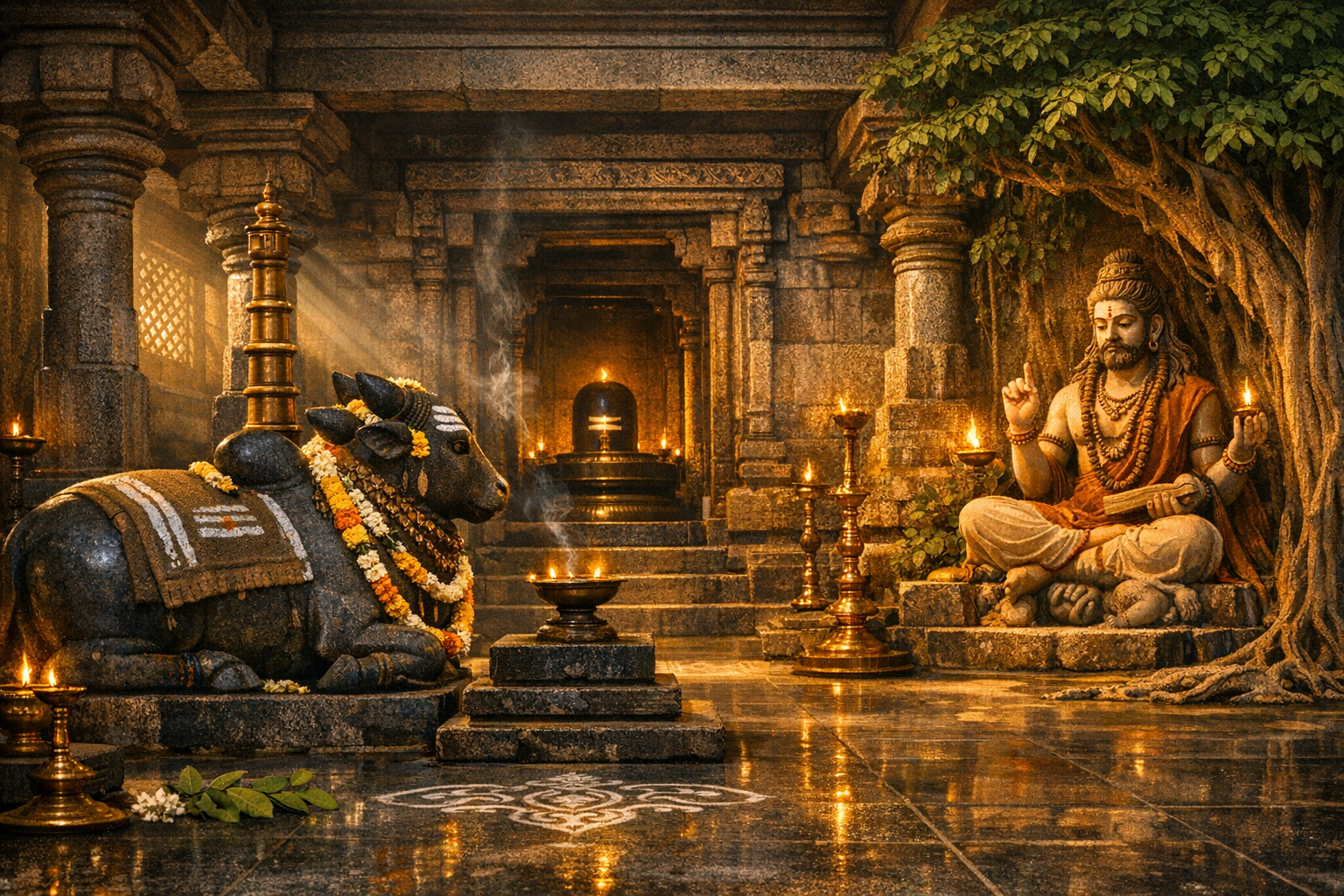
Set on the Kaveri’s banks in Mayiladuthurai, the Vadaranyeswarar Temple preserves a luminous legend in which Nandi’s unintended pride dissolves under Dakshinamurti’s silent, southward teaching. The narrative is embodied in spaceclear sight-lines, pedagogic iconography, and the banyan’s contemplative presenceturning architecture into spiritual practice. Readers discover how Dravidian temple grammar, Shaiva-Agamic iconography, and Thevaram recitation integrate…
-
Gilaharaj Ji Maharaj at Achal Taal: Hanuman’s Rare Squirrel Form and Timeless Ramayana Legacy

Gilaharaj Ji Maharaj Temple at Achal Taal in Aligarh, Uttar Pradesh, preserves a rare devotional focus: Hanuman is venerated in the form of a gilahari (squirrel), recalling the Ramayana story of Rama Setu and the power of humble seva. Set beside a historic waterbody, the shrine binds narrative memory to sacred geography in a living,…
-
Unveiling Venkateswara’s Nagabharana: Sacred Serpent Ornaments and Timeless Symbolism at Tirumala
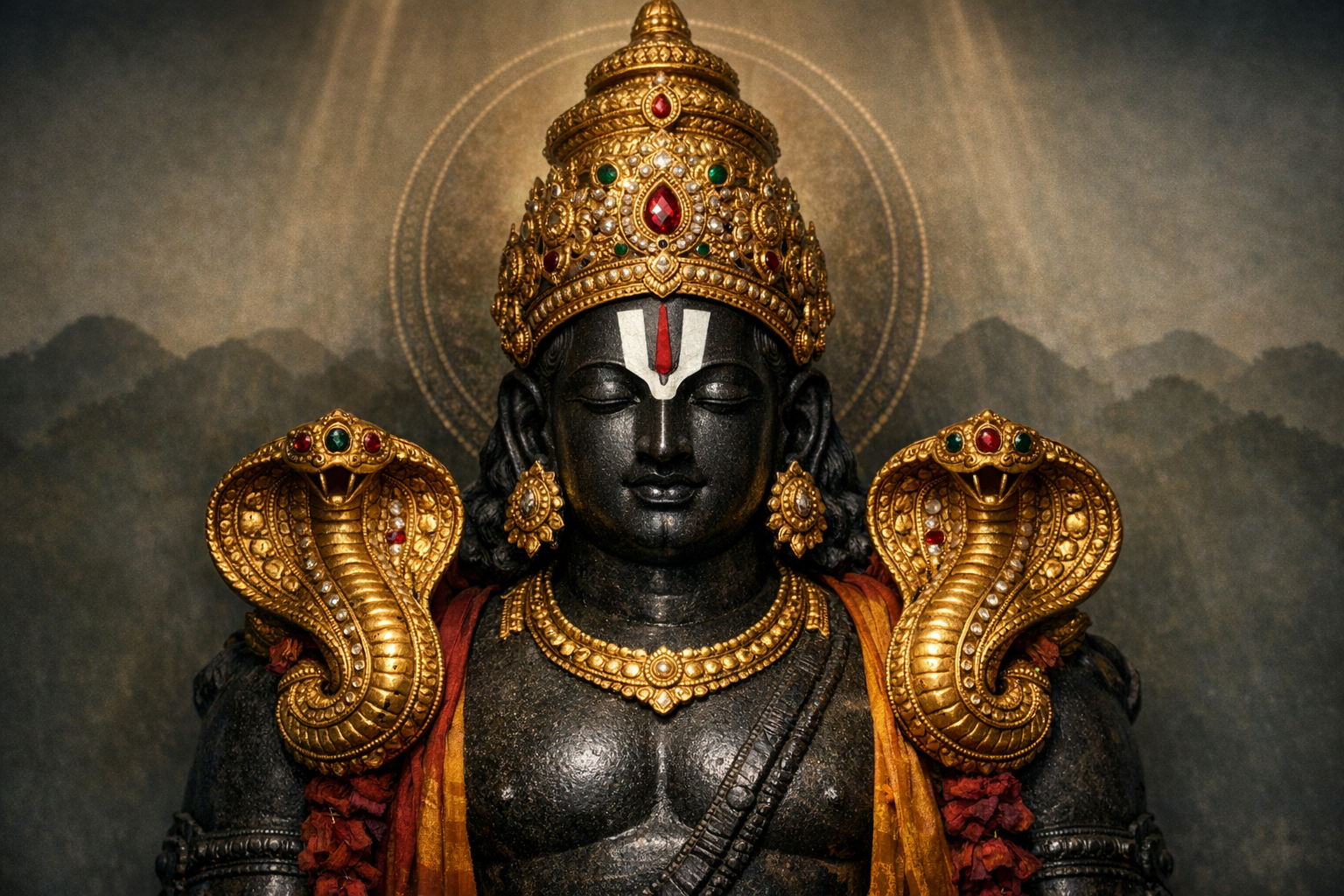
The Nagabharanapaired golden serpent emblems on the shoulders of Lord Venkateswara at Tirumalaembody a sophisticated synthesis of theology, iconography, and craft. Rooted in the Skanda Purana’s Venkatachala Mahatmya, they recall Adisesha’s guardianship and the Seshachalam hills while aligning with Vaikhanasa Agama norms for sacred ornamentation. Their symmetrical design and goldwork techniques ensure both visual clarity…
-
Kashi’s Tilbhandeshwar Mahadev: The Shivling Said to Grow a Sesame Each Year and Its Meaning
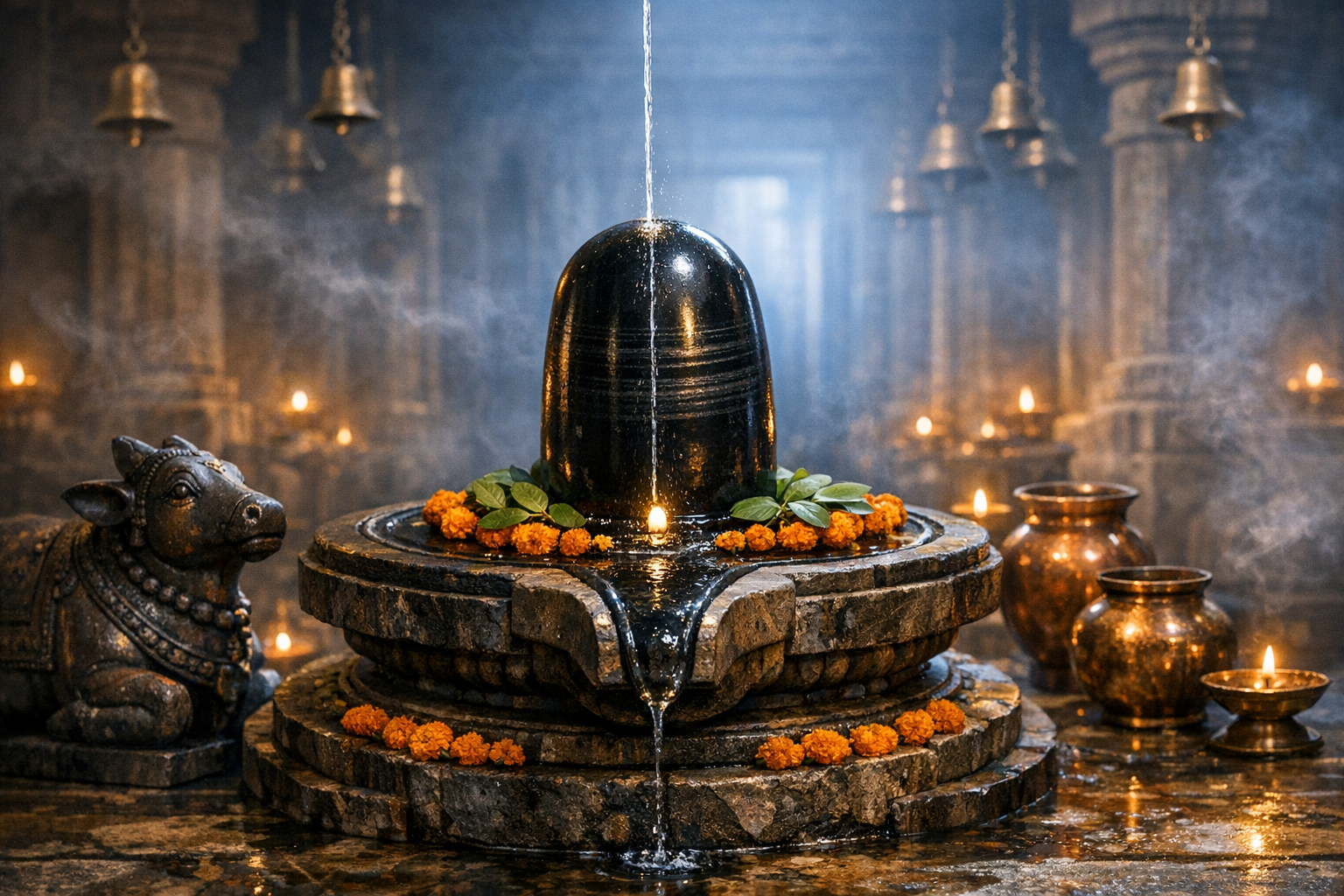
In Varanasi’s Tilbhandeshwar Mahadev Temple, devotion, memory, and material processes meet around a unique tradition: the Shivalinga is said to grow by a sesame seed each year. The temple’s name, lore, and ritual life together illustrate how communities preserve sacred knowledge through practice. Technical factorsmineral accretion from abhishekam and subtle structural shiftsoffer plausible mechanisms for…
-
Yoga Dakshinamurti Unveiled: Two Sacred Postures, Agamic Iconography, and Inner Silence

Dakshinamurti, Shiva’s south-facing form, embodies the Adi Guru whose silence instructs more deeply than speech. This long-form guide decodes two canonical idol forms of the Yoga DakshinamurtiDhyana-Padmasana and Virasana/Maharajalilasanausing Agamic and Shilpa Shastra principles. Readers learn practical cues to identify each form in temples, from asana and yogapatta to mudras, attributes, and the optional presence…
-
March 2026 Sacred Pujas at Kanchi Kamakoti Peetham: Tithi Highlights, Rituals, Devotee Guide
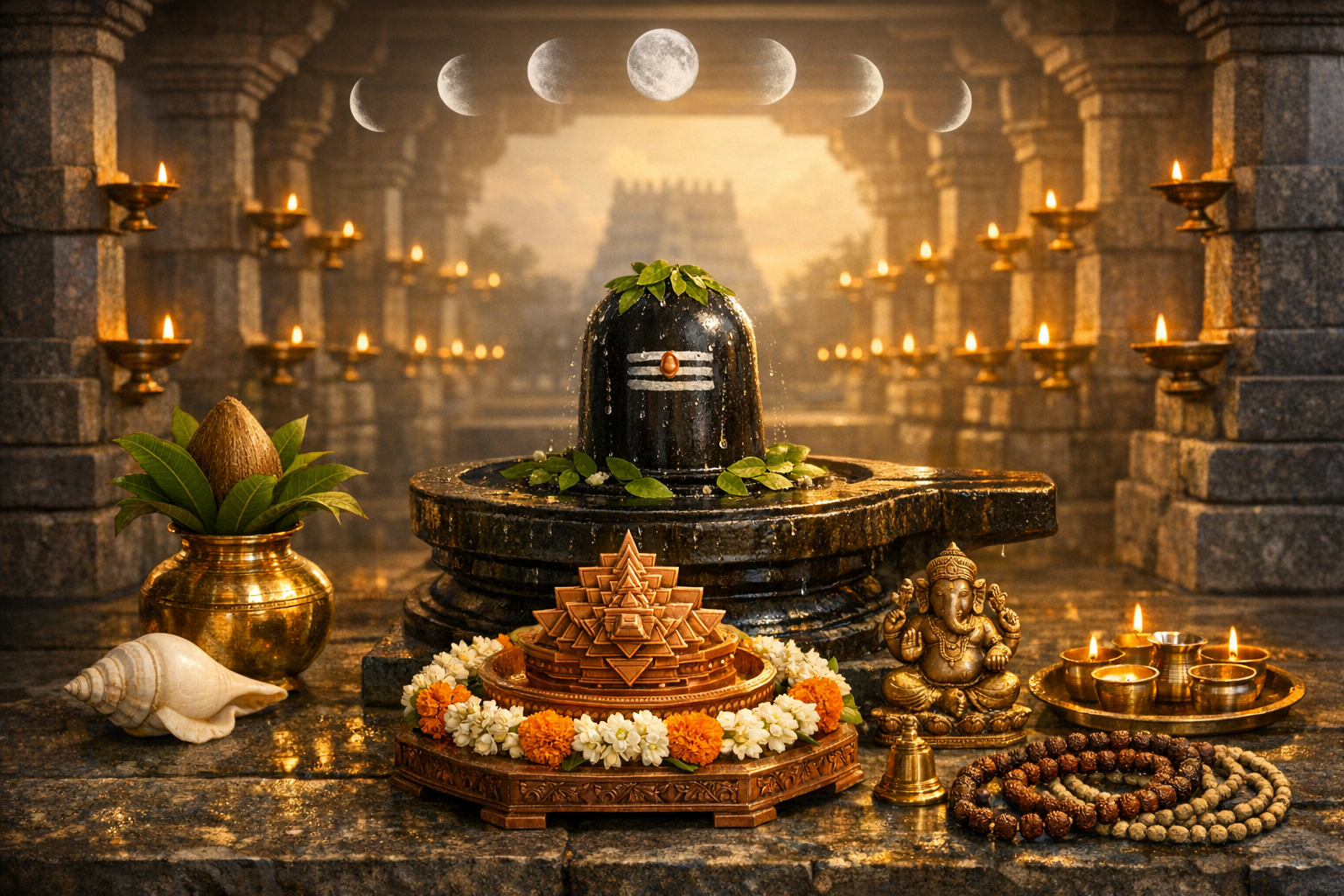
March 2026 at Kanchi Kamakoti Peetham in Kanchipuram spans Falgun Maas – Chaitra Maas (North), Phalguna Masam – Chaitra Masam (Telugu, Kannada, Marathi, Gujarati), Falgun Mash – Chaitra Mash (Bengali), and Tamil Masi – Panguni. The month’s rhythm is set by tithiEkadashi, Pradosham, Purnima, Amavasya, and Sankashtirather than fixed solar dates, so devotees should consult…
-
Nagabharana of Venkateswara Swamy: Adisesha’s Golden Embrace on Tirumala’s Divine Shoulders

The Nagabharana of Venkateswara Swamytwin golden serpents resting on the Lord’s shouldersembodies Adisesha’s protective presence in Tirumala’s Vaishnava tradition. This in-depth exploration explains its theological meaning, Agamic grounding, and South Indian craftsmanship, while showing how ornament becomes lived theology in darshan. It connects naga symbolism to Puranic narratives and to broader Dharmic motifs found in…
-
Guardians at the Village Edge: Ayyanar’s Terracotta HorsesHistory, Ritual, Symbolism
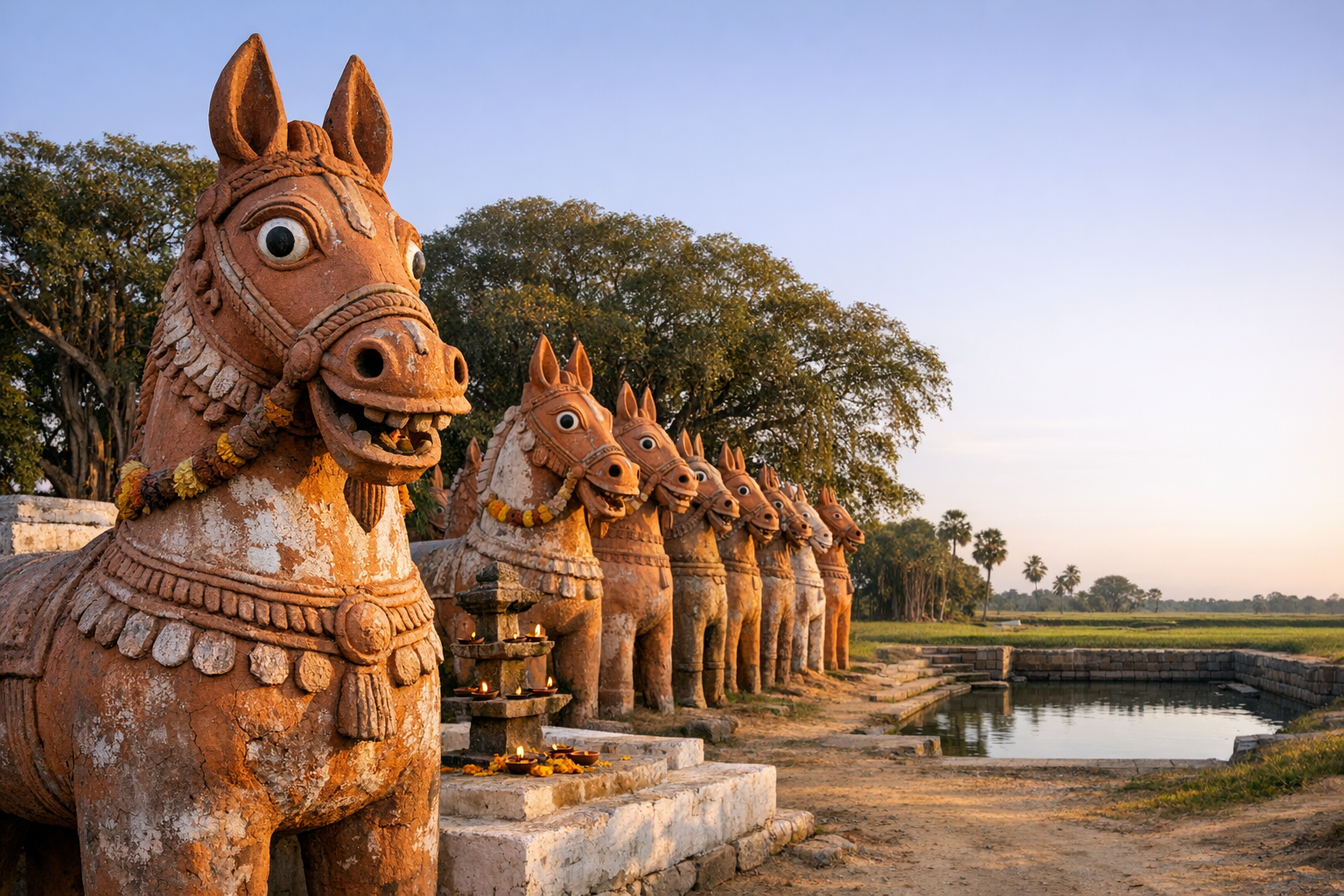
Across rural Tamil Nadu, monumental terracotta horses stand guard as votive offerings to Ayyanar, the village boundary-keeper whose protection encircles fields, groves, and water. This long-form, research-driven overview explains the history, iconography, and ritual ecology of Ayyanar worship, showing how art, craft, and community cohere into a living heritage system. Readers will learn how Velar/Kuyavar…
-
Masi Magam 2026 at Kumbakonam’s Chakrapani Temple: Rituals, Theerthavari, and Sacred Significance

Masi Magam 2026 at Kumbakonam’s Chakrapani Temple will be held on 2 March 2026, aligning the full Moon with Magha Nakshatra for a day of ritual immersion and renewal. The festival centers on the theerthavari of the utsava-murti, framed by Vedic chant, abhishekam, and deepa-aradhana within Kumbakonam’s storied temple-tank network. Devotees value this observance for…
-
Mylapore Kapaleeswarar Brahmotsavam 2026: Dates, Rituals, and Panguni Uthiram Complete Guide
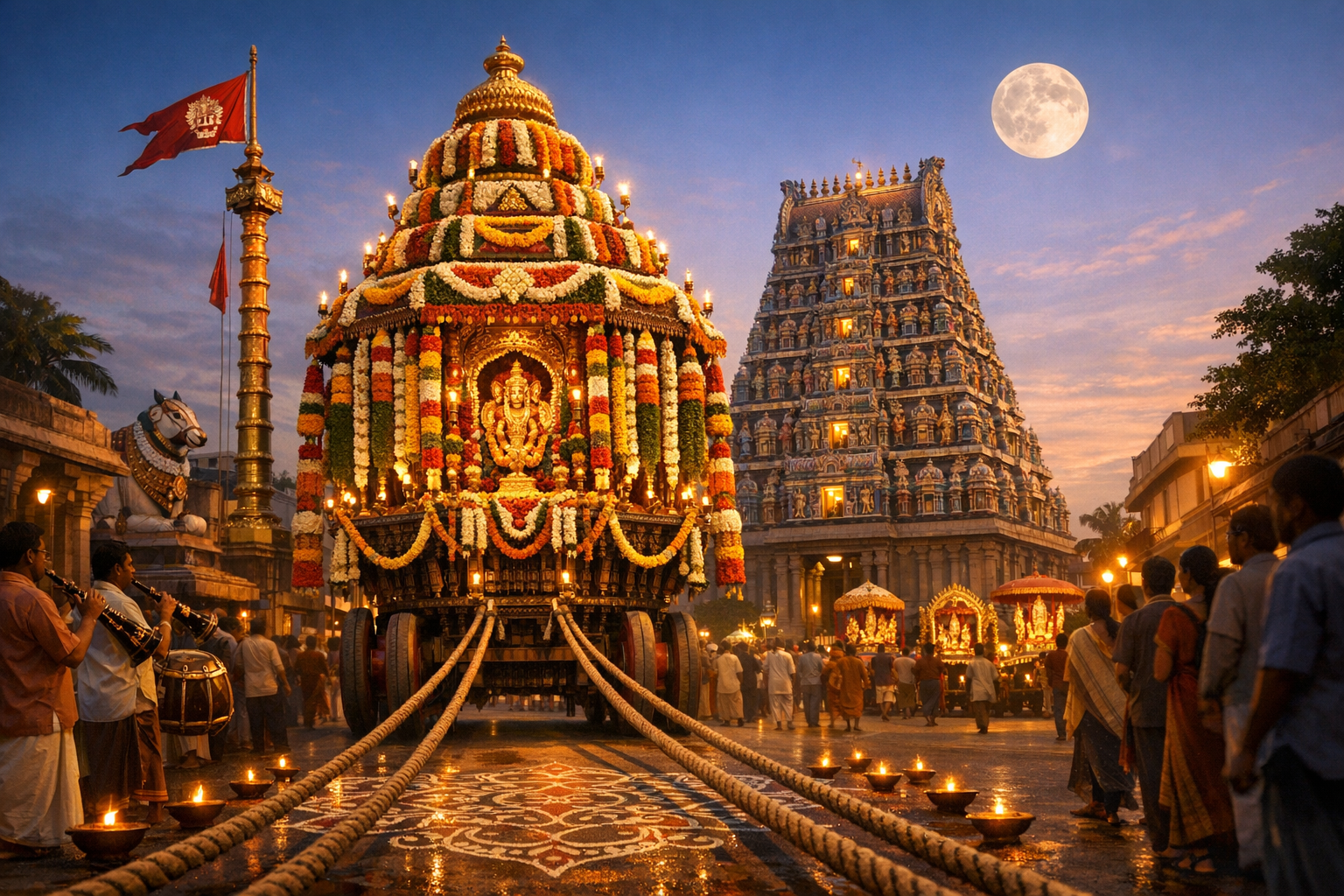
Mylapore Kapaleeswarar Temple Brahmotsavam 2026 spans March 23 to April 1, aligning with Panguni Uthiram and offering a complete arc of ritual intensity and community celebration in Chennai. The festival opens with Dhwajarohanam at 7.30 am on March 23, features Kapaleeswarar Ratholsavam on March 29, and culminates on April 1. Signature processions, including the revered…