
-
Shiva’s Third Eye and the Ashes of Desire: Profound Symbolism Behind Kamadeva’s Fall

Shiva’s incineration of Kamadeva is a profound Hindu symbol of transforming craving into clarity. The third eye represents the fire of insight (jñāna-agni) that burns compulsion to ash (vibhūti) without rejecting love or life. Variations across Puranic and poetic retellings agree on a core teaching: desire is refined, not denied. The story models how tapas,…
-
Maa Durga’s Shankha: Sacred Sound of Liberation, Dharma, and Victory Over Evil

The Shankh (Shankha) in Maa Durga’s hand symbolizes the sacred sound that restores dharma and proclaims victory over adharma. Gifted by Lord Varuna, it links purity, water, and cosmic order to Durga’s restorative power in the Devi Mahatmyam. As a manifestation of nāda and the primordial Om, the conch dispels fear, clarifies intent, and anchors…
-
Nabapatrika and Shakambhari: How Durga Puja Honors Earth’s Harvest and Sacred Ecology
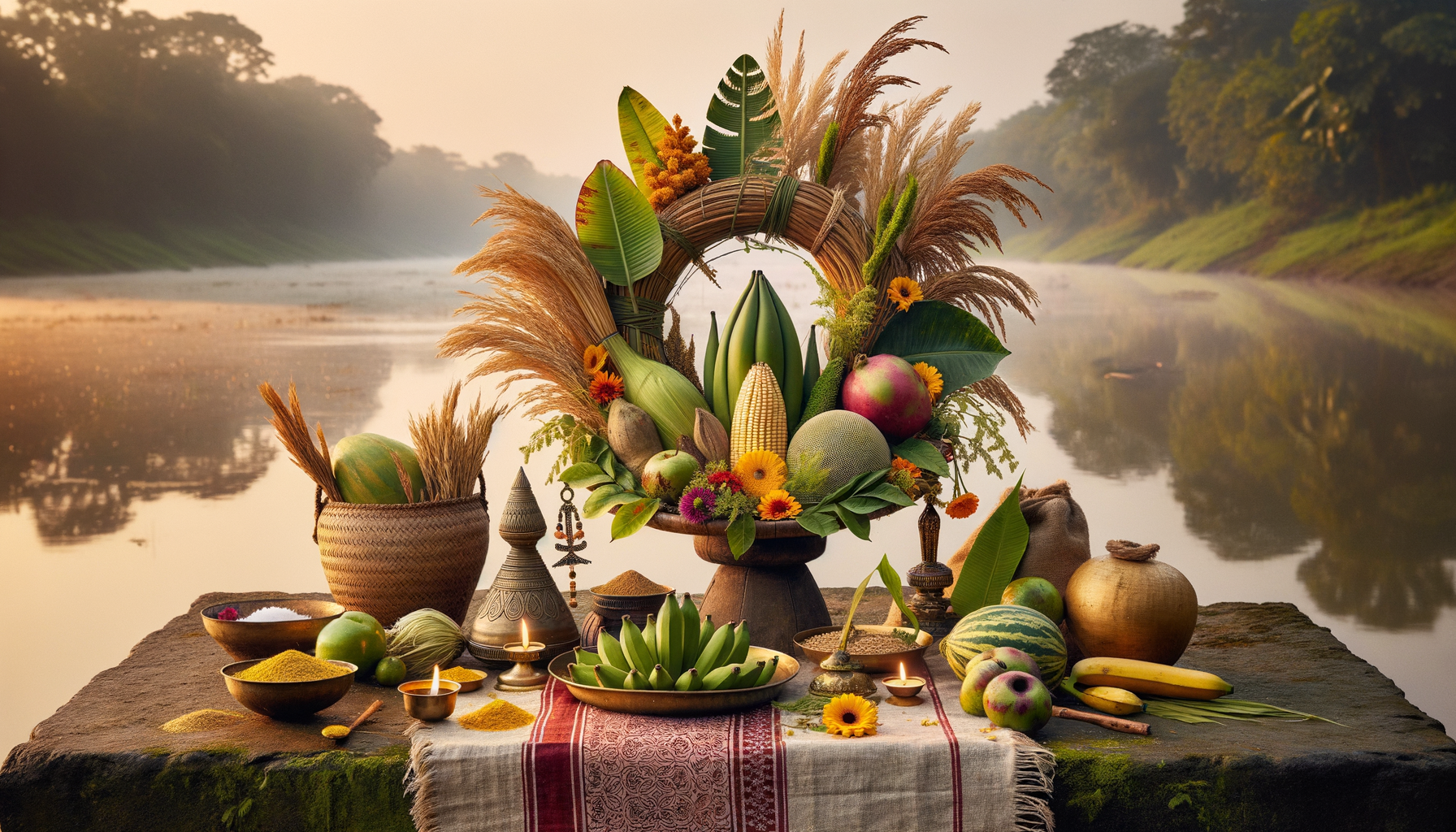
Nabapatrika and Shakambhari reveal Durga Puja’s living dialogue with agriculture and ecology. Through nine sacred plants bathed at dawn, households ritualize gratitude for soil, seed, and monsoon rhythms in the Ganga-Brahmaputra delta. Shakambhari Devi’s nourishment of the world through vegetation broadens this vision into an ethic of biodiversity and care. The rites resonate across dharmic…
-
Durga’s Sacred Mace (Gada): A Powerful Emblem of Strength, Justice, and Living Dharma

The gada (mace) in Goddess Durga’s hands signifies ethical strength guided by justice and compassion. Rooted in the Devi Mahatmya, it recalls how Yama endowed Durga with the power to restore order against adharma. The mace symbolizes grounded resolve, impartial accountability, and the stabilizing force of dharma in public and personal life. Beyond martial imagery,…
-
Unveiling Tripura Sundari: Profound Symbolism of Shodashi on Shiva’s Navel Lotus
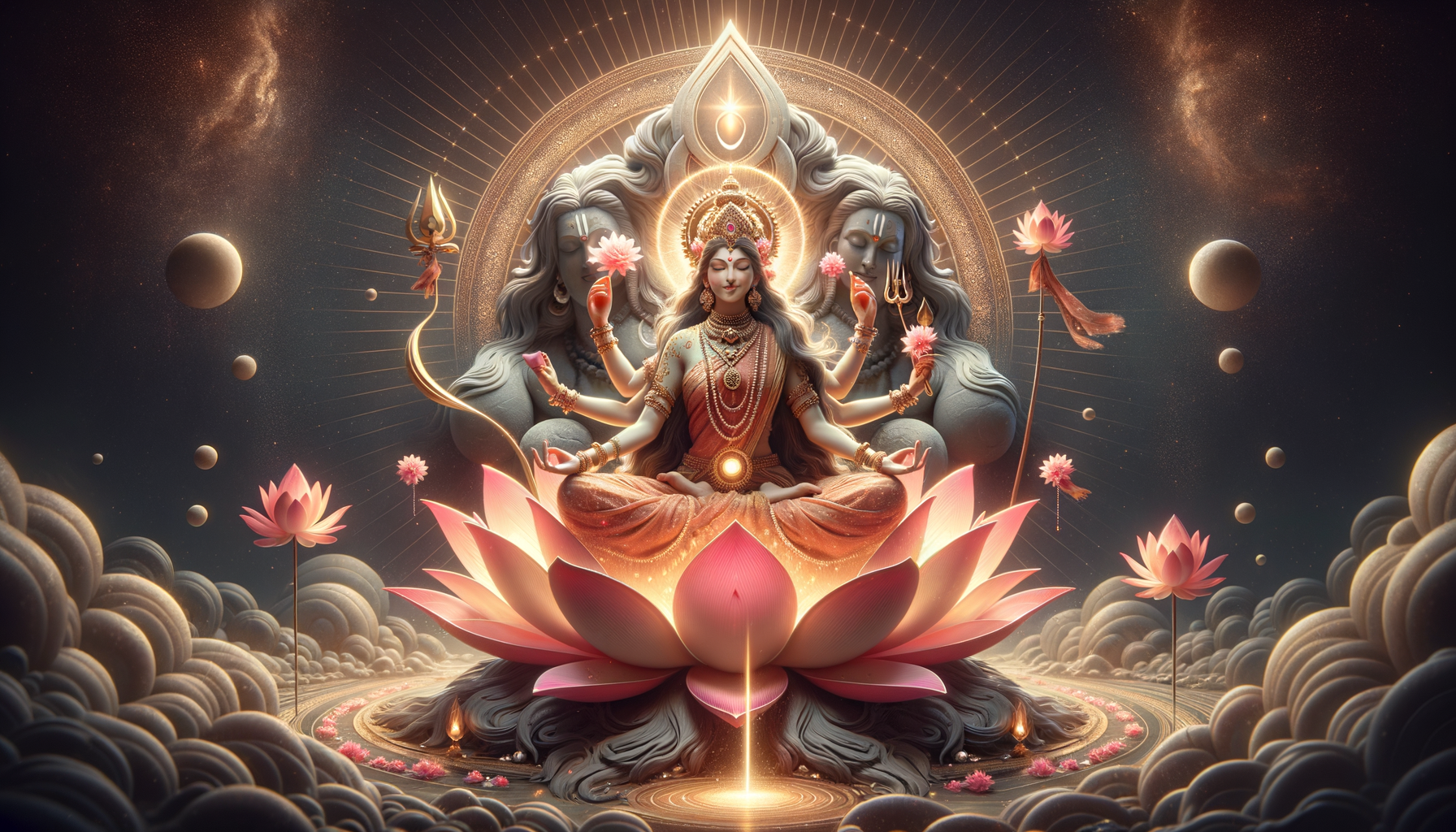
This exploration unpacks the symbolism of Goddess Shodashi (Tripura Sundari) seated on a lotus above Shiva’s navel, showing how Shakti’s luminous wisdom flowers from the stillness of consciousness. It clarifies the lotus as a shared dharmic emblem of purity and awakening across Hinduism, Buddhism, Jainism, and Sikhism. Readers gain a coherent understanding of Shiva’s nabhi…
-
Nagapasha in Durga’s Hand: Unleashing Conscious Power and the Serpent’s Victory Over Evil

The serpent—Sarpa—in Goddess Durga’s hand is not mere ornament but Nagapasha, the symbol of conscious power and ethical control. It signifies the binding of ego and disorder through lucid awareness rather than brute force. A yogic reading links the serpent to Kundalini rising from the muladhara through the sushumna nadi, illustrating disciplined Shakti in service…
-
Sacred Hearth of Bengal: How the Kitchen Stove Embodies Goddess Manasa’s Protection

The sacred hearth in rural Bengal carries a profound symbolism: the kitchen stove (chulha) doubles as a domestic altar that invokes the protection of Goddess Manasa. This article explains who Manasa is—Bishahari, Jagat Gauri, Padmavati—and why her worship intensifies during the monsoon. It shows how daily acts of cleaning, marking, and offering from the first…
-
Elephant, Swan, or Horse? Decoding Vishwakarma’s Vahana and Its Sacred Symbolism
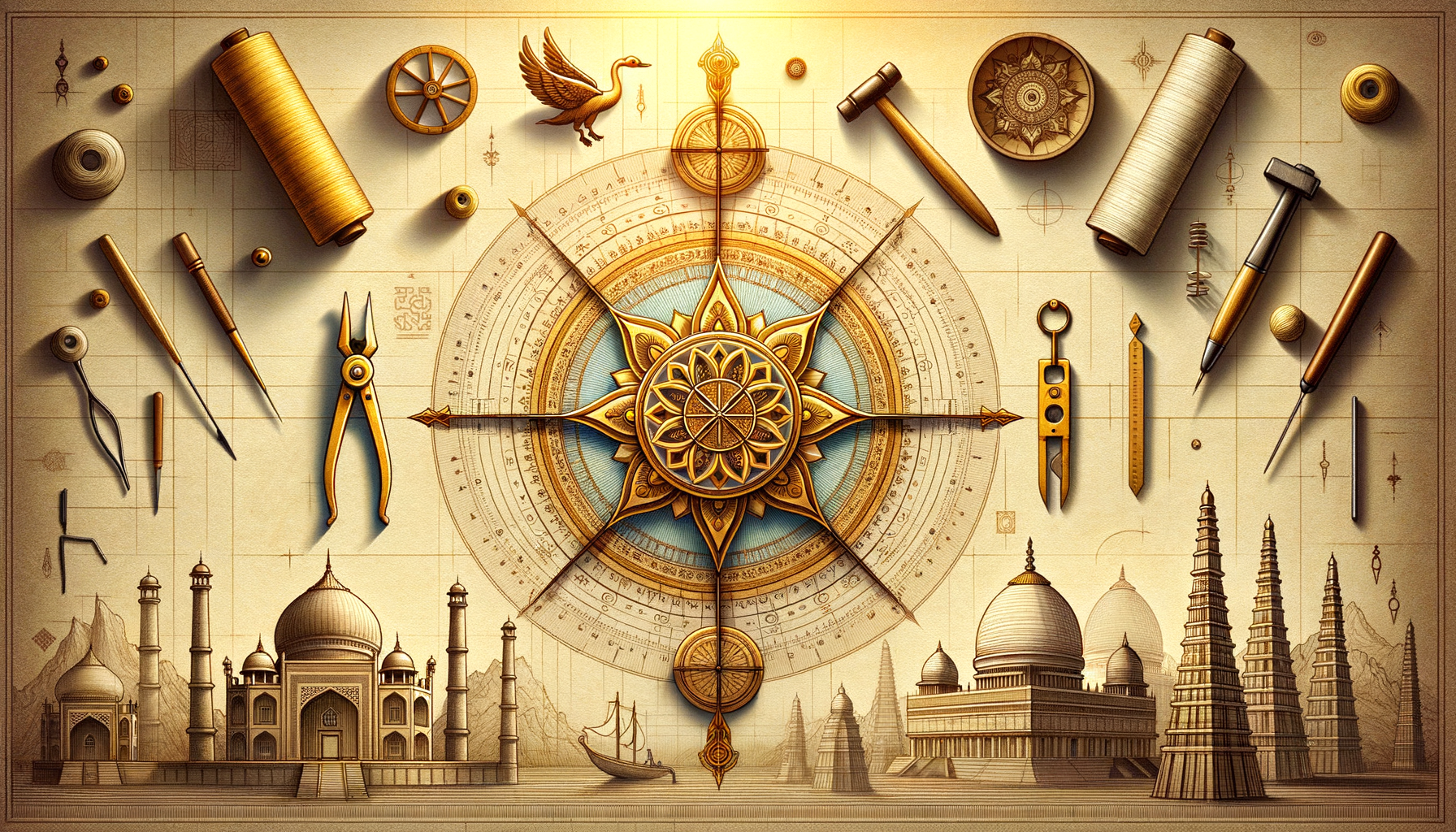
Vishwakarma’s vahana is not fixed to a single form; Hindu iconography across regions presents the divine architect with an elephant, a swan, or a horse. Each vehicle encodes a distinct facet of sacred craftsmanship: the elephant symbolizes stability and strength, the swan represents discernment and knowledge, and the horse conveys mobility and industrious energy. Puranic…
-
Kabandha as Kali’s Vahana: Tantric Symbolism of Ego-Transcendence and Inner Liberation
This exploration unpacks the esoteric image of Kabandha as Kali’s vahana as found in certain Shakta-tantric interpretations. It clarifies how headlessness symbolizes cutting through ego, aligning the body-mind as the disciplined “vehicle” of Shakti. Readers discover how this symbolism resonates with shared dharmic insights across Hindu, Buddhist, Jain, and Sikh traditions, emphasizing humility, fearlessness, and…
-
Vajra in Durga’s Hands: Indestructible Power, Sacred Courage, and Dharmic Unity
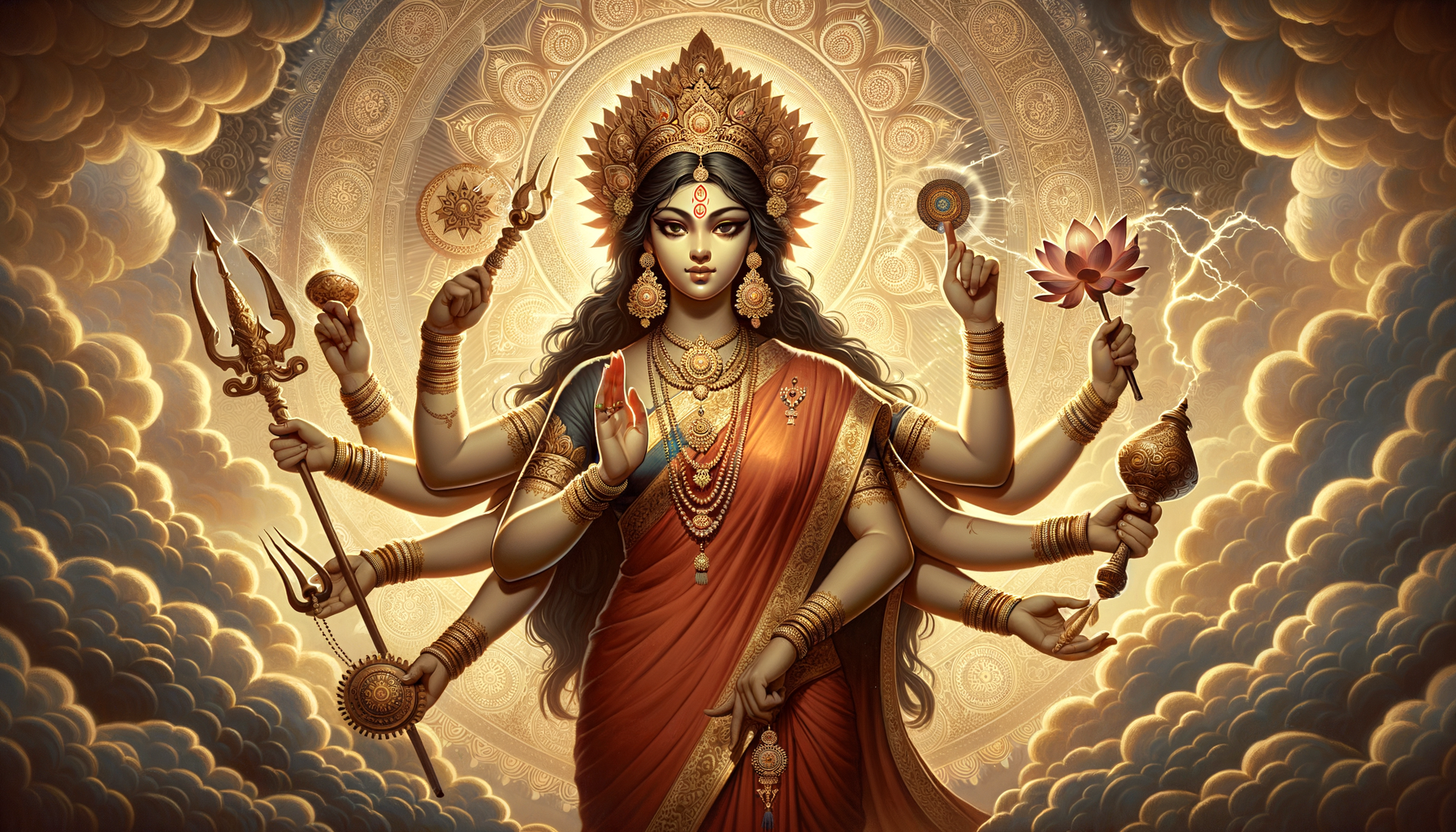
The Vajra in Goddess Durga’s hands symbolizes indestructible power guided by wisdom, as narrated in the Devi Mahatmyam of the Markandeya Purana. Indra’s gift of the thunderbolt links Durga’s protective mission with earlier Vedic and puranic themes of sacrifice, courage, and cosmic balance. Readers gain a clear understanding of how the Vajra denotes sudden illumination,…
-
Durga’s Bow and Arrow: Unveiling the Power of Universal Will and Spiritual Discipline
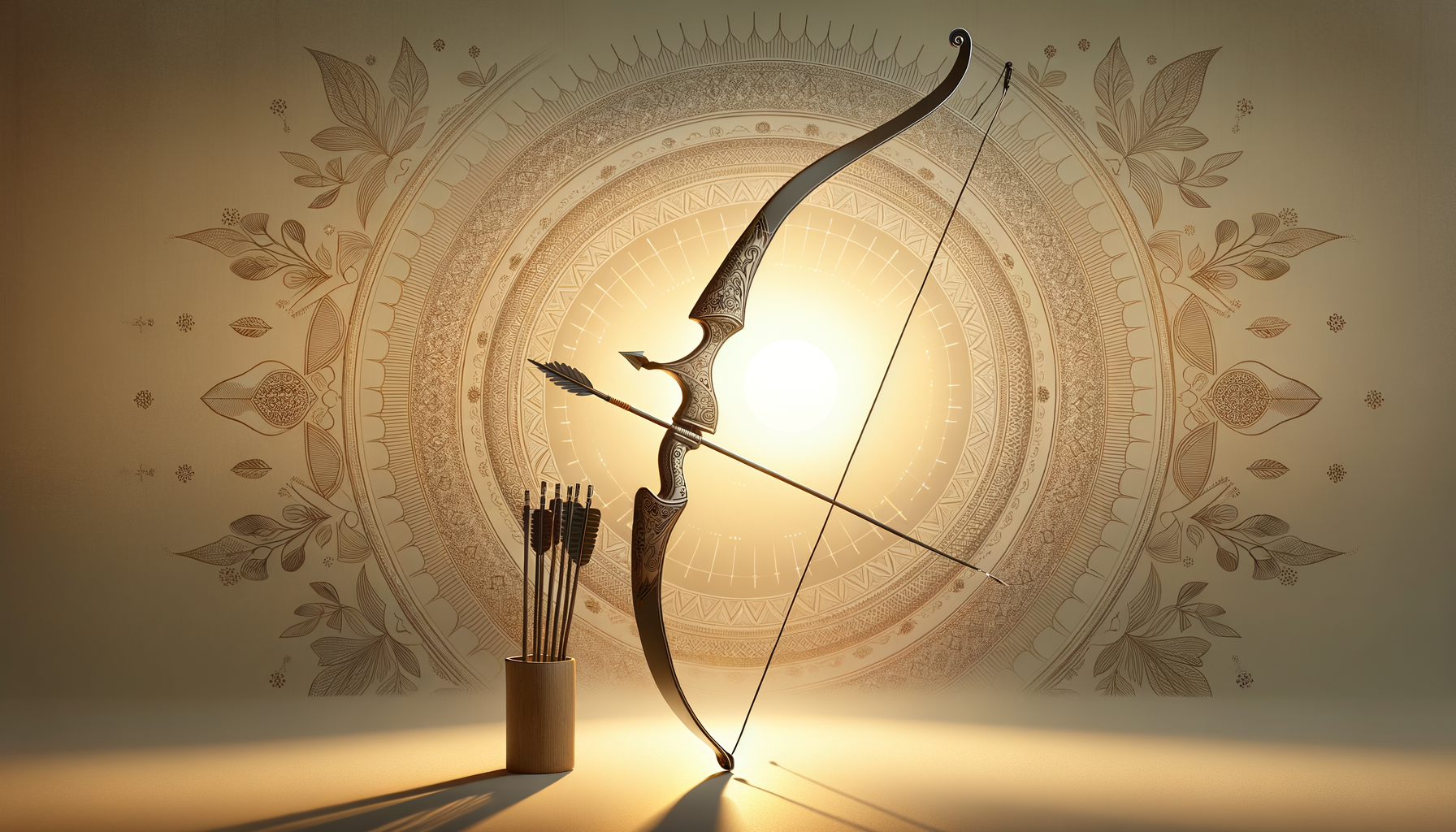
Goddess Durga’s bow and arrow symbolize the union of universal will and disciplined focus. The bow represents restrained power aligned to dharma, while the arrow embodies one-pointed concentration and purposeful action. Read through yoga, they mirror pratyāhāra, dhāraṇā, and dhyāna culminating in right action. During Navaratri and Durga Puja, this iconography becomes a practical guide…
-
Lotus of Wisdom in Durga’s Hand: Padma, Shakti, and the Defeat of Mahishasura
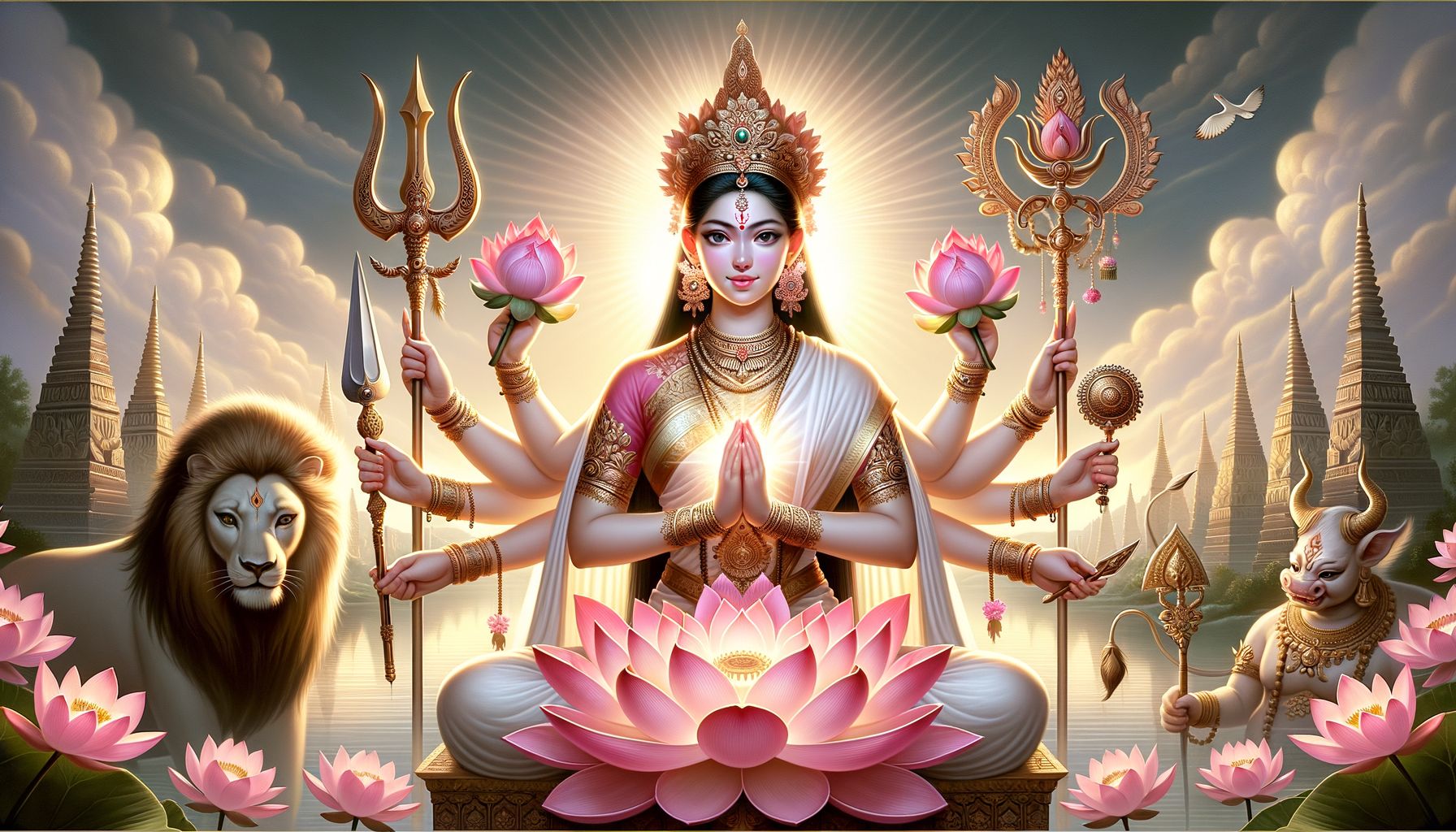
Goddess Durga’s Padma (lotus) in the Devi Mahatmya is more than ornament—it is a compass of consciousness guiding Shakti’s righteous action against Mahishasura. The lotus’s rise from mud to light illustrates clarity amidst chaos and courage tempered by wisdom. Across Hinduism, Buddhism, Jainism, and Sikhism, the shared lotus motif promotes unity, detachment, and compassionate awareness.…
-
Mahamaya’s Triumphant Illusion: How Adi Shakti Humbled Madhu-Kaitabha and Ego
The Devi Mahatmyam’s account of Mahamaya and the defeat of Madhu–Kaitabha illuminates how Adi Shakti restores balance when arrogance threatens creation. The narrative shows Maya as both veil and revealer, empowering discernment (viveka) and humility over ego. Readers gain a clear retelling of the episode, a careful unpacking of Hindu symbolism, and practical ways to…
-
Kapalini Kali Symbolism Decoded: The Skull-Bearer’s Fierce Compassion and Inner Freedom

Kapalini, the Skull-Bearer form of Goddess Kali, is more than a fearsome image; it is a rigorous teaching on impermanence, ego-transcendence, and compassion. The kapala (skull-cup) symbolizes the power to receive and transform fear, while the mundamala (garland of heads) gestures to the Sanskrit varnamala and the severing of ignorance. Read in context, these symbols…
-
Ekajata’s Single Braid: Powerful Symbolism of Focus, Protection, and Supreme Consciousness
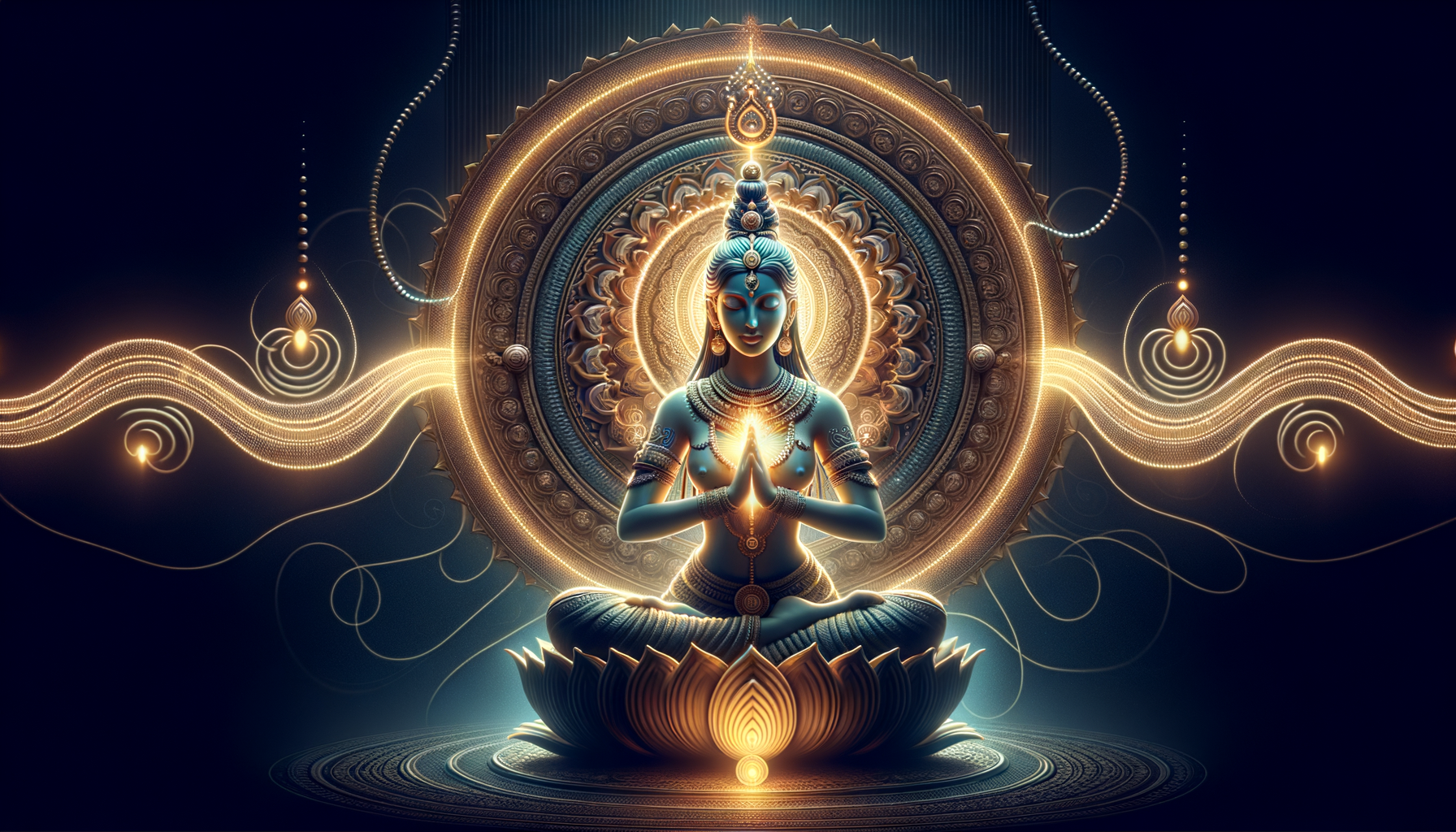
Goddess Ekajata’s single braid is a concentrated teaching in Hindu Tantra: a symbol of supreme consciousness, one-pointed focus (ekagrata), and vigilant spiritual protection. Read as Tantric anatomy, it reflects the unification of ida and pingala within the sushumna nadi, supporting sustained dhyana and the ascent of Kundalini. The braid’s tightly bound form evokes vows, secrecy,…
-
Hindu Gods and Their Vahanas: Timeless Symbolism, Deeper Meaning, and Dharma in Daily Life
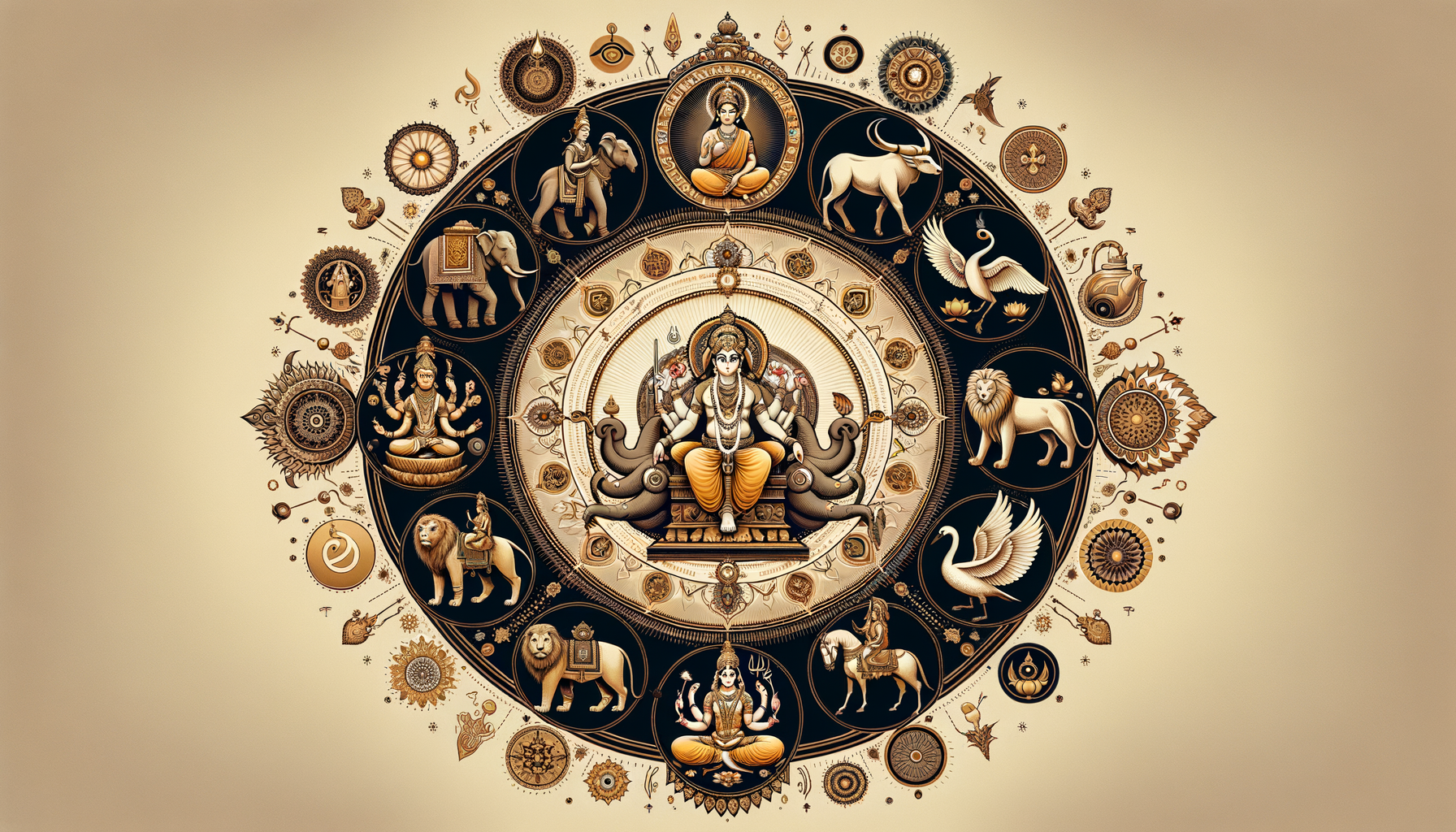
The vahanas (vehicles) of Hindu gods are not literal transport but layered symbols that teach ethics, ecology, and inner balance. Each deity–vahana pairing encodes a virtue to cultivate and an impulse to master, turning metaphysical insight into daily practice. Ganesha’s mouse models focused intellect; Shiva’s Nandi, disciplined strength; Vishnu’s Garuda, protective clarity; Durga’s lion or…
-
Severed Head of Daksha: Powerful Symbolism of Ego, Humility, and Sacred Reconciliation
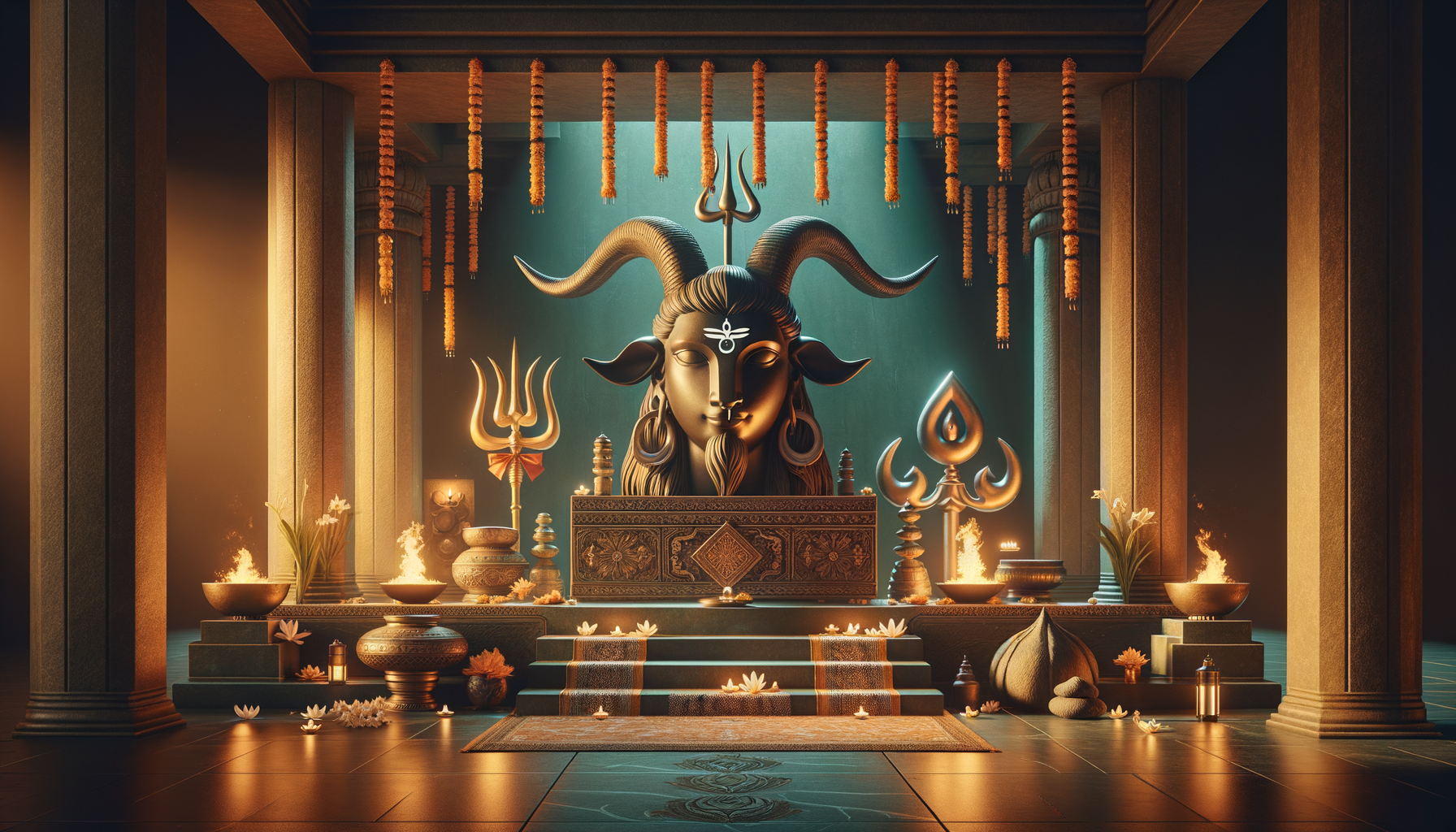
This analysis examines the Daksha Yajna narrative to explain why the severed head of Daksha endures as a powerful Hindu symbol of ego-transformation and humility. It clarifies how the head signifies pride cut away and how the goat’s head marks renewed, service-oriented understanding. The discussion connects ritual and devotion, showing that intention and reverence outweigh…
-
Six-Armed Dhanalakshmi Decoded: Powerful Symbols of Fearlessness, Prosperity, and Dharma
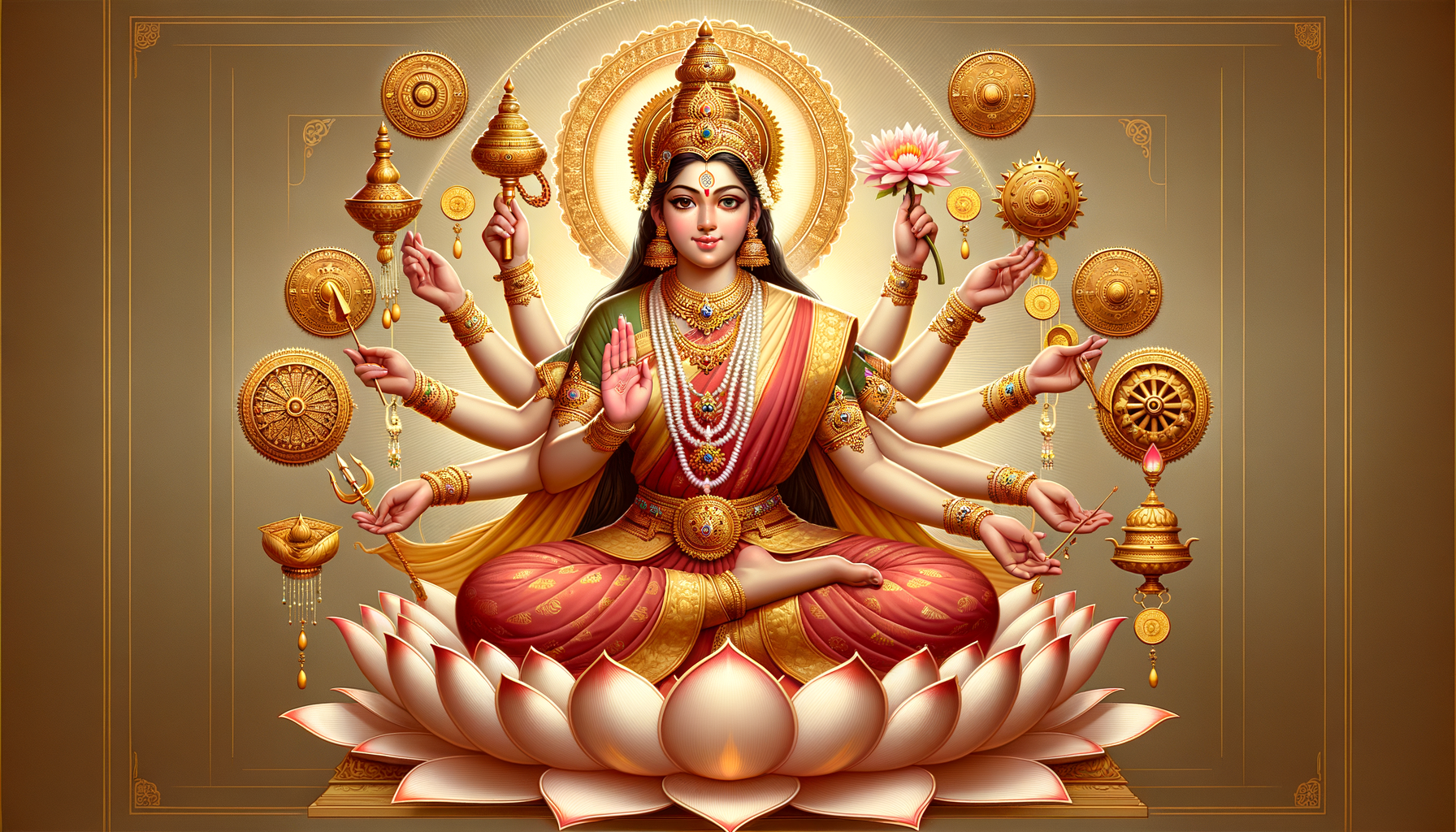
This article clarifies the two principal iconographic forms of Dhanalakshmi—four-armed and six-armed—and decodes the meaning of each sacred attribute. Readers learn how the chakra, padma, shankha, kalasha, bow and arrow, and abhaya mudra together convey prosperity grounded in dharma. The discussion highlights practical applications: ethical earning, mindful use of resources, and generosity. It also connects…
-
Kali Yantra Unveiled: Sacred Geometry, Bindu Power, and the Living Symbolism of Shakti
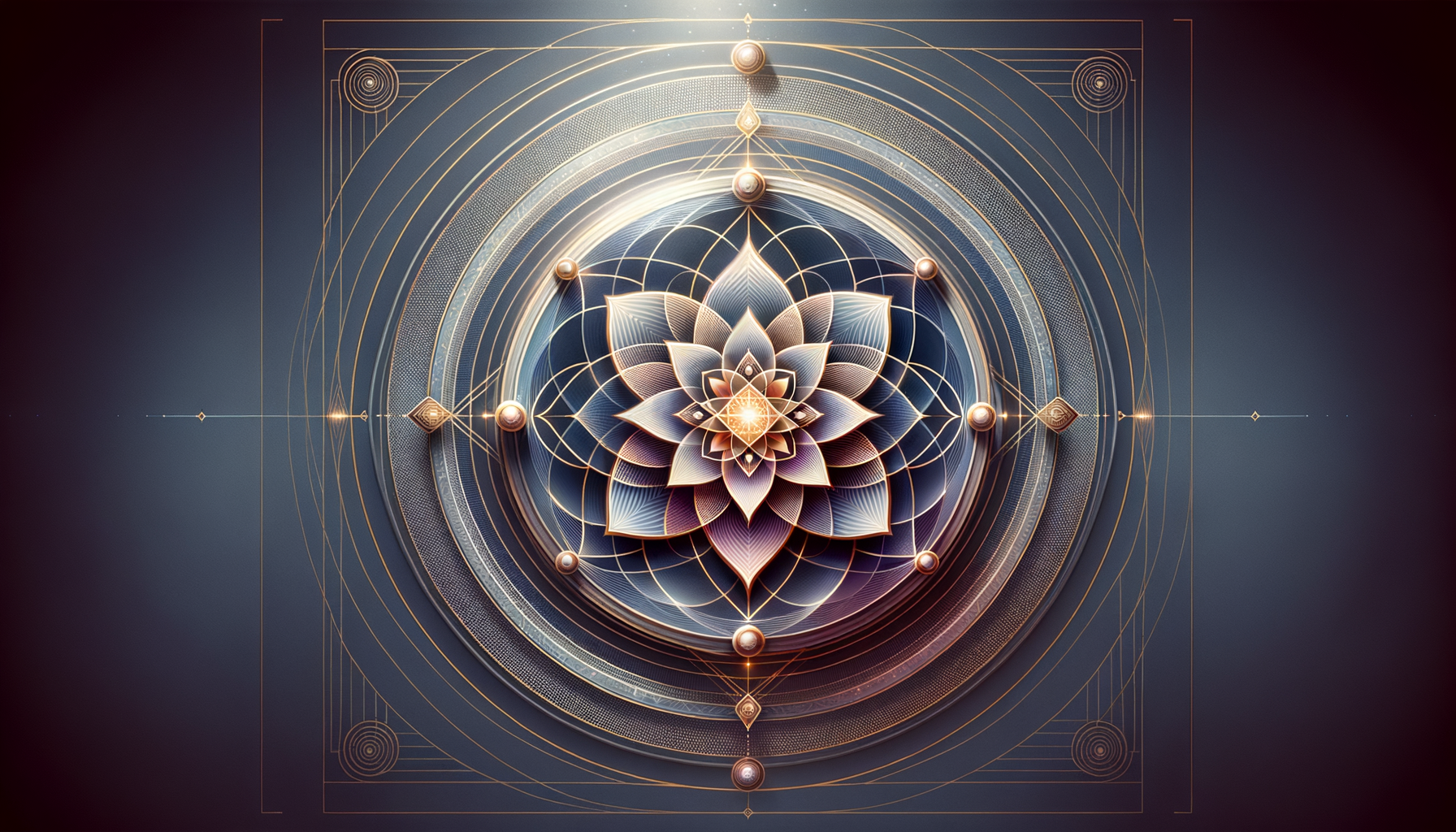
The Kali Yantra presents a precise map of sacred geometry—square, circles, lotus petals, triangles, and a central bindu—guiding attention from multiplicity to unity. The bindu functions as a powerful focal point that many practitioners experience as a gateway to calm, clarity, and compassion. Each geometric form carries layered symbolism: the bhupura stabilizes, circles harmonize, lotus…