
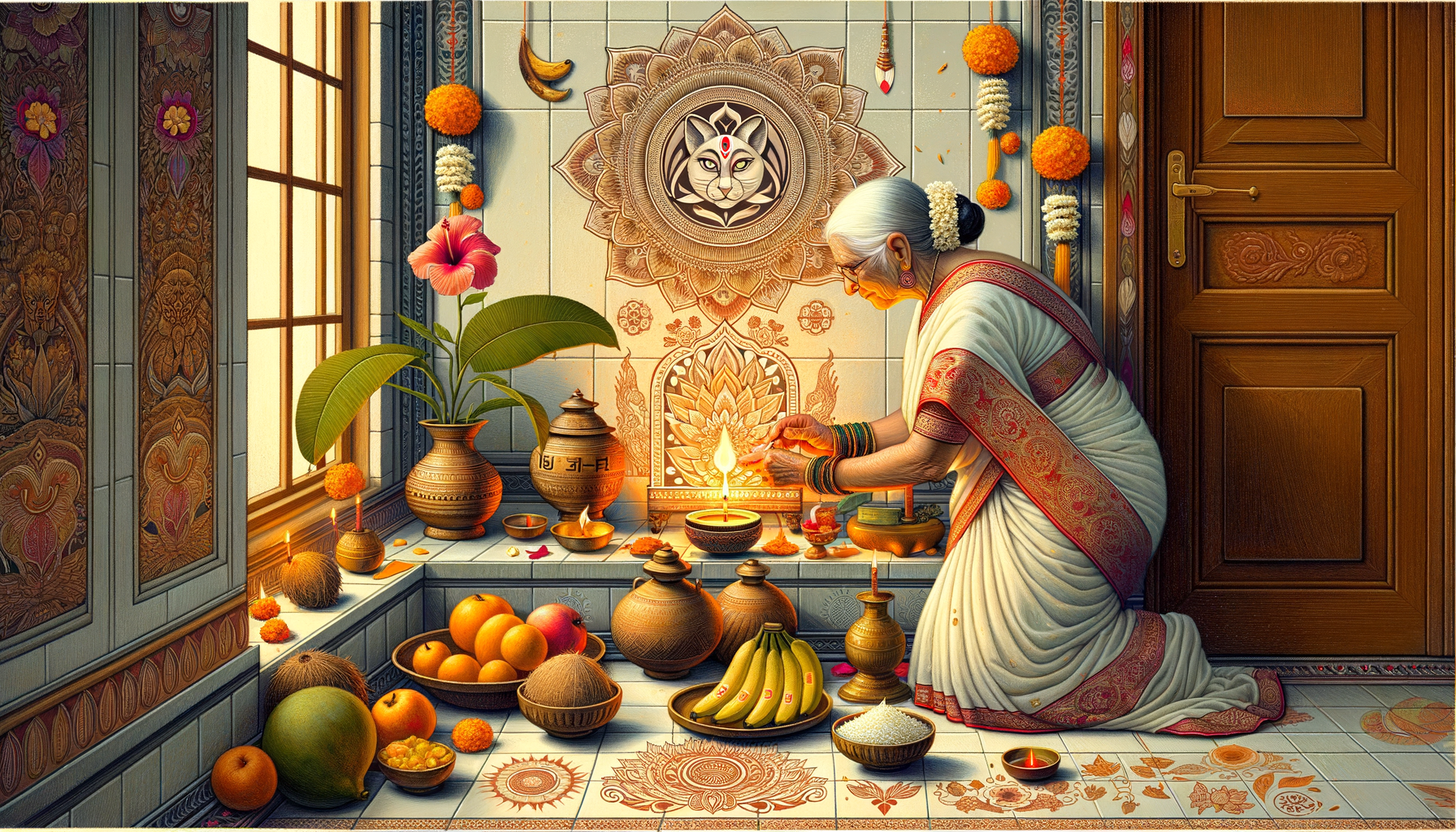
Sashti fasting in the eastern regions of the Indian subcontinent is a devotional observance dedicated to Goddess Sashti, a compassionate manifestation of Goddess Durga. Across Bengal and neighboring areas, it is kept on every Shukla Paksha Sashtithe sixth lunar day during the waxing phase of the moonand is especially cherished during Durga Puja. Within this cycle of vows and blessings, the rite is closely associated with child protection, maternal care, and family well-being.
In the sacred calendar month of Ashwin, the narrative recalls Parvati arriving at her parental home, the abode of King Himavan, accompanied by her children Ganesha and Kartik. This homecoming, celebrated as a tender, familial moment, frames the opening of the festival on Mahasashti and anchors the rite in lived domestic affection central to Bengal’s Durga Puja culture.
Moved by deep concern and love for her grandchildren, Mother Menaka (also known as Menā or Mainā), consort of Himavan and mother of Parvati, is remembered as the first to observe the Sashti fast. She offered the vrata to Goddess Sashti, invoking protection, long life, and well-being for Ganesha and Kartikand by extension, for all children under the family’s care. The account endures because it captures the emotional heart of the festival: the bonds between generations and the safeguarding of the young.
Accounts describe the observance in simple, sattvic terms: maintaining a disciplined fast, bathing at dawn, lighting a lamp, and offering fruits, flowers, and clean water while reciting prayers to Goddess Sashti. Many households also recount or listen to the Sashti brata katha, reinforcing the ethical aim of the fastchild welfare, maternal responsibility, and intergenerational harmony. The ritual is less about austerity for its own sake and more about intentional remembrance and care.
From this affectionate precedent set by Menaka, Sashti fasting has endured as a household vow across Bengal and the wider eastern cultural sphere. Mothers and grandmothers often lead the rite, and families collectively direct their intentions toward children’s health, learning, and character, mirroring the blessings once sought for Ganesha and Kartik. In many homes, stories of Menaka’s concern are retold to young listeners, helping them connect mythology to everyday life.
While Shukla Paksha Sashti recurs monthly, the Ashwin observance during Durga Puja carries particular cultural resonance. It aligns devotion to Goddess Durga with reverence for Goddess Sashti, uniting festival mythology with domestic practice and binding the grandeur of public celebration to the quiet sanctity of the home. In this way, the rite bridges communal festivity and intimate family prayer.
In contemporary practice, families adapt the fast with care for health and circumstancesome maintaining a full-day upavasa, others choosing a partial fast or a sattvic dietwhile preserving its core intention. The emphasis remains on gratitude, disciplined remembrance, and prayerful dedication to children and future generations. Such adaptability ensures the vrata’s continuity without compromising well-being.
The values expressed through Sashti fastingnon-harm, compassion, disciplined self-cultivation, and familial responsibilityresonate across the broader dharmic traditions of Hinduism, Buddhism, Jainism, and Sikhism. Though the ritual forms differ, shared commitments to ethical conduct, service, and the protection of life encourage unity in spirit and mutual respect. Recognizing these convergences strengthens cultural understanding and intercommunity harmony.
By situating Menaka’s vow within the Ashwin homecoming of Parvati, Ganesha, and Kartik, the tradition offers a living template for devotion rooted in everyday affection. In honoring Goddess Sashti on every Shukla Paksha Sashti, especially during Durga Puja, communities in Bengal and beyond reaffirm an enduring message: caring for children and safeguarding family bonds is itself a sacred act.
Inspired by this post on Hindu Blog.
