Category: Spiritual Insight

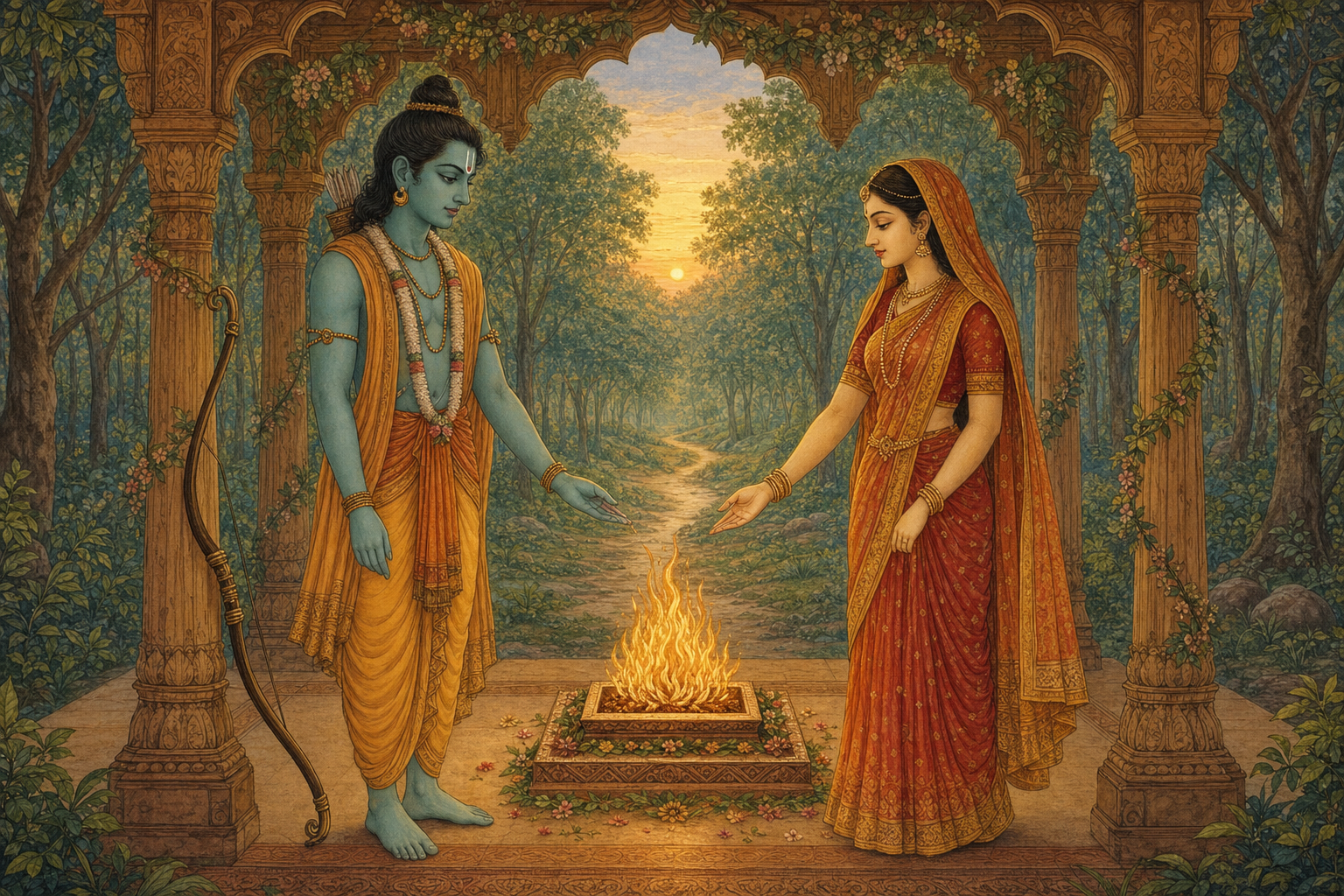
  • Parashurama and Rama Together? Demystifying Vishnu’s Avatars with Timeless Wisdom

    The perceived paradox of Parashurama and Rama appearing at the same time dissolves when viewed through core Hindu principles. The avatar doctrine allows multiple divine manifestations to operate simultaneously, each restoring dharma in a distinct way. Parashurama’s status as a Chiranjivi explains his presence across yugas, while distinctions between shaktyāveśa (empowered) and pūrṇa (full) avatars…

  • From Childhood Trauma to Inner Strength: How Brainspotting Transforms Darkness into Healing

    From Childhood Trauma to Inner Strength: How Brainspotting Transforms Darkness into Healing

    This essay examines how Brainspotting—a focused, mindfulness-based, somatic therapy—supports healing from childhood trauma, depression, and dissociation by engaging the nervous system directly. Through a sequence of formative memories, the narrative shows how body-first processing releases nonverbal material that talk therapy alone may not reach. It highlights measurable gains in self-compassion, regulation, and agency, often described…

  • Sixteen Kalas of Purusha in Prashna Upanishad: Awe-Inspiring Insights on Unity and Creation

    Sixteen Kalas of Purusha in Prashna Upanishad: Awe-Inspiring Insights on Unity and Creation

    The Prashna Upanishad’s sixth discourse presents the sixteen kalas of Purusha as a lucid framework for understanding creation and spiritual unity. It shows how discrete aspects—prāṇa, śraddhā, the elements, mind, and ethical disciplines—arise together as expressions of one reality. Readers gain a practical lens for integrating breath, faith, discipline, and action into daily life. The…

  • Drik and Drishya in Advaita Vedanta: Master the Seer–Seen Insight for Inner Clarity

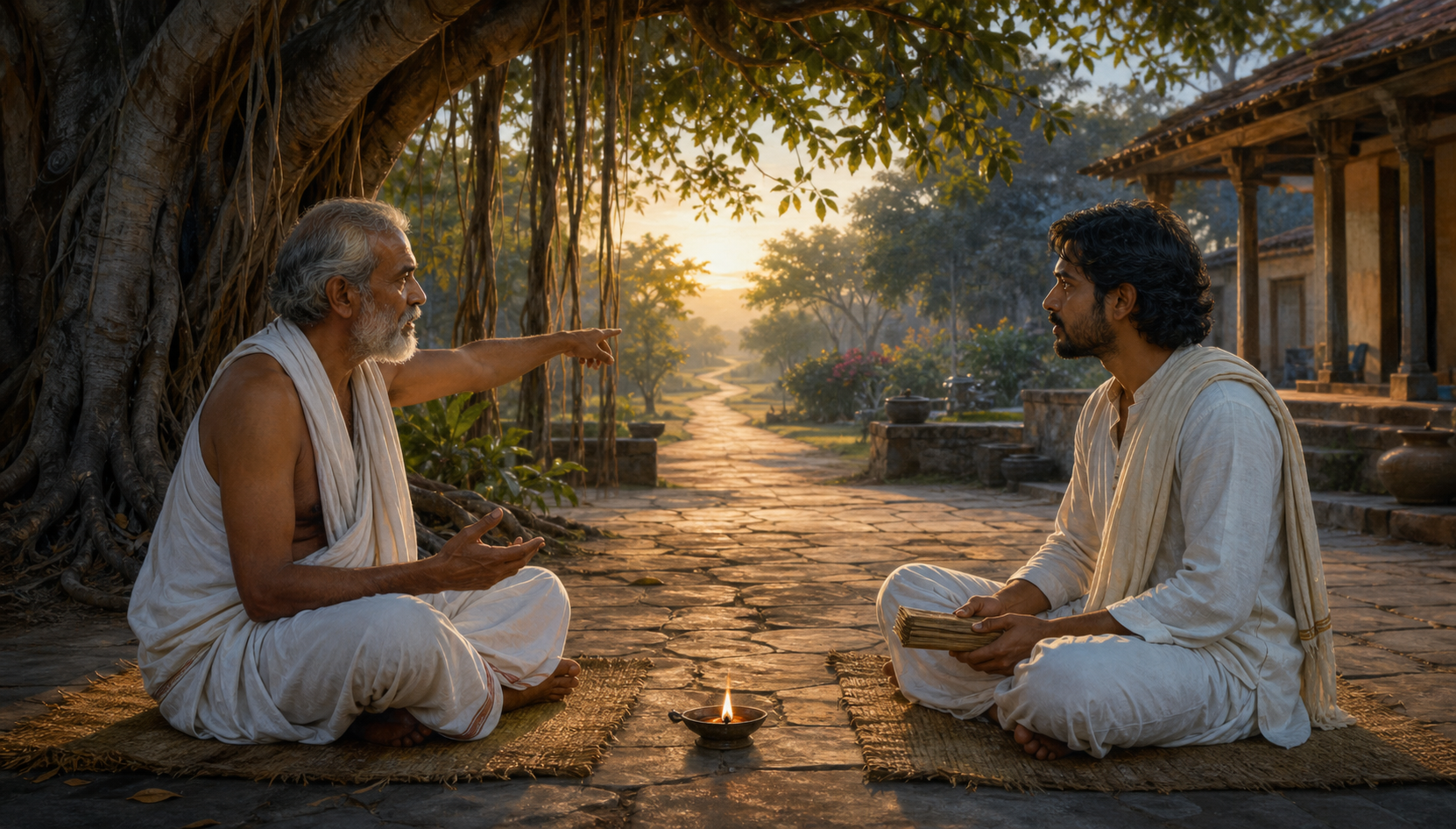
    Drik and Drishya in Advaita Vedanta: Master the Seer–Seen Insight for Inner Clarity

    Advaita Vedanta’s Drik–Drishya teaching clarifies the difference between the seer (subject) and the seen (object) to guide seekers toward Atman, the unchanging witness. By observing that body, senses, thoughts, and emotions are all Drishya, attention naturally returns to the stable Drik. This contemplative method, echoed in the Upanishads through neti neti, strengthens meditation, emotional balance,…

  • Srila Prabhupada’s Compassion in Calcutta: Enduring Leadership Lessons in Vaishnava Care

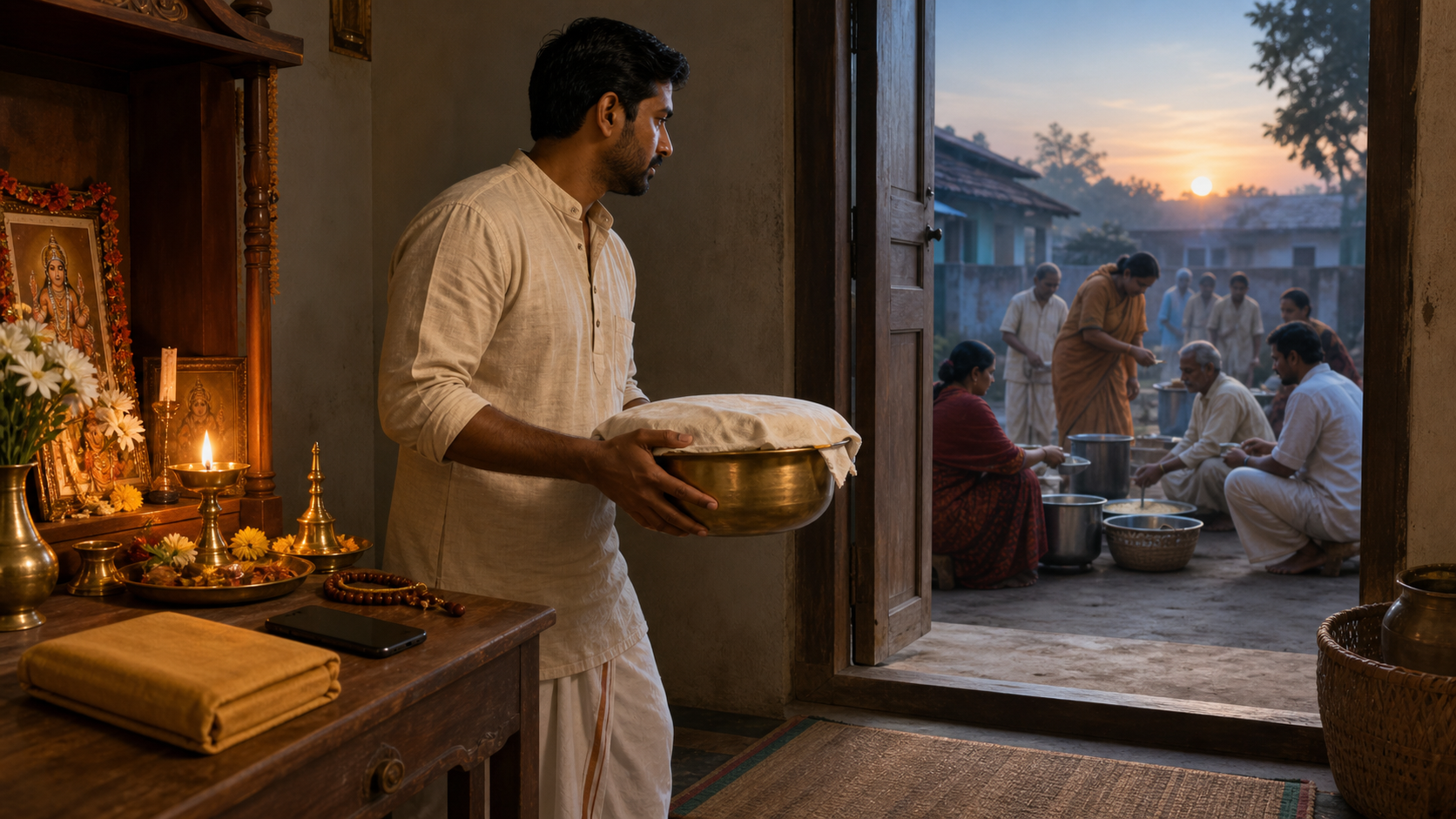
    Srila Prabhupada’s Compassion in Calcutta: Enduring Leadership Lessons in Vaishnava Care

    An early ISKCON incident in Calcutta reveals how Srila Prabhupada prioritized compassionate care over institutional busyness. When severe resource shortages left devotees struggling, he convened an open meeting and reframed priorities toward their welfare. His response to Tamal Krishna Goswami clarified that no plan is legitimate if it disturbs devotees. The episode offers actionable guidance…

  • Self-Surrender to Self-Discovery: Hinduism’s Timeless Path to Inner Freedom and Clarity

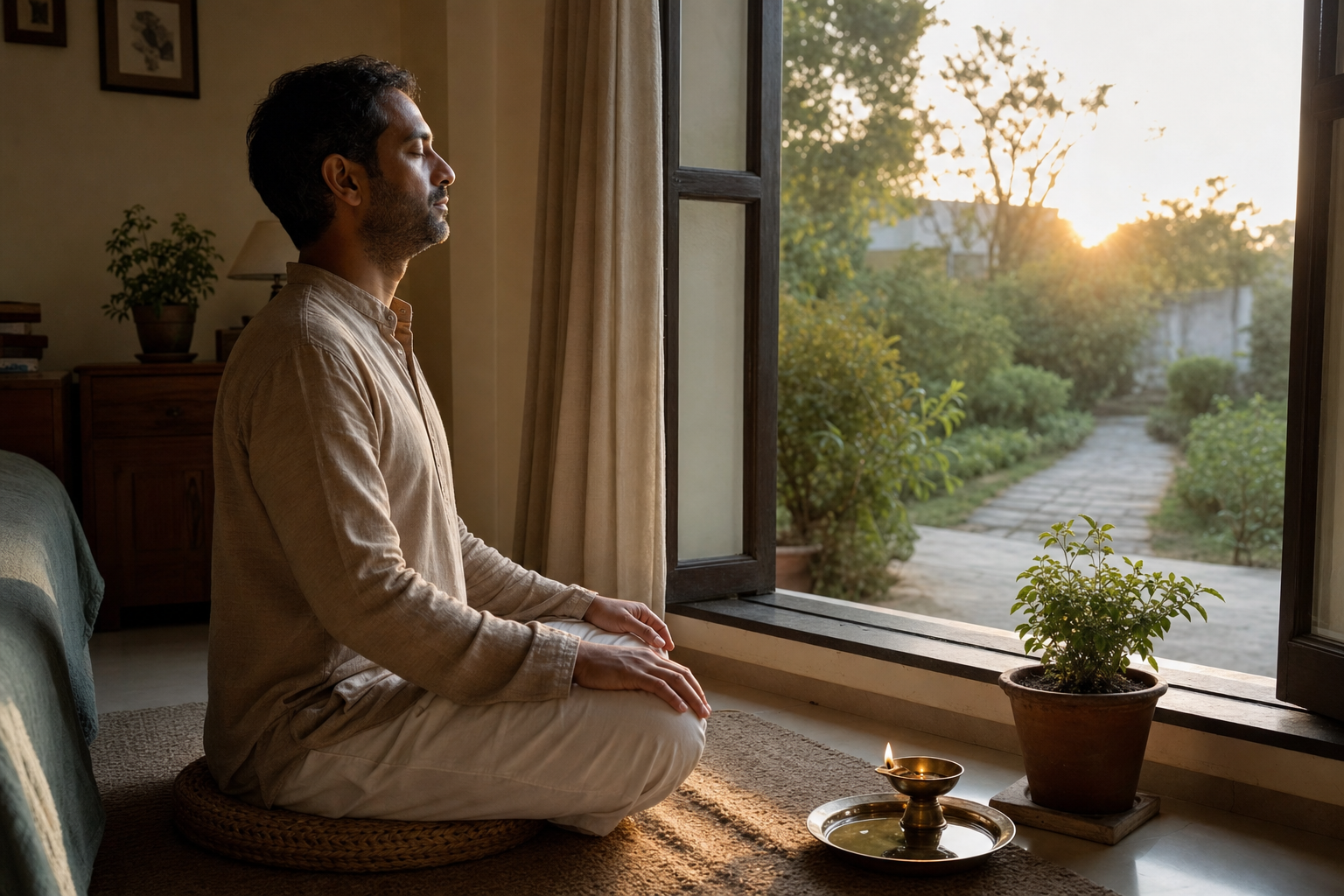
    Self-Surrender to Self-Discovery: Hinduism’s Timeless Path to Inner Freedom and Clarity

    Hinduism’s core teaching links self-surrender (Atma Samarpana) with authentic self-discovery, aligning with shared insights across Buddhism, Jainism, and Sikhism. Rather than passivity, surrender refines agency by releasing egoic fixation and aligning action with dharma. Texts like the Bhagavad Gita and the Upanishads frame this path through devotion, inquiry, and selfless action. Practical disciplines—meditation, japa, pranayama,…

  • Defusing Sanctimony: Dharmic Wisdom for Humility, Compassion, and Inner Strength

    Defusing Sanctimony: Dharmic Wisdom for Humility, Compassion, and Inner Strength

    Sanctimonious behavior thrives on ego-driven judgment and performative virtue, yet dharmic traditions offer precise tools to disarm it with grace. Hindu scriptures emphasize humility (amanitvam) and freedom from hypocrisy (adambhitvam), while Yoga philosophy identifies egoism (asmita) as a root disturbance. Complementary insights from Buddhism, Jainism, and Sikhism—Right Speech, ahiṃsā, anekāntavāda, seva, and simran—provide a unified,…

  • Tarapith, Kalighat, Nabadwip: Bengal’s Sacred Tirthas Uniting Shakti, Shiva, Vishnu

    Tarapith, Kalighat, Nabadwip: Bengal’s Sacred Tirthas Uniting Shakti, Shiva, Vishnu

    This overview of Tarapith, Kalighat, and Nabadwip presents Bengal’s pilgrimage triad as a unified tirtha experience where Shakti, Shiva, and Vishnu are encountered as complementary facets of the sacred. Readers gain concise historical context for each site, with attention to sacred geography along the Dwarka, Adi Ganga, and Bhagirathi rivers. The narration highlights living traditions—Tantric…

  • Tula Rashi 2026: Definitive Guide to Auspicious Days, Muhurats, and Mindful Beginnings

    Tula Rashi 2026: Definitive Guide to Auspicious Days, Muhurats, and Mindful Beginnings

    Tula Rashi in 2026 benefits from mindful timing based on the Hindu calendar, using supportive tithis, congenial nakshatras (Chitra, Swati, Visakha), and Venus-friendly weekdays. Shukla Paksha is often preferred for new beginnings, while eclipses and solemn periods are typically avoided for celebratory rites. Fridays suit relationship, finance, and arts-related goals; Wednesdays aid commerce and communication;…

  • Srila Bhaktisiddhanta on Fault-Finding: A Powerful Call to Compassion and Dharmic Unity

    Srila Bhaktisiddhanta on Fault-Finding: A Powerful Call to Compassion and Dharmic Unity

    Srila Bhaktisiddhanta Sarasvati’s guidance on fault-finding centers on compassionate discipline and the hard work of uplifting others. His reminder—“In this world we spend hundreds of gallons of blood to bring a person out of the clutches of maya”—clarifies why criticism should yield to constructive service. An anecdote from a preaching center in Bengal illustrates that…

  • Sheegra Vivah Totke: शीघ्र विवाह के लिए समन्वयी, सरल और सार्थक उपाय जो उम्मीद जगाएँ

    Sheegra Vivah Totke: शीघ्र विवाह के लिए समन्वयी, सरल और सार्थक उपाय जो उम्मीद जगाएँ

    यह लेख Sheegra Vivah Totke को अकादमिक और संतुलित दृष्टि से समझाता है। विवाह में विलंब के बहु-आयामी कारणों का संक्षिप्त विश्लेषण कर, यह पारंपरिक उपायों को मनोवैज्ञानिक स्थिरता, आशा और सामाजिक संपर्क बढ़ाने वाले सांस्कृतिक अभ्यास के रूप में रखता है। हिंदू, बौद्ध, जैन और सिख परंपराओं के साझा मूल्यों—धैर्य, सेवा, दया और अंतर्मुखता—को…

  • Gupt Navratri 2026 (Magha): Sacred January Dates, Rituals, and Spiritual Insights

    Gupt Navratri 2026 (Magha): Sacred January Dates, Rituals, and Spiritual Insights

    Gupt Navratri 2026 (Magha) will be observed from 19–27 January 2026 during the Shukla Paksha of Magha maas. This nine-night festival of Goddess Shakti emphasizes inward sadhana, disciplined vrat, and daily puja. Families often perform Ghatasthapana on Pratipada and conclude with special prayers on Navami, supported by recitation of Durga Saptashati or Lalita Sahasranama. The…

  • Yamuna River’s Sacred Power: Mythic Origins, Living Devotion, and Dharmic Unity

    Yamuna River’s Sacred Power: Mythic Origins, Living Devotion, and Dharmic Unity

    The Yamuna River holds enduring religious significance in Hindu Dharma as a sacred river, a site of tirtha-yatra, and a locus of living bhakti. Scriptural lineages identify Yamuna as Yami, sister of Yama and daughter of Surya and Saranyu, conveying a rich symbolism of light, moral order, and life’s transience. From Yamunotri to Mathura and…

  • Sri Satyanarayana Vratham 2026 Dates: Auspicious Days, Purnima vs Chaturdashi, Puja Guide

    Sri Satyanarayana Vratham 2026 Dates: Auspicious Days, Purnima vs Chaturdashi, Puja Guide

    Sri Satyanarayana Swamy Vratham is observed monthly in 2026 on Shukla Paksha Chaturdashi and on Purnima, with exact dates determined by local tithi timings in the Hindu calendar. The vrata, dedicated to Lord Vishnu, is especially meaningful for newly married couples who seek auspiciousness and stability. Both observance days are traditional; families are encouraged to…

  • Embodied Writing for Healing: A Dharma-Informed, Science-Backed Path from Trauma to Wholeness

    Embodied Writing for Healing: A Dharma-Informed, Science-Backed Path from Trauma to Wholeness

    Embodied writing offers a compassionate, trauma-aware path to healing by uniting reflective inquiry with somatic grounding. Informed by dharmic values—mindful attention, non-harm, and compassion—it helps transform painful memories into coherent, life-affirming narratives. Research on expressive writing suggests benefits for mood, sleep, and stress reduction when practices are paced and regulated. The method emphasizes titration, present-moment…

  • Seeds of Destiny: Conscious Choice and Liberation in Hindu Thought for Everyday Peace

    Seeds of Destiny: Conscious Choice and Liberation in Hindu Thought for Everyday Peace

    This reflection presents a practical, unifying view of Hindu philosophy: the mind holds dormant seeds of every disposition, and conscious choice determines which ones grow. It explains samskara, vasana, and the gunas while showing how daily decisions shape karma and move life toward moksha. It connects the Bhagavad Gita’s self-mastery with actionable practices—breath, japa, pratyahara,…

  • Duryodhana’s Lake Dwaipayana Refuge: A Powerful Mahabharata Lesson on Adharma Unmasked

    Duryodhana’s Lake Dwaipayana Refuge: A Powerful Mahabharata Lesson on Adharma Unmasked

    On the war’s final day, Duryodhana’s retreat into Lake Dwaipayana becomes a powerful allegory for how adharma seeks concealment when confronted by truth. The episode’s symbolism reframes water—from purification to evasion—while the subsequent mace duel with Bhima exposes the tension between rule-bound procedure and restorative justice. Read through a dharmic lens, the moment highlights karma’s…

  • A Mother’s Quest to Understand ‘Who Captured My Daughter?’ and the Pull of Devotion

    A Mother’s Quest to Understand ‘Who Captured My Daughter?’ and the Pull of Devotion

    A mother’s urgent question—“Who captured my daughter?”—captures the tension parents feel when loved ones embrace a spiritual movement. This reflection reframes the concern by highlighting how authentic dharmic traditions prize autonomy, ethics, inquiry, and compassion. It outlines how initiation, study, satsang, and seva signal voluntary devotion rather than coercion. Families gain a practical toolkit: visit…

  • Kuhuyoga Unveiled: The Rare, Ominous Celestial Sign in Hindu Astrology

    Kuhuyoga Unveiled: The Rare, Ominous Celestial Sign in Hindu Astrology

    Kuhuyoga, known as Kuhu Yoga, is described in Hindu astrology as a rare and intensely inauspicious alignment. Classical sources such as the Smritis and Puranas treat it as a cautionary signal, especially for leadership and public decision-making. Rather than encouraging fatalism, the tradition frames Kuhuyoga as an ethical prompt for prudence, transparency, and social responsibility.…

  • Tarapith Temple, Bengal: The Sacred Seat of Mother Tara Uniting Shiva, Buddha, and Seekers

    Tarapith Temple, Bengal: The Sacred Seat of Mother Tara Uniting Shiva, Buddha, and Seekers

    Tarapith in West Bengal is a revered Shakti Peetha where Mother Tara’s compassion bridges Hindu and Buddhist traditions. The site’s mythic origin—linked to the fall of Sati’s third eye—infuses the landscape with shakti and supports a long-standing culture of tantra, bhakti, and meditation. Tara’s identity as both a Mahavidya and a Vajrayana deity fosters religious…