
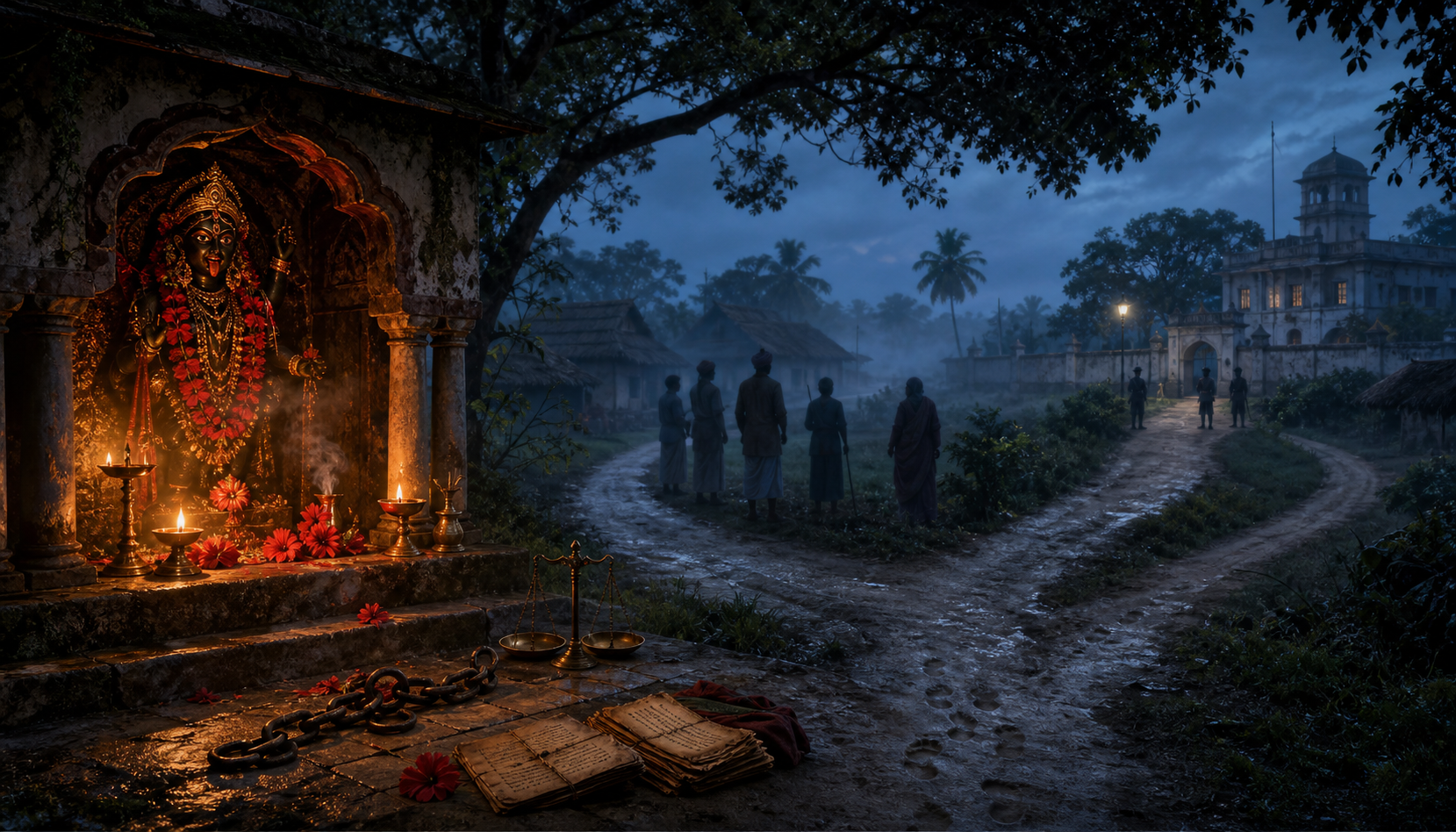
If you have encountered Dakat Kali and wondered whether the name turns banditry into dharma, the honest answer is no. But the opposite shortcut is also inadequate: an outlaw in the eyes of a ruler is not automatically devoid of a just cause. The real task is to judge a memory in which devotion, resistance, fear, protection, and violence occupy the same frame.
You can do that without insulting the devotion or romanticizing every person associated with it. Keep three questions separate: what happened, what Kali meant to the people involved, and whether their conduct met an ethical standard. Confusion begins when one answer is allowed to stand in for all three.
Why the bandit label cannot settle the moral question
Dakat Kali is commonly understood as the Bandits’ Kali. In regional memory, some groups associated with her have been compared to Robin Hood-like figures who sought courage while opposing exploitative local rulers, zamindars, and colonial police. That memory preserves a conflict over power. It does not provide a blanket acquittal for everyone called a dacoit.
The word bandit identifies transgression against an established order, but the existence of an order does not prove that the order was just. At the same time, opposition to an unjust authority does not make every method righteous. A person can resist exploitation and still injure the innocent. A community can remember courage while leaving uncomfortable acts outside the story. Both possibilities must remain visible.
When you hear a claim about a Dakat Kali shrine, devotee, or outlaw band, do not begin by choosing between hero and criminal. Ask five narrower questions:
- Who applied the label, and whose interests did that label serve?
- What conduct is actually being remembered: resistance to armed authority, protection of villagers, theft, retaliation, or something else?
- Who benefited from the conduct, and who bore its cost?
- Is the claim a documented event, regional lore, devotional testimony, or a later moral interpretation?
- Does the story acknowledge limits and accountability, or does it excuse everything done in the name of a cause?
If those answers are unavailable, keep your conclusion narrow. Devotional association can show that Kali mattered to a group and helped shape its identity. It cannot, by itself, prove that every target was guilty, every action proportionate, or every participant motivated by public welfare. Respect for historical memory includes refusing to make it carry more evidence than it contains.
Kali’s symbols direct the struggle inward and outward

Kali’s relevance to justice comes from more than ferocity. As a form of Shakti, she embodies time, the dissolution of adharma, and the possibility of a renewed ethical order. Her khadga cuts ego and ignorance. Her garland of severed heads is often interpreted through the range of Sanskrit phonemes, while her maternal aspect places protection beside destruction.
These meanings prevent a shallow reading of the iconography. Kali is not merely anger made divine, and her sword is not a devotional permission slip. The outward confrontation with adharma must be accompanied by an inward confrontation with ahankara, fear, ignorance, and the desire to dominate. Otherwise, the language of justice can become a costume for vengeance.
Before calling an action righteous, place it under four tests:
- Clarity: Can you name the adharma precisely, or are you directing generalized anger at a convenient enemy?
- Protection: Does the action safeguard vulnerable people, or expose them to greater danger for the sake of a dramatic gesture?
- Self-scrutiny: Have status, humiliation, tribal loyalty, or personal revenge been mistaken for duty?
- Ethical aftermath: Will the action make a more just order possible, or merely reverse who gets to intimidate whom?
The fourth test is especially important. Kali’s dissolution is meaningful because it clears the ground for order, not because destruction is valuable in itself. If nothing in a proposed action points toward protection, repair, restraint, or accountability, invoking the Goddess does not repair its moral defect.
Ritual can create courage, but it cannot certify a cause
In Dakat Kali’s British-era setting, bands in Bengal and adjoining regions invoked Kali for fortitude before confronting well-armed British troops. Collective rites, mantras, and vigils offered rhythm and focus. They could reduce fear, reinforce solidarity, and turn scattered anxiety into shared resolve.
That psychological function deserves to be taken seriously. People facing a stronger power need ways to steady the mind and bind individual fear to a purpose larger than the self. A murti, mantra, or vigil can become the point around which a frightened group regains composure.
Psychological effectiveness and moral legitimacy are nevertheless different claims. A ritual may make participants more courageous without proving that their information is accurate, their target is culpable, or their chosen response is proportionate. The feeling of certainty after worship is not evidence that every impulse has become dharmic.
If you use prayer or meditation before confronting an injustice, let the practice impose discipline rather than remove doubt. Name the wrong in verifiable terms. Identify the people who need protection. Decide in advance what you will refuse to do. Make yourself answerable to others who are capable of questioning you. Then plan the seva, repair, or institutional work that must continue after the moment of confrontation.
This distinction also blocks modern vigilantism. Devotional memory is not a substitute for evidence, emergency assistance, legal counsel, or a fair process. When someone faces immediate danger, protecting life and reaching appropriate professional or emergency support takes priority over trying to reenact a historical symbol. Fierce compassion is measured by the safety it creates, not by the spectacle of retaliation.
Read historical memory in four separate layers
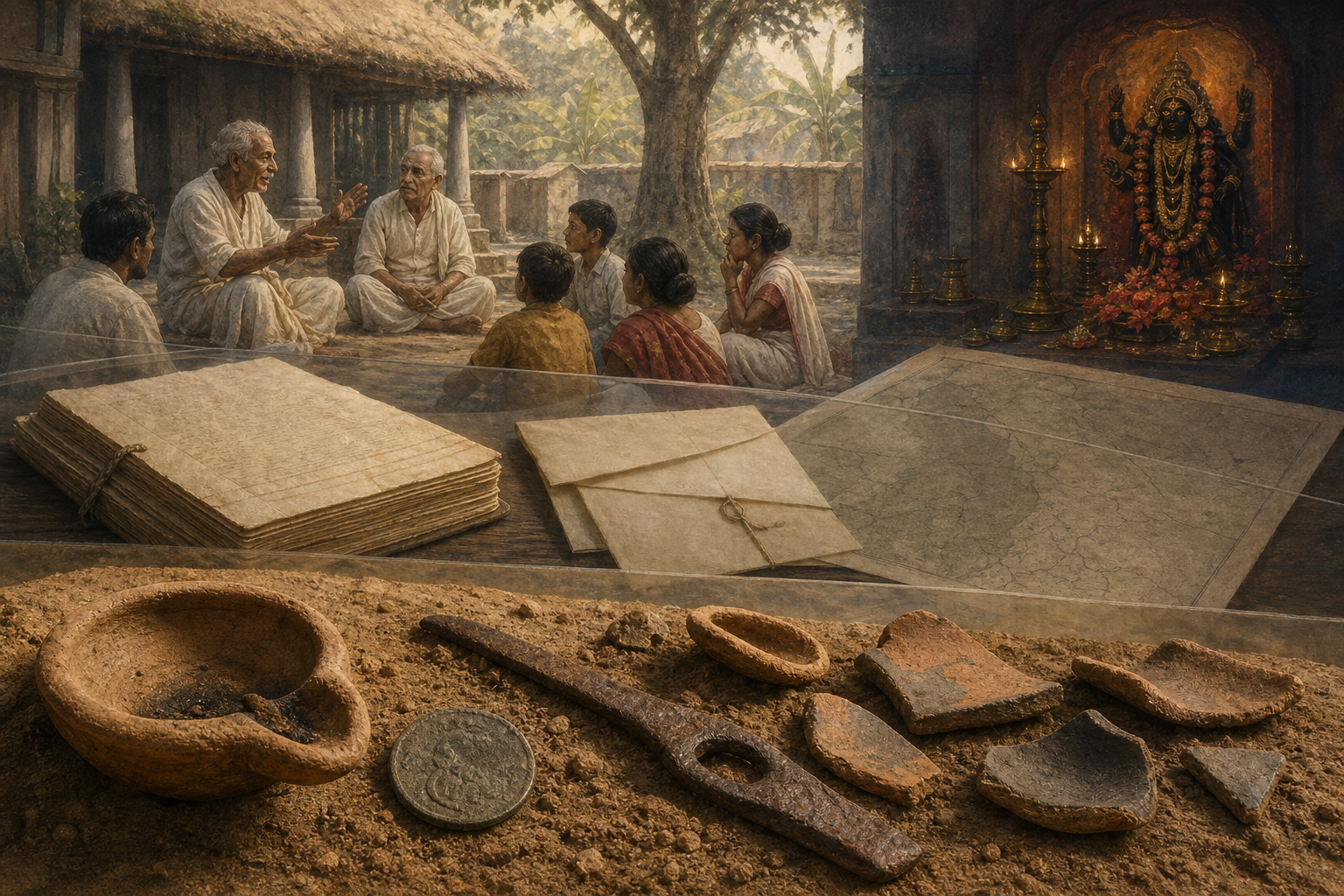
Historical memory is not useless because it is selective, and it is not a complete record because it is meaningful. It carries what a community could not afford to forget: courage under pressure, betrayal, protection, humiliation, sacred presence, or resistance. You read it responsibly by identifying the kind of claim being made before deciding how much that claim can establish.
| Layer | Question to ask | What it can establish | What remains unresolved |
|---|---|---|---|
| Event | What action is said to have occurred? | A specific rite, confrontation, relationship, or local practice | The complete motives, targets, consequences, and experiences of every participant |
| Memory | Why did a community preserve this story? | What the community regarded as courageous, threatening, protective, or sacred | Whether every remembered detail is a full chronological record |
| Symbol | What does Kali signify within the telling? | A theological interpretation involving Shakti, time, protection, ego, ignorance, and adharma | Whether a particular person’s conduct fulfilled that symbolism |
| Ethics | Should the conduct be regarded as just? | A judgment based on protection, restraint, accountability, and consequences | Any facts that the surviving memory does not supply |
This four-layer method prevents two common distortions. The first converts a sacred symbol into proof that an event happened exactly as later retellings describe it. The second demands courtroom completeness from communal memory and then discards everything that memory reveals about fear, dignity, and moral aspiration.
You can apply the method in a conversation, a temple visit, or your own writing. Mark each claim mentally as event, memory, symbol, or ethical judgment. If a statement moves from one layer to another, ask what justifies the move. A band performing Kali worship is an event claim. Kali cutting ego is a symbolic interpretation. Calling the band righteous is a moral judgment that still requires facts about its conduct.
This discipline protects more than historical accuracy. It protects Kali from being reduced either to a criminal mascot or to a vague emblem of rebellion. It also protects the people within the memory, including possible victims, from disappearing behind a preferred political narrative.
Carry fierce compassion from memory into public life
The moral tension surrounding Dakat Kali has echoes across Dharmic traditions, though the traditions must not be collapsed into one doctrine. Buddhist traditions honor Mahakala as a protector who subdues obstacles. Jain practice directs disciplined attention toward the conquest of inner passions. Sikh ardas joins courage and justice to compassion. These are distinct paths sharing an insistence that strength remain ethically governed, not claims that their deities, practices, or metaphysics are interchangeable.
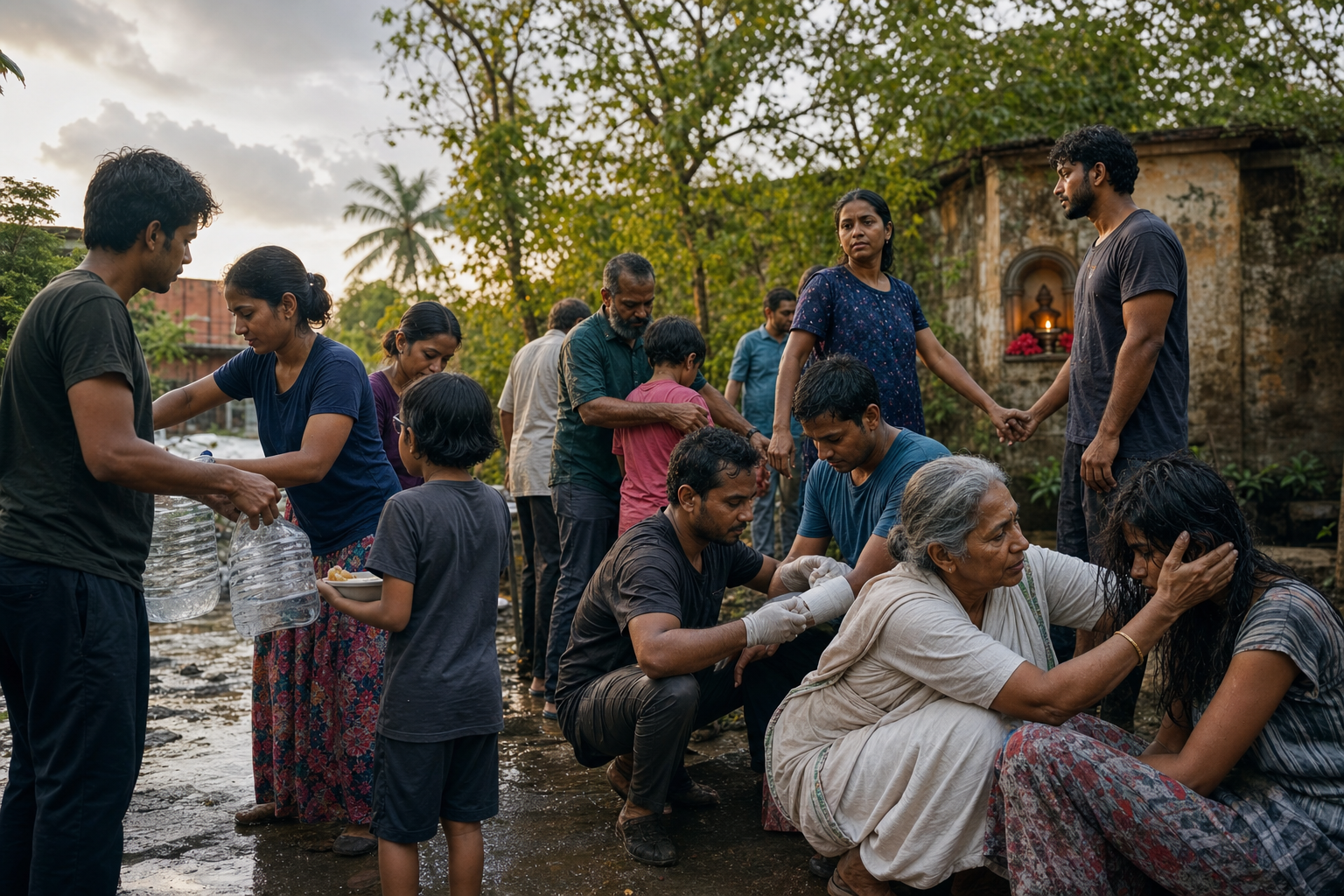
That shared standard gives you a practical way to carry Dakat Kali forward. Begin with steadiness rather than performance. Document the wrong clearly. Stand beside the person bearing the greatest risk. Use a proportionate remedy that can actually protect them, whether that means speaking up, preserving evidence, organizing collective support, or using an accountable institutional process. Invite correction from people who are not merely echoing your anger. Follow confrontation with seva and repair.
Ordinary settings are sufficient. Challenging unfairness at work, supporting a vulnerable neighbor, and confronting an ingrained bias can require the same movement from fear to purposeful courage. These actions may lack the drama of an outlaw legend, but they are better tests of whether devotion has become responsibility.
Key takeaways for a responsible reading
- Dakat Kali preserves a tension between outlaw status and moral resistance; the name alone resolves neither side.
- Kali’s fierceness is directed against adharma, ego, and ignorance, not offered as a general sanction for violence.
- Ritual can transform fear into solidarity and resolve, but courage does not prove that a cause or method is just.
- Keep event, memory, symbol, and ethical judgment separate until the available facts justify connecting them.
- In present life, Kali-like courage should produce protection, restraint, accountability, and seva rather than private punishment.
The next time you encounter a Dakat Kali story, write four short lines: what is historically claimed, what the community remembers, what Kali symbolizes, and what dharma asks of you now. If the final line yields only retaliation, begin again. If it leads toward truthful witness, protection of the vulnerable, disciplined courage, accountability, and service, historical memory is doing ethical work in the present.
References
