-
Brahmā’s Joy, Kapila’s Descent: A Powerful, Unifying Study of Srimad-Bhāgavatam 3.24.11

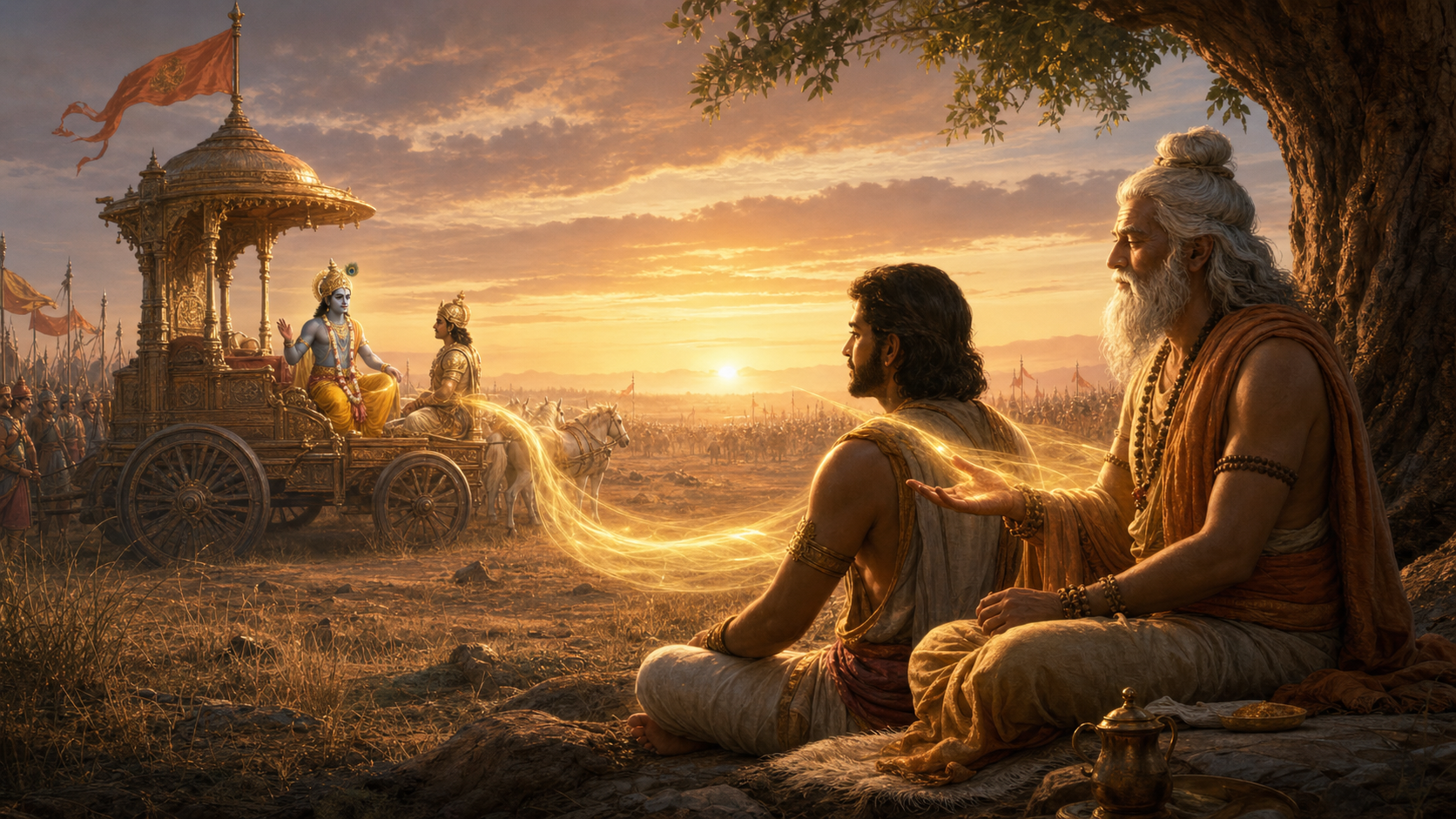
Srimad-Bhāgavatam 3.24.11 marks the moment Brahmā, purified by worship, speaks to Kardama and Devahūti as the Supreme Lord prepares to descend as Kapila. The verse frames avatāra as purposeful revelation and grounds understanding in devotion, anticipating Kapila’s theistic Sāṅkhya. Connected to Bhagavad-gītā Chapter 4—especially 4.9 (“janma karma ca me divyam”)—it teaches that properly understood divine…
-
Gajasurasamhara: Shiva’s Elephant‑Demon Dance, Symbolism, Ego, and Inner Liberation

Gajasurasamhara, Shiva’s slaying of the elephant‑demon in Darukavana, encodes a rigorous spiritual map: the destruction of ego and ignorance as the ground of inner freedom. This long‑form analysis situates the myth within Purana and Agama traditions, unpacks its iconography from the damaru to the trishula, and clarifies why the elephant hide signifies the unveiling of…
-
Unlocking the Kalagni (Panchavaktra) Rudraksha: Sacred Meaning, Safe Practice, and Dharmic Unity

The Panchavaktra (Kalagni) Rudraksha is the five-faced sacred bead revered in Hindu Dharma and identified in Shiva Purana (1.25) with Rudra Himself. This comprehensive guide explains its symbolic link to Shiva’s five cosmic faces and to fivefold frameworks such as the elements, vital airs, and sheaths. It outlines safe, lineage-respectful practice with mantras like Om…
-
Beyond Ahamkara: How Dharmic Wisdom Unmasks Ego and Illuminates Liberation

The aphorism “As long as there is the ego, everything else exists” concisely names the mechanism of duality in Hindu philosophy and resonates across Buddhism, Jainism, and Sikhism. This long-form analysis maps ahamkara in Sankhya, asmita in the Yoga Sutra, and adhyasa in Advaita Vedanta, linking them with the Bhagavad Gita’s diagnosis of doership. It…
-
Feb 22, 2026 Tithi & Panchang: Shukla Paksha Panchami to Sashti, Auspicious Times Guide

On Sunday, February 22, 2026, Shukla Paksha Panchami prevails until 11:34 AM (IST), after which the day transitions to Shukla Paksha Sashti. The post explains how tithis are computed from the Sun–Moon angular separation and why the udaya tithi matters for observances. It outlines what kinds of activities are traditionally aligned with Panchami (steady beginnings,…
-
Mahashivratri 2026: Puja Mantras, Stotras, and Step-by-Step Vidhi for a Sacred Night

Mahashivratri 2026 falls on February 15 and centers on Shiva Puja, night-long vigil, and disciplined mantra-japa. This guide provides a precise, step-by-step vidhi with academically grounded context for Bilvashtakam, Lingashtakam, Shiva Ashtakam, Om Namah Shivaya, Shiva Chalisa, Shiva Aarti, and the Shiva Sahasranama Stotram. It also situates Sri Rudram (Namakam–Chamakam) and the Mahamrityunjaya mantra within…
-
Maha Shivratri Puja Vidhi with Mantras: Precise, Devotional, Step-by-Step Home Guide

Maha Shivratri, observed on Krishna Paksha Chaturdashi, centers on Nishita Kaal Puja, mantra japa, and Shivalinga abhisheka. This detailed, home-friendly guide presents a precise, authentic Shivaratri Puja Vidhi with essential mantras and practical adaptations. It explains fasting options, altar preparation, upacharas, abhisheka sequence, Bilva offerings, and night-long vigil structure across four prahars. Clear notes help…
-
Shivaratri Jagran & Lingodhbhavam: Sacred Night Vigil, Cosmic Origin, and Ritual Science

Shivaratri Jagran (Jagarana) is the central discipline of the Shivaratri Vrata, a structured night vigil that aligns fasting, mantra, and meditation into a single, transformative practice. Grounded in the Shiva Purana and Linga Purana, it culminates at the Lingodhbhava Kalam—midnight rites recalling Shiva’s manifestation as the infinite pillar of light. The article explains the theological…
-
Shiva–Parvati Kalyanam at Maha Shivaratri: Complete Guide to Rituals, Legends, and Meaning

Shiva Parvati Kalyanam, often celebrated the day after Maha Shivaratri, unites Puranic narrative, Vedic samskāra, and Śaiva Āgamic practice in a single, transformative rite. The ceremony venerates Lord Vishnu as Kanya Daanam kartā and Lord Brahma as yajña-ācārya in many traditions, while honoring regional variations across India and Nepal. This comprehensive guide clarifies timing, key…
-
Maha Shivaratri Jagran: Why Devotees Stay Awake All Night and How It Transforms Sadhana

Maha Shivaratri Jagran is not merely a custom; it is a disciplined spiritual practice that aligns ritual, philosophy, and yogic awareness in one sacred night. Scriptural traditions such as the Shiva Purana emphasize wakeful worship during Chaturdashi, when the mind’s fluctuations are symbolically at their lowest. Across four prahars, devotees perform Rudrabhisheka, chant Om Namaḥ…
-
Maha Shivaratri 2026 Lingodbhava Kalam: Sacred Midnight Timings (15–16 Feb) & Puja Guide

Lingodbhava Kalam during Maha Shivaratri 2026 falls on the night of Sunday, 15 February into Monday, 16 February, centered on local midnight within the Nishita Kaal. This guide explains how to determine the precise window using the Hindu calendar and panchang methods by calculating the midpoint between local sunset and sunrise. It outlines the four-prahara…
-
Vibhishana’s Daring Intervention: How Dharma Rescued Rama and Lakshmana from Indrajit’s Sorcery

Vibhishana’s interventions during the Lanka campaign reveal how moral clarity and technical insight can rescue an army immobilized by occult warfare. By correctly identifying Indrajit’s Naga-pāśa and steadying the Vanara ranks until Garuḍa’s release, he prevents collapse at a decisive moment. He repeatedly exposes māyā, including the illusion of Sita’s severed head, foiling psychological warfare.…
-
Ganesha’s Small Eyes, Vast Vision: Iconography, Mindfulness, and Dharmic Unity Lessons

Ganesha’s small, intent eyes encode a powerful contemplative teaching: expansive wisdom arises from focused, compassionate attention. Drawing on Hindu iconography and Yoga philosophy, the symbol aligns with pratyahara, dharana, and dhyana, and is reinforced by the Bhagavad Gita’s guidance on nasikagra-drishti. Contemporary attention science complements this reading, linking steady gaze with reduced cognitive load and…
-
Gambhira’s Sacred Depths: Sri Chaitanya Mahaprabhu in Puri—History, Bhakti, and Unity

This in-depth study presents the Gambhira of Jagannath Puri as a pivotal site in the devotional history of Sri Chaitanya Mahaprabhu, connecting place, practice, and theology. It synthesizes insights from the rare Bengali work Gambhiraya Sri Gauranga with core Gaudiya texts to explain how nocturnal kirtan, scriptural recitation, and aesthetic theology shaped Mahaprabhu’s later years.…
-
Sri Isvara Puri’s Disappearance: Guru-Seva, Gaudiya Lineage, and a Living Bhakti Legacy

Sri Isvara Puri’s disappearance day is a lucid window into Gaudiya Vaishnava history, doctrine, and practice. Drawing on Sri Caitanya Caritamrta, the post explores how the desire tree of devotion moves from Sri Madhavendra Puri to Sri Isvara Puri and culminates in Sri Caitanya Mahaprabhu’s universal sankirtana. It analyzes guru-tattva, mantra-diksha, and guru-seva as the…
-
Ravana as Rama’s Priest: Akalbodhan in Krittibas’s Bengali Ramayana and Dharmic Unity

This essay examines the Krittibas Ojha Bengali Ramayana episode in which Ravana, despite being Rama’s adversary, officiates as priest for Rama’s Durga Puja. It contextualizes the scene within Akalbodhan, the autumnal invocation of Durga that anchors Bengal’s Sharadiya Durga Puja. Contrasting Krittibas with Valmiki’s Aditya Hridayam, it shows how regional retellings adapt epic theology without…
-
Unveiling Shakti’s Living Power: Gujarat’s Folk Goddesses and Regional Identity

Gujarat’s folk goddesses reveal how Shakti localizes as protective village deities and lineage-honored kuladevis, shaping a resilient regional identity. The essay maps major sites—Ambaji, Pavagadh, Becharaji, coastal Harsiddhi—as anchors of sacred geography linked to trade, kinship, and ecology. It explains how Navratri Garba turns metaphysics into lived pedagogy, uniting communities around Amba’s lamp in Gujarat…
-
Timeless Dharmic Debate: From Vada to Anekantavada—A Fearless Path to Truth and Unity

Constructive, unbiased debate sits at the heart of Hindu philosophy as a disciplined path to knowledge and self-realization. Grounded in pramana theory and refined by Nyaya’s robust logic, classical shastrartha privileges clarity over conquest. The Upanishads, the Bhagavad-Gita’s samvada, and traditions across Buddhism, Jainism, and Sikhism model dialogue that is rigorous, ethical, and inclusive. Practices…
-
Sri Nityananda Prabhu’s Appearance: Profound Theology, Boundless Compassion, Shared Dharmic Unity

This in-depth exploration of Sri Nityananda Prabhu’s appearance anniversary unpacks Gaudiya Vaishnava theology while highlighting practical, inclusive devotion. Readers gain a clear map of Sankarsana, Sesa Naga, and the three Visnu expansions across the Karana, Garbha, and milk oceans—framed by the concepts of amsa and kala. The essay introduces sandhini-shakti to explain how sacred abodes…