
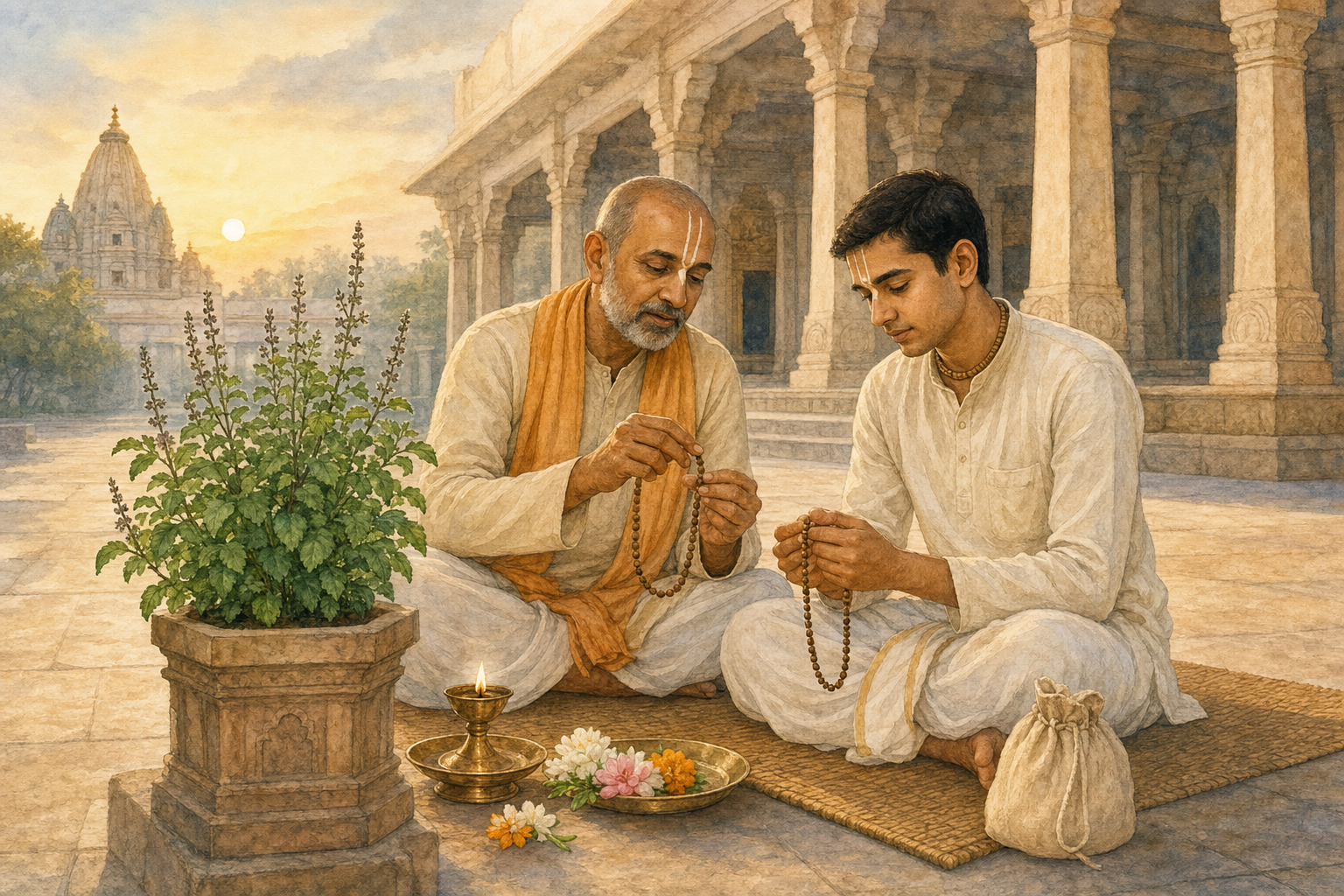
You may have entered Vaishnava life through a kirtan, a temple visit, or a conversation with a devotee. The immediate question is simple: what should you actually do with that attraction? The harder question follows close behind: how do you approach a guru and lineage without making a promise before you understand it?
You do not have to choose between hesitation and instant allegiance. Begin with honest devotional practice, learn which tradition gives that practice its meaning, and let commitment follow understanding. Lineage gives bhakti continuity and correction; daily practice turns that inheritance into character.
Lineage tells you what your devotion means
Vaishnava is a family name, not a complete set of instructions. It broadly identifies traditions centered on devotion to Vishnu, Krishna, or another form understood within Vaishnava theology. It does not tell you by itself how a community understands Bhagavan, grace, the soul, liberation, mantra, initiation, or the authority of a guru.
This is why sampradaya matters. A sampradaya is a received stream of teaching and practice transmitted through teachers and disciples. Ramanujacharya’s legacy joins Sri Vaishnavism with Vishishtadvaita Vedanta, while Gaudiya Vaishnavism is commonly associated with acintya-bheda-abheda and a devotional life centered strongly on Krishna and the holy name. Both are Vaishnava, but their theological language and disciplines should not be casually blended.
The difference is not merely academic. Theology determines what you think you are doing when you chant, worship, surrender, or serve. Two communities may use familiar words such as bhakti, guru, prasada, seva, and mantra while giving them different emphasis. If you borrow the external practices but ignore their interpretive home, you can remain busy without knowing what you are being trained to perceive.
Before treating a community as your spiritual home, get clear answers to these questions:
- Which Vaishnava sampradaya or teaching lineage shapes this community?
- Which acharyas and foundational teachings guide its interpretation?
- How does it describe the relationship among Bhagavan, the individual self, and the world?
- Which practices are open to visitors, and which require formal instruction or initiation?
- What daily commitments, vows, or forms of seva are expected after initiation?
- How is the guru’s authority understood, and how is that authority held accountable in community life?
A clear lineage should make these questions easier to answer, not harder. Do not begin by asking which Vaishnava lineage is best in the abstract. Ask which teaching you can understand accurately, practice faithfully, and examine without pretending that real differences do not exist.
Begin practising before you make a formal promise
Public kirtan is intentionally approachable. You can listen, sing, and experience devotional community without already being an initiated disciple. A Hare Krishna kirtan in the City of London showed how music, mantra, tilak, mridanga, kartals, and simple hospitality can turn passing curiosity into genuine engagement. The doorway was open, but walking through it did not automatically create a guru-shishya relationship.
Keep four stages distinct in your mind: encounter, participation, received discipline, and initiation. An encounter lets you see and hear the tradition. Participation lets you chant, ask questions, attend worship, and offer appropriate service. Received discipline begins when you deliberately follow instruction from a particular teaching community. Initiation formalizes a relationship, responsibilities, and commitments according to that lineage. Communities may use different terms, but the distinction protects both sincerity and freedom.
A practical beginning does not require a complicated private programme. Use this sequence:
- Stay with one teaching context long enough to understand it. Visit consistently and listen to how the community explains its own practice. Constantly switching between unrelated teachers can leave you comparing vocabulary instead of learning a path.
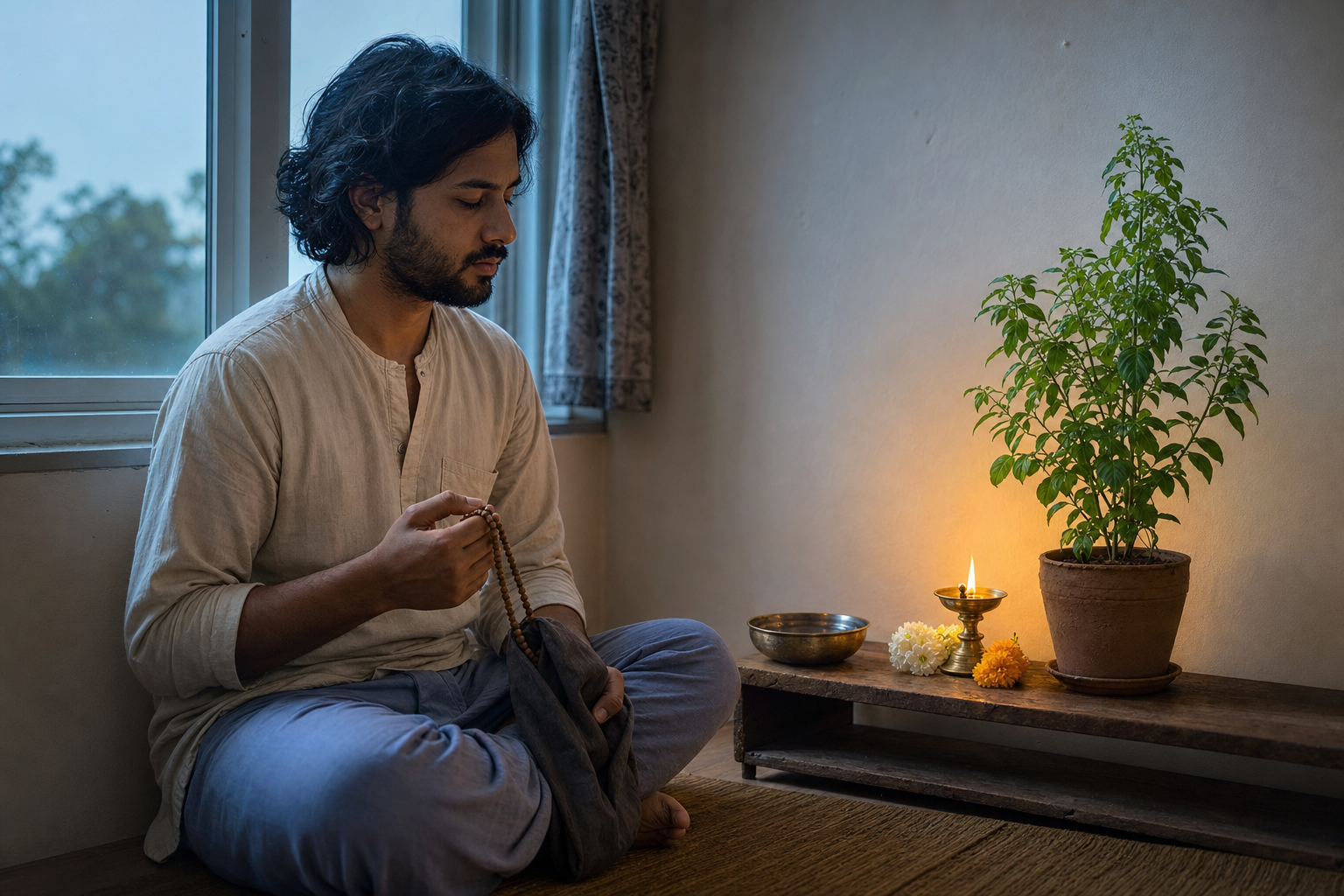
- Use the form of chanting taught openly there. In a Gaudiya or Hare Krishna setting, follow the community’s instruction on the holy name and japa. Do not collect restricted or privately given mantras from several lineages.
- Attach practice to a stable cue in your day. Chant after an existing activity such as bathing or before beginning work. A modest practice that actually happens is more revealing than an ambitious schedule that survives only while enthusiasm is high.
- Hear before improvising. Attend instruction, note unfamiliar terms, and ask how pronunciation, attention, and conduct are corrected. Bhakti is received practice, not a spiritual playlist assembled from attractive fragments.
- Accept one bounded act of seva. Help with a task the community genuinely needs and has invited you to perform. Notice whether service makes you more attentive to others or merely more concerned with being seen as useful.
- Review your conduct after practice. Ask what instruction you followed, where your attention wandered, and whether chanting affected your patience, truthfulness, humility, or willingness to serve.
Do not use emotional intensity as your main measure. Kirtan may bring joy, relief, tears, stillness, or no striking feeling at all. None of these states proves that you have understood a lineage or are ready for initiation. The more dependable question is whether you return to the practice when novelty has faded.
Vaishnava traditions often speak of bhakti as grace, but grace does not make disciplined response unnecessary. Vilasini Devi Dasi’s initiation by Indradyumna Swami in 2007 was followed by sustained hearing, chanting, kirtan, japa, satsanga, and seva. The initiation planted a devotional seed; regular sadhana was the cultivation. This is a useful correction to the idea that initiation is a spiritual graduation ceremony.
Mercy without responsibility can become sentiment. Responsibility without mercy can become anxious scorekeeping. Hold them together: receive the practice with gratitude, keep the appointment you have made, and return without drama when the mind wanders or the routine breaks.
Assess the guru and community before accepting initiation
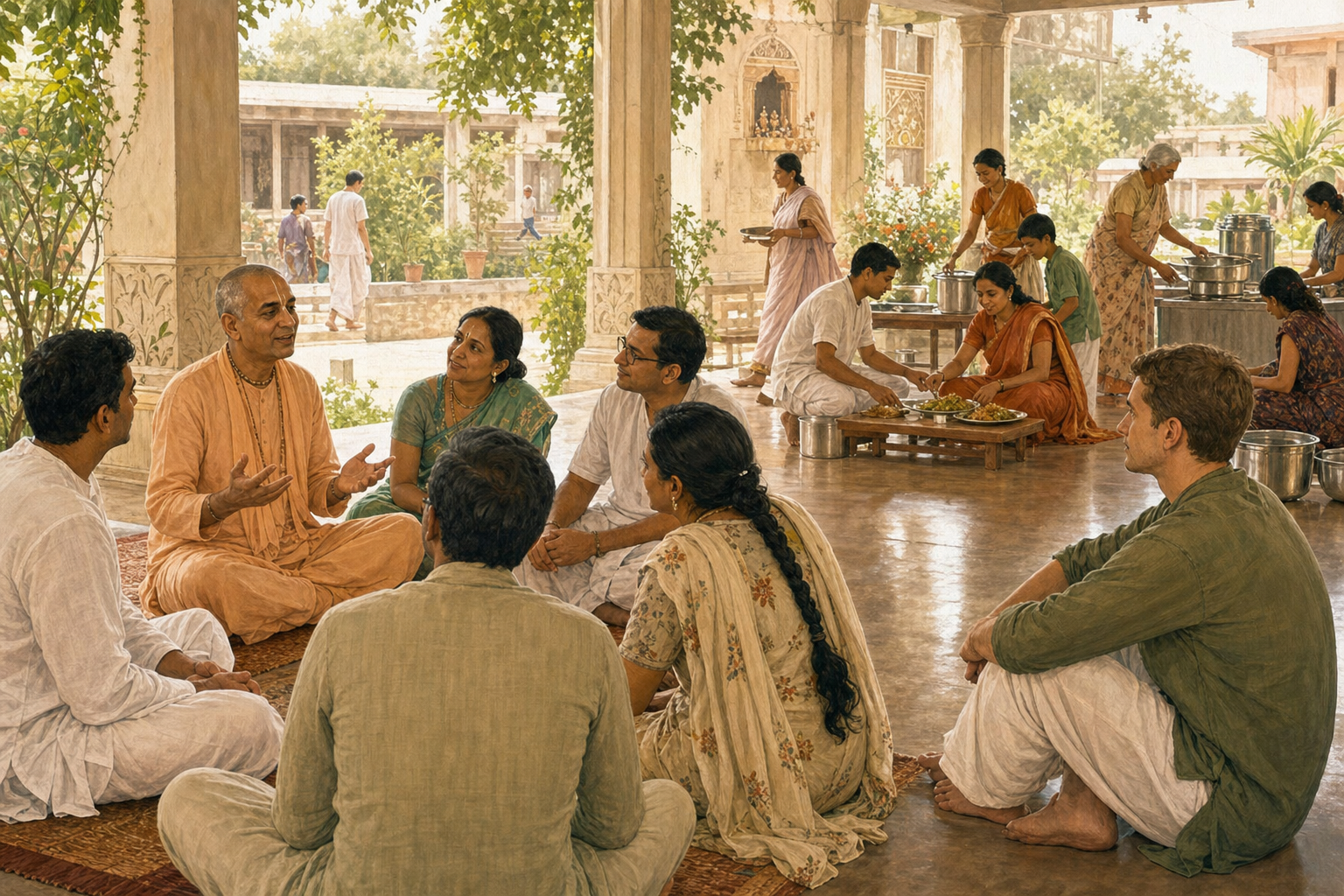
A guru is not simply the most impressive speaker in the room. Within the guru-shishya tradition, the teacher transmits a received understanding, corrects practice, and directs the disciple toward Bhagavan. That relationship asks for trust, so you should examine the teaching, conduct, expectations, and institutional setting before making a formal commitment.
Ask direct questions before initiation
- Who authorized the teacher to initiate or instruct within this lineage?
- What exactly changes after initiation?
- Which practices and vows become obligatory?
- How does the community respond when a disciple struggles to maintain a commitment?
- Can a visitor learn and serve without being pressured toward initiation?
- How are complaints, conflicts, and allegations of misconduct heard and reviewed?
- What is expected regarding time, service, travel, residence, or financial contributions?
You are not being faithless by asking. A serious commitment benefits from informed consent. A healthy answer should be clear enough that you can repeat it in your own words. If ordinary questions are treated as disloyalty, expectations remain vague until after commitment, or urgency is used to prevent reflection, step back.
Watch what the teaching produces
Warmth matters, but warmth alone is not proof. Eloquence matters, but eloquence alone is not proof. Watch how senior practitioners behave when there is no public performance: how they speak to newcomers, respond to mistakes, share work, handle disagreement, and treat people who leave or follow another path.
The expected fruits are not theatrical. Devotional guidance should strengthen humility, compassion, self-discipline, service, and truthful conduct. A lineage name cannot by itself certify these qualities. Continuity must be embodied by people who accept correction as readily as they offer it.
Pay special attention to whether the teacher remains a servant of the teaching or becomes its effective object. Reverence for guru is integral to many Vaishnava communities, but the guru’s role is not a licence for vanity, secrecy, or exemption from dharmic conduct. A trustworthy community can explain both devotion to the teacher and the limits governing human authority.
Time is useful here. See whether the same principles appear in classes, worship, private decisions, seva, and conflict. Do not accept initiation merely to preserve a pleasant social bond or recapture the feeling of your first kirtan. Belonging can begin with hospitality; discipleship should begin with tested trust.
Let public bhakti build bridges without losing its shape
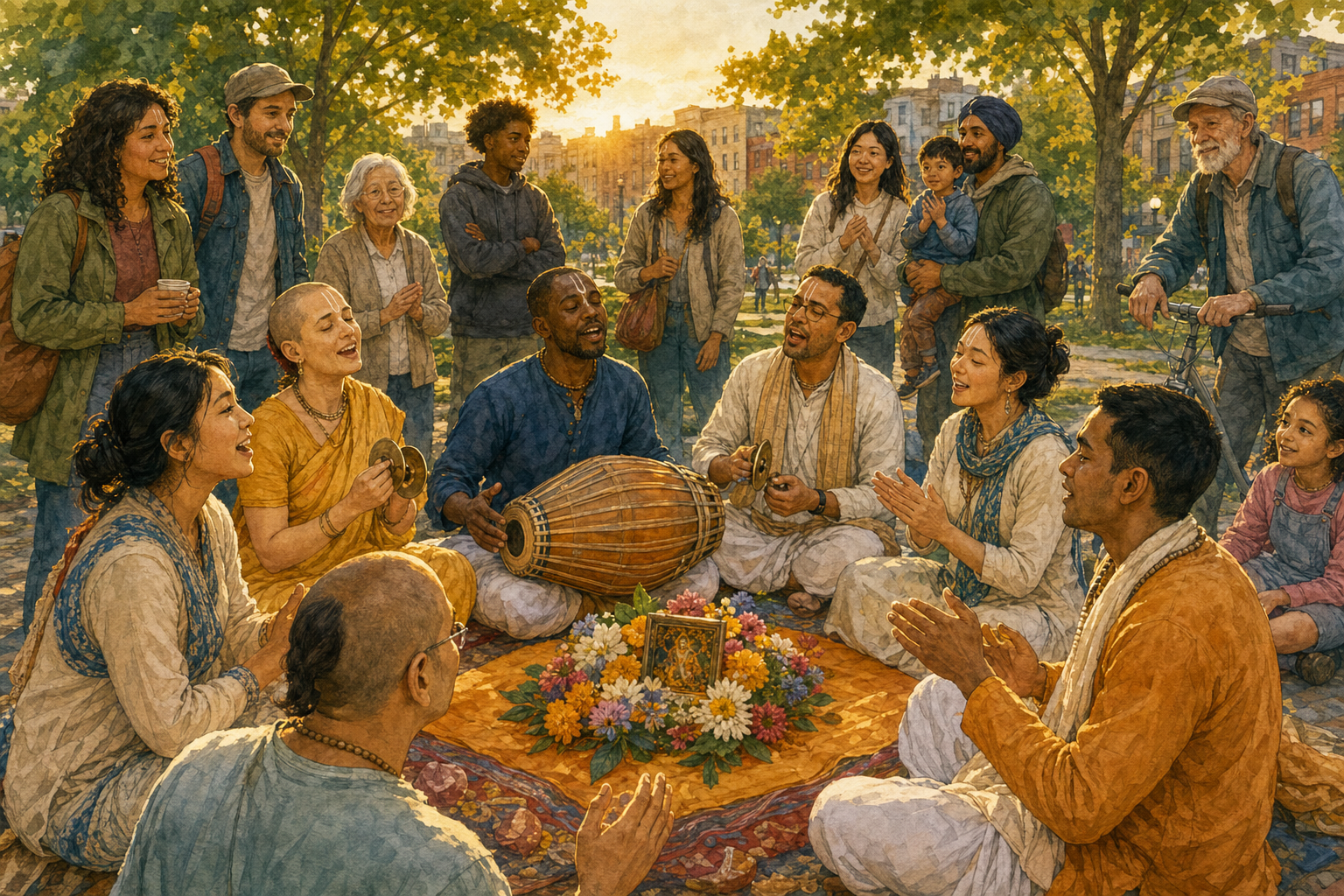
A playful remark about a ‘Boy George lookalike’ once drew passersby toward a City of London cafe where Hare Krishna followers were singing with mridanga and kartals. The unexpected cultural association opened a space for curiosity rather than hostility. The encounter worked because the devotees were recognizably themselves while remaining approachable.
This is a useful model if you help present Vaishnava practice in a school, workplace, neighbourhood, or interfaith setting. Do not strip away Krishna in an attempt to make bhakti universally acceptable. Explain plainly what people are hearing, why the mantra is sung, what the instruments are doing, and whether participation implies any commitment. Welcome questions without turning every conversation into recruitment.
Shared Dharmic virtues can provide a bridge. Compassion and inner transformation in Hindu traditions, karuna in Buddhism, ahimsa and self-mastery in Jainism, and seva in Sikhism offer genuine points of recognition. They do not prove that every tradition teaches the same metaphysics, spiritual goal, or form of authority. Respect grows when similarities permit conversation and differences are allowed to remain real.
If you are the visitor, you can receive the hospitality without pretending to agree with everything. Sing if you are comfortable, listen closely, and ask which lineage gives the practice its meaning. If you are the host, make the terms of participation explicit: listening is welcome, questions are welcome, and initiation is a separate matter. That clarity turns openness into trust.
- Name the practice accurately. Say whether the gathering belongs to a Gaudiya, Sri Vaishnava, or another Vaishnava setting.
- Explain before assuming. A visitor may recognize music and hospitality while knowing nothing about mantra, tilak, aarti, or seva.
- Invite without pressuring. Participation in public kirtan is not consent to discipleship.
- Translate values without erasing theology. Compassion, ahimsa, humility, and service can create common ground while Krishna bhakti remains distinctly Krishna bhakti.
Key takeaways
- Vaishnava identifies a devotional family; sampradaya tells you how a particular community understands and practises that devotion.
- You can attend kirtan, chant, hear teachings, and offer suitable seva before considering initiation.
- Do not mix privately transmitted mantras or binding disciplines from different lineages while you are still exploring.
- Judge progress by steadiness and conduct, not only by strong devotional emotion.
- Ask about authority, obligations, accountability, and complaint procedures before accepting a guru-shishya commitment.
- Use shared Dharmic virtues to build mutual respect without claiming that distinct traditions are interchangeable.
At your next visit, ask one precise question: ‘Which lineage shapes this practice, and what should someone practise consistently before considering initiation?’ Then follow the answer carefully enough to see what it produces in your attention, humility, and service. Let commitment grow from understanding rather than urgency.
References
- DharmaRenaissance Blog – City of London Surprise: A ‘Boy George’ Moment Sparks Hare Krishna Curiosity and Harmony
- DharmaRenaissance Blog – How Mercy Planted a Seed of Bhakti: A Transformative Journey in Krishna Consciousness
- DharmaRenaissance Blog – Ramanujacharya’s Auspicious Birth and Enduring Legacy: Inspiring Unity in Dharma
