
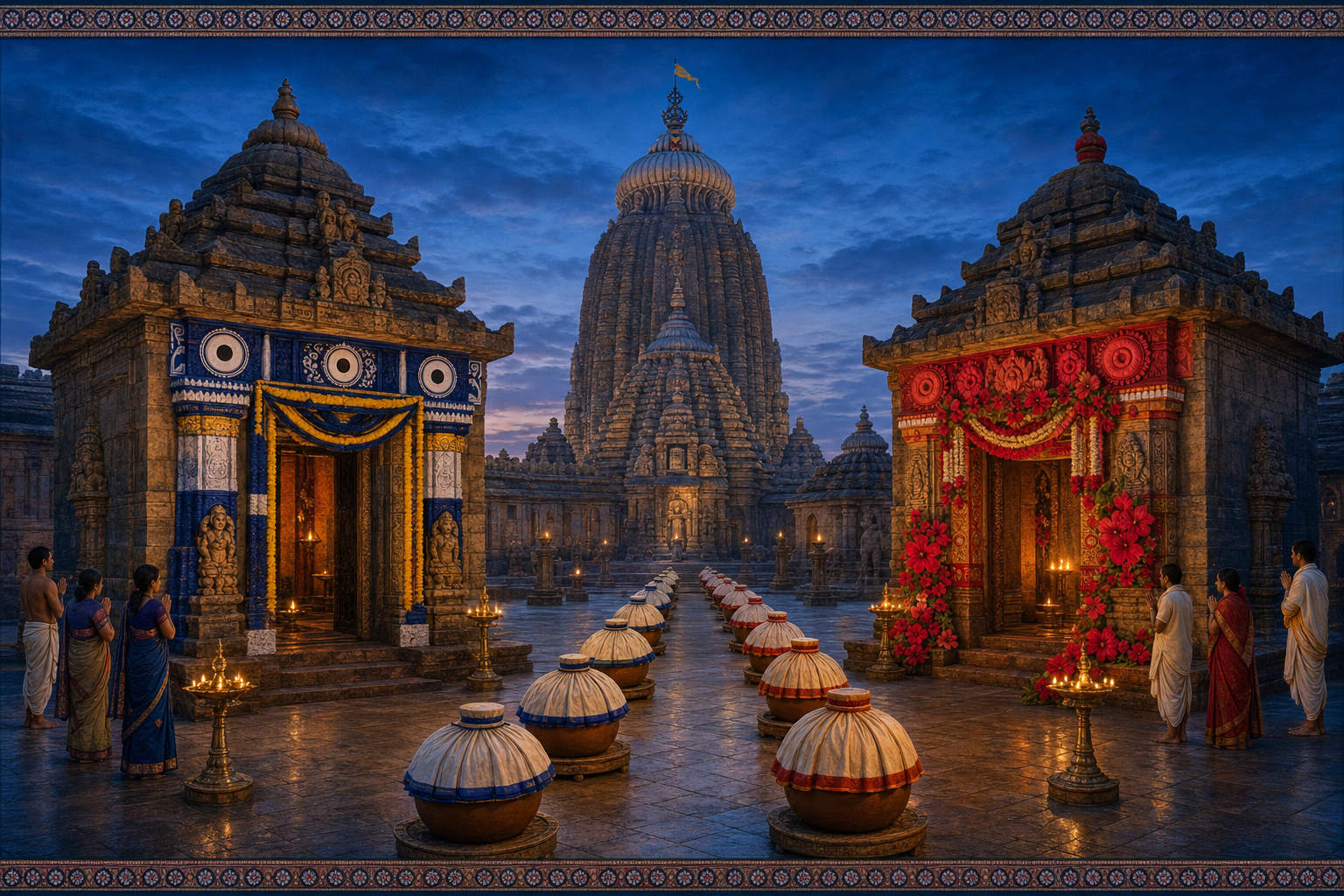
If you know Jagannath as a Vaishnava Lord and then hear him described as Dakshina Kali, you may wonder whether Odisha has confused two distinct traditions. That question becomes easier once you stop treating Vaishnava and Shakta devotion as rival labels that must divide a temple, a household, or a devotee.
The clearest way to understand the relationship is to begin with worship, then distinguish what the ritual establishes from what theology and devotional experience draw out of it. That approach lets you appreciate Odisha’s synthesis without pretending that Jagannath and Kali have become indistinguishable in every context.
Begin with Bimala and the order of Mahaprasad
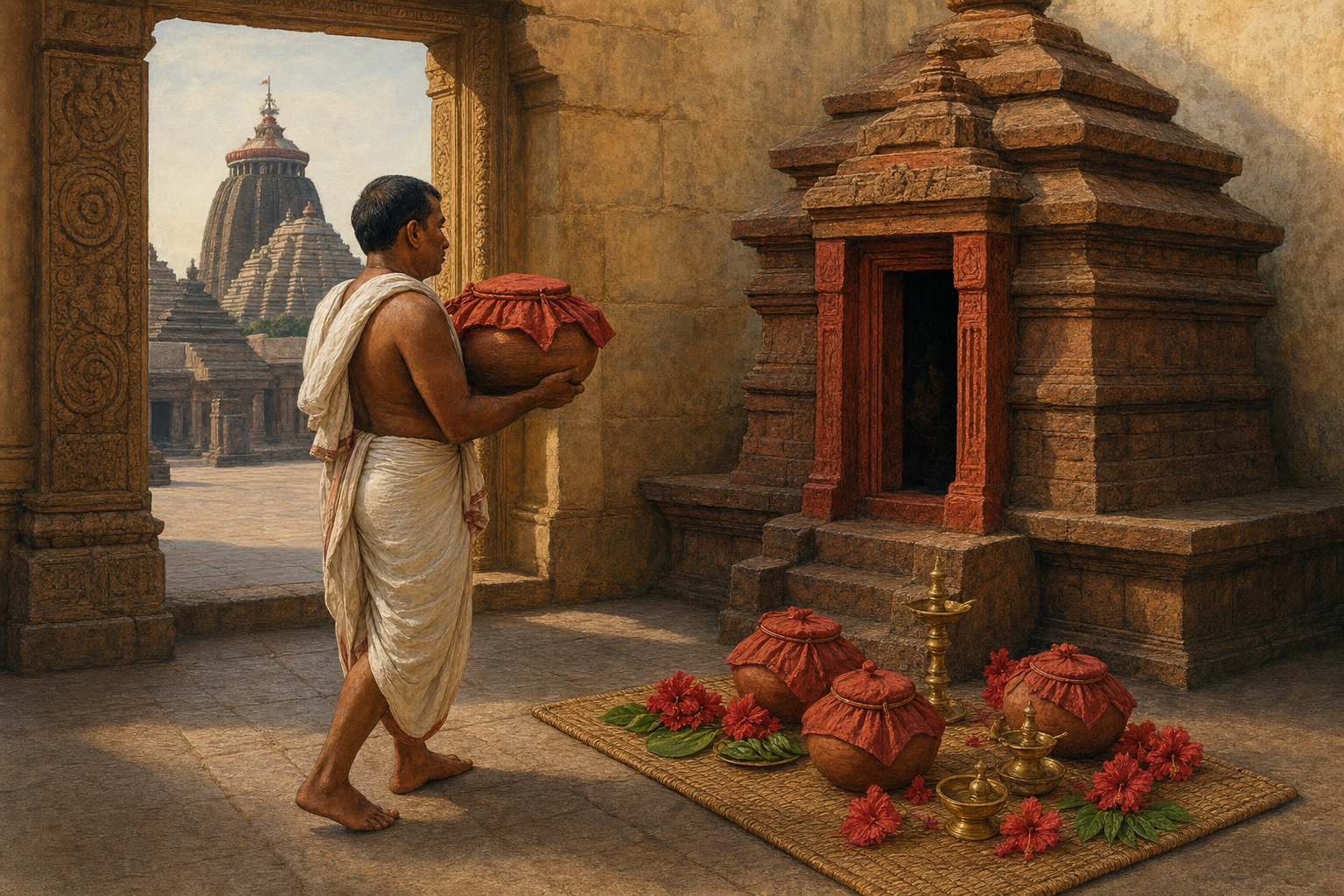
Puri Srimandir presents Jagannath through a predominantly Vaishnava ritual world, but the temple’s Shakta dimension is not an ornament added at the edge. Goddess Bimala, also called Vimala, has an inner shrine and is revered as the Shakti of the temple. Most importantly, Bimala receives the sacred food offering before Mahaprasad is distributed to devotees.
That sequence matters more than a vague claim that Odisha is “inclusive.” It places the Goddess inside the temple’s operative sacred order. Vaishnava devotion to Jagannath and reverence for Shakti meet in an act performed repeatedly: the sanctification and sharing of food. Theology becomes something devotees receive, carry and eat.
At the same time, the Bimala ritual should not be made to prove more than it does. It establishes a consequential Shakta presence within Jagannath’s temple ecology. It does not require every devotee to declare that Jagannath and Dakshina Kali are identical in every image, mantra or mode of worship.
A reliable interpretation therefore has to pass two tests. If it describes Puri as exclusively Vaishnava and cannot account for Bimala, it is incomplete. If it uses Bimala to erase Jagannath’s Vaishnava identity, it is incomplete in the opposite direction. Odisha’s synthesis works because the relationship is preserved, not because every distinction disappears.
Separate ritual fact, theological vision and devotional recognition
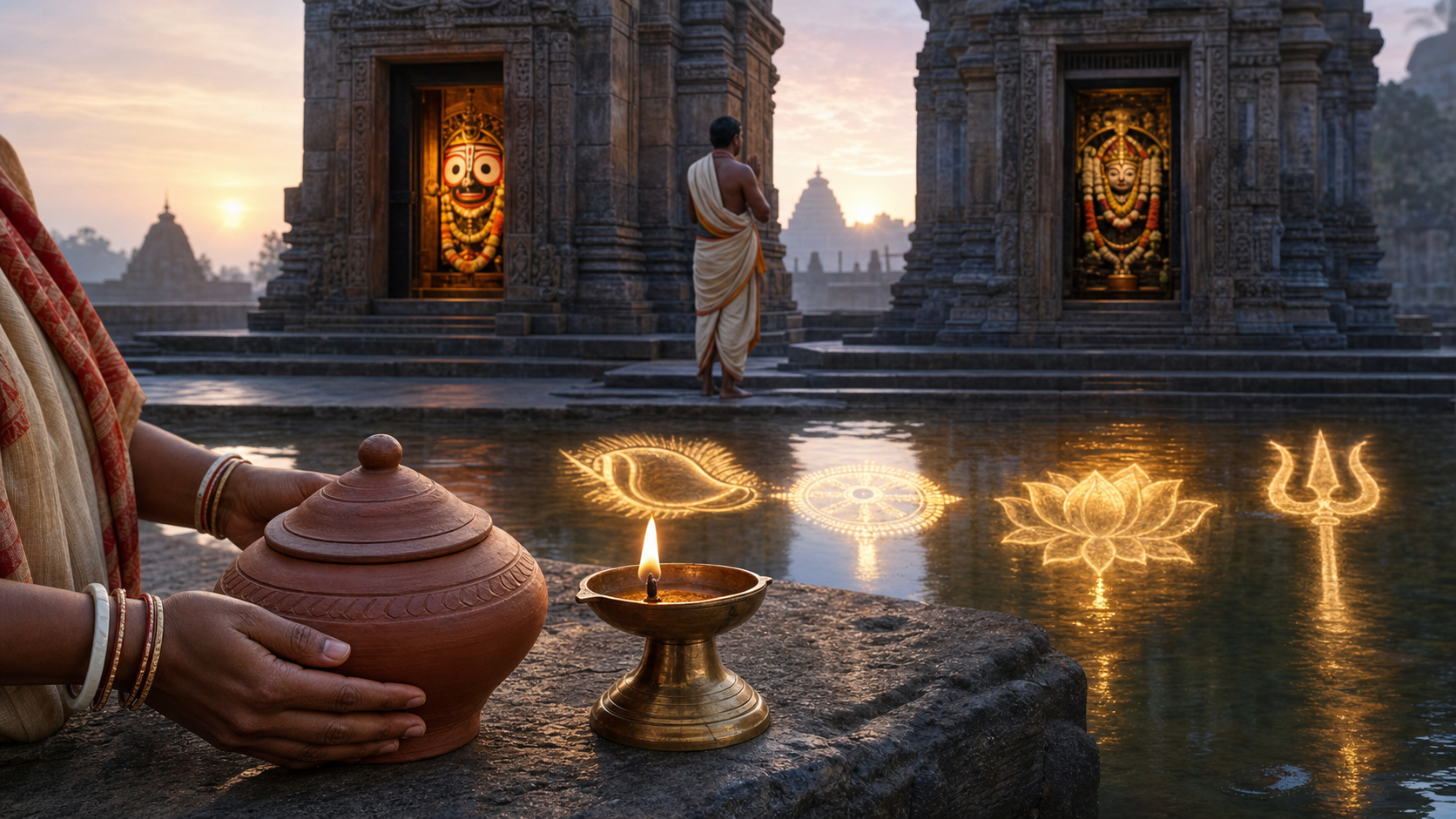
Confusion usually begins when three different kinds of claim are compressed into the sentence “Jagannath is Kali.” Keep them separate, and the statement becomes much more intelligible.
- Ritual relationship: Bimala occupies a recognized place within Srimandir, and the Mahaprasad sequence joins the worship of Jagannath to the temple’s Shakti. This is the most concrete level because it concerns what the temple does.
- Philosophical complementarity: Jagannath is celebrated as Purushottama, the Supreme Person, while Kali embodies the creative and transformative power of Prakriti. In this frame, consciousness and power are not competing sovereigns. The Divine is approached as transcendent source and active manifestation.
- Devotional recognition: A worshipper may encounter in Jagannath the same fierce compassion, protection and liberating nearness associated with Dakshina Kali. This is a matter of spiritual perception and devotional mood, not merely a classification in a catalogue of deities.
The third level explains why Jagannath’s form carries such interpretive force. His enormous circular eyes can be experienced as an all-encompassing gaze. His highly abstracted form resists ordinary anatomical representation. Devotees who associate Kali with time, protection, dissolution and liberation may recognize a related spiritual intensity in Jagannath: awe without remoteness, and power joined to mercy.
These are resonances, not a demand for visual sameness. Jagannath does not need Kali’s conventional iconography to disclose a Kali-like dimension of the Divine. Nor does a comparison based on time, fierceness or compassion establish that all doctrinal differences have vanished. The comparison tells you how one form can awaken recognition of another.
When you encounter the claim that Jagannath is Dakshina Kali, ask which of the three levels is intended. Is the speaker pointing to the Bimala ritual, explaining the unity of Purusha and Prakriti, or describing a devotional experience before Jagannath’s gaze? That single question prevents a fruitful tradition from being reduced either to literalism or to empty metaphor.
What to notice in Puri and in Odia devotional life
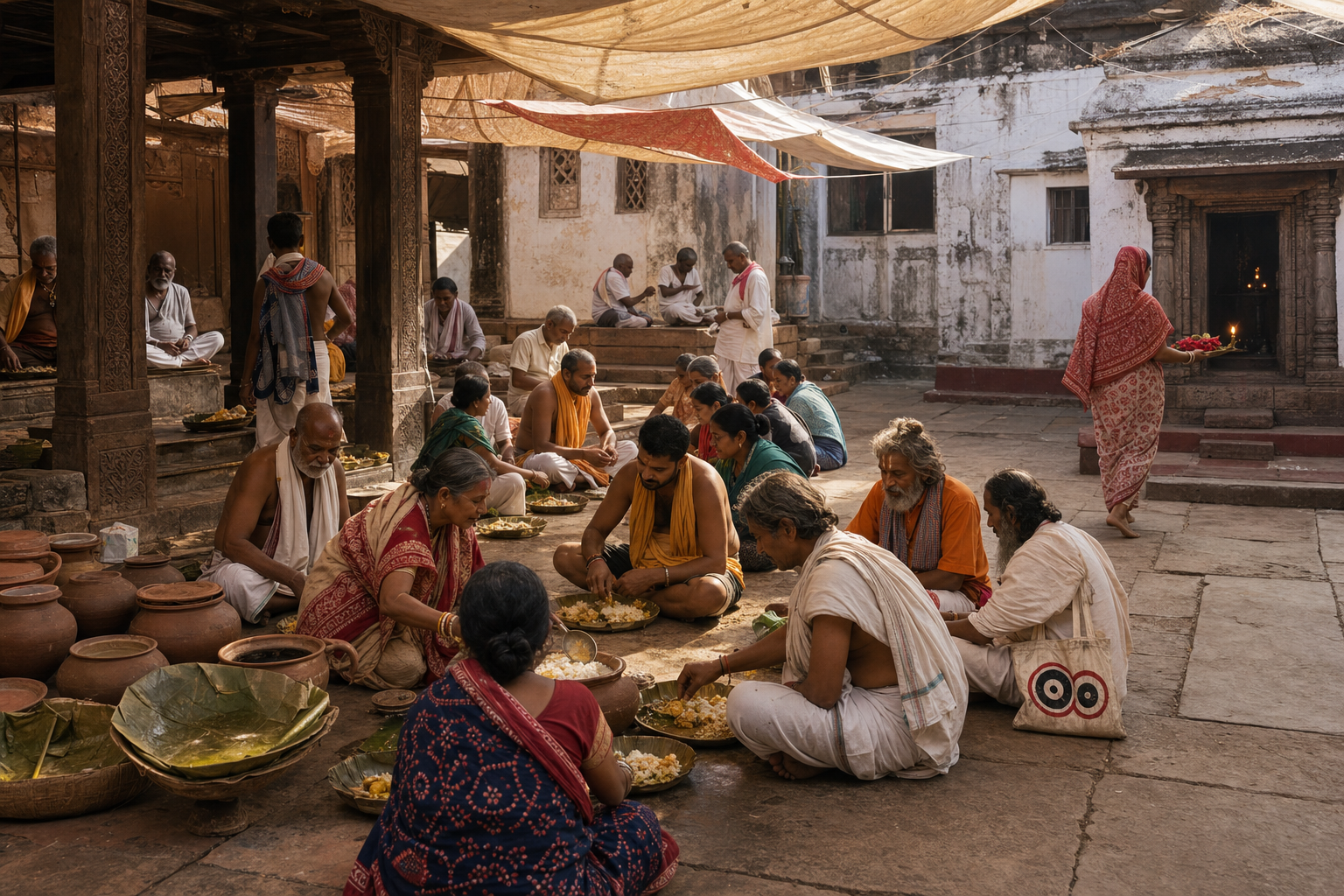
You do not need to invent a blended ritual to engage this synthesis. Odisha already expresses it through the arrangement of sacred space, the passage of offerings, festival movement, domestic worship and art. Pay attention to the relationships that are already present.
- Do not treat Bimala as a footnote. Her shrine helps you read Srimandir as an integrated sacred environment rather than a building assigned to one sectarian category. Notice that the Goddess has a ritual function, not merely a decorative presence.
- Receive Mahaprasad as embodied theology. Its meaning is not limited to food coming from a famous temple kitchen. The offering has passed through a sacred order in which Jagannath and the temple’s Shakti are both consequential. You need no additional formula; mindful reception is enough to recognize what the sequence expresses.
- Look at Jagannath before explaining him. If his vast eyes evoke both exposure and welcome, or if his unusual form feels at once formidable and approachable, you are encountering the emotional grammar behind the Dakshina Kali comparison. Let the experience precede the label.
- Distinguish festival interpretation from fixed dogma. The collective surge of Ratha Yatra can be read as Shakti in motion: divine energy leaving enclosure and moving among the people. That is a devotional interpretation of the festival’s dynamism, not a claim that every participant consciously performs a Shakta rite.
- Look for coexistence outside the main sanctum. During Kali Puja and Diwali, households may maintain reverence for both Jagannath and Kali. Shared motifs in patachitra, together with Odia literature and kirtan, show how theological kinship enters ordinary visual and musical culture.
This way of looking changes the question you bring to Odisha. Instead of asking, “Which sect does this belong to?” ask, “How are these forms placed in relationship?” The first question assumes that boundaries explain everything. The second lets ritual practice reveal how Odia Hindu life actually holds distinction and unity together.
Synthesis is unity with difference, not religious flattening
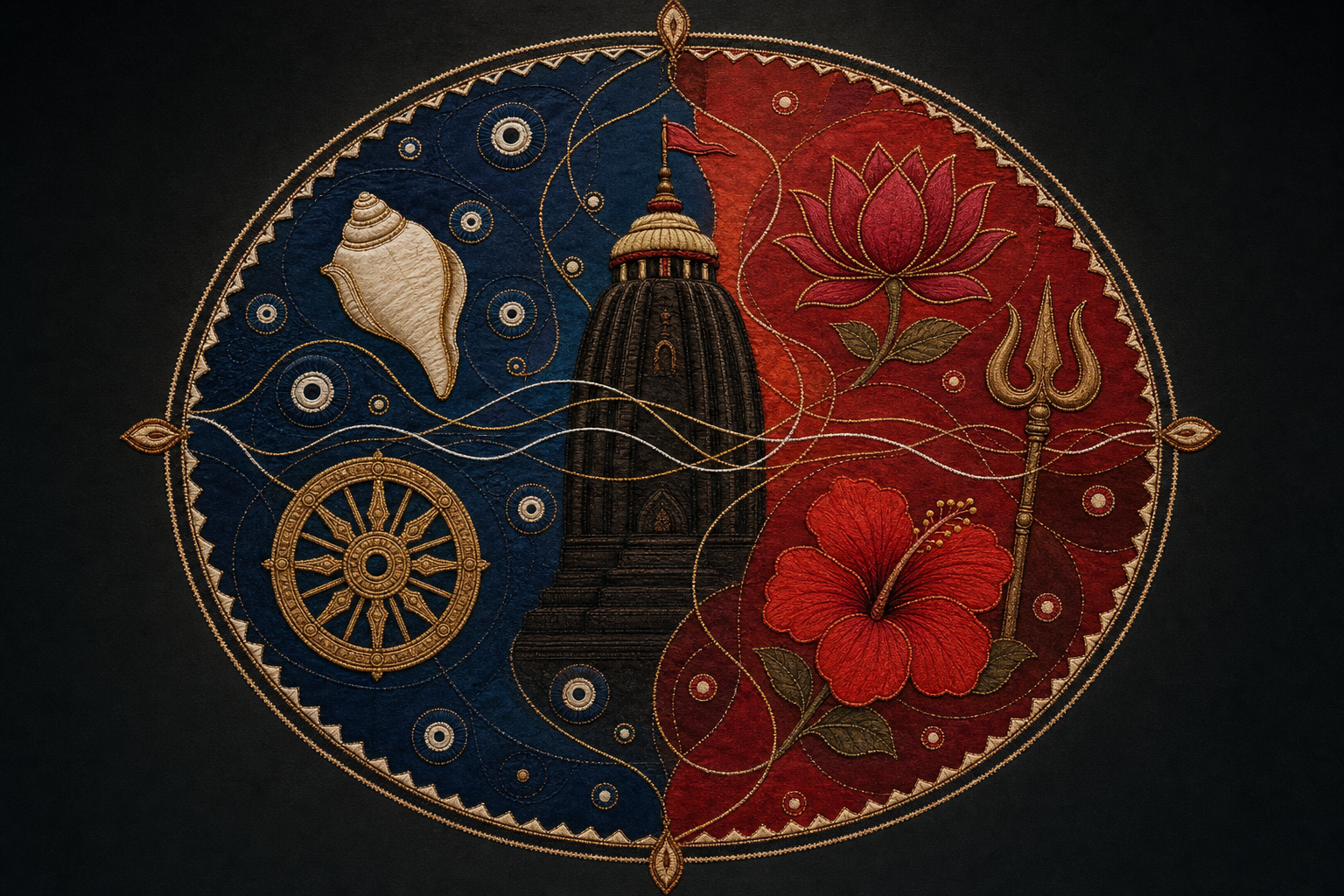
The Ishta principle gives Hindu devotees room to approach the one Divine Reality through a chosen form without declaring every other form false. In Odisha, that freedom allows Jagannath’s sovereignty and the Mother’s protective power to be experienced as mutually illuminating. A devotee can remain deeply Vaishnava while honoring Bimala, or recognize Kali’s compassionate fierceness in Jagannath without abandoning either deity’s distinctive worship.
This is not the claim that Shakta and Vaishnava traditions say exactly the same thing. Shakti must not be reduced to a minor accessory of a male deity, and Jagannath must not be reduced to an interchangeable name for another form. Purushottama and Prakriti provide a language of complementarity: the Supreme and divine power belong together, while their distinct forms continue to direct particular kinds of devotion.
The same care is needed when connecting Odisha’s example to the wider dharmic family. Buddhist karuna, Jain ahimsa and Sikh seva can serve as bridges of recognition because compassion, non-violence and selfless service help communities meet ethically. They do not prove that Buddhism, Jainism, Sikhism and Hindu traditions have identical doctrines. Shared values open a relationship; they should not erase the histories and disciplines that give each path its character.
Odisha therefore offers a practical method for speaking about dharmic unity responsibly:
- Ground large claims of unity in an actual practice, sacred place or relationship.
- Say whether you are describing ritual, philosophy, symbolism or personal devotional recognition.
- Preserve the names and forms through which practitioners understand their own traditions.
- Use shared values to encourage cooperation, not to manufacture an artificial sameness.
This method is especially useful when modern arguments try to force Hindu life into rigid, mutually exclusive compartments. Puri shows that a tradition can have a clear center without policing every adjoining form of devotion as a threat. Its cohesion comes from ordered relationship.
Key takeaways
- Puri’s strongest evidence of Vaishnava-Shakta synthesis is ritual: Bimala receives the sacred offering before Mahaprasad reaches devotees.
- Jagannath as Dakshina Kali is best understood as a devotional and theological recognition, not a compulsory declaration that every distinction has disappeared.
- Jagannath’s circular eyes and abstracted form support comparisons involving awe, compassion, protection, time and liberation.
- Ratha Yatra, household worship, patachitra, literature and kirtan carry the synthesis beyond a single shrine, although each expression should be interpreted on its own level.
- Dharmic unity is strongest when it joins traditions through practice and values while preserving their real differences.
The next time you hear Jagannath identified with Kali, do not settle the matter by arguing over labels. Ask where Bimala stands, how Mahaprasad moves, and whether the speaker means ritual, philosophy or devotional recognition. Those questions will lead you closer to Odisha’s living tradition than a forced choice between Vaishnava and Shakta ever could.
References
