-
From Mortal Hero to Sacred Ideal: Rama’s Journey from Valmiki to the Bhakti Age

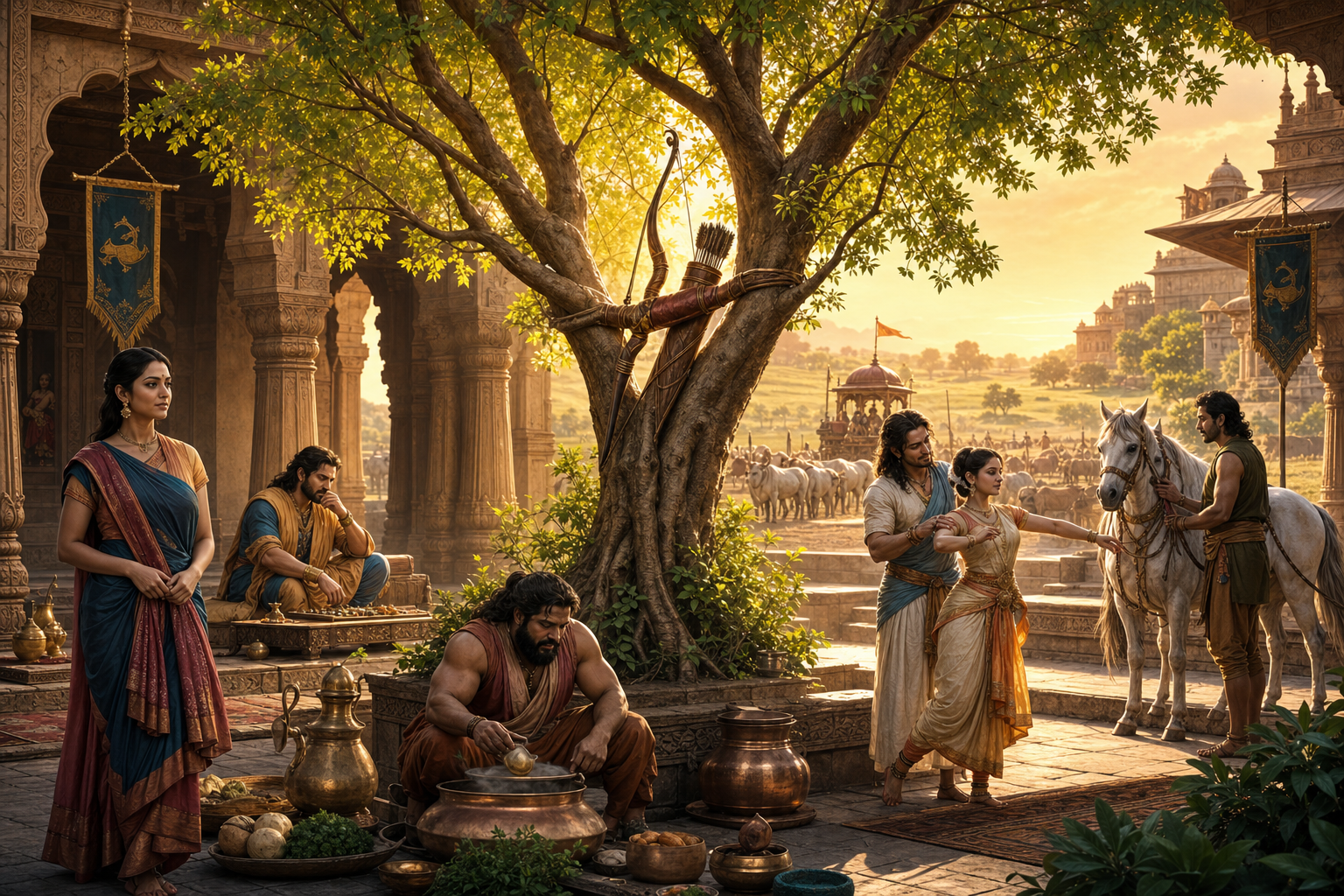
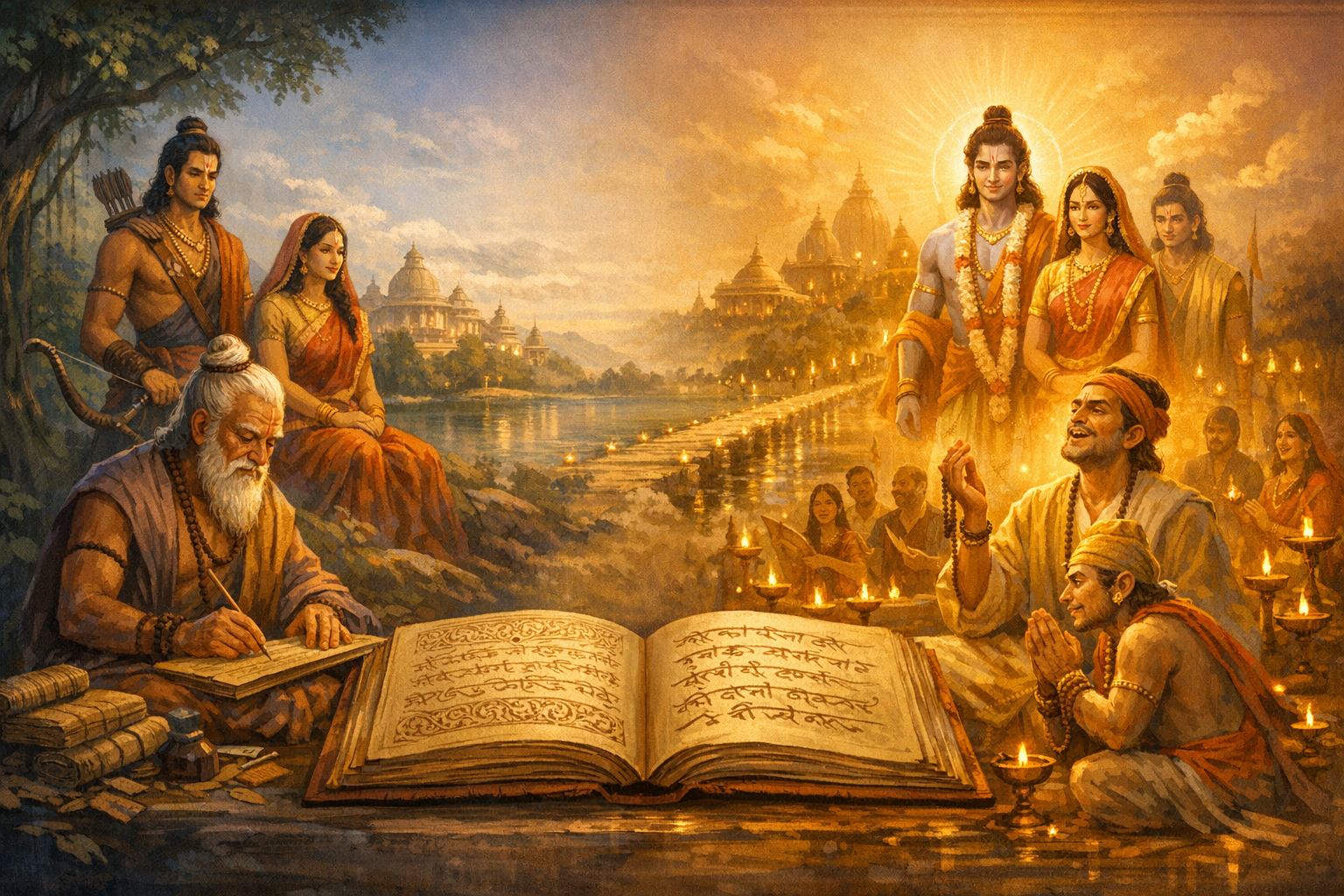
Rama’s image evolves from Valmiki’s ethically tested human king to the Bhakti movement’s compassionate divine, illuminating how dharma and devotion converge rather than compete. Valmiki Ramayana presents Maryada Purushottama as a ruler who chooses justice amid painful dilemmas; Bhakti-era Ramayanas—Kamba Ramayanam, Adhyatma Ramayana, and Tulsidas’s Ramcharitmanas—reframe those dilemmas through grace, interior devotion, and inclusive accessibility.…
-
Shattering the Myth: Why Valmiki’s Ramayana Has No Maya Sita—Evidence and Dharma

The Maya Sita motif—an illusory duplicate of Sita—does not appear in Valmiki’s Ramayana. Textual criticism across northern and southern manuscript families confirms its absence, especially in the Yuddha Kanda where Sita’s Agni-praveśa serves as public vindication. Later Puranic and bhakti-era tellings, such as the Adhyātma Rāmāyaṇa, introduce Maya Sita to offer a theologically protective reading…
-
Decoding Khila in Vedic Sutras: Hidden Supplements That Shaped Ancient Hindu Wisdom

Khila, the Vedic category for recognized supplements, reveals how ancient Indian literature balanced canonical integrity with lived adaptability. This in-depth exploration maps khila across the Rigveda Khilāni and sūtra traditions, showing how supplementary hymns and pariśiṣṭas extend ritual capacity without unsettling core śruti. Readers learn why texts like the Śrīsūkta, though technically ancillary in many…
-
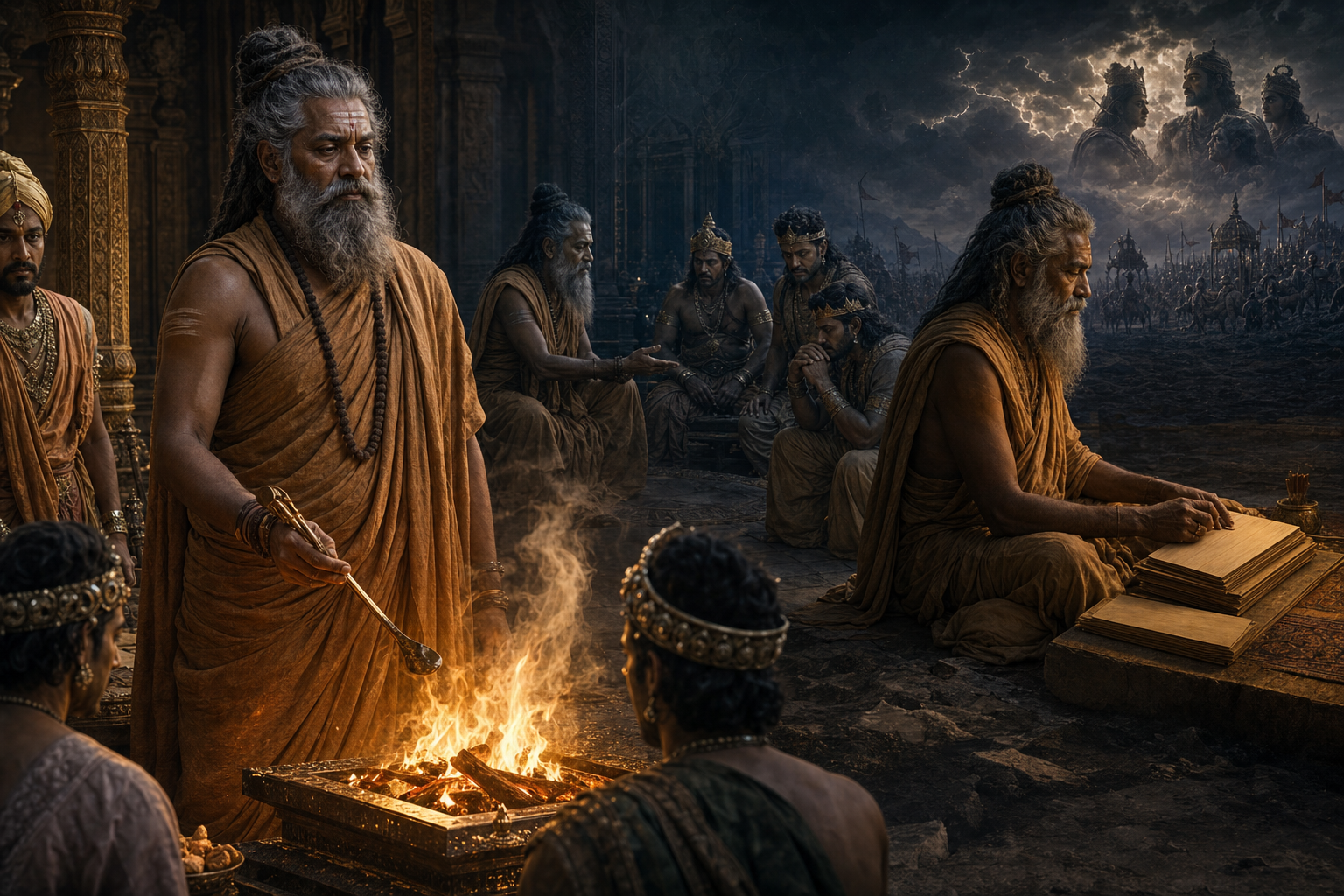
Mahabharata Masterguide: Clear, Powerful Summary of Dharma, War, and Wisdom (18 Parvas)

This academically grounded summary presents the Mahabharata in short while preserving the epic’s depth and coherence. It outlines authorship traditions (Veda Vyasa as composer, Lord Vinayaka as scribe), textual history, and the 18-parva structure. Readers gain a clear, chronological narrative—from the Kuru lineage and the dice game to the Bhagavad Gita and the 18-day Kurukshetra…
-
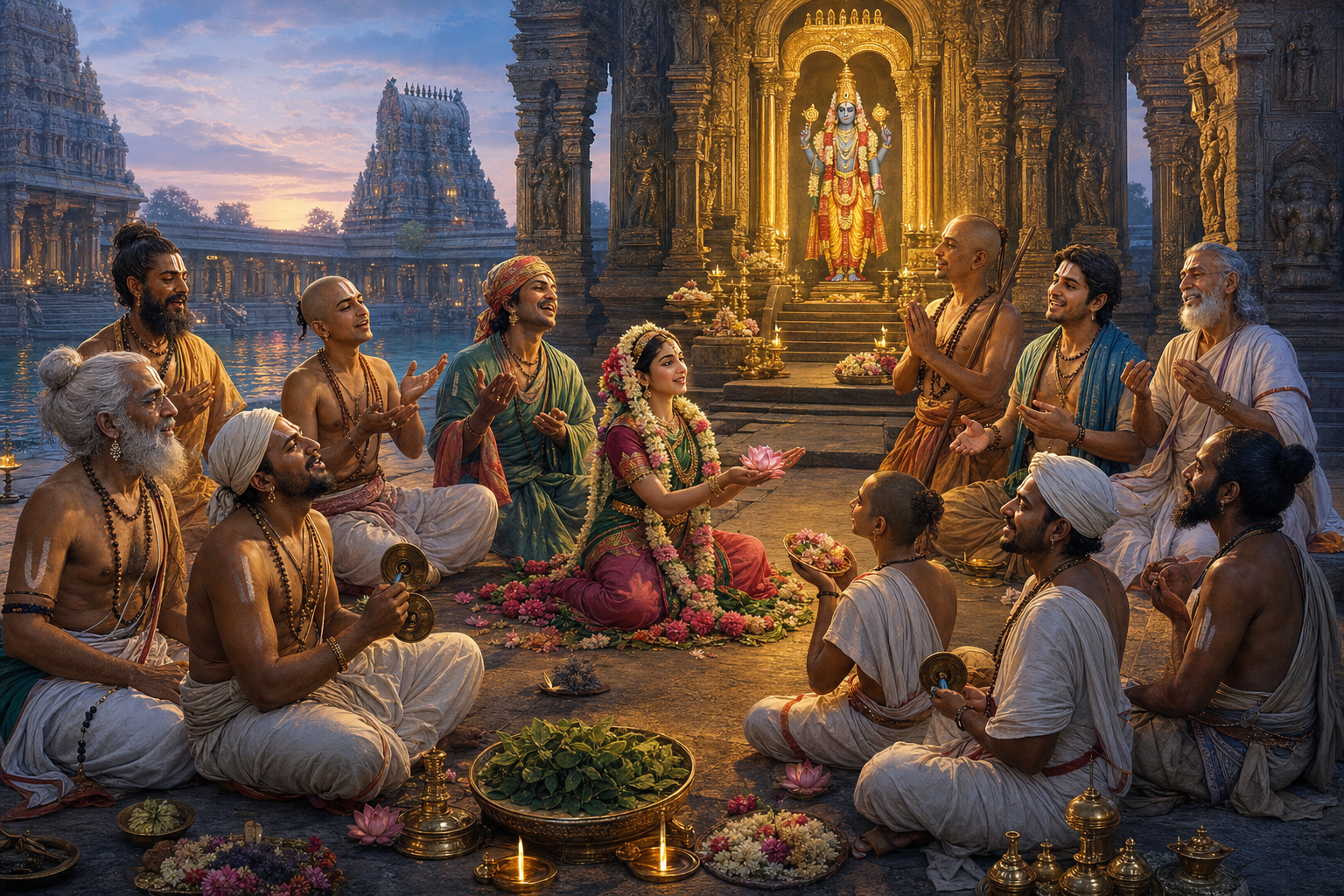
Sri Hanuman Das: Enigmatic Early Bhakti Poet of Uttar Pradesh and Rama-Hanuman Devotion

Sri Hanuman Das is remembered as a Hindu saint and Sanskrit poet from Uttar Pradesh, celebrated for ardent devotion to Lord Rama and Lord Hanuman. While a 1st-century CE date appears in some traditions, available evidence suggests this chronology is hagiographic, not epigraphically confirmed. Placed within the broader Bhakti Tradition and the ritual geography of…
-
How a Fifth-Century Sanskrit Classic Anticipated the Emergency: Mricchakatika’s Warnings

Mricchakatika (The Little Clay Cart) is a fifth-century Sanskrit classic whose legal and civic insights strikingly anticipate the dynamics of India’s 1975–77 Emergency. Set in Ujjaini, it portrays how a weak sovereign and an unscrupulous power-broker deform institutions, and how conscience-driven citizens and spiritual witnesses restore justice. The Ninth Act, Vyavahaara (The Trial), functions as…
-
Why Tagore Called the Mahabharata Indispensable: A Profound Guide to India’s Living Epic

Rabindranath Tagore’s claim that education in India is incomplete without the Mahabharata identifies the epic as a living curriculum in ethics, leadership, and spiritual inquiry. This analysis shows how the text integrates narrative with treatises such as the Bhagavad Gita, Shanti Parva, and Vidura-niti to teach rajadharma, apaddharma, and mokshadharma. Readers discover diplomacy in Udyoga…
-
Ravana as Rama’s Priest: Akalbodhan in Krittibas’s Bengali Ramayana and Dharmic Unity

This essay examines the Krittibas Ojha Bengali Ramayana episode in which Ravana, despite being Rama’s adversary, officiates as priest for Rama’s Durga Puja. It contextualizes the scene within Akalbodhan, the autumnal invocation of Durga that anchors Bengal’s Sharadiya Durga Puja. Contrasting Krittibas with Valmiki’s Aditya Hridayam, it shows how regional retellings adapt epic theology without…
-
Sringara Rasa Unveiled: The Heartbeat of Love in Hindu Poetics—Union and Separation

Sringara Rasa, one of the nine rasas, expresses the refined essence of love grounded in the sthayi bhava called rati. It unfolds through two modes—Sambhoga (union) and Vipralambha (separation)—which together illuminate the fullness of human affection. Classical vibhavas such as seasons, garlands, and garden visits prepare the mind for aesthetic experience. In dance traditions like…
-
Dandakaranya and Germany’s Black Forest: Unraveling Sacred Myths, Memory, and Nature’s Power

This comparative exploration of the Dandakaranya Forest in the Ramayana and Germany’s Black Forest reveals how sacred geography, mythology, and ecology co-create cultural identity. Readers gain clear context on Dandakaranya’s role in vanvas and dharma, alongside the Schwarzwald’s deep ties to European folklore. The analysis highlights forests as narrative thresholds that test ethics and inspire…
-
Sitayana: A Powerful Ramayana Retelling Celebrating Sita’s Courage, Grace, and Dharma

Sitayana presents the Ramayana through Ma Sita Devi’s perspective, highlighting courage, grace, and dharma with academic clarity and devotional warmth. It complements classical tellings by foregrounding Sita’s agency, compassion, and steadfastness during exile and separation. Readers gain ethical insights grounded in shared dharmic values that resonate across Hinduism, Buddhism, Jainism, and Sikhism. The text enriches…
-
Bhai Vir Singh: The Sixth River of Punjab and a Bridge Uniting India’s Dharmic Traditions

Bhai Vir Singh stands as the “sixth river” of Punjab—a poet and thinker whose work renews Punjabi literature and deepens ethical life. His celebrated writings, including Rana Surat Singh, Sundari, and Satwant Kaur, weave devotion with courage and civic responsibility. Grounded in Sikh spirituality, his vision resonates with shared dharmic values across Hinduism, Buddhism, and…
-
Behula and Lakhindar in Manasamangal: Love’s Triumph and the Origin of Manasa Devi Puja

The saga of Behula and Lakhindar in Manasamangal presents a timeless Bengali epic that explains the origin of Manasa Devi Puja while celebrating love, devotion, and reconciliation. Set in medieval Bengali literature, it explores how local goddess worship found recognition through communal dialogue and spiritual accommodation. Behula’s river voyage for her husband’s life elevates female…
-
A Path to Truthful Living: A Transformative Review on Satya, Dharma, and Dharmic Unity
A Path to Truthful Living offers a rigorous yet accessible guide to satya as a daily practice, linking truthful speech to ahimsa and disciplined self-mastery. Readers gain a comparative understanding of Hindu, Buddhist, Jain, and Sikh perspectives, with an emphasis on unity in spiritual diversity and religious pluralism. Practical methods—mindfulness, meditation, samayik, simran, and reflective…
-
Bridging Borders: A Transnational Voice in Punjabi Literature, Scholarship, and Creative Praxis

This piece explores how Punjabi literature has emerged as a transnational force, uniting scholarship and creative praxis across Punjab and the Indian diaspora. It highlights the plural, dharmic foundations of the tradition—from Bhakti to Sufi literature—and shows how these lineages nourish interfaith harmony without erasing difference. Readers gain actionable insights into translation strategies across Gurmukhi,…
-
Mahakavi Kalidas Din 2026: Date, Significance, Rituals, and Timeless Cultural Legacy

Mahakavi Kalidas Din (Kalidas Divas) in 2026 falls on July 15, coinciding with Shukla Paksha Pratipada of Ashada Month in the Hindu calendar. Regionally, it aligns with Aani Masam (Tamil), Midhunam (Malayalam), and Aashar (Bengali Panjika), reflecting its pan-Indian significance. The day honors Kalidasa’s enduring contributions through works like Raghuvamsa, Kumarasambhava, Meghaduta, and Abhijnanasakuntalam. Common…
-
Halayudha’s Genius: The 10th-century Sanskrit lexicographer who shaped Indian letters

Halayudha, the 10th-century Sanskrit scholar and lexicographer, is best known for the Abhidhanaratnamala (Halayudhakosha), a metrical dictionary that shaped classical Indian literature. Composed for memorization and precision, it preserves semantic fields vital to poets, teachers, and students. The work’s linguistic and historical value helps modern readers interpret layered meanings across texts central to Hinduism, Buddhism,…
-
Vibhishana and Vikarna: Defiant Voices of Dharma Over Blood in India’s Epics

Vibhishana and Vikarna exemplify moral courage in India’s epics, choosing dharma over kinship and expedience. Vibhishana’s reasoned counsel to Ravana and subsequent alignment with Rama reflect fidelity to righteous order, not betrayal. Vikarna’s protest in the dice hall articulates truth amid power, even as his later choices reveal the tragic weight of duty. Together, they…