-
Mahabrahmana’s Monumental Preface: Viswamitra, Gayatri, and the Atma of Bharatavarsha

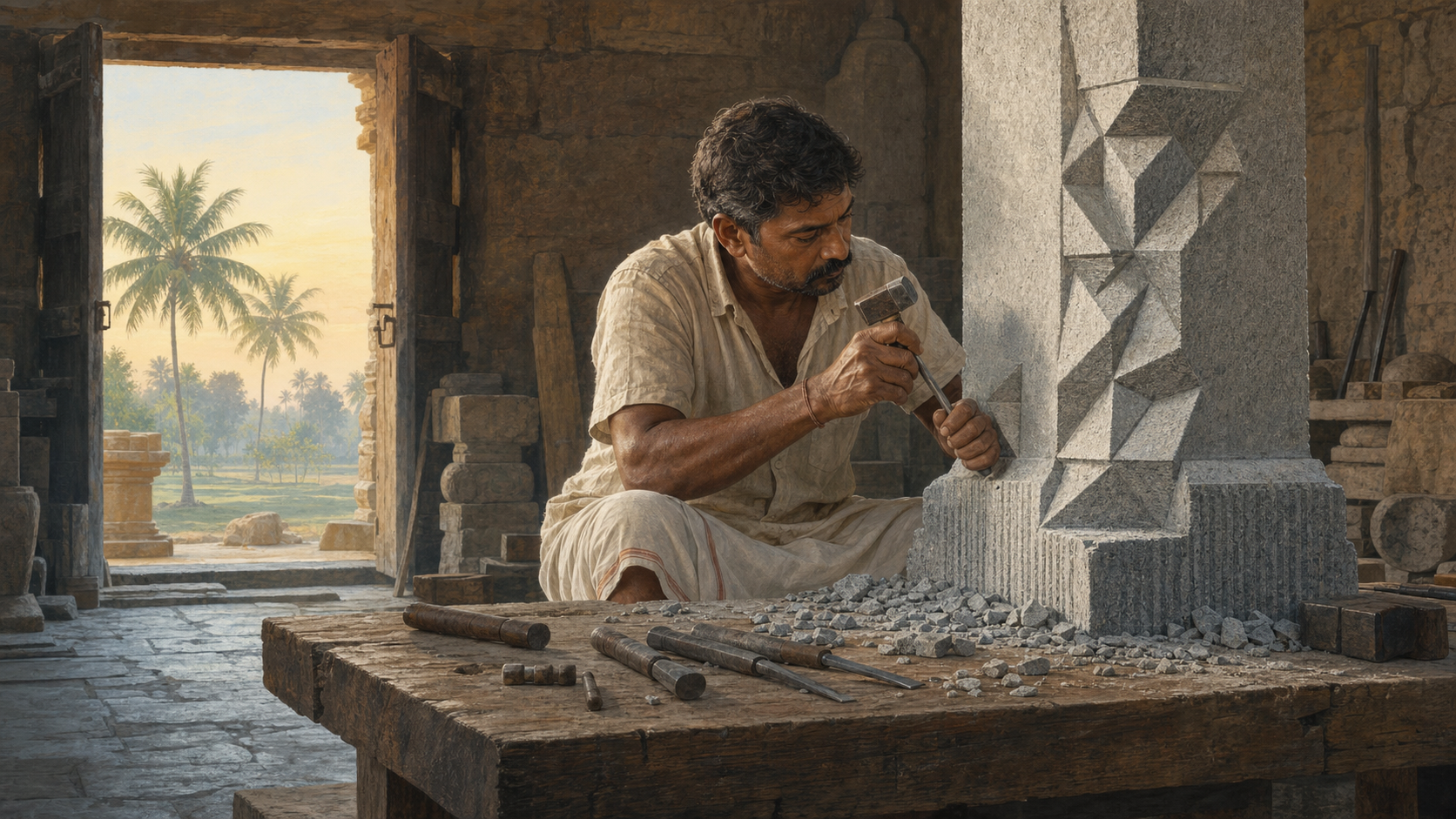
This long-form exploration examines the preface to Devudu Narasimha Sastri’s Mahabrahmana as a self-standing literary and philosophical achievement. It situates the preface within the broader history of prefaces, from Sanskritic invocations to modern print culture, and reads it as a Vedantic manual for attentive reading. Drawing on references to the Rg Veda, Brahmanas, Upanishads, the…
-
Beyond ‘300 Ramayanas’: Valmiki’s Legacy, Rasa Aesthetics, and Dharmic Unity in Retellings

This essay maps the many Rāmāyaṇa traditions while reaffirming the aesthetic primacy of Vālmīki’s Sanskrit epic. It classifies adaptations into four clear streams—dharmic subtraditions, texts attributed to Vālmīki and folk narratives, classical kāvya and drama, and modern ideological readings—so readers can evaluate variations without losing the original’s moral and poetic center. Murāri’s verse and Ānandavardhana’s…
-
Inside the Narasimha Purana: The Maya Sita Mystery behind Ravana’s Abduction

This essay explores a Puranic reinterpretation—attributed to the Narasimha Purana—of the Ramayana episode in which Ravana kidnaps Sita, proposing that he abducted a divinely fashioned “Maya Sita.” It explains how Agni shelters the true Sita, reframing the Agni-pariksha as a public revelation of truth rather than a punitive ordeal. Readers gain a clear, technical understanding…
-
Guru Nanak on Woman and Grace: A Scholarly Journey through Equality, Nadar, and Naam

This long-form, research-driven essay offers a rigorous reading of two core motifs in Sikh scripture—equality of woman and divine grace—and shows how they together shape a coherent path of practice. It clarifies key Sikh concepts such as hukam, nadar, Gurprasad, Naam Simran, seva, Kirat Karo, and Vand Chhako, situating them in historical and philological context.…
-
Ravana Grounded: Kamban’s Earthbound Abduction of Sita and the Curse That Altered Dharma

This analysis explores how Kamban’s Tamil Iramavataram reshapes the abduction of Sita into an earthbound ordeal governed by a curse that limits Ravana’s agency. In contrast to Valmiki’s aerial abduction, Kamban’s version compels Ravana to carry Sita upon a slab of earth, intensifying witness, pathos, and ethical indictment. The study situates Kamban historically and theologically,…
-
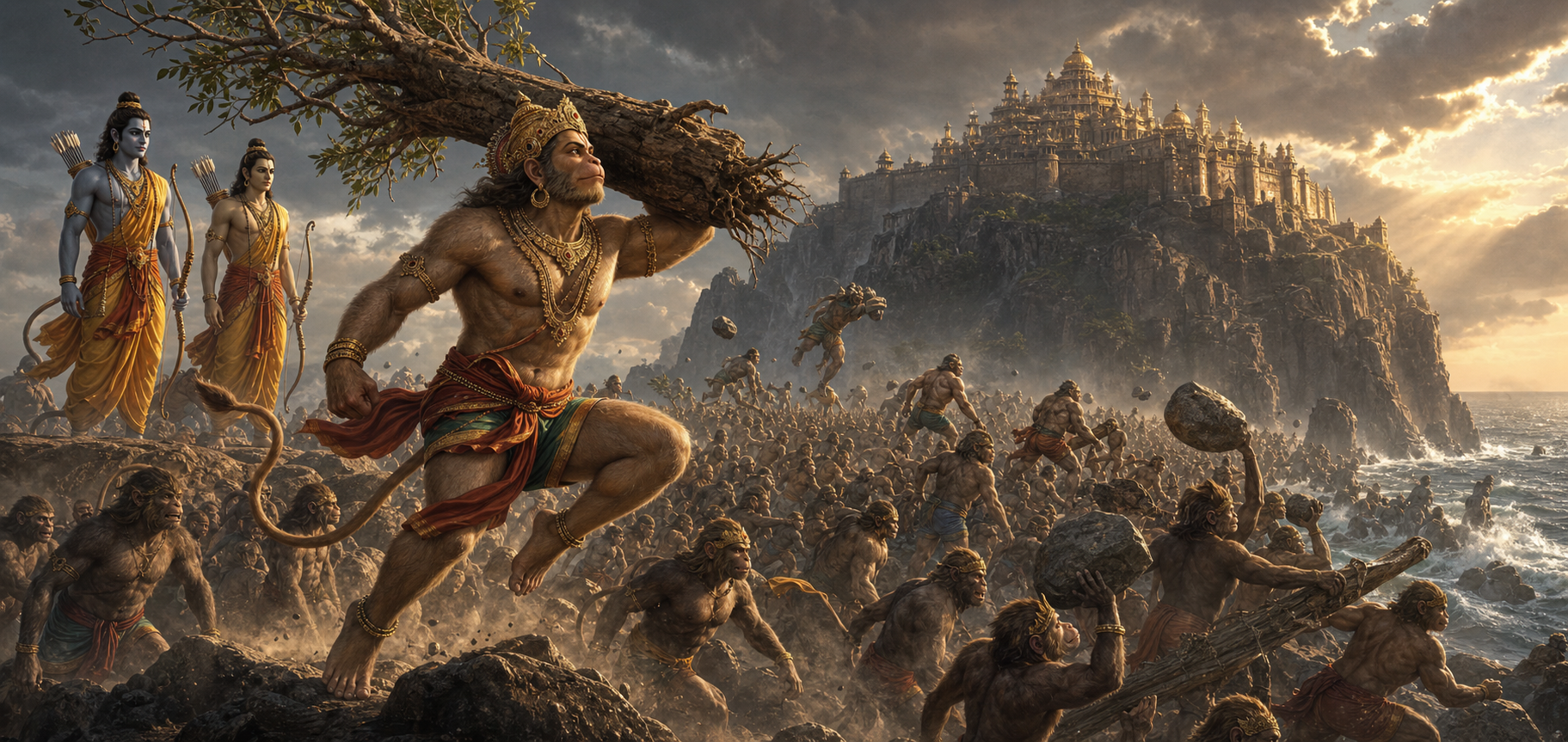
Lanka Kānda in Tulsidas’s Ramcharitmanas: Dharma, Strategy, and Enduring Bhakti

Lanka Kānda in Ramcharitmanas unites poetic beauty with ethical clarity, presenting a dharma-yuddha rooted in diplomacy, restraint, and devotion. Setubandha functions as engineering feat and sacred metaphor, while Vibhīṣaṇa’s refuge models principled dissent and moral courage. Tulsidas’s nuanced handling of Sita’s sanctity and Ravana’s downfall centers compassion over suspicion and ego. The kānda serves as…
-
Lava and Kusha’s Divine Recital: How Valmiki’s Ramayana First Echoed Through Ayodhya

This essay explores the formative moment when Lava and Kusha first chanted Valmiki’s Ramayana, tracing how an ashram audience and a later royal performance shaped the epic’s authority as sung narrative. It explains the technical foundations of the recital—metre, intonation, and emotive delivery—and shows why disciplined orality anchored the Ramayana’s cultural spread. The analysis situates…
-
Nilakantha Chaturdhara’s Bharatabhavadipa: Illuminating Mahabharata’s Dharma and Depth

Nilakantha Chaturdhara’s Bhāratabhāvadīpa (Bharatabhavadipa) stands as one of the most trusted gateways into the Mahabharata’s narrative, ethics, and philosophy. Framed by rigorous Sanskrit exegesis, it clarifies complex episodes, reconciles apparent contradictions, and highlights the epic’s enduring guidance on rajadharma, dharma-yuddha, and moksha. Attentive to philology and textual variants, the commentary equips readers to engage the…
-
Inside Vijayanagara’s Golden Age: Kavi Sarvabhauma Srinatha’s Daring Challenge to Arunagirinatha

Set during the golden age of the Vijayanagara Empire, this episode from Kavisārvabhaomuḍu reconstructs how Kavi Sarvabhauma Srinatha strategically challenged the Vidyādhikāri Arunagirinatha in a high-stakes courtly contest. Readers discover how a subtle Sanskrit device—apaśabdābhāsa—can invert a debate by disguising correctness as error. The narrative explains why grammar (anchored in Panini, Vararuchi, and Patañjali) is…
-
Jagannatha Pandita’s Rasagangadhara: Mastering Rasa, Poetics, and Indian Aesthetics

Jagannatha Pandita (1590–1670 CE) transformed Sanskrit poetics through Rasagangadhara, a landmark synthesis that clarifies how language, context, and propriety culminate in rasa—the refined relish of emotion. Born in Andhra Pradesh to Perubhaṭṭa and Lakshmi, he bridged southern scholastic lineages with the cosmopolitan courts of North India, reportedly earning the honorific Paṇḍitarāja. His oeuvre, including Bhaminivilasa…
-
Beyond the Furrow: Peahen’s Egg Legends and Sita’s Birth Symbolism in Folk Ramayanas

Hindu folk Ramayanas preserve Sita’s sanctity through imaginative origin stories that complement the canonical Valmiki account. A striking variant presents Sita as arising from a peahen’s egg, recasting her as andaja while affirming her core identity as ayonija. The peahen symbolizes guardianship, beauty, and monsoon renewal, while the egg evokes the cosmic Hiranyagarbha—both intensifying the…
-
Before Surdas: Periyalvar’s South Indian Bhakti that First Envisioned Child Krishna’s Play

This long-form study maps how Tamil Āḻvar poetry—especially Periyāḻvār’s Tiruppallāṇḍu and Periyāḻvār Tirumoḻi—pioneered an intimate, vernacular devotion to Krishna as a child centuries before Surdas. It explains the theological innovation of blessing the Lord, the poetic craft that domesticates the divine, and the temple-liturgy networks that diffused these moods northward. The analysis situates Periyāḻvār within…
-
World Punjabi Conference 2026, Ludhiana: A Landmark Book Release Uniting Dharmic Heritage

The World Punjabi Conference in Ludhiana (20–22 February 2026) anchors a landmark book release that advances Punjabi literature, script literacy, and cultural heritage while fostering unity among Hindu, Buddhist, Jain, and Sikh traditions. The analysis outlines how a conference-based launch delivers scholarly rigor, curriculum integration, and community engagement beyond a ceremonial unveiling. Technical guidance covers…