-
Surpanakha Reimagined: Folk Ramayana’s Haunting Lament and Dharma’s Grey Zones

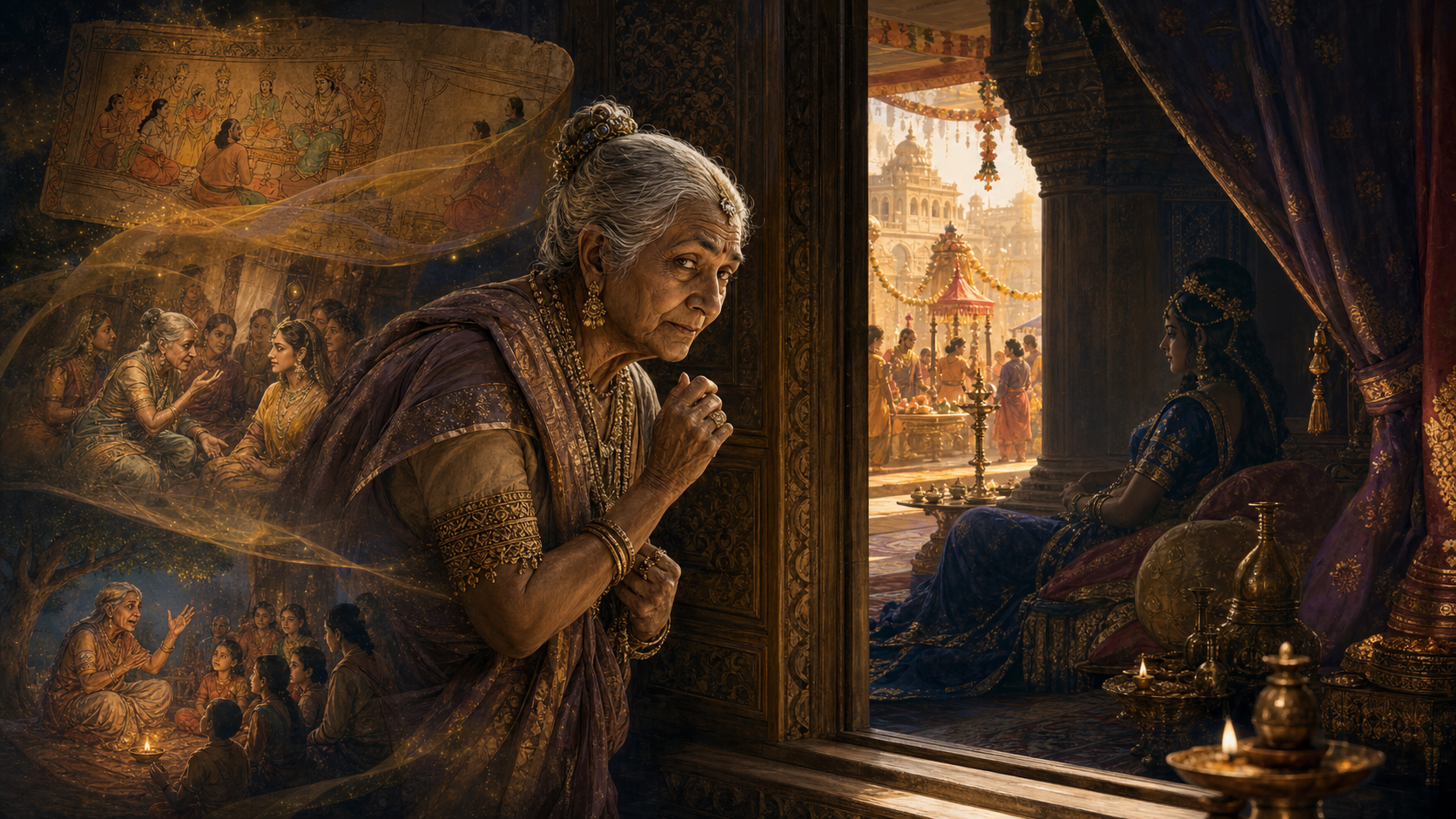
South Indian folk Ramayana retellings give Surpanakha a complex, empathetic voice that challenges simplistic binaries of dharma and adharma. This analysis explains how Yakshagana, Kathakali, and Kaliyattam frame her suffering as an ethical prompt rather than a narrative footnote. Readers gain a nuanced understanding of gender dynamics, humiliation, and proportionality in responses. The piece connects…
-
Utsav and Mricchakatika: A Scholarly, Heartfelt Reappraisal of Girish Karnad’s Adaptation

This scholarly reappraisal situates Utsav (1984) within the long legacy of Sudraka’s Mricchakatika, establishing a careful baseline before assessing Girish Karnad’s adaptation. It outlines the play’s complex plot, deftly interwoven subplots, and richly drawn characters—especially Cārudatta and Vasantasena. It highlights the social and political motifs of Ujjaini under Palaka and Shakara, and the moral transformations…
-
Why Folk Ramayanas Embrace Both Virtue and Transgression: Plural Voices, Deeper Dharma

Folk Ramayanas across India and Southeast Asia soften the boundary between dharma and adharma, using oral performance and rasa to humanize all sides. By reframing antagonists as educative foils rather than fixed enemies, these traditions promote empathy, critical reflection, and community dialogue. Regional adaptations—from Kamba Ramayanam to the Thai Ramakien and Cambodian Reamker—embed the epic…
-
Mystic Echoes Review: Luminous Sikh Stories Bridging Dharmic Wisdom and Daily Life

Mystic Echoes (Stories Rooted in Sikh Spiritual Realms) is reviewed as a contemplative collection that translates Sikh spirituality into lived, everyday ethics. The narratives highlight Naam, Seva, Sangat, and Hukam as accessible pathways to clarity, courage, and compassion. A calm, precise style makes complex ideas readable without diluting spiritual depth. The review underscores how these…
-
Bhuktivada and Rasa: Bhatta Nayaka’s Revolutionary Insight into Indian Aesthetics

Bhuktivada, articulated by Bhatta Nayaka, explains rasa as an alaukika enjoyment (bhukti) rather than a product to be caused or a conclusion to be inferred. It reframes earlier debates by introducing bhāvakatva (art’s power to universalize emotion), bhojakatva (the audience’s receptivity), and sādhāraṇīkaraṇa (shared, de-individualized feeling). Placed between Anandavardhana and Abhinavagupta, this theory anchors the…
-
Discover Angada’s Proven Strength and Dharma: The Invincible Warrior Prince of the Ramayana

Angada, the warrior prince of the Ramayana, unites extraordinary strength with unwavering adherence to dharma. As Vali’s son and Sugriva’s nephew, he balances inheritance with ethical restraint, becoming a model of Kshatra Dharma in action. His leadership in the search for Sita and his role in Lanka illustrate how courage and diplomacy can work in…
-
Discover Sarabha of the Ramayana: The Ultimate Vanara Commander and Dharma Warrior

Vanara Sarabha emerges in the Ramayana as a fearless commander who embodied disciplined courage in service of Lord Rama. Associated with Salveya Mountain, he represents the ethical leadership that sustains dharma-yuddha beyond individual heroism. Though textual traditions vary in detail, Sarabha’s role underscores the epic’s reliance on a coordinated, principled army led by capable vanara…
-
The Proven Power of the Pen: Discover How Ideas Transform History and Unite Dharmic Traditions

History demonstrates that carefully crafted words can mobilize conscience and build unity more effectively than force. Thomas Paine’s Common Sense reframed complex political debates for the public, while the clandestine circulation of History will Absolve Me showed how ideas cross barriers and legitimize movements. Within dharmic traditions, the distribution of Gaudiya literature—affirmed by Srila Bhaktisiddhanta…
-
Complete Mudrarakshasa Analysis: Discover Chanakya–Rakshasa Statecraft and Essential Dharma

Mudrarakshasa is a Sanskrit political thriller that showcases Chanakya’s and Rakshasa’s mastery of statecraft, espionage, and ethical reasoning in the formative years of the Maurya Empire. The drama’s alternating scenes read like shatranj with human stakes, revealing how forged letters, disciplined intelligence work, and psychological insight can alter the balance of power. Far from caricaturing…
-
Reacher Season 3 Review: Proven Adaptation Secrets and Why This TV Run Falls Short

This review explains why book-to-screen adaptations so often disappoint and outlines a proven framework for success: honor the emotional core, externalize interiority, calibrate pacing, cast for essence, and retain resonant details. It evaluates Reacher Season 3 against these criteria, highlighting underdeveloped suspense, muted ethical tension, and thin character dynamics despite excellent lead casting. Comparative examples—ranging…
-
Complete Guide to Parāvartana (Ghar-Wapsi): Discover Its Transformative Power in Modern Indian Literature

This article examines how modern Indian literature reframes Parāvartana (Ghar-Wapsi) as an ethical homecoming rooted in agency, empathy, and cultural continuity. It shows how novels, poetry, and non-fiction align the act of return with dharmic values such as seva and satya, while upholding constitutional freedoms and Religious Pluralism. Readers discover a cross-tradition lens—Hindu, Buddhist, Jain,…
-
S.L. Bhyrappa’s Epic Genius: The Complete, Proven Legacy That Transformed Indian Literature

S.L. Bhyrappa’s passing closes a monumental chapter in Indian literature and Kannada letters. His novels, rooted in Sanatana Dharma, the epics, and Hindustani classical music, fused philosophical depth with lived experience to create an unmistakable epic sensibility. Signature moments in Tantu and Mandra demonstrate how Puranic metaphor and Rasa aesthetics can still transform contemporary moral…
-
Zealot by Reza Aslan: A Complete, Context-Driven Reappraisal to Discover the Historical Jesus

Reza Aslan’s Zealot reframes Jesus within the upheavals of Second Temple Judaism and Roman occupation, distinguishing the theological Jesus of the Gospels from the historically situated Yeshua. The book anchors its case in two facts: Jesus led a popular Jewish movement and was crucified by Rome for political reasons. It traces post-crucifixion developments—from the Jerusalem…
-
Discover Quiet Strength Beyond Strife: A Dharmic Poetic Reflection on Unity and Ahimsa

This reflection reimagines Walking Past Strife as a dharmic passage from reactivity to responsible action rooted in Ahimsa and Dharma. It offers an accessible method—pause, perceive, proceed—supported by Mindfulness, Pranayama, and Yoga and meditation. The work situates inner stability as the basis for ethical conduct and communal harmony. It emphasizes Unity in Diversity across Hinduism,…
-
Discover the Significance of Ghar-Wapsi in Modern Indian Literature

-
Celebrating the Legacy of S.L. Bhyrappa: A Literary Titan