-
Inside Yuddha Dharma: How Hindu War Ethics Contrast Kutayuddha, Asura Vijaya, and Jihad

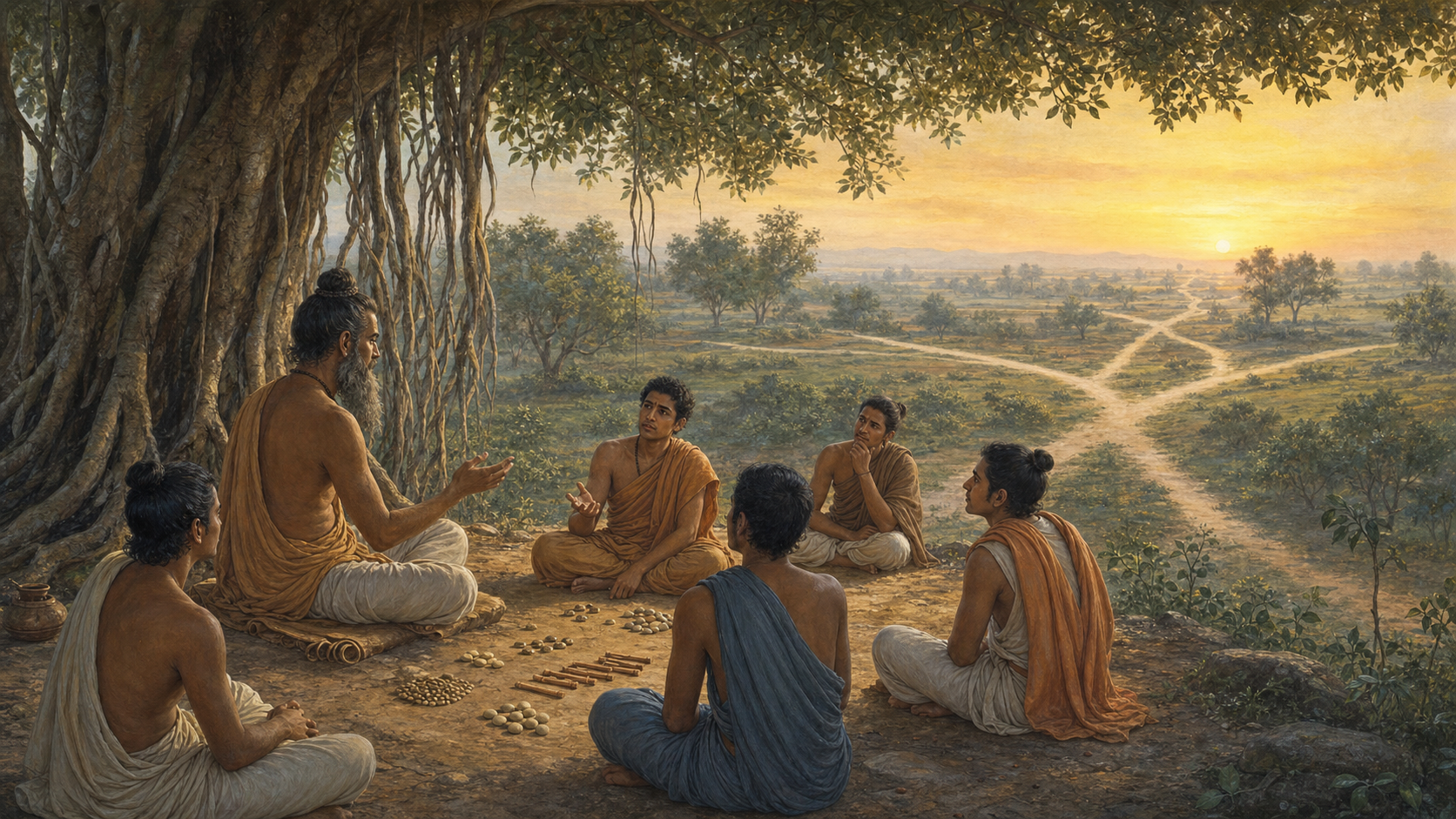
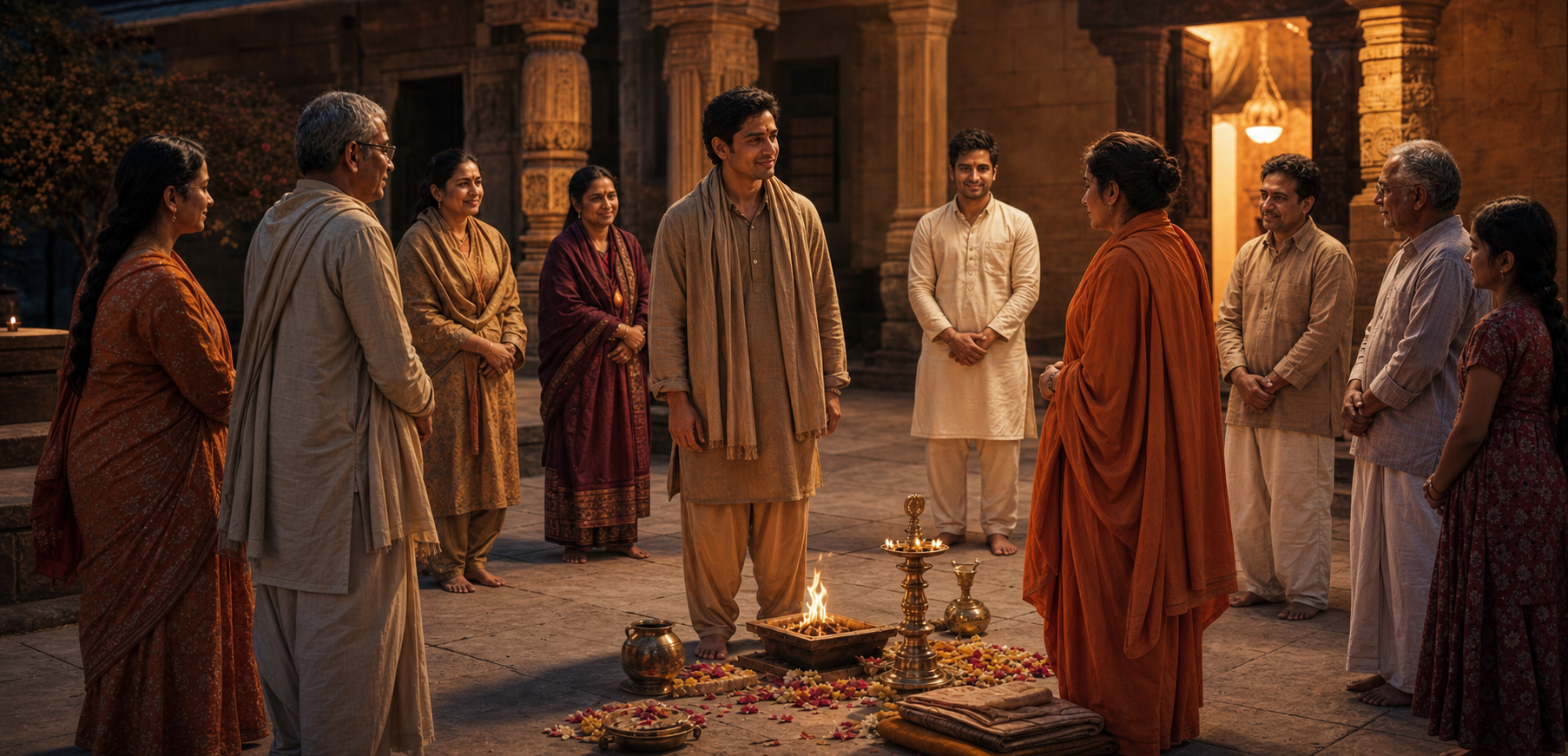
This long-form analysis explores Yuddha Dharma—the Indic ethics of war—through the lens of Kutayuddha, Dharma-Yuddha, and Asura Vijaya, drawing on the Atharva-Veda, the Arthasastra, and epic literature. It explains how Kutayuddha functions as the negation of Sanatana war ethics by permitting perfidy, poisoned weapons, and harm to non-combatants. The essay clarifies Kautilya’s pragmatic reciprocity when…
-
The Day-One Blunder Ravana Signed: A Proud Pact That Crippled Lanka’s Ramayana War Strategy

This analysis examines the opening day of the Ramayana’s Lanka campaign and the strategic pact that shaped it. By consenting to daylight, rules-based fighting and initial restraint on deception, Ravana muted Lanka’s natural advantages in night warfare and illusion. The study situates this decision within dharma-yuddha norms, Arthashastra categories of open versus concealed war, and…
-
Purochana in the Mahabharata: Lac Palace Conspiracy, Fatal Loyalty, and Dharmic Lessons

This analysis unpacks Purochana’s role in the Mahabharata’s Lakshagraha conspiracy as a study in ruthless loyalty, covert statecraft, and ethical failure. It situates the plot in the Adi Parva and explains how a luxurious lac palace was engineered as a flammable death trap through lākṣā, ghṛta, and taila. Vidura’s quiet counter-intelligence and tunnel strategy illustrate…
-
Khalsa Unveiled: Equality, Sovereignty, and Sacred Resistance in Guru Gobind Singh’s Vision

This in-depth exploration of the Khalsa traces its emergence at Vaisakhi 1699 and explains how Guru Gobind Singh united equality, sovereignty, resistance, and spirituality into a single ethical order. Readers gain a clear understanding of the Amrit Sanchar, the Panj Piare, and the Five Ks as living disciplines. The essay unpacks doctrines such as miri-piri,…
-
Drupada of Panchala in the Kurukshetra War: Dharma, Betrayal, Destiny, and Fatal Valor

Drupada of Panchala stands at the crossroads of Dharma, strategy, and tragic inevitability in the Mahabharata’s Kurukshetra War. His youthful friendship with Drona, later ruptured by humiliation, set in motion a cycle of vows, rituals, and alliances that reshaped the subcontinent’s political map. The births of Dhrishtadyumna and Draupadi through yajña translated personal injury into…
-
Sanskrit vs Prakrit in Ancient India: A Sacred Dialogue Shaping Faith, Culture, and Power

Sanskrit and Prakrit formed a sacred dialogue in Ancient India, shaping ritual, philosophy, drama, and everyday communication across Hinduism, Buddhism, Jainism, and later Sikhism. Rather than rigid opposites, they functioned as complementary registers within a diglossic ecology that prized both precision and accessibility. The article maps their historical development from Old to Middle to New…
-
Vikarna’s Tragic Fall at Kurukshetra: Bhima’s Uncommon Reverence and the Paradox of Dharma

Vikarna’s death at Kurukshetra, and Bhima’s rare public respect for him, reveal the Mahabharata’s refusal to reduce war to simple binaries. The episode traces Vikarna’s lonely protest during Draupadi’s humiliation, his later loyalty under kṣātra-dharma, and Bhima’s empathetic yet resolute response in battle. Read through the lens of Dharma-Yuddha, it becomes a case study in…
-
Courage and Compassion in Statecraft: Hindu War Ethics from Hemu to Kautilya and Ashoka

Hemachandra Vikramaditya’s remarkable rise and fall reframes a larger, enduring question in Indian statecraft: how should force be guided by dharma? This long-form analysis traces the Hindu ethics of war—from Sama, Dana, Bheda as last resort to strict noncombatant immunity—across sources like the Arthasastra, Dharmasastra, and Mahabharata. It decodes the tripartite ideal of Dharma Vijaya,…
-
From War Thunder to Living Gods: Ratha (Chariot) as Weapon, Ritual, and Wisdom in Ancient Hinduism

This long-form, research-driven essay follows the ratha (chariot) from its earliest Vedic mentions through epic warfare, temple architecture, and living festivals. Readers gain a balanced view of textual evidence (Rigveda, Mahabharata, Upanishads), archaeological debates (including Sinauli), and the Arthaśāstra’s statecraft, alongside technical insights into chariot design, crew roles, and battlefield tactics. It unpacks the Kaṭha…
-
Re-reading Guru Tegh Bahadur: A Fearless Beacon of Religious Freedom and Dharmic Unity

This interdisciplinary re-reading of Guru Tegh Bahadur situates his life and bani within history, music, philosophy, and public ethics. It explains how his teachings on detachment, compassion, and fearlessness formed a coherent ethic of conscience, culminating in a martyrdom for the protection of others’ faith. The narrative highlights how Sikhism’s sarbat da bhala converges with…
-
Bhima vs. the Elephant Legion: Epic Power, Strategy, and Dharma in the Kurukshetra War

This study examines Bhima’s encounters with the Kaurava elephant corps in the Mahabharata’s Kurukshetra War, integrating military history, scriptural exegesis, and symbolism. Readers gain a precise view of how a gaja-vyuha functioned, why elephants were both decisive and dangerous, and how Bhima’s gada-work exemplified targeted counters to heavy shock units. The ethically fraught Ashvatthama episode…
-
Shroud of Turin DNA and the ‘Indian Jesus’ Meme: History, Evidence, and Dharmic Unity

A viral ‘Indian Jesus’ meme has reignited debate about the Shroud of Turin and the possibility of Indo-Mediterranean links. This analysis clarifies what the 2015 mitochondrial DNA study actually found—heterogeneous contact with many populations—while noting the 1988 radiocarbon dating that points to a medieval linen. Legends placing Jesus in India remain unsubstantiated, yet they reflect…
-
Yuyutsu’s Dilemma at Kurukshetra: A Courageous Defection That Redefined Dharma-Yuddha

The Mahabharata remembers Yuyutsu for a rare, courageous act at Kurukshetra: defecting from the Kauravas to the Pandavas when Yudhishthira publicly invited any wavering warrior to choose dharma over faction. This decision, rooted in ethical clarity rather than birth ties, delivered intelligence and moral momentum to the Pandava cause. Beyond the battlefield, tradition associates Yuyutsu…
-
Shaheedi of Guru Tegh Bahadur: 350 Years of Courage that Secured Freedom of Conscience

This long-form essay marks 350 years since the Shaheedi of Guru Tegh Bahadur Sahib Ji and examines the event’s historical context, ethical significance, and enduring legacy. It synthesizes Sikh, Persian, and European accounts while noting interpretive variations to present a rigorous, balanced narrative. Readers gain a concise timeline, a survey of key sites of memory…
-
Bahadur Shah Zafar and 1857: Evidence-Driven Reassessment Beyond Heroics and Betrayal

Bahadur Shah Zafar’s role in the Revolt of 1857 defies simple labels. Rather than casting him as either a heroic liberator or a betrayer, this analysis situates the last Mughal emperor within the material constraints of siege warfare, fractured command, and colonial-era power asymmetries. It traces the uprising’s structural causes—from annexations and revenue extraction to…
-
Grinding Memory: Mumbai’s Kolhu Reenactment Reawakens the Brutal Realities of Kala Pani

A live kolhu demonstration at the Swatantryaveer Savarkar Rashtriya Smarak in Mumbai recreated the oil-press labor once forced upon freedom fighters at the Cellular Jail (Kala Pani) in the Andamans. By translating archival testimony into an embodied experience, the exhibit made the mechanics and cruelty of colonial punishment legible to contemporary audiences. The kolhu’s simple…
-
Kalamukhas vs Kapalikas: decoding enigmatic Shaiva ascetics—their history, rituals, and legacy

This long-form, research-based comparison clarifies who the Kalamukhas and Kapalikas were, where they thrived, and how they practiced. It distinguishes inscription-rich Kalamukha institutions in Karnataka and Andhra from the more liminal, Bhairava-oriented Kapalikas known through Sanskrit literature. It explains the ritual logic behind skull-bowls, black forehead marks, temple endowments, and cremation-ground sādhanā without sensationalism. It…
-
Haridra Dam to Vijayanagara: Field Evidence, Inscriptions, and Karnataka’s Fading Shrines

A field-based reading of Devarabelakere, near Davanagere in Karnataka, reveals how a modern check dam overlays the footprint of the medieval Haridra Dam attributed to the early Vijayanagara era under Devaraya I. Inscriptions documented by the ASI at Harihara in 1902, along with a 2003 survey by Dr. Jagadisha, help relocate the lost basin of…
-
Madurai Meenakshi Sthala Puranam: Indra’s Atonement, the Divine Wedding, and Temple History

This in-depth, research-driven overview unpacks the Sthala Puranam of the Madurai Meenakshi Sundareshwarar Temple—from the ‘effacing of Indra’s sin’ beneath the kadamba tree and by the Pottamarai Kulam to Meenakshi’s birth, prophecy, and the divine wedding with Sundareshwarar. It elucidates how the legends express the ethical logic of karma and reincarnation, resonating with the wider…
-
Forged in Faith: Weaponry in the Dasam Granth Sahib—History, Shastra-Vidya, and Symbolic Power

Weaponry in the Dasam Granth Sahib is presented as a disciplined convergence of steel and spirit, where shastra-vidya is sanctified by ethics and devotion. Set in the historical crucible of the Khalsa’s formation, these hymns catalog arms—from khanda and kirpan to chakkar, banduq, and top—while binding their use to Dharma-Yuddha principles. The text’s poetic multilingualism…