-
Stop Neglecting Karnataka’s Temples: Bagalkot Mandir Mahasangh Seeks Bold Budget Action

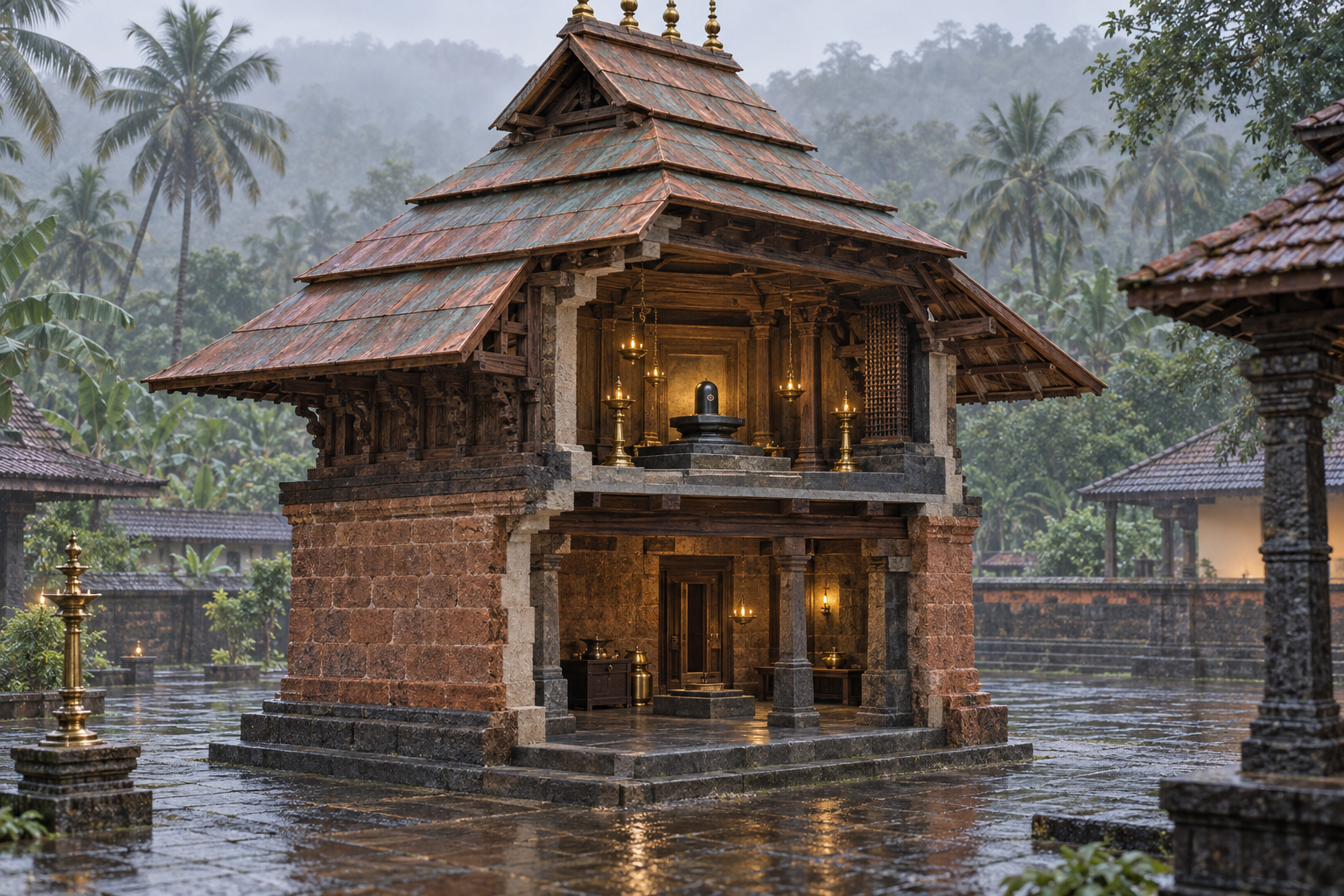
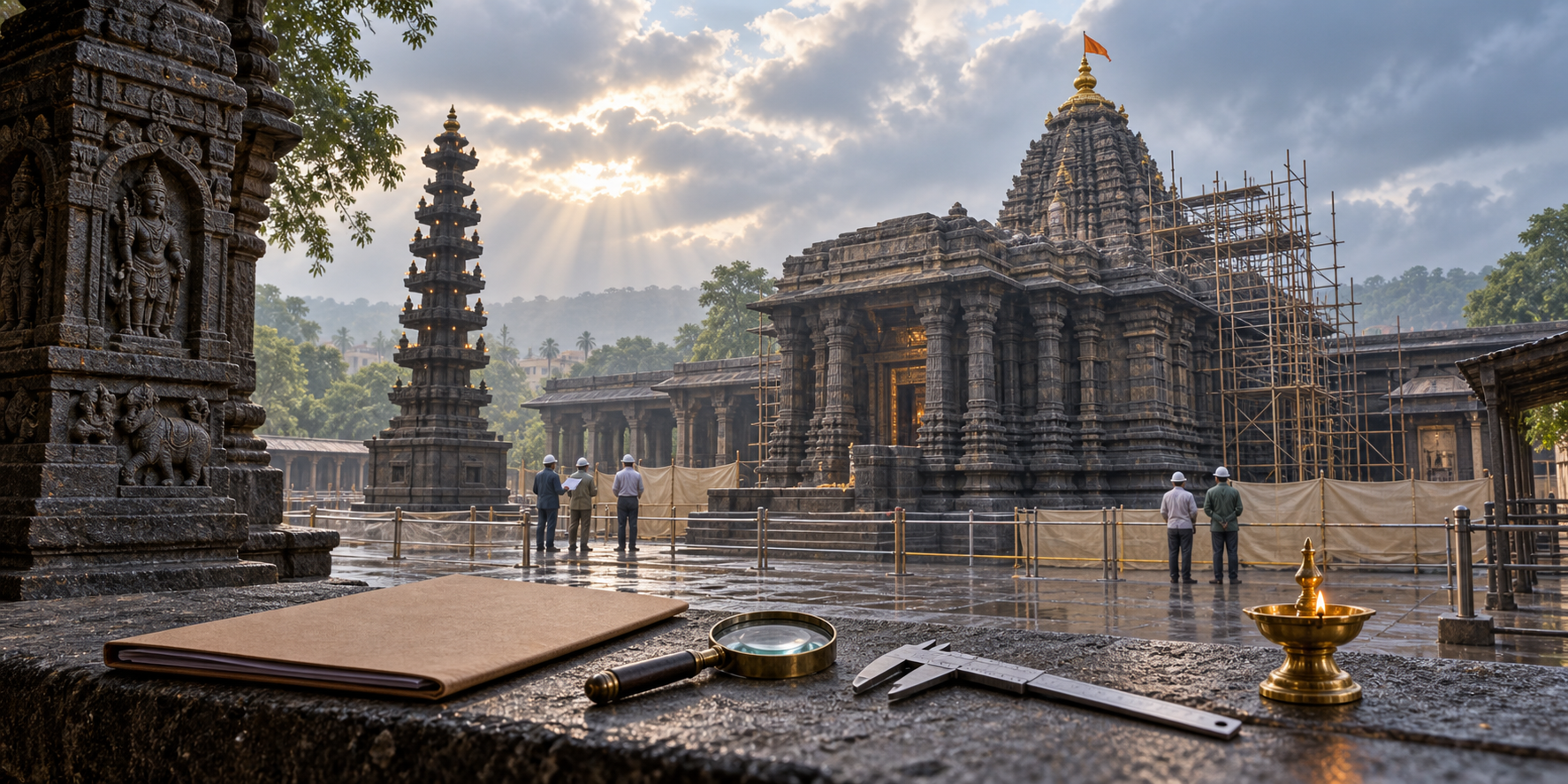
A regional convention of the Karnataka Mandir Mahasangh in Bagalkot has urged the state to create a ring-fenced budget for temple renovation, preventive maintenance, and professional management. The appeal frames temples as living heritage—sacred spaces that sustain ritual continuity, artisans’ livelihoods, and local economies—requiring predictable funding and technical rigor. The analysis outlines a pragmatic roadmap:…
-
Golden Grace and Neem-born Humility: Decoding ‘Gauranga’ and ‘Nimai’ of Chaitanya Mahaprabhu

This article decodes the dual symbolism embedded in Chaitanya Mahaprabhu’s epithets “Nimai” and “Gauranga.” It explains how “Nimai,” rooted in neem’s purificatory aura and Bengal’s domestic piety, conveys protection, intimacy, and inner cleansing. It then unpacks “Gauranga” as a theological epithet signifying Krishna’s golden, compassion-filled form, central to Gaudiya Vaishnavism’s mission of Nama Sankirtana. Drawing…
-
Flood‑Hit to Future‑Ready: Locana Prabhu’s 3D Printing Path to Preserve Devotional Heritage

A May 19, 2026 tour of Locana Prabhu’s workshop revealed serious water damage alongside the installation of a 3D printer intended to bolster preservation-focused production connected to Srila Prabhupada’s legacy. The report explains conservation-grade stabilization: environmental control at 45–55% RH, HEPA filtration, safe mold mitigation, and triage methods that prioritize unique masters and production-critical assets.…
-
Gajasurasamhara: Shiva’s awe-inspiring conquest of ego – history, symbolism, style

Gajasurasamhara presents Shiva in a fierce, transformative dance that subdues the elephant demon—an enduring visual lesson on conquering ego. This long-form, research-driven overview traces the form’s Purāṇic and Āgamic foundations and explains its technical iconography, from multi-armed attributes and the distinctive elephant-hide canopy to posture, ornaments, and attendant figures. It maps stylistic evolutions across Pallava,…
-
Konark Sun Temple: A Radiant Masterpiece of Kalinga Architecture, Astronomy, and Dharma

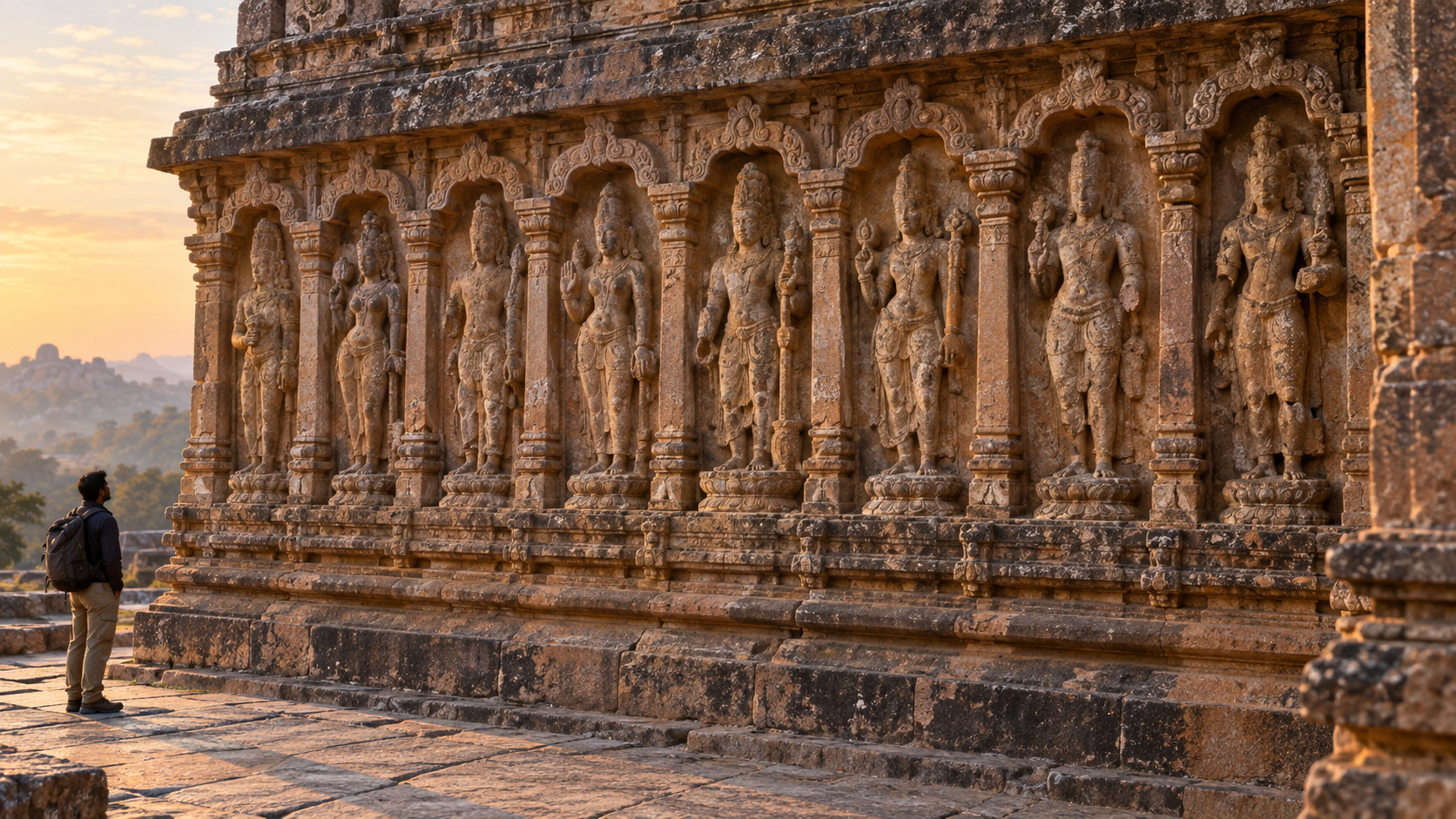
Konark Sun Temple in Odisha, a 13th-century UNESCO World Heritage Site, unites Kalinga architecture, astronomy, and living ritual in a single monumental vision. Commissioned by Narasimhadeva I of the Eastern Ganga Dynasty, the complex was conceived as Surya’s celestial chariot, complete with functional stone sundials. The surviving jagamohana, masterful masonry, and encyclopedic iconography make the…
-
Kishkindha Kanda Unveiled: Hampi’s Sacred Landscape, Dharma Debates, and Hanuman’s Rise

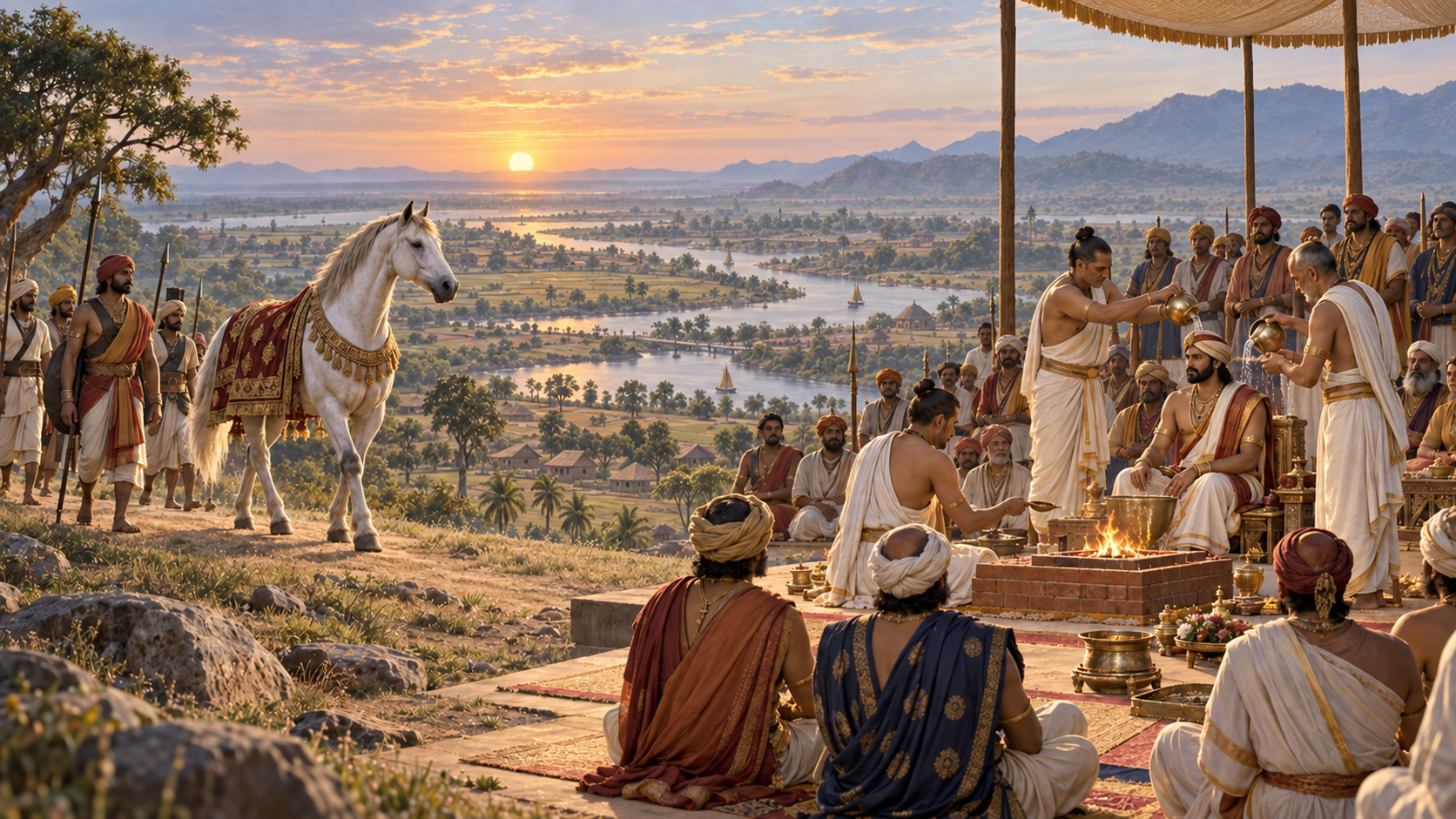
Kishkindha Kanda (Book IV of the Valmiki Ramayana) forges the Rama–vanara alliance, situates the narrative in the sacred Hampi–Anegundi landscape, and prepares the ground for Hanuman’s mission. Readers gain a clear map of key episodes—the pact with Sugriva, Vali-vadha’s dharma debate, Sugriva’s coronation, the monsoon interlude, and the strategic dispatch of search parties. The analysis…
-
Konark Sun Temple: Awe-Inspiring Kalinga Masterpiece, Cosmic Timekeeper, and Living Heritage

Konark Sun Temple in Odisha—commissioned by Eastern Ganga ruler Narasimhadeva I around 1250 CE—unites Kalinga architecture, sculpture, and ancient Indian astronomy in a breathtaking chariot-of-the-sun design. The twenty-four carved stone wheels and seven horses encode a lived experience of time and celestial geometry, while Surya’s triadic images track the diurnal path of light. As a…
-
Kishkindha Kanda Unveiled: Rama–Hanuman Alliance, Vali’s Fall, and Hampi’s Sacred Landscapes

Kishkindha Kanda, the fourth book of the Valmiki Ramayana, turns grief into disciplined action as Rama allies with Sugriva, brings down Vali, and launches a continent-spanning search for Sita. Set against the sacred landscapes around Hampi–Anegundi in Karnataka, it blends political acumen, ethical debate, and ecological poetics. The kanda highlights exemplary speech and statesmanship through…
-
Unlocking the Mātuluṅga Mystique: Why a Giant Citron Graces Lakulisha and Kolhapur Mahalakshmi

The large citrus fruit called mātuluṅga (mahalunga) appears prominently in Hindu iconography, most notably in the lower right hand of Kolhapur Mahalakshmi and the upper left hand of Lakulisha of Pāśupata Shaivism. Identified primarily as Citrus medica (citron), the fruit symbolizes abundance, purity, and the ripened results (phala) of righteous action and disciplined practice. In…
-
Under the Naga’s Canopy: The Powerful, Timeless Meaning of Serpent Hoods in Hindu Icons

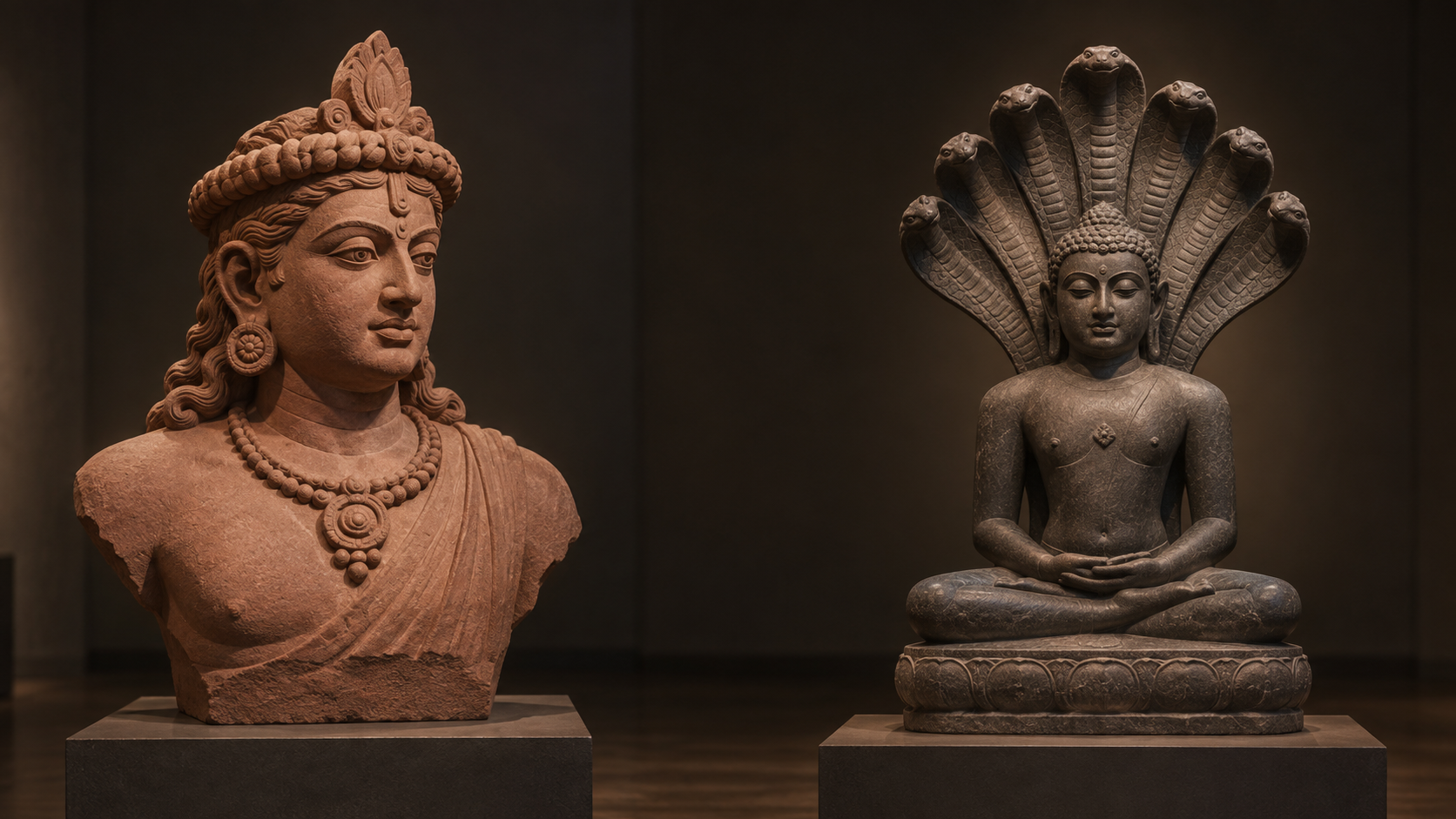
Hooded serpents above Hindu deities are not mere ornaments but condensed philosophies. The motif announces protection and sovereignty, like a living royal canopy (chatra), while symbolizing time’s cycles and awakened energy. In Vaiṣṇava art, Ananta-Śeṣa frames Vishnu as the still center of an infinite cosmos; in Śaiva icons, Vāsuki’s presence proclaims mastery over fear, poison,…
-
Unlocking the Sacred Geometry of Navagrahas: How Temple Placement Shapes Cosmic Harmony

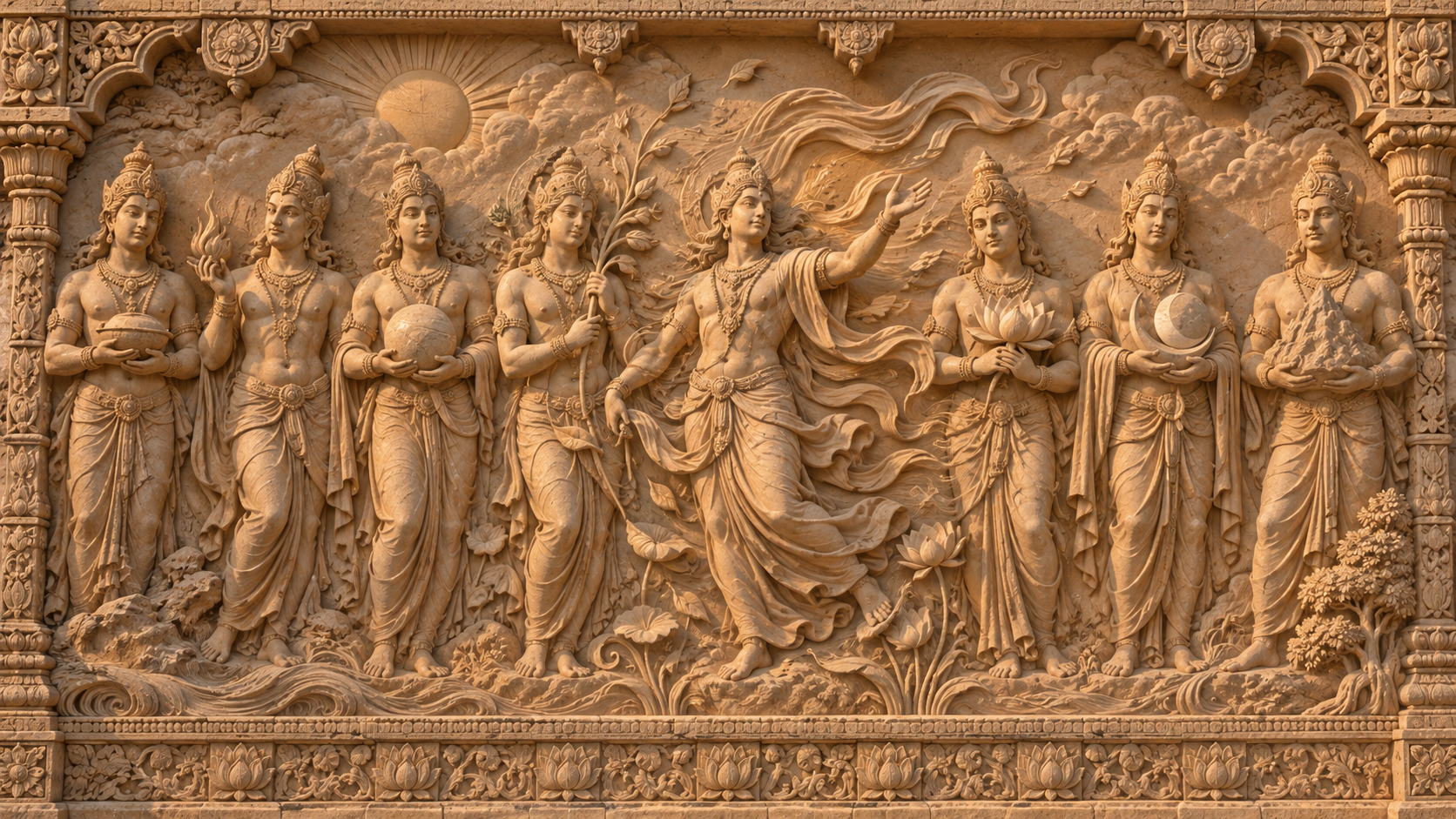
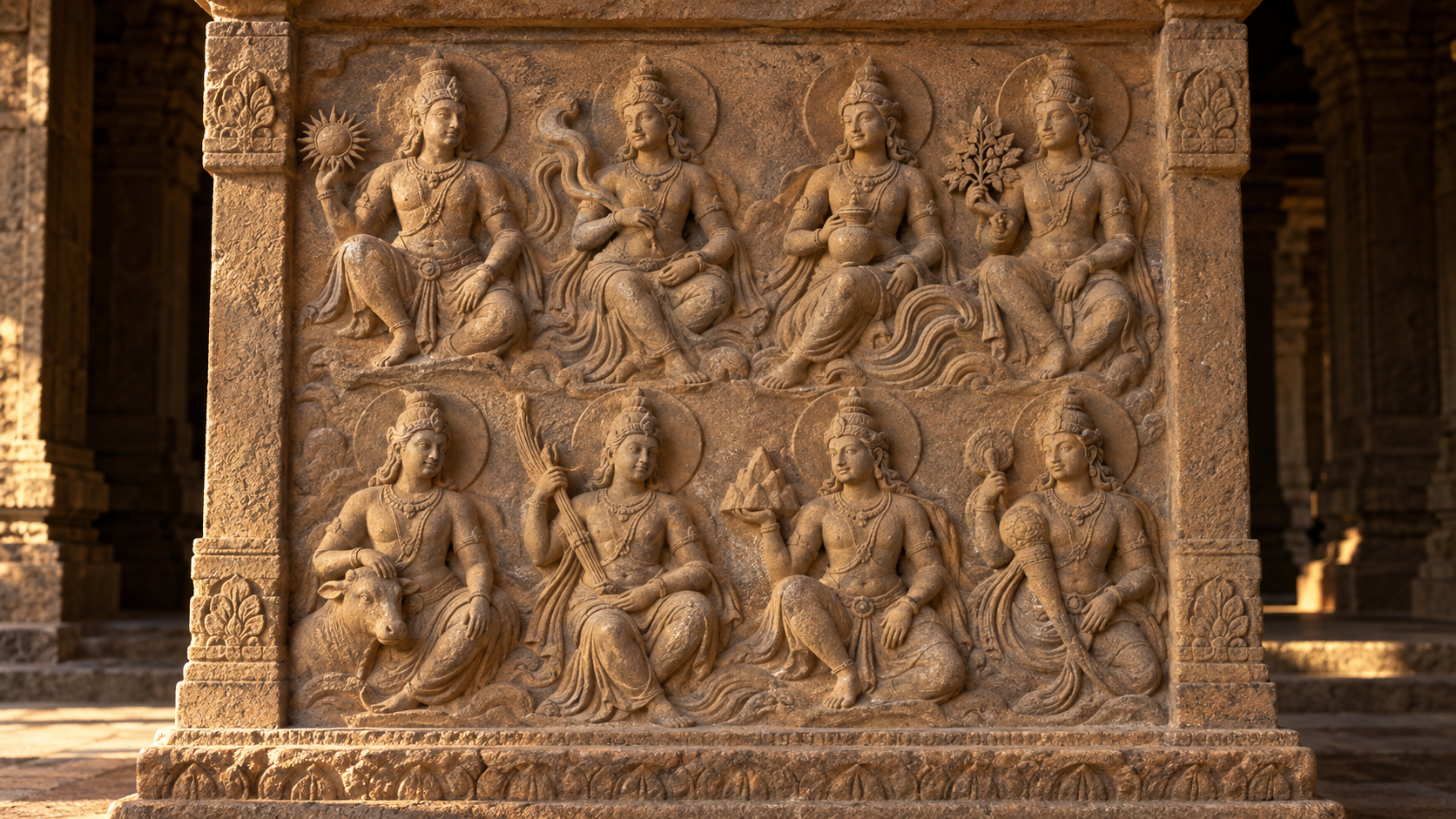
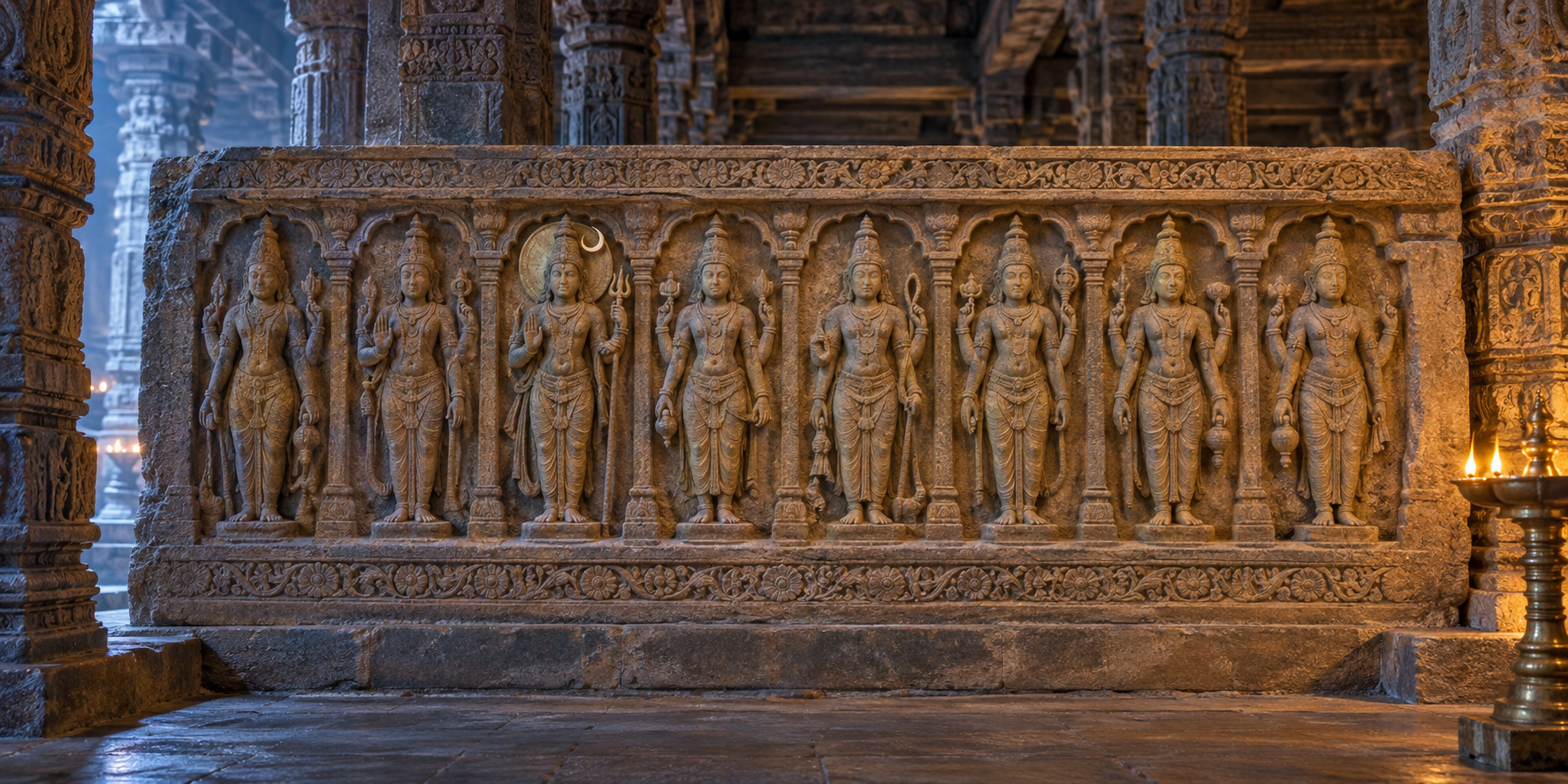
This in-depth exploration explains how the Navagrahas—Surya, Chandra, Mangala, Budha, Guru, Shukra, Shani, Rahu, and Ketu—are positioned within Hindu temple architecture to embody sacred geometry and ritual function. It synthesizes guidance from Sthāpatya-śāstra, Āgama-śāstra, and the Vāstu Puruṣa Maṇḍala, while highlighting regional variations that preserve core principles. Readers learn why the Navagraha mandala typically resides…
-
Historic 327th Baisakhi: Khalsa Spirit and Dharmic Unity Ignite Gatherings Worldwide

The historic 327th Baisakhi united Sikh communities across India and the global diaspora in a powerful commemoration of Khalsa Sirjana Diwas. Centered on Amrit Sanchar, kirtan, Ardas, and the Hukamnama, observances highlighted discipline, equality, and the living legacy of Guru Gobind Singh’s 1699 institution of the Khalsa. Processions (Nagar Kirtan) and Gatka demonstrations intertwined martial…
-
Kamantaka Murti of Shiva: Awe-Inspiring Iconography, Third-Eye Fire, and Mastering Desire

This in-depth study decodes Kamantaka (Madana Dahana), the powerful murti of Shiva who burns Kama with the third eye’s jñāna-agni, as a visual pedagogy on mastering desire. It explains field-ready markers—Kama’s sugarcane bow, bee-string, five flower-arrows, and Rati—so readers can confidently identify the scene in temples and sculpture. It situates the form in Purāṇic, Āgamic,…
-
Cannes 2026: Aarti Khetarpal’s Vedic Couture and Bhagavad Gita Redefine Red-Carpet Diplomacy

At the 79th Cannes Film Festival in May 2026, Aarti Khetarpal reframed the red carpet as a platform for cultural diplomacy by carrying a miniature Shrimad Bhagavad Gita from Gita Press and a red Gomukhi chanting bag. Her Vrindavan-inspired golden-yellow lehenga by Sulakshana Monga featured hand-painted motifs of sacred trees, the Yamuna, and dancing gopis,…
-
Bhojshala at a crossroads: Saraswati idol reportedly installed; entry rules tighten after court

Reports from Dhar, Madhya Pradesh suggest that a consecrated idol of Mata Saraswati has been installed at Bhojshala with daily worship commencing, and that entry protocols have tightened following a court directive. This analysis explains the legal frameworks (Articles 25–26, AMASR Act, and the Places of Worship Act) that shape permissible action. It outlines how…
-
Revealing the Sacred Beauty of Imperfection: Why Authentic Hindu Bronzes Aren’t Flawless

Authentic Hindu bronze sculptures are often misjudged by a modern expectation of machine-like perfection. This essay explains, in academic yet accessible terms, how lost-wax casting and panchaloha metallurgy naturally produce subtle surface variations that signal authenticity. It decodes sprue scars, chasing marks, porosity pinholes, and asymmetry as the normal fingerprints of traditional workmanship rather than…
-
Dama in Hindu Iconography: Unveiling the Sacred Neck Chain of Restraint, Grace, and Power

This article decodes the dama—the sacred neck chain—in Hindu iconography as a short, structured collar that balances longer necklaces while signaling restraint, protection, and grace. It clearly distinguishes dama/graiveyaka from kanthika (choker), muktavali (pearl strings), and hara (long necklace) using the taxonomy preserved in Shilpa Shastras. Readers learn how major treatises (Vishnudharmottara Purana, Shilparatna, Manasara,…
-
The War They Could Not Win: Dharmic Unity vs. Empire’s Cultural Offensive (Part 1)

This long-form analysis reframes the nineteenth century as a hybrid struggle—military, legal, economic, educational, and narrative—between an expanding empire and a resilient, plural civilization. It situates the 1857 War of Independence within deeper structural transformations led by the British East India Company and subsequent Crown rule. The discussion explains how revenue settlements, legal codification, and…
-
The War They Could Not Win, Part 2: Strategy, Memory, and Dharmic Civilizational Resilience

This long-form analysis explains why certain campaigns in Indian history became unwinnable at the level of legitimacy, memory, and cultural continuity. Drawing on Clausewitz and Kautilya, it shows how consent—not mere control—determines durable victory. The piece outlines how dharmic traditions—Hinduism, Buddhism, Jainism, and Sikhism—created resilient social architectures through values like dharma, ahimsa, seva, and anekantavada.…