-
Beyond Varna and Ashrama: The Ativarnashrami Ideal and a Fearless Path to Moksha

This long-form exploration clarifies the Ativarnashrami ideal as the realized state beyond social and life-stage identifiers in Hindu philosophy. It situates the concept within varnashrama dharma, the purusharthas, and scriptural anchors from the Upanishads and the Bhagavad Gita. Readers gain a technical yet readable account of renunciant gradations, ethical implications, and the principle of loka-samgraha.…
-
ISKCON Chaplaincy in UK Hospitals: Elevating Compassionate Hindu Care Across London

Bhaktivedanta Manor’s Devotee Care Team is building a professional Hindu–Vaishnava chaplaincy pathway to serve NHS hospitals, hospices, and care homes across London and other UK cities. The initiative aligns with NHS chaplaincy guidance and UKBHC competencies, ensuring safe, consent-based, and non-proselytising care. Training covers safeguarding, confidentiality, cultural fluency, end-of-life support, and evidence-informed spiritual assessment tools…
-
Jammu & Kashmir Assembly Rejects Temple Protection Bill: Deputy CM Invokes Existing Laws—What Changes Now?

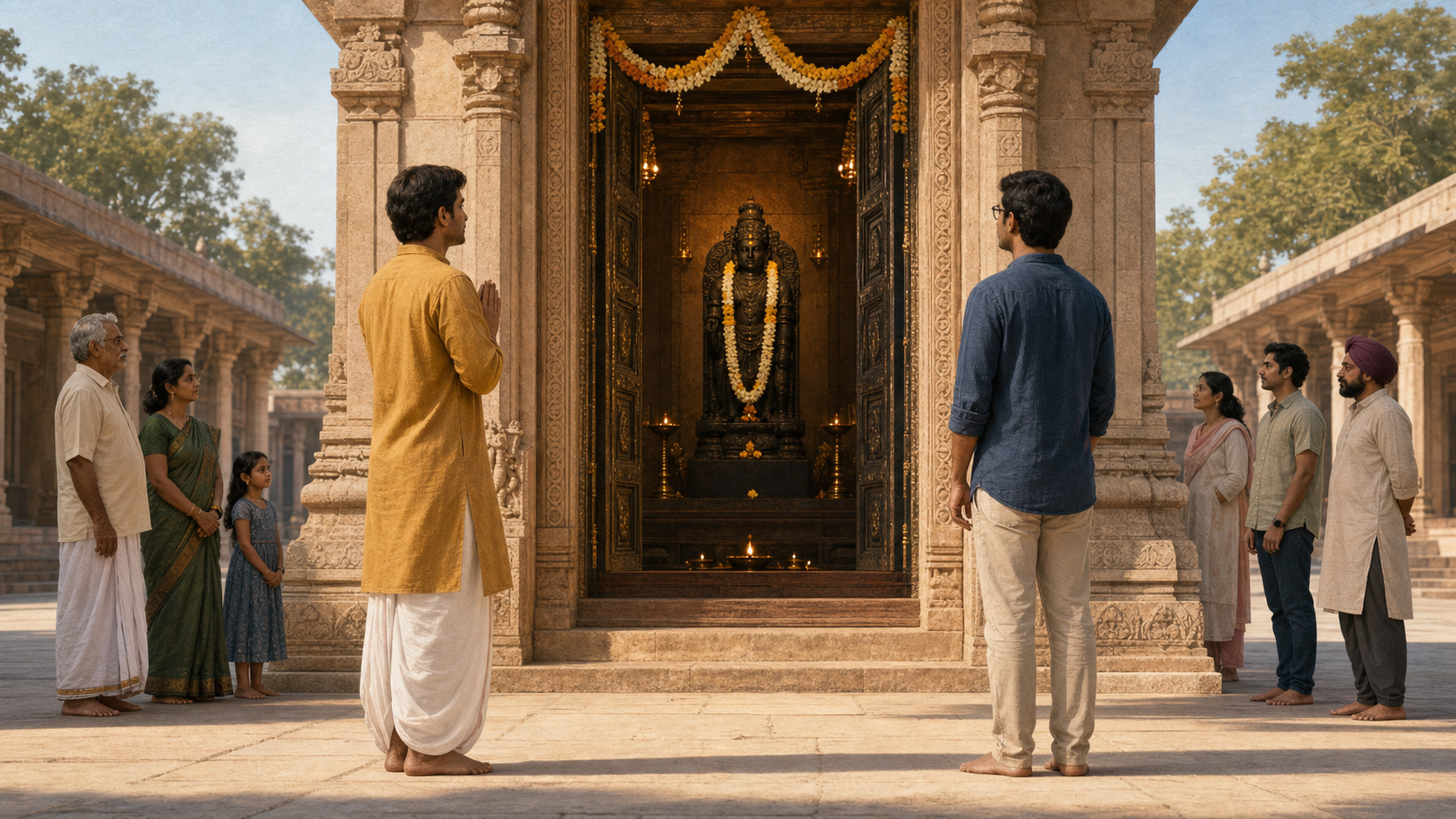
The Jammu & Kashmir Assembly’s rejection of a proposed Hindu Temple Protection Bill, and the Deputy Chief Minister’s reliance on existing statutes, has refocused attention on how sacred spaces are actually protected on the ground. This analysis maps the current legal framework—from constitutional guarantees and IPC provisions to the Places of Worship Act, shrine-specific statutes,…
-
8 Powerful Steps for Prayerful Reading of Srila Prabhupada’s Books for Deep Bhakti Insight

This article presents a practical, eight-step method for prayerful reading of Srila Prabhupada’s books that unites devotion with rigorous study. It explains how intention, a sattvic setting, and a brief invocation prime attention and humility. Slow, structured reading, classical hermeneutic tools, and light Sanskrit awareness deepen comprehension of Bhagavad Gita, Srimad Bhagavatam, and Chaitanya Charitamrita.…
-
Vedic Environmentalism: Dharmic Ethics for Sustainability, Ahimsa, and Planetary Care

This in-depth exploration of Vedic environmentalism presents a rigorous, dharmic framework for sustainability that unites Hinduism, Buddhism, Jainism, and Sikhism around shared ecological ethics. Drawing on the Īśā Upaniṣad, Bhūmi Sūkta, and the Bhagavad Gītā, it translates reverence into practical guidance on resource conservation, circular economy design, and Clean Energy transitions. It highlights sacred groves,…
-
Chanting the Holy Names to Heal Divides: Dharmic Unity, Neuroscience, and a Tehran Legacy

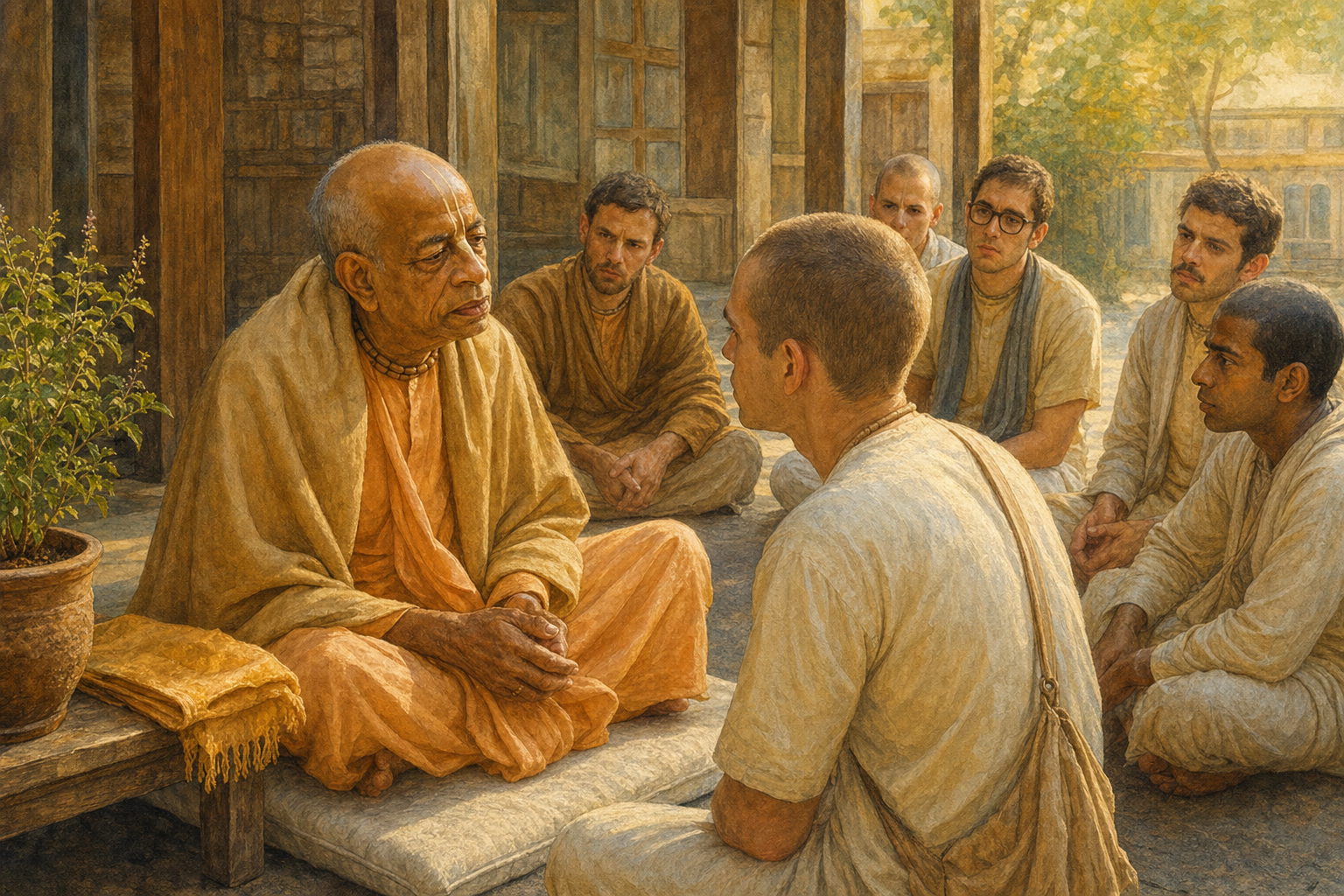
A remembered exchange from 1970s Tehran—where Muslims joined in chanting the Hare Krishna mantra and received an affirming response from Srila Prabhupada—offers a practical template for unity across dharmic traditions. This article situates the episode within the shared contemplative heritage of Hinduism, Buddhism, Jainism, and Sikhism, showing how nāma, simran, and mantra enact unity in…
-
Pichandavar Shiva: The Divine Mendicant Who Unmasks Ego and Teaches Aparigraha

Pichandavar Shiva—known in Sanskrit sources as Bhikshatana—presents the Supreme Lord as a wandering ascetic whose skull-bowl and gentle stride teach non-possession, humility, and compassion. Grounded in Puranic lore and Shaiva Agamas, this South Indian form flourished in Chola bronzes and continues to animate temple processions where symbolic alms become a mirror for inner transformation. The…
-
Unlocking Liberation: The Muktikopanishad’s Timeless Guide to the 108 Upanishads and Moksha

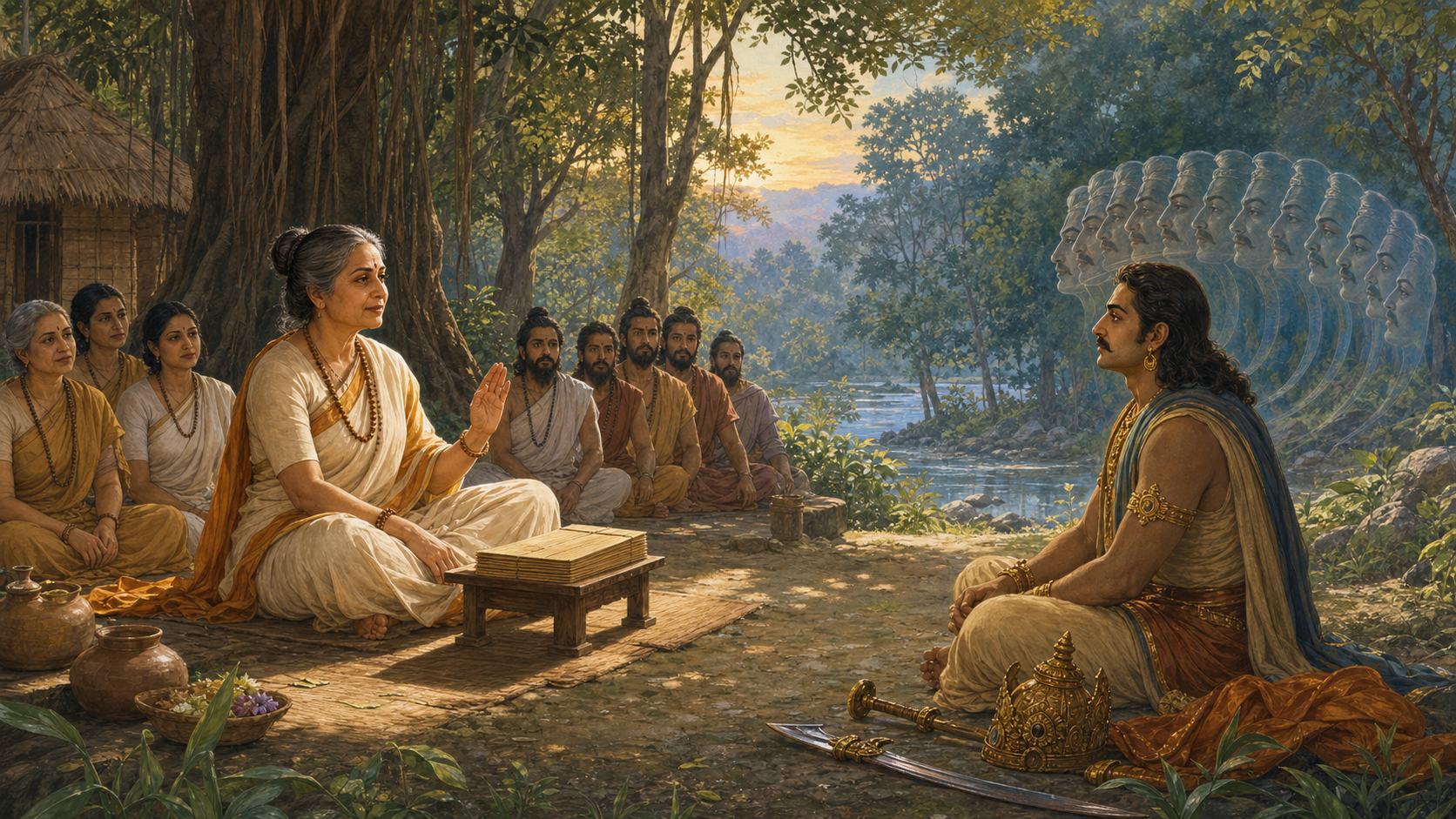
The Muktikopanishad offers a clear, graded pathway to moksha by organizing the Upanishadic corpus—especially the 108 Upanishads—into an accessible curriculum. Set as a dialogue between Rāma and Hanumān, it blends Advaita Vedānta’s nondual insight with the practical disciplines of ethics, devotion, and meditation. The text’s prioritization of the Māṇḍūkya Upanishad (often with the Kārikā) gives…
-
When Self-Awareness Becomes Overthinking: Evidence-Backed Strategies to Calm and Heal

Self-awareness helps growth, but when driven by fear it can become overthinking—anxious loops that feel like diligence yet erode clarity. This article explains, in clear academic terms, how constructive reflection differs from rumination and worry, why the nervous system often sustains analysis loops, and how regulation restores kind, accurate thinking. Drawing on mindfulness research, self-compassion…
-
Unveiling Ishana: Why the Upward Face of the Shivling Is Revered as Sadashiva

The Panchamukha Shivling encodes a complete Shaiva theology in five faces, with Ishana—the upward, zenith-facing aspect—identified as Sadashiva, the ever-auspicious ground of grace. Drawing on Vedas, Agamas, and Puranas, this analysis shows how Ishana culminates the five cosmic acts and why its supradirectional stance symbolizes omniscience and anugraha. Ritual practice confirms the link, as the…
-
Timeless Sthala Purana of Kukke Subramanya: Legends, Rituals, and Sacred Ecology of Western Ghats

Situated at the foothills of Kumara Parvatha and along the Kumara Dhara, Kukke Subramanya Swamy Temple fuses mythic memory with living ritual. The sthala purana recounts Kumara Swamy’s arrival with Lord Ganapathi to defeat Tarakasura and sanctify the valley through the marriage to Devasena. Core symbolism centers on Subramanya’s guardianship of Vasuki and Shesha, with…
-
Vishukkani Vili of North Malabar: Children’s Calls, Community Joy, and Vishu’s Living Heritage

Vishukkani Vili is a living North Malabar custom in Kerala that brings the spirit of Vishu—the Malayalam New Year—out of the home and into the village street. At dawn, groups of children move house to house calling ‘vishukaniye, vishukaniye.’, receiving modest tokens that formalize generosity and goodwill. This article explains the astronomical and cultural logic…
-
Sitalsasthi 2026: Sambalpur’s grand Shiva–Parvati wedding and Odisha’s living heritage

Sitalsasthi 2026, the ceremonial wedding of Lord Shiva and Goddess Pārvatī, will be celebrated on June 20 in Odisha, with Sambalpur hosting the most expansive and community-driven observances. Rooted in over four centuries of practice, the festival blends śāstra-guided rituals with a city-wide cultural carnival featuring processions, folk arts, and water-splashing motifs that welcome the…
-
Only Knowledge, No Struggle: Effortless Wisdom in Hindu, Buddhist, Jain, and Sikh Thought

This essay unpacks the aphorism “there is only knowledge, so they remain one with it and do not struggle” through a comparative study of Hindu, Buddhist, Jain, and Sikh philosophies. It clarifies how each tradition frames liberating knowledge—jnana, prajna, giān—and why non-struggle means non-contradiction with truth rather than passivity. Readers gain a concise overview of…
-
Duryodhana in Lake Dwaipayana: Decoding Jala Stambhana and the Psychology of Rage

On the final day of the Kurukshetra war, Duryodhana’s concealment in Lake Dwaipayana—linked in tradition to Jala Stambhana vidya—becomes a profound study of mind, emotion, and dharma. This article decodes the water symbolism in the Mahabharata, showing how immersion allegorizes the cooling of rage and the stilling of mental turbulence. It situates the episode within…
-
April 7, 2026 Panchang: Panchami to Sashti (2:05 PM) — Tithi, Nakshatra, Rashi, Shubh Muhurat

April 7, 2026, features Krishna Paksha Panchami until 2:05 PM, followed by Krishna Paksha Sashti, a mid‑day shift that matters for vratas and puja planning. The article explains tithi astronomy (12° Moon–Sun elongation segments) to clarify why transitions occur at precise moments. It outlines how to apply Abhijit Muhurta, Rahu Kalam, Yamaganda, Gulika Kalam, and…
-
WSN February 2026 Leaders: Global Sankirtan Trends, Data-Driven Insights, and Winning Practices

The World Sankirtan Newsletter (WSN) for February 2026 showcases a globally distributed leadership: Mayapur, Mumbai-Chowpatty, and Ujjain topped large temples; London-Soho, Bengaluru-South, and Bhopal led medium; Surat, Atlanta Krishna Life, and Chandigarh headed small; while Porto Alegre, Bologna, and Heidelberg led maha-small. Beyond the standings, the report highlights how kirtan and book distribution thrive across…
-
Nava Veeras of Muruga: Origins, Iconography, and Living Traditions of Nine Divine Guardians

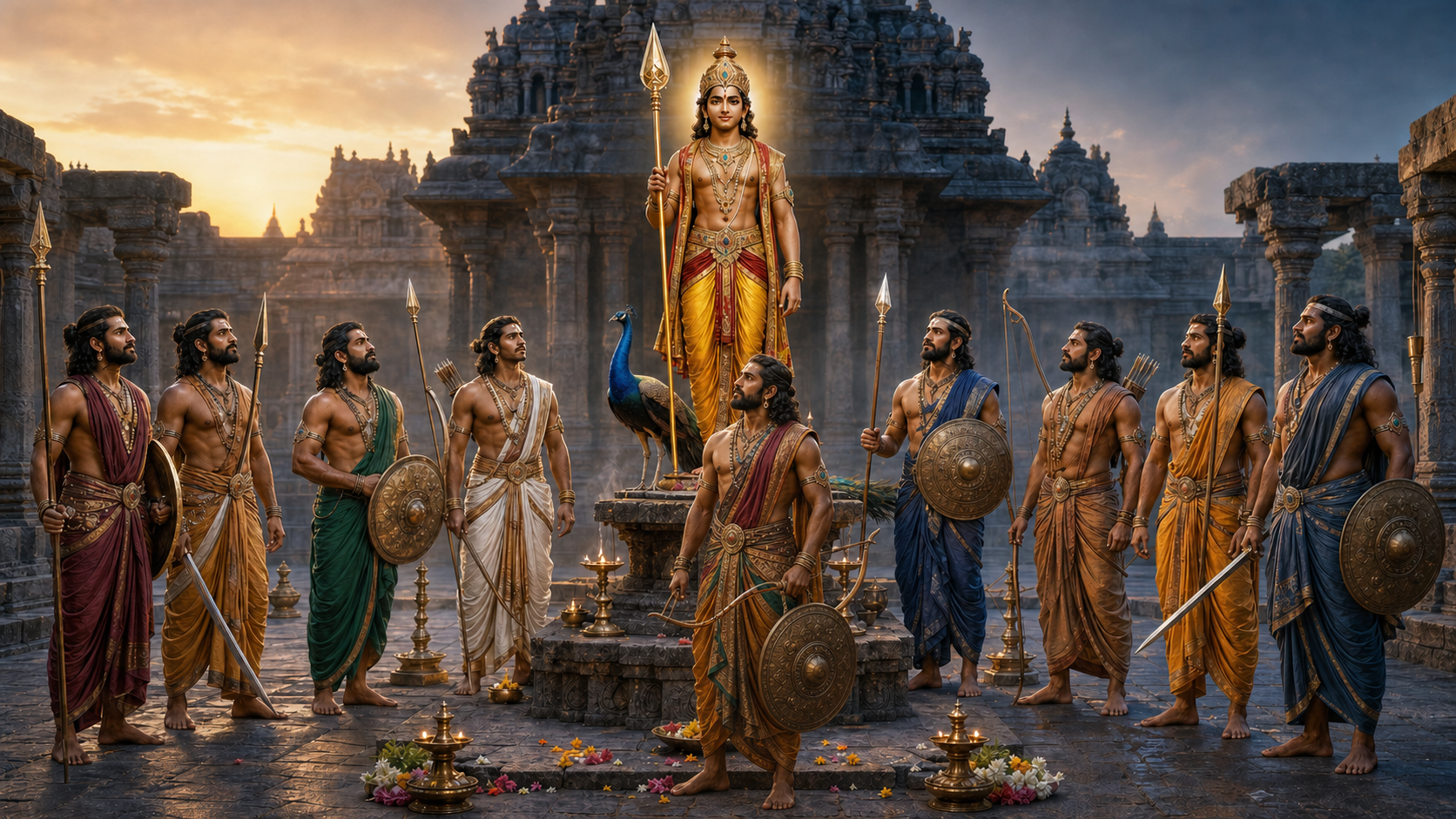
This article explores the Nava Veeras—the nine divine guardians of Lord Muruga—as living embodiments of Parvati’s Shakti and exemplars of disciplined courage in service of dharma. It situates their origins within the Skanda Purana/Kanda Puranam tradition, explains their roles in the Soorasamharam cycle, and examines how regional temple practices shape their iconography and worship. Readers…
-
Ram Navami Clashes, Nitesh Rane’s ‘Equal Rules’ Call, and a Blueprint for Harmony

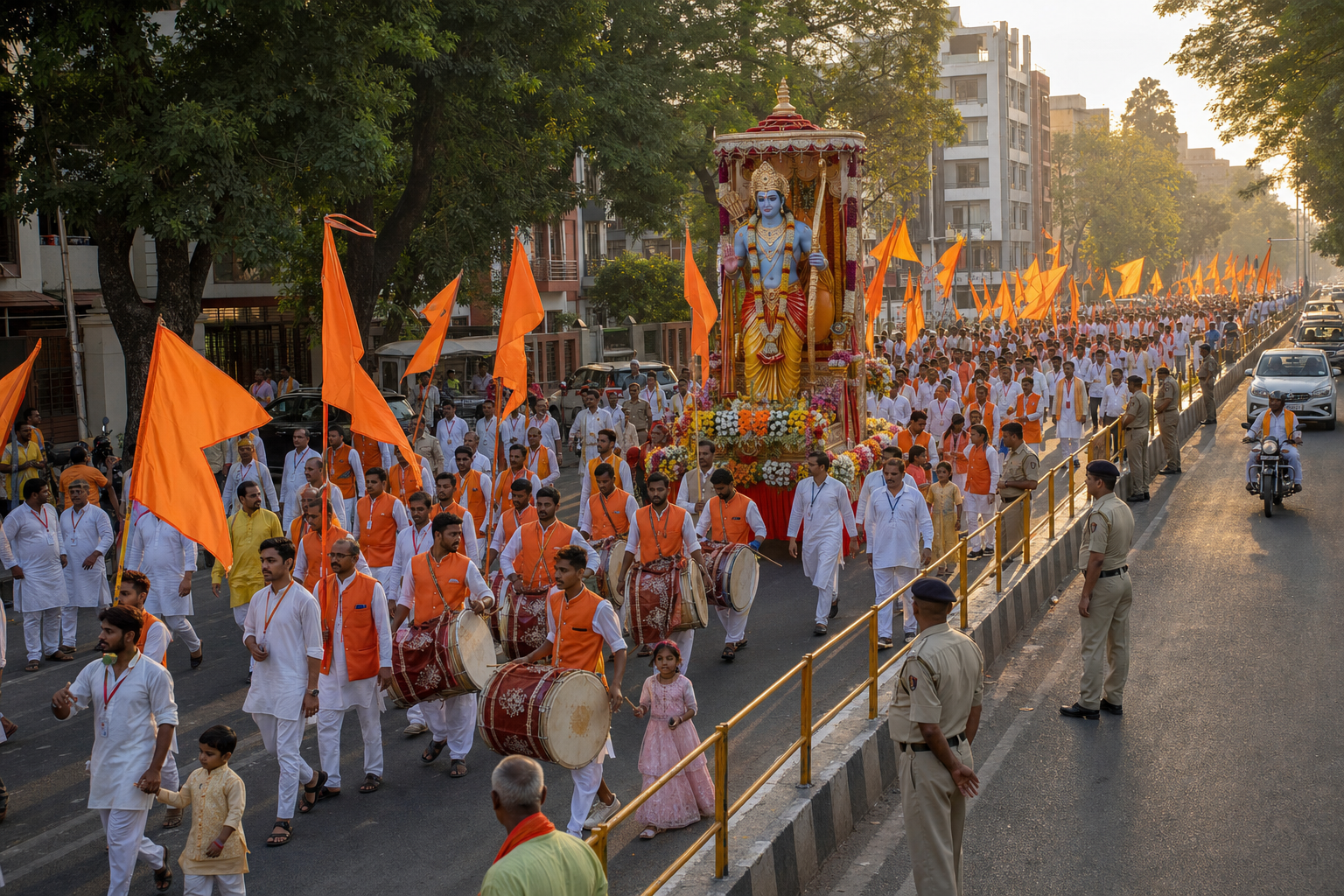
A heated exchange around Ram Navami 2026 and Nitesh Rane’s call for “equal rules” across festivals highlights a core civic challenge: protecting religious freedom while ensuring public order. This analysis maps the constitutional framework (Articles 14 and 25–28), explains content-neutral, time–place–manner regulation, and outlines how parity looks in real operations. It details actionable steps—single-window permissions,…
-
Vulnerability Without Regret: Evidence‑Based Ways to Soothe the Post‑Sharing Hangover

Vulnerability often produces a predictable nervous-system surge after sharing—tightness, second-guessing, and the urge to retract. This evidence-based guide explains why that “vulnerability hangover” occurs and offers practical, somatic strategies to restore safety. Drawing on neurobiology, mindfulness, and shared dharmic ethics (satya, ahiṁsā, aparigraha, maitri/karuṇā), it clarifies the difference between oversharing and conscious sharing. Two orienting…