Month: January 2026

  • Chali Mukte: The Transformative Saga of Forty Liberated Souls and Guru Gobind Singh

    Chali Mukte: The Transformative Saga of Forty Liberated Souls and Guru Gobind Singh

    Chali Mukte—“the forty liberated”—captures a pivotal moment in Sikh history linked to Guru Gobind Singh, where regret turned into responsibility and courage. Set between Anandpur Sahib and Muktsar Sahib, the episode showcases Mai Bhago’s galvanizing leadership and the Sikhs’ return to dharma. Readers gain a concise historical overview, ethical insights into accountability, and a practical…

  • Bridging Borders: A Transnational Voice in Punjabi Literature, Scholarship, and Creative Praxis

    Bridging Borders: A Transnational Voice in Punjabi Literature, Scholarship, and Creative Praxis

    This piece explores how Punjabi literature has emerged as a transnational force, uniting scholarship and creative praxis across Punjab and the Indian diaspora. It highlights the plural, dharmic foundations of the tradition—from Bhakti to Sufi literature—and shows how these lineages nourish interfaith harmony without erasing difference. Readers gain actionable insights into translation strategies across Gurmukhi,…

  • Panchmukhi Hanuman: Transformative Symbolism for Mastering the Five Senses (Indriyas)

    Panchmukhi Hanuman: Transformative Symbolism for Mastering the Five Senses (Indriyas)

    Panchamukhi Hanuman, the five-faced form of Hanuman, presents a refined dharmic framework for mastering the five senses (indriyas). The iconography—Hanuman, Narasimha, Garuda, Varaha, Hayagriva—maps to qualities that transform sensory life from distraction to clarity. Through pratyahara, breath regulation, and mantra, perception becomes disciplined and inwardly focused. Devotion and seva anchor this process ethically, turning insight…

  • Tarapith–Udaypur Tantric Axis: A Sacred Mirror of Bengal’s Unified Divine Feminine

    Tarapith–Udaypur Tantric Axis: A Sacred Mirror of Bengal’s Unified Divine Feminine

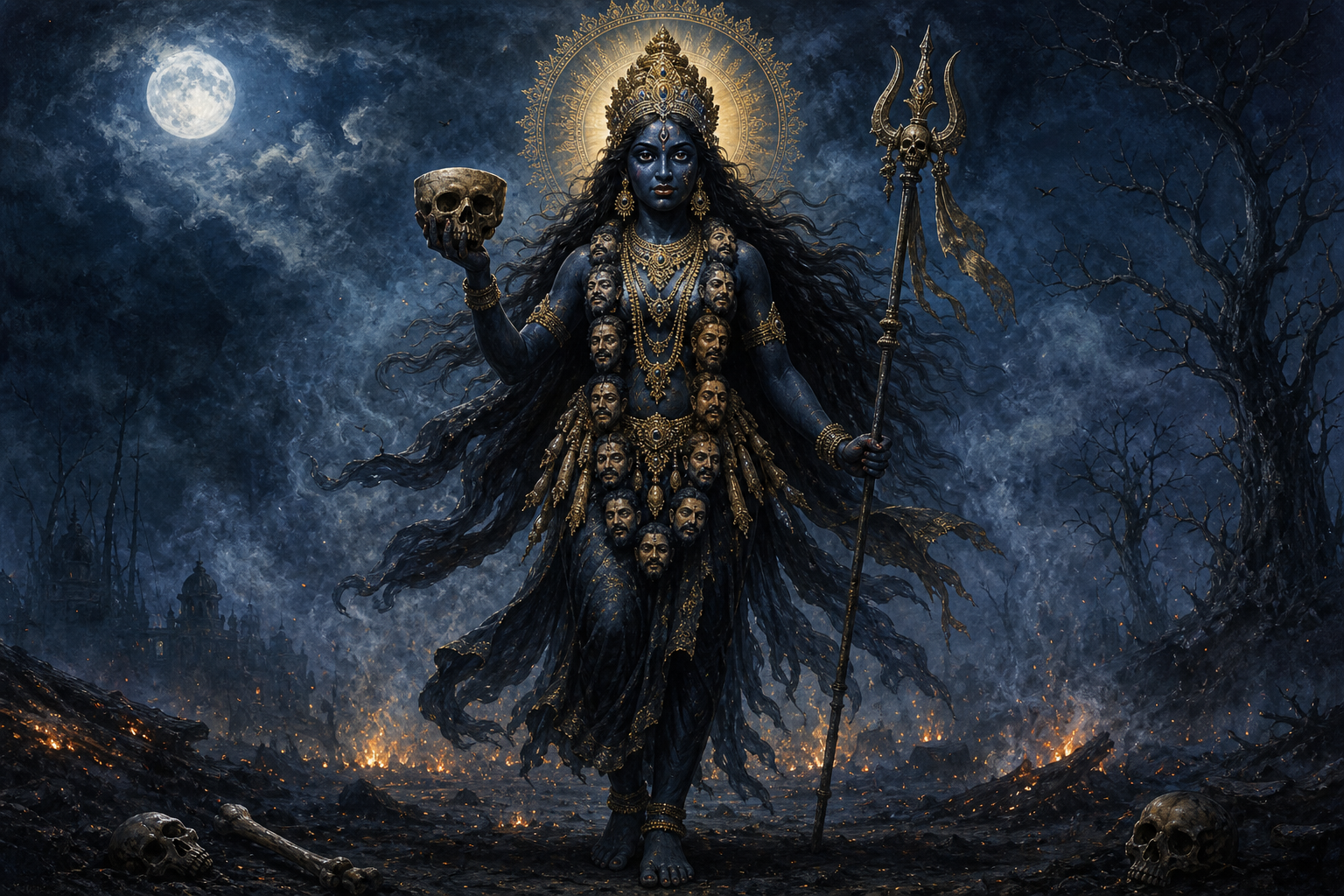
    In Bengal, Tarapith and Udaypur form a rare Tantric axis—a sacred mirror where the divine feminine appears to face itself across a krosh. The pairing illustrates how sacred geography encodes theology, with two distinct shrines expressing a single Shakti. Pilgrims often visit both temples in one yatra, describing dawn and dusk worship as complementary rhythms…

  • Vile Parle College Hosts HJS Self-Defence Training, Inspiring Confidence and Unity for Safer Campuses

    Vile Parle College Hosts HJS Self-Defence Training, Inspiring Confidence and Unity for Safer Campuses

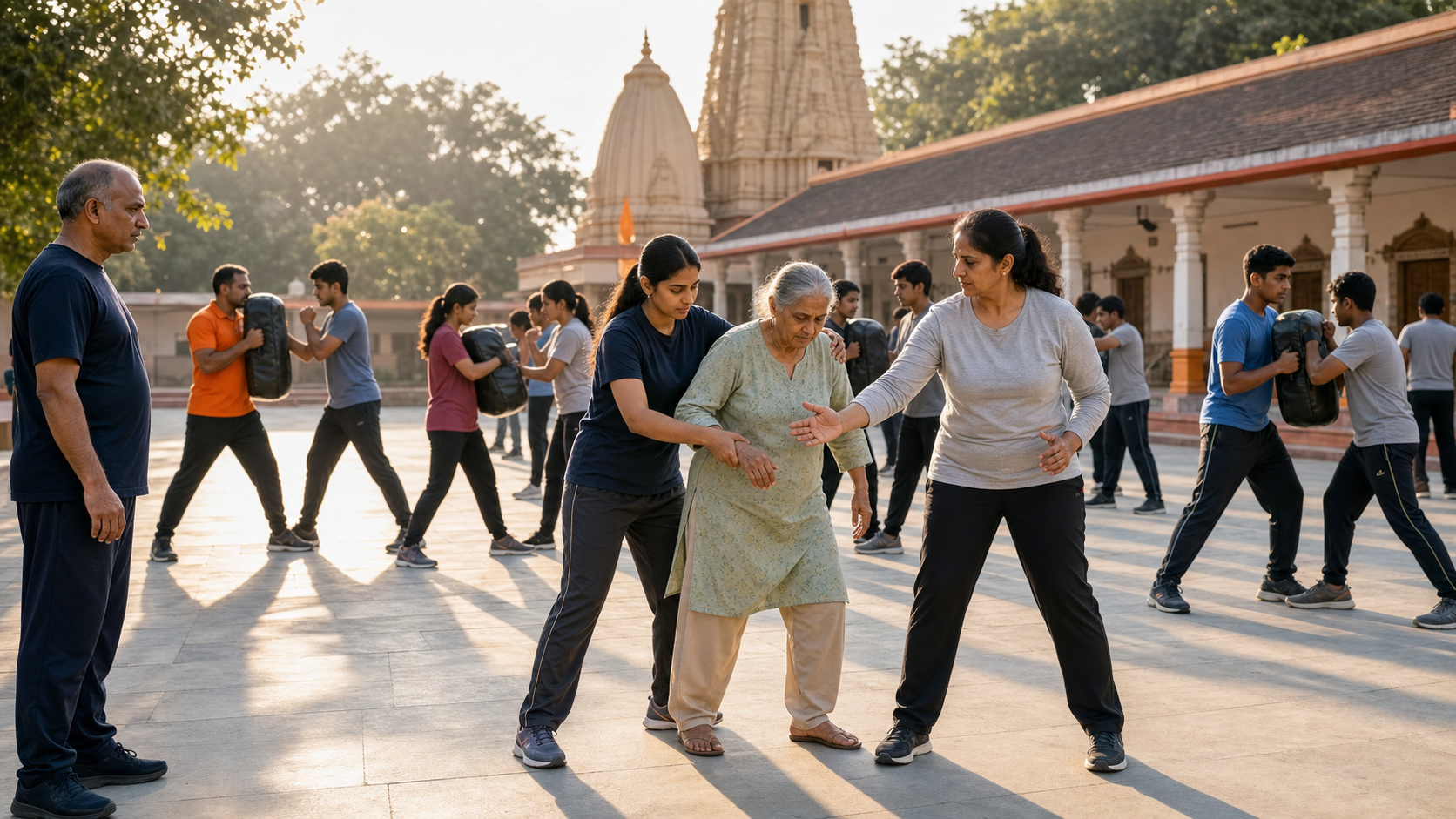
    Vile Parle college hosted a self-defence training programme by the Hindu Janajagruti Samiti (HJS), with strong student participation across disciplines. The session prioritised situational awareness, de-escalation, and bystander support, blending practical drills with reflective, ethics-focused learning. Participants noted increased confidence and clearer understanding of how to assess risk and support peers. The programme affirmed shared…

  • UGC Equity Regulations 2026: Protecting Students, Preventing Misuse, Preserving Due Process

    UGC Equity Regulations 2026: Protecting Students, Preventing Misuse, Preserving Due Process

    The UGC Equity Regulations 2026 arose from urgent calls to prevent discrimination while preserving due process and academic freedom. This analysis traces the policy timeline, clarifies what changed in the final rules, and explains why overbroad monitoring can undermine trust. It outlines a constructive alternative: privacy-preserving, pattern-based reporting that aggregates credible signals before triggering inquiries.…

  • Karnaprayag, Uttarakhand: Unveiling Karna’s Legacy, Sacred Confluence, and Living Temples

    Karnaprayag, Uttarakhand: Unveiling Karna’s Legacy, Sacred Confluence, and Living Temples

    Karnaprayag, in Uttarakhand’s Chamoli district, is a sacred confluence where the Alaknanda meets the Pindar, revered as one of the Panch Prayag. The site’s cultural memory is anchored in the legacy of Karna from the Mahabharata, whose valor and generosity shape local devotion. Temples honoring Karna and Uma-Maheshwari, daily rituals, and evening ārtī create a…

  • Seven Stages of Life in the Ramayana: A Dharma-Guided Journey from Childhood to Moksha

    Seven Stages of Life in the Ramayana: A Dharma-Guided Journey from Childhood to Moksha

    The Ramayana offers a symbolic map of seven life stages—from childhood to moksha—showing how dharma shapes character, relationships, leadership, and final liberation. Read as a guide, not only as history, it highlights how virtues formed in childhood mature through disciplined study, ethical family life, purposeful renunciation, just action, compassionate governance, and ultimately selfless letting go.…

  • Sri Vaishnavism Unveiled: Devotion, Vedanta, and the Heart of Vishnu Worship

    Sri Vaishnavism Unveiled: Devotion, Vedanta, and the Heart of Vishnu Worship

    Sri Vaishnavism (Srivaishnavism) is a major Hindu tradition that unites Vedanta philosophy with heartfelt bhakti to Vishnu, especially through devotion to Sri Rama and Sri Krishna. Anchored in Tamil Nadu and Karnataka, it draws on the Tamil Alvars’ hymns and Acharya scholarship—especially Ramanuja’s Vishishtadvaita—to harmonize poetry and philosophy. Readers gain clear insight into its sacred…

  • Lord Nityananda’s Appearance Day: Radiant Compassion, Bhakti Joy, and Dharmic Unity

    Lord Nityananda’s Appearance Day: Radiant Compassion, Bhakti Joy, and Dharmic Unity

    Lord Nityananda’s Appearance Day highlights compassion as the living core of bhakti and communal harmony. The narrative of His humility toward Lord Gaurasundara underscores service as the highest expression of spiritual greatness. As Patitapavana Avatara, Caitanya Mahaprabhu’s mission reframes outreach as dignifying and welcoming, not judgmental. Lord Nityananda’s journeys along the Ganges model respectful dialogue,…

  • Buldhana Unites for the Tricolour: HJS Leads Powerful Republic Day Flag-Respect Drive

    Ahead of Indian Republic Day, Hindu Janajagruti Samiti (HJS) led a district-wide initiative in Buldhana to uphold the honour of the national flag. The campaign emphasized respectful display of the Tricolour and civic responsibility during celebrations. Residents and local groups found the message both timely and unifying, reinforcing national dignity through everyday practices. By aligning…

  • Prayagraj Magh Mela Protest: Saints Challenge UGC Equity Rules, Urge Dharmic Unity

    At the Prayagraj Magh Mela on January 28, 2026, Hindu saints and community leaders held a peaceful protest addressing the UGC Higher Education Equity Regulations 2026. They argued that inclusive education policy must protect religious freedom, cultural heritage, and the autonomy of dharmic institutions. Proposals included an expert committee representing Hindu, Buddhist, Jain, and Sikh…

  • When AI Polished My Voice and Dimmed My Heart: Reclaiming Self-Trust in Leadership and Well-Being

    When AI Polished My Voice and Dimmed My Heart: Reclaiming Self-Trust in Leadership and Well-Being

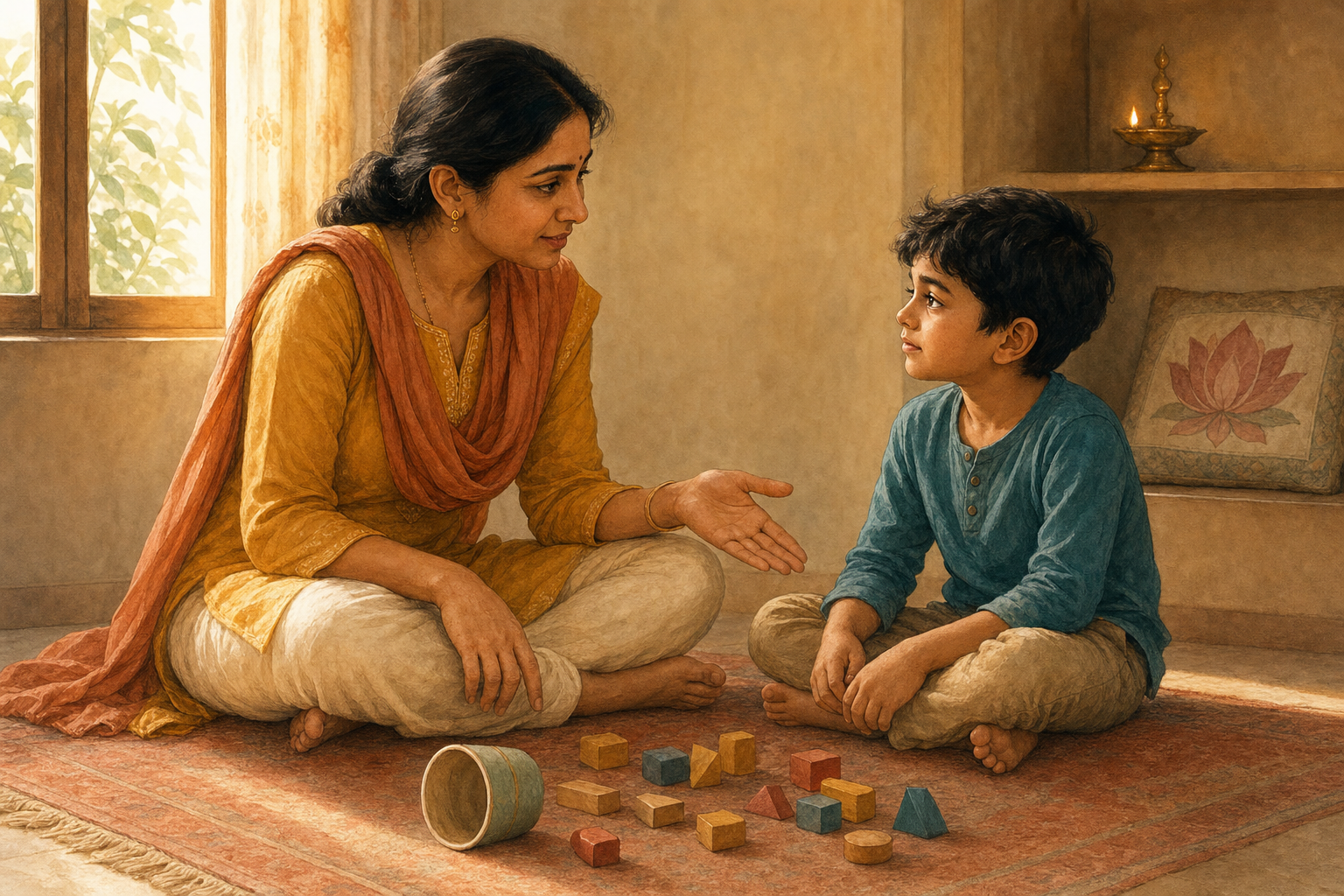
    A healthcare leader recognized a subtle over-reliance on AI for emotional regulation after late-night consultations left the mind clear but the body uneasy. The realization illuminated a wider pattern in leadership and mental health: polished language was displacing authentic voice. Practical shifts restored balance—self check-ins before tool use, human connection before chat windows, and tech-free…

  • Impermanence and Human Bonds: Hindu Wisdom on Loving, Letting Go, and Lasting Peace

    Impermanence and Human Bonds: Hindu Wisdom on Loving, Letting Go, and Lasting Peace

    Hinduism teaches—most explicitly in the Yoga Vasishta—that all human associations are impermanent, a truth that clarifies how to love without clinging. Recognizing anitya (impermanence) reframes loss, softens attachment, and supports ethical, compassionate action in relationships. This perspective aligns with the dharmic insights of Buddhism (anicca), Jainism (anitya), and Sikh wisdom on hukam and seva, highlighting…

  • Dhyana and Vichara: Harmonizing Meditation and Enquiry for Self-Realization in Hinduism

    Dhyana and Vichara: Harmonizing Meditation and Enquiry for Self-Realization in Hinduism

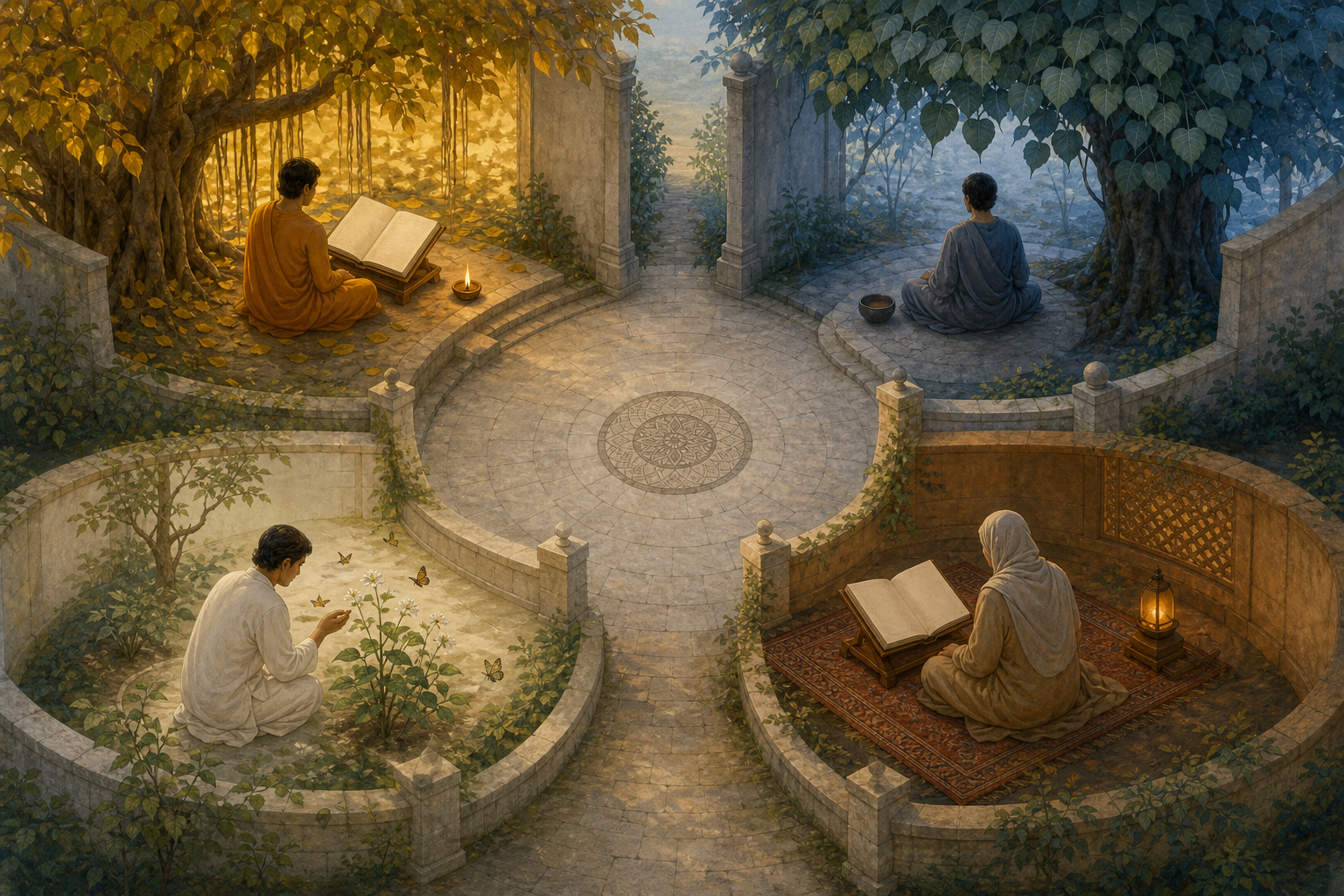
    This article presents an academic yet accessible synthesis of Dhyana (meditation) and Vichara (enquiry) as complementary paths in Hindu philosophy. It explains how moksha is the unveiling of the ever-present Self (Atman) as Brahman, grounded in the Upanishads, Vedanta, and the Bhagavad Gita. Readers gain practical clarity on how meditation stabilizes attention while enquiry dissolves…

  • Sarapot, Kolabou, and Clay Idols: A Deep Dive into Bengal’s Living Lakshmi Traditions

    Sarapot, Kolabou, and Clay Idols: A Deep Dive into Bengal’s Living Lakshmi Traditions

    Bengal’s Lakshmi Puja unfolds through three living forms—Sarapot, Kolabou, and clay idols—each illuminating prosperity as an ethical relationship with home, community, and ecology. Sarapot Lakshmi preserves a compact, household-centered tradition rooted in local clay craft and simple offerings. Kolabou, the banana plant honored in Nabapatrika, embodies a vegetal form many households revere as Lakshmi, linking…

  • Indian Female Soldiers Reclaim an Ancient Warrior Legacy: Shakti, History, and National Pride

    Indian Female Soldiers Reclaim an Ancient Warrior Legacy: Shakti, History, and National Pride

    Viral videos of Indian female soldiers at the Republic Day parade have prompted claims that women’s service is a purely modern phenomenon. A careful historical view shows continuity with India’s long tradition of women’s leadership, from Rani Durgavati and Rani Lakshmibai to Mai Bhago. The dharmic concept of Shakti—revered in Hindu goddess traditions—has inspired ethical…

  • CoHNA Demands Correction: Ye’s WSJ Apology Mislabels Swastika as Hakenkreuz

    CoHNA Demands Correction: Ye’s WSJ Apology Mislabels Swastika as Hakenkreuz

    CoHNA urges Ye and The Wall Street Journal to correct a paid advertisement that mislabels the sacred Swastika as the Nazi Hakenkreuz. The distinction is historically established: the Nazi emblem was called the Hakenkreuz, while the Swastika has denoted auspiciousness in Hindu, Buddhist, and Jain traditions for millennia. Legislatures in Virginia and California, and the…

  • How Colonial Rule Solidified ‘Caste’: Decoding History, Names, and Dharmic Unity

    How Colonial Rule Solidified ‘Caste’: Decoding History, Names, and Dharmic Unity

    This article re-examines the widespread belief that “caste” is an ancient, rigid pillar of Hinduism by tracing how British colonial administration centralized and hardened fluid social identities. It contrasts England’s parish-register surname standardization—an administrative tool that rarely fixed social rank—with the subcontinent’s census-driven reclassification that tethered names to hierarchy. It clarifies the distinct roles of…

  • US Caste Laws Risk Colonial Repeat and Bias—Protecting Dharmic Unity Now

    US Caste Laws Risk Colonial Repeat and Bias—Protecting Dharmic Unity Now

    US efforts to legislate caste as a protected category aim to curb discrimination but risk reviving colonial-era methods of identity control. Historical lessons from British rule and postcolonial India show how enumeration hardens fluid identities and creates verification problems, particularly in diaspora contexts. Early institutional responses, such as caste-focused DEI trainings, may inadvertently heighten bias…