
-
Jagath Samhara Moorthy: How Shiva’s Cosmic Dissolution Fuels Renewal and Liberation

Jagath Samhara MoorthyShiva as the cosmic dissolverexpresses a lawlike rhythm in Hindu cosmology where endings prepare the ground for renewal. Drawing on the Puranas, Upanishads, and Shaiva philosophy, the article clarifies how samhara operates within the five divine acts: creation, maintenance, dissolution, concealment, and grace. It explains the four types of pralaya and situates them…
-
Why the Vedas Are Called Nigama: Etymology, Canonical Authority, and Agama–Nigama Unity

Nigama names the Vedas as the clearest, most authoritative revelation in Hinduism, a status grounded in precise oral transmission, rigorous hermeneutics, and enduring philosophical insight. Etymologically linked to decisiveness and disclosure, Nigama highlights how Shruti reveals truth with canonical clarity. Classical literaturesuch as “nigama-kalpa-taror galitaṁ phalam”uses the term to celebrate the Vedas as a life-giving…
-
Decoding Nidhana in Somayaga: The Timeless Musical Finale and Ritual Precision of Agnistoma
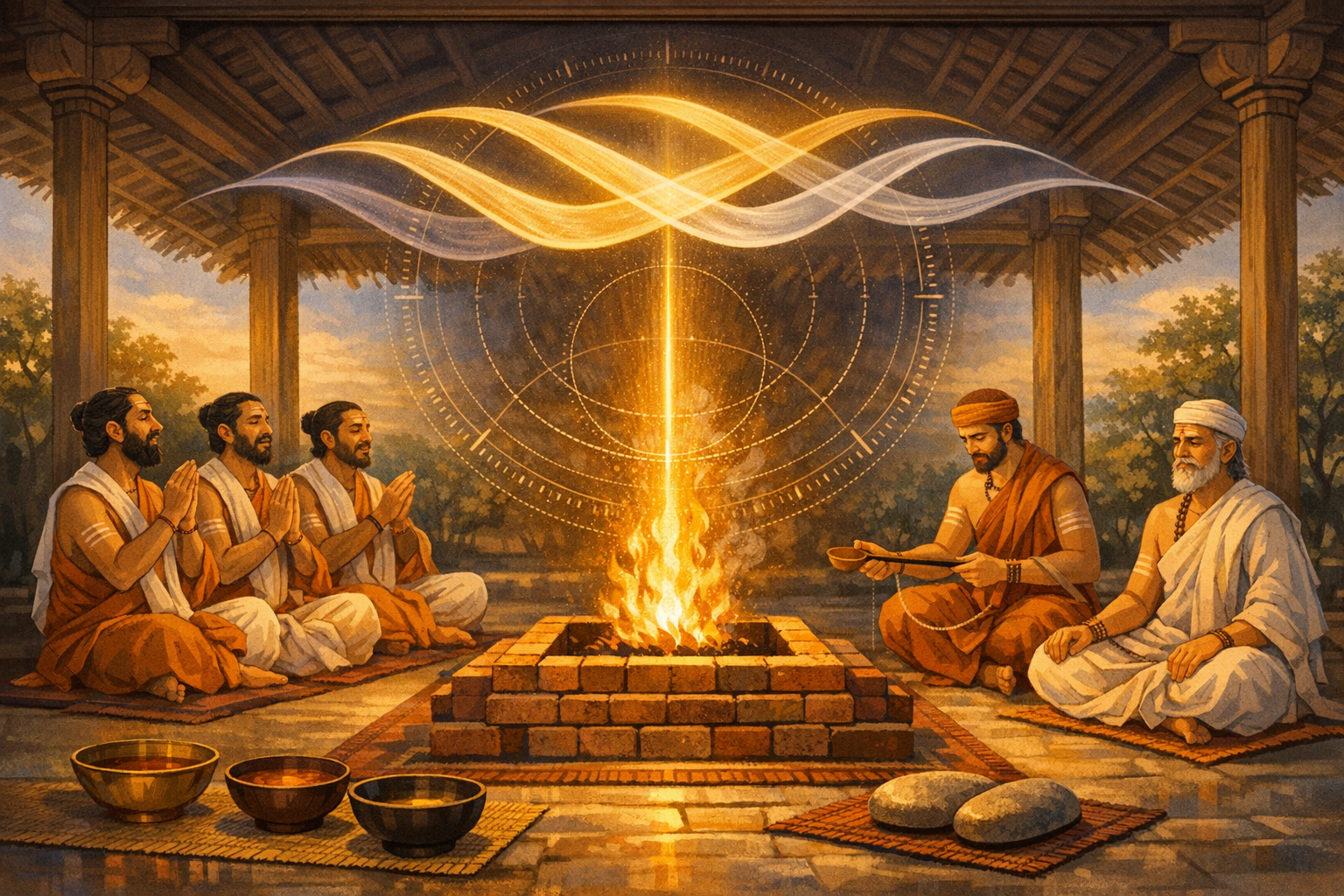
Nidhana in Somayagaespecially within Agnistomaholds a precise dual meaning: it is both the final, crafted cadence of Sama Veda chanting and a procedural marker that closes a ritual segment. This exploration clarifies how the five-part saman structure (prastava, udgitha, pratihara, upadrava, nidhana) coordinates priests, offerings, and timing across the three Soma pressings. Readers learn why…
-
Varuna in the Vedas: Majestic Sovereign of rta, Waters, and Nature’s Vital Powers

Varuna, among the oldest deities in the Rigveda, stands as sovereign of rta (cosmic order), guardian of the waters, and witness to truth. The Vedic hymns credit him with distributing nature’s vital powersstrength in horses, milk in cows, vitality in the heart, and even fire concealed within the watersexpressing a grand ecology of interdependence. His…
-
Indra and Varuna’s Celestial Rivalry: Vedic Kingship, Cosmic Law, and the Battle for Order

Indra and Varuna frame a profound Vedic conversation about power, law, and legitimacy. Indra’s thunderous decisiveness (kṣatra) complements Varuna’s guardianship of ṛta, revealing why force must be answerable to truth and why law must be capable of protection. Rigvedic hymns, especially RV 1.32 and RV 7.86–7.89, ground this dialectic, while Brāhmaṇa and Upaniṣadic texts transform…
-
Why Sanskrit Calls Humans “Nara”: Deep Origins, Dharma, and the Power of Karma
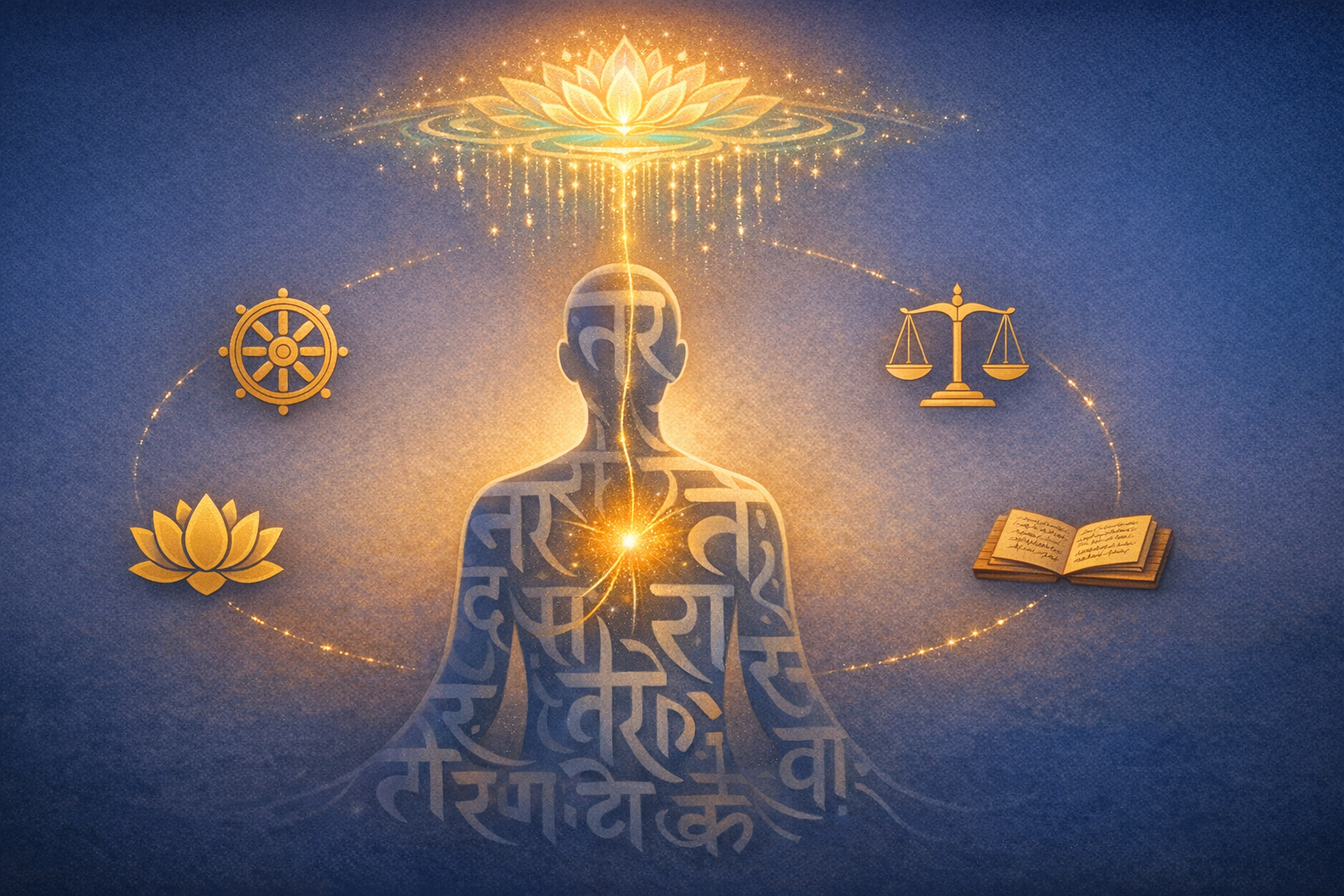
The Sanskrit term “nara” does more than denote a human being; it encodes a civilizational understanding of agency, ethics, and liberation. Its deep Indo-European etymology, rich scriptural presence, and philosophical nuance explain why Hinduism treats human life as uniquely suited to dharma and karma. Classical distinctionssañcita, prārabdha, and kriyamāṇa karmashow how present choices reshape experience.…
-
Decoding Khila in Vedic Sutras: Hidden Supplements That Shaped Ancient Hindu Wisdom

Khila, the Vedic category for recognized supplements, reveals how ancient Indian literature balanced canonical integrity with lived adaptability. This in-depth exploration maps khila across the Rigveda Khilāni and sūtra traditions, showing how supplementary hymns and pariśiṣṭas extend ritual capacity without unsettling core śruti. Readers learn why texts like the Śrīsūkta, though technically ancillary in many…
-
Navagvas and Dāśagvas in Hinduism: Angiras Lineage, Vedic Timekeeping, Ritual Mastery

This study explains why Navagvas and Dāśagvas matter in Hinduism by situating them within the Angiras lineage and the Rigvedic ritual world. It clarifies how these names encode nine‑ and ten‑month attainments in year‑long sattras (Sattrayāga), while noting alternative scholarly views that treat them as Angirasa group designations. Readers gain a clear overview of Vedic…
-
Hotṛ, Rigvedic Master of Sacred Sound: Role, Ritual Science, and Legacy in Yajña
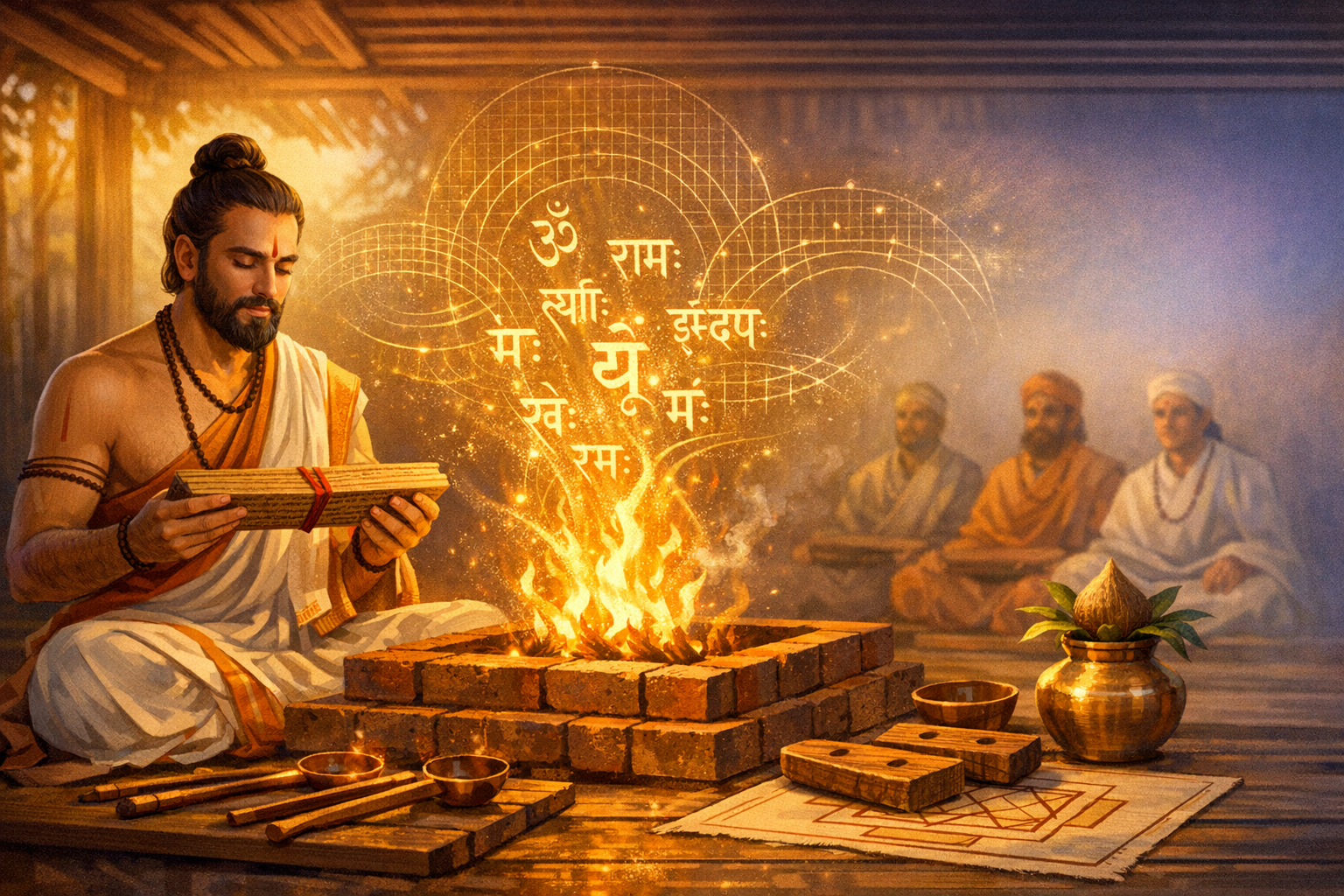
The Hotṛ is the Rigvedic specialist who gives Vedic yajña its articulate voice through precise śāstra recitations. Anchored in exact meter (chandas) and tonal accent (svara), the Hotṛ’s work integrates with the Adhvaryu’s actions, the Udgātṛ’s chants, and the Brahman’s oversight to ensure ritual integrity. Training includes advanced pāṭha methods and phonetic sciences, preserving textual…
-
Unveiling Kena’s Dual Identity: Why It’s the Talavakara Upanishadand Why It Matters Today

The Kena Upanishad is called the Talavakara Upanishad because it is embedded in the Tālavakāra Brāhmaṇa of the Sāma Veda, reflecting its precise textual lineage. Its name “Kena” comes from the opening question“by whom?”that frames a profound inquiry into the source of mind, speech, and life. Structured in four sectionstwo metrical and two proseit advances…
-
Unbroken Sacred Bonds of Bharatavarsha: Living Sanatana Dharma and India’s Cultural Unity
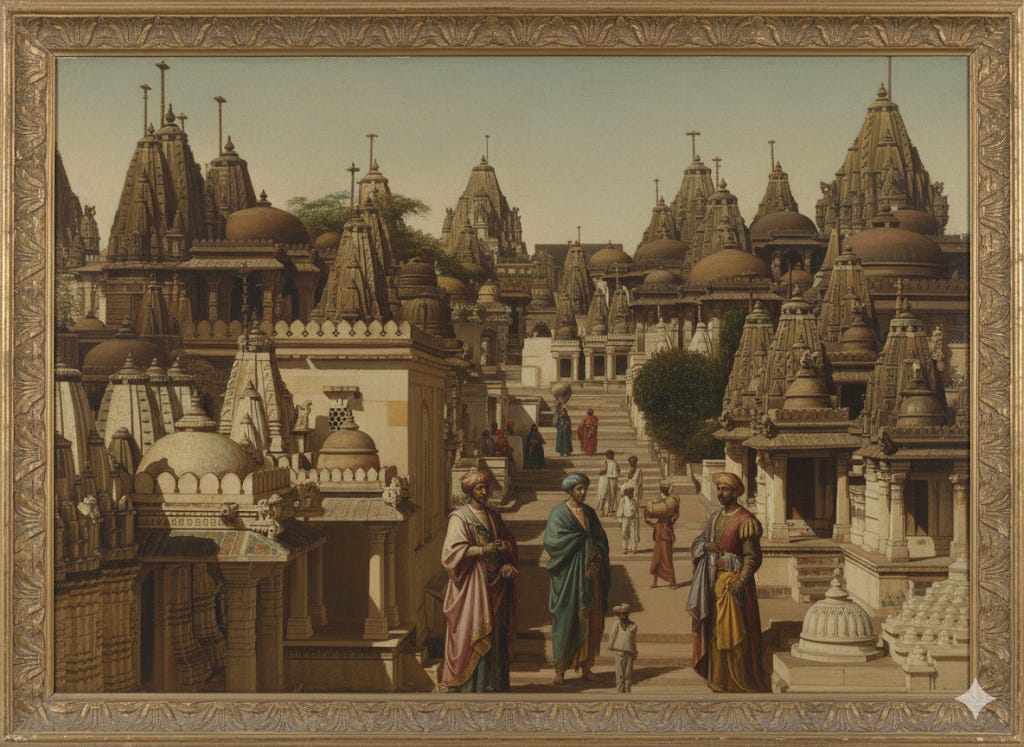
This essay examines how the cultural unity of Bharatavarsha endures through lived Sanatana Dharmawhere sacred geography, pilgrimage, arts, and scholarship weave Hindus, Buddhists, Jains, and Sikhs into a shared civilizational fabric. It highlights the continuing vitality of Adi Sankara’s mathas, Sanskrit-centered scholarly debate, and inclusive canons such as the Guru Granth Sahib. It traces interregional…
-
Indrani Mata Mahatmyam: Vedic Origins, Saptamatrika Power, and Sacred Significance

Indrani Matarevered as Aindri, Shachi, and Paulomistands at the confluence of Vedic authority and Shakta devotion. Rig Veda 10.86 attests to her sovereign presence, while Saptamatrika traditions depict her as the protective Shakti of Indra, wielding the vajra and embodying righteous leadership. Her symbolism aligns courage with dharma, inspiring devotees toward clarity and steadfastness in…
-
Indrani Mata Mahatmyam: Vedic Origins, Saptamatrika Power, and Living Devotion

Indrani (Shachi), the queen of the Devas and consort of Lord Indra, is a vivid presence in the Vedas, with Rig Veda (10.86) preserving a powerful hymn in her honor. As Aindri among the Saptamatrikas, she embodies Devi Shakti’s protective strength, symbolized by the vajra and the elephant. Her mahatmyam bridges Vedic literature and Puranic…
-
Yajurveda on Om: The Pranava’s Transformative Power for Realizing Brahman
The Yajurveda presents Om (Aum, Praṇava) as a sacred syllable that unites ritual precision with contemplative depth, guiding seekers toward Brahman. In yajña, Om sanctifies intention and aligns speech, breath, and resolve; in meditation, it concentrates attention and clarifies consciousness. Upanishadic interpretations linked to the Yajurveda read Om as an imperishable sound pointing beyond waking,…
-
Mahidhara of Kashi: The 16th‑Century Vedic Exegete Who Illuminated the Shukla Yajur Veda

Mahidhara, a seminal 16th-century scholar from Kashi (Varanasi), shaped the study of the Shukla Yajur Veda through his Vedadipa, a lucid commentary on the Madhyandina Samhita. The work blends textual precision with ritual context, making complex mantras intelligible to students, practitioners, and researchers. Readers benefit from a model of Vedic exegesis that transmits tradition without…
-
Mahāvīra Earthen Pot in Pravargya: Sacred Fire, Sun Symbolism, and Vedic Precision

The Mahāvīra earthen pot is the central vessel of the Pravargya rite, an ancillary but potent phase of the Soma sacrifice in the Vedic tradition. Heated to an intense glow, it boils fresh milk that becomes the gharmá offering, energizing the entire yajña. Prepared by the adhvaryu according to the Śrauta Sūtras, the vessel’s design,…
-
Haviryajna Unveiled: Vedic Sacrifices that Harmonize Cosmos, Ethics, and Unity
Haviryajna represents a core class of Vedic sacrifices using havismeasured offerings of grains and gheealigned with cosmic order. The threefold classification of Pakayajnas, Haviryajnas, and Soma Yajnas clarifies how Vedic ritual scales from household devotion to communal and cosmic responsibility. Rites such as Agnihotra, Darśa–Pūrṇamāsa, Cāturmāsya, and Āgrayaṇa illustrate the Haviryajna focus on sacred time…
-
Spiritual Oneness in Hinduism: Vedic Wisdom to Heal Division, Injustice, and Ecological Harm

Spiritual oneness in Hinduism, rooted in the Vedas and Upanishads, offers a practical ethic for resolving modern crises. By recognizing a shared ground of being, communities can move beyond polarization toward empathy, dialogue, and responsible action. Dharmic traditions converge on this vision: Buddhism highlights interdependence, Jainism advances anekantavada and ahimsa, and Sikhism affirms Ik Onkar…
-
Mahanamni Explained: Sacred Sama Veda Sakvari Verses Shaping Ahina Rituals and Unity

The Mahanamni, a set of nine Sama Veda verses in Jaiminiya Samhita 2.7, begins with the words “vida maghavan” and is also known as the Sakvari verses. These chants hold enduring ritual significance, especially within the focused framework of Ahina sacrifices. Their careful phonetics and measured melodic patterns ensure that intention, meter, and meaning align…
-
Ghanapatha: The Brilliant Oral Science That Preserved the Vedas with Unmatched Precision

Ghanapatha is an advanced Vedic recitation method that preserved the Vedas with exceptional precision through patterned repetition and reversal. Situated within the Shiksha Vedanga, it crowns a structured pedagogySamhita, Pada, Krama, Jata, and Ghanathat builds redundancy and error-checking into every line. By guarding phonetics and pitch accents (udātta, anudātta, svarita), it retains exact meaning and…