
-
Historic First for Nevada: Gayatri and Vedic Sanskrit Mantras to Open Elko City Council

On 26 May 2026, the Elko City Council in Nevada will, for the first time, open a meeting with Hindu prayers led by Rajan Zed, featuring the Gayatri Mantra and other Vedic-Upanishadic verses. This inclusive civic moment aligns with U.S. constitutional guidance that permits non-coercive, rotating legislative invocations. The Gayatri Mantra (Rigveda 3.62.10), composed in…
-
Decoding the Dashagvas: Swift Angirasa Sages of the Rigveda and Their Living Legacy
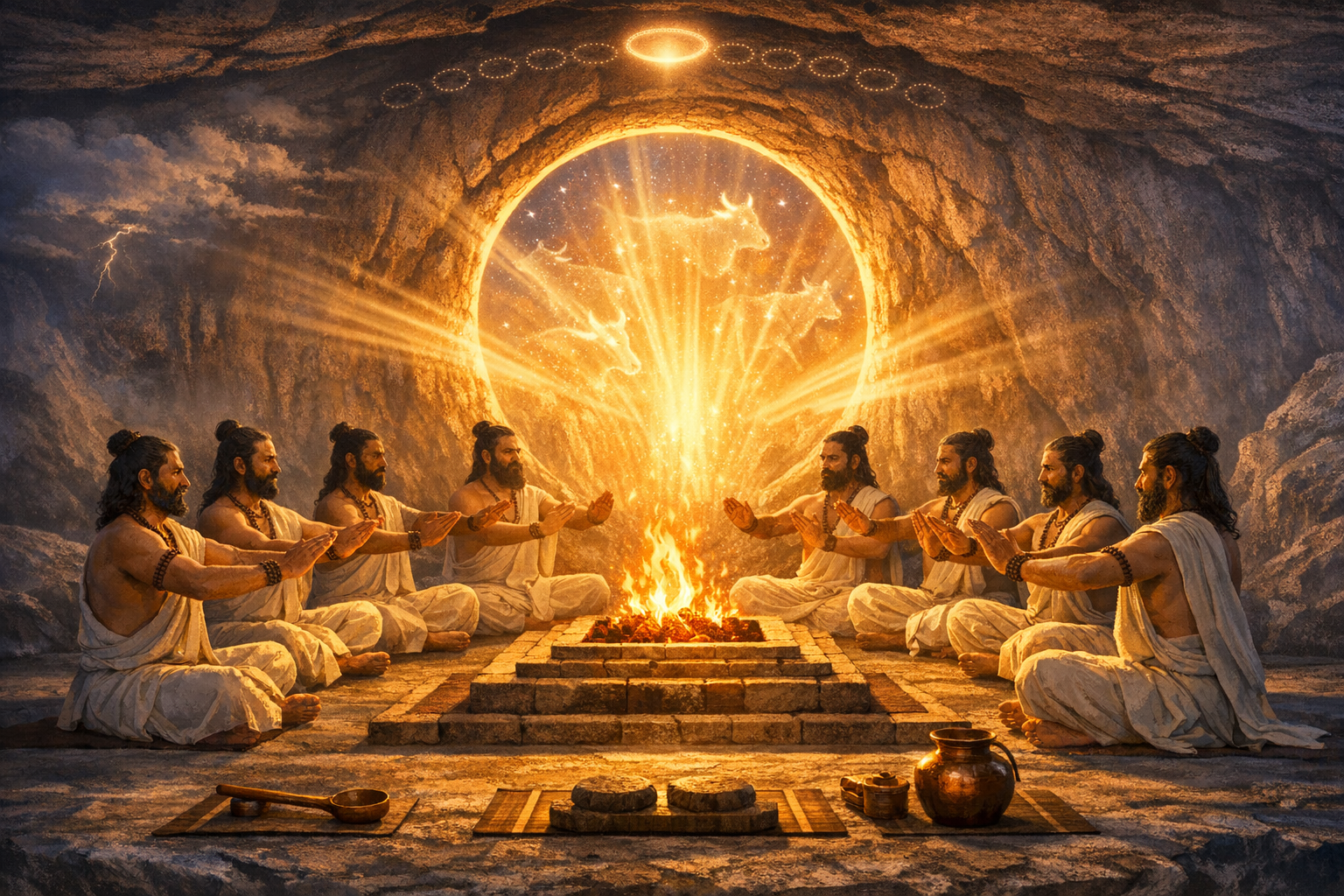
The Dashagvas, remembered in the Rigveda as Angirasa-aligned priests, exemplify the Vedic fusion of disciplined speech, precise timing, and communal practice. Tradition pairs them with the Navagvas and links their names to nine- and ten-month sacrificial cycles that culminate in the release of light symbolized as cows and dawns. Rather than celebrating haste, their famed…
-
Beyond Rivalry: Why a True Vaidika Honors Tantra and a True Tantrika Reveres the Vedas

Vedas and Tantra are not adversaries but complementary avenues to the same truth, a reality long recognized across authentic lineages. This article traces their historical interdependence through the Agamas, Pancharatra, temple praxis, and Vedantic metaphysics to clarify why both are indispensable. It explains how mantra, yantra, mudra, nyasa, and Kundalini sadhana can integrate seamlessly with…
-
Sacred Science of Nidra: Yogic Sleep in Vedas, Upanishads, and Ayurveda for Whole-Person Wellbeing

Nidra, or sleep, occupies a sacred and carefully defined role in yoga and Hindu scriptures: it stabilizes the nervous system, ripens sattva, and supports deeper meditation. The Upanishads interpret deep sleep as a vital experiential key to understanding consciousness, while Patanjali frames nidra as a distinct mental modification that can inform contemplative practice. The Bhagavad…
-
Dashashanti: Ten Timeless Vedic Shanti Mantras for Protection, Harmony, and Inner Calm

Dashashanti designates a cycle of ten Vedic Śānti Mantras recited to sanctify study, rituals, and community life. Drawn from the Rigveda, Yajurveda, and early Upanishads, these hymns seek protection, clarity, and universal welfare. The cycle typically includes Bhadraṁ karṇebhiḥ, Śaṁ no mitraḥ, Saha nāvavatu, Pūrṇam adaḥ, Asato mā, Āpyāyantu mamāṅgāni, Āpyāyasva sametu te, Svasti na…
-
Ahura vs Deva: The dramatic Indo‑Iranian reversaland what it reveals about Dharma

Why do Zoroastrian sources revere Ahura while condemning daevas, even as Hindu texts honor devas and oppose asuras? This long-form analysis traces the shared Indo-Iranian roots of these terms and explains how later reforms, rituals, and ethical priorities reversed their valuations. It clarifies early Vedic usage where asura could be a noble epithet, outlines Zarathustra’s…
-
Do Planets Shape Our Destiny? A Timeless Vedic Guide to Jyotisha, Karma, and Free Will

Is astrology truly the “eyes of the Vedas,” and do planets govern human fate? This in-depth, academically grounded guide clarifies what Vedāṅga Jyotiṣa is, how it historically joined astronomy and ritual timing, and why life is physically and culturally entangled with celestial cycles. Readers learn the technical building blocksrāśi, nakṣatra, lagna, pañcāṅga, daśā, gochara, and…
-
Purpose of the Vedas: Why Vaishnavas Champion Bhakti over Jnana, Karma, and Yoga

This in-depth exploration clarifies the purpose of the Vedas, tracing their layered structure from ritual to contemplative wisdom and showing how Vedānta articulates their culmination. It explains why Vaishnava traditions foreground Bhakti: not as sentiment, but as an integrative discipline endorsed by the Bhagavad Gita and Śrīmad-Bhāgavatam. It maps Bhakti’s relationship to Jñāna, Karma, and…
-
Unveiling Prishni: The Speckled Celestial Mother of the Maruts in Rigvedic Cosmology

Prishni, the “speckled” celestial mother of the Maruts in the Rigveda, illuminates how Hindu scriptures bind natural phenomena to sacred meaning. This analysis clarifies her etymology, traces her presence in Vedic hymnody, and examines her relationship to Indra, Rudra, and the storm-host. Readers gain a precise understanding of how “speckling” functions as Vedic symbolism for…
-
Narashamsa in the Rig Veda: The Sanctifying Voice Bridging Human Praise and the Divine

Narashamsa (Naraśaṁsa) in the Rig Veda personifies sanctified praise, revealing how Vedic ritual transforms human voice into a potent bridge to the divine. Etymology and liturgical usage in the Aprī hymns show a deity defined less by myth and more by function: protecting and amplifying rightly formed invocation. Closely allied with Agni, Narashamsa safeguards the…
-
Self‑Born, Mind‑Born, Womb‑Born: Decoding the Profound Hindu Cosmology and Sanat Kumaras
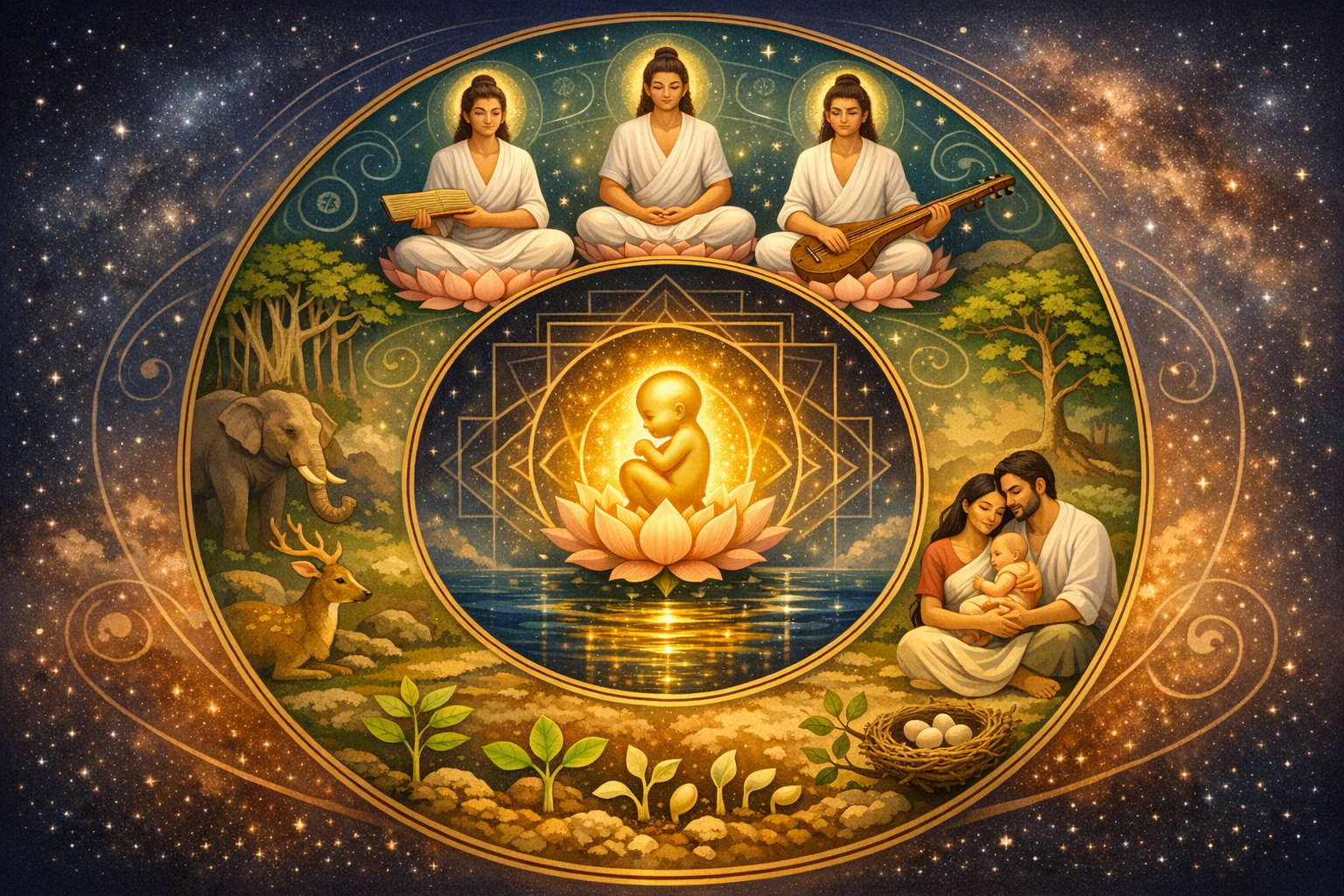
Hindu cosmology describes creation in three interlinked stages: self-born (svayambhū), mind-born (mānasa), and womb-born (jarāyujā). Drawing on the Viṣṇu Purāṇa, Śrīmad-Bhāgavatam, and allied texts, this analysis shows how sarga (primary emanation) and visarga (secondary diversification) structure a descent from subtle principle to mental formation and biological life. The Sanat Kumaras and Nārada exemplify the mind-born…
-
Niyama Vidhi in Purva Mimamsa: A Definitive Guide to Restrictive Injunctions and Dharma Precision

This in-depth guide clarifies niyama-vidhi (restrictive injunction) in Pūrva Mīmāṃsā and shows how it refines an already known duty by selecting a preferred means without creating a new obligation. It distinguishes niyama-vidhi from apūrva/utpatti-vidhi and parisankhyā-vidhi, and explains its cooperation with niṣedha and arthavāda within Vedic hermeneutics. Readers learn practical criteria for identifying a restrictive…
-
Krishna’s Omnipotence Explained: Why Name, Mantra, and Scripture Offer Direct, Daily Companionship
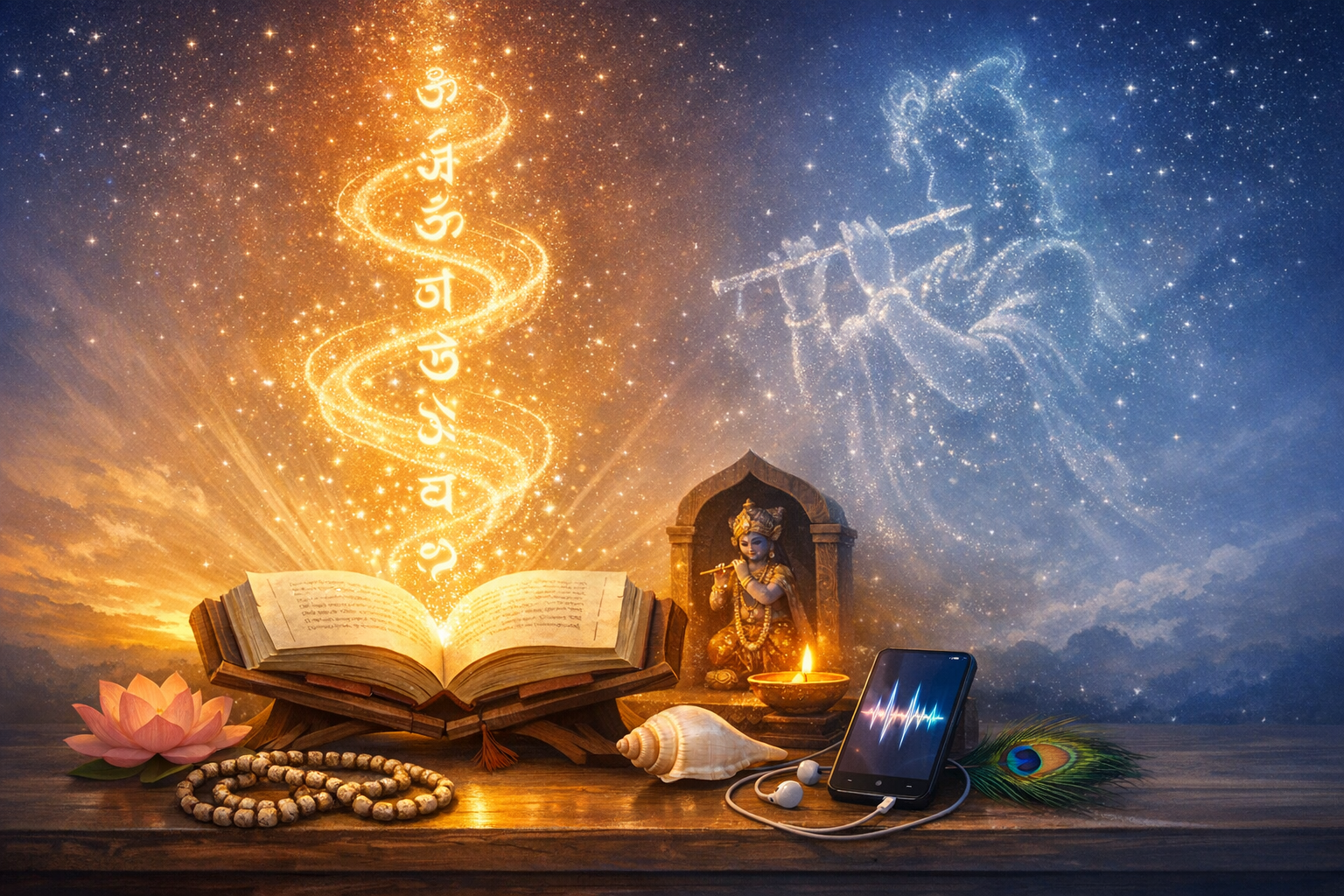
This article explains, in clear Vedic and Bhakti terms, why Krishna’s omnipotence means His words, names, and teachings are non-different from Him, offering direct companionship at any moment. It shows how the concept of shabda as an efficacious, self-revealing medium makes scriptural hearing and mantra recitation a living encounter rather than mere symbolism. Drawing on…
-
Veda Murtis Demystified: Living Forms that Illuminate Vedic Wisdom, Ritual, and Iconography

Hindu tradition presents the Vedas as living, relational knowledge by personifying them as Veda Murtisanthropomorphic embodiments that translate sacred sound into contemplative sight. Grounded in Mīmāṃsā, Agamas, and Śilpa-śāstra canons, these forms do not replace scripture; they deepen Vedic study by aligning hearing, seeing, and practice. Typical depictions personify the four Vedas with manuscripts and…
-
Saranyū, Daughter of Tvaṣṭṛ: The Swift Vedic Goddess of Transformation and ṛta

Saranyū, the swift goddess of the Vedas, unites movement, light, and craftsmanship into a single principle: transformation governed by ṛta. Positioned as daughter of Tvaṣṭṛ and wife of the solar Vivasvat, her narrative encodes lawful speed and timely transition. The Aśvins embody her swiftness in service of healing, while the Chāyā motif distinguishes authentic presence…
-
Hinduism’s ‘330 Million Gods’ Demystified: Unity, Ishta, and the Logic of Many Paths

Why Hindus follow many gods is not a contradiction but a cornerstone of Sanatan Dharma. This essay clarifies the famous “330 million gods” as a later linguistic and devotional interpretation of the Vedic 33 categories (koti) of deities, grounding the discussion in the Vedas, Upanishads, and the Bhagavad Gita. It explains Ishta-devata as a rigorous,…
-
Rohita in the Atharva Veda: The Crimson Sun-Fire as Supreme Principle of Creation and Order

Rohita in the Atharva Veda is presented as a crimson, world-sustaining principle that unites fire (Agni), the sun (Sūrya), and cosmic order (Ṛta). The Book 13 hymns of the Śaunaka recension elevate Rohita beyond any single deity by identifying this power with Prajāpati, Skambha, and Prāṇa, offering a unifying metaphysical vision. Color symbolism (rohita/lohita) reveals…
-
Shakhas of the Vedas: How Living Lineages Preserved Sacred Knowledge Across Millennia

The Vedas endured across millennia through shakhasliving lineages that safeguarded sound, meaning, and ritual with extraordinary precision. This article explains how each shakha integrates Samhita, Brahmana, Aranyaka, and Upanishad texts, supported by Vedangas, Pratisakhyas, and Sutras to ensure error-free oral transmission. It surveys the surviving recensions of the Rigveda, Samaveda, Yajurveda (Shukla and Krishna), and…
-
Unveiling Nigada: The Hidden Vedic Mantras Orchestrating Yajña with Sacred Precision

Nigada designates a specialized class of Vedic utterances that coordinate action, timing, and intention within yajña. Set apart from rik, yajus, and saman, nigada acts like a subtle conductorsoftly voiced cues that synchronize priests, offerings, and chants. The piece clarifies how nigada differs from related forms like nivid and praīṣa, and why śikṣā (phonetics) and…
-
Why Atharva Veda Appears Monkey-Faced: Unveiling Sacred Simian Symbolism in Temples
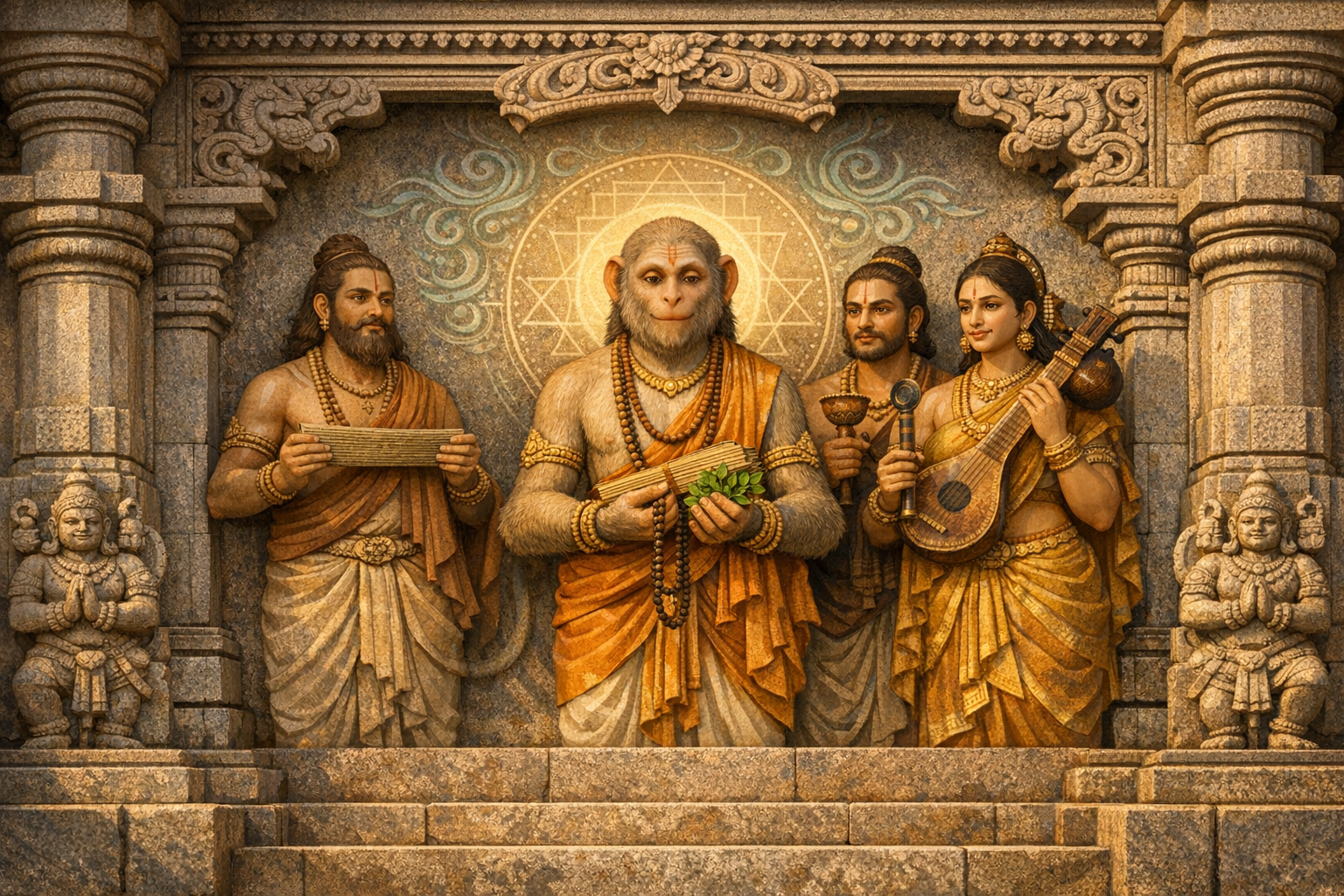
Hindu temple art often personifies the four Vedas as living presences, and in some regional traditions Atharva Veda appears with a monkey-like face. This simian marker is not caricature but a sophisticated code for healing, protection, breath-centered efficacy, and agile, disciplined intelligencequalities deeply associated with Atharvan rites. The discussion situates the motif within flexible Śilpaśāstra…