
-
Decoding the Horse-Faced Sama Veda: Iconography, Sacred Sound, and Hayagriva

In Hindu iconography, the Vedas appear as living Veda Purushas; in select programs the Sama Veda is rendered horse-faced, signaling a fusion of sacred sound and Hayagriva theology. The article explains how this equine imagery coheres with the Sama Veda’s musicological coreudgītha, svara, and sāman structureswhile linking it to Hayagriva, Viṣṇu’s horse-headed form who rescues…
-
Unveiling Yajur Veda’s Goat-Faced Icon: Sacred Symbolism in Hindu Temple Art
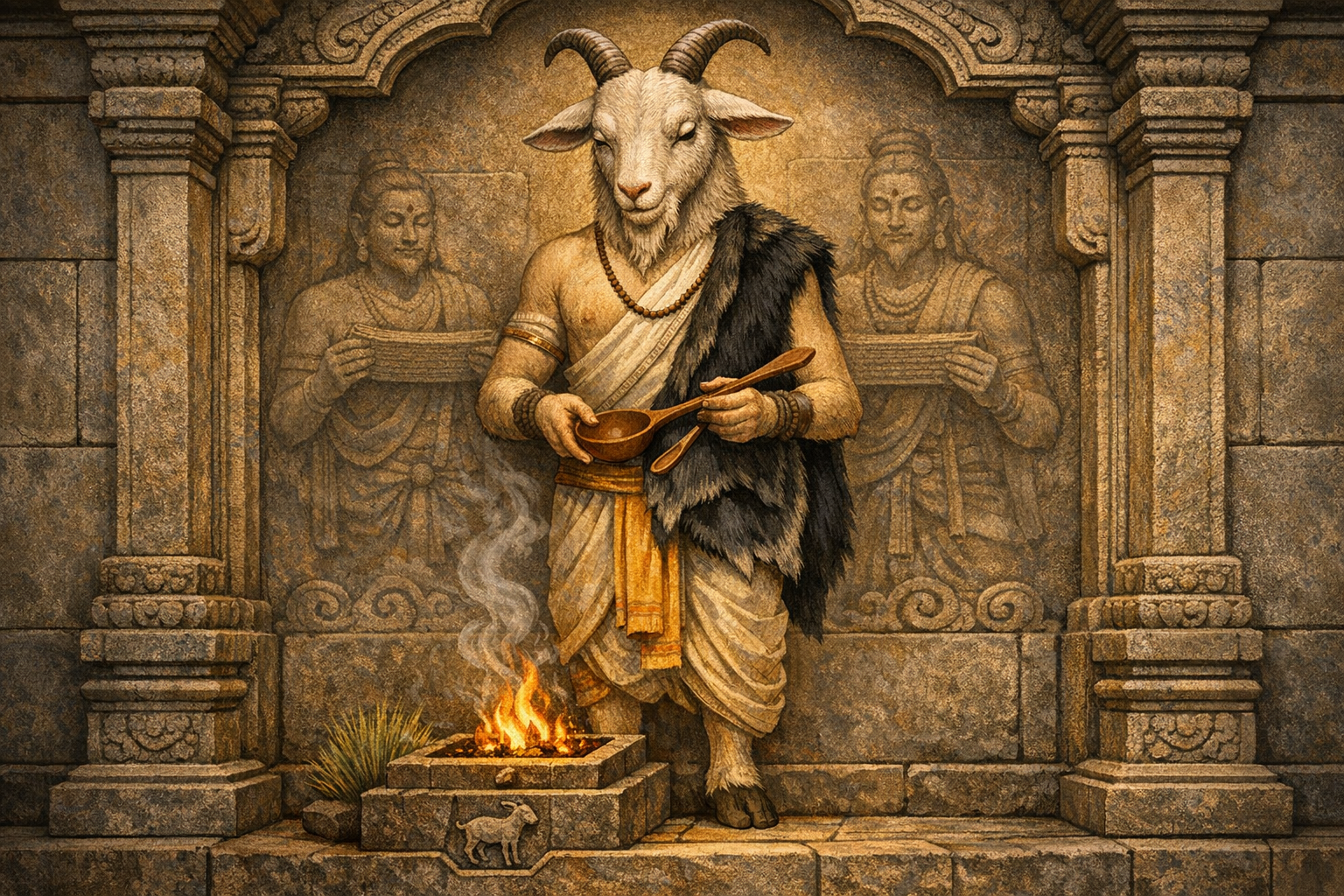
Hindu temple art often personifies the Vedas as living, intentional presences called veda-purushas, and the Yajur Veda is sometimes shown with a goat-faced form. This article explains why: it links ritual practice (yajna), philology (aja as both “goat” and “unborn”), and the Adhvaryu’s tools to a coherent iconographic language. It also clarifies common confusions with…
-
Atharva Veda Unveiled: The Fourth Veda That Bridges Ritual, Healing, and Daily Life

The Atharva Veda distinguishes itself from the Rig, Sama, and Yajur Vedas by extending Vedic wisdom into healing, household life, and public welfare while sustaining rigorous ritual and philosophical depth. It preserves two major recensions (Śaunaka and Paippalāda), the Gopatha Brāhmaṇa, and Atharvanic Upanishads like Muṇḍaka, Māṇḍūkya, and Praśna. Signature hymnssuch as the Bhūmi Sūkta,…
-
Decoding the Donkey-Faced Rig Veda: Esoteric Agamic Iconography, Sound, and Sacred Memory
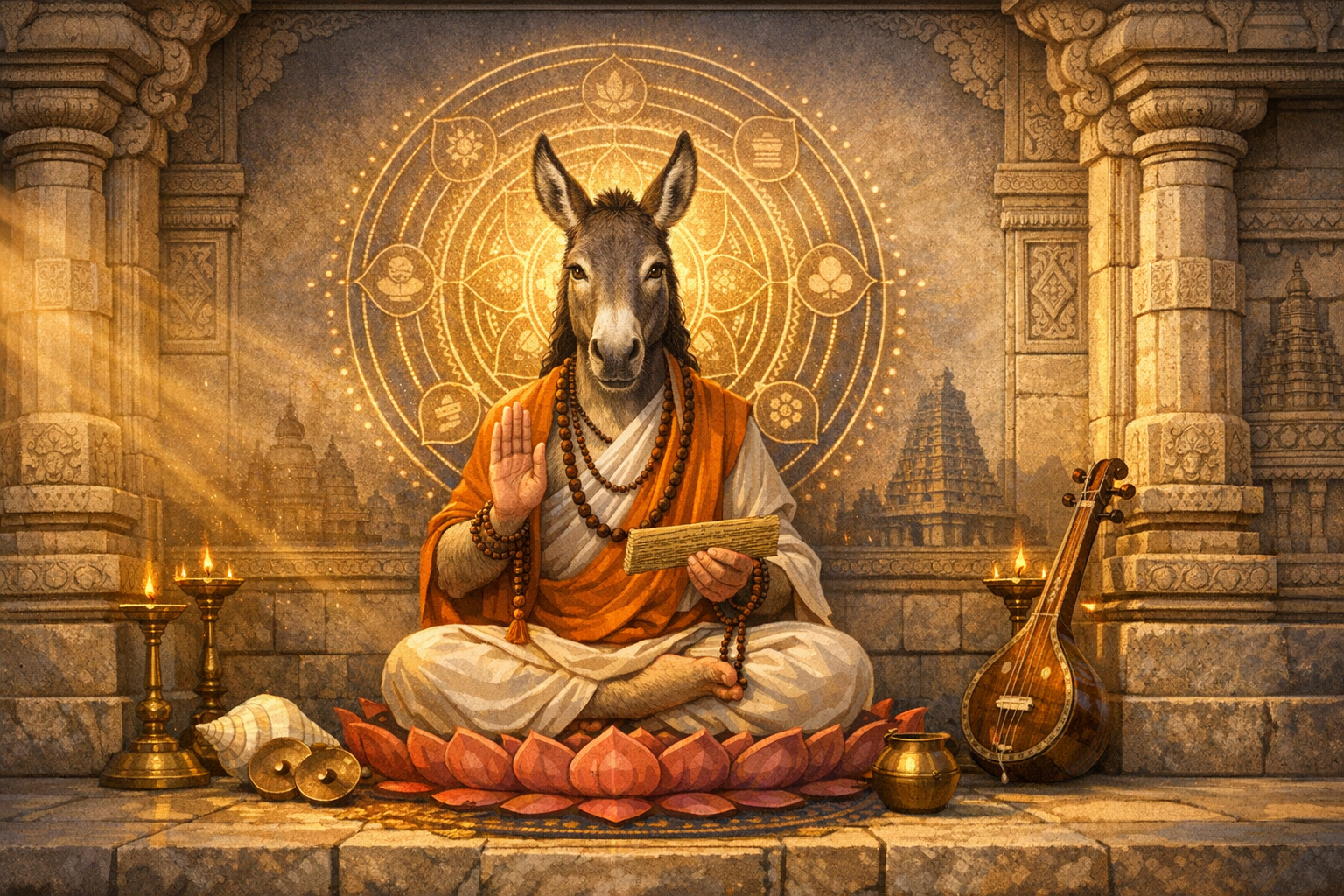
This article decodes a rare Agamic iconographic motif that personifies the Rig Veda as a donkey-faced sage, showing how Hindu sculptures render living śruti in pedagogical form. It explains why the donkey-face signifies raw sound, ascetic endurance, and hermeneutic humilityall central to Vedic study and temple practice. Readers learn how mūrti-lakṣaṇa principles translate doctrine into…
-
Timeless Gautama Maharshi: Rig Veda Seer, Dharmasutra Sage, and a Unifying Dharmic Beacon
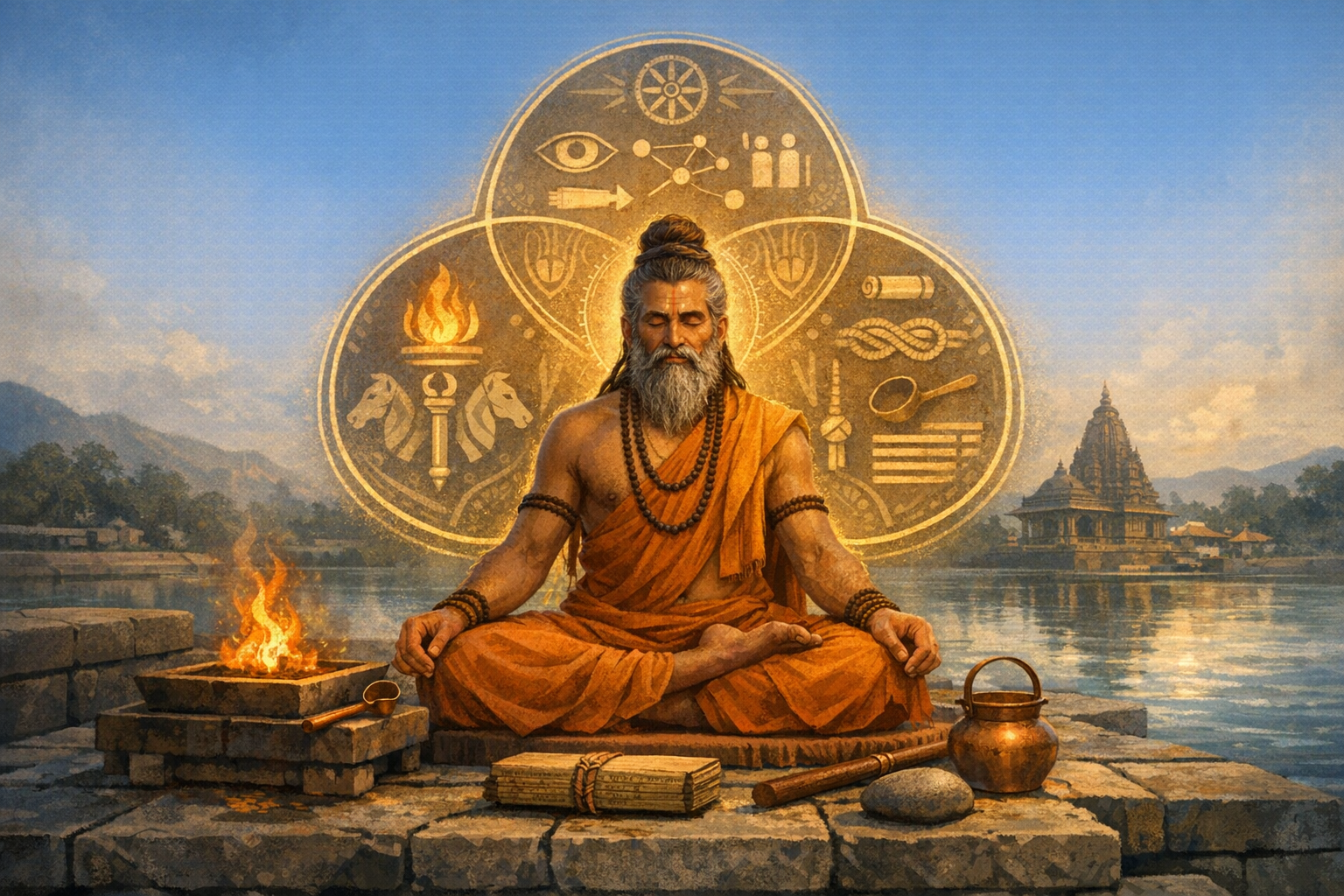
Gautama Maharshi emerges as a multidimensional sage whose legacy spans the Rig Veda, the early Dharmasutra tradition, classical Indian logic, and the living sacred geography of the Godavari. This article clarifies how the shared name “Gautama” applies to multiple luminariesVedic seers, the Dharmasutra authority, Akṣapāda Gautama of the Nyāya-sūtra, and revered figures in Jain and…
-
Decoding Nakshatras: A Timeless Vedic Star Map Uniting Dharmic Traditions and Skywatchers
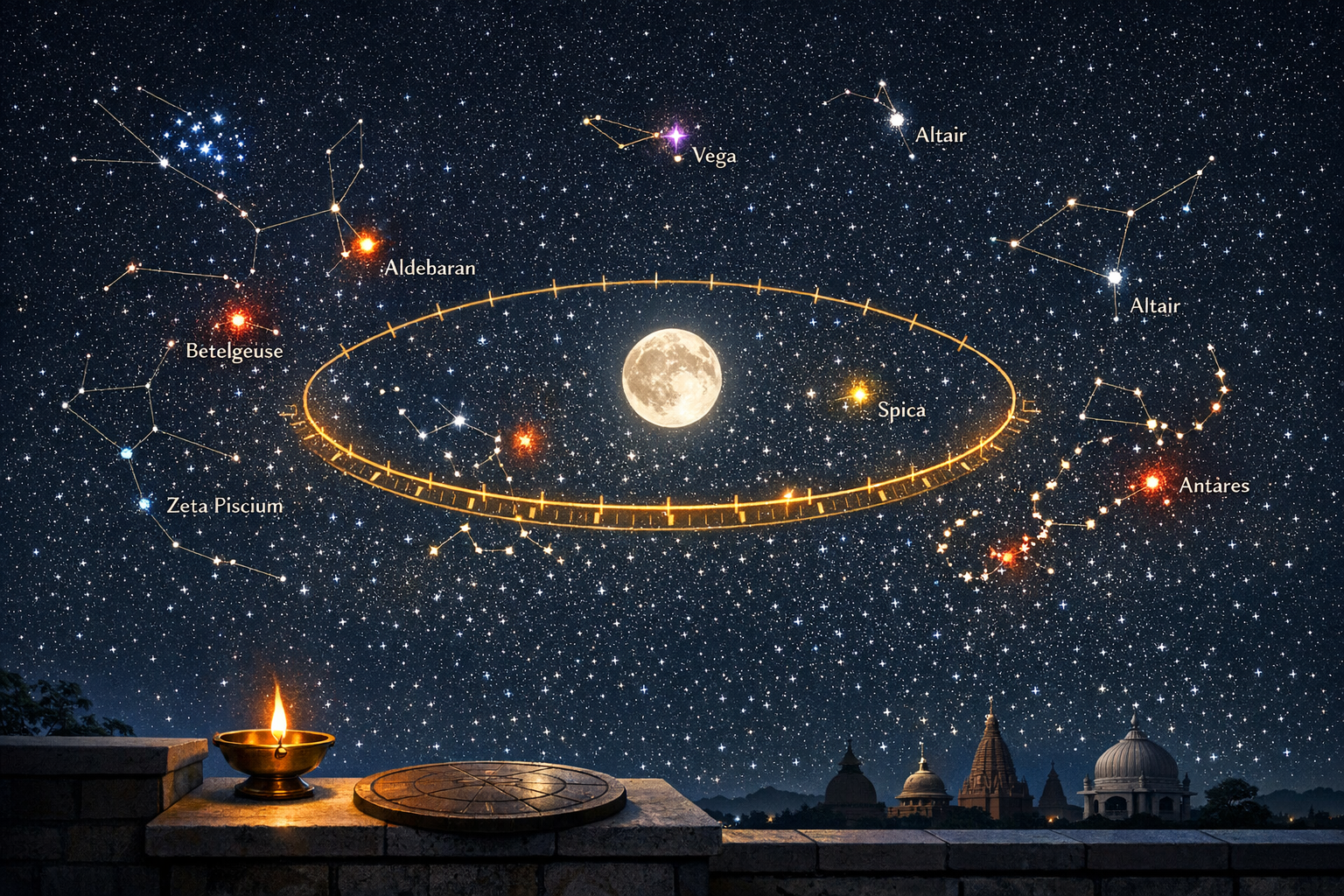
Nakshatras, the 27 lunar mansions of Vedic astronomy, form a precise star map that has guided Hindu Dharma and related dharmic traditions for millennia. Each mansion spans 13°20′ along the Moon’s path and is anchored by recognizable stars such as the Pleiades (Krittika), Aldebaran (Rohini), Spica (Chitra), and Antares (Jyeshtha). Classical sourcesfrom the Rigveda and…
-
Why Hindus Wear Janeyu (Yagnopaveetham): Vedic Origins, Ritual Science, and Sacred Duty

Janeyu (Yagnopaveetham) is a Vedic discipline rather than a mere ornament. Grounded in the Grihya Sutras and Dharmasastra, it centres on Upanayanathe ethical and contemplative initiation into study (brahmacharya). The sacred thread’s three strands map to classical Vedic ideas such as the three debts, the three gunas, sacred rivers, or the puruṣārthas, and its orientations…
-
Janeyu (Yagnopaveetham) Decoded: Sacred Thread Meaning, Ritual Science, and Daily Dharma Practice

This comprehensive guide decodes Janeyu (Yagnopaveetham) as a living samskaraits Vedic foundations, ritual science, and daily discipline. Drawing on Gṛhya Sūtras and Dharmaśāstra, it explains construction, symbolism, and the functional grammar of wearing styles (upavīti, prācīnāvīti, nivīti). Readers learn how the sacred thread supports sandhyā, svādhyāya, and ethical vows, and how annual upākarma renews study.…
-
Caitanya Mahaprabhu in Kashi: Dialogue with Advaita Sannyasis and the Power of Nama-Bhakti

This essay revisits Sri Caitanya Mahaprabhu’s celebrated encounter with Advaita Vedanta sannyasis in Kashi, reframing it as a model of rigorous dialogue and inclusive practice. It explains why Caitanya emphasized chantingHare Krishnaas the Vedic essence, while demonstrating that such devotion complements, rather than contradicts, Vedantic study. Readers gain a clear, textually grounded view of nama-bhakti,…
-
From War Thunder to Living Gods: Ratha (Chariot) as Weapon, Ritual, and Wisdom in Ancient Hinduism
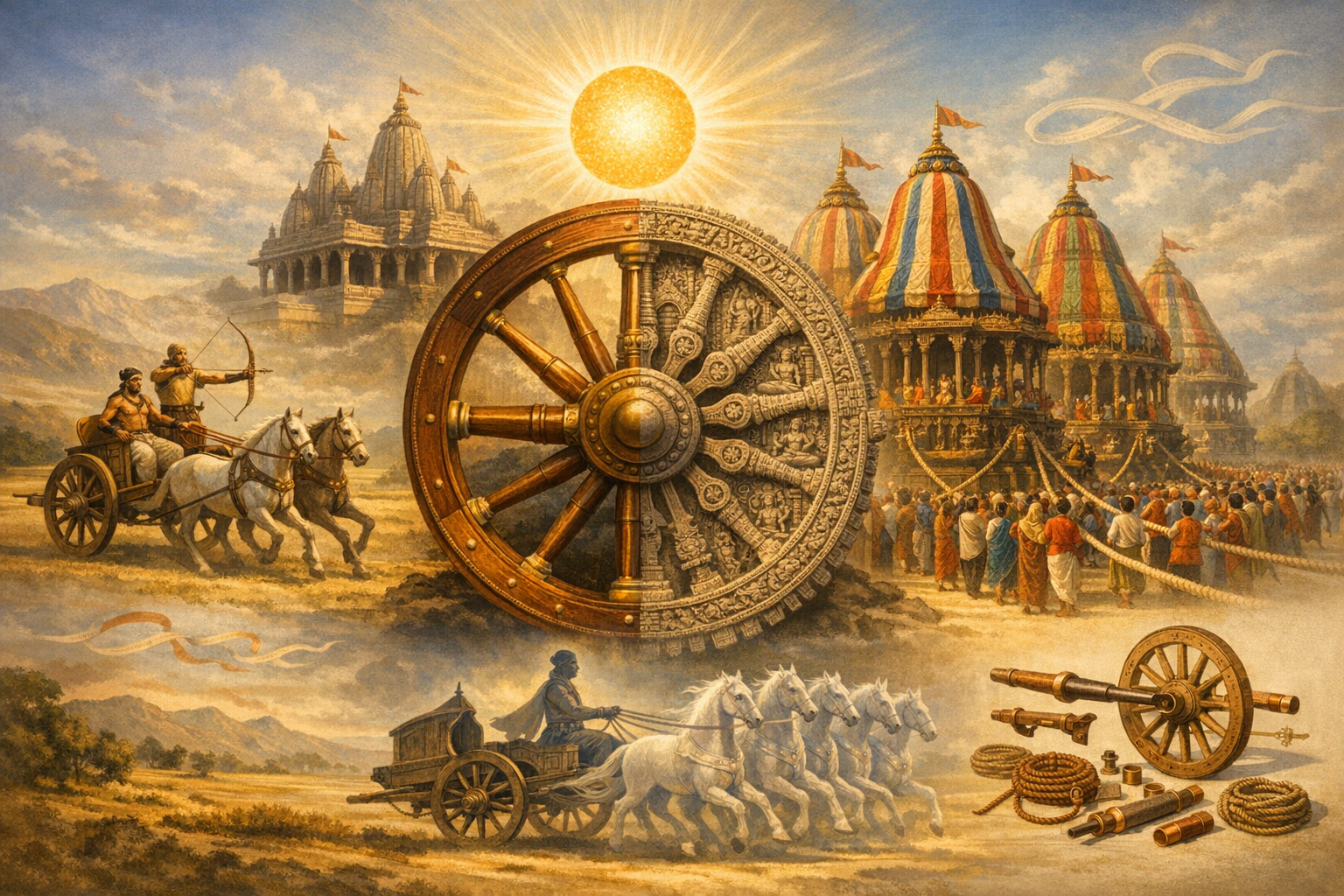
This long-form, research-driven essay follows the ratha (chariot) from its earliest Vedic mentions through epic warfare, temple architecture, and living festivals. Readers gain a balanced view of textual evidence (Rigveda, Mahabharata, Upanishads), archaeological debates (including Sinauli), and the Arthaśāstra’s statecraft, alongside technical insights into chariot design, crew roles, and battlefield tactics. It unpacks the Kaṭha…
-
Mīmāṃsā Darśana on the World: Realism, Sacred Symbolism, and Living Relevance Today

Mīmāṃsā Darśana offers a realist, practice-centered vision of the world: everyday life is a reliable field for meaningful action where dharma is learned and lived. It grounds duty in the apauruṣeya Veda, clarifies injunctions through precise hermeneutics (śruti–liṅga–vākya–prakaraṇa–sthāna–samākhyā), and explains how ritual symbolism educates attention without abandoning empirical realism. Its semantic theories (abhihitānvaya vs anvitābhidhāna)…
-
Unlocking the Hidden in Hindu Philosophy: Arthapatti and the Power of Postulation in Mimamsa

Arthapatti (postulation) is a distinctive Mimamsa pramana that posits an unperceived fact when established data would otherwise be incoherent. Classic examples such as the stout Devadatta who does not eat by day illustrate how explanatory necessity (anyathā-anupapatti) drives this cognition. The article clarifies how arthapatti differs from ordinary inference, outlines its two forms (drshtārthapatti and…
-
Shabda Pramana in Mimamsa: The Timeless Power of Vedic Testimony for Truth and Dharma

Shabdaverbal testimonyholds a privileged place in Mimamsa Darshana, where it functions as a rigorous means of valid knowledge for matters of dharma beyond the reach of perception and inference. By affirming the Vedas as apauruṣeya (authorless), Mimamsa secures scriptural authority through a detailed theory of semantics, sentence meaning, and hermeneutic indicators. The Bhāṭṭa and Prābhākara…
-
Anumana in Mimamsa Darsana: Mastering Rigorous Inference to Unlock Vedic Dharma and Meaning

Anumāna (inference) in Mīmāṁsā Darśana is a disciplined method of knowing that integrates reason with Vedic hermeneutics to guide dharma. This long-form exploration defines the technical structure of inferencepakṣa, sādhya, hetu, vyāptiand explains how anvaya–vyatireka, upādhi analysis, and tarka establish reliability. It clarifies differences between inference and arthāpatti (postulation), outlines the Bhāṭṭa–Prābhākara debate on anupalabdhi…
-
Ancient Roots of Renunciation: Vedas, Upanishads, and the Living Dharma of Monastic Life

Monasticism in the Vedas and Upanishads is not a late add-on but an organic evolution from early Vedic archetypes like the muni and vratya into the refined sannyāsa ideal. The Upanishads interiorize ritual and elevate renunciation, while the Dharmasūtras and Sannyāsa Upanishads organize practice through codes, vows, and teacher-lineages. This history offers readers a clear,…
-
Mudgala Upanishad and the Purushasukta: Decoding Cosmic Personhood, Unity, and Dharma

The Mudgala Upanishad, preserved in several Rigvedic lists, offers a concise contemplative counterpart to the Purushasukta (Rig Veda 10.90). Read together, they articulate a powerful vision of the Cosmic Person (Purusha) that harmonizes ritual symbolism with precise Upanishadic metaphysics. The essay explains key motifsimmanence and transcendence, cosmic sacrifice, and microcosm–macrocosm mappingswhile clarifying socially sensitive verses…
-
Decoding the Sacred Power of Om: Indra’s Epic Triumph in the Gopatha Brāhmaṇa Explained

The Gopatha Brāhmaṇa of the Atharvaveda preserves a striking motif: Indra and the devas overcome asuras through the sacred syllable Om. Read alongside the Chāndogya and Māṇḍūkya Upaniṣads, the narrative reveals Om as a ritual seed, acoustic map of consciousness, and instrument of non-violent victory. The symbolism frames Indra’s triumph as clarity over confusion, integrating…
-
Mahabrahmana’s Monumental Preface: Viswamitra, Gayatri, and the Atma of Bharatavarsha
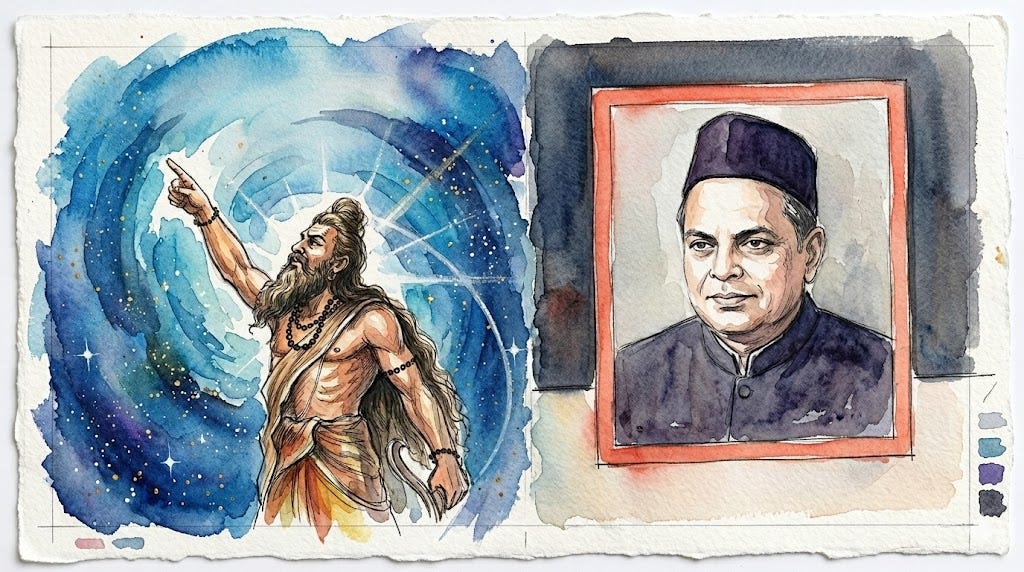
This long-form exploration examines the preface to Devudu Narasimha Sastri’s Mahabrahmana as a self-standing literary and philosophical achievement. It situates the preface within the broader history of prefaces, from Sanskritic invocations to modern print culture, and reads it as a Vedantic manual for attentive reading. Drawing on references to the Rg Veda, Brahmanas, Upanishads, the…
-
Decoding Pratigara: The Sacred Response that Powers Dialogue in Vedic Yajña Rites

This article unpacks pratigarathe sacred response or assentin Vedic yajña as a precise, timed, and theologically charged reply that authorizes ritual action. It situates pratigara within the fourfold priestly system (hotṛ, adhvaryu, udgātṛ, brāhmaṇ) and explains how call-and-response exchanges keep the rite synchronized with ṛta. Readers gain a clear sense of how oṃ or astu…
-
Not So Salient: Exposing Caste Stereotypes and Defending Hindu American Civil Rights

Harvard’s “The Brahminist Veto” casts Hindu Americans as a theocratic fringe, but the evidence points elsewhere: routine civic advocacy, due process in high-profile investigations, and a consistent demand for equal respect in academic settings. The record shows that caricatures of Hindu theologythrough misreadings of texts like Manusmriti and the Purusha Suktaignore scholarly consensus and historical…