
-
How the ‘Aryan Race’ Myth Persists: Colonial Pseudoscience, White Supremacy, and Dharmic Unity

A recent media segment revived a racialized reading of the ‘Aryan’ idea, prompting a careful review of what Sanskrit ārya actually means and how colonial-era narratives distorted it. This analysis explains how the British period and certain missionary discourses mapped language onto race, fueling the ‘Aryan–Dravidian’ binary. It traces how eugenics and white supremacist groups…
-
Madhuchandas and the First Ten Suktas: Unveiling the Rig Veda’s Foundational Voice

Madhuchandas, son of Vishwamitra, is traditionally credited with the first ten suktas of the Rig Veda’s first mandala, establishing a foundational voice for Vedic hymnody. These hymns, revered as shruti, combine ritual power with philosophical clarity, highlighting themes of cosmic order, gratitude, and truthful living. The poetic craftmeters like Gāyatrī and Triṣṭubh, and vivid imagery…
-
Kandarishi in the Vedas: Sages of Karmakanda and Jnanakanda and Their Timeless Legacy

This article clarifies the meaning of Kandarishi in the Vedas as sages associated with specific sections (kanda) who articulate the balance of Karmakanda and Jnanakanda. It explains how ritual action (Samhita–Brahmana) and transcendent knowledge (Aranyaka–Upanishad) form a complementary continuum in Vedic tradition. Readers gain a clear map of Vedic structure alongside the roles rishis play…
-
Pavamana Suktam in the Rig Veda: Timeless Hymn of Soma, Purity, and Dharmic Unity

Pavamana Suktam (Rig Veda 9.1.1–10) opens the Soma Mandala with a powerful vision of purification, clarity, and renewal. Attributed to Madhucchanda and composed in the Gayatri meter, it functions as both liturgical chant and contemplative text. The imagery of Soma’s sacred flow symbolizes inner transformation, aligning with shared values across Hinduism, Buddhism, Jainism, and Sikhism.…
-
Sacred Ecology in Hinduism: How Nature Worship Shapes Dharma, Ethics, and Daily Life

Nature worship in Hinduism is a core expression of sacred ecology that unites philosophy, ritual, and ethics. Rooted in the Vedas, Upanishads, and Puranas, it affirms cosmic unity and the sanctity of the five elements. Rituals like offerings to Surya and the care of Tulsi translate reverence into daily practice. Ethical pillarsAhimsa, Aparigraha, and devotion…
-
Four Faces of Varuna: Unveiling Vedic Symbolism for Cosmic Order and Inner Harmony

This article decodes the “Four Faces of Varuna” as a Vedic metaphor for omniscient care, moral order, and compassionate accountability. It clarifies how Rita (ṛta) structures both the cosmos and ethical life, linking Varuna’s symbolssuch as the pāśa and watersto practical integrity and social trust. Readers gain a clear framework that integrates the four Vedas,…
-
Br̥hatī (Brihati) Vedic Meter Explained: Structure, Rigvedic Usage, and Timeless Significance

Br̥hatī (Brihati) is a principal Vedic meter with thirty-six syllables arranged as four quarters of nine. Traditionally placed fourth in canonical lists of chandas, it bridges compact and expansive meters, balancing precision with breadth. Its cadence shapes the sound and emphasis of Vedic hymns, especially in the Rigveda, and remains audible in contemporary recitation and…
-
Hinkara in Vedic Sacrifices: The Transformative Power of ‘Him’ in Sama Veda Chanting
Hinkara, the intentional chanting of the syllable “Him,” serves as the invocation that inaugurates Sama Veda recitation during Vedic sacrifices. Located just before the Prastava and followed by the Udgitha, it marks the exact transition from silence to sacred sound. As a stobha syllable, Hinkara aligns breath, pitch, and attention, demonstrating the technical and contemplative…
-
Decoding Havis in Vedic Sacrifices: Sacred Offerings Sustaining ṛta and Shared Dharma

Havis, the sanctified offering in Vedic sacrifices, serves as a disciplined bridge between humans and the divine, sustaining cosmic order or ṛta. Grounded in the Vedas and expressed through yajna and homa, it unites devotion, ethics, and community. A practical five-fold schema clarifies common offerings such as ghee, grains, milk preparations, sesame and barley, and…
-
Havirdhana in Somayaga: Sacred Logistics, Symbolism, and Precision in Vedic Rituals

Havirdhana, the dedicated enclosure within Somayaga, safeguards the transport, protection, and sanctification of the soma creeper and offerings in Vedic sacrifices. It aligns spatial design with priestly roles so that logistics become liturgy and preparation becomes prayer. By emphasizing purity, precision, and unity of purpose, the enclosure serves as a living metaphor for Vedic insight:…
-
Pushpaka Vimana: Legendary Flying Chariot in Vedas, Puranas, Ramayanaand a Unifying Vision

Pushpaka Vimana, the most renowned among ancient vimanas, is presented in Hindu scripturesespecially the Ramayana and Puranasas a radiant aerial chariot bound to dharma. Traditionally linked to Lord Kubera and later seized by Ravana, it ultimately returns Sri Rama, Sita, and Lakshmana to Ayodhya, symbolizing moral restoration. Descriptions emphasize inclusivity and immense capacity, reinforcing ideals…
-
Why the Puranas Matter Now: Srila Jiva Goswami’s Case for Vedic Truth and Unity
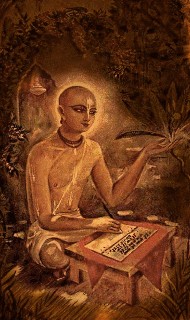
Srila Jiva Goswami’s Sri Tattva-sandarbha argues that the Puranas are indispensable for understanding the unified message of the Vedas. By privileging śabda over perception and inference, this approach presents the Puranas as hermeneutical guides that translate Vedic truths into accessible narratives and practices. The result is clarity: seekers gain a coherent framework that bridges philosophy,…
-
The Transformative Power of Divine Names: Vedas, Upanishads, and Epics for Inner Renewal

This reflection examines the power of divine names as preserved in the Vedas, Upanishads, Ramayana, and Mahabharata, highlighting how sacred sound directs the mind toward dharma. It presents chanting, mantra, and japa as disciplined practices that transform remorse into responsible action. The analysis emphasizes unity across Hinduism, Buddhism, Jainism, and Sikhism, where sacred namessuch as…
-
The Transformative Power of Divine Names: Vedas, Epics, and Dharmic Unity
Divine names, celebrated in the Vedas, Upanishads, Ramayana, and Mahabharata, provide a practical discipline to steady attention, calm the breath, and strengthen ethical living. By anchoring the mind in nāma-smaraṇa or japa, practitioners experience reduced stress and clearer moral judgment. The same principle appears across Buddhism (Om Mani Padme Hum), Jainism (Namokar Mantra), and Sikhism…
-
Master the Vedic Education Blueprint: The Essential Guru–Shishya System Explained

This article presents a clear overview of the Vedic education system, structured around its three essential pillars: Guru (teacher), Shishya (student), and the content and methods of learning. Readers gain a concise understanding of how the Guru–Shishya tradition united intellectual rigor with ethical formation and inner growth. The discussion highlights the breadth of studyfrom Śruti…
-
Master Deep Focus and Memory: Proven Benefits of Studying Sacred Texts across Dharmic Paths

Sacred study functions as a sattvika yagyadisciplined worship performed without attachment to resultsgrounded in Bhagavad Gita 17.11 (karmani prayoga). Traditional methods such as memorization, precise recitation, and commentary reading build medha shakti while cultivating humility and steadiness. Modern research supports these practices, linking Vedic learning to neuroplasticity and gains in short- and long-term memory, language,…
-
Essential Breakthrough: Rethinking Vedic Origins, Saraswati, and Aryan Migration
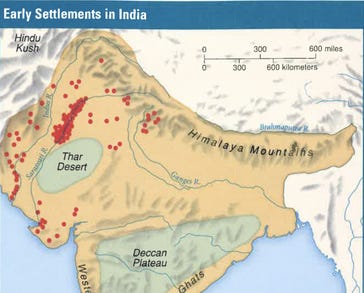
This analysis revisits the Vedic people through archaeology, linguistics, and Vedic textual geography to clarify how Saraswati, Aryan Migration, and Out of India debates intersect. It highlights dense Harappan settlements along the Ghaggar–Hakra (Saraswati) paleochannel and explains why Vedic references to a mighty river matter for chronology. It reviews leading Indo-European homeland models and the…
-
Discover the Rig Veda’s Complete Creation Wisdom: Upanishadic Insights to Transform Understanding

Hinduism’s creation vision, grounded in the Rig Veda and clarified by the Upanishads, presents a cyclical, ever-unfolding cosmos sustained by Brahman. Rig Vedic humility, especially in the Nasadiya Sukta, invites inquiry rather than dogma. Upanishadic insights like “tat tvam asi” and “satyam jnanam anantam brahma” align the inner Self with the Absolute, framing multiplicity as…
-
Master Purva Mimamsa’s Complete Insight: Discover an Eternal, Uncreated Universe

This article presents Purva Mimamsa’s core insight: an eternal, uncreated universe governed by dharma, adrishta, and apurva rather than a one-time creation event. Readers gain a clear overview of how Vedic authority (apaurusheyatva) and precise ritual action explain moral causality without requiring a creator-deity. The piece shows how this perspective aligns with broader Dharmic traditionsBuddhism,…
-
Discover Chaturvedasvami: The Complete Guide to a Forgotten Rig Veda Commentator

Chaturvedasvami, a late 15th-century commentator on the Rig Veda, offers a valuable but underrecognized perspective within Vedic literature. Situating his work alongside the dominant tradition of Sayana reveals how multiple commentaries enrich Sanskrit scholarship and deepen understanding of Hindu scriptures. This exploration highlights the benefits of interpretive plurality, including sharper textual analysis and nuanced appreciation…