
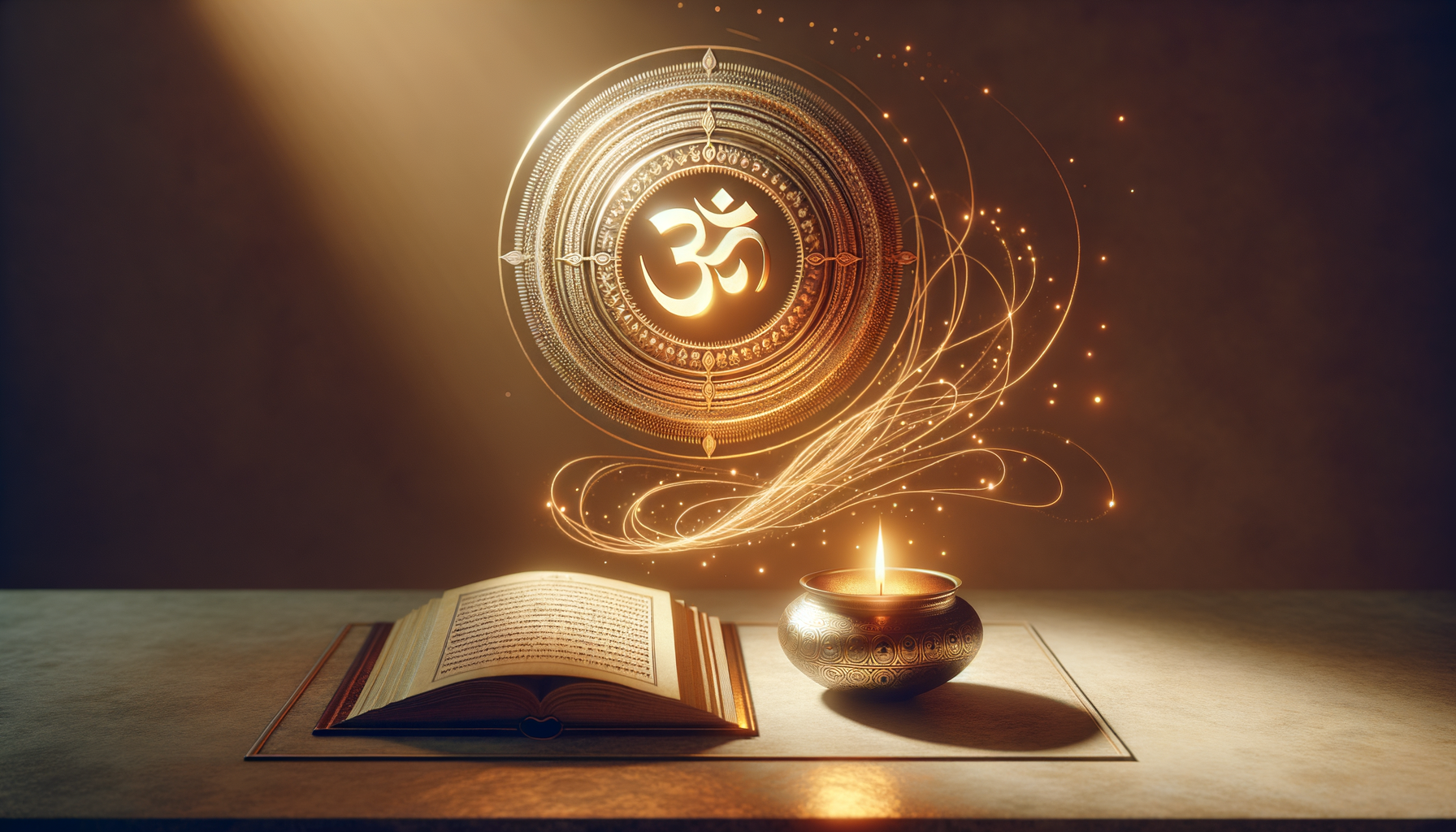
The Yajurveda, one of the four principal Vedas, presents Om (also rendered as Aum or the Praṇava) as a sacred syllable that opens the path to Brahman, the ultimate reality. Within Hindu scriptures, this single sound concentrates liturgical precision and metaphysical depth, guiding ritual action and contemplative insight toward divine realization. Read across allied Upanishadic reflections associated with the Yajurveda, Om is not merely uttered; it is contemplated as a symbol that unifies sound, meaning, and being.
In the Yajurveda’s ritual framework, Om precedes and sanctifies action. As priests intone mantras in yajña (sacrifice), the Praṇava sets intention, steadies breath, and aligns speech with sacred order. The syllable functions as a liturgical thresholdwhere vāk (speech), prāṇa (breath), and saṅkalpa (resolve) convergeso that external offering and internal devotion reinforce each other. In this sense, Om elevates ritual from performance to participation in a cosmic rhythm.
Philosophically, the tradition presents Om as an akṣara (imperishable sound) that signifies Brahman. Classical exegesis interprets A-U-M as indexing layers of consciousnesswaking, dreaming, and deep sleepwith the silent resonance beyond signifying the transcendent, a perspective harmonized across the broader Upanishadic corpus, including reflections linked to the Taittirīya tradition. Through this lens, meditating on Om becomes a disciplined inquiry into reality: the seeker studies consciousness itself to intuit the substratum from which thought, sound, and world arise.
Practice aligns with theory through japa (repetition) and dhyāna (meditation) on Om. Traditional pedagogy and contemporary practitioners alike describe tangible benefitsmental clarity, emotional balance, and one-pointednesswhen the syllable is recited with mindful breath and attentive posture. In yogic terms, the Praṇava aids pratyāhāra (sensory inwardness) and deepens dhyāna, allowing attention to settle into quiet awareness. This synthesis of mantra, breath, and focus exemplifies the Yajurvedic insight that inner refinement perfects outward rite.
Reverence for sacred sound also illuminates harmony across dharmic traditions. In Buddhism, mantras beginning with Omsuch as “Om Mani Padme Hum”orient the mind toward compassion and wisdom. In Jainism, ॐ signifies homage to the five supreme beings, concentrating devotion in a brief, potent utterance. In Sikhism, the affirmation “Ik Onkar” and the practice of Naam Simran embody a parallel devotion to the Divine through sacred remembrance. While the languages and lineages differ, the shared esteem for sound as a vehicle of insight encourages unity in spiritual diversity without erasing distinctive paths.
Accessible guidance follows from these teachings. Practitioners may begin by aligning breath and soundletting the “A” rise from the navel, the “U” resonate through the chest, and the “M” settle at the lipsbefore resting in the ensuing silence. Whether as soft japa, silent repetition, or collective recitation, the practice is strengthened by steadiness (āsana), ethical mindfulness, and a spirit of humility. In inter-tradition settings, respectful framingacknowledging the origins of Om in the Vedas while inviting shared contemplative silencesafeguards fidelity to scripture and nurtures mutual understanding.
Ultimately, the Yajurveda’s emphasis on Om integrates liturgy, philosophy, and meditation into a coherent path: act with sanctity, inquire with rigor, and contemplate with stillness. Approached in this way, the Praṇava becomes both compass and destinationorienting devotion, clarifying thought, and quieting the heart. In honoring Om as the sound-symbol of Brahman, seekers across Hinduism, Buddhism, Jainism, and Sikhism can recognize shared contemplative aspirations, strengthening unity while cherishing each tradition’s distinctive wisdom.
Inspired by this post on Hindu Blog.
