
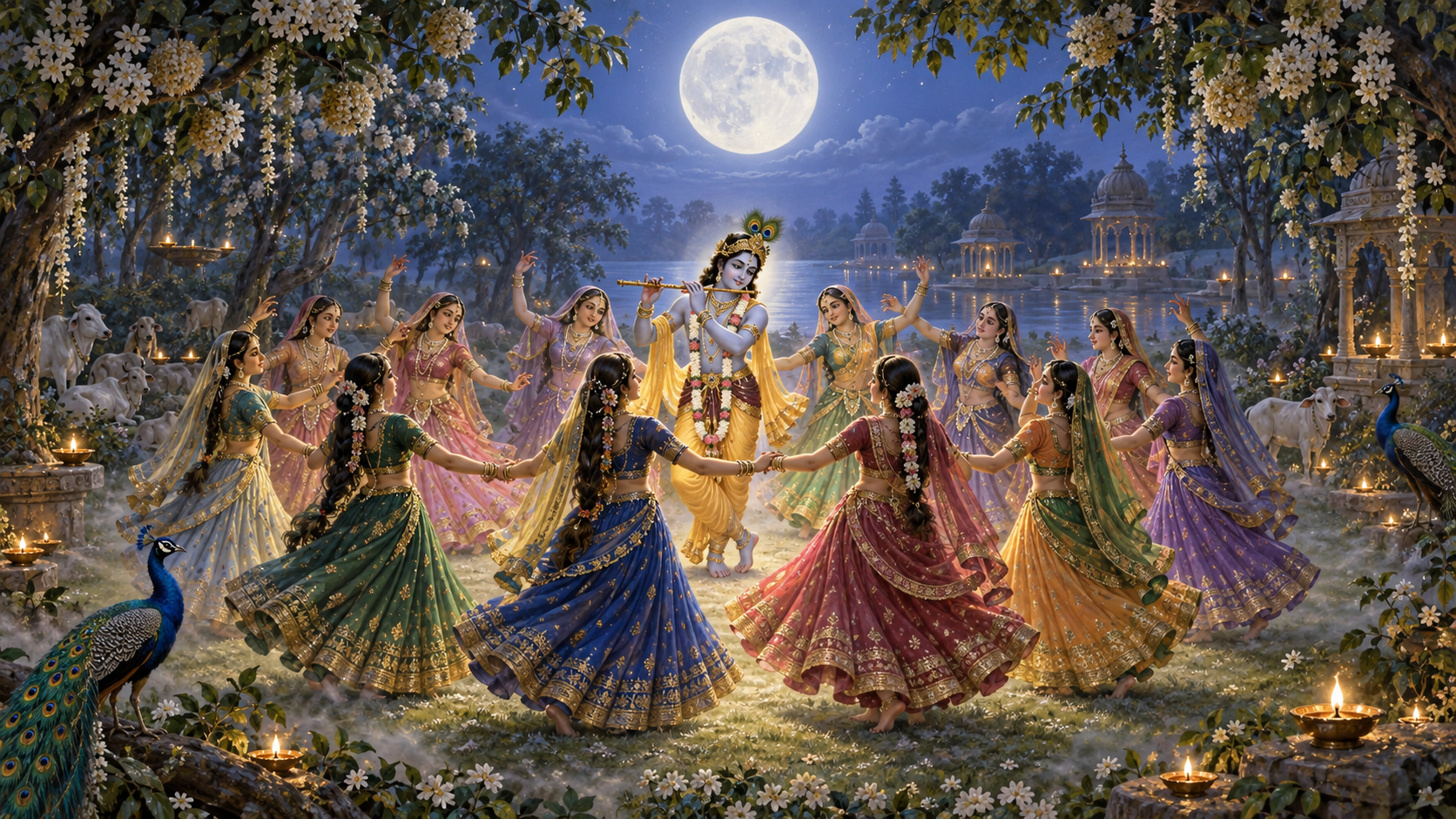
You want to observe Sharad Purnima properly, but the calendar presents several names and devotional emphases: Sharad Poonam, Kojagari Purnima, Lakshmi Puja, and Krishna’s Maha Raas. You don’t need to combine every regional custom into one crowded programme.
For a Krishna-centred observance, first confirm the local tithi, then keep Krishna at the centre of a simple sequence of worship, remembrance, and reflection. If your family or sampradaya already has a received practice, let that tradition determine the details.
Key takeaways for Sharad Purnima 2026
- In October 2026, Purnima is dated 25 October, beginning at 11:56 a.m. on 25 October and ending at 9:41 a.m. on 26 October. Confirm the applicable time with a panchang calculated for your location.
- The occasion is known by several names, including Ashwin Purnima, Sharad Purnima, Kojagari Purnima, Kumar Purnima, and, in Gujarat, Sharad Poonam. These names can reflect different regional and devotional contexts; they do not require you to perform every associated custom.
- Sharad Purnima commemorates Sri Krishna’s Maha Raas and Raaslila with the gopis of Vrindavan. Approach that remembrance as sacred lila, not merely as seasonal entertainment.
- The same occasion is associated with Lakshmi Puja, Kaumudi Puja, and Gajalakshmi Puja. Follow the emphasis received in your family, temple, or sampradaya instead of declaring one regional form universally mandatory.
Fix the calendar before planning the observance

A lunar tithi does not necessarily begin and end with a civil date. That matters in 2026 because the stated Purnima period begins late in the morning of 25 October and continues until the following morning. The festival date and the full tithi window therefore answer different questions.
Do not copy the clock times into another country or time zone and assume they remain applicable. Panchang timings are used for a particular place. Your local temple calendar or a reliable location-specific panchang should settle the practical schedule.
- Enter 25 October 2026 as the main planning date.
- Check the Purnima start and end times for your city rather than converting an unidentified calendar time yourself.
- Ask whether your family follows a particular rule for the evening observance, Lakshmi worship, or Krishna remembrance.
- Check your temple’s programme before arranging a separate home event. A community commemoration may already provide the worship, katha, bhajan, or devotional Raas appropriate to its tradition.
- Write down the final local time and devotional emphasis so that everyone in your household follows the same plan.
This small amount of preparation prevents two common mistakes: observing from a generic civil calendar alone, and mixing several regional practices without understanding which tradition they belong to.
Approach Maha Raas as sacred lila
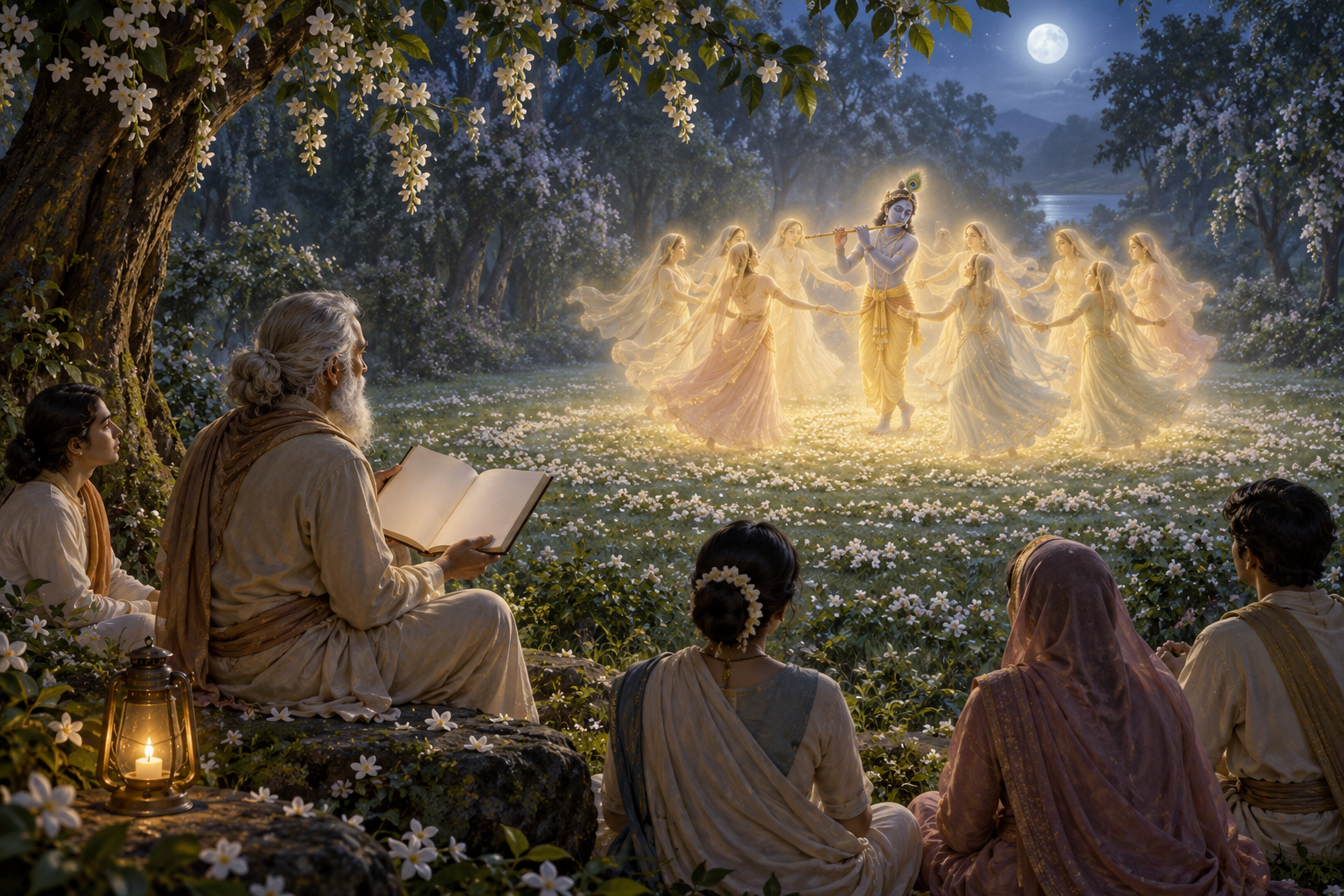
Sharad Purnima remembers Lord Krishna’s Maha Raas with the gopis of Vrindavan. The important word is lila: the event is received within devotion as divine play. If you reduce it to an ordinary social dance, you remove the sacred frame through which devotees approach it. If you reduce it to a colourful performance, you keep the appearance while losing the inward purpose.
Different Vaishnava communities may explain the theological meaning in their own language. You do not have to settle every interpretive question before you can observe the night sincerely. Begin with the common devotional ground established by the occasion: Krishna is the centre, the gopis are devotees of Vrindavan, and the Raas is remembered as a divine event rather than imitated as ordinary conduct.
Use three questions to turn that understanding into practice:
- What is at the centre? Arrange the evening so that Krishna’s name, form, and remembrance remain central. Music, decoration, and dance should serve that focus.
- What are you bringing? Bring attention rather than spectatorship. If you attend a public celebration, listen to the words, observe the temple’s discipline, and participate with the dignity expected in a sacred setting.
- What will remain afterward? Identify one habit of devotion that can continue after the festival. A lila remembered for one evening should still affect how you direct your attention the next day.
If Maha Raas is new to you, learn through the teacher, temple, or trusted retelling recognised by your tradition. This keeps a profound devotional subject from being flattened into either casual romance or online argument.
Build a coherent home observance
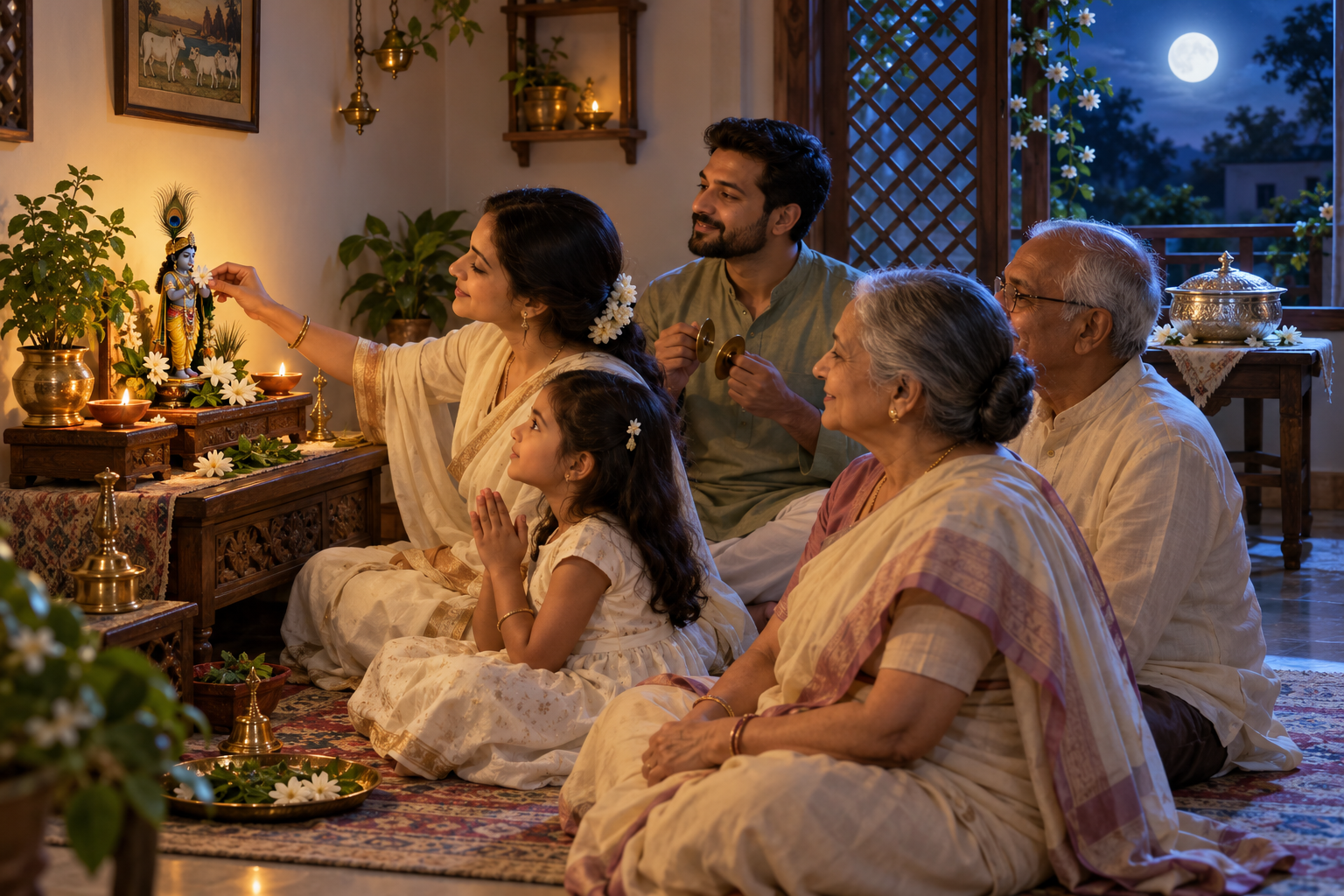
There is no need to invent a supposedly universal Sharad Purnima liturgy. The following sequence is a practical template for a Krishna-centred home observance, not a replacement for instructions received from your family, guru, or temple.
- Choose the devotional frame. Decide whether the household observance will primarily follow Krishna remembrance, an inherited Lakshmi practice, or the programme of your local temple. Make this decision before collecting ritual items.
- Prepare a clean focal place. Use the murti, picture, or sacred form through which your household already worships Krishna. Keep the arrangement reverent and manageable rather than treating elaborate decoration as a measure of devotion.
- State the intention. You can say plainly that the household is observing Sharad Purnima and remembering Sri Krishna’s Maha Raas with the gopis of Vrindavan. A clear intention prevents the evening from becoming only a social gathering.
- Follow your received puja practice. Use the mantras, offerings, and sequence already authorised in your tradition. If you have not been taught a formal ritual, choose accessible devotional acts such as prayer, naam-smarana, bhajan, and attentive contemplation. Do not present an improvised sequence as scripturally mandatory.
- Give Maha Raas deliberate attention. Read, hear, or contemplate the account in the form accepted by your sampradaya. If your temple or community commemorates the lila through devotional dance, join with maryada and keep the devotional meaning ahead of display.
- Close according to your custom. Complete the worship and share prasada in the manner familiar to your household. Avoid adding practices simply because they appeared on an unrelated checklist.
- Carry one commitment forward. Before dispersing, choose one realistic continuation: regular Krishna naam-smarana, more attentive daily worship, participation in a temple gathering, or learning your community’s Sharad Poonam tradition before the next observance.
If Lakshmi Puja, Kaumudi Puja, or Gajalakshmi Puja belongs to your inherited observance, do not erase it merely to make the night fit a Krishna-only template. You can retain the received puja and add a clearly separated period of Krishna remembrance, or follow the order prescribed by your temple. Coherence is more respectful than assembling fragments from several traditions.
Let devotion, not the size of the event, measure the night
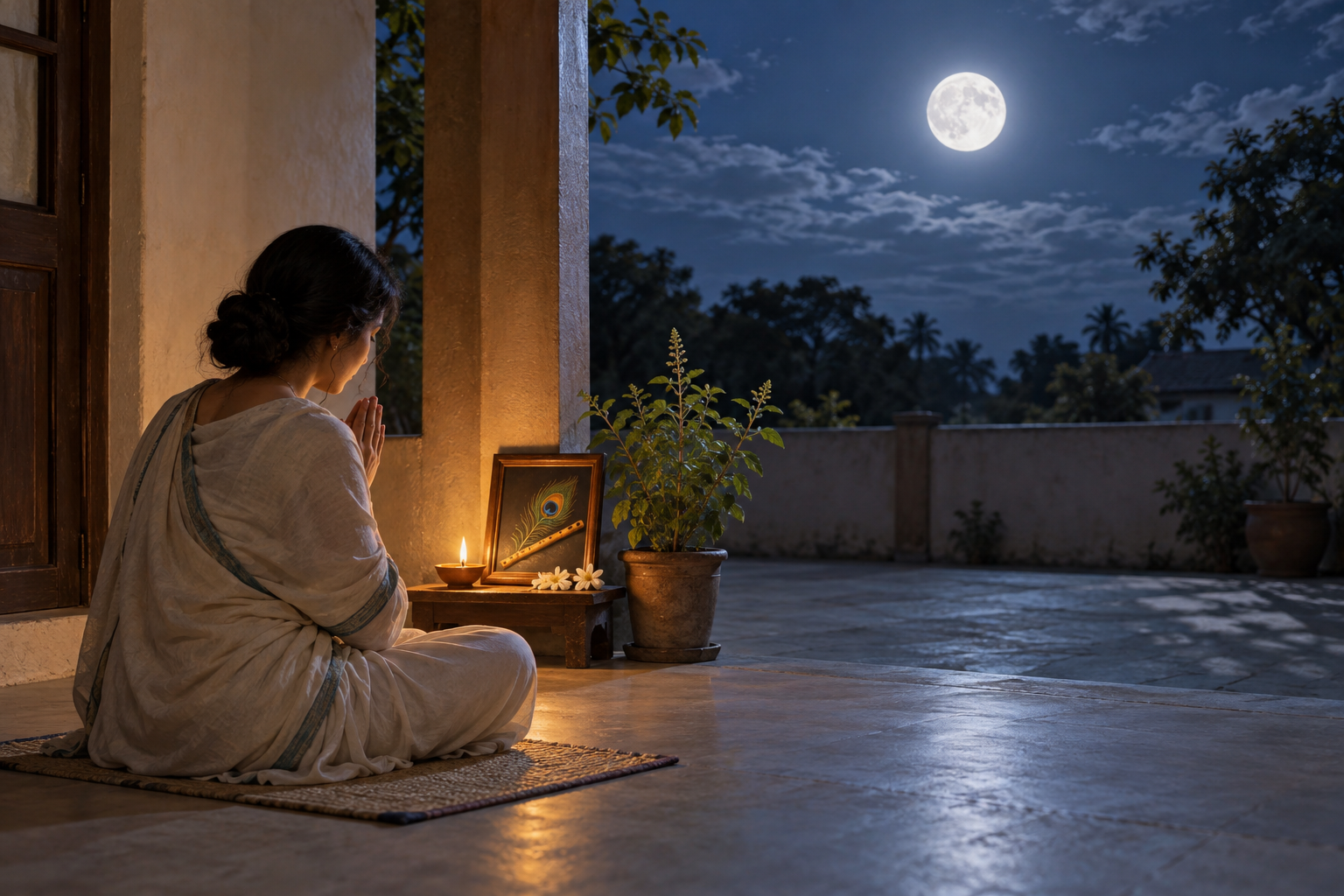
A large community Raas and a quiet household prayer can both honour Sharad Purnima when Krishna remains the centre. The scale is not the test. The test is whether the observance deepens attention, gratitude, discipline, and reverence.
Before the night ends, write down the one devotional practice you intend to continue and decide when it will begin. That single decision turns Sharad Purnima from a date you marked into a relationship you chose to cultivate.
References
- Hindu Pad — Sharat Purnima Maha Raas, Lord Krishna played Raaslila with Gopis on Sharad Poornima
- Hindu Pad — Purnima October 2026 date, Time

Leave a Reply
You must be logged in to post a comment.