
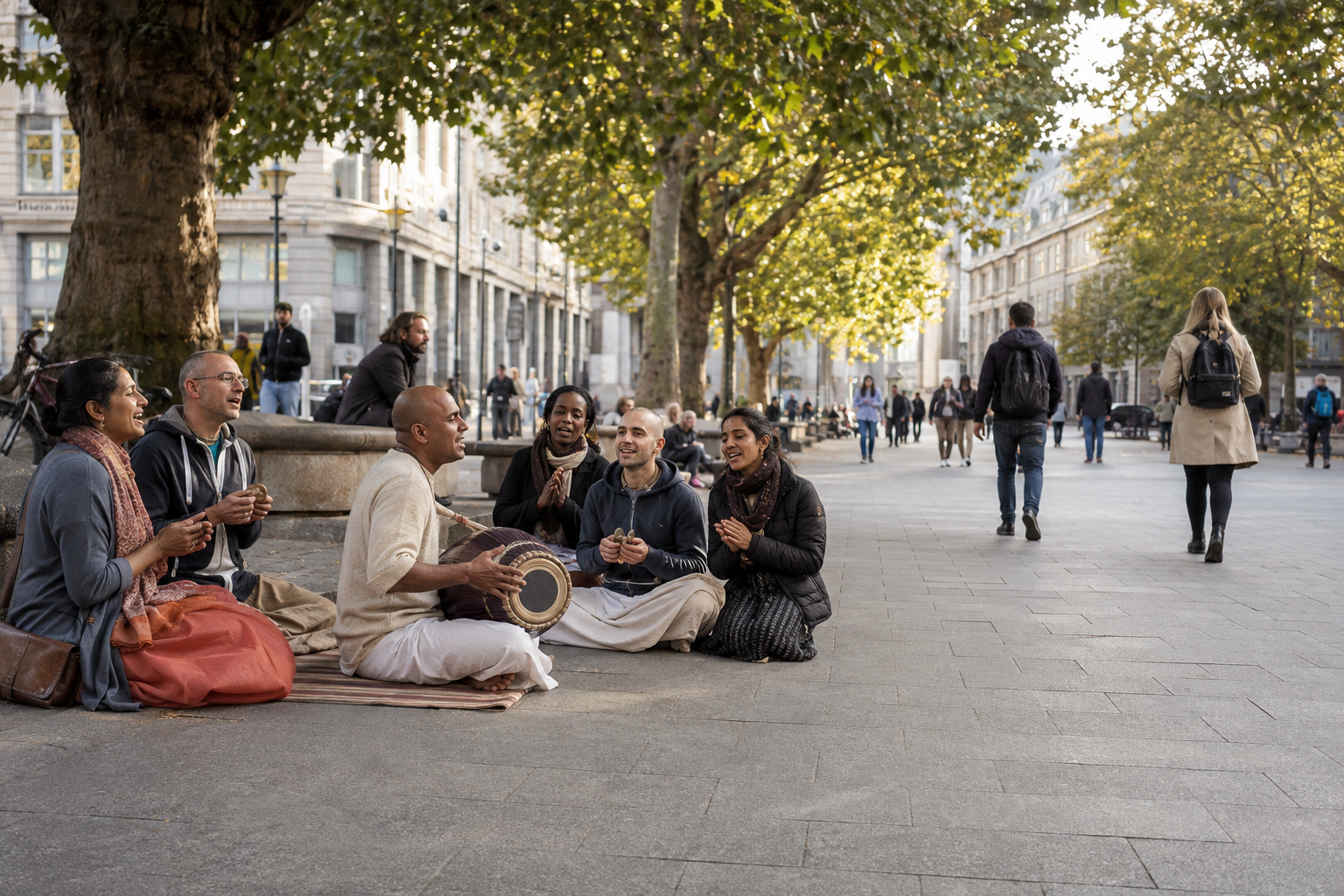
You may have arrived with a simple question: where and when do you join the Janmastami 2026 Harinama festival? Do not plan a journey from a video title alone. What can be confirmed is only the connection between Janmastami 2026 and a Harinama festival weekend. A city, venue, timetable, procession route, registration process, and organizer contact are not established here.
That gap changes your next step. Verify the gathering before you travel, then prepare to enter Harinama as devotional practice rather than entertainment. If the video is a recording rather than an invitation, you can still use it to strengthen your own Janmastami observance.
Verify the gathering before you plan the journey
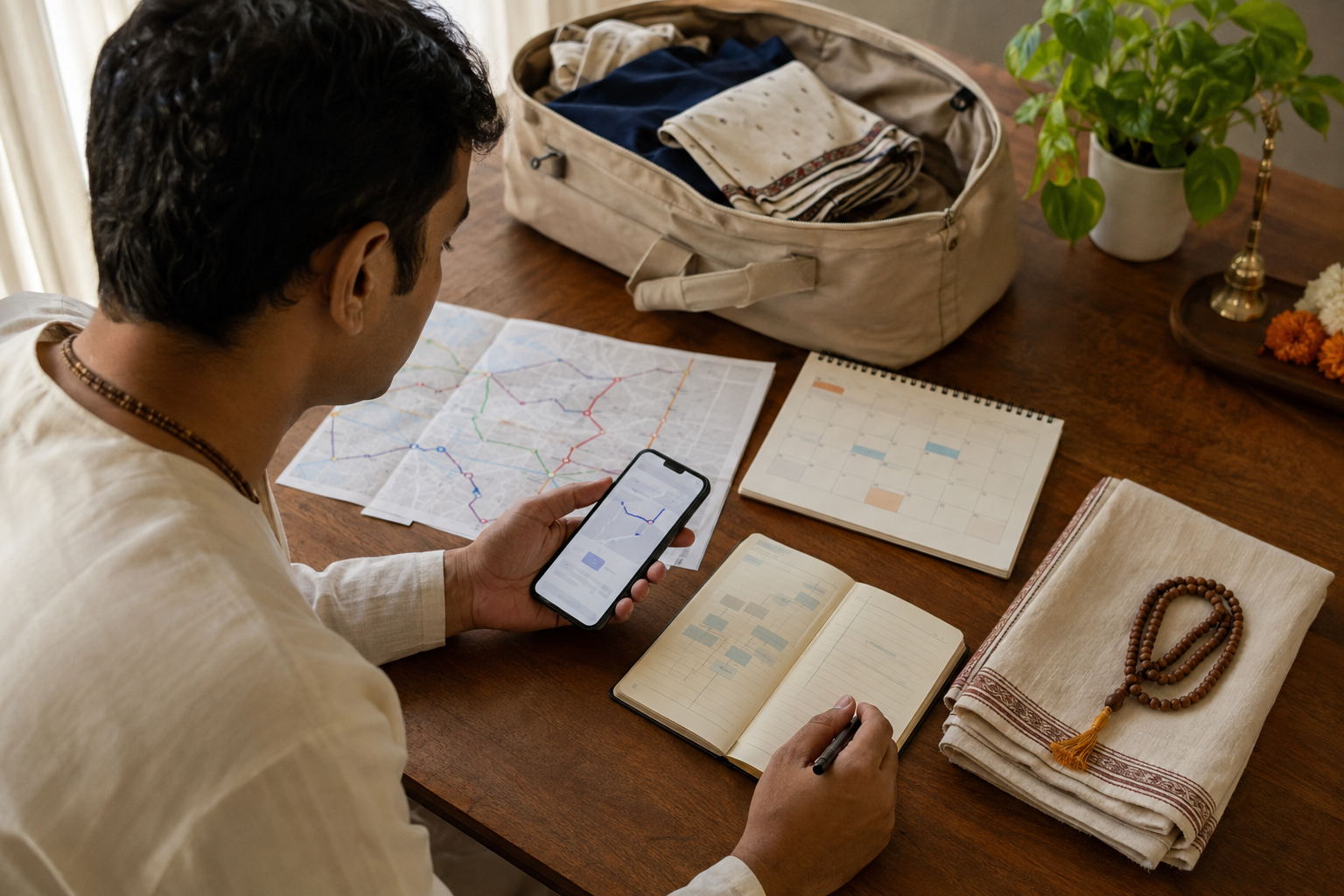
Janmastami is also commonly written Janmashtami. Search both spellings when looking for the organizer’s official notice, but do not mistake repeated listings, reuploads, or enthusiastic comments for confirmation. You need a dated notice from the temple, devotional community, or organizer responsible for the gathering.
Work through these checks before arranging transport or accommodation:
- Establish the status. Is the page announcing an upcoming gathering, carrying a livestream, or presenting a recording of a completed festival? A year in the title does not answer that question.
- Identify the organizer. Look for the full name of the temple or community and an official contact method. The person sharing a video may not be responsible for the event itself.
- Confirm the calendar details. Obtain the complete date, local start time, assembly time, and expected finishing time. For an online broadcast, confirm the time zone as well.
- Confirm the physical place. Ask for a street address or map pin and determine whether the assembly point, procession starting point, temple, and finishing point are different places.
- Ask what participation requires. Check whether registration is needed, whether the program is open to everyone, what participants should bring, and whether any temple dress or footwear expectations apply.
- Check practical changes. Find the official channel for weather notices, route changes, cancellation information, accessibility questions, and updates issued on the day.
If an official contact cannot confirm those essentials, treat the link as devotional footage rather than a travel notice. You can appreciate the Harinama without committing time or money to an uncertain journey.
Enter Harinama as a participant, not a spectator
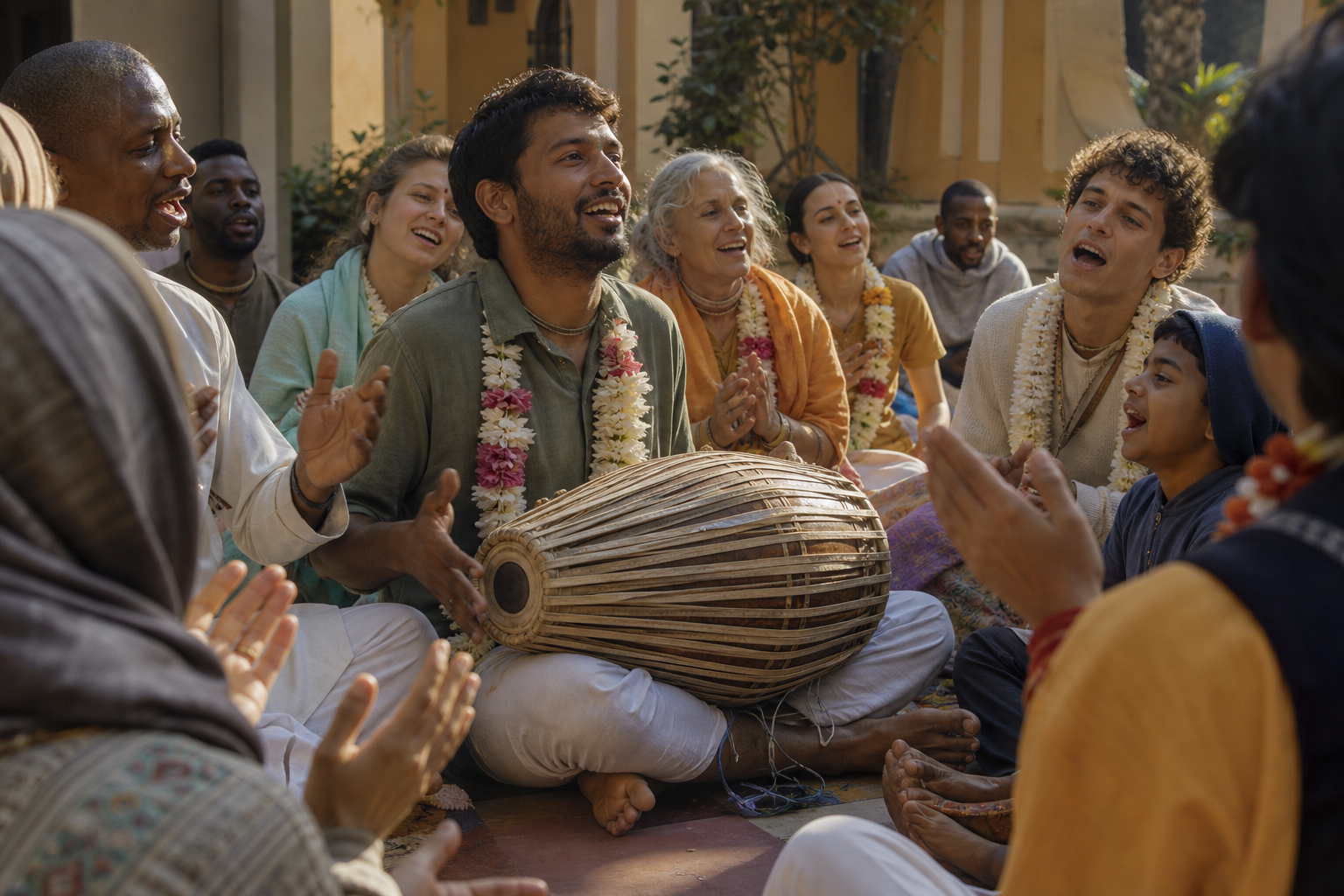
Harinama is the congregational chanting of the names of Hari. In a public festival, that chanting may move beyond the temple and into shared civic space. The setting may be visually striking, but its center is remembrance, attentive hearing, and participation in nama-sankirtana.
You do not need to know every melody before joining. Use the following approach:
- Listen before trying to lead. Hear the refrain, pronunciation, and rhythm, then answer with the group when the kirtan is call-and-response.
- Follow the lead singer. Avoid starting a competing melody or accelerating the response. Congregational unity matters more than displaying musical knowledge.
- Keep the procession navigable. If Harinama moves through a street or public square, follow the stewards, leave space around instruments, and avoid stopping suddenly in the moving group.
- Use your phone sparingly. Record briefly if photography is welcome, then return your attention to chanting. Do not obstruct the route to obtain a better angle.
- Respect personal boundaries. Seek permission before taking close photographs of worshippers, children, or anyone engaged in a private devotional moment.
- Accept a simple seva. If the organizer needs help, you may be able to distribute approved information, assist with prasadam, carry permitted supplies, guide participants, or help keep the route orderly. Ask rather than assuming a role.
- Follow the host community’s customs. Instructions concerning temple entry, footwear, prasadam, sacred spaces, instruments, and deity photography can differ. Local guidance should settle the matter.
A meaningful Harinama is not measured by the amount of footage you collect. Notice whether you can hear the holy name, respond with the devotees, and leave with a steadier desire to continue chanting.
Build the weekend around sadhana, not stamina

Janmastami celebrates the appearance of Sri Krishna. Communities may combine kirtan with fasting, temple darshan, readings, worship, seva, prasadam, or a night observance. The form and timing vary by tradition, so obtain the host community’s program instead of constructing expectations from another temple’s practice.
A workable devotional plan has three phases:
- Before the gathering: Ask how the community observes Janmastami, learn the refrain commonly used in its kirtan, and choose a clear intention such as attentive chanting, hearing Krishna-katha, or offering practical service. If fasting is part of the observance, learn what the tradition actually asks rather than improvising a severe vrata. Anyone with medical needs, a history of difficulty with food restriction, or medication that must be taken with food should obtain appropriate medical guidance before changing meals or fluids.
- During the gathering: Protect the devotional anchors of the day. Make room for chanting, attentive hearing or darshan, and a concrete act of seva. If a long program leaves you unable to participate attentively, simplify your personal schedule instead of trying to be present for every activity.
- After the gathering: Carry one practice into ordinary life. That may mean joining the next local kirtan, setting aside a regular period for nama-japa, helping the host community with follow-up service, or sharing verified information about its next public Harinama.
This keeps Janmastami from becoming an isolated burst of activity. The festival can awaken devotion, but continuity turns that awakening into sadhana.
Make the day workable for children and newcomers
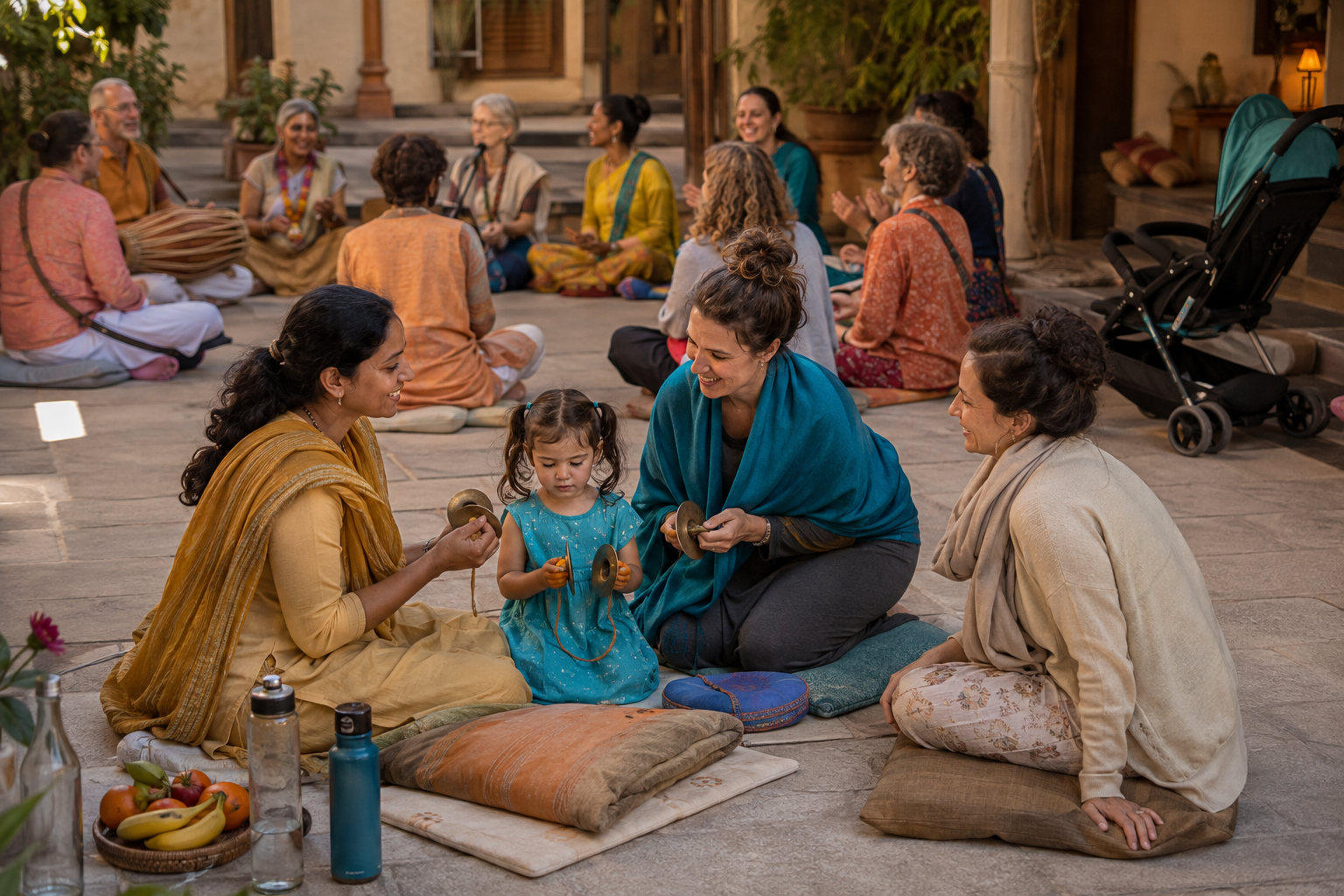
Good preparation is part of hospitality. A newcomer should not have to guess what Harinama is, where the group is going, or which temple customs matter. Give a plain explanation: the community is chanting Krishna’s names together as an act of devotion, and participants are welcome to listen and respond respectfully.
- Agree on a meeting point. If the event moves through public space, choose a recognizable place where separated members of your group will reunite. Save the organizer’s contact information and the route map on your phone.
- Explain the movement of the group. Tell newcomers whether the program remains at a temple, includes a street procession, or ends somewhere other than its starting point.
- Prepare children for sound and crowds. Keep children close during a moving procession. If amplification is uncomfortable, move farther from speakers and use suitable hearing protection rather than expecting a child to tolerate distress.
- Identify a steward. On arrival, point out the people responsible for route guidance or participant assistance so that family members know whom to approach.
- Check prasadam ingredients. Anyone with an allergy or dietary restriction should ask the serving team about ingredients and cross-contact instead of assuming that a devotional preparation is automatically suitable for every diet.
- Confirm accessibility in practical terms. Ask about the route surface, stairs, seating, toilets, rest points, nearby transport, and the accessibility of any temple entered during the program. Do not rely on a general claim that everyone is welcome.
- Describe temple etiquette before arrival. Explain footwear arrangements, photography restrictions, and the respectful use of sacred spaces so that a newcomer is not corrected only after making an avoidable mistake.
These details do not distract from bhakti. They remove preventable friction so that attention can return to Krishna’s name.
Key takeaways
- The confirmed information connects Janmastami 2026 with a Harinama festival weekend, but it does not establish the location, schedule, route, or attendance process.
- Determine whether you are viewing an announcement, livestream, or recording before making travel plans.
- Use an official organizer’s dated notice to confirm the city, time, meeting point, participation requirements, accessibility, and update channel.
- Approach Harinama through attentive chanting, cooperation, respect for local customs, and practical seva rather than treating it chiefly as a spectacle.
- Plan for health needs, children, food restrictions, sound, transport, and accessibility before the program begins.
- Let the festival lead into a continuing practice after Janmastami rather than ending when the procession or video ends.
Your next move is straightforward: open the original link, decide whether it is an invitation or a recording, and write down the logistical details that remain missing. If the organizer confirms them, make your plan. If not, let the festival inspire a Janmastami observance or Harinama with your own trusted local community. Devotion does not require guessing where to go.
References
