
-
Prophecy and Peril: Hanuman’s Divine Birth That Defied Vali’s Deadly Plot
A lesser-known episode from the Kamba Ramayana recounts how Vali, fearing a prophecy, sought to destroy Hanuman before birth, only for Vayu to shield Anjana and the unborn child in a stunning affirmation of dharma. This retelling clarifies how regional variants complement the Valmiki Ramayana, enriching the epic’s living tradition. Readers gain insight into why…
-
Anjana’s Sacred Teachings: Maternal Wisdom That Forged Hanuman’s Eternal Devotion

This essay explores how Anjana’s maternal wisdom formed the inner discipline behind Hanuman’s legendary devotion in the Ramayana. It highlights her role as an apsara-turned-seeker whose tapas and ethical guidance laid the foundation of spiritual strength. Readers discover how humility, service, and steadfastnessinstilled earlyshaped Hanuman’s fearlessness and discernment. The discussion frames bhakti as practical ethics…
-
Ravana’s Karmic Reckoning: Sage Dvaipayana’s Curse and Surpanakha’s Tragic Turn in the Ramayana

This exploration presents a lesser-known strand in Ramayana storytelling that links a curse attributed to Sage Dvaipayana with Surpanakha’s ordeal, highlighting the theme of karmic justice. It clarifies that while Valmiki’s text is primary, regional and later traditions use this motif to teach moral causality. Readers gain an academic yet accessible account that balances empathy…
-
Rama’s Sacred Vow to Sita: A Timeless Promise of Devotion, Dharma, and Protection

Set in Mithila during King Janaka’s famed swayamvara, this exploration traces how the Ramayana presents Rama’s assurance to Sita as a model of dharma-guided companionship. Drawing on the Valmiki Ramayana and bhakti-era retellings, it explains why traditions revere Rama’s eka-patni-vrata as unwavering fidelity expressed more in conduct than in declaration. The piece clarifies textual nuances…
-
Why Hanuman Embraced Eternal Brahmacharya: Devotion, Dharma, and the Strength of Service

Hanuman’s naishthika brahmacharyalifelong celibacyhas long symbolized the union of devotion, discipline, and service in the Ramayana tradition. While Valmiki’s text highlights unwavering focus rather than an explicit vow, later devotional memory firmly presents Hanuman as a celibate exemplar. Read as a dharmic principle, brahmacharya signifies self-mastery and conservation of energy for higher purpose. Variations such…
-
Ravana’s Arrogance and the Brahmin’s Curse: How Kartavirya Arjuna Humbled a Titan

This retelling of Ravana’s imprisonment by Kartavirya Arjuna presents a clear, scriptural lesson on karma, humility, and the impartiality of dharma. It frames the Brahmin’s curse as a literary device expressing moral causality rather than superstition. Readers encounter Kartavirya Arjuna (Sahasrabahu) as the disciplined ruler of Mahishmati whose strength is guided by reverence for sages.…
-
10 Defining Moments of the Ramayana: Timeless Lessons from Rama’s Epic Journey

This concise guide highlights ten defining moments of the Ramayanafrom Rama’s birth in Ayodhya and Sita’s swayamvara to the vanvas, Hanuman’s Sundara Kanda mission, and the return to Ayodhya. Each episode is presented with clear context and ethical significance to illuminate Dharma in action. Readers gain practical insights into righteous leadership, loyalty, compassion, and the…
-
Dasharatha and Shani in the Padma Purana: A Timeless Legend of Karma, Courage, and Grace

Padma Purana’s Uttara Khanda presents Narada’s inquiry to Mahadeva on Shani’s feared reputation and reveals Shani as a stern upholder of karmic justice rather than a capricious force. The legend of King Dasharatha complements this insight, illustrating leadership grounded in devotion, responsibility, and service. Readers gain a clear, balanced understanding of Shani’s symbolism within Hindu…
-
Kalmasapada’s Curse and Redemption: Ikshvaku King Saudasa, Dharma, and Deception
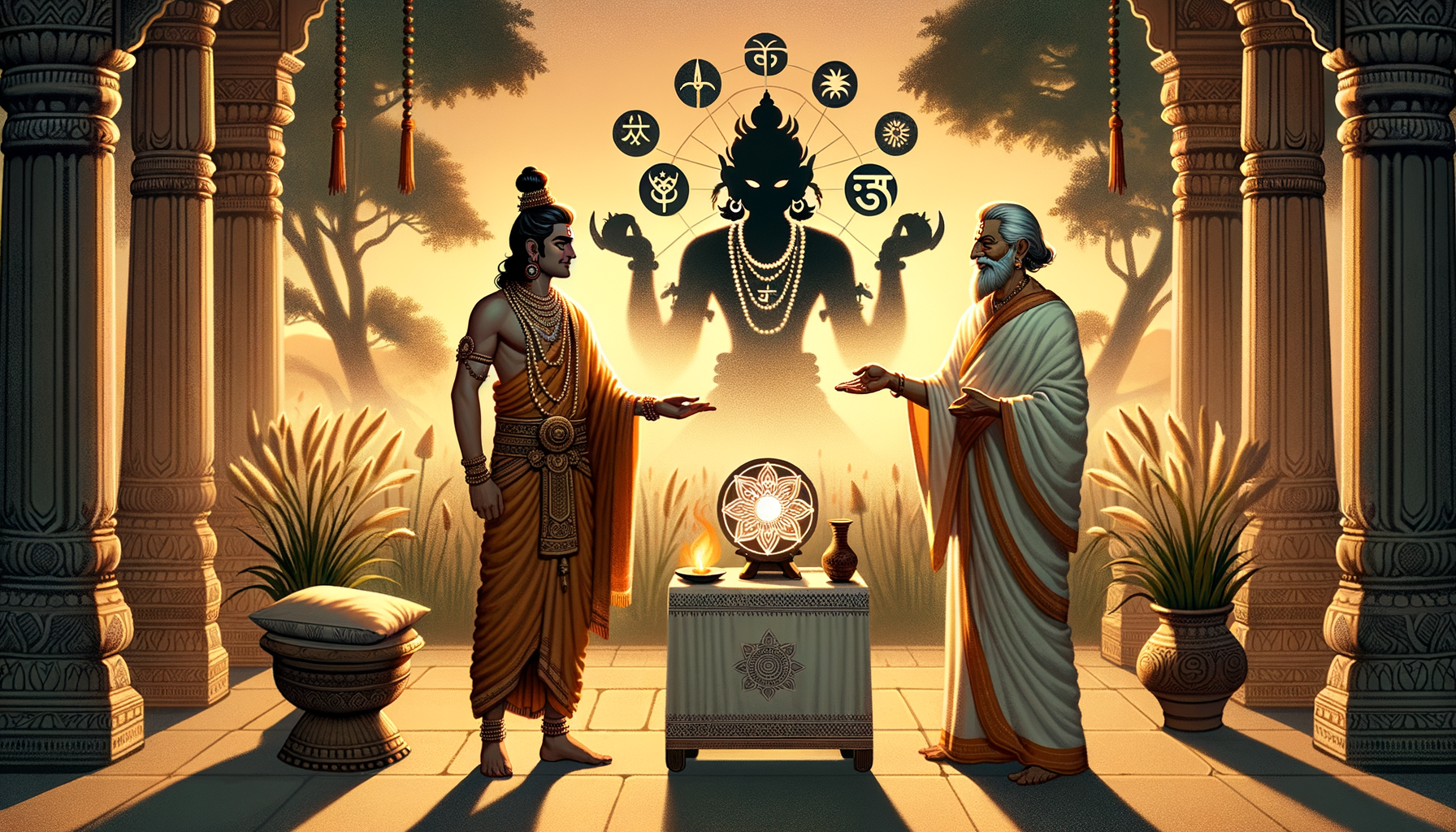
Kalmasapada’s storyrooted in the Ramayana and Puranic loretraces King Saudasa’s fall through deception and his eventual restoration through dharma and wisdom. It shows how a single lapse in discernment can disrupt social harmony, while penance and counsel repair moral order. The narrative’s variations emphasize shared values across Hinduism, Buddhism, Jainism, and Sikhism, including self-restraint, right…
-
Hanuman’s Trimurti Teaching: Healing Grief by Living the Present with Brahma, Vishnu, Shiva

This article explores a lesser-known Ramayana narrative in which Hanuman meets Sage Kandu, grieving the loss of his sixteen-year-old son, to illuminate a practical teaching on the TrimurtiBrahma, Vishnu, and Shiva. It explains how living in the present harmonizes creation, preservation, and transformation without denying the depth of sorrow. Readers gain a clear, actionable framework:…
-
Hanuman’s Timeless Blueprint: How a Dharmic Hero Shaped the Modern Superhero Archetype

This article examines Hanuman as a fully realized heroic model whose narrative structure and values anticipate the modern superhero archetype. It highlights how feats like the ocean-leap and Dronagiri episode parallel contemporary hero narratives while foregrounding service, humility, and ethical restraint. Readers gain an accessible framework for understanding how the Sundara Kanda maps onto mission-driven…
-
Bhadra of Ayodhya: Unveiling a Quiet Witness in the Ramayana Who Shaped Dharma
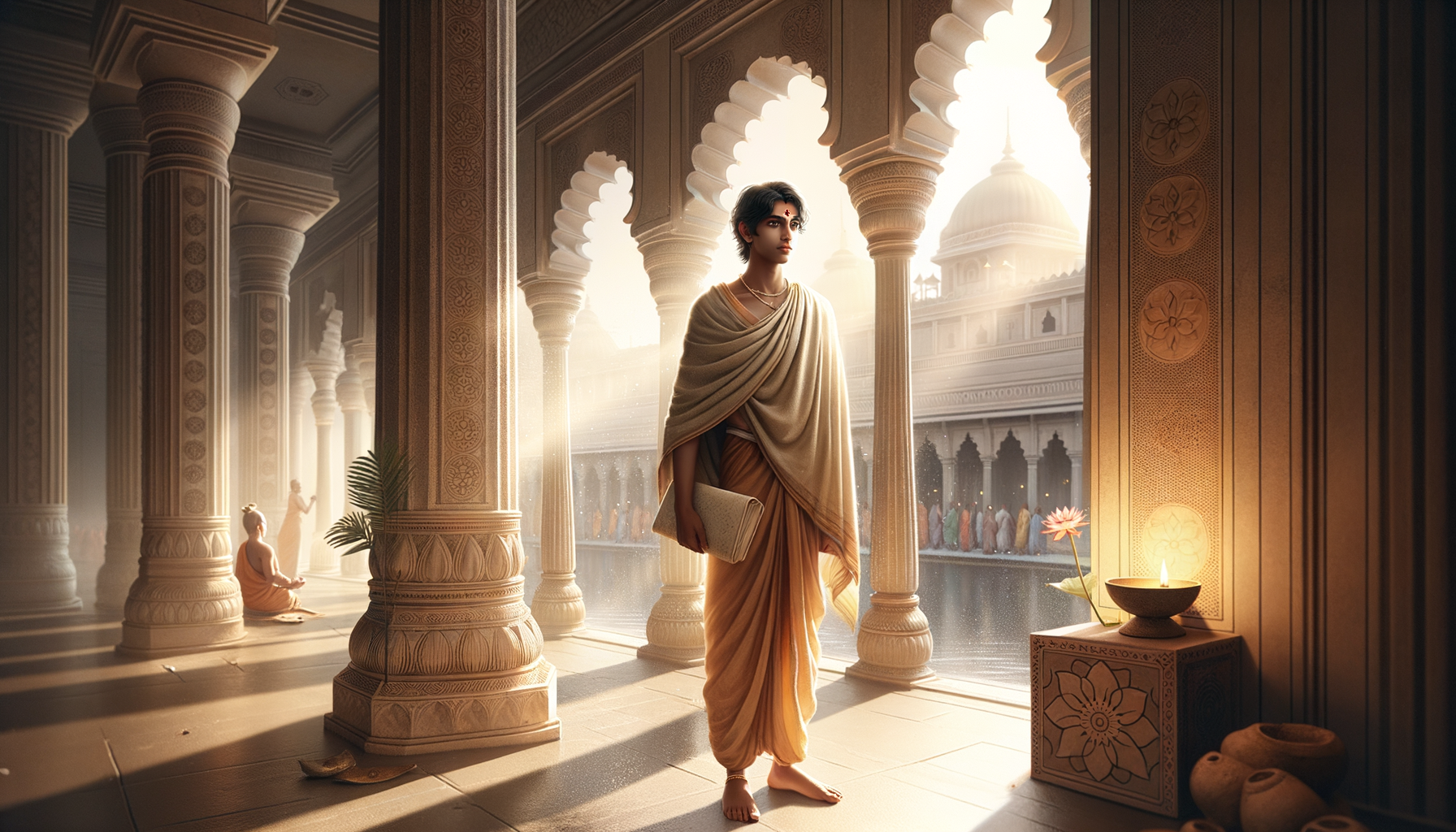
Bhadra, a lesser-known figure in the Ramayana, embodies the link between Ayodhya’s public voice and royal duty. Remembered as both “the amuser” and an attentive informer, his brief presence helps explain how rajadharma listens to everyday concerns. Through Bhadra, the epic captures realistic social textures while sustaining its moral vision of dharma. Readers gain insight…
-
Vayudeva Mahatmyam: Exploring the Wind God’s Power, Prana, and Dharma Across Traditions

Vayu Bhagavan, the wind god of Hindu tradition, is revered as the sustaining force behind prana, movement, and life. Classical narratives honor him as the divine father of Hanuman and Bhima, whose devotion to Lord Rama and loyalty to Lord Krishna exemplify courage and service. Philosophically, Vayu’s essence is experienced through pranayama and mindful breathing,…
-
Chakravana: The Western Sea’s Sacred MountainAn Awe-Inspiring Anchor of Hindu Epics

Chakravana, portrayed as a sacred mountain rising from the Western Sea, holds a distinctive place in Hindu scriptures and the imagination shaped by Indian Epics. This account situates Chakravana amid Vishnu’s protective triumphs and the Ramayana’s search for Sita, highlighting how sacred geography deepens narrative meaning. Readers gain an accessible, academic summary that clarifies the…
-
Desire, Discipline, and Redemption: Vishwamitra’s Fall and Rise to Enlightened Self-Mastery
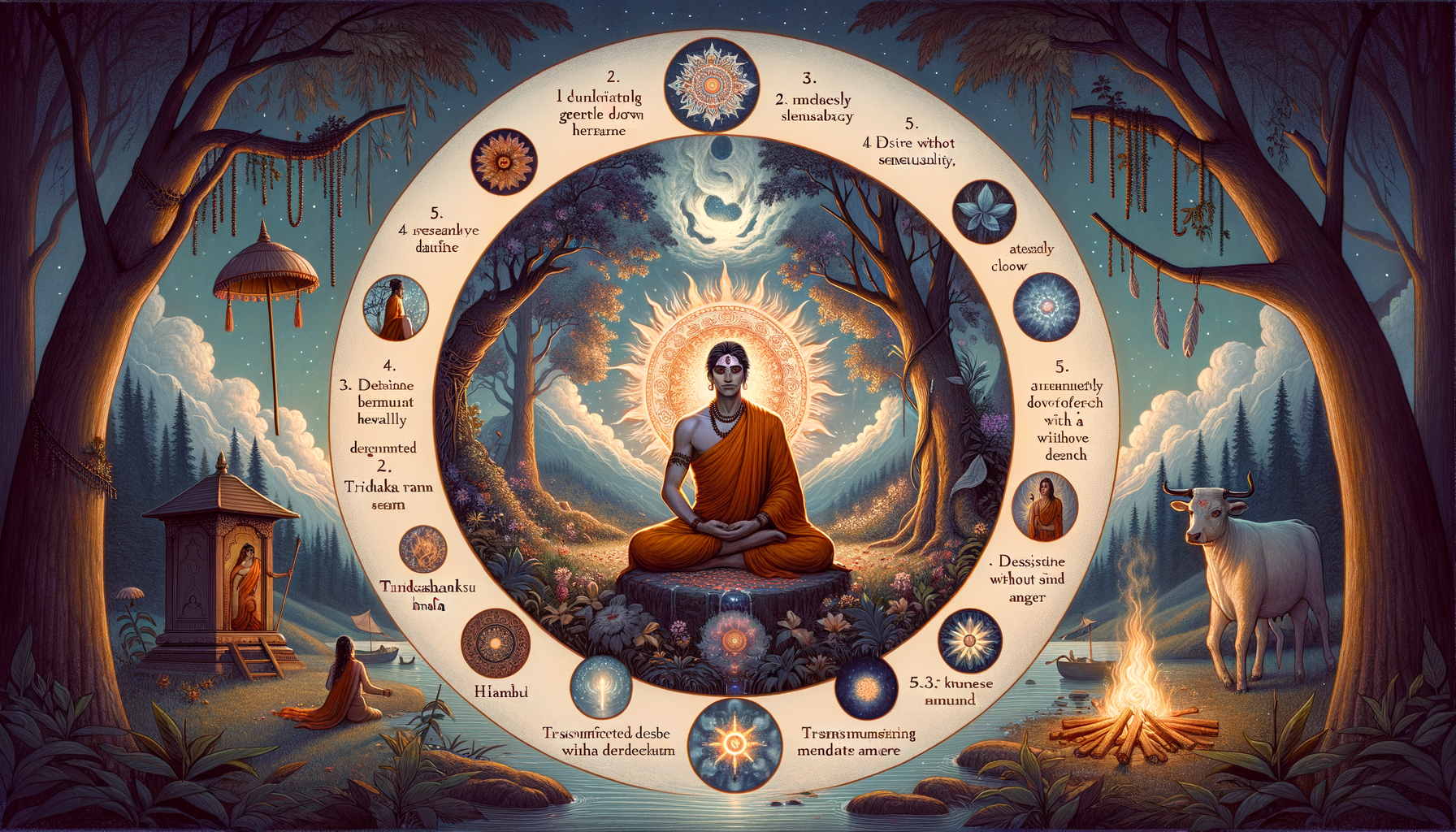
Sage Vishwamitra’s journey, preserved in the Ramayana and Puranas, reveals how desire, discipline, and humility shape authentic spiritual growth. The episodes of Menakā, Rambhā, and Trishanku illuminate why repression alone fails and how insight transforms both desire and anger. Read as a spiritual psychology, the narrative models tapas joined to compassion, equanimity, and surrender. The…
-
Poetic Karmic Justice: Vali Reborn as Jara and the Arrow That Ends Krishna’s Leela

This article explores a powerful link between the Ramayana and the Mahabharata through the motif of karmic justice connecting Vali, Jara, Rama, and Krishna. It clarifies how later devotional and regional traditions interpret Jara as Vali reborn while noting that the critical Mahabharata text simply names Jara as a hunter. Readers gain a nuanced understanding…
-
Beyond Time and Space: Bhusundi Ramayana and the Immortal Crow’s Countless Ramayanas

Bhusundi (Kākabhūśuṇḍi), the immortal crow sage, embodies the Hindu vision of cyclical time by witnessing Ramayana’s unfolding across infinite kalpas. The Bhusundi Ramayana asserts that there are countless Ramayanascontextual, complementary, and united by dharma’s essence. This plurality aligns with Jain anekāntavāda, Buddhist dependent origination, and Sikh remembrance of the Divine, underscoring unity across dharmic traditions.…
-
A Serendipitous Meeting in Leeds: Dr Ali Hayder, Ramayan, and the Power of Shared Devotion

A chance meeting in Leeds with Dr Ali Hayder led to a thoughtful exchange on devotion, the Ramayan, and shared spiritual values. The conversation echoed Srila Prabhupada’s insight that faith ultimately addresses the human heart beyond religious labels. It offered a living example of religious pluralism and harmony of faiths, grounded in respect and openness.…
-
Why Ravana Took Sita to Lanka: Exploring a Protective Motive Across Dharmic Perspectives

This article examines why Ravana took Sita to Lanka by engaging both the Valmiki Ramayana and alternative interpretations that emphasize restraint and honor. It highlights how Sita’s inviolable dignity becomes the ethical fulcrum of the narrative across Hindu, Buddhist, Jain, and Sikh perspectives. Readers gain a nuanced understanding of motive, vow, and dharma without displacing…
-
Rama’s Darbha Sayana: Sacred Patience and Yoga Nidra Before Crossing the Ocean

This post explores Darbha Sayana Murthy, the Ramayana moment when Sri Rama, seeking to cross the ocean to Lanka, prays to Varuna and rests in Yoga Nidra on a bed of darbha grass. Readers learn the ritual significance of darbha (kusa) in Vedic practice and how Yoga Nidra symbolizes restful awareness and ethical clarity. The…