
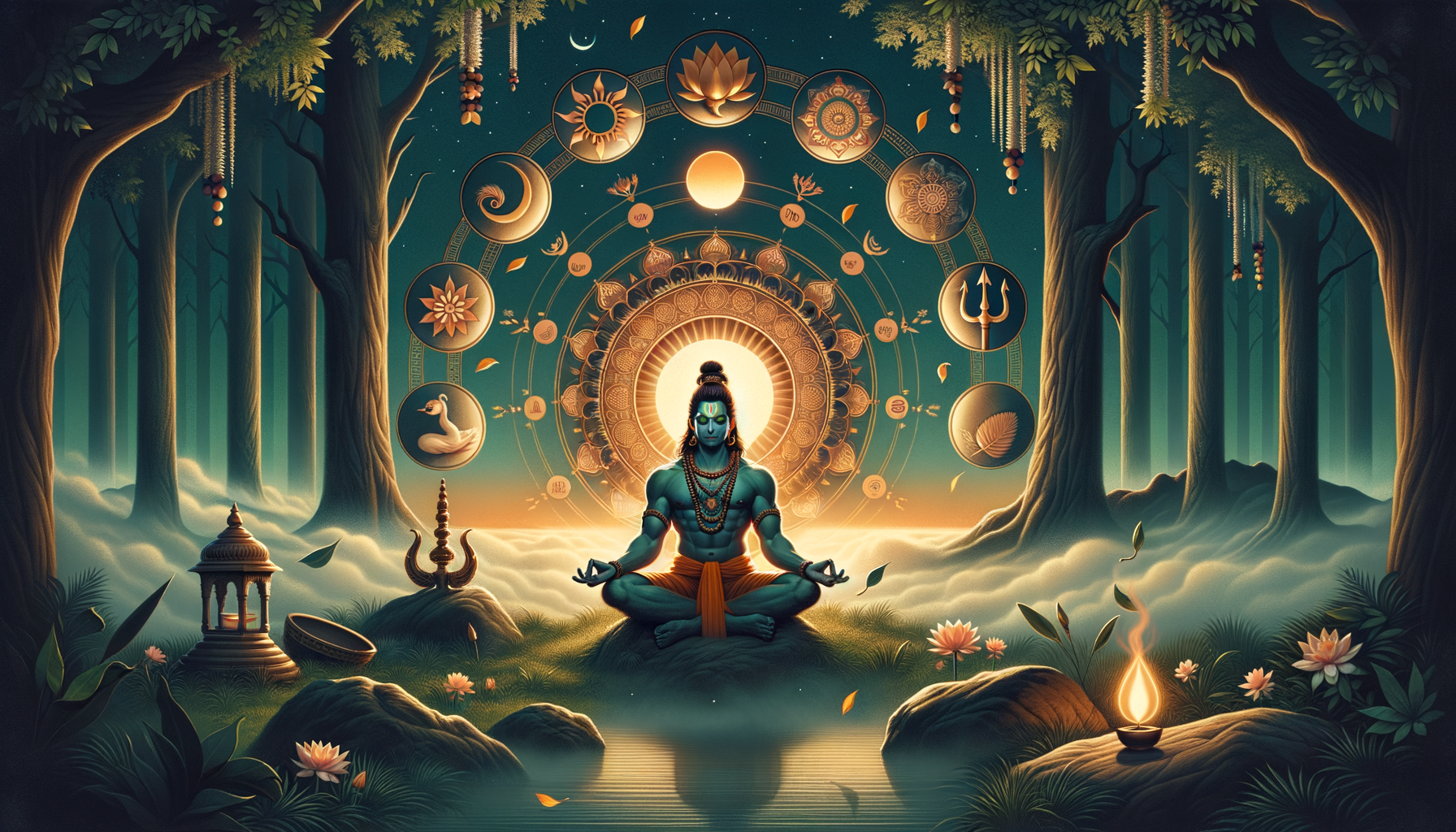
Hanuman’s role in the Ramayana continues to illuminate profound spiritual insights, particularly regarding the TrimurtiBrahma, Vishnu, and Shiva. A lesser-known narrative tradition recounts a moving encounter during Hanuman’s search for Sita, where a meeting with Sage Kandu, transformed by grief over the untimely death of his sixteen-year-old son, becomes a doorway to understanding presence, devotion, and resilience.
Set within the timeless landscape of the Ramayana, the episode frames Hanuman not only as a divine messenger but as a guide whose wisdom helps navigate suffering without denial or fatalism. Sage Kandu, described as deeply learned yet shaken by loss, embodies the universal question: how can dharma sustain a person when pain feels overwhelming?
The Trimurti offers a philosophical lens through which this question can be approached. Brahma symbolizes creation, Vishnu preservation, and Shiva transformation and dissolution. Together they describe the cyclical rhythm of existenceemergence, continuity, and release. The teaching linked to Hanuman in this narrative emphasizes living in the present as a practical alignment with this rhythm, neither bound by the past nor anxious about the future.
Read through the dharmic tradition, living in the present does not imply indifference. Rather, it calls for conscious attention, steady devotion (bhakti), and right action (dharma). In this light, Hanuman’s guidance points to cultivating clarity of mind, compassion in conduct, and surrender to the divine orderembodied for many through devotion to Ramaso that grief is held with dignity and transformed through purposeful living.
Philosophically, this approach honors karma and anitya (impermanence) while nurturing karuna (compassion). Creation (Brahma) invites the renewal of intention, preservation (Vishnu) sustains what is noble and life-affirming, and transformation (Shiva) teaches the courage to release what has completed its course. Together, these aspects help transmute sorrow into wisdom without erasing the depth of feeling.
As a reflective practice, three simple contemplations emerge from this framework: create a mindful response to pain (Brahma), preserve what nourishes the heartsuch as remembrance, community, and seva (Vishnu), and release the grasping that prolongs suffering (Shiva). This triadic movement allows grief to be witnessed and integrated, not suppressed, aligning daily life with the Trimurti’s living symbolism.
For many seekers, Hanuman’s steadfastness in the Ramayana exemplifies courage rooted in humility and service. This steadiness encourages the cultivation of presenceanchoring attention in the here and nowso that ethical action flows naturally. In turn, resilience grows, and the capacity to uphold dharma in the midst of uncertainty is strengthened.
Across dharmic traditions, resonances with this integrative view can be discerned. Buddhism’s emphasis on mindful awareness and compassion, Jainism’s anekantavada (many-sided truth) in engaging complex realities, and Sikhism’s remembrance of Naam united with seva reflect shared commitments to inner clarity and shared welfare. Without collapsing distinct doctrines, such parallels affirm a unity in diversity that honors each path while nurturing inter-traditional harmony.
In this narrative setting, Hanuman’s teaching on the Trimurti becomes a compassionate philosophy of life: create what is right, preserve what is good, and release what must changewhile remaining fully present. Such presence dignifies grief, steadies the mind, and channels devotion into service, allowing individuals and communities to move through loss with wisdom.
Ultimately, the Ramayana’s spiritual tapestryhere refracted through Hanuman and Sage Kanduoffers a practical, hopeful message. By living the present with awareness and devotion, aligning with Brahma’s creativity, Vishnu’s sustaining power, and Shiva’s transformative grace, seekers find a path that heals, clarifies, and unites.
Inspired by this post on Hindu Blog.
