
-
Lakshmana’s Measured Justice: Symbolism and Dharma in Surpanakha’s Nose-Cutting

The Dandaka forest episode of Surpanakha in the Ramayana presents a nuanced study in proportionate justice. Lakshmana’s cutting of her nose and ears is framed not as impulse but as a measured defense of Sita within Kshatra Dharma. Dharmashastra context shows such penalties aligned with culturally recognized sanctions for harassment and attempted harm. Symbolically, the…
-
Sita’s Compassion Tested: Dharma and the Ethics of Lakshmana’s Punishment of Surpanakha

The Aranya Kanda episode of Surpanakha’s attack and Lakshmana’s response invites a careful reading of dharma and compassion. Valmiki’s text does not quote Sita’s immediate reaction, so understanding her stance relies on her consistent character across the Ramayanarooted in karuṇā and kṣamā. Interpreted through proportionality and restraint, Lakshmana’s non-lethal action reflects kṣātra-dharma: protecting the innocent…
-
Surpanakha and Rama: A Heart‑Rending Clash of Cultures in the Ramayana’s Moral World

This analysis reframes Surpanakha’s meeting with Rama as a cross-cultural encounter shaped by contrasting ethical codes. It explores how direct desire, marital fidelity, and ascetic restraint collide in Panchavati and why the misreading escalates into conflict. Readers gain a nuanced view of Surpanakha’s agency without moral reductionism. The discussion highlights consent, proportionality, and empathy as…
-
Fatal Pride in Hindu Epics: Comparing Mahishasura and Ravana for Timeless Dharmic Lessons

Mahishasura and Ravana exemplify how unchecked pride destabilizes power and invites a dharmic corrective. Drawn from the Devi Mahatmya and the Ramayana, their stories trace boons misused, counsel ignored, and justice ultimately restored. Readers gain clear leadership lessons: humility, accountability, and attention to wise advice sustain order. The festivals of Durga Puja and Dussehra translate…
-
Sacred Boundaries, Unshakeable Devotion: Sita–Lakshmana’s Bond in Eknath’s Bhavartha Ramayana

Sant Eknath’s Bhavartha Ramayana offers a lucid, ethical reading of the Sita–Lakshmana bond in the Aranya Kanda, where maryada and bhakti shape a relationship of reverence and restraint. The episode highlights Lakshmana’s dilemma between guarding Sita and seeking Rama, revealing devotion as principled action. The Lakshmana Rekha motif, prominent in devotional traditions, functions as a…
-
Lakshmana and Jambukumara: Unseen Karma, a Broken Vow, and the Ethics of Regret in Ramayana

This article explores a lesser-known Ramayana tradition about Jambukumaradescribed in some folk accounts as the son of Surpanakha and Vidyutjihvaand the inadvertent killing by Lakshmana, framed as the “karma of an unseen blade.” It examines how the motif of a “forgotten promise” enriches the ethics of dharma-yuddha, emphasizing restraint, accountability, and moral repair. Readers gain…
-
Why Rama Chose Humanity: Profound Wisdom Behind Ravana’s Boon, Suffering, and Dharma

This article explains why Lord Rama, an avatar of Vishnu, chose to be human in response to Ravana’s boon. It shows how Ravana’s selective invulnerability created a lawful path for dharma to prevail without violating cosmic commitments. By accepting human limitations and suffering, Rama modeled maryadaethical excellence under constraint. The narrative highlights the power of…
-
Maharatha vs Atiratha: Timeless Warrior Ranks, Epic Valor, and Kshatra Dharma

This article clarifies the difference between Maharatha and Atiratha as presented in the Hindu epics, showing how these warrior ranks function as ethical and strategic categories rather than poetic embellishments. It explains Maharatha as disciplined excellence and Atiratha as transformative, dharma-aligned leadership on the battlefield. Readers gain a clear, historically grounded understanding rooted in the…
-
Chanting Ramcharitmanas Chaupais: A Time-Tested Path to Peace, Protection, and Resilience

This article examines the traditional view that chanting Ramcharitmanas chaupais supports peace, protection, and resilience during adversity. It outlines why rhythmic, meaningful repetition (japa) steadies attention and breath, helping reduce anxiety and improve focus. Practical guidance highlights intention-setting, steady pacing, and reflective engagement with verses, including those in Sundara Kanda. Devotee accounts frequently describe improved…
-
रामचरितमानस की चौपाइयों का जप: बड़े संकटों से मुक्ति और आत्मबल के सशक्त उपाय

Across the Bhakti tradition, it is widely held that chanting selected Ramcharitmanas चौपाइयाँ strengthens inner stability and helps navigate major crises. The method is simple, disciplined, and compatible with evidence-informed insights on mantra meditation and attention training. By aligning breath, sound, and intention, japa encourages calm affect, moral clarity, and courage for ethical action. Families…
-
Diwali in Basingstoke: A Powerful Ramayan Performance Unites Community and Heritage
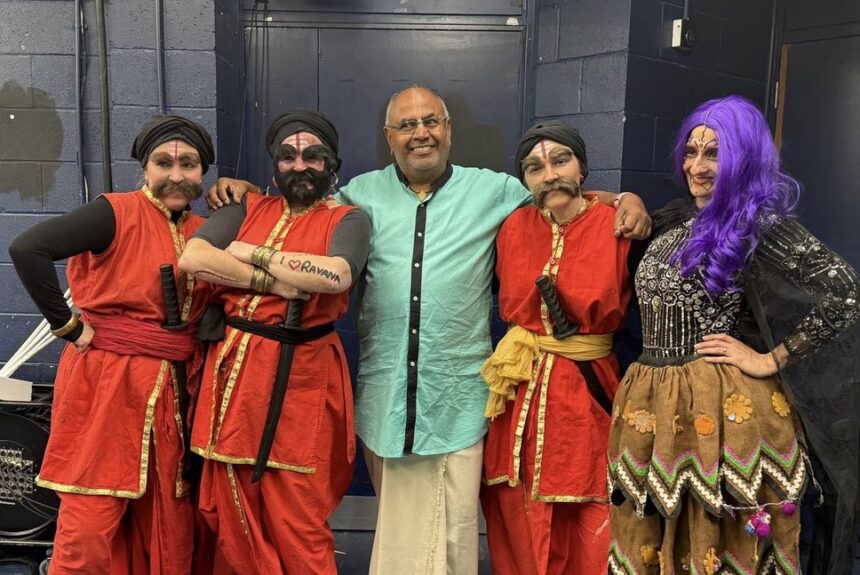
A Diwali-themed cultural event in Basingstoke showcased a special Ramayan performance by the Bhaktivedanta Players at Queen Mary’s College, marking their 40th anniversary. The production emphasized dharma, devotion, and compassion through clear storytelling that engaged both families and students. Collaboration between local devotees and Bhaktivedanta Manor strengthened community ties and intergenerational learning. The program highlighted…
-
The Transformative Power of Divine Names: Vedas, Upanishads, and Epics for Inner Renewal

This reflection examines the power of divine names as preserved in the Vedas, Upanishads, Ramayana, and Mahabharata, highlighting how sacred sound directs the mind toward dharma. It presents chanting, mantra, and japa as disciplined practices that transform remorse into responsible action. The analysis emphasizes unity across Hinduism, Buddhism, Jainism, and Sikhism, where sacred namessuch as…
-
The Transformative Power of Divine Names: Vedas, Epics, and Dharmic Unity
Divine names, celebrated in the Vedas, Upanishads, Ramayana, and Mahabharata, provide a practical discipline to steady attention, calm the breath, and strengthen ethical living. By anchoring the mind in nāma-smaraṇa or japa, practitioners experience reduced stress and clearer moral judgment. The same principle appears across Buddhism (Om Mani Padme Hum), Jainism (Namokar Mantra), and Sikhism…
-
Sundarakanda Parayana Procedures: A Clear, Devotional Guide to Parayanam Vidhanam for Courage and Grace

This guide presents Sundarakanda Parayana Procedures (Sundarakanda Parayanam Vidhanam) in a clear, flexible format that suits home and community practice. It explains essential preparationclean space, sankalpa, lamp, and sattvik offeringsand a simple step-by-step sequence for focused recitation and graceful conclusion. Multiple day-wise schedules are outlined, from 1-day to 41-day observances, so practitioners can match pace…
-
Surpanakha Unveiled: The Powerful Etymology, Symbolism, and Dharma Lessons in the Ramayana

Names in the Ramayana carry layered meanings that guide ethical understanding, and Surpanakha is a vivid example. This piece explains the Sanskrit etymology of Surpanakha (śūrpa + nakha) and shows how the name functions as narrative symbol and moral cue. It places the episode within the Valmiki tradition while acknowledging later retellings that frame the…
-
Why Folk Ramayanas Embrace Both Virtue and Transgression: Plural Voices, Deeper Dharma

Folk Ramayanas across India and Southeast Asia soften the boundary between dharma and adharma, using oral performance and rasa to humanize all sides. By reframing antagonists as educative foils rather than fixed enemies, these traditions promote empathy, critical reflection, and community dialogue. Regional adaptationsfrom Kamba Ramayanam to the Thai Ramakien and Cambodian Reamkerembed the epic…
-
Lesser-Known Vanara General Rambha in the Ramayana: Lion-Hearted Commander of Lanka’s Fall

This article explores the lesser-known figure of Vanara General Rambha as portrayed in certain regional and popular retellings of the Ramayana. It clarifies how the Valmiki Ramayana lists other principal leaders, while later traditions sometimes expand the vanara roster to teach enduring virtues. Readers gain a clearer view of textual variation without losing sight of…
-
Sibling Bonds in the Ramayana: Timeless, Powerful Lessons on Dharma and Unity in Kaliyuga

The Ramayana’s sibling bonds offer a clear ethical framework for Kaliyuga, modeling fraternal love, duty, and sacrifice through Rama, Bharata, Lakshmana, and Shatrughna. Bharata’s stewardship under Rama’s paduka exemplifies humility and accountability over ambition. Rama and Lakshmana illustrate complementary roles and counsel in crisis, while Shatrughna’s quiet service honors the dignity of unseen labor. These…
-
Discover Panchavati’s Sacred Origins: The Ultimate Tale of Sage Agastya’s Transforming Curse

This exploration of Sage Agastya and Panchavati presents a timeless Ramayana narrative where karma, divine justice, and redemption converge. It situates Panchavati within the sacred geography of the Godavari and Nashik, highlighting the grove’s enduring spiritual resonance. The account clarifies that the five gandharvas motif arises from later retellings, while honoring Valmiki Ramayana’s core portrayal…
-
Discover the Sacred Secrets of Panchavati: A Complete Guide to Its Symbolism in Ramayana

Panchavati, the sacred grove of the Ramayana on the Godavari River, is more than a location; it is a symbol of disciplined living, ecological reverence, and ethical courage. The grove’s “five trees” evoke harmony of the senses and elements, framing exile (vanvas) as a path of inner refinement. Key episodesŚūrpaṇakhā’s encounter, the golden deer, Sita’s…