
-
Sita Navami 2026 (Apr 25): Auspicious Puja Vidhi, Vrat Guide, Panchang Rules & Significance

Sita Navami 2026 falls on April 25, aligning with Vaishakha Shukla Navami in the Hindu calendar. This comprehensive guide explains the festival’s scriptural foundations, cultural depth, and ecological symbolism, spotlighting Sita as an embodiment of dharma and a manifestation of Goddess Lakshmi. It clarifies Panchang-based tithi rules, the Udaya Tithi and Madhyahna approaches, and why…
-
Akshaya Tritiya Lakshmi Puja: Auspicious Timings, Kubera Vidhi, and Proven Ritual Steps
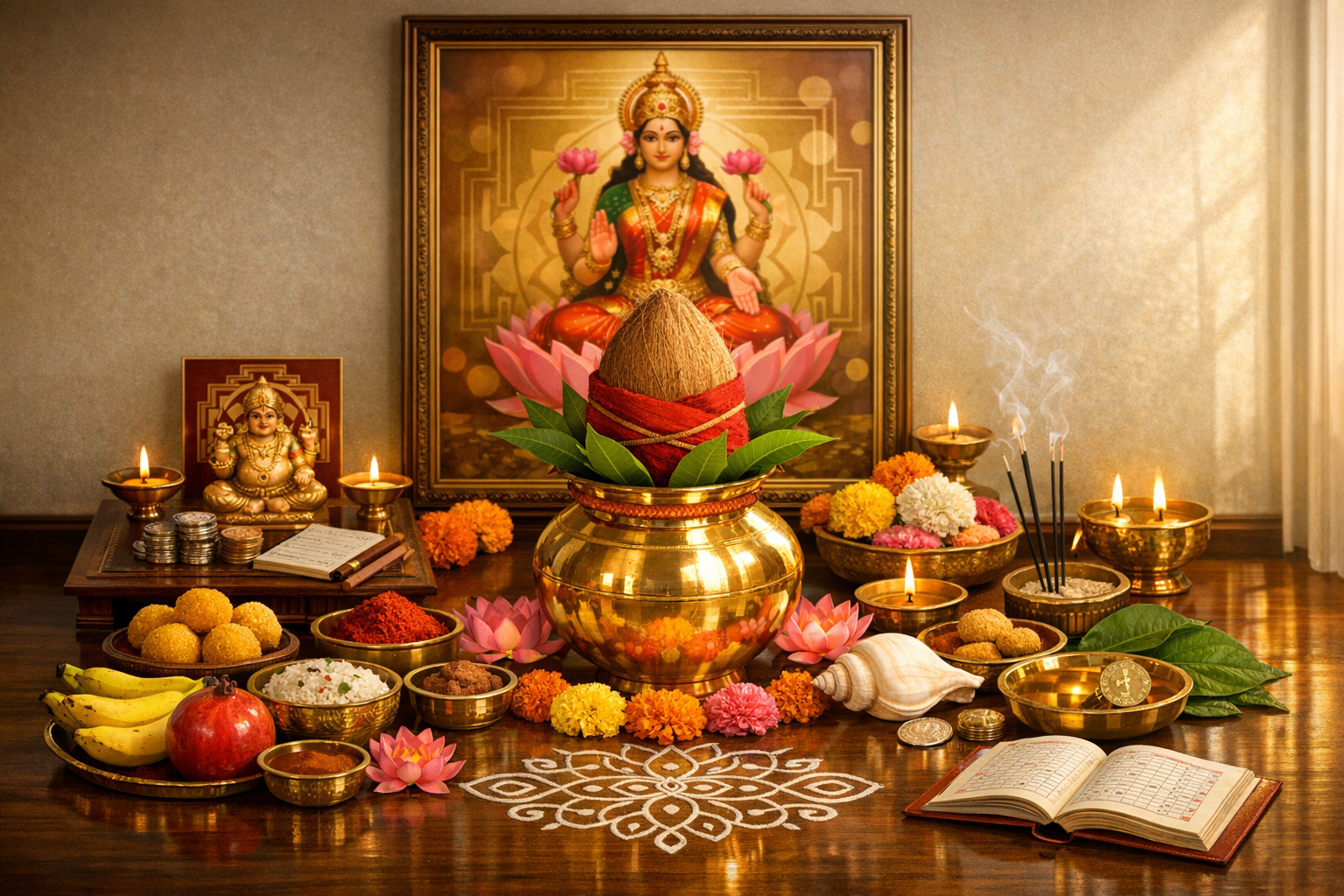
Akshay Tritiya or Akshaya Trutiya, observed on Vaishakh Shukla Tritiya, is celebrated as a sarva-siddha muhurta to honor Goddess Lakshmi through Lakshmi Puja and Kubera worship. The day’s ethos“akshaya,” or imperishable prosperitycombines devotion with ethics: wealth must be cultivated, stewarded, and shared. This guide details a complete, home-friendly Lakshmi Puja vidhi, including kalasha sthapana, Shodashopachara…
-
Akshaya Tritiya’s Eternal Blessings: Scriptural Events, Shared Dharma, and Timeless Charity

Akshaya Tritiya, observed on Vaishakha Shukla Tritiya, is celebrated across dharmic traditions as a day of inexhaustible merit and compassionate action. Hindu scriptures connect it with Parashurama Jayanti, the Akshaya Patra narrative in the Mahabharata, Annapurna’s alms to Shiva, and the traditional commencement of Vyasa’s dictation to Ganesha. Popular associations also include the spirit of…
-
Saptatori on Kojagari: Bengal’s Banana-Boat (Kolar Nouko) Ritual to Honor Lakshmi

Kojagari Lakshmi Puja in Bengal features the Saptatori traditionseven miniature Kolar Nouko (banana-boats) floated under the Sharad Purnima moon as offerings to Goddess Lakshmi. Each eco-friendly boat, crafted from banana trunk and leaves, carries grains, turmeric, vermilion, a coin, and a diya, symbolizing ethical prosperity and household well-being. The ritual’s timing aligns with cultural astronomy…
-
Kaudi Mata of Kashi and Shabari’s Bhakti: Varanasi’s Living Tapestry of Devotion and Equality
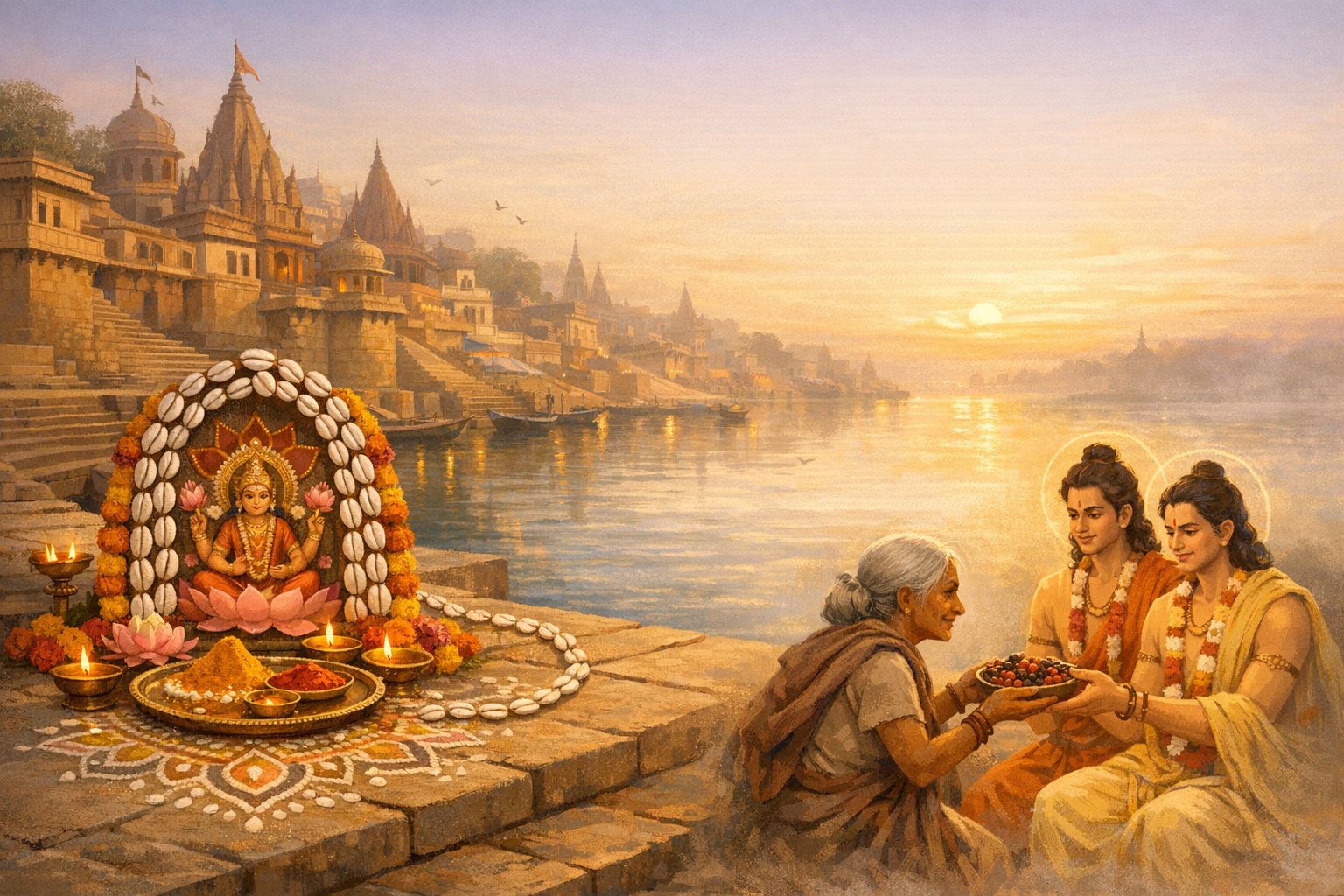
This comprehensive exploration pairs the Kaudi Mata Temple of Varanasirevered as a Lakshmi manifestationwith the timeless devotion of Shabari from the Ramayana to reveal a unified ethic of spiritual equality and compassion. Readers learn how cowrie symbolism and household Lakshmi rituals connect with Kashi’s sacred geography and South Indian pilgrimage culture. The Shabari episode is…
-
Why Shiva Rarely Holds the Lotus: Decoding Shaiva Iconography, Vairagya, and Dharmic Harmony

The lotus dominates Indic sacred art, yet Shiva is rarely defined by it. This essay explains why by tracing Shaiva iconography prescribed in Agamas and Shilpa Shastras, where trishula, damaru, vibhuti, rudraksha, Nandi, and the aniconic linga carry the core theological message. It contrasts the lotus’s semantics of purity, abundance, and preservationwith Vishnu, Lakshmi, and…
-
Why Suvarna Mahalakshmi ‘Gets Angry’ at Puri Rath Yatra: Hera Panchami to Niladri Bije

The Puri Rath Yatra encodes a subtle theological drama in which Suvarna Mahalakshmi’s ritualized “anger” during Hera Panchami invites reflection on responsibility, love, and reunion. Rather than a quarrel, the sequence from Hera Panchami to Niladri Bije is a carefully staged lila that affirms the agency of the Divine Feminine and the reciprocity at the…
-
Why Lakshmi Is Worshipped with Ganesha: Timeless Wisdom for Ethical Wealth and Success

Why are Lakshmi and Ganesha worshipped together? This comprehensive exploration shows how the pairing harmonizes prosperity with wisdom, grounding artha in dharma. Drawing on the Sri Sukta, the Ganapati Atharvashirsha, and Puranic-smarta liturgy, it explains why Vinayaka Puja precedes Lakshmi Puja and how Panchopachara and Shodashopachara offerings encode this ethic. Iconographyfrom Gaja-Lakshmi to Ganesha’s mouse…
-
From Brahma’s Treasure to Ravana’s Gates: Lankini, Vijayalakshmi, and Dharma’s Fate
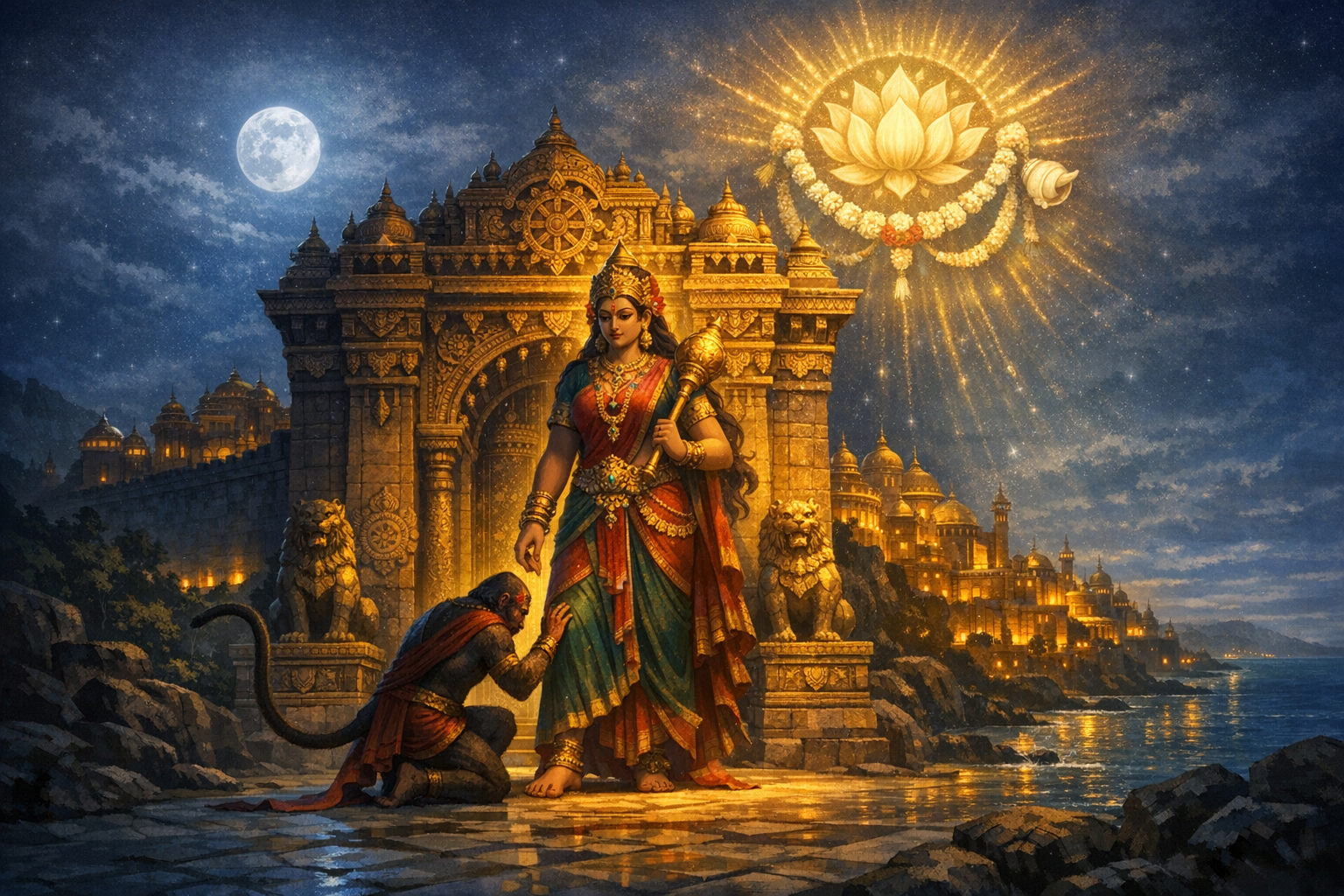
This article explores Lankini (Lankalakshmi) as Lanka’s guardian deity in the Ramayana and explains how her encounter with Hanuman marks the ethical turning point of the epic. It traces Lanka’s origins as a divine ‘treasure’ linked to Brahma, Kubera, and later Ravana, showing how prosperity (śrī) is ethically contingent. It clarifies Vijayalakshmi’s place among the…
-
Vasant Navratri 2026: Dates, Puja Vidhi, Fasting, NavaDurga & Ram Navami’s Sacred Finale
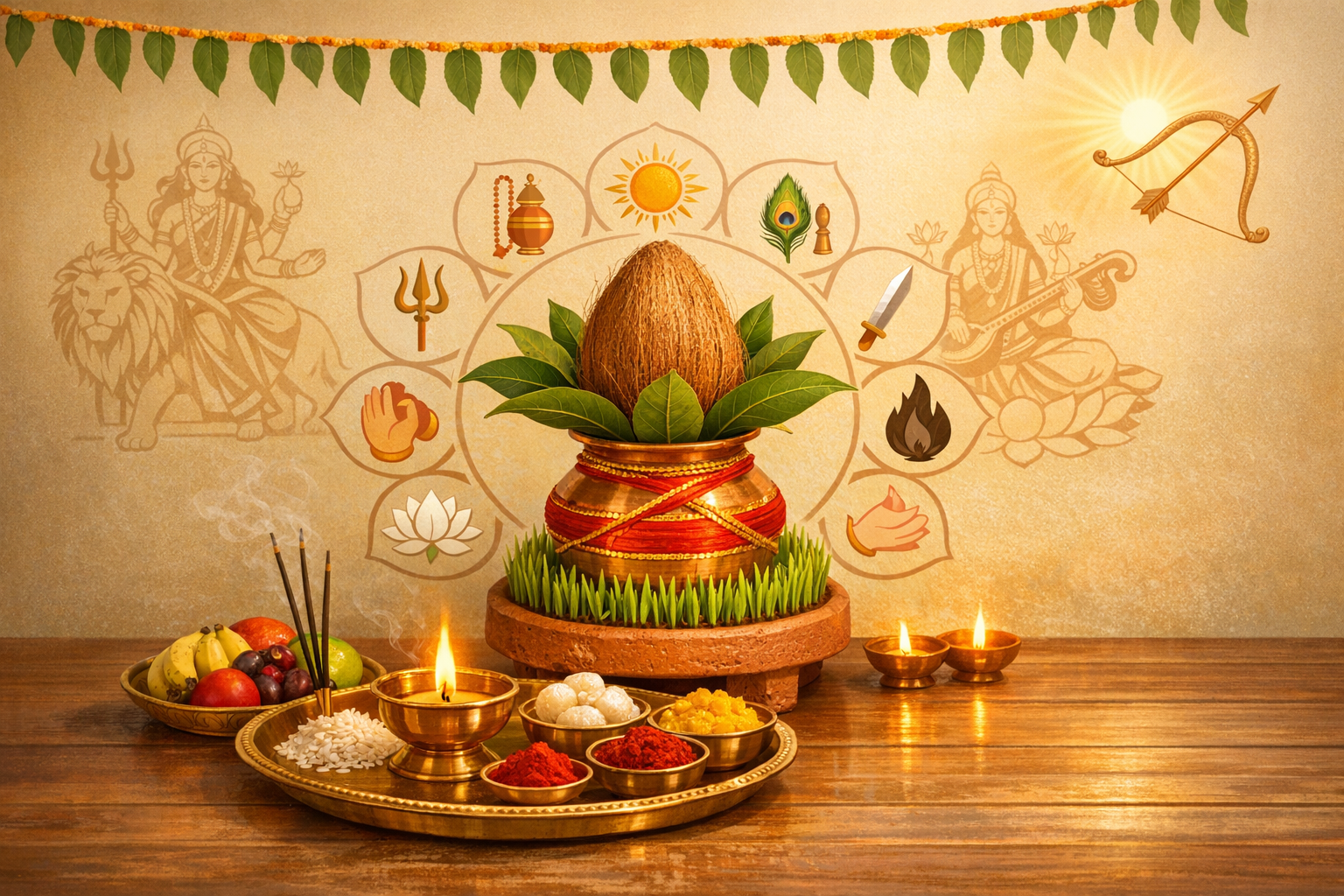
Vasant Navratri 2026 (Basant Navaratri, Chaitra Navratri, Sri Ram Navratri) will be observed from 19 to 27 March 2026, beginning on Chaitra Shukla Pratipada and culminating on Ram Navami. This long-form guide explains the festival’s spiritual architecture, outlines day-by-day observances for the NavaDurga, and details Ghatasthapana, puja vidhi, and fasting practices with attention to health…
-
Decoding Lakshmi’s Lotus: Sacred Symbolism of Prosperity, Purity, and Dharmic Wealth

Goddess Lakshmi’s enduring association with the lotus is a precise theological and ethical statement, not a decorative habit. The lotus models purity-in-engagementthriving in muddy waters yet remaining unstainedmirroring how dharmic wealth should arise and circulate without exploitation. Scriptural memory (Śrī Sūkta, samudra-manthana), iconographic conventions (padma-pīṭha, Gaja-Lakshmi), and temple arts all embed this meaning in public…
-
Bedi (Beri) Lakshmi in Bengal: Sacred Grain Altars and the Living Symbolism of Prosperity
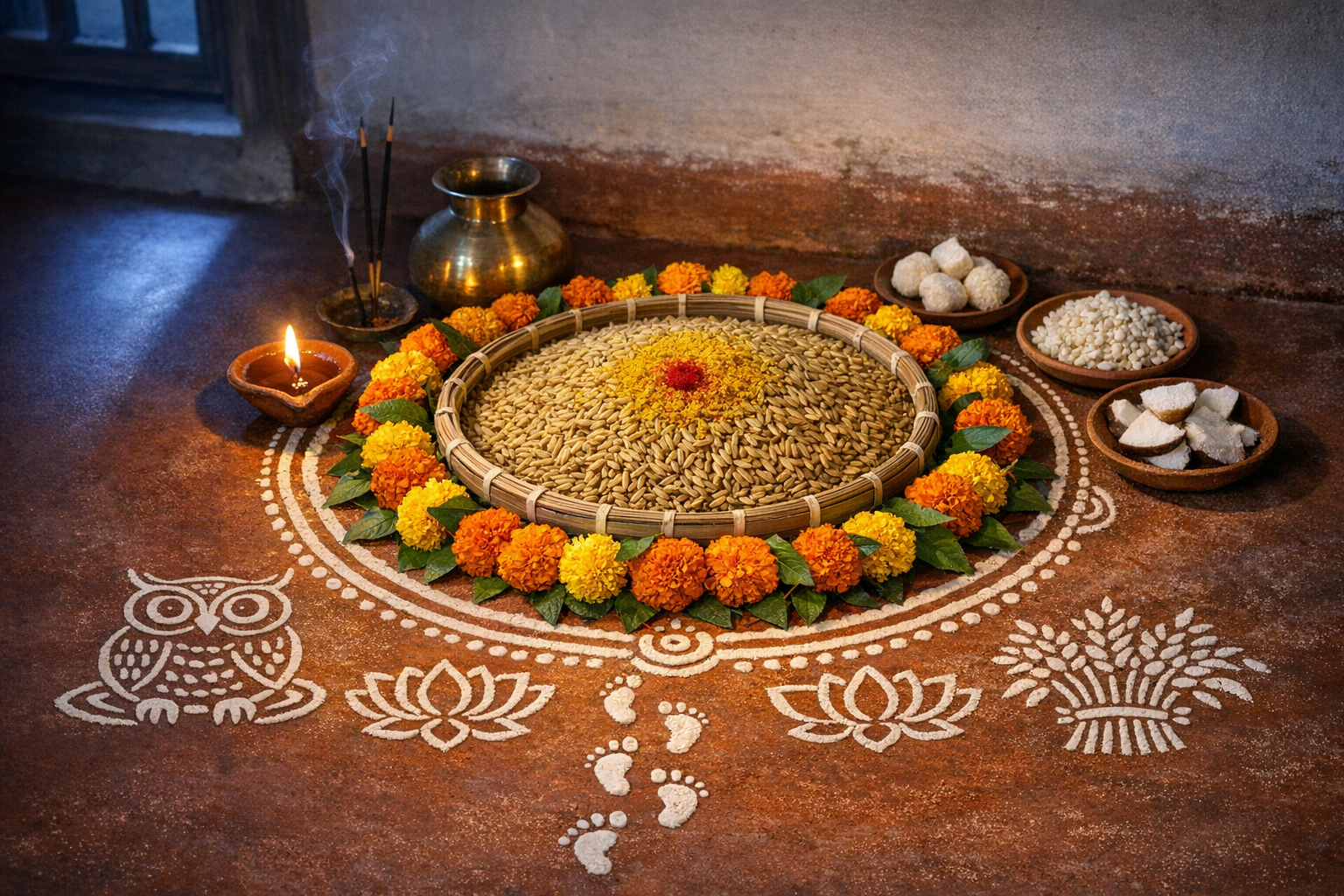
Bedi (Beri) Lakshmi is a distinctive Bengali household rite in which Goddess Lakshmi is invoked through a grain-filled altar and a carefully sanctified boundary. The practice centers prosperity in living seed, uniting ecology, economy, and devotion within the domestic sphere. Marked especially on Kojagari Purnima, it employs rice-paste alpana, paddy, turmeric, and lamp to translate…
-
Sampada Gowri Vratham 2026 on Vaishakh Purnima: Date, Muhurat, Complete Vidhi and Udyapana Guide

Sampada Gowri Vratham (Sampath Gauri Vrata) in 2026 is observed on Vaishakh Purnima, Friday, May 1, aligning with a full moon revered across Hinduism, Buddhism (Vesak), Jainism, and Sikh traditions. The vrata honors Goddess Lakshmi and Goddess Gauri as complementary manifestations of śakti, seeking holistic prosperity grounded in virtue, gratitude, and stewardship. This comprehensive guide…
-
Beyond Gold and Fortune: How Goddess Lakshmi Cultivates Inner Peace and Lasting Prosperity

Goddess Lakshmi in Hinduism signifies far more than financial gain. Traditional imagery and the Ashta Lakshmi forms reveal a complete vision of prosperity that unites outer wealth with inner qualities like compassion, courage, and wisdom. Aligning artha with dharma transforms money into responsible stewardship that benefits families and communities. This integrated approach resonates across Buddhism,…
-
Lakshmi Shora of Bengal: Revered Clay Discs and the Living Heritage of Kojagari Puja

Lakshmi Shora (Lakshmi Sora) are painted clay discs central to Kojagari Lakshmi Puja and Thursday worship in Bengal, preserving an intimate form of household devotion. Crafted by traditional potters and adorned with lotus, owl, and grain motifs, each shora embodies layered symbolismearthy humility, cyclical abundance, and alert wisdom. The ritual centers the home with alpona,…
-
Sarapot, Kolabou, and Clay Idols: A Deep Dive into Bengal’s Living Lakshmi Traditions
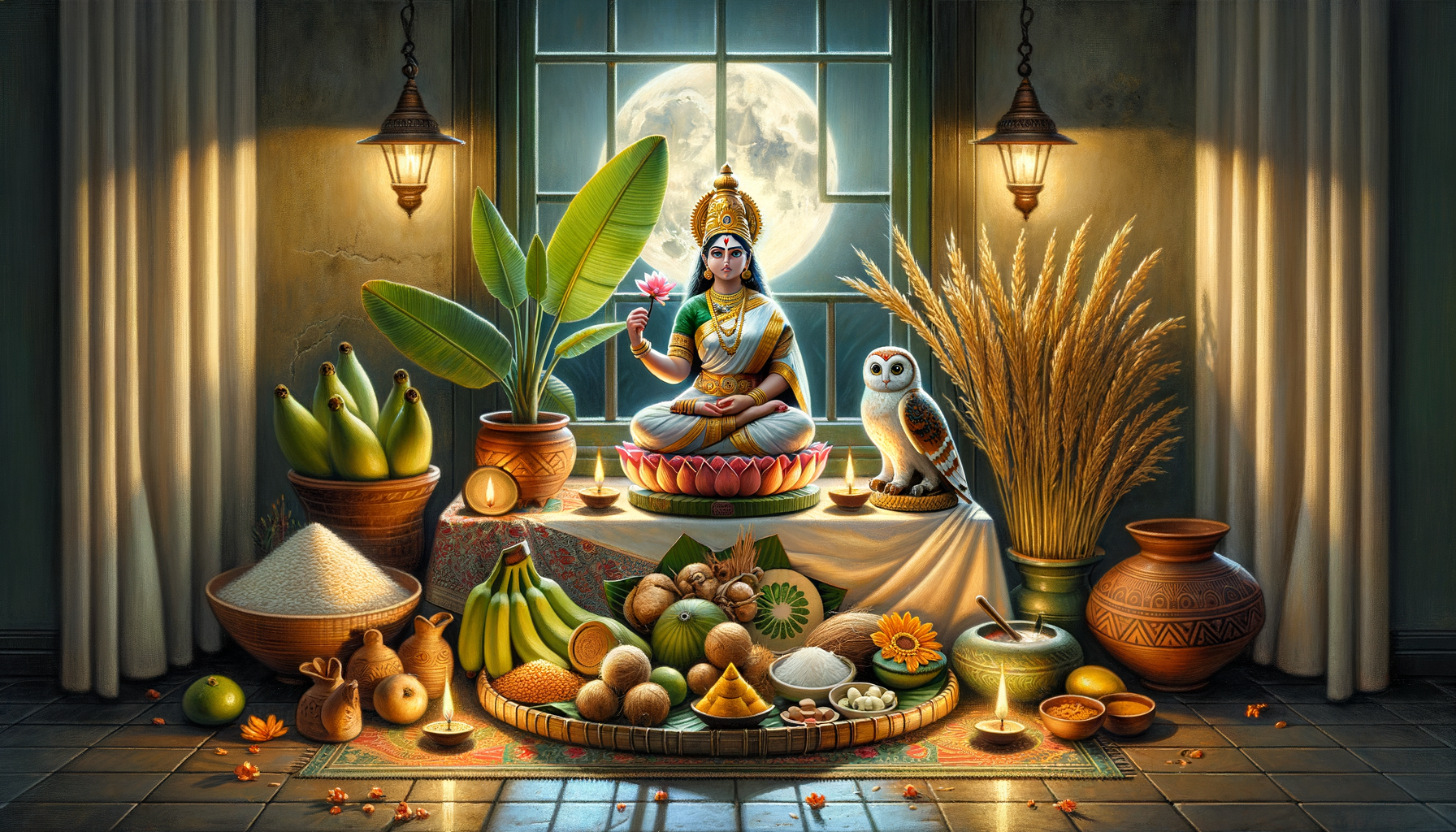
Bengal’s Lakshmi Puja unfolds through three living formsSarapot, Kolabou, and clay idolseach illuminating prosperity as an ethical relationship with home, community, and ecology. Sarapot Lakshmi preserves a compact, household-centered tradition rooted in local clay craft and simple offerings. Kolabou, the banana plant honored in Nabapatrika, embodies a vegetal form many households revere as Lakshmi, linking…
-
Lakshmi and Chicomecoatl: Powerful Cross-Cultural Echoes of Prosperity and Nourishment

A striking visual parallel links Hinduism’s Goddess Lakshmi with Chicomecoatl, the Aztec corn goddess, through shared symbols of flowers and grain. This comparison clarifies how agrarian civilizations independently envisioned prosperity, abundance, and ethical well-being. Readers gain an accessible, evidence-based perspective on cross-cultural symbolism without overstating historical contact. The discussion highlights values central to dharmic traditionscompassion,…
-
Falgun Purnima 2026 (Holika Purnima): March 3 Date, Holika Dahan, Rituals, and Meaning

Falgun Purnima 2026, also called Holika Purnima, falls on March 3 and is dedicated to Lord Krishna and Goddess Lakshmi while honoring the wider Phalguna month’s reverence for Shiva and Parvati. The evening bonfire of Holika Dahan symbolizes the triumph of dharma, with Holi (Rangotsav) celebrated on March 4. Observances include snana, vrata, Krishna Puja,…
-
Nine Sacred Powers of Goddess Lakshmi: A Profound Guide to Prosperity and Inner Grace
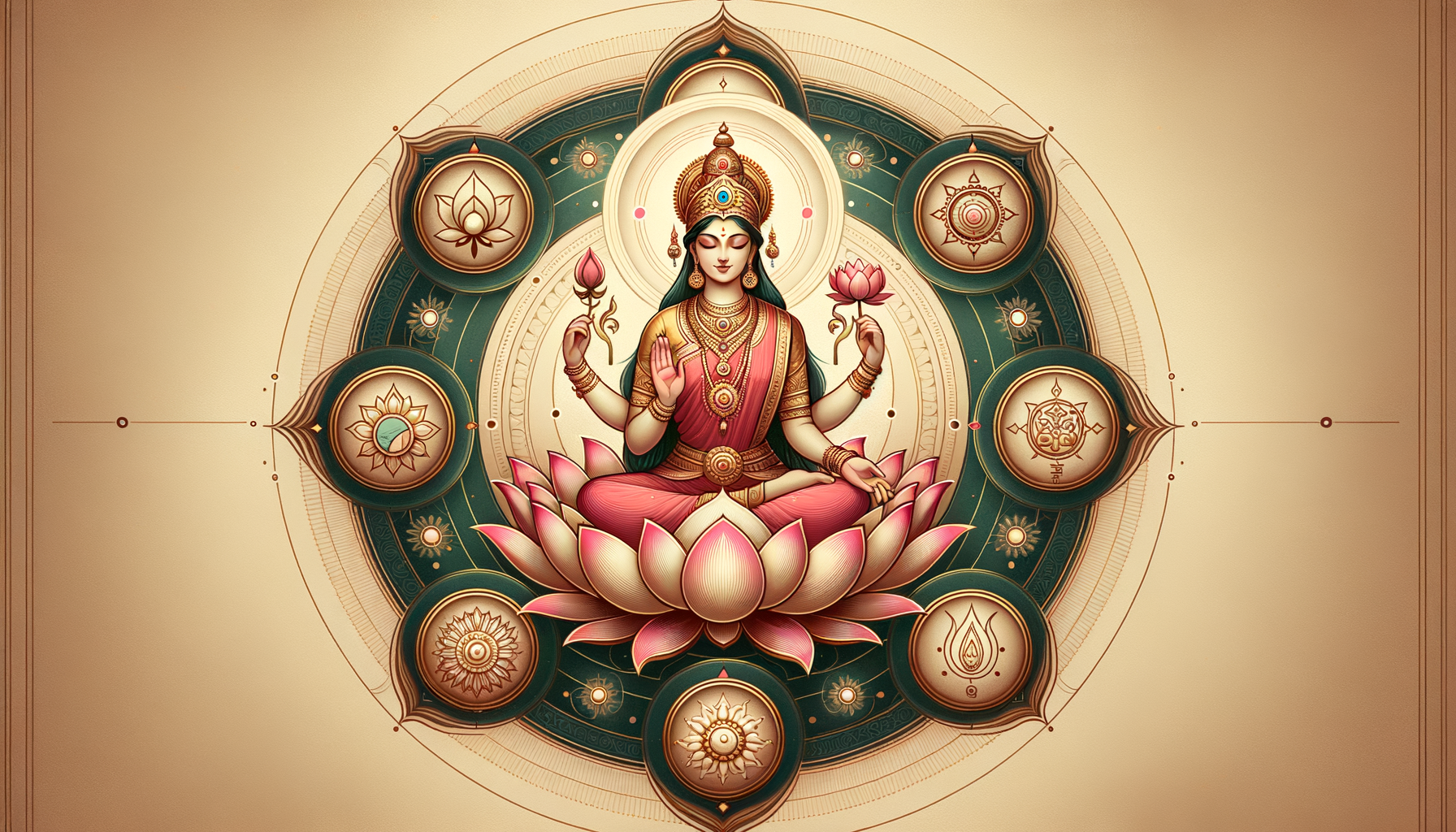
Goddess Lakshmi is revered not only as the deity of prosperity but as the source of nine sacred powers that integrate material abundance with inner grace. This guide presents a concise, academically grounded overview of a widely referenced enumerationthe Ashta Lakshmi plus Aishwarya Lakshmiwhile honoring regional and textual diversity. Each manifestation illuminates a virtue: from…
-
Decoding Lakshmi’s Sacred Iconography: Why the Owl Vanishes in South Indian Temples
Goddess Lakshmi’s iconography differs across regions, and South Indian temples rarely depict an owl as her vahana because Agamic traditions prioritize lotus and elephant symbolism. Drawing on the Pancharatra and Vaikhanasa frameworks, South Indian sanctums present Lakshmi as Shri on the lotus or as Gaja Lakshmi, emphasizing auspiciousness, rainfall, fertility, and ethical prosperity. In contrast,…