
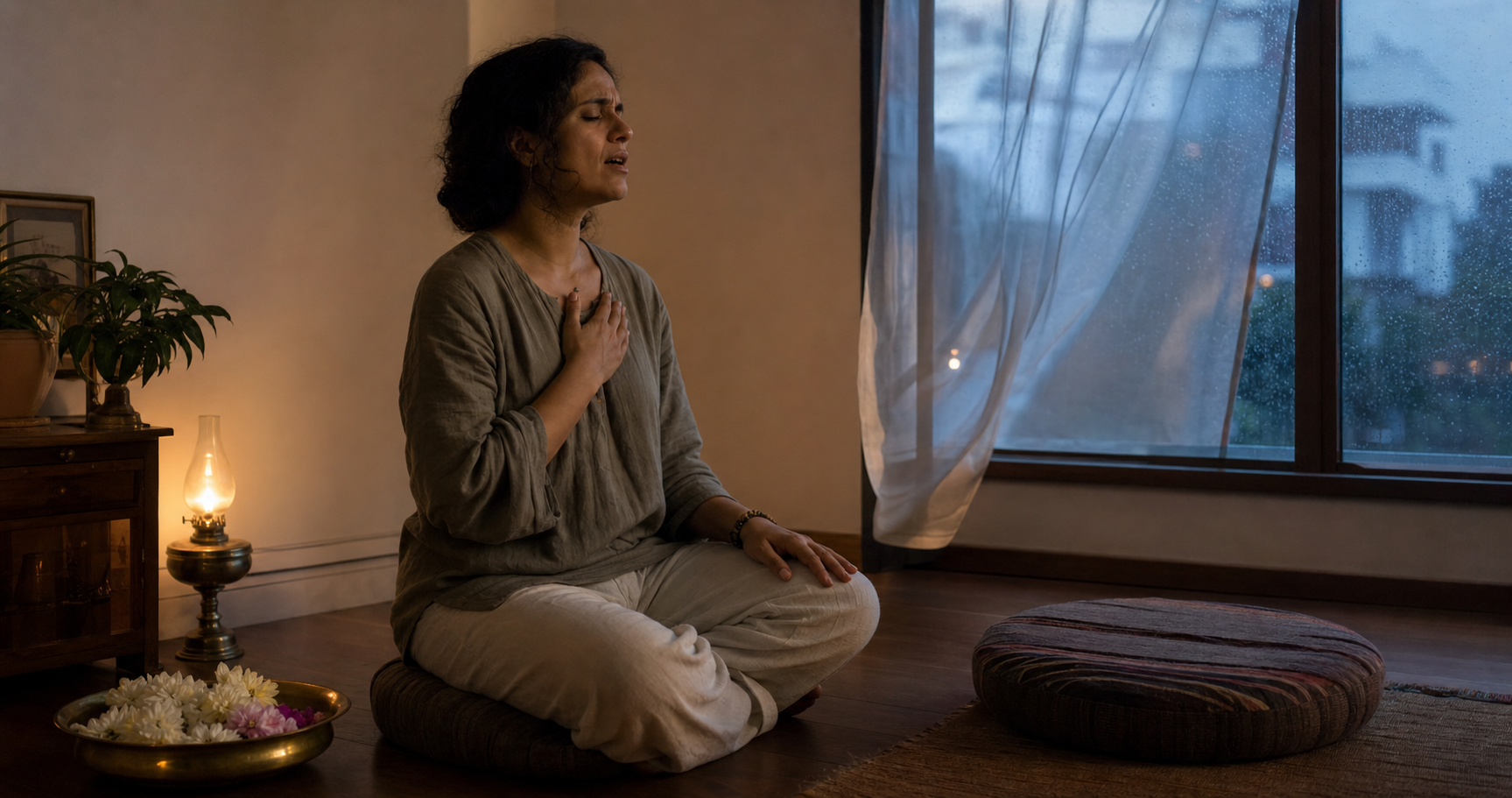
You may want to pray, yet find that silent meditation leaves you alone with a mind that will not settle. Grief keeps circling. Anger rehearses its argument. Longing has nowhere to go. Kirtan offers another entrance into practice: you give the feeling breath, rhythm, and a sacred name instead of demanding that it disappear before you approach the Divine.
If you are wondering whether kirtan can heal you, the honest answer needs care. Sacred singing can help steady attention, soften isolation, and turn difficult emotion toward remembrance and devotion. It cannot guarantee a particular emotional release, and it is not a substitute for psychological or medical care. Its strength lies in giving you a disciplined way to remain spiritually present while feeling what you actually feel.
Kirtan gives emotion a direction without denying it
Kirtan commonly uses call-and-response singing, mantra, and the divine names, or nama. Repetition gives the wandering mind something stable to return to. Melody carries feeling. Rhythm recruits the body. Breath, voice, attention, memory, and aspiration begin working together rather than pulling in different directions.
This is why kirtan is more than devotional entertainment. In bhakti, emotion is not automatically an obstacle to spiritual life. It becomes material for practice. Longing can become prayer. Gratitude can become praise. Grief can become surrender without being disguised as happiness. Anger can be held before the Divine long enough for its energy to stop dictating your conduct.
The relevant movement is not from feeling to numbness. It is from scattered feeling to bhava: emotion gathered into a devotional orientation. The divine name serves as an anchor when thought keeps multiplying. Repetition becomes smarana, or remembrance, because you are repeatedly returning attention to the sacred rather than merely repeating a sound.
Chaitanya, Mirabai, Tukaram, and Annamacharya stand within a history in which participatory devotion moved across regions, languages, and communities. Their presence in that history matters for a practical reason: bhakti does not require one emotional temperament, one social setting, or a musician’s training. It requires a sincere object of remembrance and the willingness to return.
Do not make emotional intensity your measure of sincerity. Tears may come, or they may not. You may feel uplifted, quiet, resistant, distracted, or tired. None of those reactions alone tells you whether the practice is deep. The better question is whether the chant helps you relate to your emotion without becoming completely ruled by it.
Build a home practice simple enough to repeat
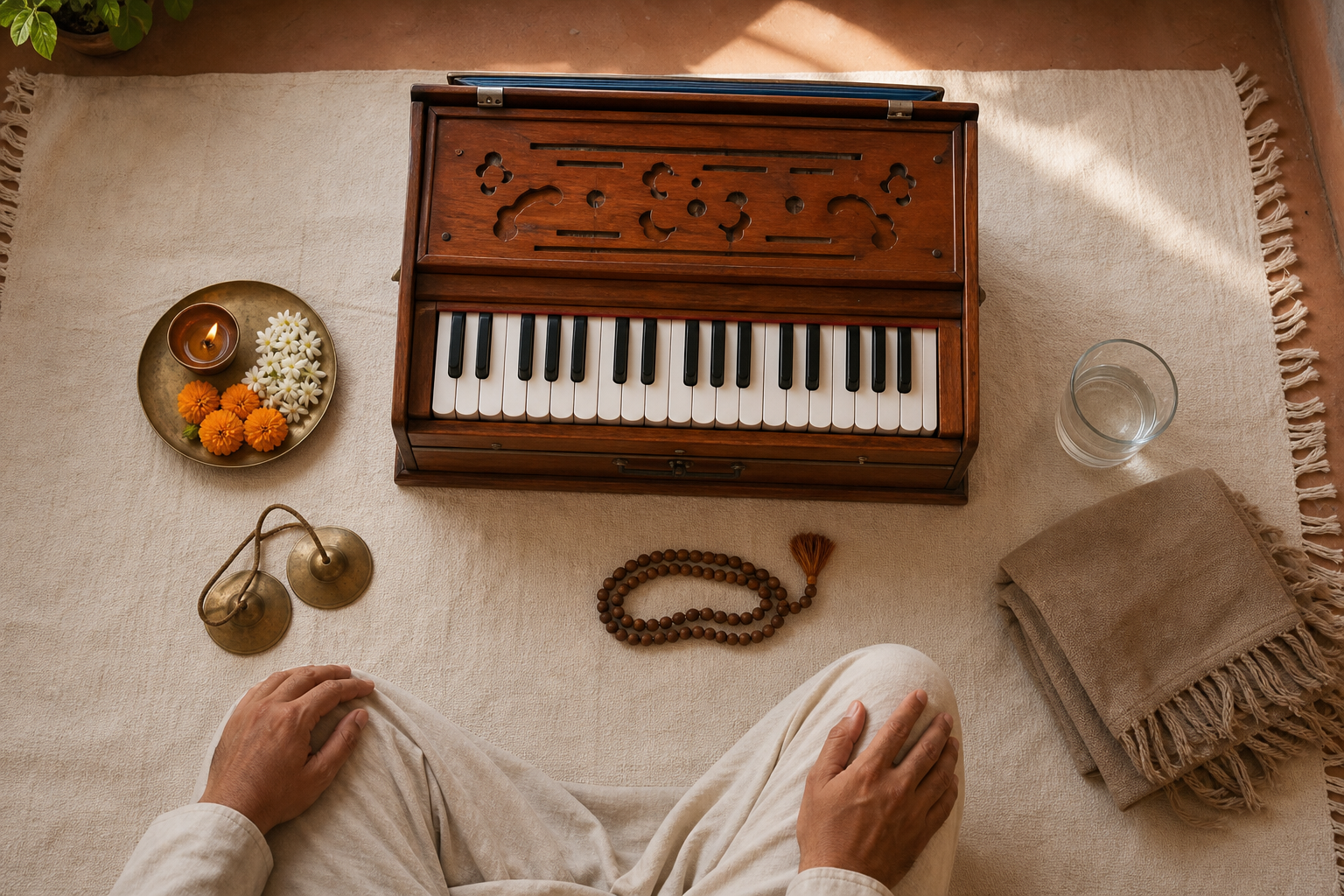
A useful kirtan practice does not need elaborate musical preparation. Harmonium, mridanga, kartals, and cymbals can strengthen rhythmic cohesion in a gathering, but instruments are supports rather than prerequisites. At home, your voice, a comfortable pulse, and a mantra you can approach with respect are enough.
- Name your present condition plainly. Before singing, acknowledge what you are bringing: grief, agitation, gratitude, loneliness, confusion, or simple devotion. This is not an analysis session. A clear acknowledgment prevents you from using sacred sound to pretend that you feel something else.
- Choose a single divine name or short invocation. Use a name or mantra rooted in the form of the Divine you worship or in the lineage you follow. If a teacher has given you instructions for a mantra, keep those instructions. Familiar sacred language lets attention deepen without turning the session into a search for novelty.
- Find an easy pitch and natural breath. Your voice should not strain. Let the phrase fit your ordinary breathing rather than forcing long breaths or excessive volume. The purpose is sustained remembrance, not vocal display.
- Establish a steady pulse. Gentle clapping or simple percussion can keep the mind and body together. If rhythm becomes complicated enough to consume your attention, simplify it. The sound should carry the name, not compete with it.
- Allow intensity to change without manufacturing it. You may begin quietly, let the chant gather energy, and later soften it. Follow the practice rather than chasing a dramatic peak. If emotion rises, keep your breathing easy and your pronunciation clear.
- Let sound resolve into silence. Do not end by immediately reaching for another stimulus. Stay still long enough to notice your breathing, bodily tension, emotional tone, and direction of mind. The silence shows you what the singing has actually left behind.
- Record the after-effect in a few words. Ask: What changed in my breath, feeling, and willingness to act well? This makes it easier to distinguish a durable devotional shift from a passing musical high.
Call-and-response can be especially helpful if self-consciousness or mental restlessness makes solitary chanting difficult. A leader holds the melodic line; you only need to listen and answer. A trusted digital kirtan can serve that function when you cannot reach a gathering, though it helps to sing actively rather than letting the sound become background audio.
Consistency matters more than escalation. Repeating a modest practice teaches the mind where to return when emotion becomes turbulent. Constantly changing chants, performers, tempos, and techniques can feel stimulating while preventing that familiarity from developing. Let abhyasa, steady repetition, do some of the work.
Judge healing by the after-effect, not the emotional peak
Group chanting naturally coordinates rhythm and breathing. That coordination may support physiological calming and is sometimes understood through its relationship to vagal tone. Participants may move from restlessness toward steadier attention, release, or uplift. These are possible responses, not guaranteed outcomes or a medical claim.
The most reliable signs appear in what happens after you sing. Can you name the feeling more clearly? Is your breathing less hurried? Can you return to a neglected duty? Are you less likely to speak from the sharpest edge of anger? Do you feel more willing to pray, seek company, apologize, rest, or ask for help? Kirtan becomes emotionally fruitful when sacred remembrance changes your next response.
Be cautious when the practice becomes a way to avoid what requires action. Chanting about surrender does not remove the need to set a boundary, repair harm, mourn a loss, or have a difficult conversation. Bhakti can change the spirit in which you act; it should not be used to make necessary action disappear.
Likewise, a powerful session is not proof that a wound has been resolved. Music, collective energy, memory, and repetition can produce a strong temporary state. Look for greater steadiness across ordinary life rather than trying to recreate the same peak. If you become dependent on louder, faster, or longer chanting just to feel anything, return to a simpler form and examine what you are pursuing.
If singing repeatedly leaves you more overwhelmed, lower the volume, simplify the rhythm, or stop and orient yourself to your surroundings. Persistent distress that disrupts sleep, work, relationships, or basic functioning deserves attention from a qualified mental-health professional. If you believe you may harm yourself or someone else, seek immediate local emergency or crisis support. Kirtan can accompany appropriate care; it must not be made responsible for replacing it.
Let community support you without flattening traditions
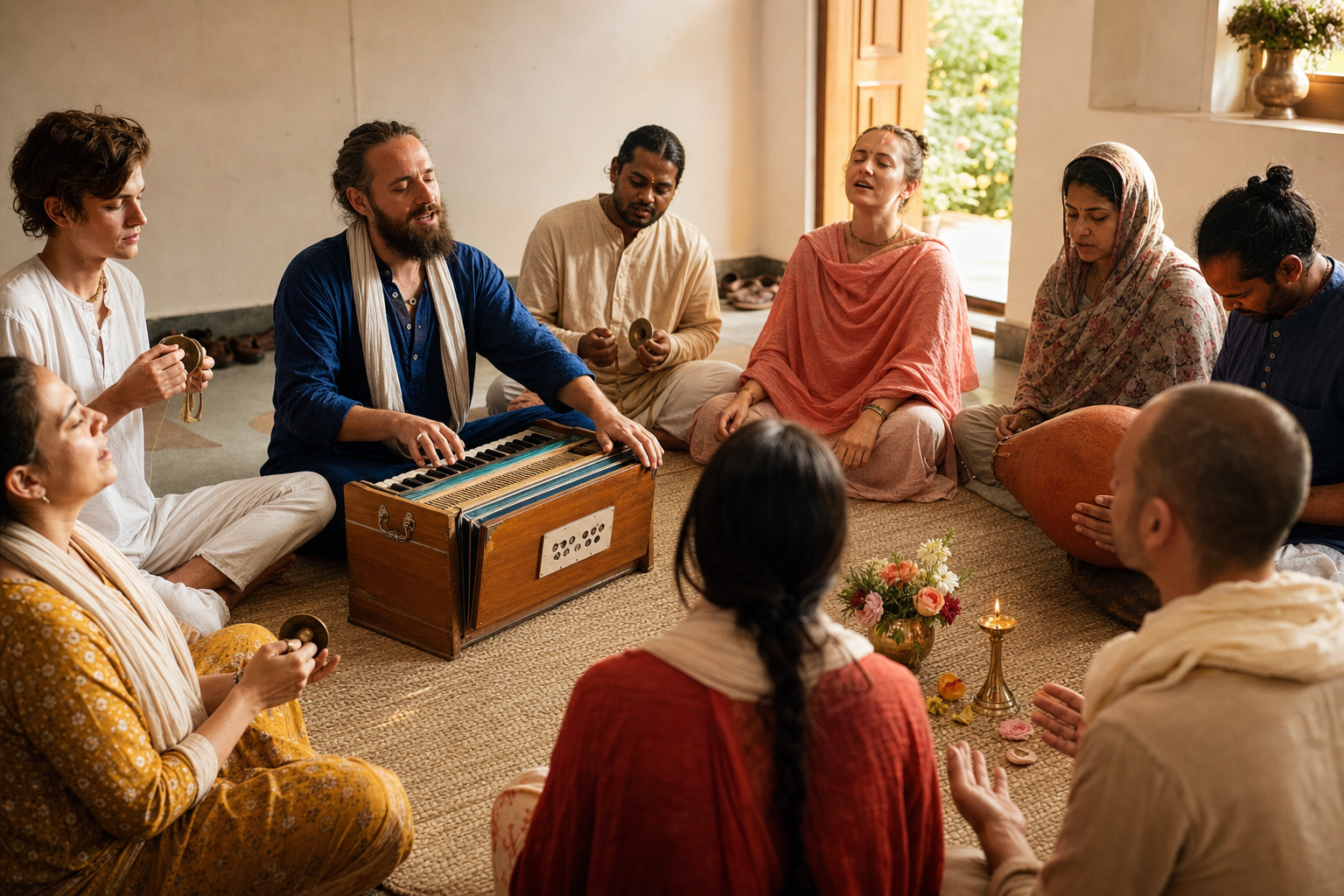
Solitary practice offers privacy, but collective kirtan offers something different: you do not have to generate the entire practice from your own emotional resources. The leader carries the invocation, the group answers, and a shared rhythm holds attention when individual concentration falters. For someone who feels isolated, being one responding voice among many can be as important as the musical form itself.
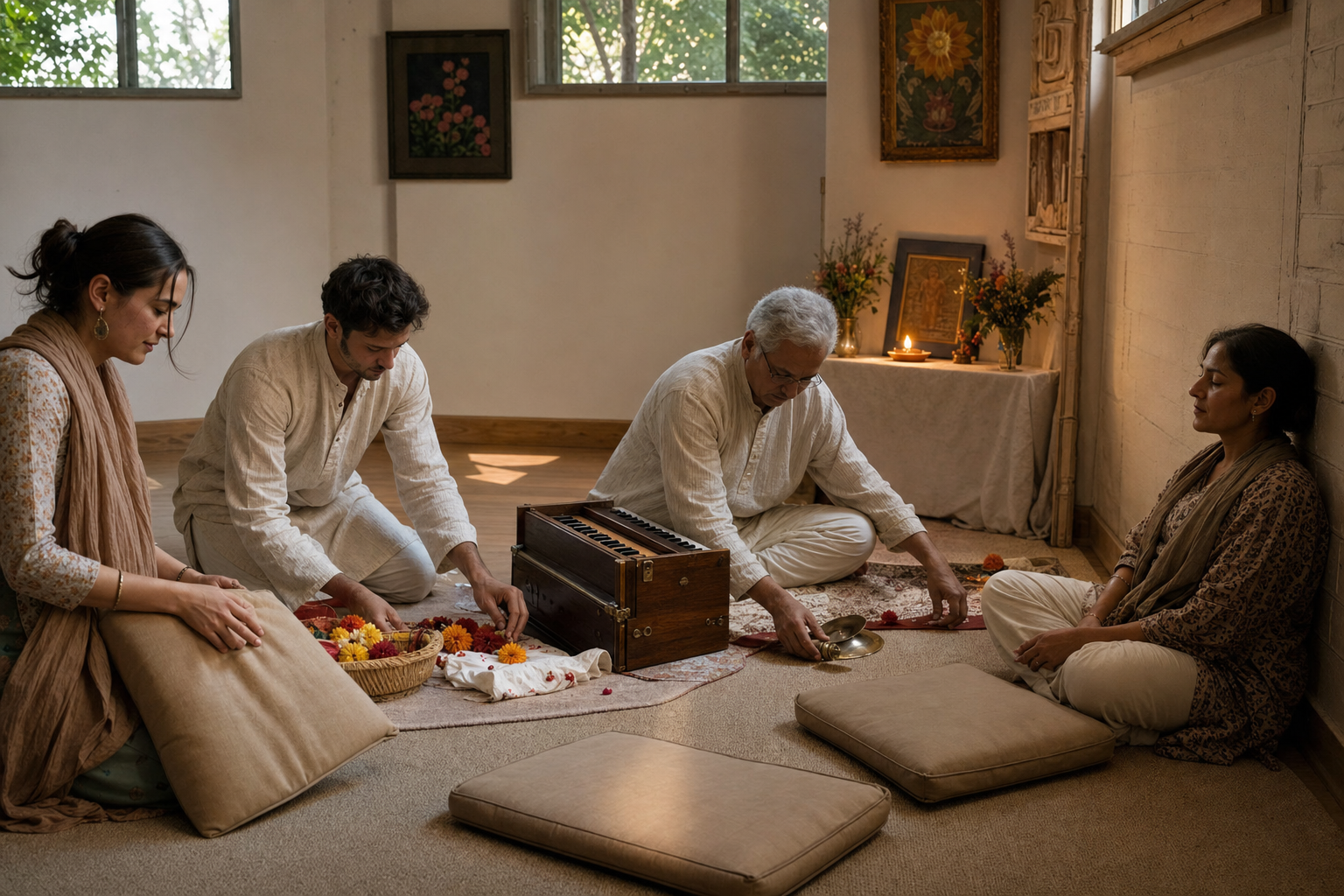
When you join a gathering, listen before trying to lead with your volume. Follow the pronunciation and tempo being offered. Respond with the group rather than treating the chant as a solo. Allow quieter participants space. These small disciplines turn collective sound into shared worship instead of performance.
Sacred singing also runs through several Dharmic traditions, but resemblance should not be confused with interchangeability. Hindu kirtan commonly centers divine names and mantras within bhakti. Sikh Gurbani Kirtan centers the congregational singing of scripture in the gurdwara. Buddhist communities maintain distinct chanting traditions in Pali and Sanskrit. Jain stavans and bhajans support contemplation and ethical refinement. Each practice belongs to its own theology, discipline, and liturgical setting.
You can recognize a shared Dharmic confidence in sacred sound while respecting those differences. Learn what is being sung, where it comes from, and how that community understands it. Do not turn every chant into a generic wellness soundtrack. Reverence includes context.
Key takeaways for choosing your next practice
- If your mind is restless, use a short, familiar invocation and a steady pulse rather than adding musical complexity.
- If you are grieving, begin gently and permit sorrow to remain present. You do not need to manufacture uplift for the practice to count.
- If you feel isolated, choose a respectful call-and-response gathering where participation matters more than vocal skill.
- If you become overstimulated, reduce volume and rhythmic intensity, then let the chant resolve into silence.
- If you are unsure whether kirtan is helping, examine your conduct afterward. More patience, clarity, connection, and willingness to meet your duties matter more than dramatic emotion.
- If distress remains severe or disrupts daily functioning, use kirtan as spiritual support alongside qualified care, not in place of it.
At the next unsettled moment, do not wait to become calm enough for devotion. Choose the divine name you already trust, let your breath remain natural, and begin quietly. Your task is not to force healing in a single sitting. It is to give the heart a sacred direction and keep returning until that direction begins to shape how you live.
References
