
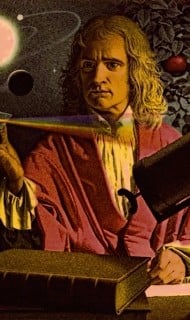
“This phenomenal world or material world in which we are placed is complete in itself because the twenty-four elements of which this material universe is a temporary manifestation, according to Sankhya philosophy, are completely adjusted to produce complete resources which are necessary for the maintenance and subsistence of this universe. There is nothing extraneous, nor is there anything needed.” (A. C. Bhaktivedanta Swami Prabhupada)
Understanding how God relates to the world is central to any serious dialogue between theology and science. Contemporary debates in Christian theology of nature have devoted sustained attention to the problem of divine action and non-physical causation, particularly in a cosmos described by law-like regularities. Vaishnava metaphysics, articulated through the theistic Sāṅkhya of the Bhagavata Purana (Srimad-Bhagavatam), contributes a rigorous framework that clarifies how transcendence and immanence, freedom and law, mind and matter, can coexist without conceptual strain. Read alongside Christian proposals, the Bhagavata’s layered ontology and account of agency deepen the conversation and offer constructive ways to integrate scientific explanations with a theistic worldview.
At the heart of the science–theology interface lies a set of linked questions: If nature exhibits stable laws, where is there room for God to act? If human minds are embodied, how can intention or consciousness exert causal influence without violating physical closure? What distinguishes a miracle from a rare natural event? Addressing these questions requires clarity about causation, law, and ontology. The Christian and Vaishnava traditions each preserve sophisticated accounts that can be rendered mutually illuminating when articulated with contemporary philosophy of science.
Christian theology of nature often begins with classical theism’s grammar of causality. On this view, God as primary cause sustains creatures in being and concurs with secondary causes, so that creaturely actions are genuinely their own while remaining fully dependent on divine conservation. Miracles, in this frame, are not violations of natural law but instances in which God acts in ways beyond the capacity of created causes. This concurrentist model protects both divine sovereignty and the integrity of nature’s regularities, yet it invites further specification about where, when, and how divine action becomes manifest in empirical history.
Non-interventionist accounts of objective divine action explore such specification by locating divine causality at the level of indeterministic processes. Proposals drawing on quantum indeterminacy and top-down causation suggest that God acts without breaking laws, subtly specifying outcomes among many allowable possibilities. Others develop non-reductive physicalism and emergentism, contending that higher-level properties (including mind) can exert downward causal influence consistent with, yet irreducible to, lower-level dynamics. These models aim to be scientifically consonant while preserving robust theism; they turn on whether the metaphysics of levels and information can underwrite genuine agency.
Kenotic theologies and process-oriented, panentheistic frameworks add a complementary emphasis: God’s self-limiting love (kenosis) and persuasive, not coercive, influence. Here, divine action is pervasive, world-affirming, and relational, often described as the continuous offering of novel possibilities to creatures. The strength of this approach is its ethical and relational texture; the challenge is to preserve a strong doctrine of divine transcendence and efficacy without reducing God’s agency to a merely immanent process.
Each of these Christian approaches faces a shared difficulty: articulating the ontology of mind, law, and causation so that divine and human agency are neither eclipsed by physical closure nor detached from empirical reality. It is precisely here that the theistic Sāṅkhya of the Bhagavata Purana becomes analytically helpful, because it offers a multi-layered, theistic ontology of nature (prakṛti), self (puruṣa/jīva), and God (Īśvara/Paramātmā) that supports both law-like order and genuine agency.
Classic Sāṅkhya enumerates twenty-four material tattvas (principles) unfolding from prakṛti: mahat (cosmic intelligence), ahaṅkāra (ego-function), the subtle elements (tanmātras), the gross elements (mahābhūtas), manas (mind), buddhi (intellect, often aligned with mahat in various enumerations), and the sensory and motor faculties. The puruṣa, the conscious self, is distinct and irreducible to matter. The Bhagavata Purana’s theistic account deepens this schema by emphasizing Paramātmā (the indwelling Lord), kāla (time), svabhāva (dispositional nature), and karma (moral-causal order) as pervasive structuring principles of reality. In this enriched ontology, the universe’s intelligibility arises from the guṇa-dynamics of prakṛti under the sanction and supervision of Īśvara, while conscious selves act through subtle and gross bodies embedded in a moral ecology.
Within this framework, law-like regularities correspond to stable patterns of the guṇas (sattva, rajas, tamas), which shape the unfolding of mahat, ahaṅkāra, and the tanmātras into perceptible elements and faculties. The jīva interfaces with materiality through a subtle body (liṅga-śarīra) comprising mind, intelligence, and ego, which mediates intention, memory, and desire to the gross body. Agency is thus non-reductive: conscious intention is not a late byproduct of neural processes, but a distinct, enduring principle that utilizes neurophysiology as an instrument. Divine action, meanwhile, is both immanent (as Paramātmā within all beings) and transcendent (as Bhagavān beyond the cosmos), guidingnot crushingsecondary causes.
Crucially, Vaishnava metaphysics integrates non-physical causation without positing a violation of natural law. Karma provides a law-like, trans-individual continuity that links intentions and outcomes across time, ensuring moral intelligibility. Kāla, as the conditioning flow of temporality, frames all transformations of prakṛti. Paramātmā sanctions and coordinates the interplay of causes, guaranteeing coherence between the moral and physical orders. On this account, extraordinary events (often labeled “miracles”) are not ontological ruptures but rare configurations in which divine will, karmic trajectories, and guṇa-dynamics align in highly atypical ways. The world remains intelligible and complete, just as the cited Sāṅkhya description affirms, while leaving genuine scope for both divine and human agency.
When translated into the idiom of contemporary science and philosophy, this theistic Sāṅkhya yields a layered model of causation: bottom-up regularities (microphysics, chemistry, biology) coexist with top-down constraints (organismal form, informational structure, social systems) and cross-level moral constraints (karma) under an overarching theistic teleology. The proposal avoids “God-of-the-gaps” reasoning by treating guṇa-regularities as what scientists call “laws,” while construing divine and mental causation as orthogonal dimensions of explanation. In systems terms, Paramātmā provides a continuous, law-grounding concurrence and guidance, while jīvas enact meaningful, responsible agency through informational and intentional channels that physics alone does not exhaust.
Placing this alongside Christian theologies of nature clarifies and strengthens several points. First, classical theism’s primary/secondary causation finds a clear analogue: Īśvara as continuous sustainer and guide of the guṇa-ordered cosmos, with created agencies operating as true, finite causes. Second, non-interventionist models that draw on indeterminacy and downward causation receive metaphysical footing in the subtle-body account of intention and in the Bhagavata’s layered ontology, which allows informational and moral causation to be efficacious without contradicting physical regularities. Third, kenotic and panentheistic intuitions resonate with Paramātmā’s intimate immanence and compassionate guidance, while Vaishnava personalism safeguards transcendence and intentional divine will.
Philosophically, the Bhagavata’s account of self and mind offers resources for the modern mind–body problem. Consciousness, on this view, is not epiphenomenal; it is a fundamental feature of reality associated with the jīva, capable of initiating and shaping action through subtle-to-gross interfaces. This is consistent with empirical findings that highlight the bidirectionality of brain–mind relations, plasticity shaped by intentional practice, and the role of higher-level information in constraining lower-level dynamics. The approach suggests research programs at the nexus of contemplative studies, cognitive science, and moral psychology, where intentional training (bhakti-yoga, meditation, disciplined ritual) predictably alters perception, affect, and behavior.
The ethical and ecological implications are equally significant. A cosmos ordered by karma and overseen by Īśvara invites stewardship, humility, and responsibilityvalues shared across dharmic traditions and many strands of Christian “creation care.” The guṇa framework aligns with sustainability ethics by encouraging clarity (sattva), disciplined energy (rajas rightly ordered), and restraint from degradation (tamas sublimated), yielding actionable guidance for personal and social transformation in a scientifically literate age.
Unity across dharmic traditions reinforces this constructive vision. Buddhism’s Abhidharma maps causal processes with extraordinary precision and shares the emphasis on disciplined attention and ethical intentionality; Jainism’s jīva–ajīva distinction and doctrine of karma articulate a non-reductive pluralism of substances and a rigorous ethic of ahiṁsā; Sikh thought affirms Hukam (cosmic order) and the experiential realization of Nāmu (Naam) within an active, ethical life. These convergences do not erase doctrinal differences; rather, they provide a broad, dharmic consensus that non-reductive causation, moral law, and contemplative transformation belong at the heart of any serious conversation between God and science.
In practice, the Vaishnava bhakti traditionknown globally through the Hare Krishna movementembodies these insights by integrating rigorous metaphysics with lived devotion. Mantra, worship, disciplined study, and service constitute an applied science of consciousness: a repeatable, ethically oriented training in which subjective and intersubjective transformations can be observed, assessed, and refined. Such praxis-focused theology complements theoretical models, illustrating how a theistic account of mind and divine action bears fruit in resilient communities and responsible lives.
As Christian and Vaishnava thinkers continue a respectful, evidence-sensitive dialogue, the contours of a shared, intellectually satisfying picture come into view: a complete, law-ordered cosmos; a personal, immanent–transcendent God; genuinely efficacious minds; and a moral order that binds knowledge to responsibility. The theistic Sāṅkhya of the Bhagavata Purana does not replace Christian theologies of nature; it enriches themclarifying how divine action can be continuous without coercion, how agency can be real without violating laws, and how science can remain science while recognizing that reality is deeper than its measurable surfaces. In this convergence, unity across dharmic traditions and constructive interfaith understanding become not only possible but practically compelling.
Inspired by this post on Dandavats.
