
-
Unmasking the Self: Dharmic Wisdom on Maya, Ahamkara, and Authentic Living Today

In a culture of performative identities, dharmic traditions provide a precise, compassionate roadmap for authentic living. Drawing on Hindu concepts such as māyā, avidyā, ahaṁkāra, and Pancha Kosha Viveka, alongside Buddhist analysis of the skandhas and anatta, Jain practices of samayika and pratikramana, and Sikh disciplines of nām simran, kīrtan, and sevā, the piece shows…
-
Ultimate Reality Cannot Be Taught: Profound, Experiential Wisdom in Hinduism and Dharmic Paths
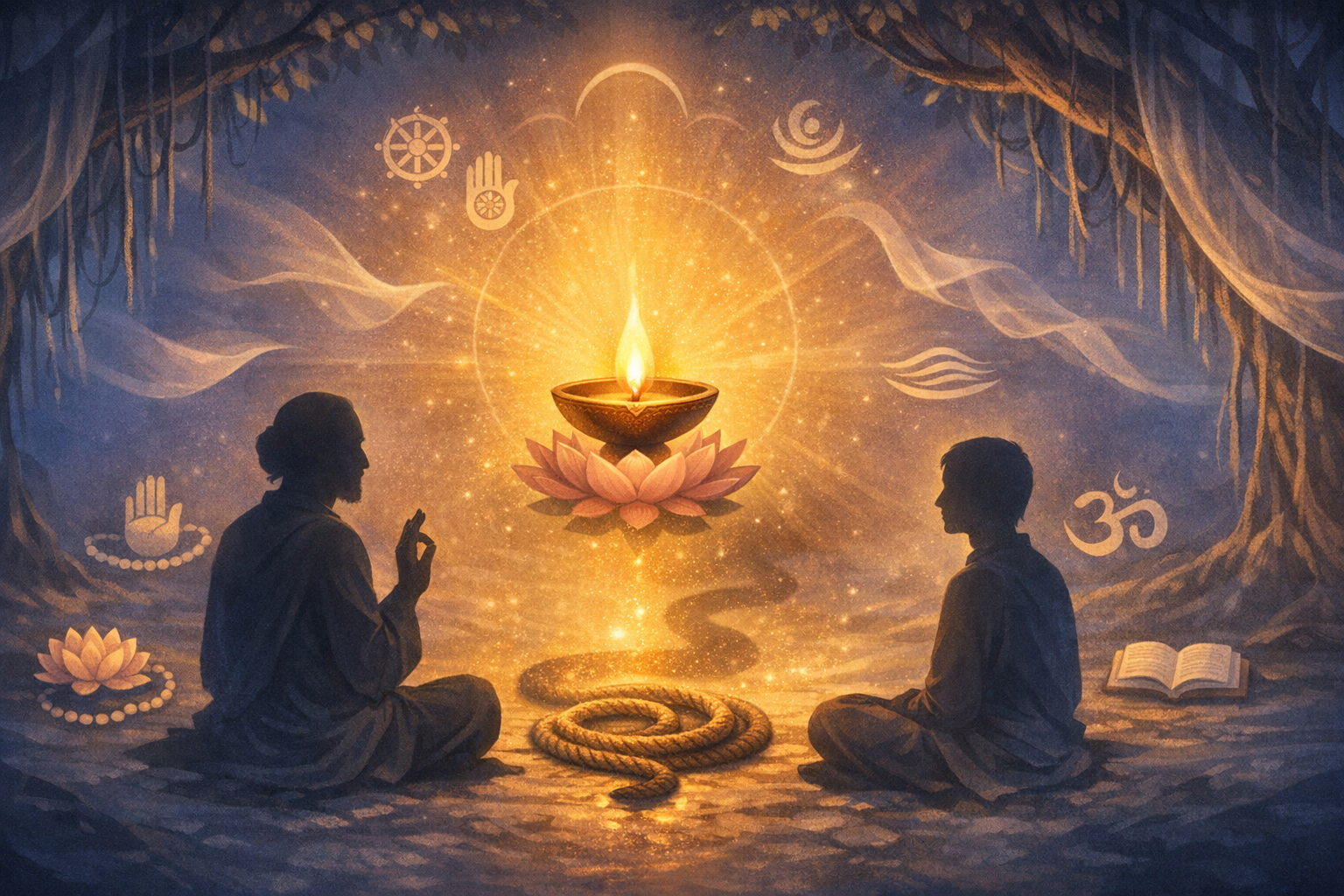
This long-form exploration clarifies why Ultimate Reality in Hindu philosophy cannot be taught as a mere concept and must be realized through direct experience. It maps the classical triad of śravaṇa–manana–nididhyāsana and the role of Guru–Shishya Tradition, highlighting how scripture and guidance remove ignorance rather than transfer realization. Readers gain a technically sound overview of…
-
Beyond Marks and Robes: Recognizing True Sanatana Dharma by Conduct and Consciousness

The dharmic traditions of the Indian subcontinent teach that true spiritual identity is recognized through conduct and consciousness, not through marks, robes, or ritual display. Sanatana Dharma and its sister pathsBuddhism, Jainism, and Sikhismconverge on ethical and contemplative maturity as the most reliable signatures of practice. Scriptural anchors such as the Upanishads, the Bhagavad Gita,…
-
Queen Leela and King Padma in Yoga Vasistha: The Eternal Dance of Desire, Time, and Liberation
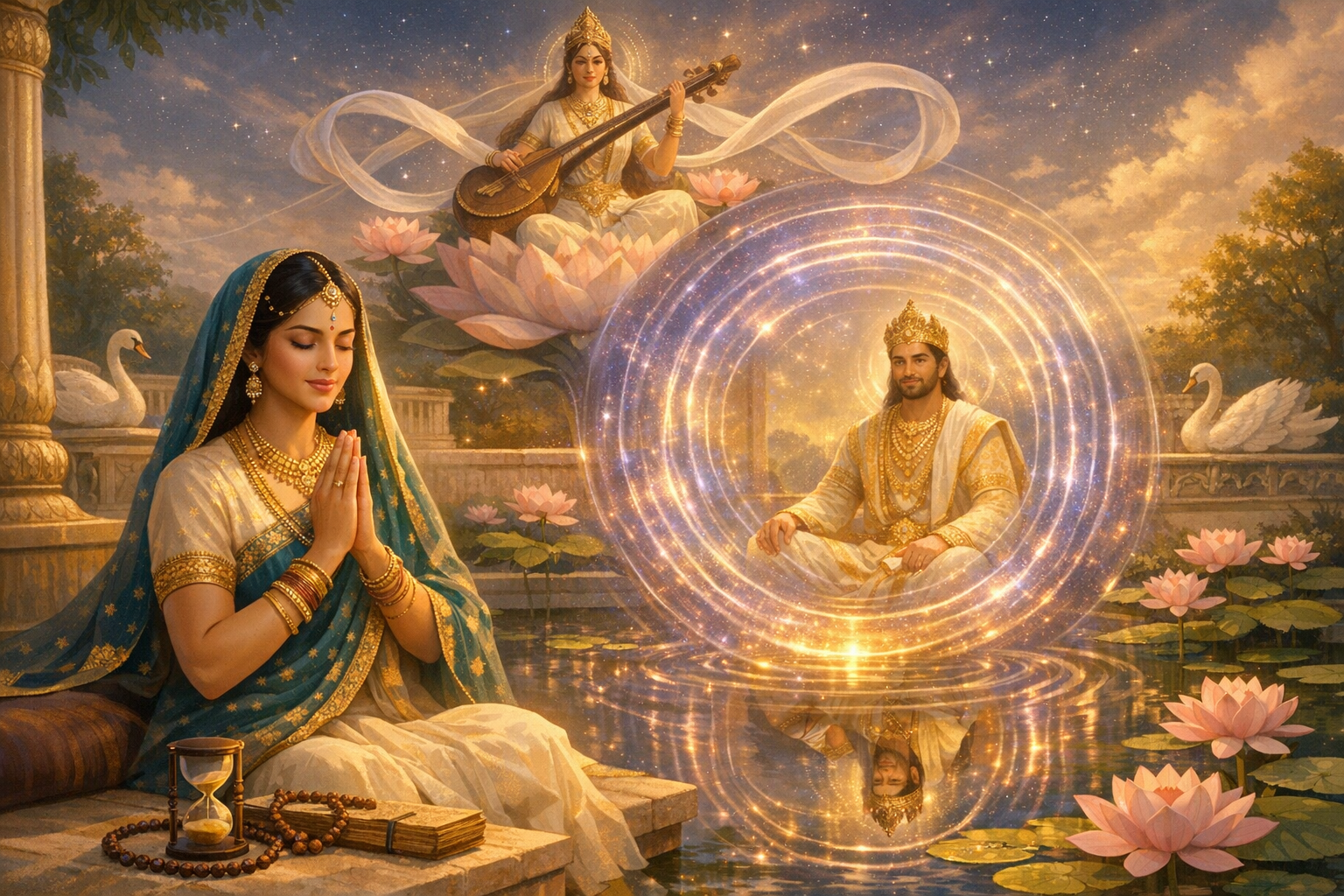
This long-form exploration of Queen Leela and King Padma in the Yoga Vasistha unpacks how consciousness, desire, and time interweave to produce the felt world. Readers learn why the text situates death and rebirth within the triad of gross, subtle, and causal bodies, clarifying continuity without clinging. The analysis translates core methodsshravana, manana, nididhyāsana, and…
-
From Ritual to Realization: Ending Barren Devotion with Dharmic Discipline and Insight
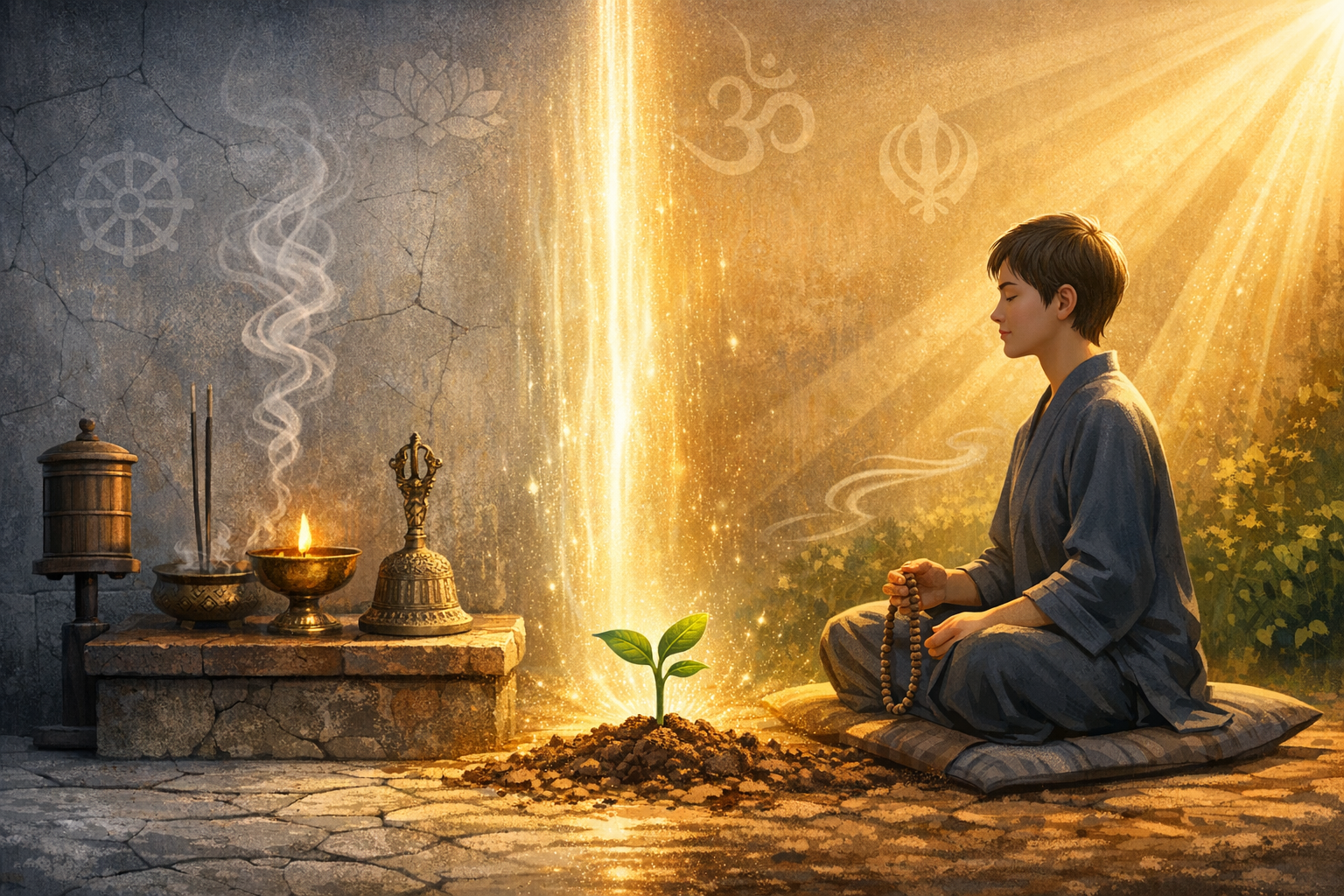
Modern worship often looks vibrant yet feels spiritually thin. This long-form, academic analysis explains why devotion turns barrentransactional aims, inattentive ritual, neglected ethics, and fragmented attentionand details what Hindu, Buddhist, Jain, and Sikh scriptures actually prescribe for transformation. It offers an integrated method grounded in yama–niyama or śīla, daily abhyasa of japa or dhyana, breath…
-
Choosing Our ‘Amazing Stories’: A Rigorous Case for Vedic Epistemology and Dharmic Unity
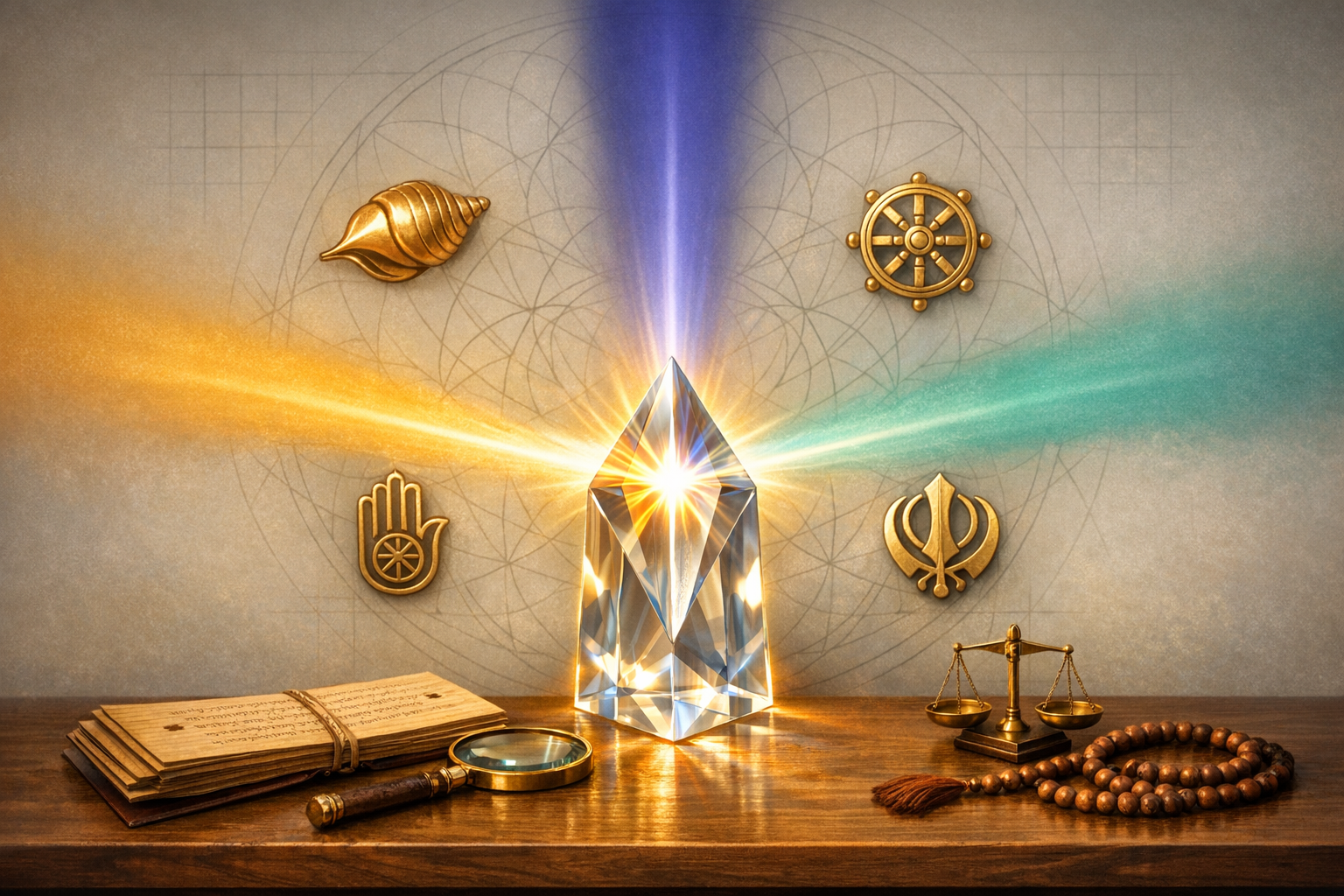
This essay examines the oft-quoted contrast between materialism and the Vedic view by asking how anyone comes to know. Drawing on the dharmic theory of pramāṇaperception, inference, testimony, and moreit distinguishes the legitimate power of science from the unwarranted metaphysics of scientism. It argues that Vedic epistemology offers greater coherence and explanatory breadth, especially for…
-
Beyond Death’s Arrow: How Arishtanemi’s Tapas in the Mahabharata Reveals Deathless Dharma

This essay examines how the Mahabharata’s doctrine of tapas frames spiritual discipline as “divine protection,” reading the image of going beyond death’s arrow as a technical claim about fearlessness and clarity. It situates Ariṣṭanemi (Neminātha in Jain tradition) within a shared Dharmic milieu, linking ahiṃsā and aparigraha to the epic’s tapas-centered ethic. Drawing on Shanti…
-
Own Your Dharma with Clarity and Courage: A Dharmic Antidote to Social Comparison

This comprehensive essay examines a core Dharmic counseldo not get lost in others’ idealsand explains why it is vital in an age of social comparison. Drawing from the Bhagavad Gita, Upanishads, Yoga Sutra, Buddhist teachings, Jain Anekantavada, and Sikh principles, it presents a practical, ethical, and context-sensitive framework for staying aligned with one’s svadharma. Readers…
-
Beyond the Senses: Unveiling Brahman and the Limits of Perception in Hindu Thought

This article explores why, in Hindu philosophy, ultimate reality (Brahman) cannot be captured by the senses or by conceptual thought, and how Vedanta uses shabda-pramana and Upanishadic teaching to reveal the Self. It clarifies the roles of pratyaksha, anumana, and shabda in Indian epistemology, showing why the senses are necessary yet insufficient. It integrates Advaita…
-
Shiva–Shakti Raasa Leela: Unveiling the Cosmic Dance of Love, Consciousness, and Creation
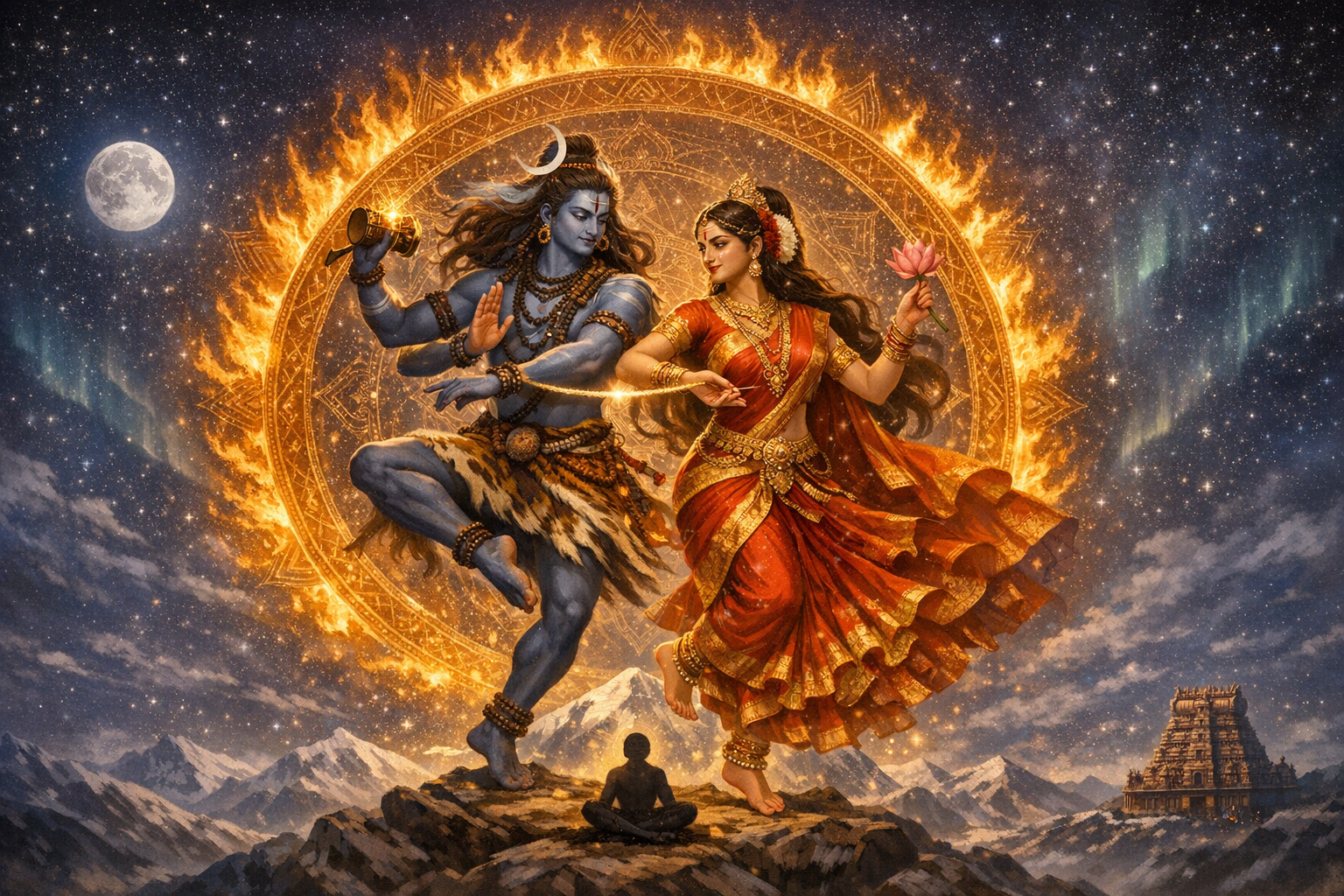
Shivashakti Raasa Leelaalso known as Sri ShivShakti Rasalilapresents the union of Śiva and Śakti as a continuous dance and embrace that render Shaiva metaphysics visible and livable. Anchored in Natyashastra aesthetics, Shaiva Āgamas, and Kashmir Shaivism’s rasa theory, it interprets creation as spanda (vibration) and devotion as aesthetic savoring (rasa). Iconography of Śiva Naṭarāja, Somāskanda,…
-
From ‘Why Me?’ to ‘What Now?’: Research-Backed Practice for Acceptance and Resilience

A small linguistic pivot from Why me? to What now? can transform adversity into a field of choice. This research-informed narrative examines a real case of Idiopathic Intracranial Hypertension, outlining how acceptance, present-moment awareness, and small, honest steps sustained healing and professional continuity. It clarifies the difference between acceptance and resignation, translating insights from resilience…
-
Relativity, Interconnectedness, and Impermanence in Sikh Philosophy: Clarity for Dharmic Unity

This long-form exploration clarifies how Sikh philosophy integrates relativity, interconnectedness, and impermanence under Ik Oankar and hukam. It explains why perspective-awareness enhances, rather than weakens, commitment to Truth, and how interconnectedness turns metaphysics into concrete seva for sarbat da bhala. It shows how impermanence frees the heart from clinging without collapsing into nihilism, orienting life…
-
The Thirst That Remains: A Transformative Journey Across Hindu, Buddhist, Jain, and Sikh Wisdom

This long-form reflection reads the “thirst that remains” as a unifying metaphor across Hindu, Buddhist, Jain, and Sikh wisdom, showing how diverse practices meet a common aspiration for freedom and compassion. It maps core goalsmoksha, nirvana, kevala-jñāna, and muktiwhile explaining shared ethics like ahimsa, satya, dana/dasvandh, and aparigraha. It outlines practical contemplative methodsAṣṭāṅga Yoga, ānāpānasati…
-
Unlocking Truth: Six Pramāṇas in Hindu Philosophy and How They Strengthen Modern Thinking

This long-form guide explains the six pramāṇas of Hindu philosophypratyakṣa, anumāna, upamāna, arthāpatti, anupalabdhi, and śabdaand shows how they collaborate to produce reliable knowledge. It clarifies acceptance across Nyāya, Mīmāṃsā, Vedānta, Sāṃkhya-Yoga, Carvāka, and connects these insights with Buddhist, Jain, and Sikh approaches. Readers learn concrete criteria for perceptual reliability, how to build and test…
-
Freedom from the Senses: A Dharmic Pathway to Moksha, Mastery, and Inner Sovereignty

This essay explores the Hindu philosophical insight that freedom from the slavery of the senses constitutes liberation and shows how it converges with parallel teachings in Buddhism, Jainism, and Sikhism. It clarifies how indriyas, raga-dvesha, and samskaras generate compulsion, and how masterynot repressionunlocks moksha. Drawing from the Bhagavad Gita, the Upanishads, and Yoga philosophy, it…
-
Craving the Crowd, Bearing Its Dust: Hindu-Dharmic Insights on Desire, Acceptance, Complaint
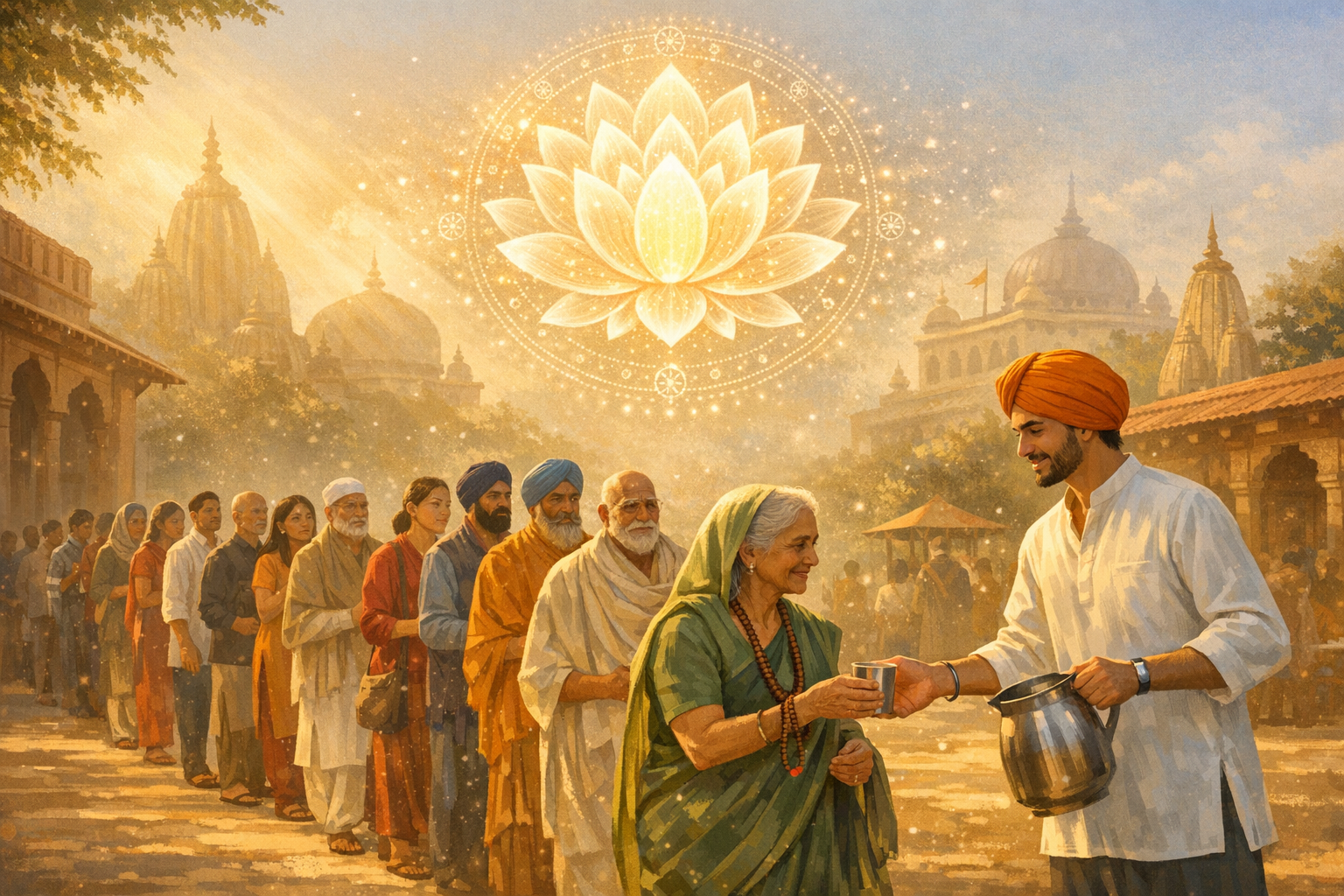
This reflection unpacks the proverb “If you want to be part of the crowd, do not complain about its dirt” through a dharmic, multi-tradition lens. It explains why the human need for belonging carries ethical trade-offs and how Hindu, Buddhist, Jain, and Sikh teachings transform complaint into constructive participation. Drawing on the Bhagavad Gita, Patanjali’s…
-
Divine Lawkeeper: How Dharma and Karma Make God the World’s Most Just Policeman

This essay presents a rigorous, accessible account of how Hindu philosophy understands God as the ideal lawkeeper through the integrated workings of dharma, karma, and ṛta. Readers learn how justice in Sanatana Dharma is primarily restorative and educational, privileging conscience, proportionality, and reform over retribution. The discussion bridges scripture (Bhagavad Gita, Dharmasastra, Arthasastra) with social…
-
Universality as the Heart of Spirituality: Bridging Reason and Intuition across Dharmic Paths
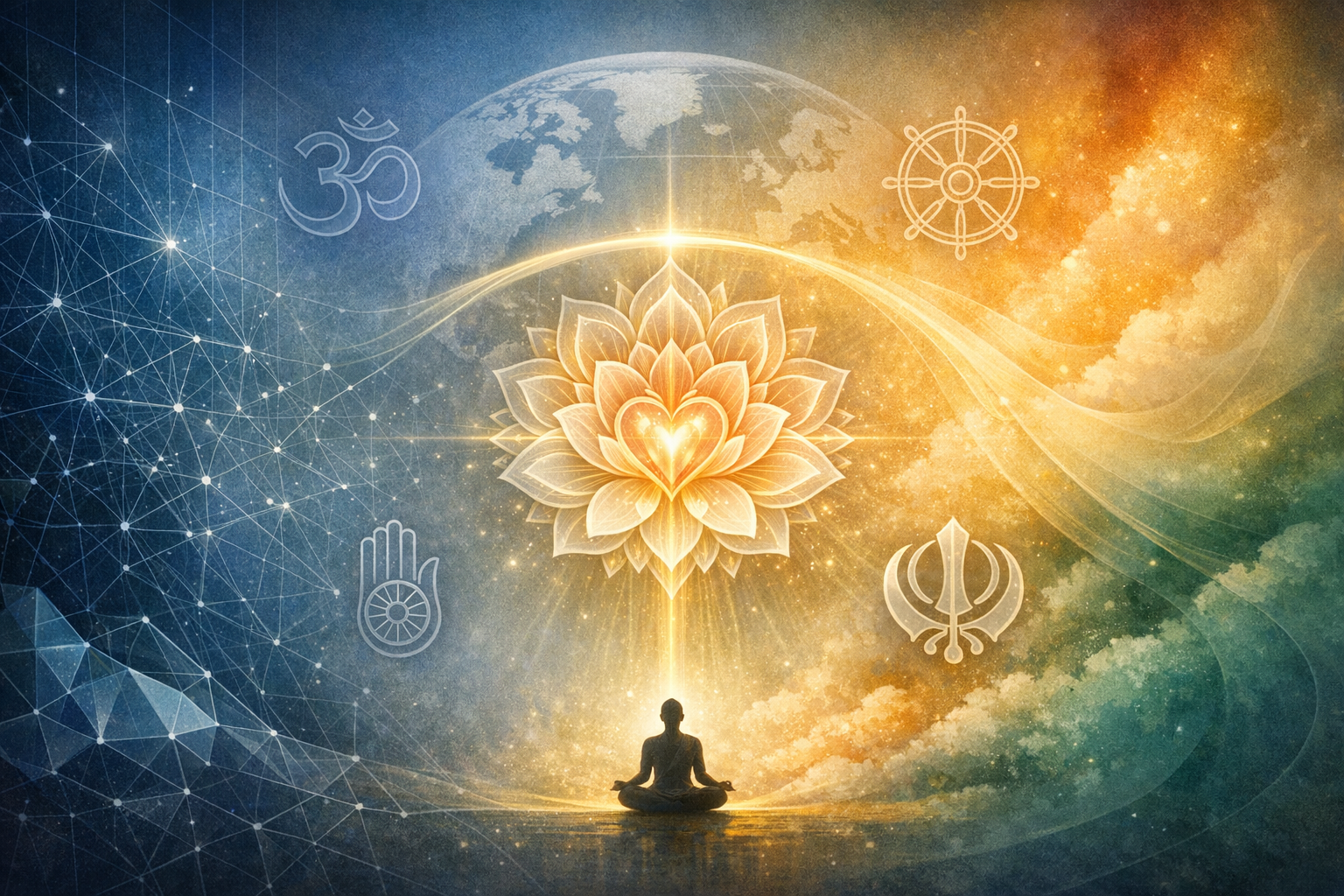
Universality is the defining mark of spiritual maturation: it expands identity beyond self-interest into a lived concern for the whole. In Dharmic traditions, reason and intuition are complementaryanalysis clarifies and prepares, while intuition unifies and completes. Hindu, Buddhist, Jain, and Sikh frameworks each root this universality in distinctive insights and practicesfrom Upanishadic oneness and Buddhist…
-
Seeing the Banyan in a Seed: Profound Hindu Wisdom on Infinite Potential and Dharmic Unity
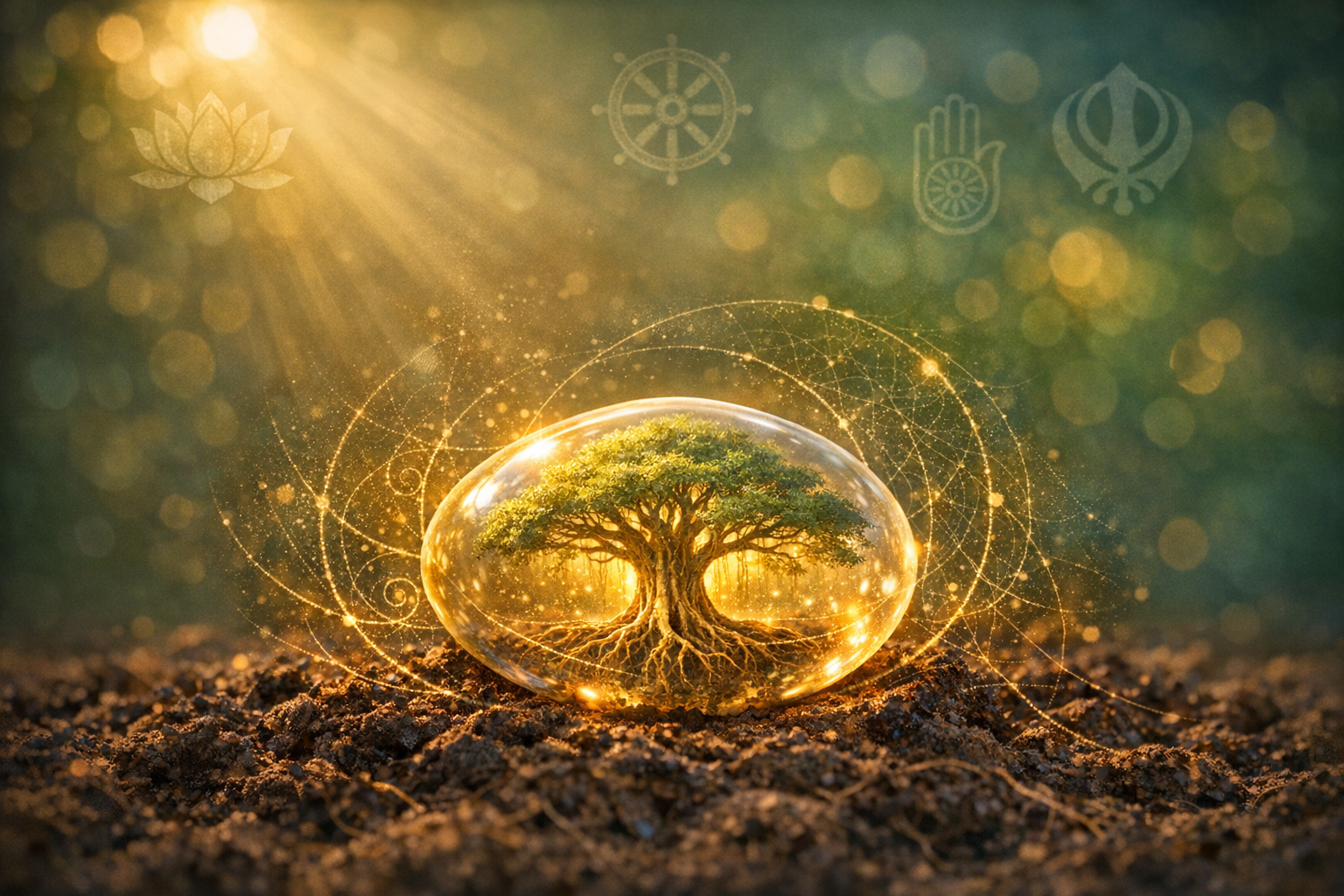
Hindu wisdom describes spiritual vision as the ability to perceive wholeness within the smallest fragment of reality, symbolized by seeing a vast banyan in a tiny seed. Drawing on the Chandogya and Mundaka Upanishads, the discussion clarifies how potentiality unfolds lawfully into form and how this insight aligns with Vedanta, Sankhya-Yoga, and systems science. Convergences…
-
Timeless Lila: Exploring the Divine Play of Being and Becoming Across Dharmic Paths
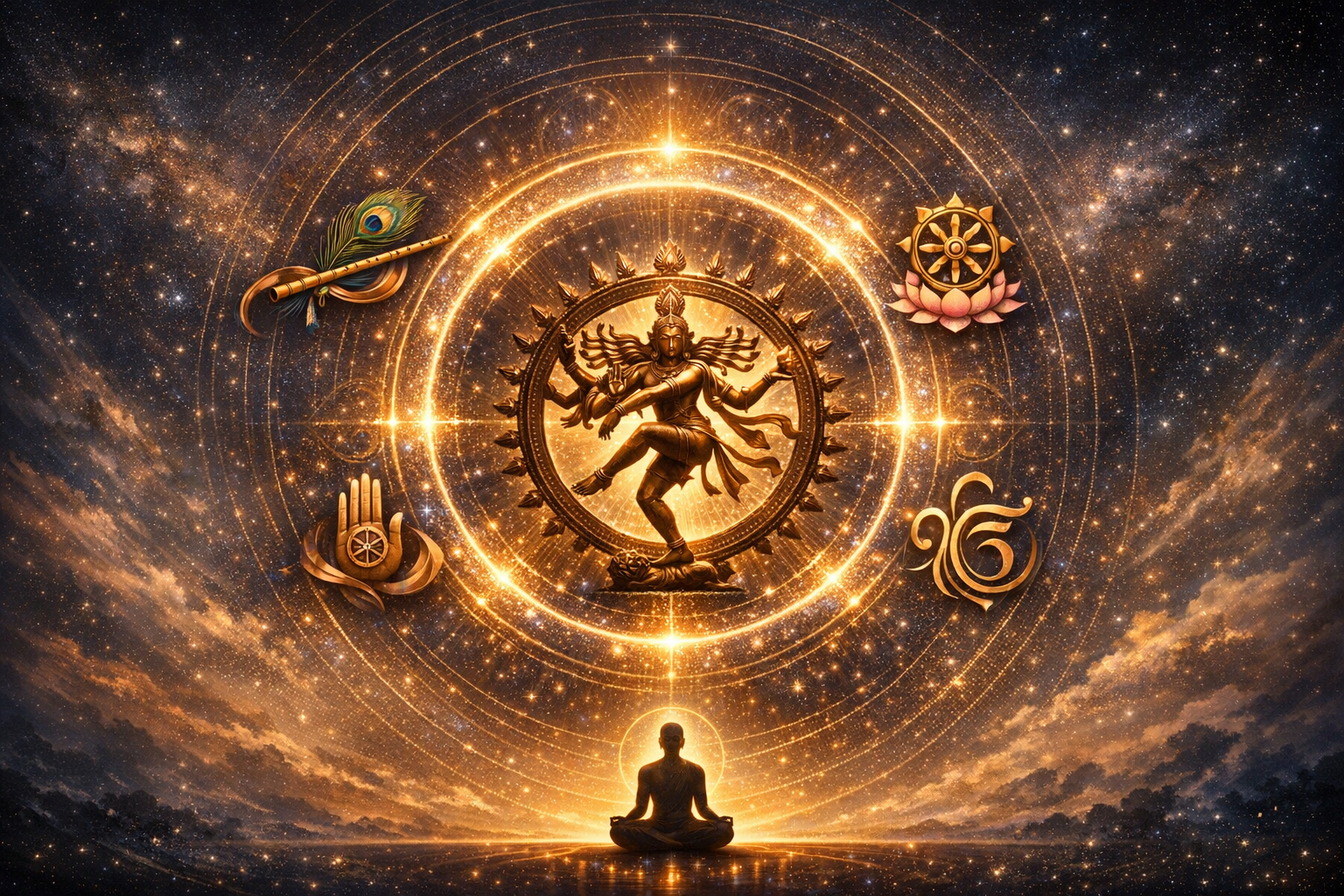
This long-form exploration presents Lilathe eternal divine playas a framework for understanding how being and becoming interrelate across Hinduism, Buddhism, Jainism, and Sikhism. Drawing on the Upanishads, Vedanta (Advaita, Vishishtadvaita, Dvaita), the Bhagavad Gita, and Shaiva–Shakta thought, it clarifies how creation, preservation, and dissolution express a living unity. It maps key concepts like dharma, karma,…