
-
Only Knowledge, No Struggle: Effortless Wisdom in Hindu, Buddhist, Jain, and Sikh Thought

This essay unpacks the aphorism “there is only knowledge, so they remain one with it and do not struggle” through a comparative study of Hindu, Buddhist, Jain, and Sikh philosophies. It clarifies how each tradition frames liberating knowledgejnana, prajna, giānand why non-struggle means non-contradiction with truth rather than passivity. Readers gain a concise overview of…
-
Beyond Perfection: Liberating Dharmic Wisdom on Impermanence, Dharma, and Divine Order

Perfection, as popularly pursued, continually recedes because all conditioned things are impermanent; dharmic traditions convert this problem into a path by aligning aspiration with dharma and the Divine Order. Drawing on the Bhagavad Gita, Upanishads, Yoga philosophy, and the broader insights of Buddhism, Jainism, and Sikhism, the essay reframes success as excellence grounded in clarity,…
-
Prayer Is the Voice of the Soul: Timeless Dharmic Science for Healing, Clarity, and Grace

This article unpacks the Hindu teaching “Prayer is the voice of the soul” as a precise, reproducible inner science shared across Hinduism, Buddhism, Jainism, and Sikhism. It explains technical frameworks such as vāk (levels of speech), Pancha-kosha viveka (five sheaths), and the discipline of japa, dhyana, and pranayama. Readers gain a clear practice framework that…
-
When Inventions Rule Their Makers: Dharmic Ethics to Reclaim Agency in a Tech Age

Humanity stands at a crossroads where powerful inventions often master their makers. Drawing on Hindu, Buddhist, Jain, and Sikh wisdom, this long-form analysis shows how Dharmic ethics can reorient technology from compulsion to stewardship. It translates core ideas like Dharma, Anekantavada, mindfulness, and seva into practical tools such as Karmic Impact Assessments, sattva-first interface design,…
-
Mani Shankar Aiyar’s temple remarks rekindle debate on Indian secularism and Dharmic pluralism

Reported remarks by Mani Shankar Aiyar about not relating to Hindu Dharma and seeing no divinity in temple icons have sparked debate about Indian secularism in a Dharmic society. This analysis distinguishes personal disbelief from public responsibility, showing how language about sacred symbols can affect social harmony. It explains the philosophical basis of murti-puja, prāṇa-pratiṣṭhā,…
-
Ego (Ahamkara), Conflict, and Liberation: A Dharmic Synthesis with Practical Tools for Peace
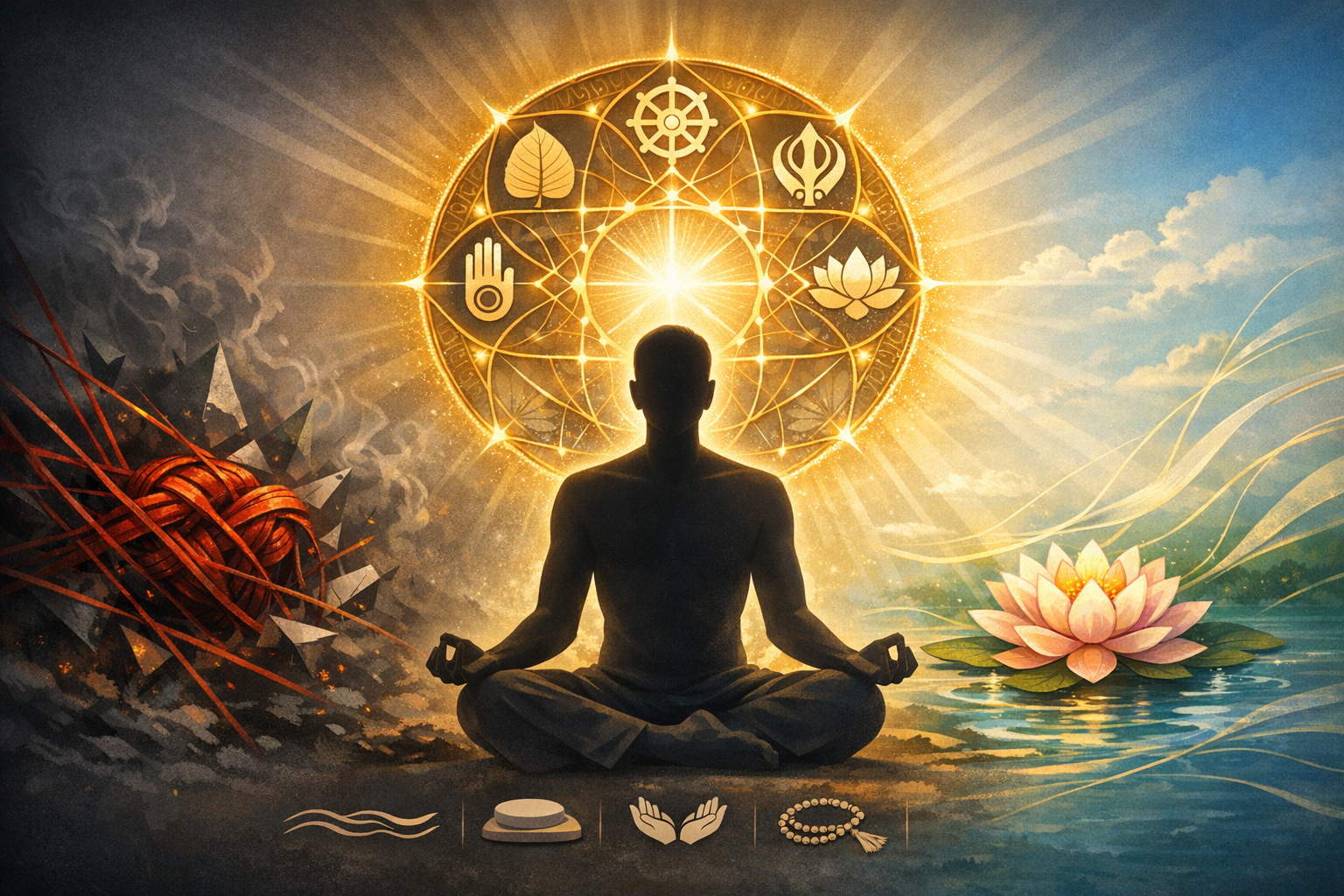
This article examines why ego (ahamkara) is repeatedly identified by Hinduism, Buddhism, Jainism, and Sikhism as a root driver of conflict, and how each tradition prescribes precise methods to transform it. It clarifies the mechanism from avidya to anger found in the Bhagavad Gita and Yoga philosophy, then correlates those insights with Buddhist anatta, Jain…
-
Empathy as the Mark of Divinity: Dharmic Teachings on Karuṇa, Dayā, and Universal Compassion

Empathy is presented as the defining mark of divinity across Hinduism and the broader dharmic family, where compassion (karuṇa/dayā) is both spiritual practice and social ethic. Grounded in scriptural foundations such as Bhagavad Gita 6.32 and 12.13, the article links inner realization with the welfare of all beings. It highlights convergences with Buddhism’s Brahmavihāras, Jainism’s…
-
Bhagwan Parshvanatha: Life, Four Vows, and the Enduring Legacy of Jainism’s Compassionate Reformer

Bhagwan Parshvanatha, the 23rd Tirthankara, helped shape Jain ethics through a clear fourfold disciplineahimsa, satya, asteya, and aparigrahalater integrated with Mahavira’s expanded code. Born in Varanasi and widely regarded as historical, Parshvanatha’s legacy is visible in sacred sites like Sammed Shikharji and in distinctive serpent-canopied iconography. Texts such as the Kalpa Sūtra and the Uttarādhyayana…
-
Hik Sathi Laddham: The Timeless Companion Uniting Dharmic Wisdom and Sindhi Sufi Song

Anchoring on the Sindhi phrase “Hik Sathi Laddham” (“The Companion”), this essay maps a unifying motif across Hinduism, Buddhism, Jainism, and Sikhism, in dialogue with Sufi song. It clarifies the companion as inner witness and outer guide through Upanishadic sakshi, Buddhist kalyāṇa-mitra, Jain śuddhātman and the Three Jewels, and the Sikh Satguru and Śabad. Readers…
-
Eternal Paradox of Being: Nothing Is Lost, Yet Everything Changes in Hindu-Dharmic Thought

This essay decodes the paradox “Nothing can be wiped out; but nothing remains same” through the lens of Hindu philosophy and the wider dharmic traditions. It shows how the Upanishads, the Bhagavad Gita, Advaita, Samkhya, Nyaya-Vaisheshika, Buddhism, Jainism, and Sikhism converge on a coherent view: being persists while forms transform. Readers gain clear definitions (sat,…
-
Desire Beyond Need: Dharmic Strategies to Transform Craving into Clarity and Freedom

This article clarifies why, in Hindu thought, desire is not a need but a demand that reaches beyond needand how that demand can be guided rather than suppressed. It maps desire across the puruṣārthas and pañca-kośa models, showing when desire serves dharma and when it becomes compulsion. It integrates insights from the Bhagavad Gita, Yoga…
-
Beyond Right and Wrong: Hindu Dharma’s Compassionate Guide to the Sacred Relativity of Truth
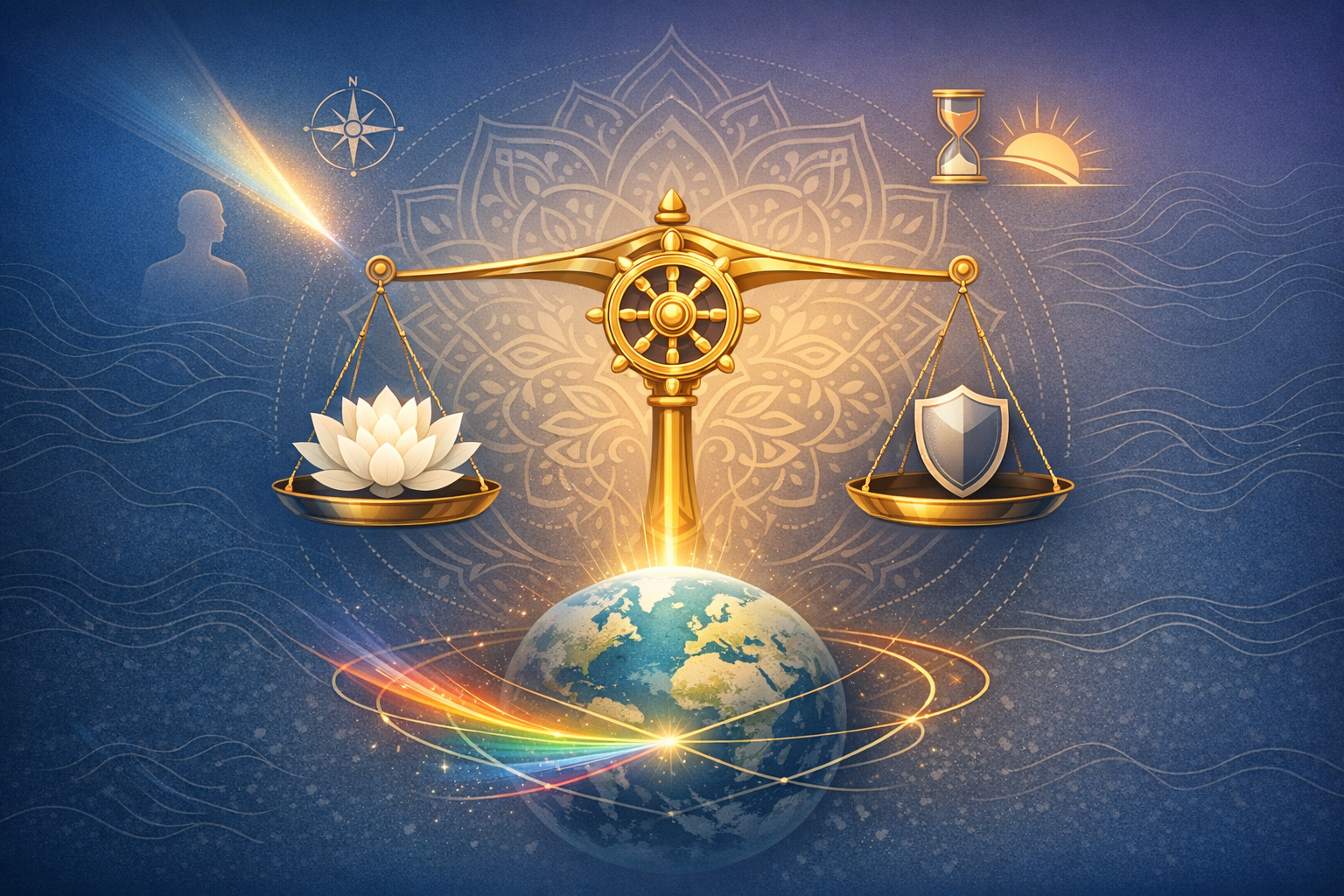
This article explains how Hindu Dharma frames morality as contextual rather than absolute, grounding ethical judgment in place, time, person, intention, and consequence. It clarifies the difference between universal virtues and their context-sensitive application, showing how ahimsa, satya, and lokasangraha orient decision-making. Drawing from the Mahabharata, the Bhagavad Gita, Dharmashastra, Yoga philosophy, and Mimamsa hermeneutics,…
-
Controversial Claims on Shri Ram and Shri Krishna: Evidence-Based Review and Dharmic Unity

A viral controversy over alleged disparaging remarks about Shri Ram and Shri Krishna has spotlighted the need for evidence-based reading of Hindu scriptures. This analysis explains how to verify claims using critical editions, Sanskrit philology, and respected commentaries. It clarifies commonly misread episodes from the Ramayana, Bhagavad Gita, and Bhagavata Purana without inflaming tensions. Readers…
-
Ajati in Advaita Vedanta: Radical Non-Birth, Mandukya Karika, and Deep Clarity

AjatiAdvaita Vedanta’s doctrine of non-birthasserts that ultimate reality never truly originates or changes, while preserving everyday causality and ethics at the empirical level. Rooted in the Mandukya Upanishad and Mandukya Karika, it culminates in the recognition of turīya, the ever-present awareness. By distinguishing absolute from empirical standpoints, Ajati avoids nihilism and affirms a positive, non-dual…
-
Egolessness and Emptiness in Hindu Thought: The Transformative Power of Ego-Death

Emptiness in Hindu philosophy is not nihilism but the liberating absence of egoic grasping, revealing the intrinsic fullness (pūrṇatā) of awareness. Drawing on Advaita Vedānta, the Bhagavad Gītā, and Yoga, and in harmony with Buddhism’s śūnyatā and anatta, Jainism’s Anekantavada, and Sikhism’s remembrance (simran) and seva, the discussion shows how egolessness cultivates fearlessness, compassion, and…
-
When Nothing Remains, Fear Ends: A Dharmic Science of Abhaya beyond Ego and Identity

This essay maps a dharmic science of fearlessness (Abhaya) grounded in Hindu philosophy and harmonized with Buddhism, Jainism, and Sikhism. It clarifies how fear originates in avidya and duality, then outlines practical pathsJnana, Karma, Bhakti, and Raja Yogato dissolve misidentification and regulate reactivity. Readers gain scriptural anchors from the Upanishads, the Bhagavad Gita, and the…
-
When Mistakes Happen: A Dharma-Guided, Science-Backed Playbook for Calm, Compassionate Resilience

Errors are inevitable, but responses can be principled, compassionate, and effective. This essay synthesizes dharmic wisdom from Hinduism, Buddhism, Jainism, and Sikhism with evidence-based tools from behavioural science and reliability engineering to offer a practical protocol for handling mistakes. Readers will learn a five-step responseregulate, acknowledge, repair, learn, and recommitthat protects relationships while improving systems.…
-
Vasudhaiva Kutumbakam Today: A Dharmic Blueprint for Unity, Security, and Shared Prosperity
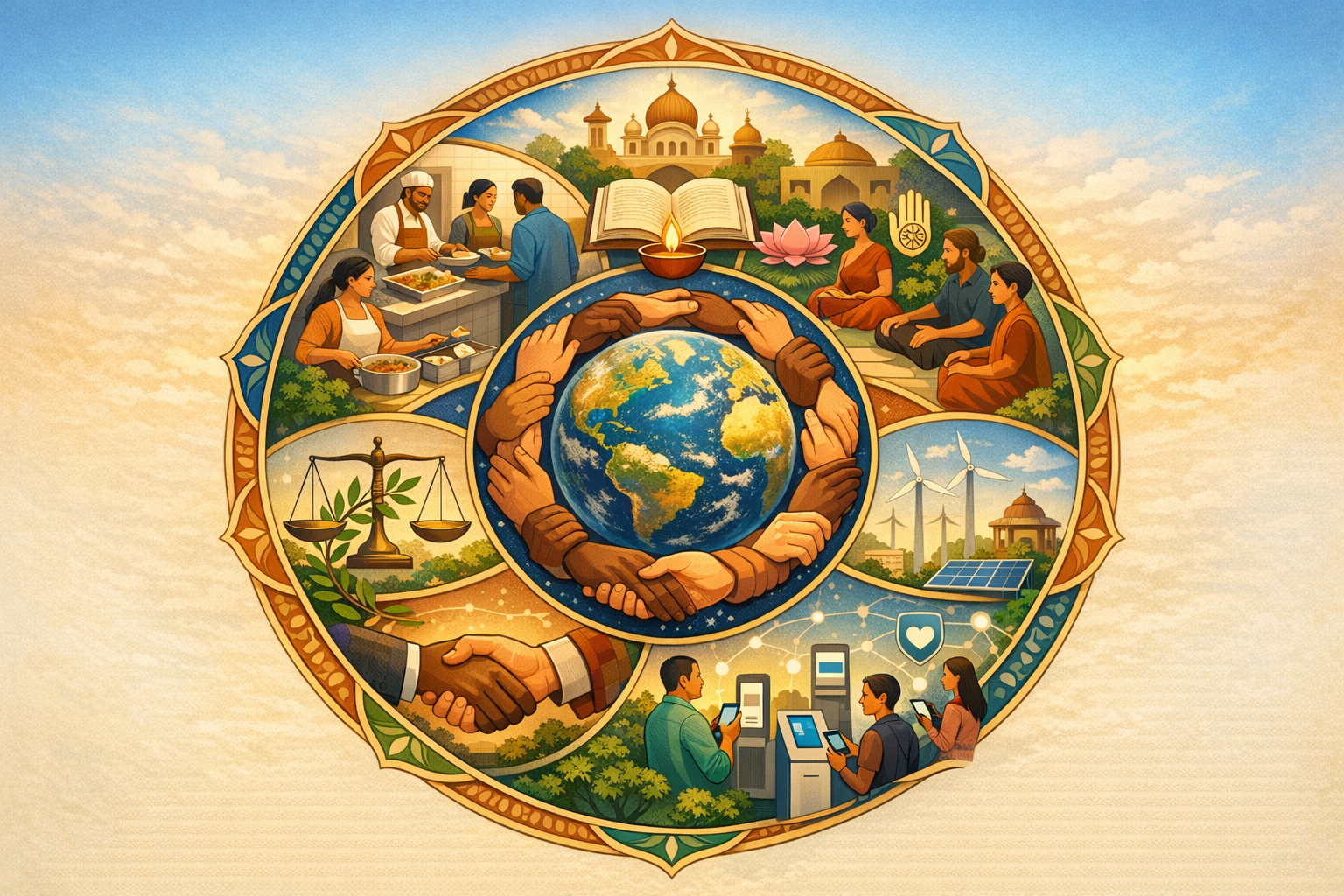
Vasudhaiva Kutumbakam the world is one family is reframed here as a practical, measurable framework for public policy, interfaith harmony, and global cooperation. Rooted in the Maha Upanishad and echoed across Buddhism, Jainism, and Sikhism, the concept aligns ethical statecraft with inclusive development and human security. The analysis outlines design principles dignity by default, dialogue-first,…
-
Unraveling Karma’s ‘Complicated Play’: Dharmic frameworks of action, causality, and grace

This long-form guide unpacks why “Gurudev says that it is a complicated play,” showing how Karma operates across intention, action, impressions, and outcomes. It compares Hindu, Buddhist, Jain, and Sikh frameworks, clarifying doership, responsibility, and grace without collapsing their differences. Readers gain a precise map of sañcita–prārabdha–kriyamāṇa, Buddhist intentionality (cetanā) and dependent origination, Jain karmic…
-
When the Formless Takes Form: Skanda Purana on Parvati’s Awe‑Inspiring Union with Shiva
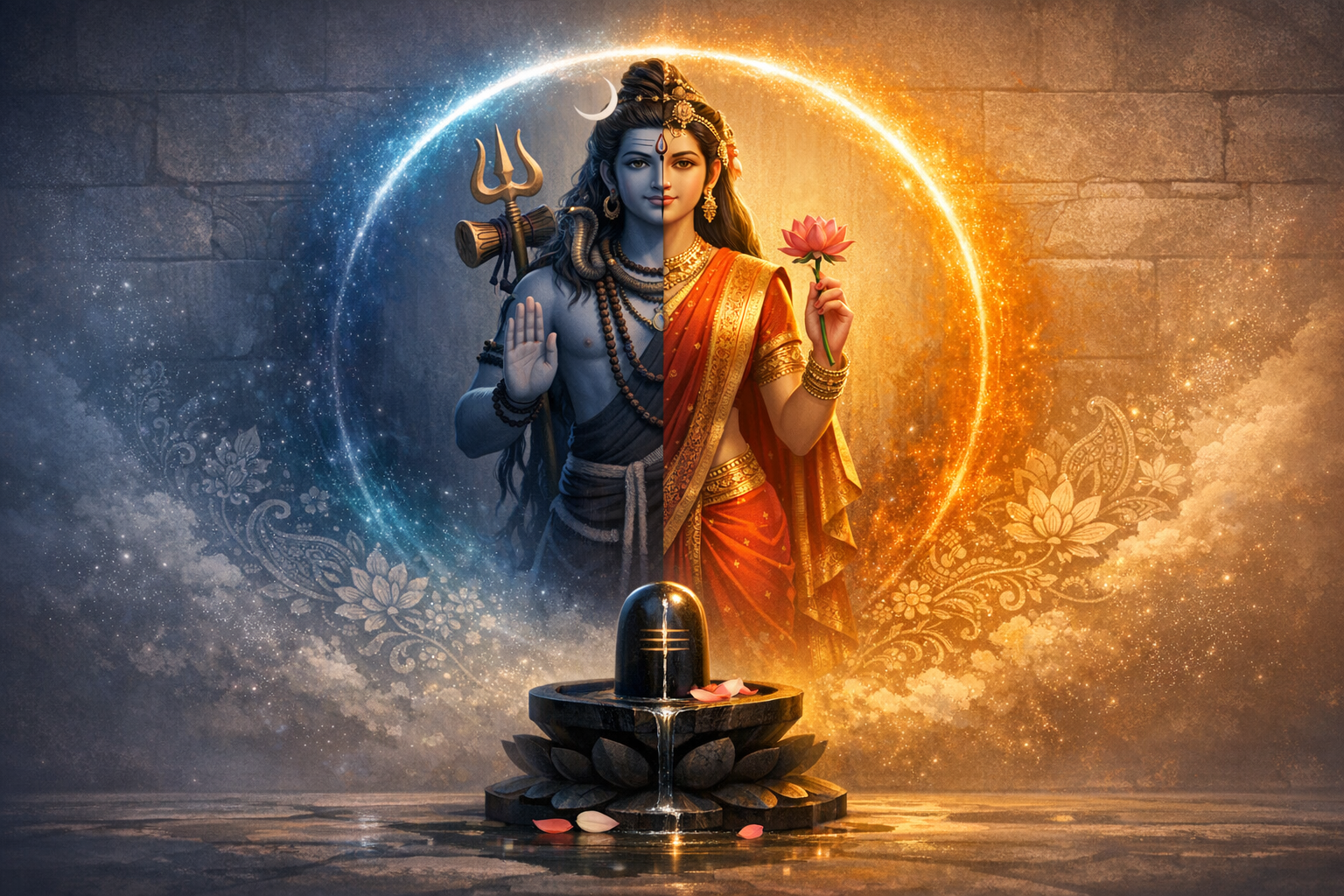
This in-depth exploration of the Skanda Purana’s teaching on Goddess Parvati and Lord Shiva presents their union as a precise account of how formless consciousness and living form are inseparably one. Readers will learn how the nirguna–saguna dialectic, familiar from the Upanishads, is rendered experiential through Shaiva iconography such as Ardhanarishvara, the Shivalinga, and Shiva…