-
The Conscious User: Mastering AI with Jain, Buddhist, Hindu, and Sikh Wisdom

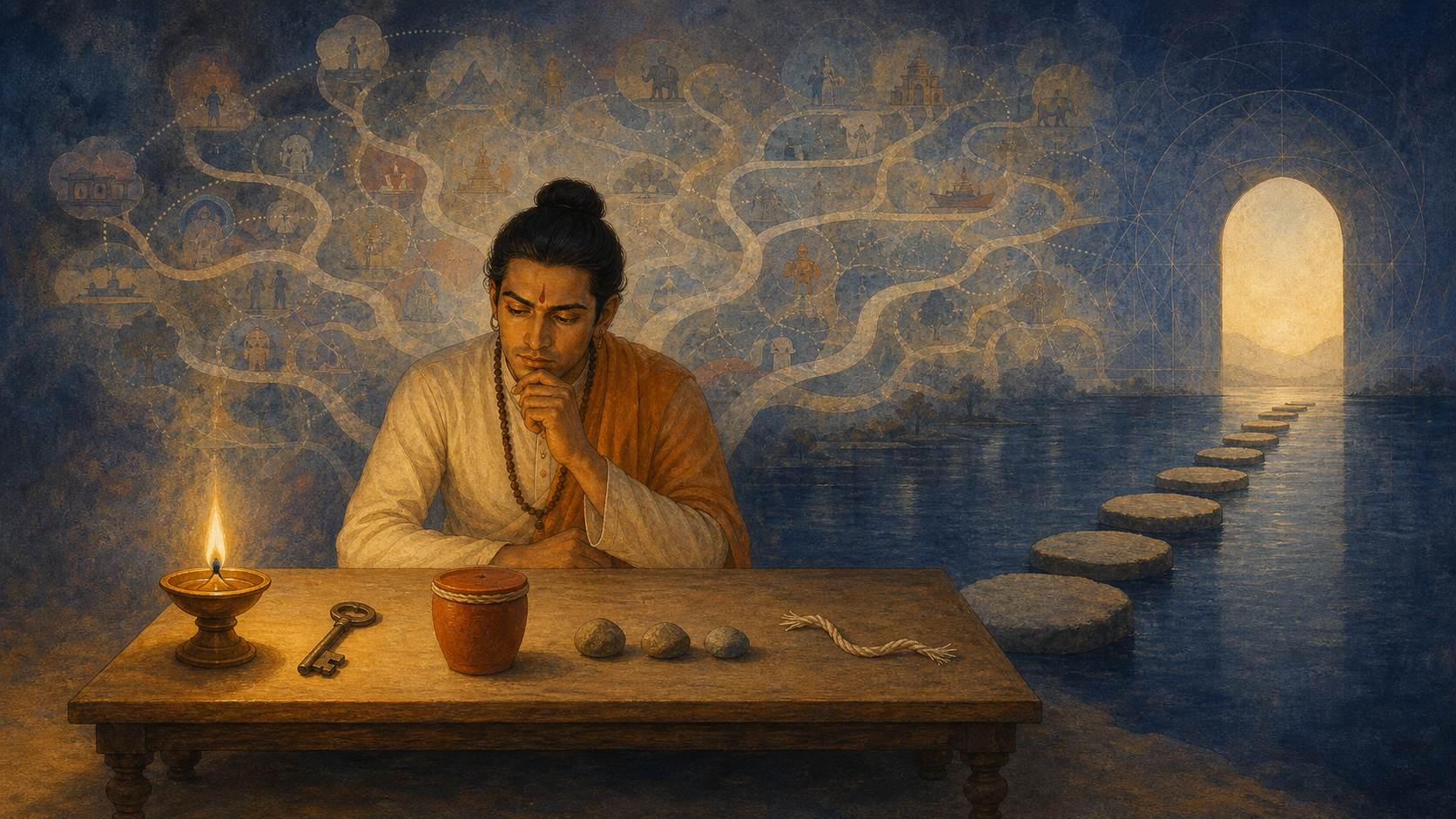
Artificial Intelligence is now a household reality; the challenge is using it without losing clarity, agency, or ethics. This essay outlines a dharmic frameworkrooted in Jainism and harmonized with Buddhism, Hinduism, and Sikhismfor human-centered, responsible AI. It translates anekantavada, syadvada, and nayavada into concrete practices for uncertainty handling, multi-metric evaluation, and context-aware decisions. Ahimsa informs…
-
Embracing Sukha and Dukha: Dharma’s Transformative Science of Resilience and Freedom

This essay explains why Sanatana Dharma views Sukha (happiness) and Dukha (distress) as complementary threads woven into the fabric of life. Drawing on the Bhagavad Gita, the Yoga Sutra, and convergent insights from Buddhism, Jainism, and Sikhism, it shows how Dharma transforms hardship into clarity and compassion. Readers learn practical methodsKarma Yoga, Bhakti, Jnana, Raja…
-
Jada Bharata vs. Kali Yuga: Unmasking Algorithmic Gurus and Reclaiming Timeless Dharma

Jada Bharata’s encounter with the modern attention economy offers a precise lens for navigating Kali Yuga’s spiritual noise. Grounded in the Bhagavata Purana, the sage’s teachings on vairagya, mauna, sakshi-bhava, and nishkama-karma map cleanly onto today’s influencer culture and consumer spirituality. Clear criteria from the Upanishads and the Gita help distinguish authentic guidance from spectacle…
-
Idle Mind Is the Devil’s Workshop: A Dharmic, Scientific Guide to Focus and Virtue

This article reframes the proverb ‘An idle mind is the devil’s workshop’ through a dharmic and scientific lens, unifying insights from Hinduism, Buddhism, Jainism, and Sikhism with contemporary psychology. It distinguishes restorative rest from unstructured idleness and shows how right effort, seva, and mindfulness reduce rumination and impulsivity. Readers gain a practical framework: align purpose…
-
The Lantern of Dayā: Uniting Dharmic Traditions through Compassion, Ahimsa, and Seva

The Lantern of Dayā advances a clear, comparative framework for compassion that unites Hinduism, Buddhism, Jainism, and Sikhism without erasing their distinct identities. It traces how dayā/karuṇā functions as disciplined practice, social ethic, and policy-relevant principle rooted in Dharma, Ahimsa, Anekantavada, and Seva. Readers gain a rigorous yet accessible mapping across texts and institutionsfrom Yoga…
-
Myth-Busting the ‘Traitor’ Label: Vibhishana’s Dharma-First Loyalty in the Ramayana

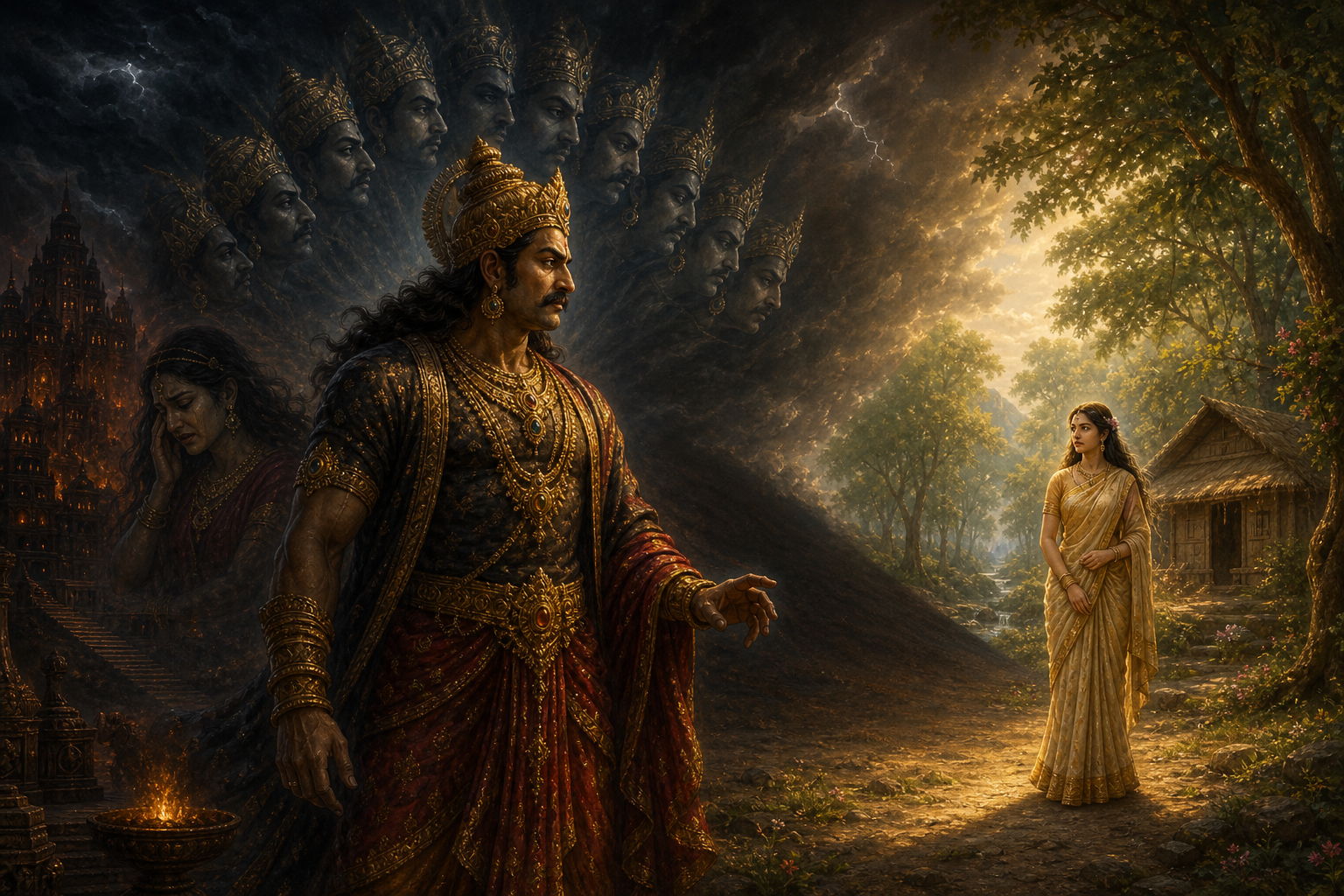
This analysis challenges the popular notion of Vibhishana as a betrayer and demonstrates, with reference to Ramayana ethics, that his alignment with dharma over family partisanship constitutes exemplary loyalty. It explains how Rajadharma and Sharanagati frame his choice as morally necessary rather than opportunistic. By contrasting Vibhishana with Kumbhakarna and drawing on Dharmashastra principles, it…
-
Unlocking the Hidden in Hindu Philosophy: Arthapatti and the Power of Postulation in Mimamsa

Arthapatti (postulation) is a distinctive Mimamsa pramana that posits an unperceived fact when established data would otherwise be incoherent. Classic examples such as the stout Devadatta who does not eat by day illustrate how explanatory necessity (anyathā-anupapatti) drives this cognition. The article clarifies how arthapatti differs from ordinary inference, outlines its two forms (drshtārthapatti and…
-
Digital Maya Unmasked: Rethinking Influencer Culture with Sikh Wisdom and Dharmic Ethics

Influencer culture often amplifies urgency, comparison, and performance, but Sikh philosophy reframes these pressures as Digital Maya that can be met with clarity and care. Grounded in Hukam, Seva, Santokh, and Sarbat da Bhala, the article offers a practical, ethical framework for creators. It shows how Naam Japna, Kirat Karni, and Vand Chhakna translate into…
-
Why Questioning Is Sacred in Hinduism: A Deep Dive into Dharmic Philosophy and Pluralism

This article examines why questioning is sacred in Hinduism and the wider dharmic traditions, showing how inquiry anchors both philosophy and spiritual practice. It explains how the Upanishads, the Bhagavad Gita, and the classical darshanas institutionalize rigorous debate, evidence, and contemplative verification. Readers learn practical tools from pramana theory to navigate misinformation, and from disciplines…
-
Cut Through the Noise: Yoga Vasistha’s Radical Call for Direct Experience over Debate

Yoga Vasistha confronts the overload of modern discourse with a precise remedy: shift from argument to direct experience. Framed as a dialogue between Vasishta and Rama, this classical Hindu scripture privileges aparoksha-anubhutiimmediate realizationover conceptual accumulation. It maps a practical path through dispassion, inquiry, meditation, and ethical alignment, showing how transformation is verified in everyday equanimity…
-
When Knowledge Feels Hollow: Hindu Philosophy on Reuniting Intellect and Spirit

Modern life often shapes keen intellects while leaving many with a quiet sense of hollowness. Hindu philosophy explains this as a split between buddhi (intellect) and adhyatma (spiritual orientation), and prescribes integration through the four YogasJnana, Bhakti, Karma, and Raja. Drawing on the Upanishads, the Bhagavad Gita, Patanjali’s Yoga, and the Pancha Kosha model, this…
-
Pratyaksha in Mimamsa Darsana: Unlocking the Power of Direct Perception in Dharma and Reason

Pratyaksha in Mimamsa Darsana presents a rigorous, experience-centered account of how direct perception functions as a trustworthy pramana. It clarifies the two-phase structure of perception (from indeterminate to determinate), the role of the mind in perceiving inner states, and the conditions that distinguish valid perception from illusion. The article explains how Mimamsa integrates perception with…
-
A Vision for Bharat: Shivamogga Sammelan Calls for Dharmic, Constitutional, Unifying Governance

At a provincial Hindu Rashtra Sammelan in Shivamogga on April 6, 2026, the Hindu Janajagruti Samiti (HJS) called for “Hindu Ideology-Based Governance” in Bharat. Read through a constitutional and inclusive lens, this can be translated into a broader, dharmic governance model that upholds pluralism, compassion, and rule of law for Hindus, Buddhists, Jains, Sikhs, and…
-
Modern Education’s Illusion of Control: Dharmic Wisdom to Build Resilient, Purposeful Lives

Modern culture often trains people to believe life can be engineered into submission. Dharmic traditionsHinduism, Buddhism, Jainism, and Sikhismoffer a corrective: disciplined agency paired with principled surrender. The Bhagavad Gita’s focus on action without attachment, the Yoga Sutra’s blend of practice and non-attachment, Buddhism’s insight into impermanence, Jainism’s many-sidedness, and Sikhism’s hukam together form a…
-
At the Doorstep of Light: Hindu Lamp Symbolism for Inner Wisdom and Social Harmony

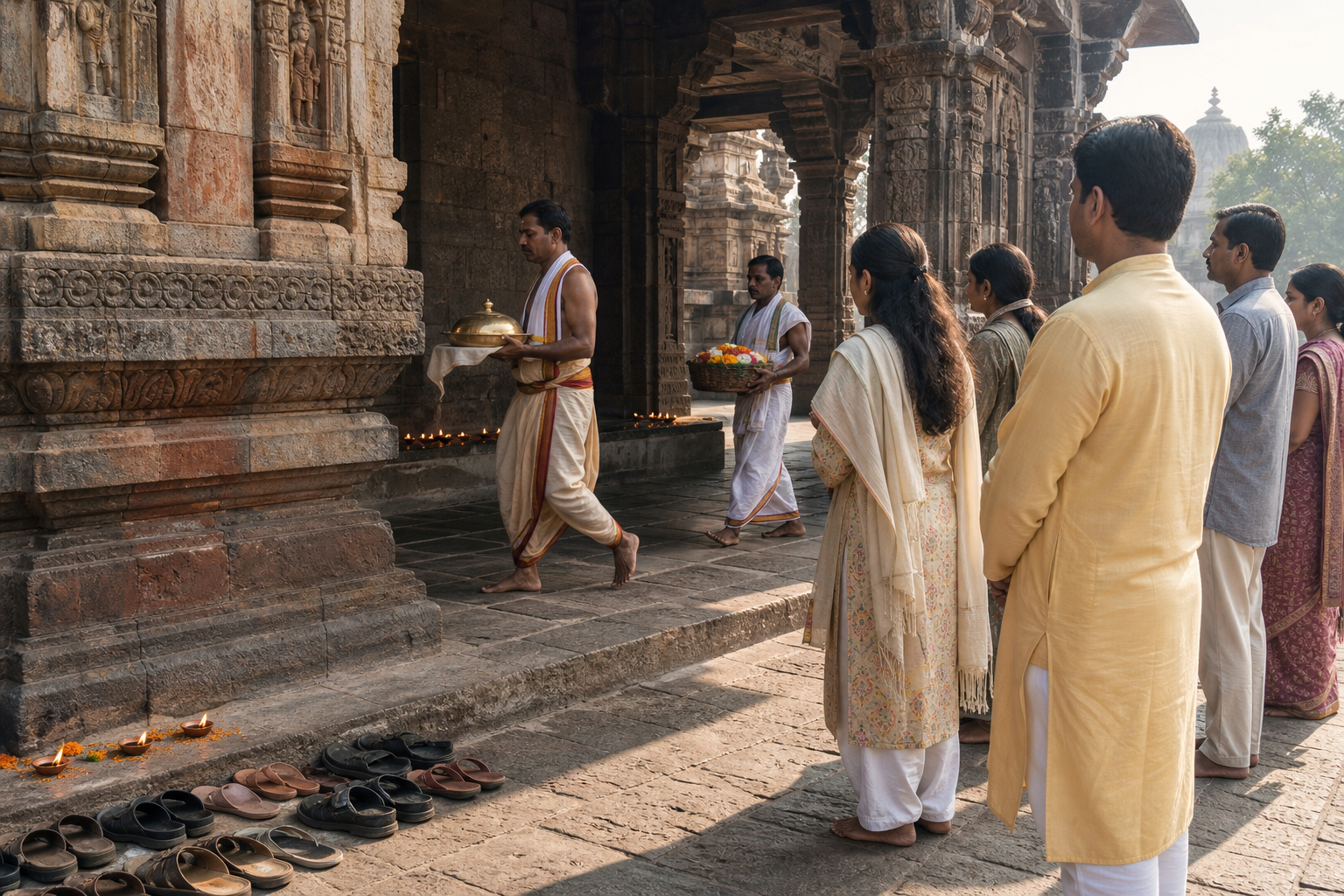
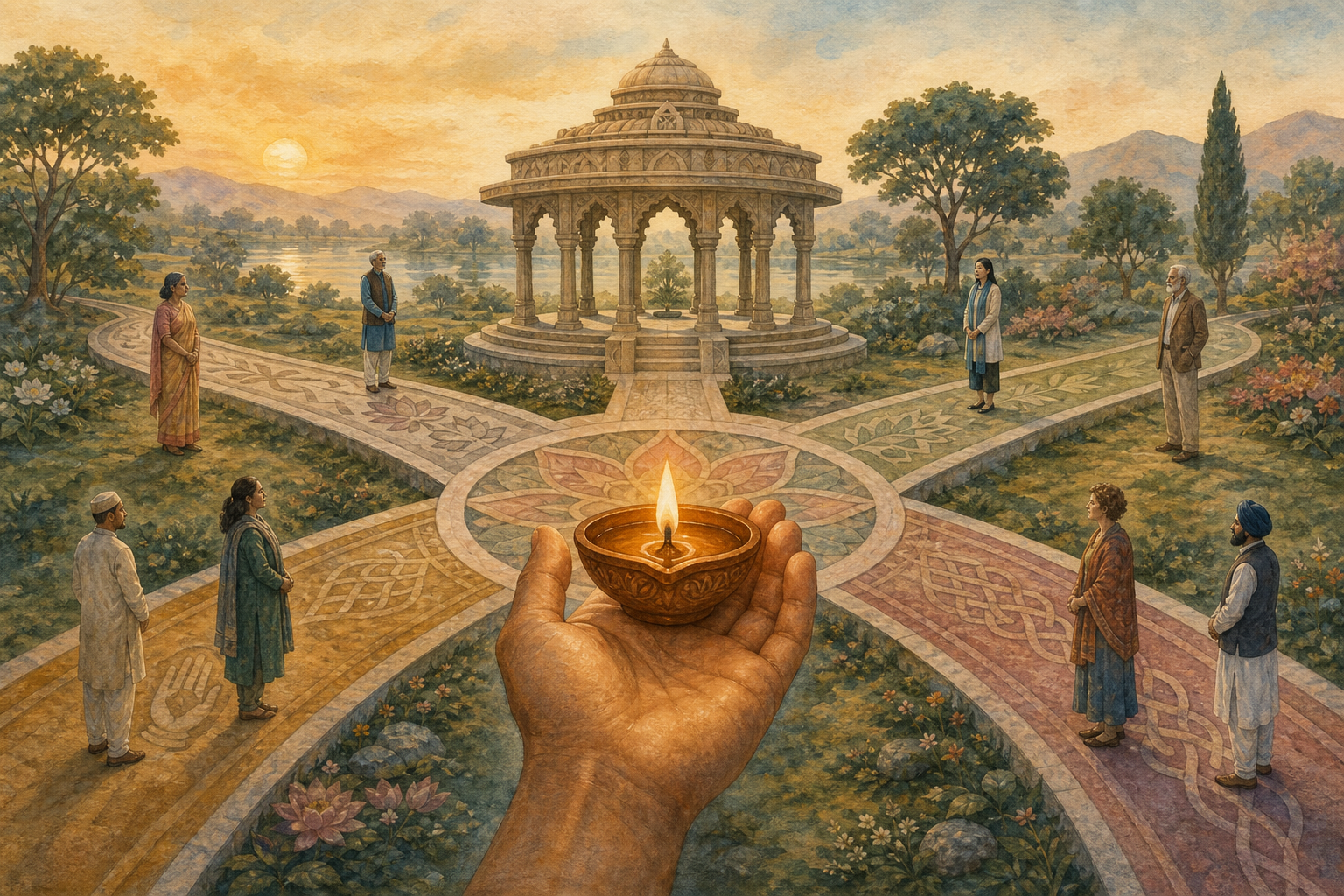
A lamp at the doorstep in Hindu tradition is more than décor; it encodes a philosophy in which inner clarity must become outer care. Light symbolizes knowledge in the Upanishads, while the thresholdbeing a liminal spacebridges private devotion and social responsibility. Diwali, Yam Deep Daan, Karthika masam, and Karthigai Deepam place lamps at entrances to…
-
Ego’s Illusion of Difference: Dharmic Wisdom on Avidya, Unity in Diversity, and Healing

This essay examines why humans manufacture differences where none ultimately exist, using a dharmic framework drawn from the Upanishads, the Bhagavad Gita, Yoga Sutra, Anekantavada, Buddhist anatta, and Sikh teachings on Ik Onkar. It explains how avidya and ahankara harden provisional distinctions into identity, and how sama-darshana resists that process. It integrates classical Indian logic…
-
Knower of the Field: Cutting-Edge Insights into Consciousness, Experience, and Dharmic Unity

This essay examines consciousness through the Bhagavad-Gita’s kshetra–kshetrajna lens and connects it with current neuroscience and philosophy of mind. It clarifies arousal versus awareness, reviews global neuronal workspace and integrated information theory, and explains how predictive and recurrent processing shape experience. Drawing on cell biology, it traces how neuronal excitability, glial modulation, and plasticity ground…
-
Person or Energy? Find Clarity in a Dharmic Synthesis across Vedanta, Buddhism, Jainism, Sikhism

This essay clarifies whether the Divine is best understood as Person or Energy by synthesizing perspectives from Vedanta, Buddhism, Jainism, and Sikhism. It defines key terms (Brahman, purusha, shakti, prana) and shows how saguna–nirguna, nirgun–sargun, and anekantavada converge in a coherent framework. Readers gain a precise yet accessible model that honors both devotional intimacy and…
-
Hinduism’s Universal Ideals: Defeating Stagnation and Igniting Flourishing with Dharma

This article argues that the absence of shared, universal ideals creates moral drift, weakens institutions, and precipitates social stagnation. Drawing on the Vedas, Upanishads, the Bhagavad Gita, Ramayana, Mahabharata, and Puranas, it distills Dharma, Ahimsa, Satya, Aparigraha, Seva, and Lokasangraha as civilizational anchors. It highlights resonances across Buddhism, Jainism, and SikhismAnekantavada, the Brahmaviharas, and sarbat…
-
Beyond Varna and Ashrama: The Ativarnashrami Ideal and a Fearless Path to Moksha

This long-form exploration clarifies the Ativarnashrami ideal as the realized state beyond social and life-stage identifiers in Hindu philosophy. It situates the concept within varnashrama dharma, the purusharthas, and scriptural anchors from the Upanishads and the Bhagavad Gita. Readers gain a technical yet readable account of renunciant gradations, ethical implications, and the principle of loka-samgraha.…