
-
Beyond Shadows: Plato’s Cave, Dharmic Wisdom, and the Mind’s Illusion of Reality

Plato’s allegory of the cave explains why humans often mistake partial images for complete reality; Dharmic philosophies show how to correct that error through disciplined practice. This article integrates Plato’s ascent with Hindu, Buddhist, Jain, and Sikh frameworksavidya and maya, the two truths, anekantavada, and Naamdemonstrating how perception can be retrained. Readers gain a rigorous…
-
Beyond Facts: Transformative Teaching through DharmaTimeless Hindu, Buddhist, Jain, Sikh Insights

Education is not the mere transfer of facts; in dharmic traditions it is a transformative process that unites knowledge, character, and contemplative depth. Drawing on Hindu, Buddhist, Jain, and Sikh insights, this analysis explains why śravaṇa–manana–nididhyāsana, anekāntavāda, and the triad of śabad–sangat–seva map onto evidence-based practices like active learning and mindfulness. It clarifies the parā/aparā…
-
Two Yet One: Advaita Vedanta’s Science of Oneness and a Dharmic Bridge across Traditions

The teaching ‘you and I are two persons; yet we are one’ expresses Advaita Vedanta’s core insight: empirical plurality and ultimate unity coexist without contradiction. This long-form exploration clarifies Brahman, Atman, and the roles of maya and avidya, situating ethics and devotion within a rigorous non-dual framework. Drawing on the Upanishads and the Bhagavad Gita,…
-
Affection Without Weakness: Timeless Dharmic Wisdom for Compassionate, Courageous Living

This article reframes affection as a resilient strength when aligned with discernment, boundaries, and ethical purpose across Hinduism, Buddhism, Jainism, and Sikhism. Drawing on the Bhagavad Gita, Vidura-niti, the Brahmavihāras, Anekāntavāda, and the Sikh Sant-Sipahi ideal, it shows how compassion matures with wisdom and becomes courage in action. Readers gain a practical decision process rooted…
-
No Two Days Are Alike: Hindu Wisdom on Impermanence, Resilience, and Joyful Equanimity

The insight that no two days are alike is a core teaching of Hindu philosophy, linking impermanence to disciplined resilience rather than despair. Drawing on the Bhagavad Gita, the Upanishads, and the Yoga Sutra, it explains how abhyasa, vairagya, and titiksha cultivate equanimity in the face of change. Comparative perspectives from Buddhism (anicca and upekkha),…
-
The Art of Objectivity: Dharmic Wisdom for Clear Thinking, Equanimity, and Just Action
This essay presents a rigorous, dharmic approach to objectivity that integrates Hindu, Buddhist, Jain, and Sikh wisdom. It explains how Nyaya pramana, Sankhya-Yoga, and the Bhagavad Gita’s buddhi-yoga cultivate clear perception and ethical decision-making. It shows how Jain Anekantavada prevents dogmatism, while Buddhist mindfulness builds equanimity and Sikh ideals of nirbhau-nirvair align clarity with courage.…
-
Dissolving Matter’s Mirage: Dharmic Wisdom on Returning to the Primordial, Nondual Source
This essay examines how dharmic traditions understand the illusion of materiality and the emergence of a primordial, nondual source through deep inquiry. Drawing on the Upanishads, Bhagavad Gita, Advaita Vedanta, and yogic practice, it explains the movement from gross to subtle via pañca-kośa and the triad of sthūla–sūkṣma–kāraṇa śarīra. It highlights complementary perspectives in Buddhism…
-
Disarming the Ego: A Cross-Dharmic, Science-Backed Guide to Self-Realization and Freedom
Ego is the single greatest barrier to self-realization because it fuses awareness with passing roles and narratives, a pattern Dharmic traditions diagnose with remarkable agreement. This essay integrates Vedanta, Buddhism, Jainism, and Sikhism with cognitive science to explain how Avidya and identity habits formand how to unwind them. Readers gain a precise map of the…
-
From Humble Beginnings to Enduring Eminence: Scholarship, Faith, and Dharmic Unity
This essay maps the path from humble beginnings to enduring eminence through the dharmic lenses of scholarship, faith, struggle, legacy, and inspiration. It shows how the Guru-Shishya Tradition, Nalanda-style scholastic cultures, Jain Anekantavada, Sikh Seva, and vedantic inquiry create complementary routes to excellence. Readers gain a pragmatic five-vector blueprintVidya, Sadhana, Seva, Sangha, and Shraddhafor integrating…
-
Sankalpa to Samadhi: How Focused Intention Forges Divine Union Across Dharmic Paths
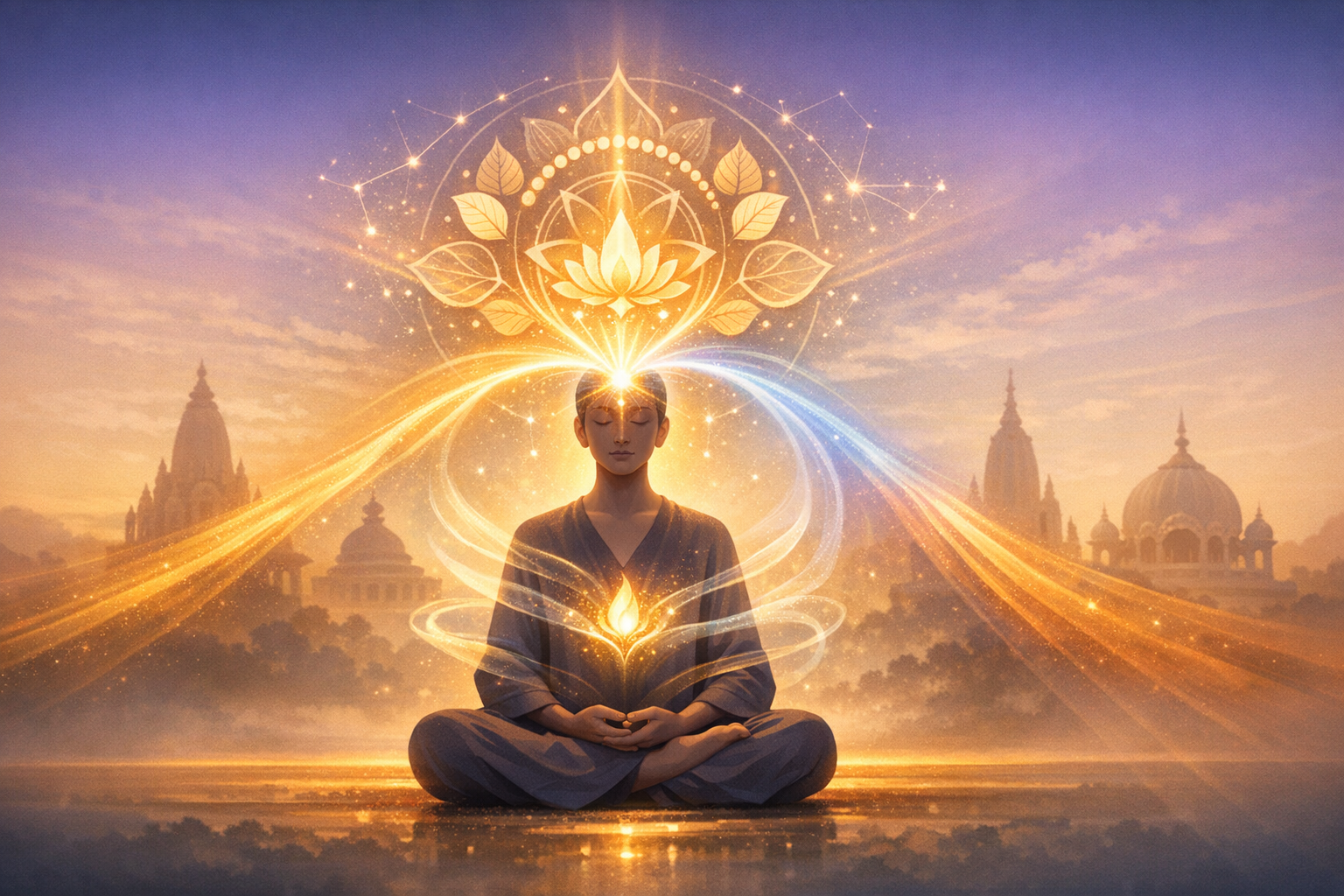
This article examines how strong intentionsaṅkalpa, cetanā, bhāvanā, or alignment with Hukambecomes the central engine of transformation across Hinduism, Buddhism, Jainism, and Sikhism. It explains the shared architecture that links ethics, attention training, contemplative absorption, and compassionate action, showing how these elements cohere into divine union or ultimate realization. Drawing on the Bhagavad Gita, the…
-
Break Free from Fragmentation: Seeking the Whole in Vedanta and Dharmic Paths for Inner Peace

This article unpacks the insight that suffering arises from fragmentation and shows how Vedanta and the broader dharmic traditions offer a precise remedy by seeking the whole. It explains avidya through the Upanishads and the Bhagavad Gita, connects Yoga’s kleshas and eightfold discipline to integration, and brings in Buddhist, Jain, and Sikh perspectives that converge…
-
Khandana Khanda Khadya: Shriharsha’s Razor and a Masterclass in Defending Advaita Vedanta

Khandana Khanda Khadya stands as a luminous 12th-century masterpiece of Advaita Vedanta, using elegant refutation to unsettle rigid categories and clear a contemplative path to nondual insight. Shriharsha’s method exposes circularities in definitions and limits in pramana theory, challenging naive realism while honoring the self-luminous nature of consciousness. The analysis reveals deep resonances with Buddhist…
-
Ravana’s Abduction of Sita Revisited: Dharma, Curses, and a Deliberate Path to Moksha
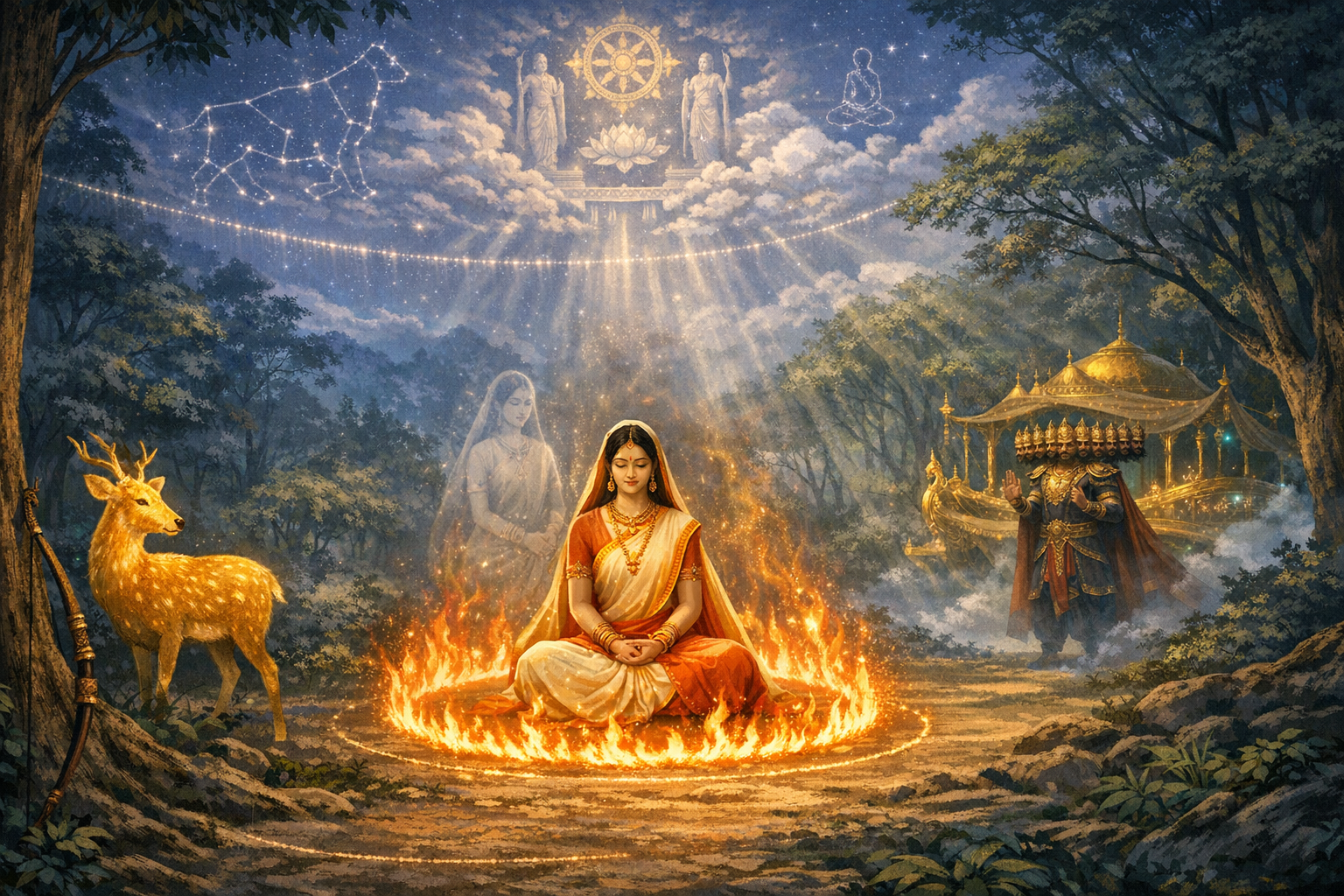
Did Ravana kidnap Sita to be slain by Sri Rama and attain moksha? A careful, text-sensitive study shows that while Valmiki’s Ramayana emphasizes Ravana’s pride and desire, later Puranic and bhakti traditions interpret his fall within a cosmic design of grace. The Jaya–Vijaya doctrine, vaira-bhakti (absorption through enmity), karmic curses, and the Maya Sita motif…
-
Cultivating Contentment: Dharmic Pathways to Enduring Happiness and Inner Peace

This essay examines why contentment generates enduring happiness through a unified lens from Hinduism, Buddhism, Jainism, and Sikhism. It distinguishes short-lived pleasure (sukha) from abiding wellbeing (ananda) and situates santosha within Yoga philosophy and the Bhagavad Gita’s portrait of steady wisdom. It integrates Vedanta’s Pancha Kosha model, Buddhist mindfulness and equanimity, Jain ahimsa and aparigraha…
-
Timeless Dharmic Debate: From Vada to AnekantavadaA Fearless Path to Truth and Unity

Constructive, unbiased debate sits at the heart of Hindu philosophy as a disciplined path to knowledge and self-realization. Grounded in pramana theory and refined by Nyaya’s robust logic, classical shastrartha privileges clarity over conquest. The Upanishads, the Bhagavad-Gita’s samvada, and traditions across Buddhism, Jainism, and Sikhism model dialogue that is rigorous, ethical, and inclusive. Practices…
-
Beyond Names and Forms: Embracing the Infinite Nature of God in Dharmic Wisdom

Hinduism teaches that the divine is infinite and cannot be confined to one form or name, as expressed in the Upanishadic dictum “Ekam Sat Vipra Bahudha Vadanti.” This perspective affirms religious pluralism through Ishta, allowing varied yet valid approaches to the sacred. Related dharmic traditions reinforce this vision: Jainism’s Anekantavada, Buddhism’s skillful means, and Sikhism’s…
-
From Many Forms to One Reality: Unifying Dharmic Paths to Universal Divinity

This reflection reframes “from many gods to one” as a unifying dharmic philosophy rather than a call for uniformity. It explains how Hindu Ishta, Buddhist Dharmakaya, Jain Anekantavada, and Sikh Ik Onkar converge on one universal reality through diverse practices. Readers gain a clear, academic framework for understanding religious pluralism and unity in spiritual diversity.…
-
Beliefs as Mirrors of Consciousness: Timeless Dharmic Wisdom from Yoga Vasishta to Today

This reflection explores how Hindu philosophy understands beliefs as mirrors of consciousness, drawing on the Yoga Vasishta, the Upanishads, and Advaita Vedanta. It highlights convergences with Buddhism, Jainism, and Sikhism, showing how Dharmic traditions foster clarity, compassion, and ethical living. Readers gain a precise frameworksamskara, vasana, manas, buddhi, and ahamkarato understand how beliefs form and…
-
Heart and Mind in Harmony: A Hindu Dharma Blueprint for Balanced, Compassionate Living

Modern life demands more than speed; it calls for a values-centered way to live with clarity and compassion. Hindu philosophy offers a practical synthesis of heart (karuṇā) and brain (buddhi), aligning emotion with discernment. Through brief daily practicespranayama, svādhyāya, and sevareaders can cultivate inner peace, emotional balance, and ethical decision-making. The Bhagavad Gita’s integrated path,…
-
Find Lasting Peace: The Transformative Hindu Teaching of Not Looking at Others’ Faults

A time-tested teaching in Hindu philosophy states, “If you want peace, do not look into anybody’s faults.” Grounded in the Bhagavad Gita, the Upanishads, and Yoga, this practice transforms attention from judgment to self-reflection, acceptance, and mindful speech. Dharmic perspectivesAnekantavada in Jainism, mindfulness and Right Speech in Buddhism, and humility with seva in Sikhismconverge to…