-
Symbolism of Durga’s Axe and Armor: Timeless Emblems of Courage, Protection, and Dharma

Goddess Durga’s axe (Kuthar or Parashu) and armor (Barm or Kavach) are profound symbols of ethical strength in Hinduism. The axe represents decisive wisdom that cuts through ignorance and adharma, while the armor reflects protective grace sustained by discipline and devotion. Referenced in texts like the Devi Mahatmyam (Durga Saptashati) and the Devi Kavacham, these…
-
Unveiling Tripura Sundari: Profound Symbolism of Shodashi on Shiva’s Navel Lotus

This exploration unpacks the symbolism of Goddess Shodashi (Tripura Sundari) seated on a lotus above Shiva’s navel, showing how Shakti’s luminous wisdom flowers from the stillness of consciousness. It clarifies the lotus as a shared dharmic emblem of purity and awakening across Hinduism, Buddhism, Jainism, and Sikhism. Readers gain a coherent understanding of Shiva’s nabhi…
-
Om Namah Shivaya Benefits: A Transformative Mantra for Calm, Clarity, Courage, and Grace

Om Namah Shivaya is a foundational Shaivite mantra known for enhancing calm, clarity, and emotional resilience through focused japa and mantra meditation. Its meaning—salutation to Shiva as auspiciousness—anchors ethical living and compassionate strength. Rhythmic recitation, aligned with the breath, supports stress reduction and balanced mood by gently calming the nervous system. Practitioners often experience improved…
-
Harsiddhi Mata, Sacred Shakti: Kula Devata Uniting Gujarat, Madhya Pradesh and Maharashtra

Harsiddhi Mata—also known as Harsiddhi Bhavani Devi—is venerated across Gujarat, Madhya Pradesh, and Maharashtra as a compassionate manifestation of Mata Parvati. Revered as a Kula Devata by Brahmin, Jain, and other communities, she anchors family rites, intergenerational continuity, and social cohesion. Coastal devotees and fishing communities especially uphold heartfelt worship, seeking blessings for safety and…
-
Dakshineshwari Stuthi: Timeless Praise of Shakti, Consort of Lord Dakshinamurthy

Dakshineshwari Stuthi honors Ma Dakshineshwari Mata as Shakti and as the consort of Lord Dakshinamurthy, the Guru form of Shiva. The hymn reveres her as the foremost Sanyasini, aligning renunciation, wisdom, and compassion in a single spiritual ideal. Devotees approach the stuthi with mindful breath, clear intent, and measured recitation—often during auspicious observances like Navaratri,…
-
Prahlada Gita: Timeless Lessons on Devotion, Fearless Faith, and Dharma for Everyday Life

Prahlada Gita presents a clear, practice-centered pathway to devotion, ethical courage, and emotional steadiness grounded in Sanatan Dharma. Set within the Gurukulam context of Sri Shukracharya, Prahlada’s instruction guides peers toward fearless faith in Lord Vishnu and principled living. Its disciplines—śravaṇa, smaraṇa, seva, and ātma-nivedana—translate readily into modern routines that foster clarity and resilience. Read…
-
When Love Hurts: Practical Steps to Leave Toxic Relationships and Reclaim Self-Worth

When love feels like pain, clarity begins with naming reality and restoring boundaries. This reflective account explains how toxic relationship cycles form, why they persist, and how consistency matters more than intensity. It outlines practical steps—support, space, and small daily acts of self-respect—to stabilize the nervous system and rebuild self-worth. It emphasizes that leaving does…
-
Manasa Snana and Mantra Snana: Compassionate Vedic Paths to Purity, Presence, and Peace

Manasa Snana and Mantra Snana are compassionate, dharmashastra-sanctioned practices that preserve purity through focused awareness and Vedic chanting when physical bathing is not feasible. Manasa Snana employs visualization of sacred waters and ethical intention to cultivate inner clarity. Mantra Snana invokes Rig Vedic hymns—such as water hymns—to consecrate consciousness with sacred sound. Together, they uphold…
-
Sacred Sound at Life’s Threshold: The Transformative Power of Om for Conscious Departure

This essay explores why chanting Om at the end of life is revered in Hinduism and how it supports a conscious, peaceful departure. Drawing on the Bhagavad Gita and the Upanishads, it explains Om as a symbol of total consciousness and a practical aid for liberation (moksha). It highlights how regular mantra-japa, meditation, and pranayama…
-
GAAVANI Historic India Tour: Navpreet Kaur’s Reflections on Dharmic Unity and Living Heritage

The GAAVANI Historic India Tour, shared by Navpreet Kaur with SikhNet, offers a clear, reflective view of India’s sacred geography and living heritage. It highlights convergences across Hinduism, Buddhism, Jainism, and Sikhism through shared ethics like seva, ahimsa, and karuṇā. Readers gain practical insights into ethical pilgrimage, heritage stewardship, and interfaith dialogue. The narrative shows…
-
Chinnamasta’s Fearless Sacrifice: Symbolism of Dakini–Varnini Drinking the Sacred Blood
Goddess Chinnamasta’s iconography—her self-decapitation and three streams of blood nourishing herself, Dakini, and Varnini—distills a Tantric teaching on ego-transcendence, prāṇa as sacred power, and compassionate reciprocity. The image integrates desire, impermanence, and fearlessness without glorifying violence. Interpreting Dakini and Varnini as ida and pingala reveals how polarities are harmonized through sushumna and kundalini awakening. The…
-
Timeless Guidance from Srila Bhaktisiddhanta on Devotion, Tolerance, and United Dharma

Srila Bhaktisiddhanta Sarasvati Thakura’s guidance centers on “param vijayate Sri-Krishna -Sankirtanam,” presenting chanting as a shared Dharmic bridge to inner clarity and social harmony. The teachings encourage humility, tolerance, and one-pointed devotion, while affirming unity in spiritual diversity across Hindu, Buddhist, Jain, and Sikh traditions. Scattered religiosity is reframed as a call for coherent purpose,…
-
Srila Bhaktisiddhanta’s Timeless Guidance: Find Pilgrimage, Purpose, and Strength in Trials

This reflection synthesizes Srila Bhaktisiddhanta Sarasvati Thakura’s concise teachings into practical guidance that unites Hindu, Buddhist, Jain, and Sikh perspectives. It recasts any sincere discourse on ultimate reality as a true place of pilgrimage, encouraging readers to transform everyday spaces through satsanga and thoughtful dialogue. It identifies attachment as a spiritual malady and recommends aparigraha…
-
Mayapur’s Sri Caitanya Math: Vrindavana’s Sacred Forest Manifested and Sarasvati Thakura’s Legacy

Sri Caitanya Math in Mayapur is described as “Vrindavana Pattan,” where the sacred presence of Syama-Kunda, Radha-Kunda, and Giri-Govardhana is understood to be manifest. Established in 1918, it became the headquarters of Krishna Consciousness preaching and a cornerstone of the Gaudiya renaissance. At its peak, around 800 devotees served daily visitors, underscoring its organizational rigor…
-
Kaliyuga Ramayana: Timeless Dharma, Courage, and Compassion for Today’s World

Kaliyuga Ramayana offers a contemporary, ethical reading of the Ramayana—set in the Treta Yuga—applied to modern challenges. It distills lessons from Lord Rama, Mata Sita, Lakshmana, Bharata, and Shatrughna into practical guidance for leadership, family duty, and social harmony. The text’s symbols—Ravana as ego, the vanara sena as collective service, and the bridge to Lanka…
-
Vinayaka Purana Mahatmyam: Timeless Ganesha Stories that Inspire Devotion and Unity

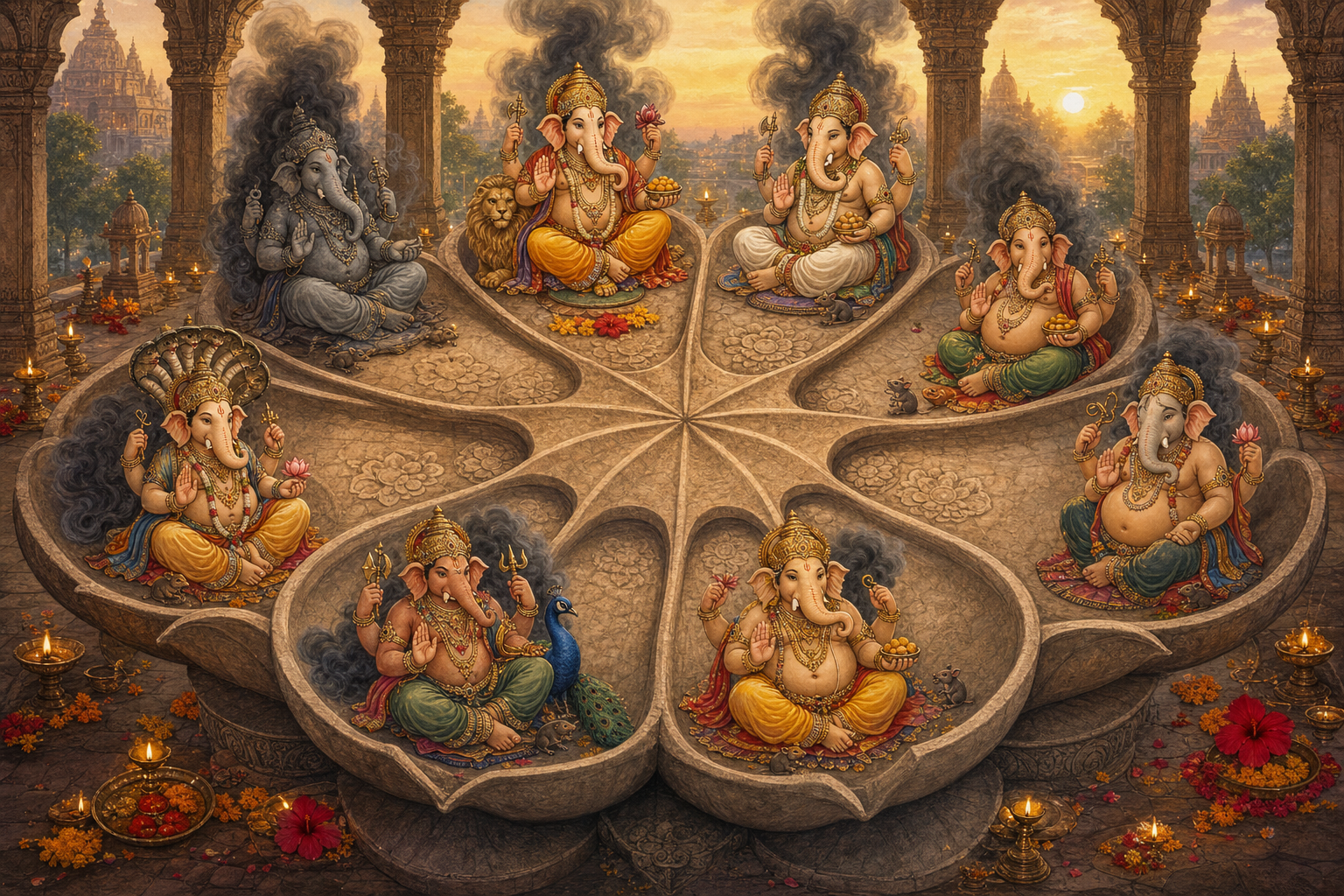
Vinayaka Purana Mahatmyam presents Lord Ganesha’s inspiring glory through accessible, ethically rich stories attributed in tradition to Veda Vyasa. These narratives illuminate Ganesha’s qualities as the remover of obstacles and patron of wisdom, linking miracle accounts to practical virtues such as patience, clarity, and compassion. Related texts like the Ganesha Purana and Mudgala Purana complement…
-
Why Ayush Homa on Birthdays and Anniversaries Deepens Blessings, Longevity, and Family Harmony

Ayush Homa on birthdays and anniversaries consecrates personal milestones with prayers for longevity, vitality, and harmony. Mantra chanting fosters a tangible field of positivity and sacredness, steadying attention and deepening gratitude. Within traditional frameworks of sthula and sukshma bodies, the rite is understood to work beyond the physical, gently harmonizing subtle patterns of thought and…
-
Find Lasting Peace: The Transformative Hindu Teaching of Not Looking at Others’ Faults

A time-tested teaching in Hindu philosophy states, “If you want peace, do not look into anybody’s faults.” Grounded in the Bhagavad Gita, the Upanishads, and Yoga, this practice transforms attention from judgment to self-reflection, acceptance, and mindful speech. Dharmic perspectives—Anekantavada in Jainism, mindfulness and Right Speech in Buddhism, and humility with seva in Sikhism—converge to…
-
Nagapasha in Durga’s Hand: Unleashing Conscious Power and the Serpent’s Victory Over Evil

The serpent—Sarpa—in Goddess Durga’s hand is not mere ornament but Nagapasha, the symbol of conscious power and ethical control. It signifies the binding of ego and disorder through lucid awareness rather than brute force. A yogic reading links the serpent to Kundalini rising from the muladhara through the sushumna nadi, illustrating disciplined Shakti in service…
-
Mahakala as Kali’s Vehicle in Tantra: Unveiling Time, Power, and Non-Dual Wisdom

This exploration clarifies why, in Tantric symbolism, Mahakala is described as Kali’s vahana not as a literal mount but as the timeless ground supporting Shakti’s transformative dance. It unpacks the etymology of kala, linking time and the fathomless dark to non-dual metaphysics. The discussion reframes iconography—Kali standing upon Mahakala—as a pedagogy for transcending fear and…