-
Swaswas Bhairava: Fierce Protector of Dharma, Lord of Time, and the Sacred Bond with Dogs

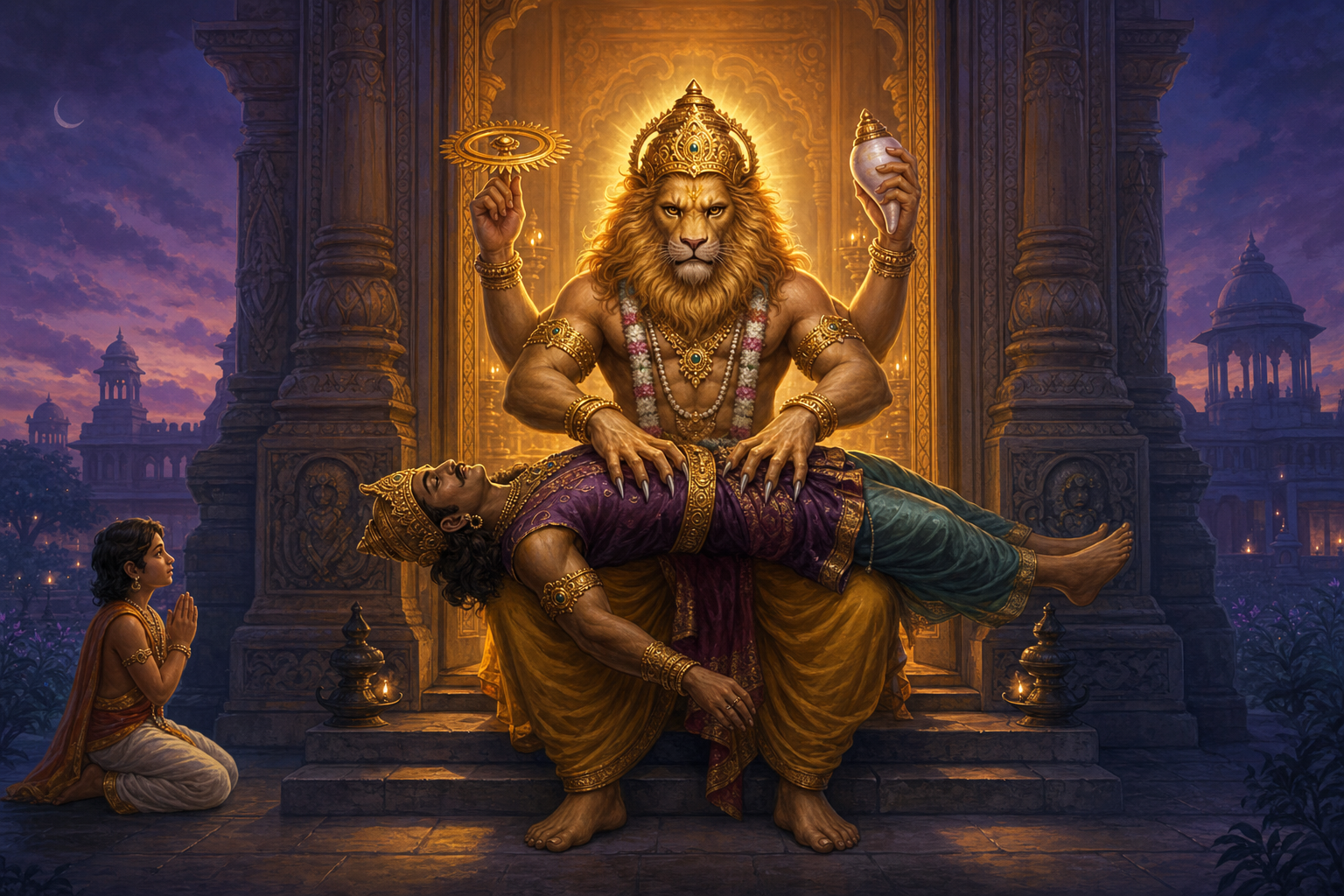
Bhairava’s Swaswas form illuminates a profound synthesis of guardianship, time, and compassion through the sacred bond with dogs—especially black dogs. As kṣetrapāla, Bhairava protects thresholds while the dog symbolizes fidelity, vigilance, and the courage to dwell at liminal edges. Vedic memory of Yama’s four‑eyed dogs and Puranic narratives from the Skanda Purana reinforce the dog’s…
-
Pure and Trained Mind in Hindu Dharma: A Practical, Science-Backed Guide to Wise Decisions

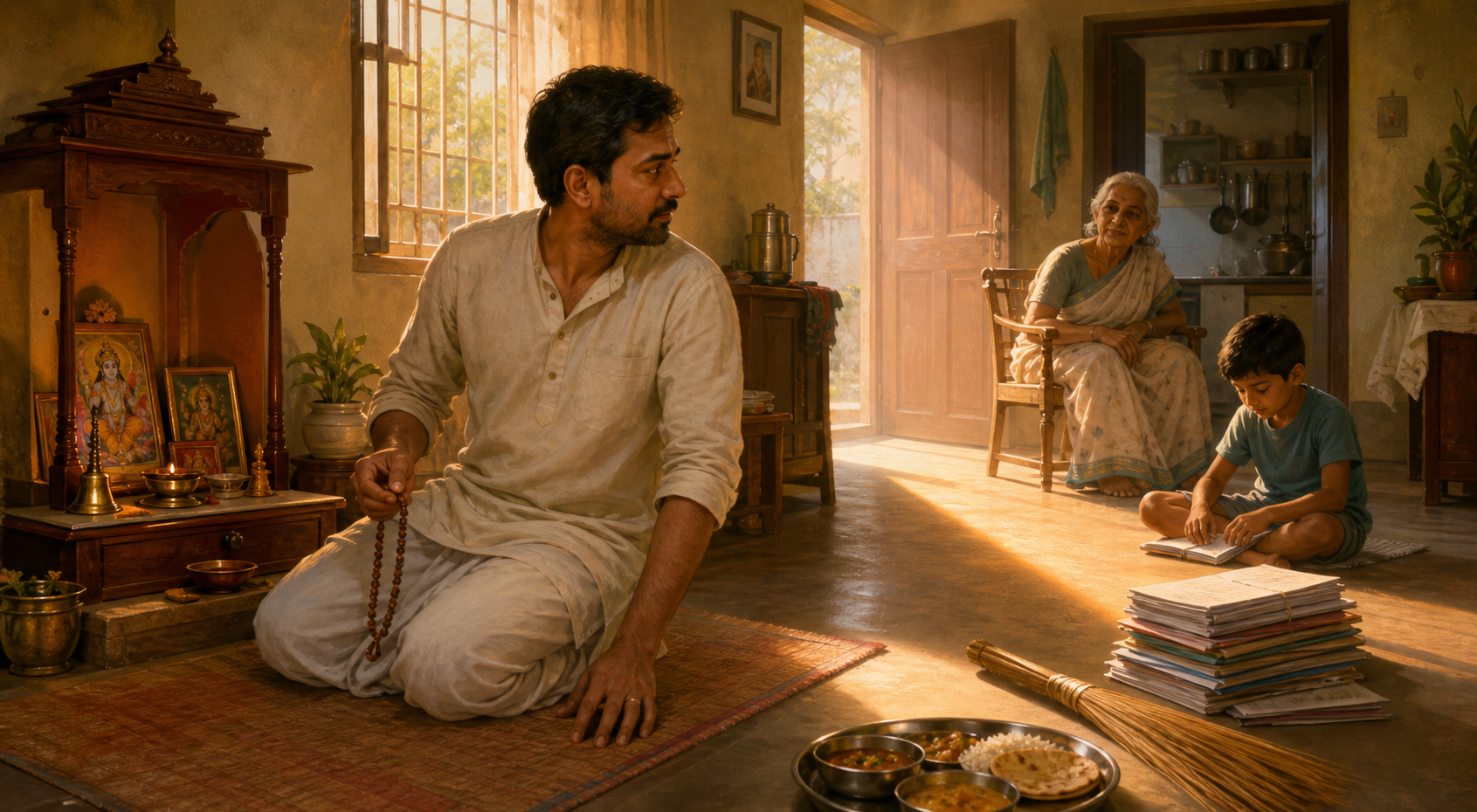
This article presents a comprehensive, academically grounded framework for cultivating a pure and trained mind to improve decision-making in contemporary life. Drawing on Hindu philosophy and complementary insights from Buddhism, Jainism, and Sikhism, it explains how sattva, abhyasa, and ethical guardrails like yama–niyama elevate judgment under stress. It details a practical viveka–vichara loop for real-world…
-
Cosmic Harmony in Daily Puja: Aligning Five Elements and Senses for Transformative Worship

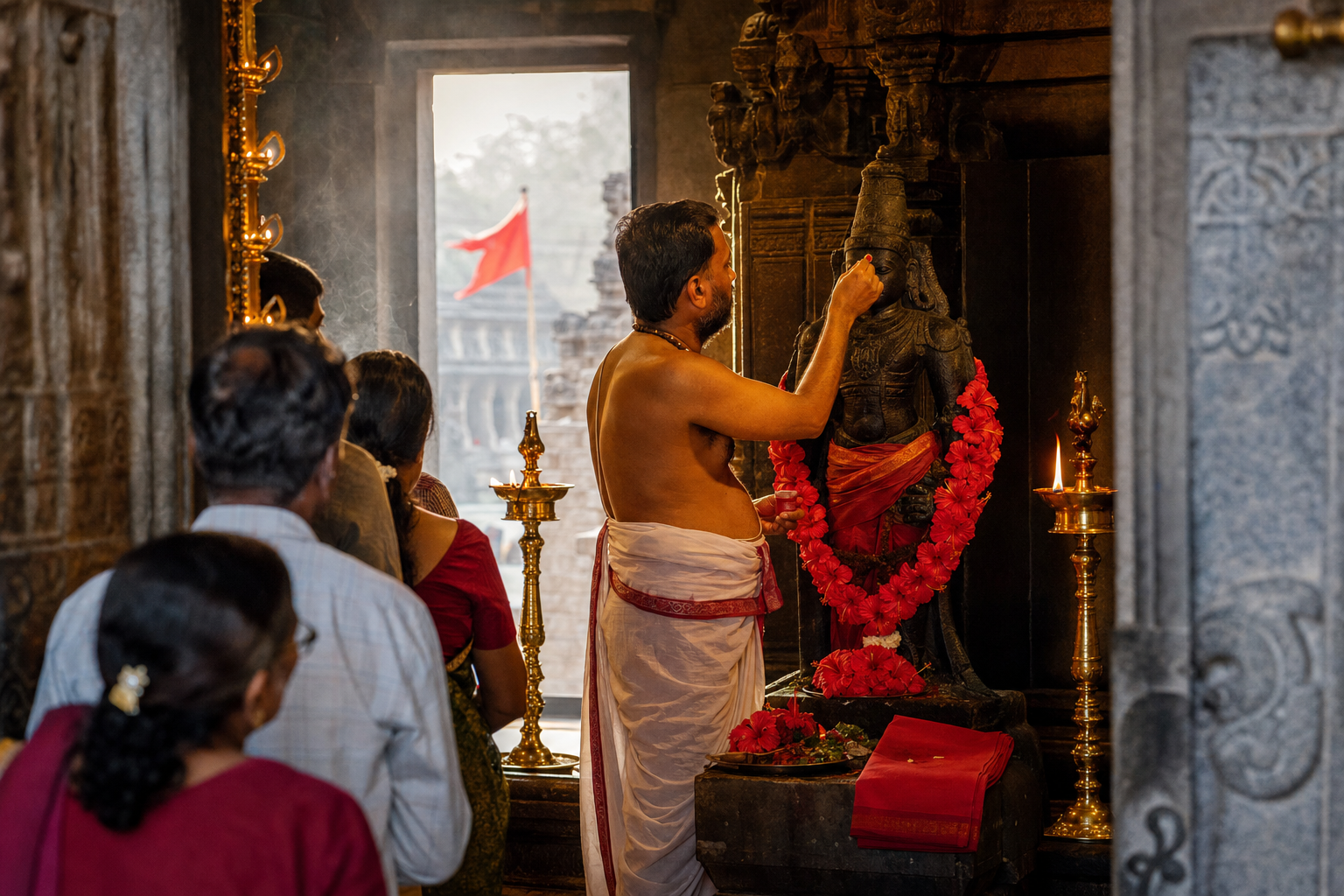
Daily puja in the Hindu way of life is a precise, sense-centered discipline that aligns the five elements (Pancha Mahabhuta) with the five senses (Pancha Indriya). Drawing on the Bhagavad Gita 7.4 and allied traditions, it maps offerings such as gandha, pushpa, dhupa, deepa, and naivedya to smell, sight, sound, touch, and taste. Earth, water,…
-
Letting Emotions Flow: How Surrender Transformed Overwhelm into Lasting Inner Peace

A compressed, ten-day relocation triggered converging stressors—logistics, financial surprises, relational strain, and grief—that overwhelmed even a mature contemplative practice. The turning point arose not from tighter control but from permission: an unfiltered cry and somatic release reframed the problem from “being emotional” to resisting emotion. Reinterpreting peace as a baseline that reemerges after completion—rather than…
-
Srimad Bhagavatam 11.5.32 Decoded: Chaitanya’s Sankirtana as Kali Yuga’s Transformative Path

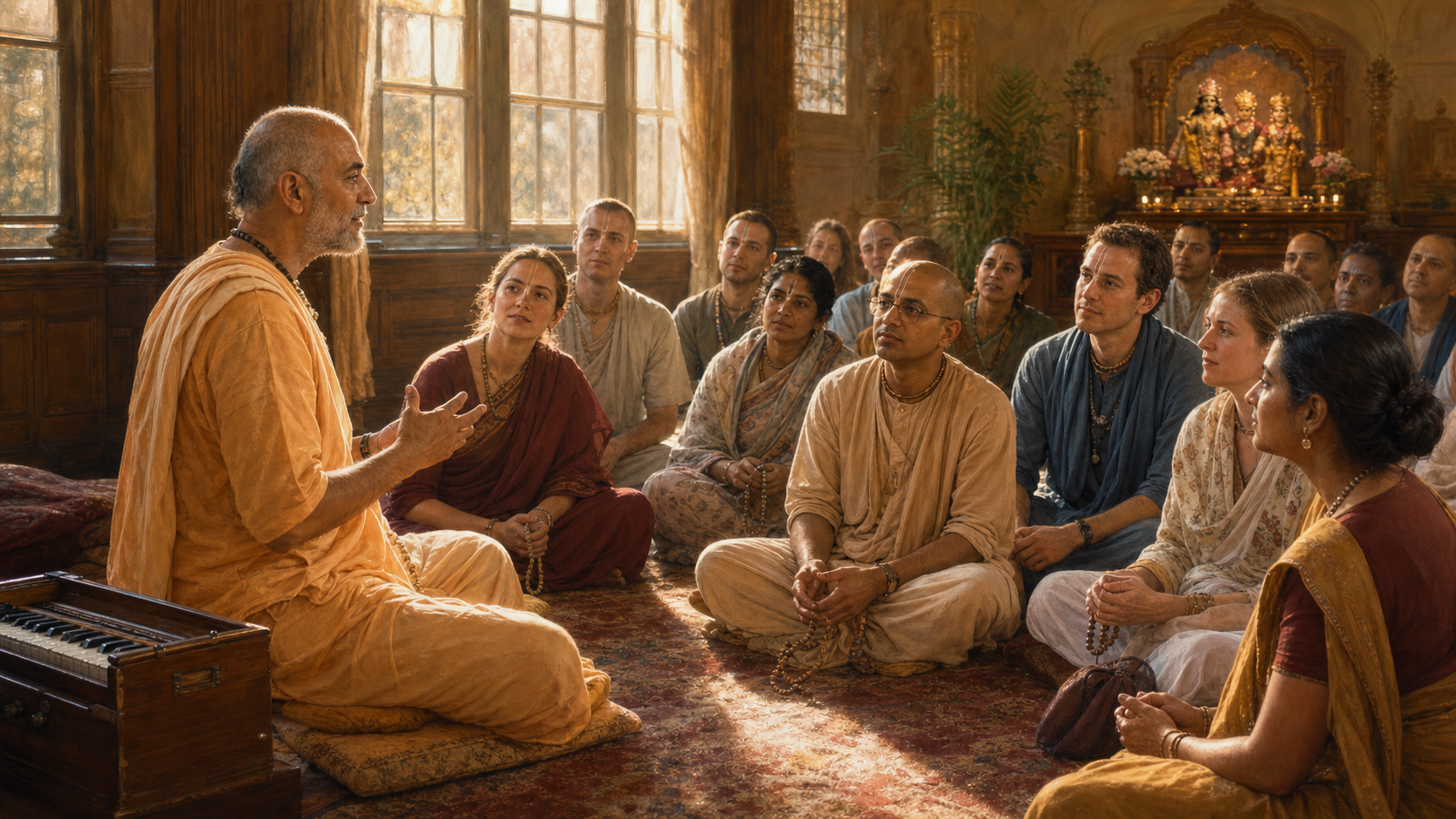
Srimad Bhagavatam 11.5.32 presents congregational chanting of the divine Name as Kali Yuga’s most intelligent path, a vision Gaudiya Vaishnavism reads as pointing to Sri Chaitanya Mahaprabhu. Drawing on classical commentaries by Jiva Goswami and Krishnadasa Kaviraja, and on expositions by H.H. Jayapataka Swami Maharaj, this analysis unpacks the verse’s grammar, theology, and praxis. The…
-
Alidha Stance in Hindu Iconography: Embodied Power, Dharma Readiness, and Sacred Motion

Alidha (ālīḍha) is the forward-striding stance in Hindu iconography where the right leg advances and the left draws back, fusing motion with stability to signal dharma-ready power. Rooted in the Nāṭyaśāstra and Dhanurveda and codified in Śilpa-śāstra, it recurs across Shaiva, Shakta, and Vaishnava imagery and in classical dance such as Bharatanatyam. The stance animates…
-
Darshan as Divine Reciprocity: The Two-Way Vision that Transforms Hindu Worship and Life

Darshan, derived from the Sanskrit root “drsh,” is presented as a two-way exchange: the devotee beholds the divine and is, in turn, beheld. The article explains how this reciprocity operates in Hindu ritual life through consecrated images, temple choreography, and the distribution of prasad as an embodied blessing. It engages classical Indian theories of perception…
-
Krishna as Purna Purusha: Revealing the Feminine Divine That Completes the Supreme Being

This long-form exploration presents Sri Krishna as Purna Purusha—the Complete Being—who integrates both masculine and feminine dimensions without contradiction. Drawing on the Bhagavad Gita, the Bhagavata Purana, and Vaishnava theology, it explains how Radha as Hladini Shakti reveals the feminine divine at the very heart of Krishna’s identity. The article situates Mohini within Vaishnava-Puranic tradition,…
-
March 10, 2026 Panchang: Krishna Paksha Saptami, Auspicious Muhurtas, Nakshatra & Rashi

Tuesday, March 10, 2026 falls on Krishna Paksha Saptami, the seventh lunar day of the waning fortnight, continuing until 12:11 AM on March 11, when Ashtami begins. This Panchang overview explains how tithi is computed, why end times rarely align with civil midnights, and how to apply practical muhurta guidance. Readers learn to combine Abhijit…
-
Beyond the ‘Better’ Trap: A Dharmic Guide to Hope Without Clinging or Burnout

Hope is powerful fuel, but it can become a trap when peace depends on outcomes. This long-form, research-informed reflection clarifies the difference between direction and demand, showing how mindfulness, equanimity, and non-attachment protect motivation without creating pressure. Drawing on a unified dharmic lens—Buddhist equanimity, Hindu Karma Yoga, Jain aparigraha, and Sikh hukam and seva—it reframes…
-
Shravana Kumara’s Devotion in the Ramayana: Enduring Lessons in Matru Pitru Bhakti and Dharma

Shravana Kumara’s story in the Ramayana is a powerful testament to Matru Pitru Bhakti—devotion to parents—embodied through a son’s tireless care for his blind, elderly parents during their sacred tīrtha-yātra. The episode, culminating in King Daśaratha’s tragic mistake and subsequent curse, provides the narrative key to understanding his later death from separation from Rāma. Vālmīki’s…
-
March 2026 Pujas at Kanchi Kamakoti Peetham: Comprehensive Lunar Calendar and Guide

This in-depth guide aligns March 2026 pujas at Sri Kanchi Kamakoti Peetham with the Hindu lunar calendar, mapping them across Falgun–Chaitra (North), Phalguna–Chaitra (Telugu, Kannada, Marathi, Gujarati), Falgun–Chaitra (Bengali Panjika), and Masi–Panguni (Tamil). It explains how tithis drive temple observances, why local Panchang rules matter, and how to plan darshan around Purnima, Amavasya, Pradosham, Ekadashi,…
-
Two Yet One: Advaita Vedanta’s Science of Oneness and a Dharmic Bridge across Traditions

The teaching ‘you and I are two persons; yet we are one’ expresses Advaita Vedanta’s core insight: empirical plurality and ultimate unity coexist without contradiction. This long-form exploration clarifies Brahman, Atman, and the roles of maya and avidya, situating ethics and devotion within a rigorous non-dual framework. Drawing on the Upanishads and the Bhagavad Gita,…
-
Mukhyartha in Hinduism: Unlock the Power of Abhidha-Shakti for Precise, Sacred Meaning

Mukhyartha—secured by abhidha-shakti—provides the primary, literal meaning that anchors Hindu hermeneutics, ritual, and scripture. This article clarifies how primary sense operates in sentences, why context can trigger shifts to lakshana (secondary meaning) and vyanjana (suggestion), and how classic criteria like akanksha, yogyata, and sannidhi preserve coherence. It surveys perspectives from Mimamsa, Nyaya, Vedanta, and the…
-
Gaura Purnima Explained: Advaita Acharya’s Call that Reawakened Bhakti in Bengal

Gaura Purnima marks the full-moon appearance of Sri Chaitanya Mahaprabhu (1486 CE) in Navadvip, Bengal, and inaugurates the Gaurābda calendar. Situated in the Bhakti Tradition and celebrated as a major Hindu Festival, its historical context critiques performative religiosity and re-centers inner transformation. Gaudiya sources depict Sitanath Advaita Gosai invoking Krishna’s descent through worship with Ganga…
-
Inside Gaura Purnima 1975 at Mayapur: Srila Prabhupada’s Vision, Discipline, and Lasting Impact

Gaura-purnima 1975 in Mayapur, witnessed in the presence of Srila A.C. Bhaktivedanta Swami Prabhupada and preserved in the recollections of Srutakirti das, offers a disciplined, practice-centered model for celebrating Sri Chaitanya Mahaprabhu’s appearance. The festival integrated mangalā-ārati, focused japa, scriptural study, sankirtana, abhiṣeka, and prasāda into a coherent arc of devotion. Theologically anchored in acintya-bheda-abheda,…
-
Gaura Purnima 2026: Gaura‑lila, Nama‑sankirtana, and ISKCON Ljubljana’s Living Legacy

Sri Gaura Purnima 2026 at ISKCON Ljubljana brings the golden legacy of Sri Chaitanya Mahaprabhu (Gaura‑lila) into vivid focus through nama‑sankirtana, study, and service. Grounded in Gaudiya Vaishnava scriptures, the festival highlights acintya‑bhedabheda‑tattva and the transformative power of the Hare Krishna maha‑mantra. Reflections inspired by teachers such as HH Candramauli Swami underline sadhana, sadhu‑sanga, and…
-
Mahasadashiva Unveiled: Rare 25-Headed, 50-Armed Cosmic Shiva in South Indian Temples

Mahasadashiva—depicted with twenty-five heads and fifty arms—is among the rarest and most conceptually rich forms of Shiva in South Indian temple art. Drawn from the Shaiva Agamas and śilpa treatises, the icon expands the fivefold logic of the pañca-brahma into a full cosmic diagram in stone. The fifty arms are widely read as the Sanskrit…
-
Shakini Yogini Unveiled: Lion-Headed Shakti, Bhairava’s Wrath, and Deep Tantric Symbolism

Shakini Yogini, often depicted with a lion face, crystallizes Tantric teachings about fearless clarity, ethical speech, and disciplined power. Emerging mythically from Bhairava Samvarta as mahauraudra, she embodies purgative intensity in service of transformation, not harm. Many traditions map her to the Vishuddha chakra, where the seed sound HAM refines voice and intention into vāk-siddhi—truthful…
-
Gyaraspur’s Timeless Legacy: Ekadashi Devotion and the Jain–Hindu Temple Heritage of Vidisha

Gyaraspur in Madhya Pradesh unites Ekadashi devotion with a remarkable ensemble of Jain–Hindu temples, offering an exemplary study in sacred geography and cultural continuity. The village’s name is locally linked to gyaras (the eleventh lunar day), reflecting how fasting traditions shape communal identity. Architectural treasures—Maladevi Temple, Bajramath, and the Hindola Torana with Athkhamba—showcase Gurjara–Pratihara and…