-
Transform Overwhelm into Steady Calm: Seven Strengths for Dharmic Resilience and Clarity

Overwhelm is widespread, yet inner steadiness can be trained. A seven-strengths framework—cultivating calm, clarity, compassion, courage, equanimity, connection, and integration—offers a concise, research-aligned path to resilience. Short daily practices regulate the nervous system, reduce reactivity, and improve attention. Breath awareness builds vagal tone, compassion training softens harsh self-criticism, and values-based action converts avoidance into momentum.…
-
Transforming Longing into Living Presence: Arcana, Bhakti-Yoga, and Inclusive Community Darshan

This essay examines why humanity’s longing to see the Divine is a significant experiential datum and explains how arcana (Deity Worship) in bhakti-yoga translates that longing into a disciplined, living encounter. It clarifies the archa-avatara understanding of the deity, situates arcana among the nine processes of devotion, and outlines a rigorous, scalable model for congregational…
-
Deep Ecology through Vedic Wisdom: A Dharmic Blueprint for Compassionate Sustainability

This essay presents a rigorous, dharmic framework for deep ecology rooted in Vedic culture and enriched by convergences across Hinduism, Buddhism, Jainism, and Sikhism. It explains how Krishna-centrism and principles like ahimsa, aparigraha, and seva generate practical Environmental stewardship. Readers gain a clear understanding of the Bhagavad Gita’s ethical architecture, the Guna model’s relevance to…
-
Chanda at Vishnu’s Eastern Gate: The Fierce Dvarapala Safeguarding Vaishnava Sanctuaries

Hindu temple architecture encodes a sophisticated theology of thresholds, and in many Vaishnava kshetras, Chanda stands as the fierce guardian of Vishnu’s eastern gate. This analysis situates Chanda within Agamic prescriptions, Puranic memory, and regional priestly traditions, explaining why the eastern entrance—aligned with dawn and auspicious beginnings—receives a sentinel of disciplined kshatra-energy. It outlines the…
-
When Darkness Falls: Vedic Science of Twilight, Tamas, and Transformative Evening Rituals

Dusk in Hindu tradition is not superstition but a precise window for inward recalibration, grounded in Vedic wisdom about the guṇas and circadian rhythms. This long-form analysis explains how rising tamas at sunset, properly guided, supports rest, clarity, and ethical closure. It details the technical structure of sandhyā-vandanam, the timing and purpose of pradoṣa-kāla, and…
-
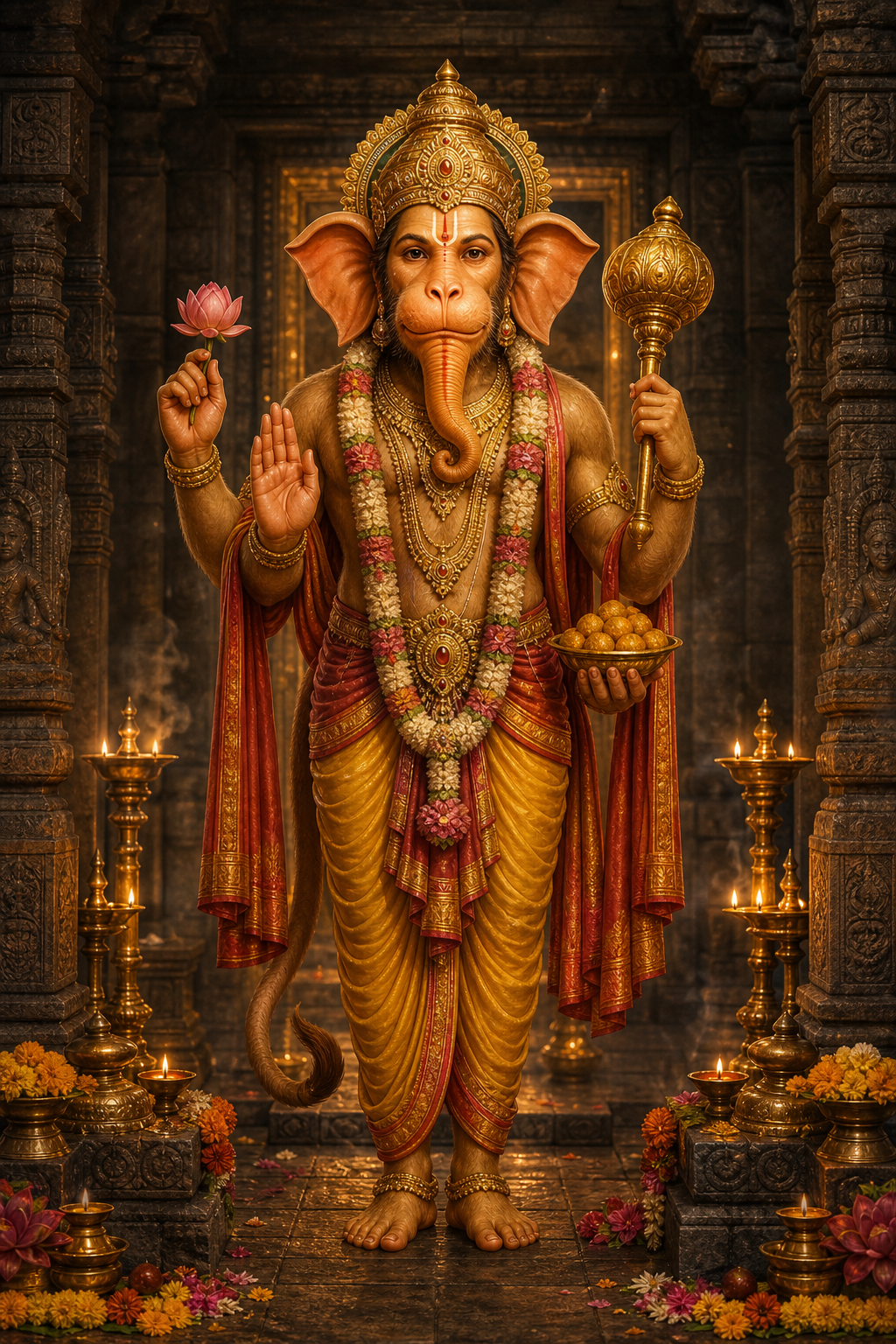
Decoding Hanuman’s Saffron and Scarlet: The Timeless Color Science of Devotion and Power

Color in Hindu traditions carries philosophical intent, and Hanuman’s saffron and scarlet encode a complete ethic of devotion and power. Saffron (bhagwa/kesari) signals tapas, renunciation, and sattva illumined by disciplined rajas; scarlet expresses vira-bhava, purposeful courage, and dharmic action. The beloved sindoor narrative explains why many Hanuman murtis are orange-red, while regional iconography shows valid…
-
Beyond Ritual and Dogma: Hindu Wisdom on Moving from Religion to Transformative Spirituality

This article clarifies the often-misunderstood difference between a religious person and a spiritual person through the lens of Hindu thought and its dharmic siblings. It explains how Hindu scriptures integrate dharma (form, ethics, and ritual) with adhyatma (direct realization) to support an inner transformation culminating in moksha. The discussion highlights Bhagavad Gita harmonies of karma,…
-
April 9, 2026 Panchang: Krishna Paksha Saptami→Ashtami, Shubh Muhurat, Nakshatra & Rashi

On Thursday, April 9, 2026, the Hindu Panchang records Krishna Paksha Saptami until 6:00 PM, followed by Krishna Paksha Ashtami for the remainder of the day. This guide explains how tithi works technically, why sunrise and locality matter, and how to use Shubh Muhurat, Rahu Kalam, Yamaganda, Gulikai, and Choghadiya to plan important actions. It…
-
From Faith to Fellowship: A Family’s Peaceful Embrace of Sanatan Dharma at Bageshwar Dham

A family publicly embraced Sanatan Dharma at Bageshwar Dham in Chhatarpur, Madhya Pradesh, on April 1, 2026, with reported name changes to Arjun Singh and Priya Singh. This analysis situates the event within India’s constitutional protections for freedom of conscience while emphasizing state-level compliance requirements that guard against force, fraud, or inducement. It explains the…
-
Ravana’s Hubris and Vasishta’s Warning: How Knowledge Without Humility Ensured Defeat

Framed as “Vasishta’s curse,” this long-form analysis examines how later Ramayana traditions dramatize the collision between Ravana’s brilliance and the dharmic demand for humility. It clarifies textual nuance by distinguishing the core Valmiki Ramayana from regional and oral tellings, reading the “curse” as a pedagogical axiom rather than magical determinism. The essay surveys the ethical…
-
Achyutananda Dasa of Odisha: Visionary Vaishnava Sage Uniting Devotion, Language, and Dharma

Achyutananda Dasa, one of Odisha’s revered Panchasakhas, helped vernacularize the Bhakti Tradition and shape Odia literature while deepening Jagannath-centered devotion. Born between 1460 and 1512 CE to Dinabandhu in Tilakana, he is associated with Nemala and remembered for a capacious theology of sunya that integrates personal devotion with contemplative insight. His corpus—attributed works such as…
-
Decoding Rasa and Tattva in Srimad Bhagavatam 11.3.8: Timeless Love, Ultimate Truth, and Kāla

This essay distills H.H. Guru Prasad Swami’s class on Srimad Bhagavatam 11.3.8 into a rigorous yet accessible exploration of two “unlimiteds”: rasa, the ever-fresh devotional experience of Krishna, and tattva, the limitless architecture of philosophical truth. It clarifies how the Bhagavata Purana aligns accurate seeing (tattva-darśana) with transformative tasting (rasa-āsvāda), while kāla (time) governs the…
-
Compassion on Garuḍa’s Wings: SB 2.7.17—Gajendra’s Rescue, Bhakti, and Daily Practice

SB 2.7.17 presents an archetypal moment of divine responsiveness: the Lord hears a sincere plea and arrives on Garuḍa with the cakra to liberate the supplicant. Read alongside the fuller Gajendra-mokṣa narrative in Canto 8, the verse affirms the Bhakti Tradition’s core doctrine of śaraṇāgati—refuge met by grace. The symbolism of Garuḍa (swift compassion) and…
-
Lingodbhava—Shiva’s Infinite Pillar of Light: Iconography, Temple Rituals, and Timeless Wisdom

Lingodbhava, the manifestation of Lord Shiva as an infinite pillar of light, gathers narrative, philosophy, and temple architecture into a single, luminous symbol. The article recounts Brahma and Vishnu’s failed search for the limits of the jyoti-stambha and frames the episode as a lesson in epistemic humility rather than sectarian triumph. It traces textual roots…
-
Decoding Sacred Mudras in Hindu Puja: A Deep, Practical Guide to Gesture, Mantra, and Mind

Mudras in Hindu puja are not mere motions but a precise language that unites gesture, mantra, and focused intention. This comprehensive guide explains how mudras function within the classical triad of kayika, vacika, and manasika acts to stabilize attention and deepen devotion. Drawing on Agamic, Tantric, and Smarta sources—alongside insights from the Natya Shastra tradition—it…
-
Unveiling the Fourteen Lokas: A Deep, Clarity-Driven Journey through Hindu Consciousness

This long-form, research-driven exploration clarifies the fourteen lokas (seven Urdhva and seven Adho) in Hindu cosmology as both cosmic regions and states of consciousness. Drawing on Hindu scriptures and Vedic philosophy, it explains each loka’s pedagogical role, distinguishes Adho lokas from Naraka, and shows how the “cosmic ladder” aligns with yogic practice. The piece emphasizes…