-
Adhika Jyeshta Masam 2026 (Telugu Calendar): Sacred Dates, Rituals & Purushottama Vrata Guide

Adhika Jyeshta Masam 2026 in the Telugu Chandramana Panchangam runs from 17 May to 15 June during Parabhava Nama Samvatsaram. This intercalary month appears when no solar saṅkrānti occurs within a lunar cycle, ensuring long-term alignment of the lunisolar calendar. Revered as Purushottama Maas and dedicated to Lord Krishna, it emphasizes bhakti, ethical living, and…
-
Neo‑Vedanta Unveiled: A Powerful Modern Synthesis Bridging Dharmic Wisdom and Pluralism

This article examines Neo‑Vedanta as a rigorous, modern synthesis of Vedāntic wisdom grounded in the Prasthanatraya (Upanishads, Bhagavad Gita, Brahmasutras). It traces historical catalysts in nineteenth‑century India and explains how Sri Ramakrishna and Swami Vivekananda anchored a plural, practice‑oriented vision. Readers gain a clear understanding of Ishta as a principle of respectful diversity and see…
-
Break Free from the Cult of Approval: A Seven-Year Deprogramming Toward Dharmic Inner Freedom

This essay examines the “cult of approval” as a pervasive people-pleasing pattern and presents a seven-year deprogramming arc grounded in psychology and dharmic wisdom. It clarifies how unspoken social contracts—trading authenticity for belonging—form and why they are so hard to leave. It outlines pragmatic steps for change: mapping implicit rules, creating ethical distance, regulating the…
-
Memento Mori as Dharmic Practice: Urgent Living, Clear Priorities, and Courageous Leadership

This article presents a disciplined, Dharmic approach to mortality contemplation as a practical technology for urgent living and ethical leadership. It synthesizes insights from Hinduism, Buddhism, Jainism, and Sikhism—maranasati, pratikraman, simran, and dharma—to convert awareness of impermanence into decisive action. A step-by-step protocol guides breath awareness, a regrets inventory, value-based reprioritization, and execution of one…
-
Bliss, Boredom, and Breakthroughs: An Evidence-Based Guide to Japa Practice

Japa often swings between luminous connection and dutiful repetition. This guide explains why that fluctuation is normal and how to stabilize practice using classical modes (vācika, upāṁśu, mānasa), breath entrainment, and ergonomic cues. It reframes “bad days” into actionable categories—physiological, environmental, cognitive-emotional, and social—so adjustments become precise rather than punitive. Practical protocols cover time-of-day strategy,…
-
Dissolving Trishna’s Hidden Fire: Timeless Dharmic Strategies to Transform Craving into Freedom

This long-form, research-driven exploration explains trishna (craving) as the subtle energy that precedes action—the “root before the root.” It integrates Hindu, Buddhist, Jain, and Sikh perspectives to present a unified Dharmic framework for transforming craving into clarity and freedom. Readers gain a technical map (kleśas, vāsanās, vedanā, dependent arising), scriptural anchors (Yoga Sutra, Bhagavad Gita,…
-
Samhara of Shiva: Unveiling the Compassionate Power of Dissolution and Renewal

Samhara, the dissolution aspect of Shiva, is not violent destruction but compassionate renewal that clears exhausted forms so truth can shine. Grounded in Vedic, Purāṇic, and Āgamic sources, this long-form analysis explains how Samhara interlocks with Shiva’s five acts to sustain cosmic and personal transformation. The iconography of Naṭarāja, Mahākāla, and Kālābhairava decodes dissolution as…
-
May 22, 2026 Panchang: Exact Sashti–Saptami Shift, Good Muhurtas, Nakshatra and Rashi Insights

May 22, 2026 is a two-tithi day in the Hindu Calendar: Shukla Paksha Sashti lasts until 11:46 AM (IST), followed by Shukla Paksha Saptami. This guide explains how to plan devotion and life tasks across the Sashti-to-Saptami transition, when to prefer Abhijit and Brahma Muhurtas, and how to avoid Rahu Kalam using a simple, location-based…
-
Jwarahareshwara Shiva: Rare Three-Headed Healer Guarding Humanity from Disease and Fear

Jwarahareshwara Shiva is a rare and powerful healing manifestation of Lord Shiva, envisioned with three heads, three legs, and six arms to symbolize balance, fearlessness, and compassionate protection. The form integrates Vedic portrayals of Rudra as the supreme healer with Puranic narratives that dramatize the pacification of disease and dread. Its triadic symbolism aligns closely…
-
From Triggered to Tranquil: How Rehearsed Boundaries Break Narcissistic Cycles

Many people know exactly what to say in narcissistic abuse dynamics yet cannot access those words when it matters. This analysis shows how voiced rehearsal—practicing a single boundary sentence out loud—transfers insight into procedural skill under stress. Drawing on psychophysiology (amygdala hijack, state-dependent retrieval, and polyvagal-informed regulation), it explains why the prefrontal cortex goes offline…
-
Aim Hrim Klim: Unlock the Sacred Triad of Shakti and the Three States of Consciousness

Aim Hrim Klim – the revered triad of bīja mantras – unites knowledge, compassionate power, and loving attraction into a single, practical discipline in Hindu spirituality. Drawing on classical mantra-śāstra and living lineages, the article explains how Aim clarifies cognition, Hrīṁ integrates heart-intelligence, and Klīṁ refines desire into dharmic will. It maps the triad to…
-
Samavartana Unveiled: The Transformative Rite of Return and the Making of a Householder

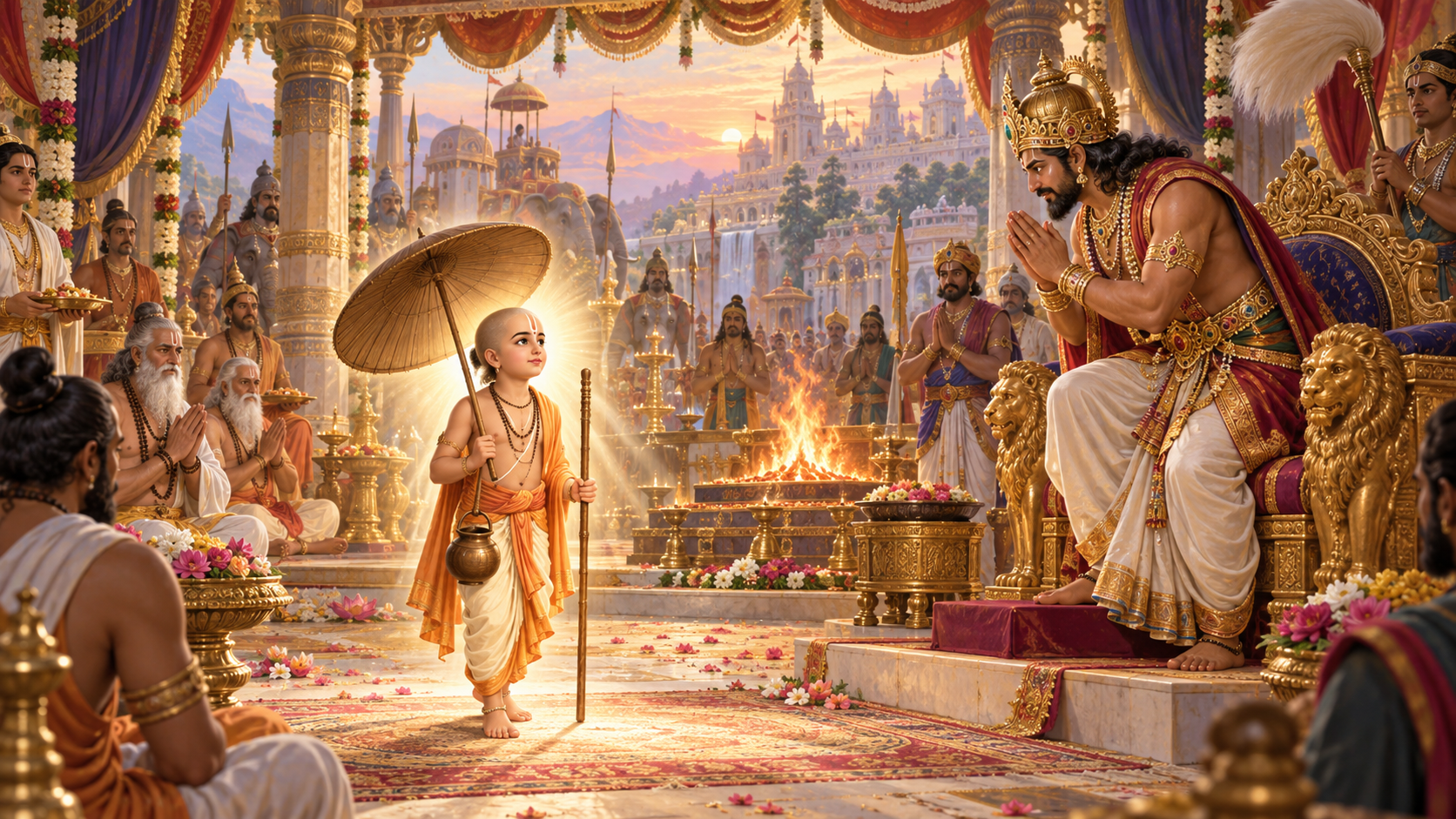
Samavartana—Hindu Dharma’s rite of return—formally completes Brahmacharya and inaugurates the ethical agency required for Grihastha. Grounded in the Grihya Sutras, Dharmasutras, and the Taittirīya Upaniṣad’s convocation counsel, it transforms private learning into public responsibility through guru-dakṣiṇā, ritual bathing, and vows of truth, duty, and lifelong study. The rite prepares the Snātaka for pañca-mahāyajñas—daily disciplines that…
-
Organized Religion Reconsidered: Safeguarding Dharma Without Losing the Sacred Pulse

This essay examines the enduring paradox of organized religion in the dharmic traditions: the need to institutionalize sacred insight without extinguishing its contemplative core. Drawing on historical patterns from the Buddhist sangha, Hindu mathas and ashramas, Jain fourfold communities, and Sikh gurdwaras, it shows how organization can preserve wisdom, expand seva, and protect sacred spaces.…
-
King Charles III’s Lambeth Summit: A Powerful Step Toward Interfaith Harmony and Dharmic Unity

King Charles III convened about thirty leaders from Muslim, Sikh, Baháʼí, Christian, Hindu, and other traditions at Lambeth Palace Library to advance interfaith dialogue and social cohesion in the UK. The setting underscored scholarship and stewardship, framing the meeting as both symbolic and practical. Grounded in the UK’s 2021 Census realities, the piece explains why…
-
Dashashanti: Ten Timeless Vedic Shanti Mantras for Protection, Harmony, and Inner Calm

Dashashanti designates a cycle of ten Vedic Śānti Mantras recited to sanctify study, rituals, and community life. Drawn from the Rigveda, Yajurveda, and early Upanishads, these hymns seek protection, clarity, and universal welfare. The cycle typically includes Bhadraṁ karṇebhiḥ, Śaṁ no mitraḥ, Saha nāvavatu, Pūrṇam adaḥ, Asato mā, Āpyāyantu mamāṅgāni, Āpyāyasva sametu te, Svasti na…
-
Student Suicides in India: Data-Driven Causes, Risks, and Dharmic, Evidence-Based Solutions

Student suicides have reached record highs in India, mirroring a global public-health crisis that disproportionately affects youth. This analysis explains the scale of the problem using WHO and NCRB trends and unpacks multi-layered risks spanning mental-health vulnerability, academic pressure, family dynamics, social media, and sleep loss. It translates leading psychological models into clear prevention targets…
-
Backbiting and Dharma: Psychological, Social, and Karmic Costs—Plus Practical Remedies

Backbiting may appear trivial, yet dharmic ethics and modern psychology converge on its real costs: eroded trust, increased anxiety, fragmented communities, and deepened karmic imprints. Hinduism (Bhagavad Gita 17.15), Buddhism (Right Speech), Jainism (ahimsa and satya), and Sikhism (rejection of ninda) all prescribe compassionate, truthful, and beneficial speech. Research likewise shows that malicious gossip undermines…
-
Hindu Views on Love: A Scholarly Guide to Bhakti, Dharma, and the Heart’s Awakening

This in-depth guide explains love (prema) in Hinduism as both a metaphysical principle and a cultivated virtue, drawing on the Upanishads, the Bhagavad Gita, and classical bhakti theology. It clarifies distinctions between kāma, sneha, maitri, karuṇā, and prema, and shows how love matures through Bhakti, Jñāna, Karma, and Rāja Yoga. Readers gain practical exercises—japa, mindful…
-
Do Planets Shape Our Destiny? A Timeless Vedic Guide to Jyotisha, Karma, and Free Will

Is astrology truly the “eyes of the Vedas,” and do planets govern human fate? This in-depth, academically grounded guide clarifies what Vedāṅga Jyotiṣa is, how it historically joined astronomy and ritual timing, and why life is physically and culturally entangled with celestial cycles. Readers learn the technical building blocks—rāśi, nakṣatra, lagna, pañcāṅga, daśā, gochara, and…