

If you have come to Tulsidas’s life with a personal question, it may be this: can a painful beginning disqualify someone from dharma? His life gives a careful answer. What happened at the beginning can shape a person deeply, but it does not have to possess the final word.
Tulsidas is not remembered because suffering is sacred in itself. He is remembered because suffering did not remain the governing truth of his life. The movement from despair toward Bhagavan Sri Rama is what makes his early life spiritually useful to you.
A harsh beginning is a context, not a verdict
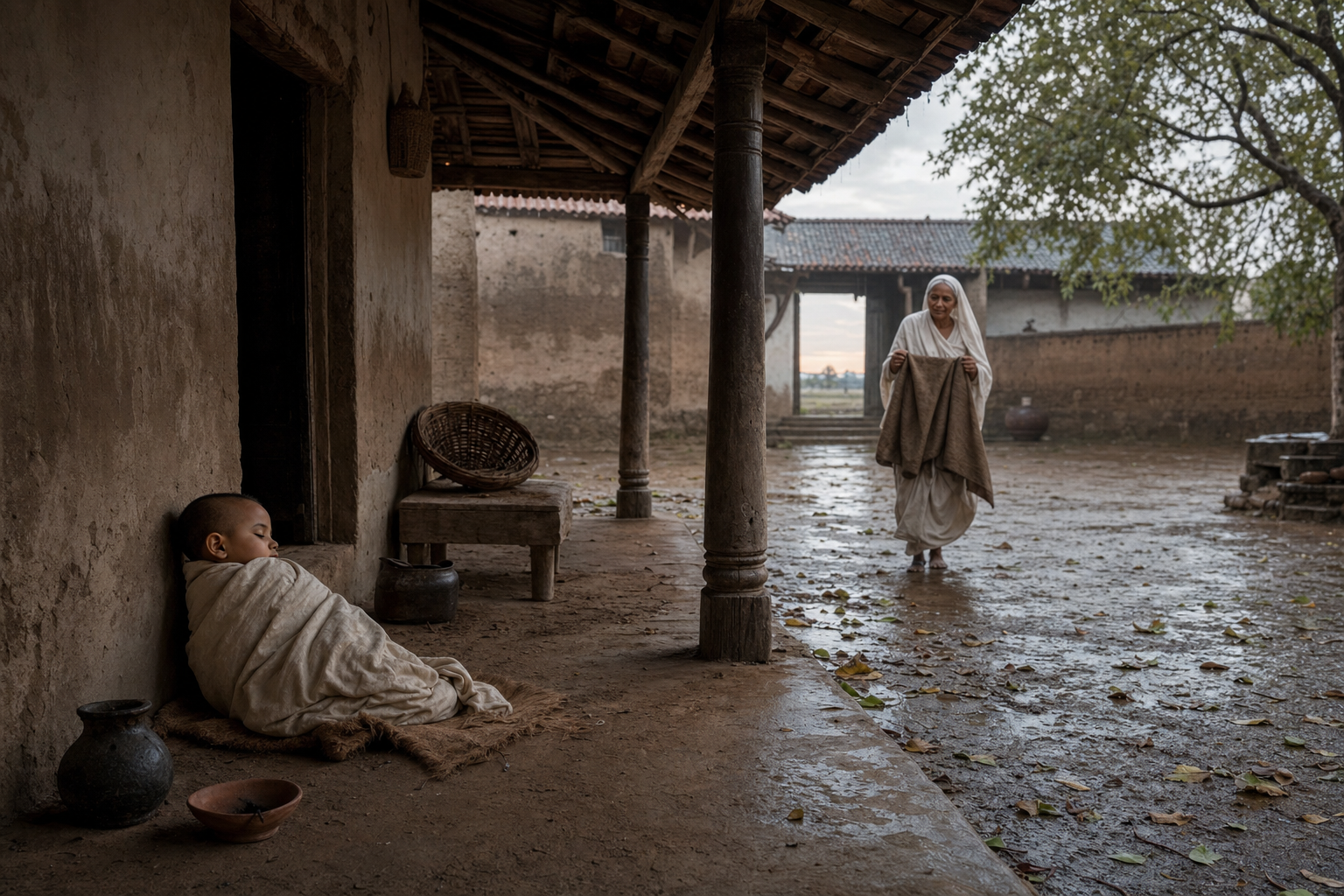
Tulsidas was born in 16th-century India amid turbulence and circumstances remembered as extraordinarily harsh. His story therefore does not begin with comfort, social security or an obvious path toward spiritual distinction. It begins where many people fear a meaningful life cannot begin at all.
A responsible reading should keep two layers in view. The biographical core is a severely difficult beginning. The devotional meaning is that Bhagavan Sri Rama’s care reached a life that appeared uncared for. The first tells you what Tulsidas faced. The second tells you why generations have continued to find hope in his transformation.
Keeping those layers distinct does not weaken the katha. It prevents two common mistakes. One is to treat every vivid detail in a devotional retelling as equally verifiable history. The other is to reduce the life of a saint to bare chronology and discard the spiritual meaning for which the life is remembered.
For your own life, the distinction is equally important. You can state truthfully that something painful happened without turning that event into a definition of who you are. “I was neglected” names an experience. “I am unworthy of care” converts the experience into a verdict. Tulsidas’s spiritual arc asks you to challenge that conversion.
Divine transformation gives life a new center
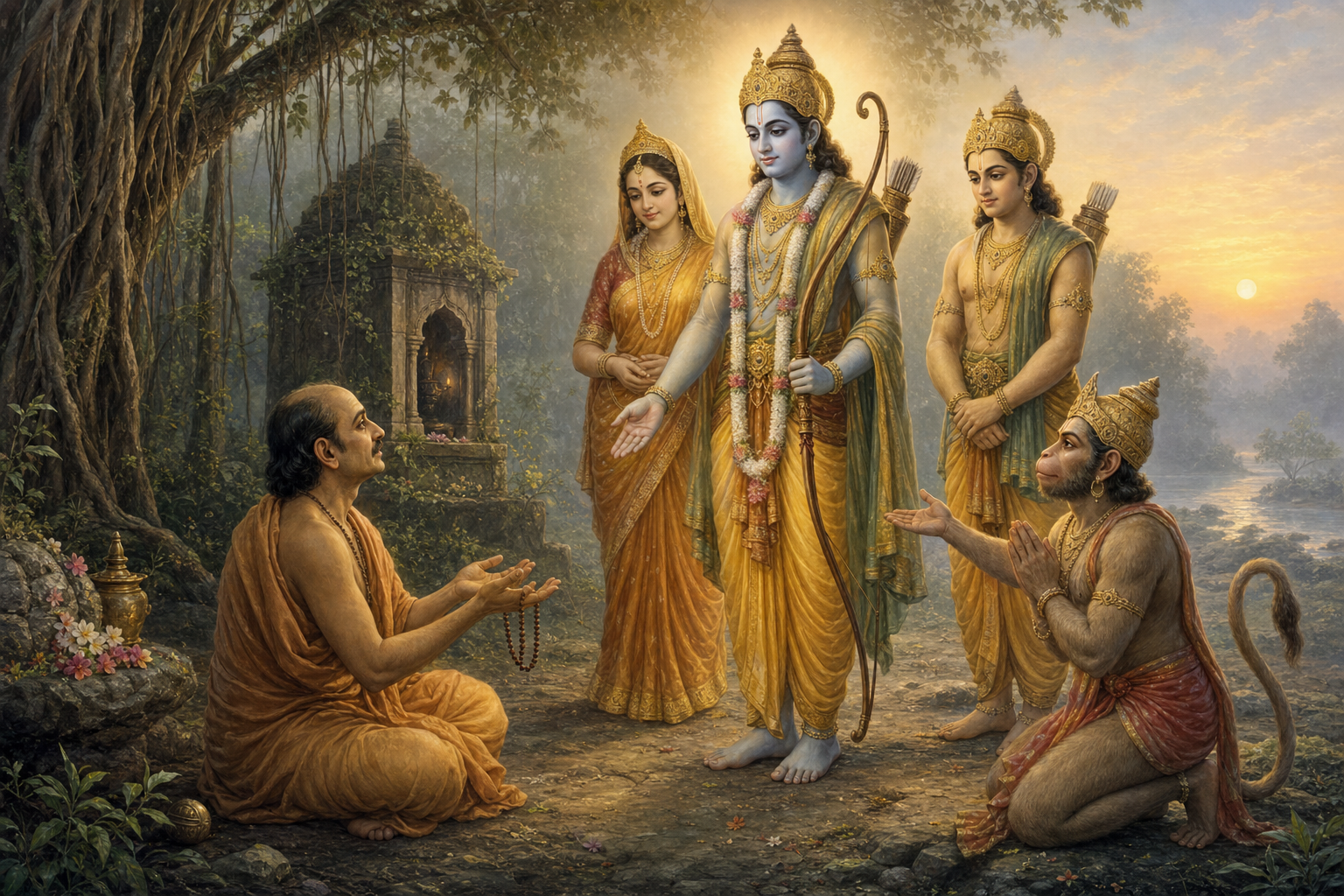
Transformation is often confused with reversal. We imagine that divine grace must erase the past, remove every consequence or make the rest of life effortless. Tulsidas’s story points toward a more demanding understanding: grace changes what stands at the center of a life.
Relief changes a condition. Consolation changes your ability to endure it. Spiritual transformation changes the allegiance by which you understand yourself and choose your next action. In Tulsidas’s remembered journey, abandonment does not remain the central authority. Bhagavan Sri Rama does.
This is why the phrase “Rama cares” carries more weight than ordinary reassurance. It is not merely a promise that distressing feelings will pass. It places human worth and direction within a relationship with the Divine rather than leaving them dependent on whether other people offered recognition at the right time.
If you are reading Tulsidas because rejection has followed you into adult life, notice the question his transformation raises. Do not ask only, “Why did this happen to me?” Also ask, “What now has the authority to name me and direct my conduct?” The first question looks honestly at the wound. The second prevents the wound from becoming your guru.
A dramatic feeling is not required for this change to begin. In bhakti, orientation matters more than spectacle. Each time remembrance of Rama governs an action that fear, resentment or despair would otherwise govern, transformation has acquired practical form.
Grace does not make neglect or suffering holy

The wrong lesson from Tulsidas’s difficult beginning is that deprivation produces sainthood. It does not. Neglect remains neglect, and cruelty remains adharma. Divine grace can work within suffering without turning the cause of that suffering into something good.
- Avoid fatalism. The fact that a saint emerged from hardship does not mean you must passively accept preventable harm.
- Avoid spiritual spectacle. Obsessing over how extraordinary a transformation appears can distract you from the ordinary discipline through which devotion shapes conduct.
- Avoid self-erasure. Dependence on Rama is not a command to reject appropriate human care, wise counsel or protection.
If you are currently living with neglect, coercion or danger, seeking protection is not a failure of faith. Moving toward trusted people and appropriate professional or community support can itself be a dharmic action. Spiritual practice must never be used to demand that someone remain exposed to harm.
This correction matters because devotion can otherwise be turned against the vulnerable. Tulsidas’s life should help you refuse despair, not pressure you to tolerate adharma. Rama’s care is the answer to abandonment; it is not an excuse for those who abandon their duties toward others.
Bring Tulsidas’s movement into your own sadhana
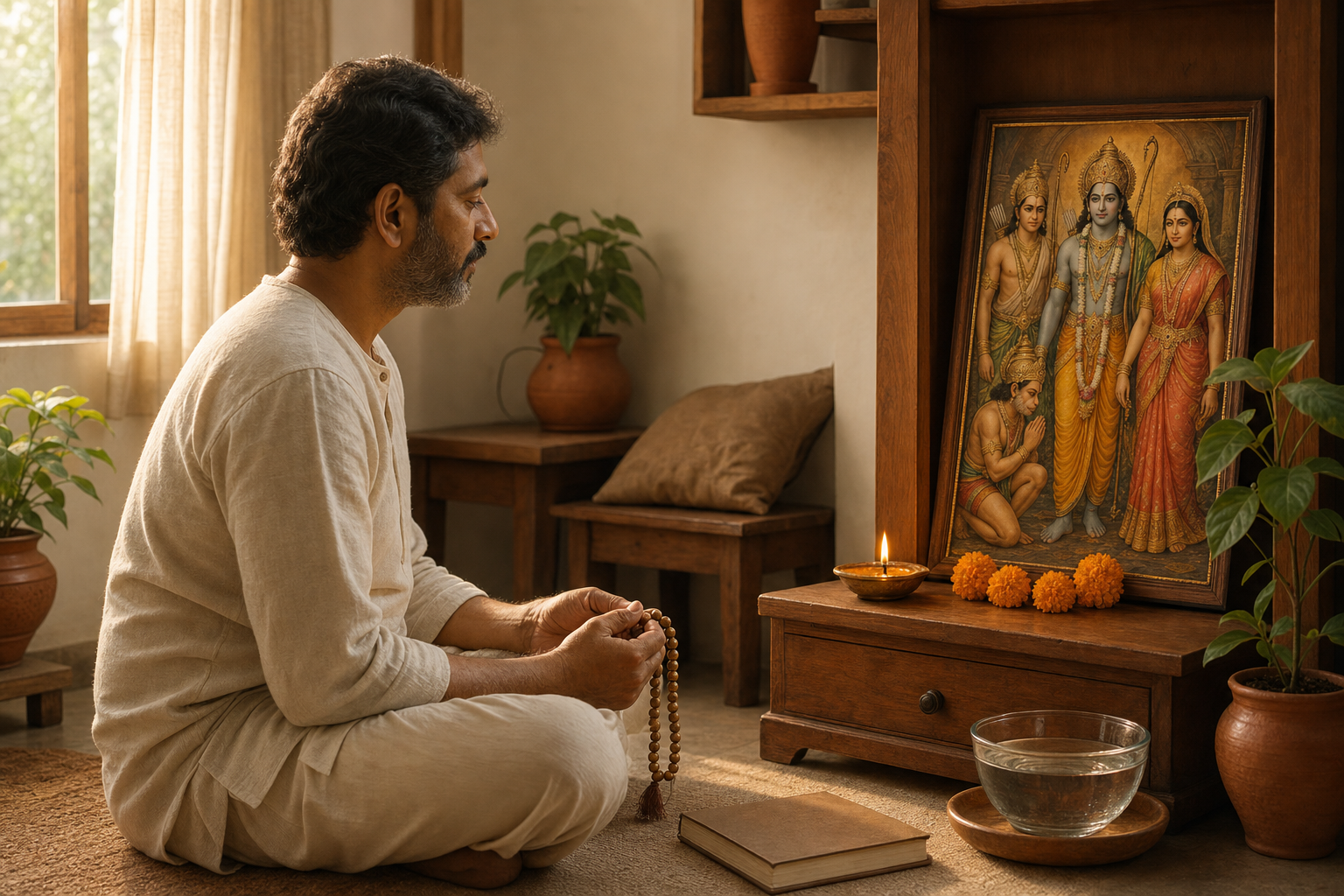
You do not need to reproduce Tulsidas’s suffering in order to learn from his transformation. What you can reproduce is the movement from being governed by abandonment to being governed by remembrance, responsibility and dharma. Use the following sequence as a simple personal practice.
- Name the event without enlarging it. Describe what happened in plain language. Avoid adding a conclusion about your permanent worth, destiny or spiritual eligibility.
- Identify the verdict attached to it. Complete the sentence, “Because this happened, I have been assuming that…” This exposes the belief that may still be directing your reactions.
- Choose a stable Rama-centered anchor. Repeat Rama Nama, offer a short prayer or read a trusted passage of Rama-katha at a fixed point in your daily routine. Choose one practice you can keep, rather than several practices you will abandon.
- Take the next dharmic action. Ask what truthfulness, duty, compassion or courage requires now. The answer may be keeping a commitment, requesting help, apologizing, establishing a boundary or serving someone who has been overlooked.
- Examine the fruit. Notice whether the practice is making you more truthful, responsible and compassionate. If it is being used to avoid a duty, excuse harmful conduct or suppress a necessary decision, correct the direction.
This method keeps devotion from becoming vague consolation. Rama-smriti enters the exact place where an old verdict normally takes control, and it changes the next choice. Repeated choices then give spiritual transformation an observable shape.
There is also a social test. A person who has received the meaning of divine care should become less willing to overlook another person’s abandonment. The inward lesson, “Rama did not leave me without meaning,” should produce an outward duty: do not make another person invisible when care is yours to give.
Key takeaways
- Tulsidas’s early hardship is the setting of his transformation, not the definition of his identity.
- The devotional center of his story is Bhagavan Sri Rama’s care where human care appeared absent.
- Grace changes the authority that directs a life; it does not require pretending that suffering was good.
- Bhakti should lead toward truthful action, responsibility and compassion, not passive acceptance of adharma.
- You can apply this movement by separating an event from the verdict attached to it, establishing a steady spiritual anchor and choosing the next dharmic action.
When you next remember Tulsidas, do not stop at the darkness of his beginning. Ask what becomes possible when Rama’s care, rather than abandonment, occupies the center. Then identify the old verdict directing you today and take one concrete action that belongs to dharma instead. That is where remembrance begins to become transformation.
References
