-
Nilasukta Unveiled: Nila Devi’s Compassionate Radiance in a Vedic Hymn of the Taittiriya Samhita

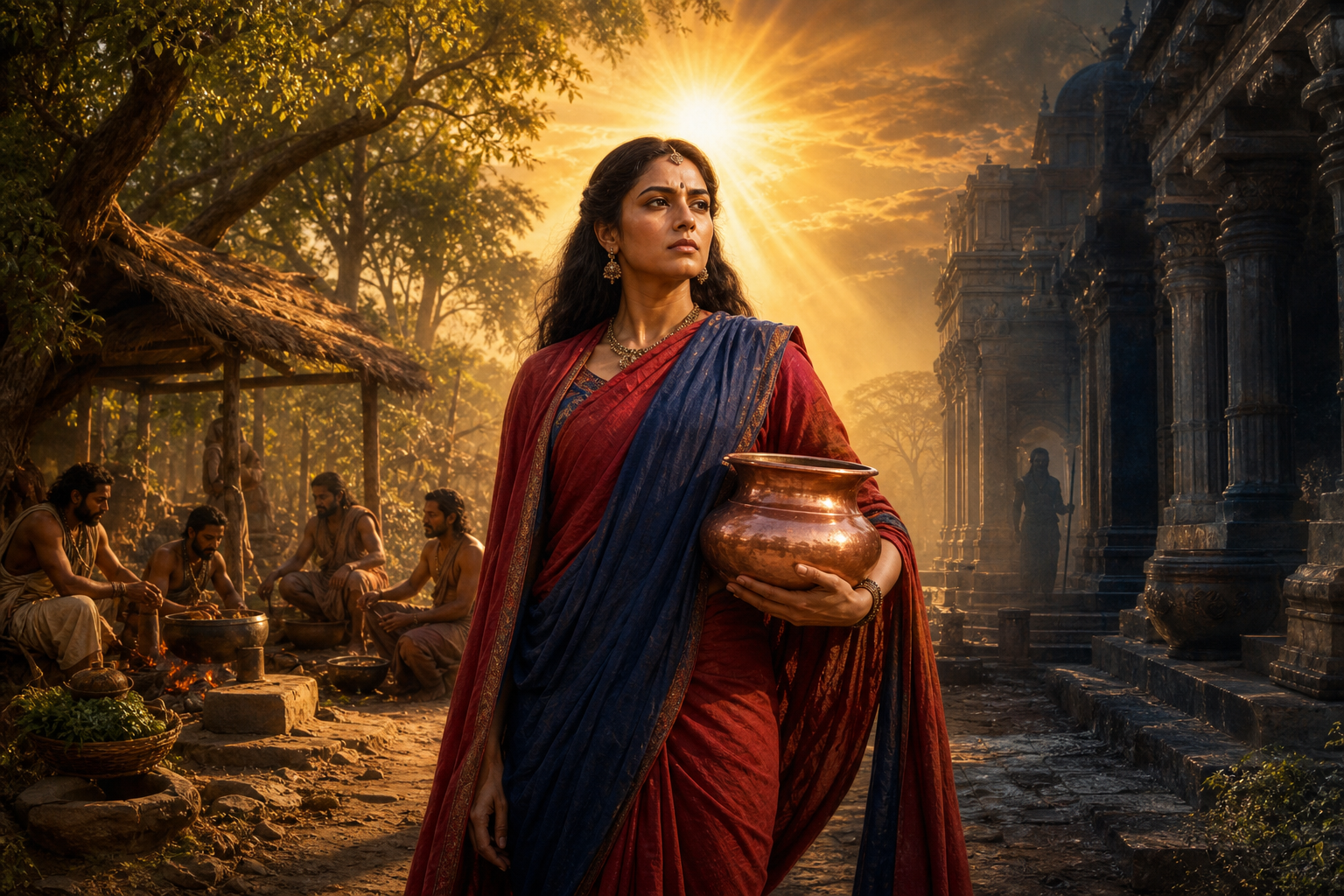
Nilasukta (Nila Sukta) is a Krishna Yajurveda hymn linked to the Taittiriya Samhita that venerates Nila Devi, the compassion-aspect of Vishnu’s shakti. Drawing on the cosmic symbolism of Surya, Chandra, and Agni, it frames compassion as ethical clarity, serene poise, and transformative warmth. The article clarifies its textual transmission, triadic theology (Sri–Bhu–Nila), and ritual use…
-
Rama Katha: Scholarly, Soul-Stirring Life History of Sri Rama, the Maryada Purushottama

This comprehensive Rama Katha presents a scholarly yet accessible life history of Sri Rama, the Maryada Purushottama, rooted in Valmiki Ramayana and allied traditions. Readers gain a clear overview of the seven kandas, from Ayodhya and vanvas to the Setubandha, Yuddha Kanda, and Sri Rama Pattabhishekam. Ethical complexities—such as Vali-vadha and the Agni Pariksha—are examined…
-
When Pride Breaks a God-Gifted Sword: The Curse that Unmade Ravana’s Chandrahasa

This long-form, research-informed reading of the Chandrahasa episode explains how later Ramayana and Puranic traditions frame Ravana’s celestial sword as a dharma-conditioned gift from Lord Shiva. It clarifies why the blade’s power failed: not through metallurgy but through a self-executing moral law that de-authorizes weapons when wielded in arrogance. It surveys variant tellings across regional…
-
Kali Yuga’s Vanishing Divide: Decoding How Asuras ‘Turn Human’ and What It Means for Dharma

This in-depth analysis decodes the Hindu claim that in Kali Yuga the line between asuras and humans fades, showing it as a moral-psychological map rather than a literal prophecy. Drawing on the Vishnu Purana, Bhagavata Purana, and the Bhagavad Gita, it explains how dharma degrades across the yugas and why the age demands simpler, heart-centered…
-
Mudgala Upanishad and the Purushasukta: Decoding Cosmic Personhood, Unity, and Dharma

The Mudgala Upanishad, preserved in several Rigvedic lists, offers a concise contemplative counterpart to the Purushasukta (Rig Veda 10.90). Read together, they articulate a powerful vision of the Cosmic Person (Purusha) that harmonizes ritual symbolism with precise Upanishadic metaphysics. The essay explains key motifs—immanence and transcendence, cosmic sacrifice, and microcosm–macrocosm mappings—while clarifying socially sensitive verses…
-
Akshaya Tritiya’s Eternal Blessings: Scriptural Events, Shared Dharma, and Timeless Charity

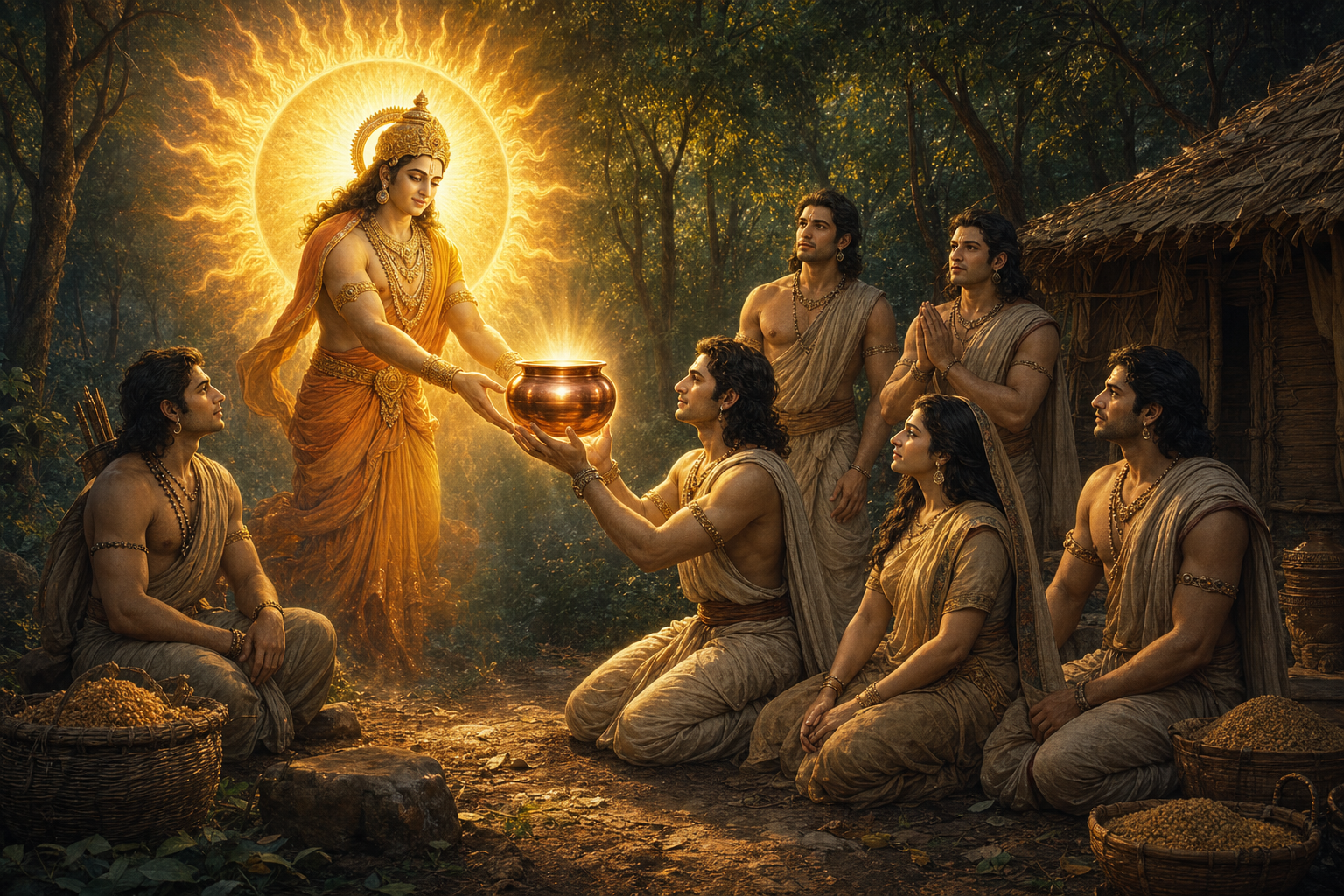
Akshaya Tritiya, observed on Vaishakha Shukla Tritiya, is celebrated across dharmic traditions as a day of inexhaustible merit and compassionate action. Hindu scriptures connect it with Parashurama Jayanti, the Akshaya Patra narrative in the Mahabharata, Annapurna’s alms to Shiva, and the traditional commencement of Vyasa’s dictation to Ganesha. Popular associations also include the spirit of…
-
Ravana’s Hubris and Vasishta’s Warning: How Knowledge Without Humility Ensured Defeat

Framed as “Vasishta’s curse,” this long-form analysis examines how later Ramayana traditions dramatize the collision between Ravana’s brilliance and the dharmic demand for humility. It clarifies textual nuance by distinguishing the core Valmiki Ramayana from regional and oral tellings, reading the “curse” as a pedagogical axiom rather than magical determinism. The essay surveys the ethical…
-
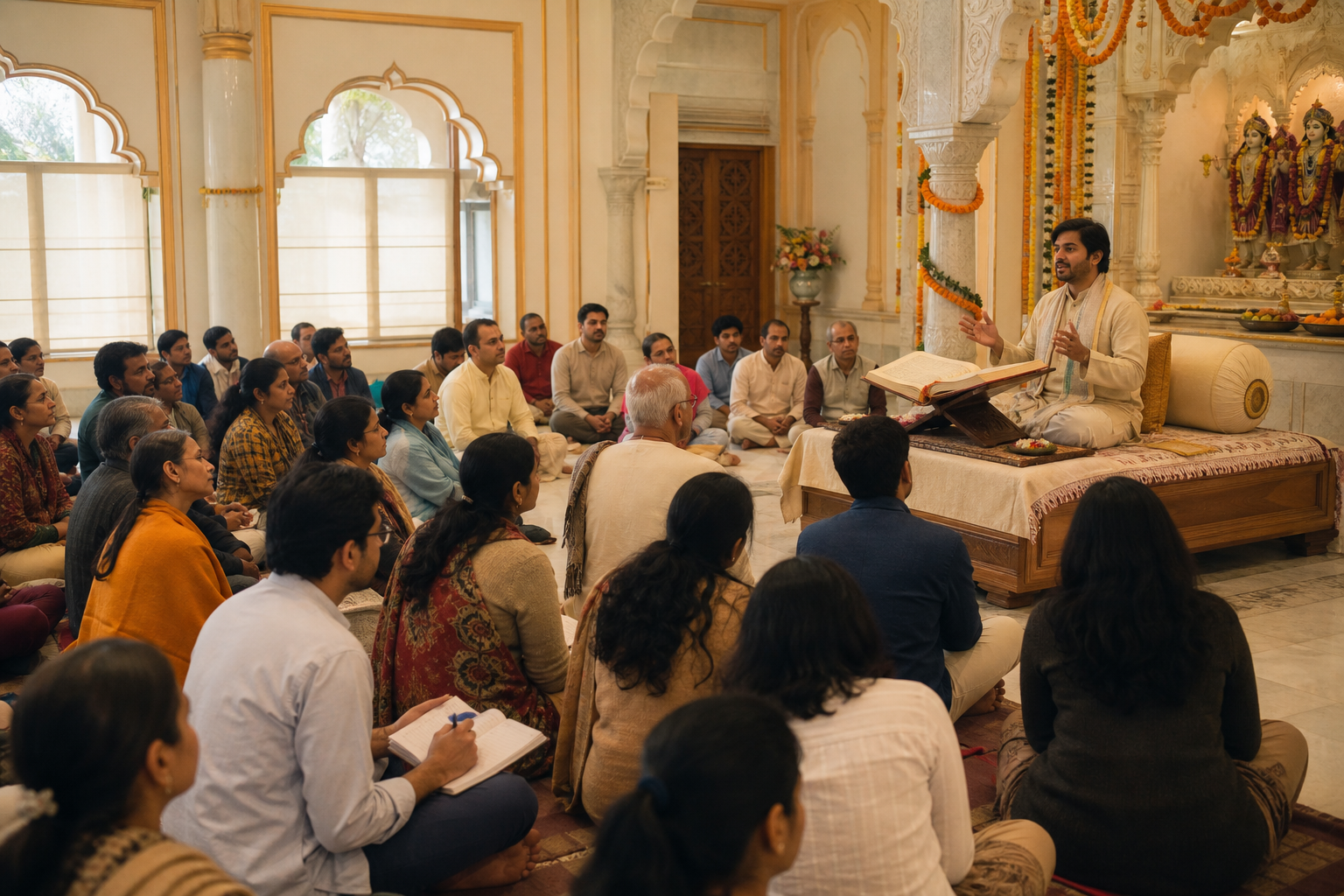
Decoding Rasa and Tattva in Srimad Bhagavatam 11.3.8: Timeless Love, Ultimate Truth, and Kāla

This essay distills H.H. Guru Prasad Swami’s class on Srimad Bhagavatam 11.3.8 into a rigorous yet accessible exploration of two “unlimiteds”: rasa, the ever-fresh devotional experience of Krishna, and tattva, the limitless architecture of philosophical truth. It clarifies how the Bhagavata Purana aligns accurate seeing (tattva-darśana) with transformative tasting (rasa-āsvāda), while kāla (time) governs the…
-
Compassion on Garuḍa’s Wings: SB 2.7.17—Gajendra’s Rescue, Bhakti, and Daily Practice

SB 2.7.17 presents an archetypal moment of divine responsiveness: the Lord hears a sincere plea and arrives on Garuḍa with the cakra to liberate the supplicant. Read alongside the fuller Gajendra-mokṣa narrative in Canto 8, the verse affirms the Bhakti Tradition’s core doctrine of śaraṇāgati—refuge met by grace. The symbolism of Garuḍa (swift compassion) and…
-
Forged in Faith: Weaponry in the Dasam Granth Sahib—History, Shastra-Vidya, and Symbolic Power

Weaponry in the Dasam Granth Sahib is presented as a disciplined convergence of steel and spirit, where shastra-vidya is sanctified by ethics and devotion. Set in the historical crucible of the Khalsa’s formation, these hymns catalog arms—from khanda and kirpan to chakkar, banduq, and top—while binding their use to Dharma-Yuddha principles. The text’s poetic multilingualism…
-
Ramayana’s Powerful Blueprint: Dharma vs. Disorder and the Quest for Just Leadership

This essay examines how the Ramayana confronts humanity’s enduring paradox: the quest to draw order from chaos without promising utopia. It analyzes dharma as a multi-layered system—cosmic, social, and personal—and shows how Rama’s choices model rule-bound leadership (rajadharma) under real-world constraints. Readers gain a technically grounded framework for just decision-making: prioritize norms, exhaust diplomacy before…
-
Kurukshetra’s Hollow Victory: Mahabharata’s Stark Warning Against Meaningless War

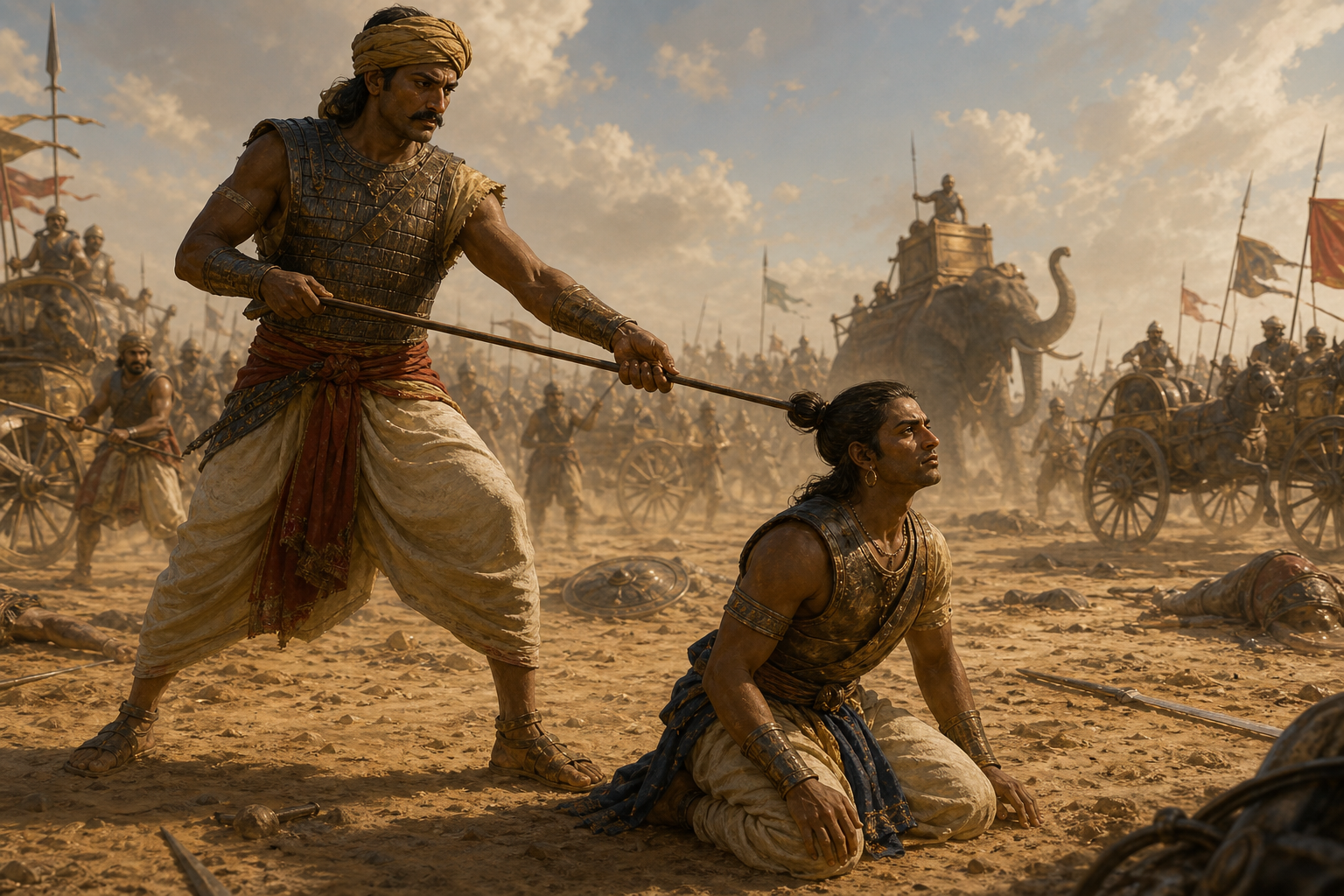
The Mahabharata presents the Kurukshetra War as a hollow victory, using scale, lament, and post-war ethics to warn against meaningless conflict. Through Udyoga Parva’s failed diplomacy and Vidura-niti’s counsel, it sets out a just-war framework—just cause, last resort, right intention, and proportionality—then dramatizes the consequences when those rules are broken. Shanti and Anuśāsana Parvas outweigh…
-
8 Powerful Steps for Prayerful Reading of Srila Prabhupada’s Books for Deep Bhakti Insight

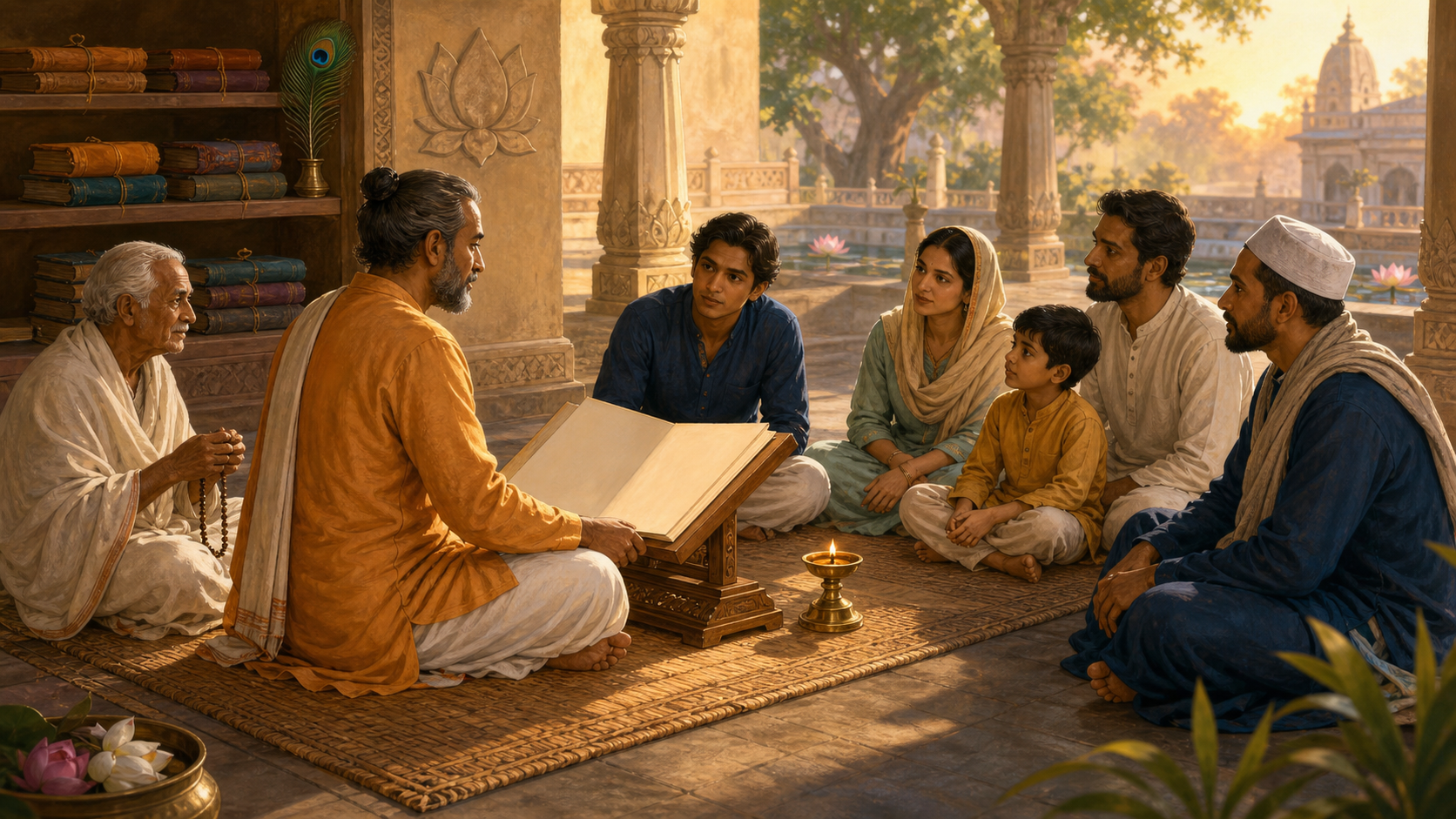
This article presents a practical, eight-step method for prayerful reading of Srila Prabhupada’s books that unites devotion with rigorous study. It explains how intention, a sattvic setting, and a brief invocation prime attention and humility. Slow, structured reading, classical hermeneutic tools, and light Sanskrit awareness deepen comprehension of Bhagavad Gita, Srimad Bhagavatam, and Chaitanya Charitamrita.…
-
Unlocking Liberation: The Muktikopanishad’s Timeless Guide to the 108 Upanishads and Moksha

The Muktikopanishad offers a clear, graded pathway to moksha by organizing the Upanishadic corpus—especially the 108 Upanishads—into an accessible curriculum. Set as a dialogue between Rāma and Hanumān, it blends Advaita Vedānta’s nondual insight with the practical disciplines of ethics, devotion, and meditation. The text’s prioritization of the Māṇḍūkya Upanishad (often with the Kārikā) gives…
-
Unveiling Ishana: Why the Upward Face of the Shivling Is Revered as Sadashiva

The Panchamukha Shivling encodes a complete Shaiva theology in five faces, with Ishana—the upward, zenith-facing aspect—identified as Sadashiva, the ever-auspicious ground of grace. Drawing on Vedas, Agamas, and Puranas, this analysis shows how Ishana culminates the five cosmic acts and why its supradirectional stance symbolizes omniscience and anugraha. Ritual practice confirms the link, as the…
-
Duryodhana in Lake Dwaipayana: Decoding Jala Stambhana and the Psychology of Rage

On the final day of the Kurukshetra war, Duryodhana’s concealment in Lake Dwaipayana—linked in tradition to Jala Stambhana vidya—becomes a profound study of mind, emotion, and dharma. This article decodes the water symbolism in the Mahabharata, showing how immersion allegorizes the cooling of rage and the stilling of mental turbulence. It situates the episode within…
-
Anasuya Versus Ravana: Vedic Wisdom, Dharmic Unity, and Women Scholars’ Enduring Authority

This article examines the evocative Anasuya–Ravana motif as a pedagogical window into Vedic wisdom, Ramayana ethics, and the honored status of women scholars in Ancient India. It clarifies the textual record—Anasuya’s formal debate with Ravana is not in the critical edition—while explaining why the motif flourishes in oral and regional traditions. Readers gain a rigorous,…
-
How Rama and Lakshmana Overcame Viradha’s Boon: A Defining Battle in Aranya Kanda

Set in the early sargas of the Aranya Kanda, the encounter with Viradha in Valmiki’s Ramayana demonstrates how Rama and Lakshmana combine disciplined courage with lawful ingenuity to defeat a rakshasa protected by a boon. The episode transforms a battlefield into a seminar in applied ethics: honor the letter and spirit of law, adapt strategy…