-
Vishwakarma Across India: How Bengal’s Striking Icons and Rituals Recast the Divine Architect

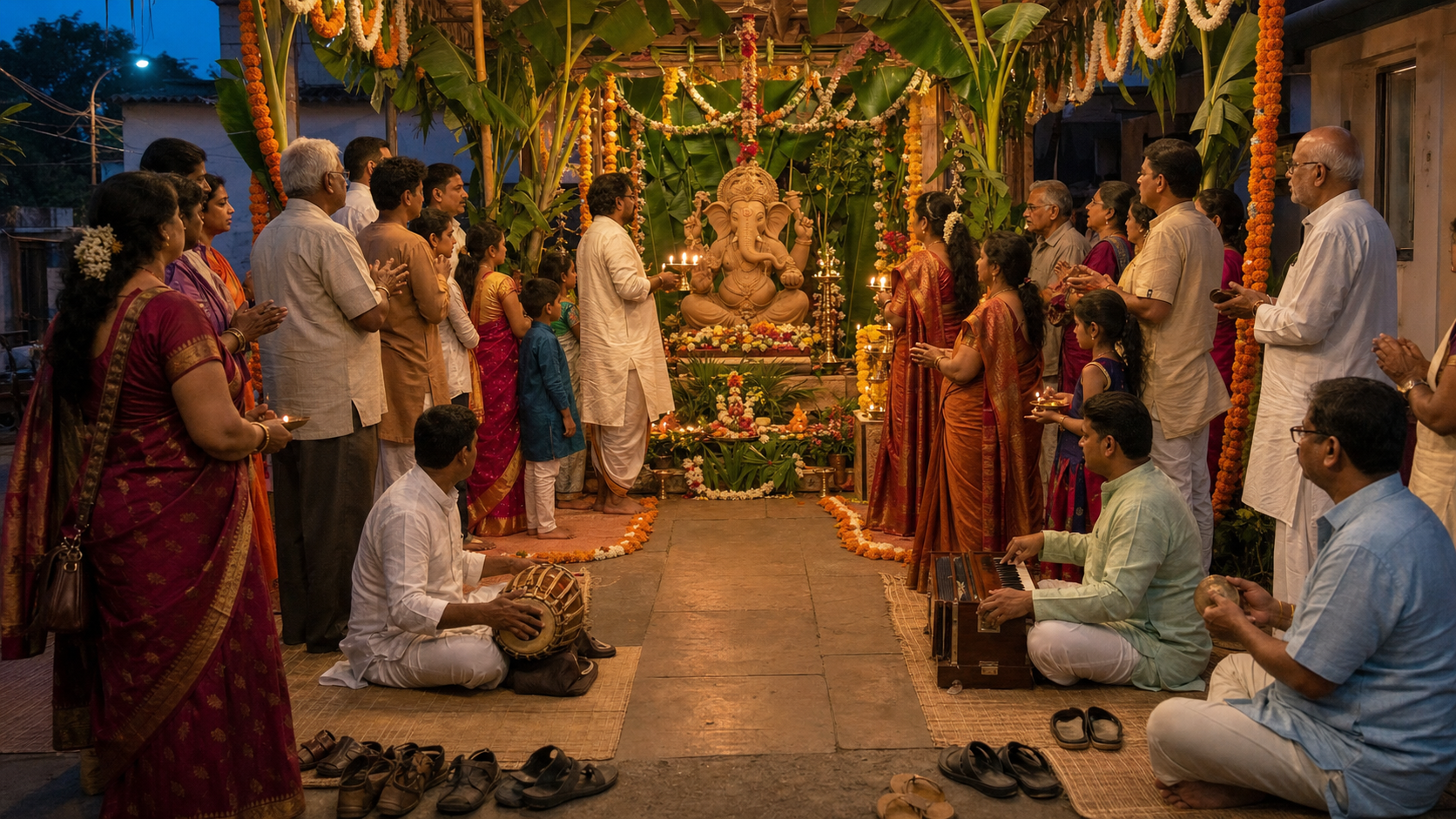
Vishwakarma, the divine architect, is honored across India through rich regional traditions that share a common theological core yet vary in iconography, ritual calendar, and social meaning. Bengal’s Biswakarma Puja, marked on Kanyā Saṅkrānti, relocates devotion to rooftops and workshops, pairing vivid clay icons with explicit tool worship and communal kite-flying. North and West India…
-
Beyond ‘God of War’: Murugan’s origins, Vel symbolism, and Thaipusam’s transformative devotion

Murugan, revered across Hindu, Buddhist, Jain, and Sikh milieus as a symbol of disciplined compassion, emerges in Tamil sources as the mountain-born “Beautiful One” whose power is guided by wisdom. Classical narratives from the Tolkappiyam and Puranic traditions explain his sixfold awareness, the gift of the Vel, and the transformation of Surapadman from pride into…
-
April 21, 2026 Panchang: Shukla Chaturthi to Panchami, Auspicious Timings, Nakshatra & Rashi

April 21, 2026 is a Tuesday featuring a tithi transition from Shukla Paksha Chaturthi (until about 08:13 AM IST in most regions) to Shukla Paksha Panchami. The post explains the technical basis of tithi—12° lunar-solar longitude segments—and shows how this early-morning Chaturthi window suits concise Vinayaka puja, while the remainder of the day favors Panchami’s…
-
Dried Chillies and Salt Ritual: A Powerful, Time-Honored Hindu Shield Against the Evil Eye

This long-form exploration examines the dried chillies and salt ritual—nazar utarna or drishti nivarana—as a concise, household grammar of protection in Hindu life. It situates the practice within Dharmic concepts of raksha, the Atharvavedic concern with averting harm, and the Grihya-sutras’ domestic ethos, while clarifying that chilli–salt use itself is a folk inheritance (lokachara). The…
-
Anand Karaj Unveiled: A Soul-Stirring, Shabad-Centered Guide to Lifelong Companionship

Anand Karaj is more than a wedding; it is a Shabad-centered rite that orients marriage around Guru Granth Sahib and the lived culture of Gurbani. This long-form guide explains the ceremony’s canonical flow, the musicology of the Laavan and Anand Sahib, and the ethical commitments enshrined in Sikh Rehat Maryada. It clarifies common misconceptions, distinguishes…
-
Hanuman Jayanti in Odisha on Maha Bishuba Sankranti: Devotion, Renewal, and Odia New Year

Hanuman Jayanti in Odisha coincides with Maha Bishuba (Pana) Sankranti, aligning Shri Hanuman’s worship with the Odia New Year. This long-form guide explains the sidereal basis of Mesha Sankranti, clarifies how Odia Panji determines muhurta, and contrasts Odisha’s solar-dated observance with lunar-based practices elsewhere. It details Odisha’s distinctive rituals—Bela Pana, Basudha Puja, Danda Nata, and…
-
April 19, 2026 Panchang: Shukla Dwitiya→Tritiya, Shubh Muhurat, and Vedic Guidance

Sunday, April 19, 2026 features a mid-day tithi transition: Shukla Paksha Dwitiya lasts until 13:01 local time in most regions, after which Shukla Paksha Tritiya prevails. This detailed Panchang overview explains how tithi is calculated from the Sun–Moon angular separation and why changes can occur at any clock time. It outlines how to select Shubh…
-
Sacred Amavasya Tharpanam, April 2026: Powerful Sankalpam Mantras, Dates, and Ritual Guidance

Amavasya Tharpanam in April 2026 spans 16–17 April across India, aligning with Chithirai (Tamil Nadu), Mesha Māsa (Kerala), Chaitra (Telugu/Kannada/Marathi/Gujarati), and Vaishakh (North India). Because the amavasya tithi crosses two civil dates, the rite is generally performed on the day it prevails during local midday. This guide situates the observance in Parabhava Nāma Samvatsaram (Śaka…
-
Definitive Panchang for April 17, 2026: Chaitra Amavasya Timings, Nakshatra, Rashi, Shubh Muhurat

April 17, 2026 features Chaitra Amavasya until 5:13 PM IST, followed by Shukla Paksha Pratipada through 3:13 PM IST on April 18. The overview explains how tithis are computed from Sun–Moon longitudes, why month naming differs (Amanta vs. Purnimanta), and how this Amavasya aligns with Chaitra Navratri preparations. It situates the luminaries in Mesha (Aries)…
-
Vaishakh 2026 Guide: Verified Dates, Auspicious Observances, and Dharmic Unity

Vaishakh (Vaisakh) is the second month of the Hindu lunisolar calendar. In 2026, it runs from 3 April to 1 May in North Indian (Purnimanta) calendars and from 18 April to 16 May in Telugu, Kannada, Marathi, and Gujarati (Amanta) calendars. This guide explains why the two month-spans differ, how tithi controls festival dates nationwide,…
-
Vishu’s Timeless Golden Bloom: Kanikonna’s Legend, Botany, and Shared Dharmic Symbolism

Kanikonna, the golden shower tree (Cassia fistula), illuminates the Vishu festival in Kerala with its perfectly timed pre-monsoon bloom and deep ritual symbolism. Rooted in a cherished Kerala legend about Unni and Bala Krishna at Ambadi, the flower’s place at the heart of Vishukkani Darshan unites devotion, seasonal ecology, and intergenerational memory. This long-form exploration…
-
April 16, 2026 Panchang: Krishna Paksha Chaturdashi to Amavasya, Tithi–Nakshatra–Rashi Guide

April 16, 2026 features a meaningful lunar transition in the Hindu calendar: Krishna Paksha Chaturdashi continues until 6:54 PM (IST), after which Amavasya begins and flows into the next day. This guide explains how Tithi is calculated, why two Tithis can occur on one civil date, and how to interpret Nakshatra and Rashi for nuanced…
-
Vishu in Kerala: The Astronomical New Year, Sacred Vishukkani, Sadhya, and Dharmic Harmony

Vishu marks the sidereal Sun’s entry into Mesha (Aries) and is cherished in Kerala as an astronomical New Year of vision, renewal, and balance. This in-depth explainer clarifies how almanacs determine Mesha Sankramana, why Vishu is linked to the term vishuvam, and how its rituals translate cosmic order into everyday ethics. Readers will learn the…
-
Boishakh Mash 2026, Bengali Calendar 1433: Dates, Poila Boishakh 2026, Rituals, and Dharmic Unity

Boishakh Mash—also known as Baisakh or Baishakh—opens Bengali Calendar 1433 in mid-April 2026, setting the cultural and seasonal tone for West Bengal and Bangladesh. This guide clarifies region-specific dates (15 April–15 May in West Bengal; 14 April start in Bangladesh), explains the sidereal solar mechanics behind Mesha Saṅkrānti, and shows how time zones and civic…
-
Akshaya Tritiya Dos & Don’ts: Proven Rituals, Timings, and Ethical Choices for Enduring Prosperity

Akshaya Tritiya (Akha Teej) is celebrated as a Sade-Teen Muhurat—an intrinsically auspicious day for new beginnings, Vishnu Puja, fasting, and charity. This guide clarifies what to do and what to avoid on Akshay Tritiya with academic rigor and practical detail, from puja sequences and fasting options to ethical giving and sustainable community service. It explains…
-
Unlock Inexhaustible Merit on Akshaya Tritiya: Daana Rituals, Scriptural Fruits, and How to Give

Akshaya Tritiya is honored as a naturally auspicious day on which Daana (charitable giving) is believed to yield enduring “akshaya” merit. Classical teachings emphasize six factors—intention, recipient, object, time, place, and method—and present this date as uniquely favorable for aligned, ethical giving. Traditional donations highlighted include Jala Daanam for wealth that benefits all, Shayana Daanam…
-
Sade Teen Muhurat 2026: Unlock 3½ Auspicious Days for New Beginnings—Dates, Timings, Rituals

Sade Teen Muhurat 2026 highlights the three-and-a-half most auspicious days—Gudi Padwa, Akshaya Tritiya, Vijaya Dashami, and Kartik Pratipada—when new ventures are begun without elaborate muhurta selection. It explains why Vijaya Dashami counts as the “half,” focusing on the Aparahna window and the Vijaya Muhurta. Readers gain a clear, region-sensitive view of likely 2026 dates (IST)…
-
April 15, 2026 Panchang Guide: Krishna Trayodashi–Chaturdashi, Sacred Pradosh and Auspicious Timings

This Panchang briefing for Wednesday, April 15, 2026 explains that Krishna Paksha Trayodashi prevails until 8:12 PM (in most Indian regions), after which Krishna Paksha Chaturdashi begins. It clarifies the practical implications for Pradosh Vrat on a Wednesday (Budha Pradosh) and how to confirm observance by checking whether Trayodashi spans local pradosha kala. It outlines…
-
Gandham Amavasya 2026 at Simhachalam: Sacred Sandalwood Rites Before Nijaroopa Darshanam

Gandham Amavasya at Simhachalam initiates the sacred sandalwood preparation that culminates in Chandanotsavam on Akshaya Tritiya. In 2026, it falls on 17 April, three days before Nijaroopa Darshanam on 20 April. The temple’s unique tradition keeps the moola vigraha covered in chandan year-round, removing it only on Akshaya Tritiya for rare darshan. Rituals are conducted…
-
Parashurama Jayanti 2026 Definitive Guide: Akshaya Tritiya Date, Puja Vidhi, Significance

Parashurama Jayanti 2026 coincides with Akshaya Tritiya, the auspicious Vaishakh Shukla Tritiya that symbolizes inexhaustible merit. This definitive guide explains why some regions observe the festival on Dvitiya when Tritiya does not prevail at sunrise, clarifying panchang differences and time-zone effects. It explores Parashurama’s theology as a Vishnu avatar, his role in restoring dharma, and…