
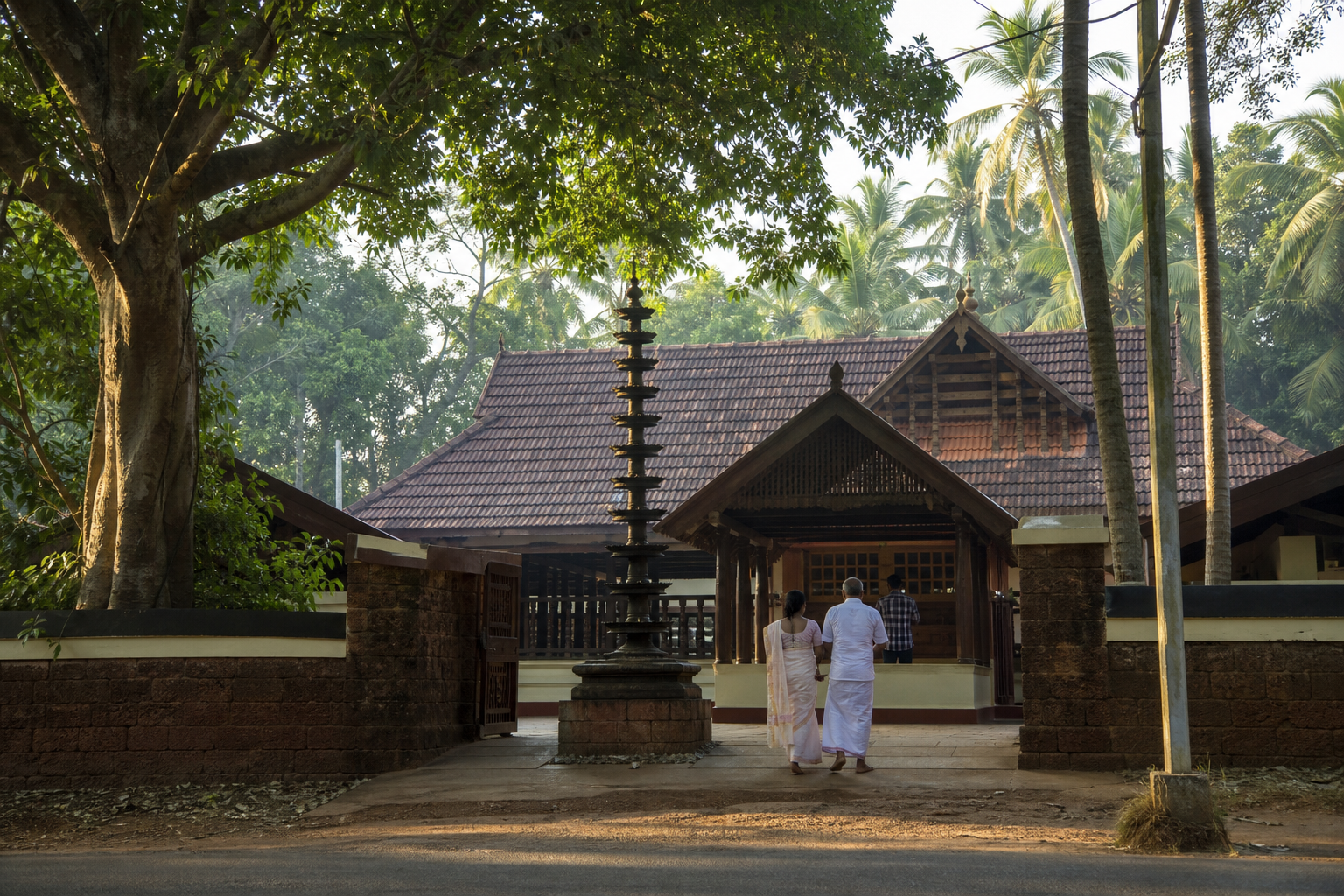
If you are trying to understand Perumana Valiyachan before visiting Chathiyara Devi Temple, the first challenge is not memorising a long legend. It is knowing what is established, what belongs to living local memory, and what should be learned from the people who preserve the tradition.
That distinction protects you from two common mistakes: reducing a sacred guardian to a generic character, or repeating attractive details that the tradition itself has not confirmed. You can approach Valiyachan with reverence while remaining precise about what you know.
Begin with the tradition’s established core
The dependable identification is concise: Perumana Valiyachan, also known as Thekkethadathil Valiyachan, is remembered as the guardian deity of Chathiyara Devi Temple in Shaktikulangara, Alappuzha, Kerala.
This gives you three anchors: the two names identify the same sacred figure in this tradition; his stated role is that of guardian deity; and the tradition is rooted in a particular temple and place. Keep those anchors together whenever you discuss him. A name detached from its temple can quickly become a different story.
Do not silently replace "guardian deity" with "presiding deity." Those expressions make different claims, and only the former is established here. Guardian describes Valiyachan’s relationship to the sacred place. By itself, it does not supply a biography, ritual calendar, iconographic description, list of offerings, or historical date.
The two names also should not be treated as evidence for two separate deities. If you hear Perumana Valiyachan in one conversation and Thekkethadathil Valiyachan in another, begin by recognising them as alternate names within the same temple tradition. Ask a knowledgeable local custodian before proposing any further distinction.
Read the tradition as living memory, not detachable folklore
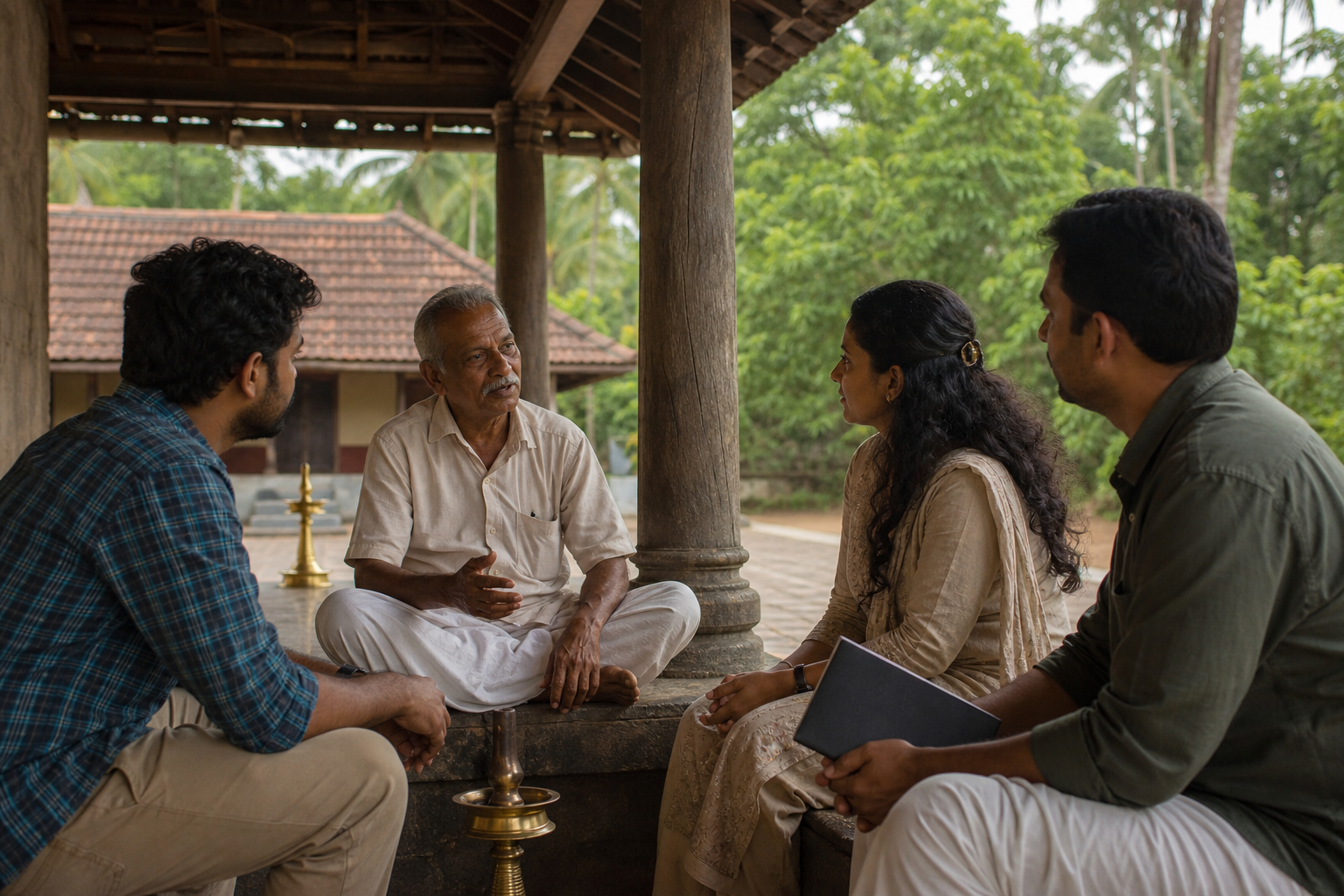
Perumana Valiyachan’s story survives through elders’ memories, ritual life, sacred place, and faith passed between generations. That mode of preservation requires a different kind of attention from a dated inscription or a printed ritual manual. It asks you to listen for who is speaking, what is enacted, and which parts of the account are shared across the community.
Oral transmission is not automatically unreliable. It can preserve relationships, names, duties, boundaries, and sacred meaning that formal histories overlook. At the same time, sacred importance does not make every later explanation equally ancient. Respect for oral tradition therefore includes preserving its own levels of certainty.
- Established identification: the names, guardian role, temple, and location stated above.
- Locally transmitted explanation: an account attributed to temple custodians, elders, or a particular family or community.
- Personal interpretation: what a visitor or devotee believes the tradition means.
Use those labels when you retell what you have learned. Say "an elder explained" when that is what happened. Say "I understand this to mean" when the conclusion is yours. Do not promote either statement into a universally accepted temple teaching without confirmation.
This discipline is not scepticism directed at faith. It is a form of cultural care. Reverence without precision can turn a local deity into a generic myth; precision without reverence can reduce a living relationship to an entry in a catalogue. Dharmic preservation needs both.
Ask better questions when you visit Chathiyara Devi Temple
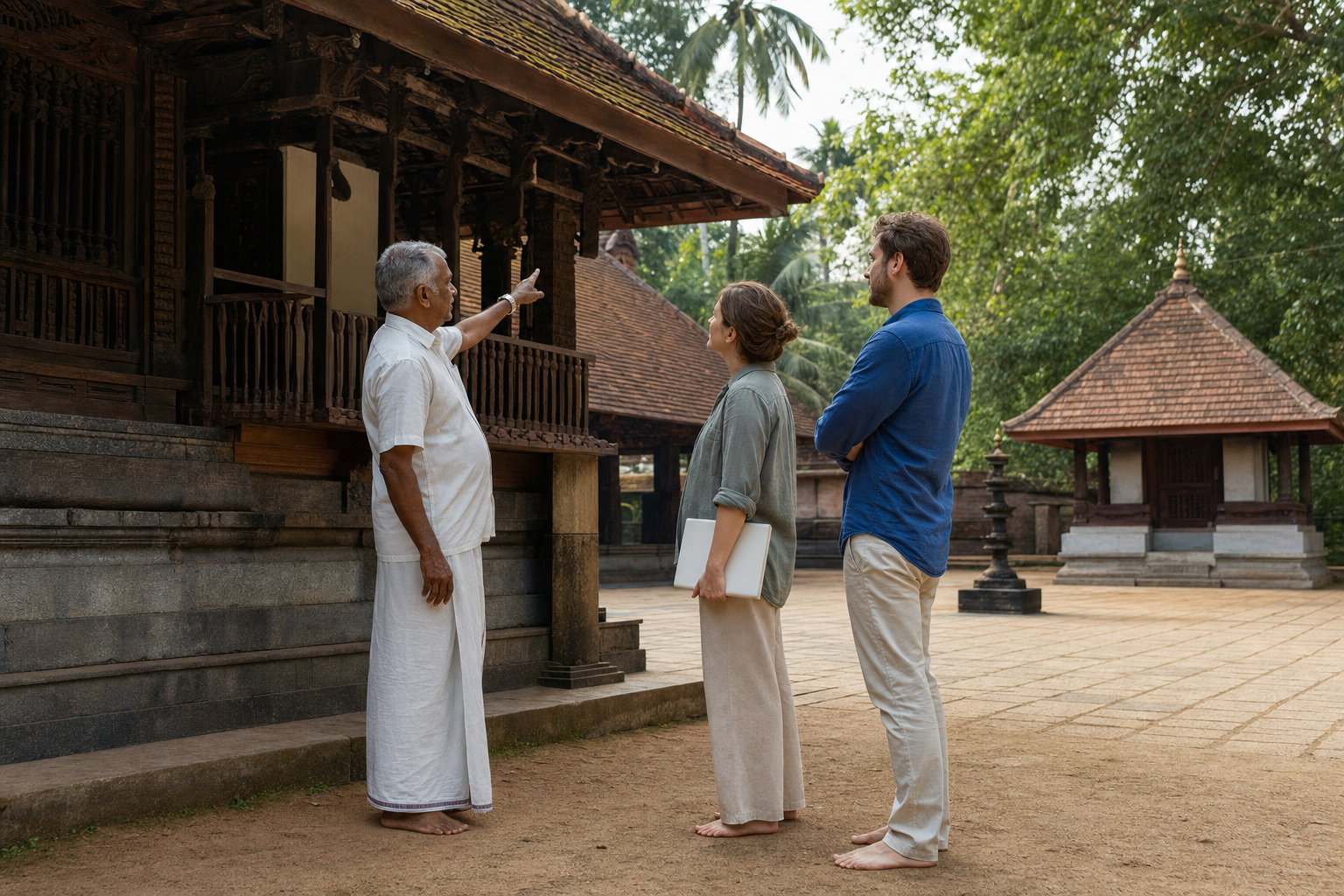
If you visit the temple, arrive with the exact identification rather than a completed theory. Your purpose is to understand how the guardian tradition is lived there, not to make it fit a story pattern borrowed from another shrine.
- Name the tradition precisely. Ask about "Perumana Valiyachan, also called Thekkethadathil Valiyachan, at Chathiyara Devi Temple." This makes your question clear from the beginning.
- Ask about role before origin. Begin with, "How is Valiyachan understood as guardian here?" This lets local practice define the relationship before you ask for a narrative.
- Separate observance from explanation. Ask which aspects are expressed through ritual and which are remembered as stories. Do not assume that a narrated episode is enacted, or that every ritual has one agreed verbal explanation.
- Ask who preserves each account. A temple-wide understanding, a family memory, and one devotee’s interpretation can all matter, but they should not be presented as interchangeable.
- Follow local instructions before acting. Do not invent an offering, vow, form of address, or method of worship from practices seen at another temple. Ask what is appropriate here. Obtain permission before photographing, recording, or publishing anything connected with worship.
A useful conversation may be shorter than you expect. One exact local term, one clarification of the guardian role, or one correction to your assumption can be more valuable than an elaborate account assembled from unrelated temple traditions.
Pay attention to what is not offered for public retelling. A community does not owe every visitor access to every ritual detail or family memory. If a custodian indicates that something is private, leave it private. Cultural preservation is not the same as unrestricted collection.
Preserve what you learn without flattening differences
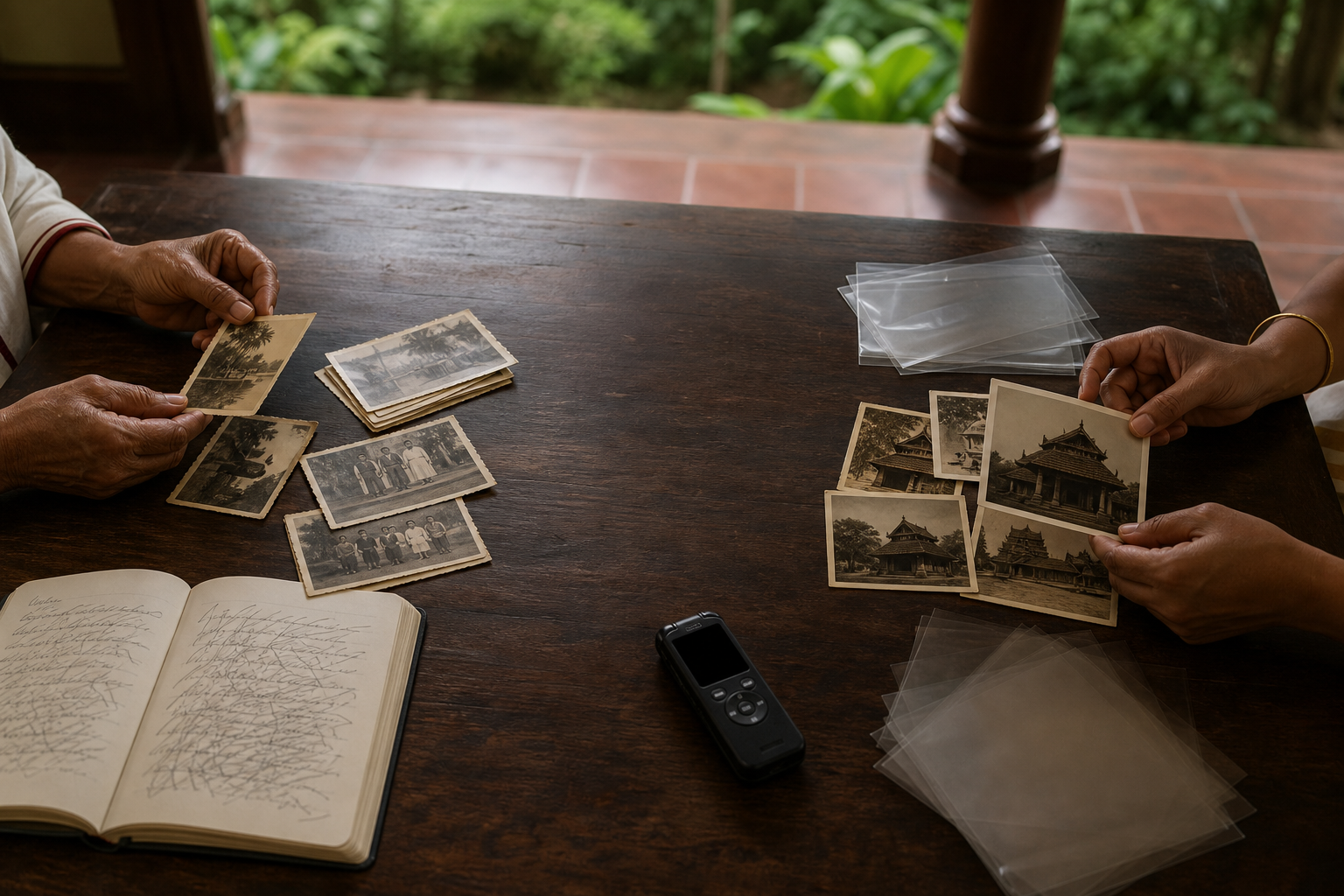
If you are recording the tradition for your family, a community archive, or a future article, documentation should make the chain of memory visible. A polished composite story may read smoothly, but it can erase the very people and distinctions that make a local tradition trustworthy.
- Record provenance. Note who shared the account, that person’s relationship to the temple or tradition, where the conversation occurred, and the date. Obtain consent before naming the speaker publicly.
- Keep original names and terms. Retain "Perumana Valiyachan" and "Thekkethadathil Valiyachan" rather than replacing them with an approximate label. If a local term is explained to you, preserve the term alongside the explanation.
- Distinguish seeing from hearing. Write "I observed," "I was told," or "this family remembers" as appropriate. These phrases tell a future reader what kind of evidence each note contains.
- Preserve variations before reconciling them. If two elders give different versions, record each separately. Do not merge them into a third version merely to remove the difference.
- Confirm what may be shared. Permission to listen is not necessarily permission to publish a name, image, recording, or ritual detail.
- Keep the local scope visible. Describe the account as a tradition of Chathiyara Devi Temple unless a competent custodian gives you grounds for a wider claim. Do not present one local explanation as a rule for all Hindu temples or guardian deities.
Before publishing, read your account once with a simple test: can a reader tell which details were established, which came from a named or described local voice, and which are your interpretation? If not, revise the wording until those boundaries are visible.
Key takeaways for visitors and family historians
- Perumana Valiyachan and Thekkethadathil Valiyachan are alternate names for the guardian deity associated with Chathiyara Devi Temple in Shaktikulangara, Alappuzha.
- Do not confuse the documented guardian role with an unverified biography, ritual schedule, or presiding-deity status.
- Ask local custodians how guardianship is understood and practised at this temple before applying ideas from elsewhere.
- When recording an oral account, identify its speaker, context, and level of certainty instead of blending every version into one seamless legend.
- Seek permission before recording or publishing, and respect any boundary placed around sacred or family-held knowledge.
When you approach Chathiyara Devi Temple, carry the exact names, the exact place, and a few careful questions. Let the living tradition tell you what comes next. What you preserve will then remain recognisably Perumana Valiyachan’s tradition, rather than a familiar story imposed upon it.
References
