

If you came looking for the goddess associated with Purattasi in Tamil Shaiva tradition, the precise name is Simhika Devi. The answer becomes much more meaningful when you see her within the full Shaiva calendar rather than as an isolated deity assigned to one month.
That context also changes how you should approach worship. Start with the tradition’s understanding of sacred time, verify local observances with your temple or family lineage, and resist filling gaps with unverified pictures, mantras, or ritual claims.
Simhika Devi presides over Purattasi
In the Shaiva Agamic and Tamil Shaiva calendar tradition, each of the twelve Tamil months has a distinct presiding goddess. These twelve forms are collectively called the Dvadasa Masa Devis, meaning the goddesses of the twelve months. Simhika Devi is the form connected with Purattasi.
The crucial word is presides. It describes a relationship between a divine form and a portion of sacred time. It does not mean that Devi exists only during Purattasi, that Simhika Devi replaces Shiva, or that every other observance during the month becomes secondary. The monthly form gives a Shaiva devotee a particular way to recognize divine presence within the calendar.
This distinction matters because a Hindu month can carry several overlapping layers of observance. A family, temple, or sampradaya may emphasize festivals, vows, ancestral customs, or another deity during the same period. Simhika Devi is therefore not a rival claimant to Purattasi. She belongs to a specific Shaiva way of reading the month as sacred.
The twelve monthly goddesses make time part of worship
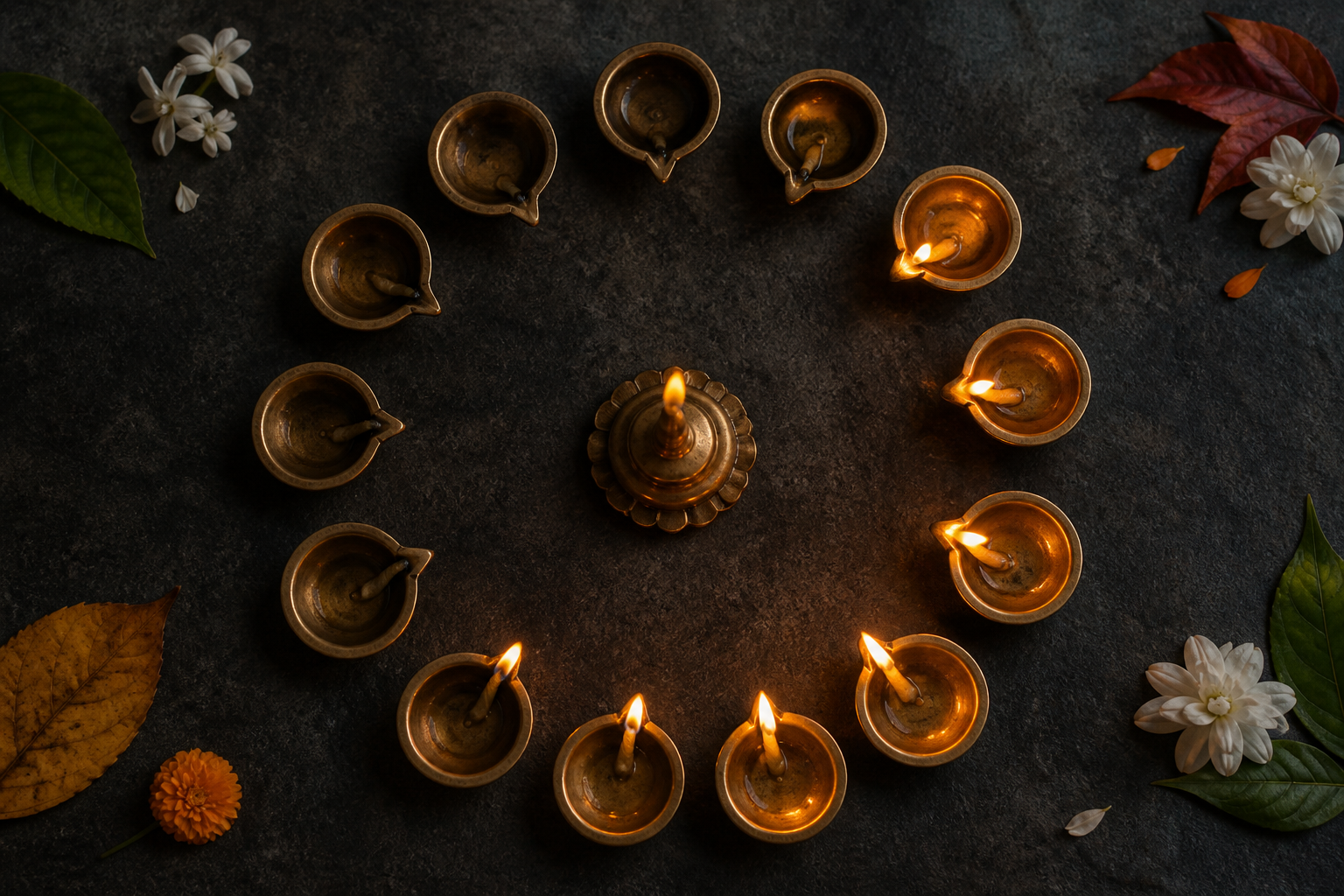
Ordinary calendar use treats a month as a container for appointments. The Dvadasa Masa Devi framework asks you to notice something deeper: time itself participates in sacred order. The calendar does not merely tell you when worship occurs. Its recurring divisions can become forms through which divine power is contemplated.
- Notice the month as a spiritual unit. At the beginning of Purattasi, pause and name Simhika Devi rather than letting the month pass as an anonymous stretch of days.
- Let recurrence create accountability. Choose one dharmic discipline already appropriate to your life and maintain it through the month. Daily prayer, scripture reading, charity, restraint in speech, or dependable service are more substantial than collecting decorative correspondences.
- Hold unity and distinction together. The twelve forms are distinct enough for each month to have its own presiding Devi, yet they belong to one calendrical vision of Shakti. Difference here organizes devotion; it need not fragment the Divine.
If you adopt a monthly discipline, describe it honestly as your devotional response unless your lineage explicitly identifies it as a Purattasi vrata. A personally chosen practice can be sincere and fruitful without being advertised as an ancient or universally prescribed rite.
How to honor Simhika Devi without inventing a ritual

Knowing the name of a monthly goddess does not automatically give you an Agamic ritual manual. Agamic worship is structured and transmitted. Details such as mantras, offerings, gestures, installation rules, and iconographic forms should not be manufactured from a short name or an image found online.
- Find the correct Purattasi dates for the year and place where you live. Use a current Tamil calendar, a reliable panchangam, or your temple’s published calendar. Do not reuse a Gregorian date range copied from a previous year.
- Ask whether your temple follows the Dvadasa Masa Devi system. Use the exact term. Then ask whether Simhika Devi is named for Purattasi, whether she has a separate representation, and whether the observance appears through alankara, archana, sankalpa, recitation, or another temple-specific form.
- Give inherited household practice priority. If your family already has a Purattasi discipline, do not discard it merely because you have learned the name Simhika Devi. Ask an elder or qualified teacher how the monthly Devi understanding can sit within that practice.
- Keep unsupported home worship simple. Where it is already customary and safe in your household, clean the prayer space, light a lamp, make an ordinary offering accepted in your family tradition, and address Shiva and Devi through prayers you already know.
- Use plain language when no transmitted mantra is available. You may say, as a personal prayer, that you honor Simhika Devi as the presiding power of Purattasi and ask for the steadiness to use the month dharmically. Make clear that this is your prayer, not an Agamic mantra.
- Do not improvise esoteric elements. Avoid attaching seed syllables, nyasa, ritual diagrams, initiatory formulas, or promises of supernatural results to Simhika Devi unless they come from a competent tradition that authorizes their use.
This approach is not spiritually thin. It distinguishes bhava, the sincerity of your devotional orientation, from claims of ritual authority. You can honor the sacred month fully while remaining truthful about what you have and have not received from a lineage.
How to evaluate images and claims about her form
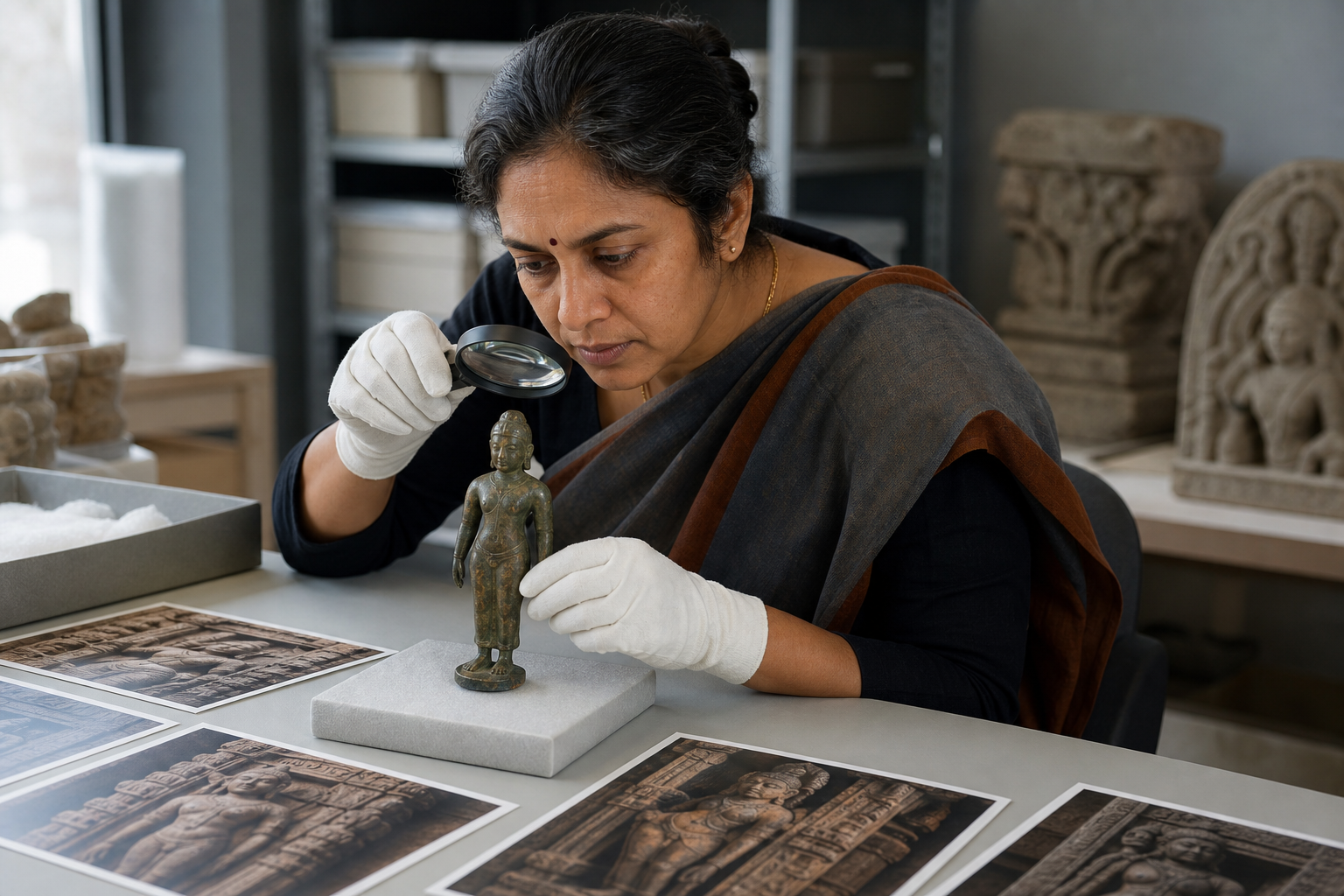
A picture of a goddess posted during Purattasi is not automatically an image of Simhika Devi. Nor can an unlabeled image be identified reliably from its mood, color, number of arms, or apparent fierceness alone. The safest identification comes from context supplied by the tradition that worships the form.
- Look for the temple’s own name or label. A caption issued by the temple, an inscription, or an explanation attached to the shrine is stronger evidence than a reposted social-media caption.
- Check whether the image belongs to a sequence of twelve. Placement within a Dvadasa Masa Devi series gives the identification more context than a detached image does.
- Ask how the identity is expressed ritually. A temple may recognize a monthly goddess through its worship schedule or sankalpa even when visitors do not see a separate permanent murti.
- Record local terminology accurately. Roman-letter spellings can vary. A small transliteration difference does not by itself prove that two differently spelled names refer to separate forms.
- Separate verification from interpretation. First establish that the temple or lineage identifies the form as Simhika Devi. Only then ask what particular attributes, gestures, or teachings mean within that setting.
This method protects more than factual accuracy. It respects Tamil temple traditions as living systems with their own custodians, vocabulary, and ritual memory. Extracting an image from that setting and supplying a dramatic story may attract attention, but it can erase the very tradition you are trying to understand.
Key takeaways for Purattasi worship
- Simhika Devi is the presiding goddess of Purattasi within the Tamil Shaiva monthly-goddess tradition.
- She belongs to the Dvadasa Masa Devis, the twelve divine forms associated with the twelve Tamil months.
- The central teaching is calendrical as well as devotional: time is approached as sacred and alive with divine presence.
- A monthly presiding form does not exclude other Purattasi observances followed by your family or sampradaya.
- Temple and lineage guidance should determine Agamic mantras, iconography, offerings, and formal rites.
- When no transmitted procedure is available, a simple, truthful personal observance is preferable to an invented ritual presented as tradition.
Your next step is practical. Mark Purattasi using a current local calendar, ask your temple whether it observes the Dvadasa Masa Devis, and write down the exact name and instructions it gives you. If no special procedure is transmitted, maintain one honest dharmic discipline through the month and remember Simhika Devi in plain personal prayer. That lets the month become sacred in your life without claiming ritual knowledge you have not received.
References
