
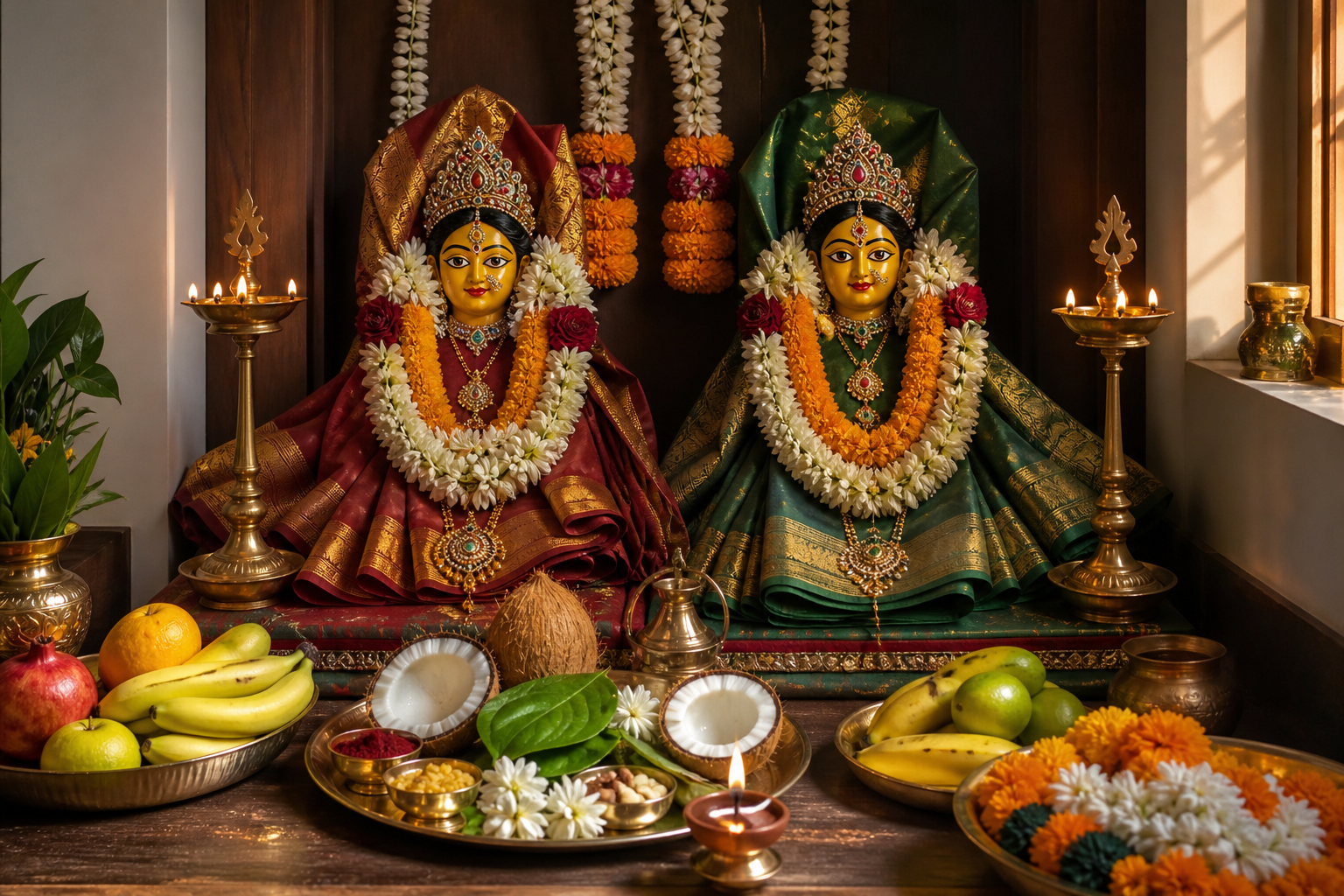
You want to observe Jyeshta Gauri properly, but the names quickly become confusing. One family calls it Gauri Puja, another calls it Bhadrapada Mahalakshmi, and a North Karnataka household may speak of Ele Ashtami or Jyeshta Devi Puja.
Before you collect puja materials or copy a mantra list, identify which tradition your household means. That one decision determines the deity-form, lunar dates, duration and correct ritual sequence.
First identify which vrata your household means

The overlapping names do not always describe one universal ceremony. They point to related but distinct regional and household observances.
| Name you hear | Calendar pattern | What to verify |
|---|---|---|
| Jyeshta Gauri Puja or Bhadrapada Mahalakshmi Vrata | Three days during Bhadrapada Shukla Paksha: Shashti, Saptami and Ashtami | Confirm the household method for avahana, principal worship and visarjana |
| Ele Ashtami or Jyeshta Devi Puja | Associated with Bhadrapada Shukla Ashtami and widely observed in North Karnataka | Confirm whether the worship is addressed as Jyeshta Lakshmi, Jyeshta Devi or Alakshmi in your tradition |
| Sixteen-day Mahalakshmi Vrata | A longer Mahalakshmi observance associated with Ashwin Krishna Paksha in North Indian traditions | Do not substitute a three-day Bhadrapada sequence for its complete vrata-vidhi |
Ask four questions before proceeding: What did your family call the vrata? Does it last three days or sixteen? In which lunar month and paksha was it kept? Was the invoked form named Gauri or Mahalakshmi, or specifically Jyeshta Devi?
These questions are more reliable than matching decorations or photographs online. Two households can create similar-looking arrangements while following different sankalpas and ritual calendars.
Do not collapse Gauri, Mahalakshmi and Jyeshta Devi into one label
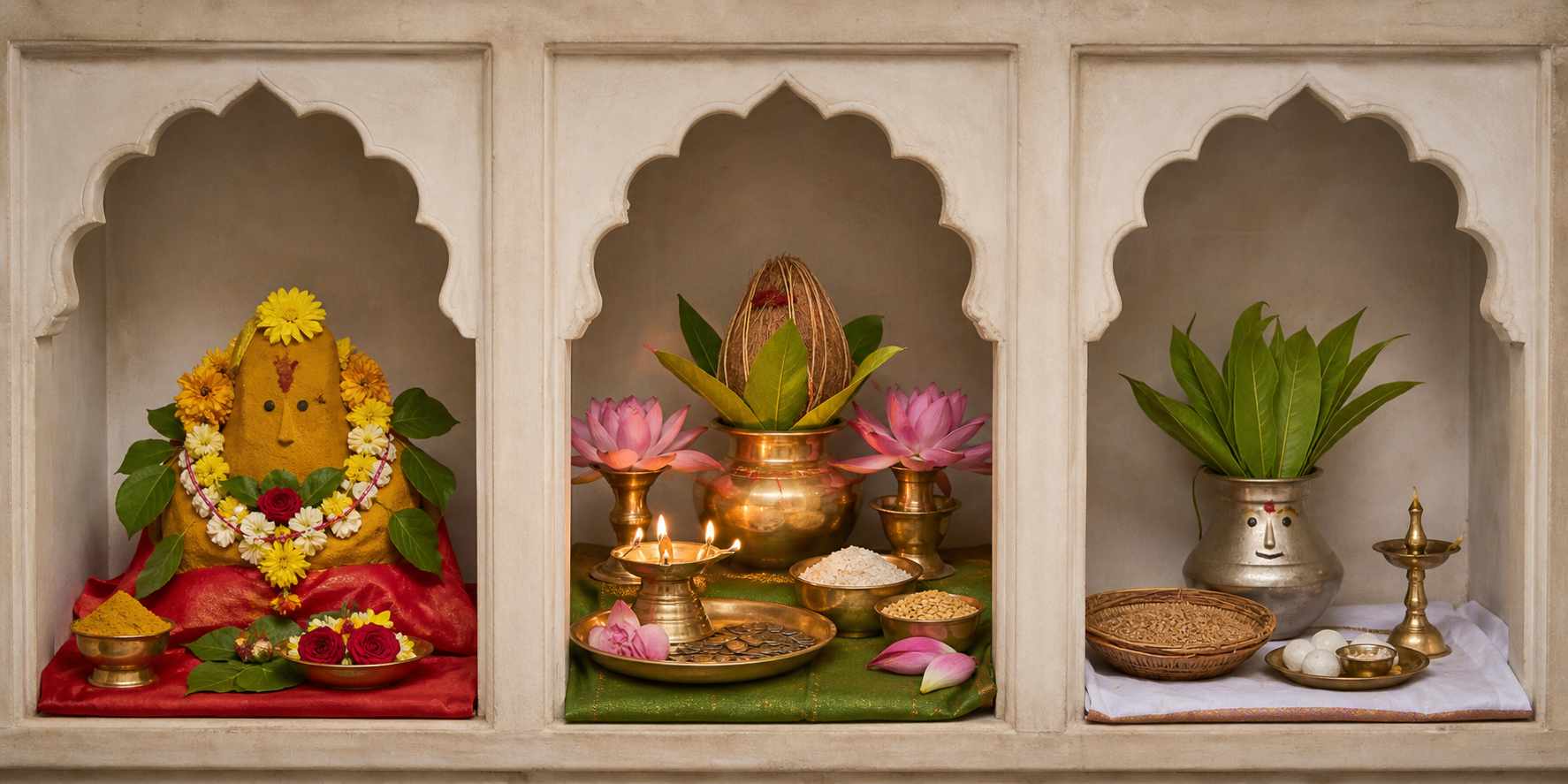
Jyeshta Gauri Puja is also known as Bhadrapada Mahalakshmi Vrata. Ele Ashtami, meanwhile, is dedicated to Jyeshta Lakshmi Devi, also identified as Jyeshta Devi or Alakshmi. The shared words do not erase the difference in ritual intention.
The name Alakshmi can trouble someone encountering the tradition for the first time because it is associated with inauspiciousness and disorder. Within a propitiatory ritual, however, reverence does not necessarily mean inviting the condition represented by the deity. Hindu worship can acknowledge a difficult power, establish a disciplined relationship to it and seek the removal or pacification of what disturbs household well-being.
That is why you should not correct a relative merely because one person says Mahalakshmi while another says Jyeshta Devi. First discover what the family means by the name. Regional vocabulary often carries ritual distinctions that disappear when every observance is translated simply as Lakshmi Puja.
If you are learning from an elder, ask the intended deity-form directly. Also ask which name is spoken in the sankalpa and which inherited prayers belong to the observance. Those answers matter more than a generic list assembled from several traditions.
Plan the 2026 three-day observance in the right order
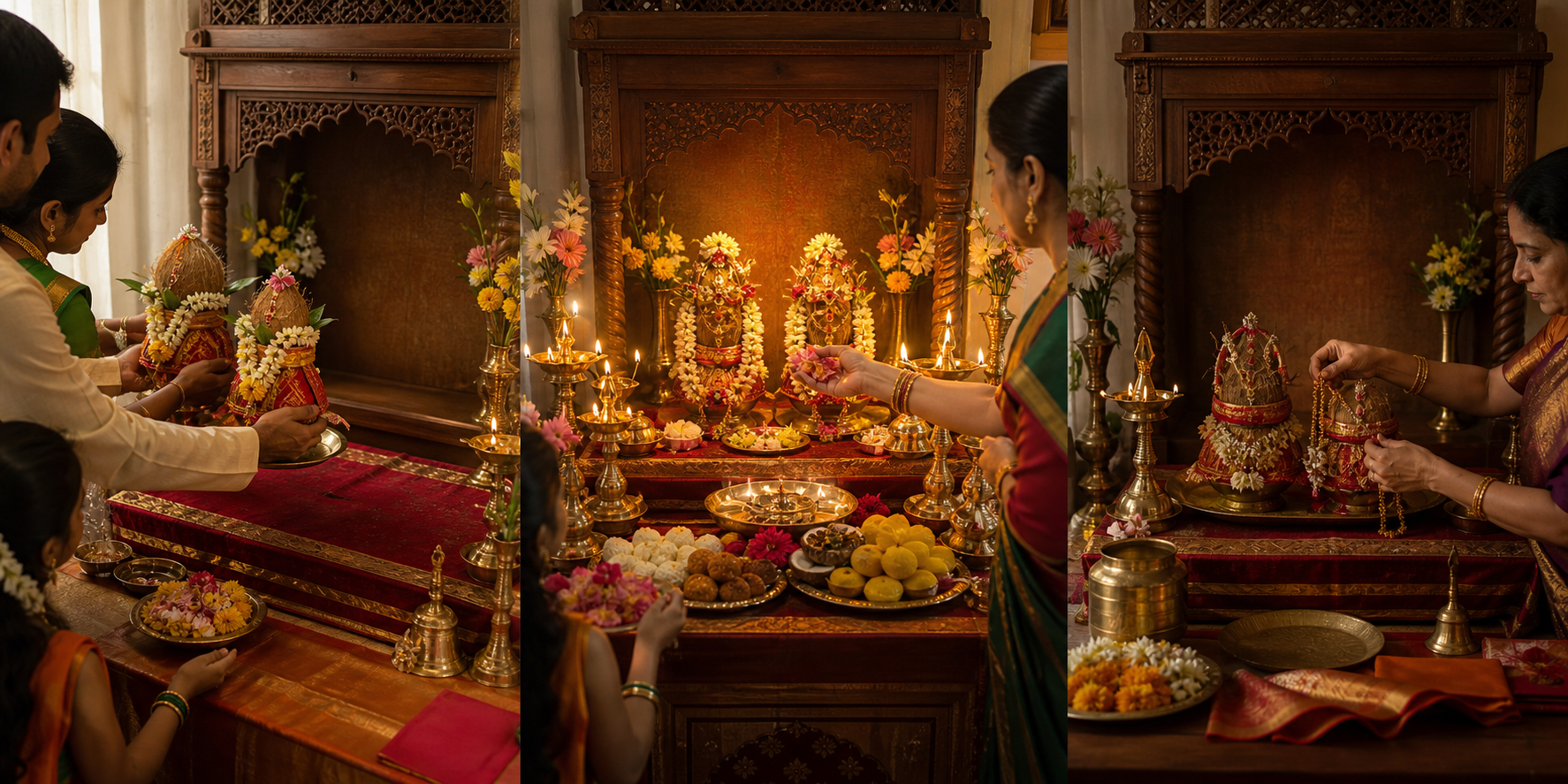
In 2026, Jyeshta Gauri Puja runs from 17 September through 19 September. The observance follows the movement from avahana to principal worship and then visarjana across the three-day period.
- 17 September: prepare for and perform avahana. Treat the welcome as the formal beginning of the vrata, not merely as the day on which the arrangement is assembled.
- 18 September: perform the principal puja. Keep the worship internally coherent by using the prayers, offerings and sequence taught within your household or regional tradition.
- 19 September: complete visarjana. Finish the concluding prayers and formal leave-taking before dismantling the worship arrangement.
Use these dates as the planning frame, but obtain the exact avahana, puja and visarjana times from a panchanga calculated for your location or from the temple or purohit guiding your observance. A clock time copied from another city may not match the local tithi boundary or muhurta.
The word Ashtami can create another avoidable misunderstanding. Although Ele Ashtami is tied to Bhadrapada Shukla Ashtami, its 2026 observance is given as 17-19 September. Do not reduce the entire household tradition to a single day solely because Ashtami appears in its name.
Before the first day, settle five practical matters: who is guiding the vidhi, which family instructions are authoritative, which items must remain in place through all three days, who will be present for the principal worship, and how the visarjana will be completed. This prevents the final day from becoming an improvised cleanup rather than a ritual conclusion.
If you have no written family procedure, choose one coherent path
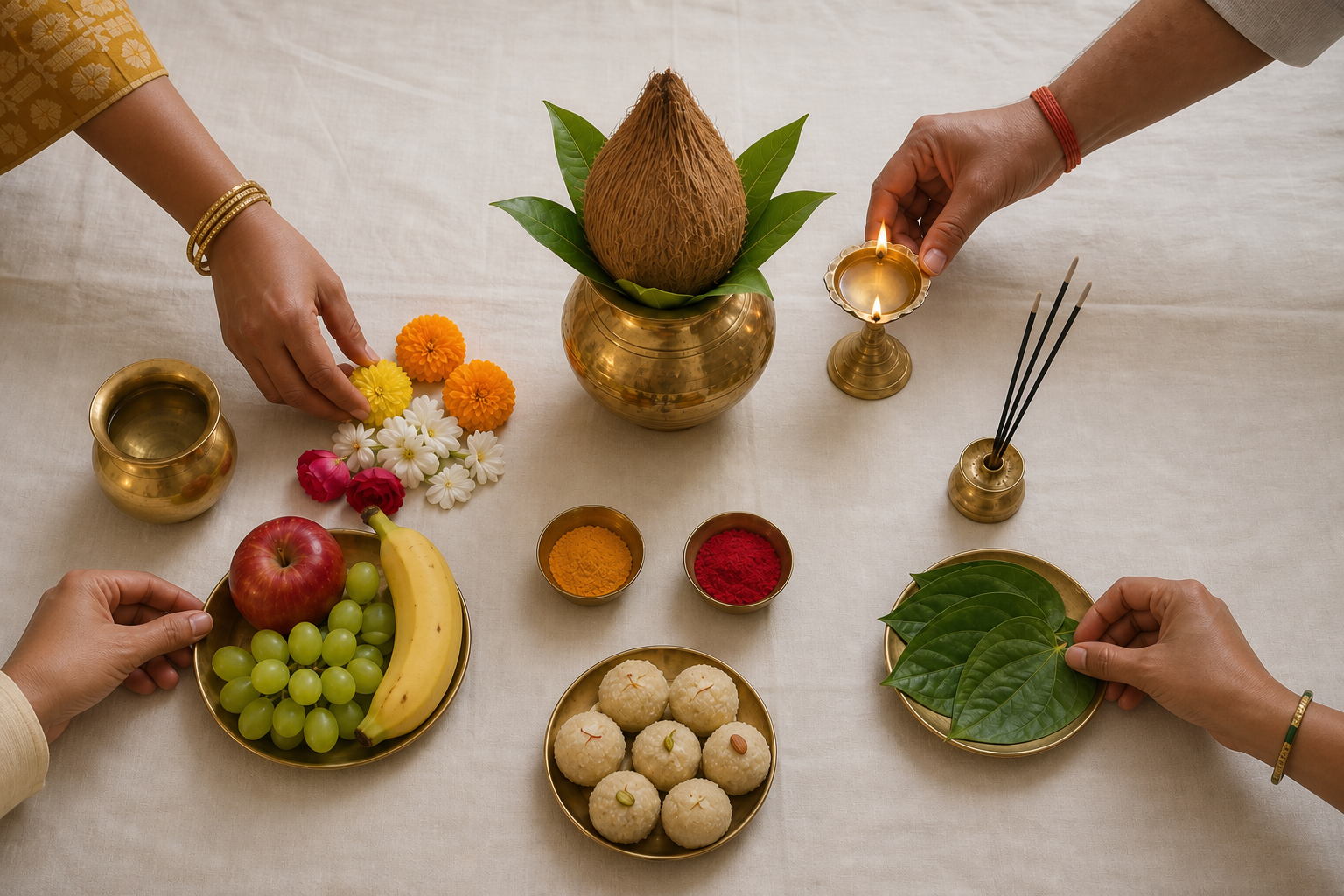
A missing notebook does not mean the tradition has vanished. It does mean you should resist constructing a new ceremony from unrelated fragments. Use the narrowest reliable line of transmission available to you.
- Start with the eldest available practitioner in your family. Ask for the local name, dates, deity-form, ritual stages and words used in the sankalpa. Record the answers instead of relying on memory.
- If family knowledge is incomplete, consult the same regional community. A practitioner or purohit familiar with your family’s area is more useful than a visually elaborate procedure from a different region.
- Decide explicitly between the three-day and sixteen-day traditions. The Bhadrapada Jyeshta Gauri observance and the sixteen-day Mahalakshmi Vrata with its own mantras, stotras and prayers should not be treated as interchangeable schedules.
- Use one complete vidhi. Do not combine the sankalpa from one tradition, deity identification from another and concluding rite from a third merely because all three mention Lakshmi.
- Be honest about the scale of your observance. If you have not learned the full inherited vrata, you can offer a sincere prayer to Mahalakshmi while continuing to learn. There is no need to claim that a newly assembled sequence is the family’s traditional vidhi.
After visarjana, create a one-page household record for the next generation. Write down the name used by your family, the lunar month and paksha, the three ritual stages, the mantra or booklet followed, the person who taught the method, and any questions that remain unresolved. That record will be more valuable next year than a folder of unlabelled images.
Key takeaways
- Jyeshta Gauri Puja is also called Bhadrapada Mahalakshmi Vrata and is observed over Shashti, Saptami and Ashtami in Bhadrapada Shukla Paksha.
- Ele Ashtami is especially associated with North Karnataka and is dedicated to Jyeshta Lakshmi Devi, Jyeshta Devi or Alakshmi.
- The North Indian sixteen-day Mahalakshmi Vrata belongs to a different calendar and ritual framework; do not compress it into the three-day Bhadrapada observance.
- For 2026, reserve 17-19 September for the three-day Jyeshta Gauri sequence, then verify local muhurta times.
- When names or methods conflict, give priority to a coherent family or regional parampara rather than mixing online instructions.
Your next step is not to buy more puja materials. Contact the person who knows your household practice and ask one precise question: Are we observing the three-day Bhadrapada Jyeshta Gauri vrata, Ele Ashtami as Jyeshta Devi Puja, or the sixteen-day Mahalakshmi Vrata? Once that is settled, place the correct dates on your calendar, obtain the local timings and preserve the method you receive.
References
- Hindu Pad – Ele Ashtami | Jyeshta Devi Pooja
- Hindu Pad – Mahalakshmi Vrata Vidhi | Procedure with Mantras
- Hindu Pad – Jyeshta Gauri Puja Muhurat 2026, Avahan, Visarjan Timings
