Author: Web Desk

  • West Bengal’s Democratic Reset: How BJP Can End Tolabaji and Protect Every Citizen

    West Bengal’s Democratic Reset: How BJP Can End Tolabaji and Protect Every Citizen

    West Bengal’s 2026 change of government creates a rare opportunity to replace cadre control with citizen-centred administration. This analysis explains why tolabaji, cut-money, protection demands and syndicate pressure must be treated as institutional threats rather than minor party indiscipline. It distinguishes allegations from proven offences and presents a due-process model grounded in Indian criminal law,…

  • The Indus Waters Treaty Reckoning: How Nehruvian Statecraft Cost Bharat Leverage

    The Indus Waters Treaty Reckoning: How Nehruvian Statecraft Cost Bharat Leverage

    This analysis separates hydraulic fact from televised spectacle in the debate over the Indus Waters Treaty. It explains how the 1960 pact divided the six-river system, why the familiar 80:20 shorthand requires context, and what rights Bharat retained on the western rivers. It assesses Jawaharlal Nehru’s settlement in its post-Partition setting while identifying the strategic…

  • How Colonial Blood-Purity and Race Theories Recast India’s Complex Social Order

    How Colonial Blood-Purity and Race Theories Recast India’s Complex Social Order

    The modern idea of a unified Indian “caste system” was shaped partly by European histories of ancestry, blood purity, race, and colonial government. This study traces the conceptual path from Iberian limpieza de sangre and Portuguese casta to racial anthropology, colonial censuses, ethnography, and Anglo-Indian law. It explains why varṇa, jāti, kula, gotra, sampradāya, śreṇi,…

  • Namo Cities Face NCR’s Hardest Test: Can Transit-Led Growth Finally Decongest Delhi?

    Namo Cities Face NCR’s Hardest Test: Can Transit-Led Growth Finally Decongest Delhi?

    Namo Cities could become the NCR’s strongest attempt yet to move from uncontrolled expansion toward balanced, transit-led development. The Delhi–Ghaziabad–Meerut RRTS already shows how reliable regional transport can improve access to employment, education and healthcare. However, easier commuting will not decongest Delhi unless jobs, affordable housing and public services also move closer to regional communities.…

  • Syama Prasad Mookerjee’s Bold Blueprint for a United, Strong and Inclusive Bharat

    Syama Prasad Mookerjee’s Bold Blueprint for a United, Strong and Inclusive Bharat

    Syama Prasad Mookerjee envisioned Bharat as one sovereign constitutional community in which cultural diversity and equal citizenship could reinforce each other. His best-documented arguments on Jammu and Kashmir appear in the Lok Sabha debate of 7 August 1952, where he combined support for peaceful accommodation with opposition to competing sovereignties. This analysis explains the Instrument…

  • The Fiscal Choices Shaping India: Maharashtra, Gujarat and Punjab Compared

    The Fiscal Choices Shaping India: Maharashtra, Gujarat and Punjab Compared

    State budgets are central to India’s ambition of becoming Viksit Bharat by 2047 because states deliver many of the public services and infrastructure that determine everyday development. This analysis compares Maharashtra, Gujarat and Punjab using harmonised 2024-25 budget estimates, later actuals and NITI Aayog’s Fiscal Health Index. Gujarat recorded the strongest capital orientation, while Maharashtra…

  • Sadguru Subrahmanyam: Powerful Lessons in Self-Realization and Inner Peace

    Sadguru Subrahmanyam: Powerful Lessons in Self-Realization and Inner Peace

    Sadguru Subrahmanyam Garu’s life demonstrates how Self-Realization can be pursued within family life, professional work, service, and ordinary responsibility. Born in Konathaneri and later settled in sacred Srikalahasti, he became known for an unusual stillness rather than public display or institutional power. His relationships with Sri Veeraiah Garu and Thatha Garu Swamy illuminate the disciplines…

  • FCRA 2.0 Explained: What Bharat’s Tough Foreign-Funding Overhaul Means for Sovereignty

    FCRA 2.0 Explained: What Bharat’s Tough Foreign-Funding Overhaul Means for Sovereignty

    The Foreign Contribution (Regulation) Amendment Bill, 2026 proposes a major new framework for supervising foreign contributions and assets when an organisation’s FCRA registration is cancelled, surrendered or ceases. Often described informally as “FCRA 2.0,” the measure remained a pending Bill as of 11 July 2026 and should not be mistaken for fully implemented law. Its…

  • Citizen Vigilante: A Shoddy Revenge Fantasy That Warns of a Fracturing West

    Citizen Vigilante: A Shoddy Revenge Fantasy That Warns of a Fracturing West

    Citizen Vigilante is technically weak, narratively incoherent and ethically troubling, but its popularity reveals a consequential crisis of trust in Western institutions. The film converts public anxiety about crime, immigration and political silence into a fantasy of private punishment. Its central contradiction is that a protagonist who condemns lawlessness repeatedly destroys the rule of law…

  • Digital India at 11: A Bold Blueprint for Sustainable UPI and Deeper Inclusion

    Digital India at 11: A Bold Blueprint for Sustainable UPI and Deeper Inclusion

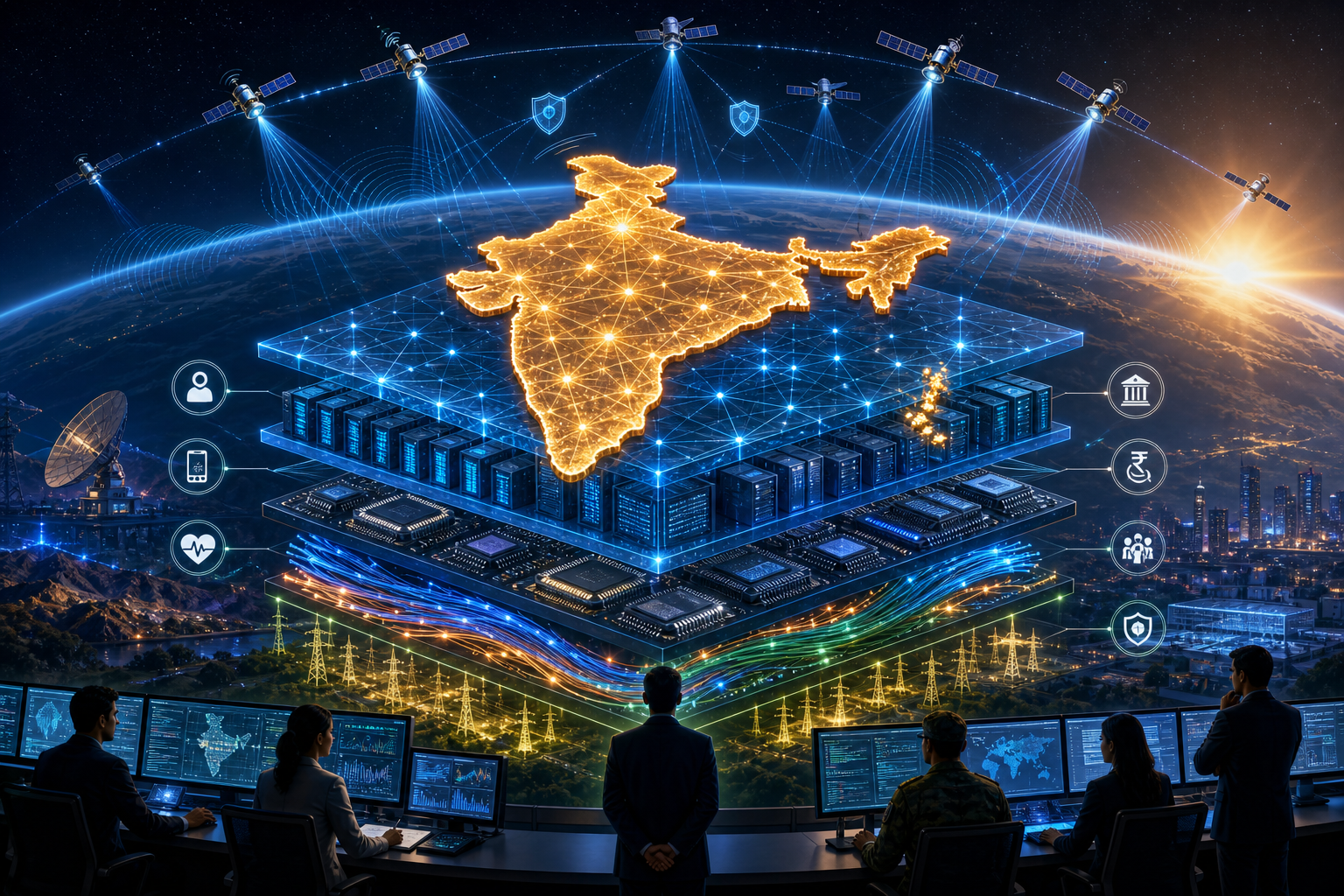
    Digital India’s eleventh anniversary marks a decisive transition from rapid expansion to institutional sustainability. UPI processed approximately 24,162 crore transactions worth ₹314 lakh crore in 2025–26, but maintaining this national infrastructure requires dependable funding, cybersecurity and customer support. A calibrated MDR framework could keep person-to-person transfers, small purchases and small-merchant payments free while allowing limited…

  • Justice Muralidhar, Gaza and Media Bias: The Crucial Facts The News Minute Left Out

    Justice Muralidhar, Gaza and Media Bias: The Crucial Facts The News Minute Left Out

    The News Minute’s profile of Justice S. Muralidhar presents an admiring but incomplete account of his judicial career and leadership of the UN inquiry on Gaza. This analysis corrects the profile’s appointment timeline and carefully reconstructs the documented chronology of his controversial 2020 transfer. It explains why procedural rulings, criticism of anti-conversion laws and questions…

  • UP 2027 Decoded: The Yogi–Akhilesh ‘150 vs 150’ Math Every Voter Should Know

    UP 2027 Decoded: The Yogi–Akhilesh ‘150 vs 150’ Math Every Voter Should Know

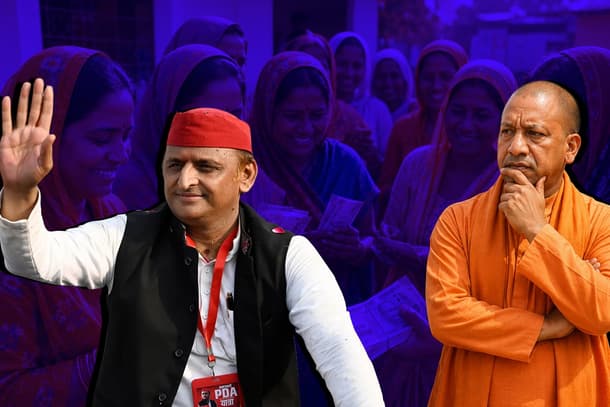
    The Uttar Pradesh Assembly Election 2027 is not merely a personality contest between Yogi Adityanath and Akhilesh Yadav. The ‘150 vs 150’ framework suggests that both principal alliances may possess a strong starting base while still remaining well short of the 202-seat majority. This analysis explains how the remaining competitive constituencies could be decided by…

  • The Silent Encirclement: How China Is Reshaping the Bharatiya Subcontinent

    The Silent Encirclement: How China Is Reshaping the Bharatiya Subcontinent

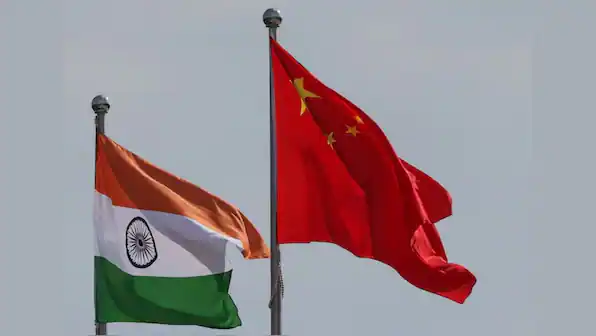
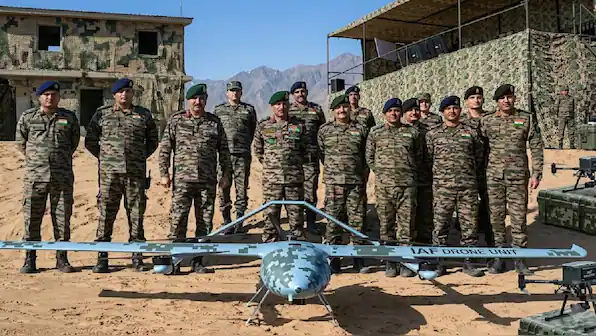
    China’s challenge to the Bharatiya subcontinent extends far beyond conventional military pressure along the Line of Actual Control. This analysis explains how infrastructure finance, defence supply, ports, digital networks, debt exposure and political influence can create asymmetric dependence across South Asia. It provides country-specific assessments of India, Pakistan, Nepal, Bhutan, Bangladesh, Myanmar, Sri Lanka and…

  • Vīrabhadra and Hindutva: A Powerful Dharmic Lens on Cultural Renewal in Bharat

    Vīrabhadra and Hindutva: A Powerful Dharmic Lens on Cultural Renewal in Bharat

    This long-form analysis explains why Vīrabhadra provides a powerful but demanding metaphor for Hindutva and Hindu cultural resurgence. It guides readers through the Purāṇic knowledge system, the complete Dakṣa Yajña narrative and the movement from exclusion to restoration. It distinguishes Hindu civilisation, modern Hindutva, political organisations and electoral strategy instead of collapsing them into one…

  • Beyond Vismṛti: How Nalanda’s Living Legacy Can Transform Indian Education

    Beyond Vismṛti: How Nalanda’s Living Legacy Can Transform Indian Education

    Indian education cannot reclaim its civilizational inheritance through nostalgia or rejection alone. This analysis uses Vismṛti and Rajju-Sarpa Nyāya – Adhyāsa to explain how inherited categories can obscure lived Indian traditions. It distinguishes the historical Nalanda Mahāvihāra from a modern university while showing why “university” remains a useful but limited comparison. The discussion traces Nalanda’s…

  • India’s New FCRA Rules Explained: The High-Stakes Debate Over NGOs and Conversion

    India’s New FCRA Rules Explained: The High-Stakes Debate Over NGOs and Conversion

    India’s 2026 FCRA amendments make foreign-funding permissions specific to approved purposes and geographical areas. They introduce a detailed schedule for religious, cultural, economic, educational and social activities while excluding proselytisation from specified religious categories. The rules strengthen donor traceability, governance disclosures, project reporting and scrutiny of key functionaries. They also impose a 75 per cent…

  • Inside M. Hiriyanna’s Secret Diary: Wisdom, Grief and the Making of a Vedantic Master

    Inside M. Hiriyanna’s Secret Diary: Wisdom, Grief and the Making of a Vedantic Master

    M. Hiriyanna’s private diary, Chaff and Draff, reveals the disciplined human life behind one of modern India’s most respected interpreters of Vedanta and aesthetics. Its entries trace more than fifty years of family responsibility, travel, scholarship, grief and spiritual practice. The diary explains how Shravana, Manana, Nidhidhyasana and Dhyana shaped Hiriyanna’s movement from philosophical learning…

  • India–Pakistan Talks After Terror: A Hard-Edged Framework for Lasting Peace

    India–Pakistan Talks After Terror: A Hard-Edged Framework for Lasting Peace

    This long-form analysis examines why renewed calls for India–Pakistan dialogue provoke deep scepticism after repeated cycles of outreach, aggression and terrorism. It explains the 2026 open letter signed by 117 Indian and Pakistani public figures and evaluates its proposals individually. The discussion distinguishes crisis communication, humanitarian engagement, religious access, Track Two diplomacy and comprehensive political…

  • How Bharat Can Escape the Hormuz Trap by Closing Four Critical Technology Gaps

    How Bharat Can Escape the Hormuz Trap by Closing Four Critical Technology Gaps

    The 2026 disruption at the Strait of Hormuz showed that Bharat can manage a major short-term energy shock through diversified suppliers, higher domestic production and coordinated maritime action. It also exposed the difference between temporarily securing imported fuel and permanently reducing dependence on it. Broad electrification of transport and cooking offers a practical route toward…

  • Alpha Review: A Blistering Look at Failed Spectacle and Selective Film Criticism

    Alpha Review: A Blistering Look at Failed Spectacle and Selective Film Criticism

    This long-form review examines the controversy around Alpha, the YRF Spy Universe film criticised by The Commune while receiving praise from Anupama Chopra for its “badass women” and “kinetic action.” It argues that representation, franchise branding, and polished action cannot compensate for weak writing, shallow characterization, and poor dramatic structure. The piece separates the value…