-
Rudra-Gita’s Powerful Lesson: Lord Shiva’s Prayer for Clarity and Bhakti

Śrīmad-Bhāgavatam 4.24.32-43 presents Lord Śiva’s Rudra-gītā as a profound teaching on humility, sacred sound, sense control, and devotional service. The passage shows Lord Śiva as compassionate and nārāyaṇa-paraḥ, guiding the Pracetās toward disciplined bhakti rather than sectarian rivalry. Its theology explores Vāsudeva, Saṅkarṣaṇa, Pradyumna, and Aniruddha while connecting cosmology with the practical purification of mind,…
-
Qazi Nur Muhammad’s Jangnama: Powerful Lessons for Sikh and Indian Historiography

Qazi Nur Muhammad’s Jangnama is a crucial Persian war narrative for understanding eighteenth-century Punjab, the Durrani campaigns, and the rise of the Sikh misls. Its importance comes from the fact that it is a hostile source that still preserves evidence of Sikh courage, discipline, and military effectiveness. The text helps historians study post-Mughal state formation,…
-
Powerful Lessons from Śrīmad-Bhāgavatam 8.18.13 on Vāmana and Sacred Duty

Śrīmad-Bhāgavatam 8.18.13 reveals the sacred moment when the sages joyfully recognized Lord Vāmana in the form of a young brahmacārī and performed the proper Vedic ceremonies under Kaśyapa Muni’s guidance. The passage offers a rich study of Vāmana avatāra, samskaras, jāta-karma, upanayana, and the deeper meaning of brahmacarya in Vedic culture. It shows how humility…
-
Punjab’s Sikh Heartland: Powerful History, Sacred Geography, and Living Heritage

Punjab is best understood as the sacred and cultural heartland of the Sikhs, shaped by geography, agriculture, language, devotion, and community institutions. This long-form study explains how Guru Nanak’s teachings, the Guru Granth Sahib, the gurdwara, langar, kirtan, and the Khalsa gave Punjab a distinctive spiritual and historical identity. It also places Sikh heritage within…
-
Equanimity as Inner Strength: A Buddhist Path to Peace and Emotional Balance

Equanimity in the Four Immeasurables is presented as a disciplined, warm, and practical foundation for Buddhist spiritual life. Rather than promoting indifference, it trains the mind to hold love and care without attachment, aversion, or emotional collapse. The teaching explains why mental discipline, shamatha, bodhicitta, and emotional awareness are essential for genuine transformation. It also…
-
Ishvara Samhita: Powerful Vaishnava Wisdom for Sacred Worship and Inner Discipline

Ishvara Samhita is a significant Vaishnava text within the Pancharatra tradition, offering a disciplined approach to worship, initiation, mantra, temple practice, and inner realization. This rewritten study explains how the text connects ritual precision with devotional tenderness and philosophical depth. It highlights the role of Vishnu-Narayana, sacred sound, consecrated images, temple culture, and the transformation…
-
Navagrahamakha Explained: Powerful Vedic Ritual for Planetary Harmony and Inner Clarity

Navagrahamakha is a sacred Hindu ritual performed to honour Surya, Chandra, Mangala, Budha, Brihaspati, Shukra, Shani, Rahu, and Ketu. It is traditionally undertaken when planetary influences are believed to create hardship in a horoscope, home, family, or community. The ritual combines mantra, homa, sankalpa, dana, and ethical self-correction to seek harmony with cosmic order. Rather…
-
Six UBT MPs Join Shinde: A Powerful Turning Point in Maharashtra Hindutva Politics

Six Shiv Sena (UBT) MPs reportedly joined the Eknath Shinde-led Shiv Sena, creating a major political setback for Uddhav Thackeray’s camp. Maharashtra minister Nitesh Rane framed the move as a return to the Hindutva line associated with Balasaheb Thackeray. The MPs named in reports include Sanjay Uttamrao Deshmukh, Sanjay Haribhau Jadhav, Bhausaheb Rajaram Wakchaure, Omprakash…
-
Sir John Tavener’s Powerful Krishna Vision: Devotion, Opera, and Sacred Song

Sir John Tavener’s Krishna project reveals how sacred music can become a bridge between Western classical composition and Vaishnava bhakti. The story centers on Ranchor Prime, a disciple of A. C. Bhaktivedanta Swami Prabhupada, who helped connect Tavener’s artistic vision with Sanskrit, mantra, and Krishna devotional tradition. Completed in 2005 and later staged posthumously, Krishna…
-
Makara in Hindu Scriptures: Powerful Seven-Animal Symbol of Water and Wisdom

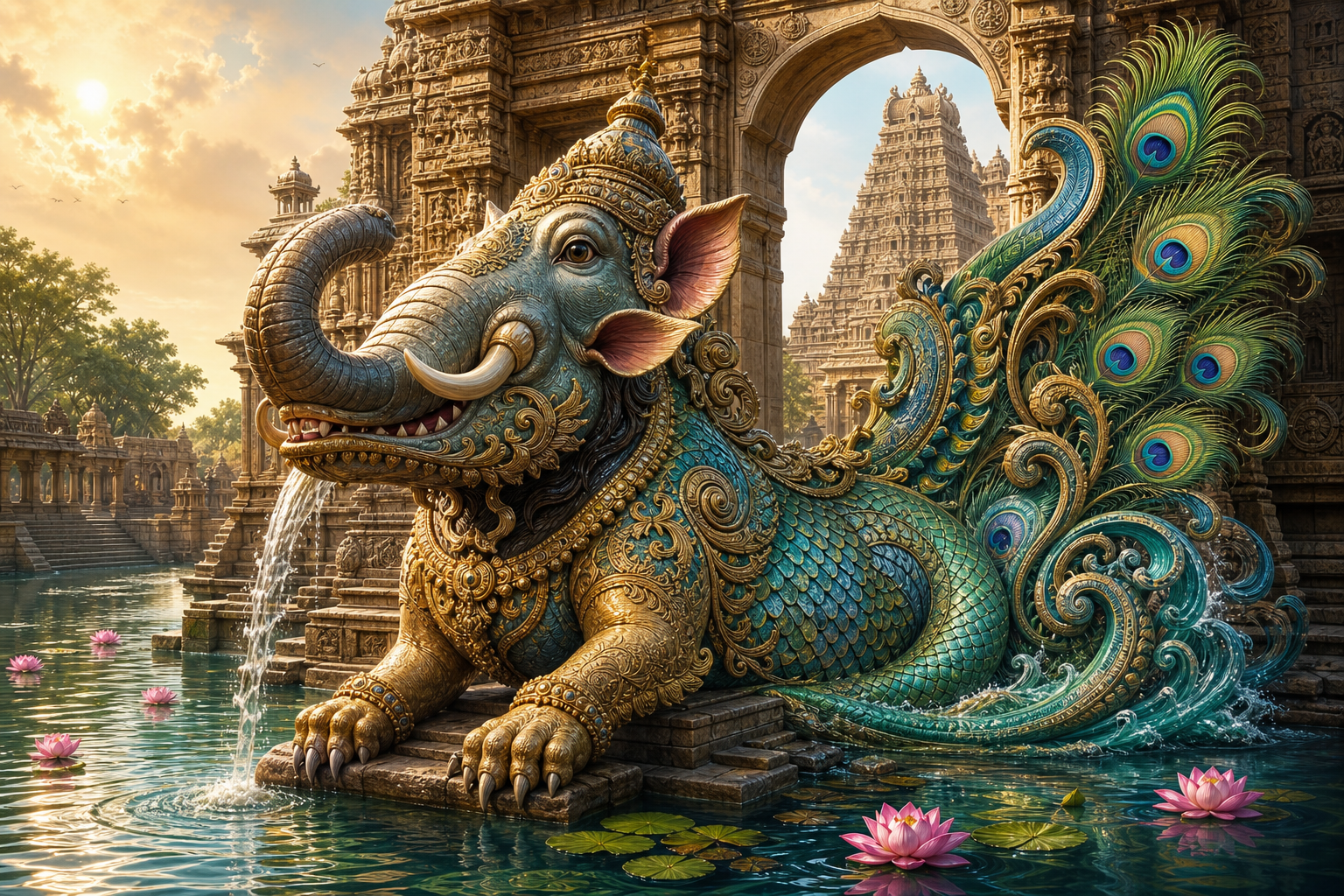
Makara is one of the most fascinating composite creatures in Hindu scriptures, sacred art, and temple architecture. Traditionally associated with Varuna, Ganga, Narmada, Kamadeva, and Makara-kundala iconography, it represents water, fertility, protection, desire, and cosmic order. Its seven-animal form brings together the elephant, crocodile, boar, monkey, fish, lion, and peacock as a symbolic body of…
-
Alarming reports of organised conversions in Mumbai trains; HJS urges urgent, lawful probe

Reports indicate an organised religious conversion push inside Mumbai’s local trains, with HJS urging swift but lawful scrutiny. This analysis clarifies the constitutional balance under Article 25protecting the right to propagate religion while prohibiting force, fraud, or inducement as affirmed by Supreme Court jurisprudence. It outlines how railway norms, GRP/RPF roles, and general criminal provisions…
-
Six Paths of Sannyāsa in the Nārada Parivrājaka Upanishad: Timeless Map to Inner Freedom

Renunciation in the āśrama system reaches a mature articulation in the Narada Parivrajaka Upanishad, which maps six authentic paths of sannyāsa without enforcing a single mold. It names kuṭīcaka, bahūdaka, haṁsa, paramahaṁsa, turīyātīta, and avadhūta as complementary modes that guide a seeker from external disciplines toward interior freedom. Each type balances ethical foundationsahiṁsā, satya, and…
-
Bangladesh’s 81‑Foot Lord Ram Statue Halted: Intimidation, Legal Gaps, and a Dharmic Call to Unity

An 81-foot Lord Rama statue project in Gaibandha, Bangladesh, has been paused at roughly 80% completion after a viral threat, spotlighting the intersection of religious freedom, public order, and minority protection. This analysis consolidates what is known, explains the legal framework (including constitutional guarantees and applicable Penal Code provisions), and evaluates how intimidation can derail…
-
Sant Dnyaneshwar Palkhi 2026: Full Waari Schedule, Route Insights, Rituals & Planning Guide

Sant Dnyaneshwar Maharaj Palkhi 2026 anchors the Pandharpur Waari Yatra with confirmed dates: departure from Alandi on 8 July 2026 and arrival at Pandharpur on 25 July 2026. This guide explains the Waari’s cultural significance, the Varkari ethos, and how the Palkhi’s daily rhythm coordinates morning halts, lunch breaks, and evening aartis. Readers gain route…
-
Anuttama Dasa’s Alachua Sunday Feast: Profound Bhakti-Yoga Insights and Dharmic Unity

On 31 May 2026, Anuttama Dasa spoke at the Hare Krishna Temple in Alachua, Florida, offering a clear, textually grounded presentation of bhakti-yoga. The Sunday Feast formatkirtan, śāstra-kathā, and prasadamwas shown as an integrated pedagogy that turns learning into lived practice. The lecture’s approach reflected classical Indian epistemology and hermeneutics, connecting scriptural authority with reason,…
-
Kadru’s Curse and Janamejaya’s Sarpasattra: Dharma, Deceit, and Astika’s Compassionate Intervention

The Adi Parva’s account of Kadru’s curse and Janamejaya’s Sarpasattra fuses maternal authority, filial courage, and the perils of ritual power into a single, ethically charged arc. It traces how a deception over Uchchaihshravas spirals into a kingdom-scale sattra, and how Astika’s compassionate intervention halts annihilation without trivializing grief. Readers gain a clear view of…