
-
Shahuwadi Tehsildar Office Toilets: Hindu Vidhidnya Parishad Demands Urgent, Dignity-Centered Steps

Hindu Vidhidnya Parishad has sought urgent remediation of unhygienic public toilets at the Shahuwadi Tehsildar office in Kolhapur, placing public health and dignity at the center of the discussion. The issue engages constitutional protections for sanitation under Article 21 and long-standing Supreme Court guidance on abating public health nuisances. National standards (Swachh Bharat Mission, National…
-
Beyond Rivalry: Why a True Vaidika Honors Tantra and a True Tantrika Reveres the Vedas

Vedas and Tantra are not adversaries but complementary avenues to the same truth, a reality long recognized across authentic lineages. This article traces their historical interdependence through the Agamas, Pancharatra, temple praxis, and Vedantic metaphysics to clarify why both are indispensable. It explains how mantra, yantra, mudra, nyasa, and Kundalini sadhana can integrate seamlessly with…
-
Jharkhand Governor to raise ‘corporate jihad’ grievances with PM, seeking a transparent probe

A memorandum submitted in Jharkhand alleging coordinated corporate misconductdescribed by petitioners as “corporate jihad”will be conveyed by the Governor to the Prime Minister for appropriate consideration. The constitutional pathway emphasized here prioritizes due process, evidence, and regulatory competence over rhetoric. A rigorous inquiry, if initiated, would likely engage the MCA, SEBI, and the CCI to…
-
Thanjai Mamani Koil: Unraveling Thanjavur’s Sacred Triple Divya Desam and Living Heritage
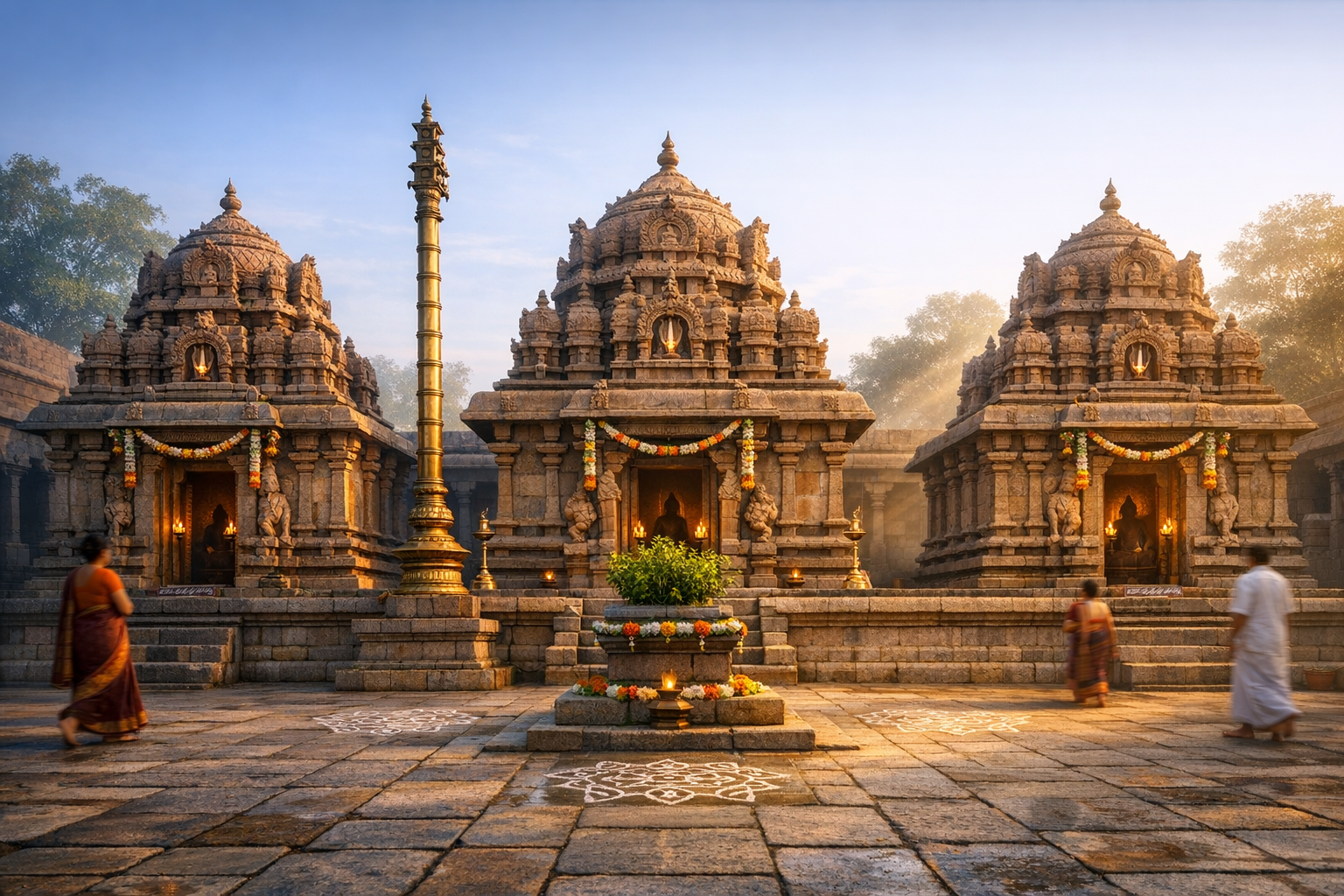
Thanjai Mamani Koil in Thanjavur is a rare triadic Divya Desam where three adjacent Vishnu sanctums share a single sacred precinct. Celebrated in the Naalayira Divya Prabandham, the complex embodies a living synthesis of theology, architecture, and ritual practice in the Kaveri delta. The three deitiesNeelamegha Perumal, Manikundra Perumal, and Veera Narasimha Perumaloffer complementary experiences…
-
May 21, 2026 Panchang: Shukla Panchami to Sashti, Sacred Auspicious Times, Nakshatra & Rashi

May 21, 2026 is marked in most regions by Shukla Paksha Panchami until 1:45 PM, followed by Shukla Paksha Sashti, bringing a day well-suited to learning, counsel, and steady progress. The overview clarifies how tithi is computed, why its boundary matters for vratas and sankalpa, and how to plan tasks within the intended lunar segment.…
-
Upadhi in Hindu Thought: Unmasking Limiting Adjuncts that Veil Reality and Freedom

Upadhi“limiting adjunct”explains how unconditioned reality appears delimited without itself changing. In Advaita Vedānta, it clarifies the jīva–Īśvara distinction, the role of avidyā and māyā, and why body–mind vestures only seem to bind the Self. Classic analogiespot-space, crystal-and-flower, and reflections of the sundemonstrate avaccheda-vāda and pratibimba-vāda. Taittirīya Upaniṣad’s pañca-kośa viveka and the three-body model present a…
-
Hanuman Puja Mantras and Stotras: A Definitive, Devotional Guide to Chanting and Ritual

This definitive guide brings together the most respected Hanuman Puja stotras and mantrasHanuman Chalisa, Sankat Mochan Hanuman Ashtak, Hanuman Pancharatnam, moola and extended mantras, the Gayatri, and namavaliexplaining their origins, correct usage, and ideal recitation timings. Readers will find a clear, tradition-aligned home puja outline, practical pronunciation guidance, and culturally sensitive notes on offerings and…
-
Ganga Dussehra 2026: Sacred Dates, Shukla Dashami Significance, Puja Vidhi, and Eco‑Seva

Ganga Dussehra 2026 spans 15–24 June and culminates on Jyeshta Shukla Dashami, observed on 24 June, with morning snana, puja, and dana as core practices. Rooted in the Purāṇic descent of Ganga and the ideal of tenfold purification, the festival blends inner discipline with outward charity. Panchang guidance suggests observing the day when Dashami prevails…
-
Nitya in Hinduism: Timeless Truths and Daily Duties for Transformative Dharmic Clarity

Nitya in Hindu thought unites two powerful ideas: the eternal ground of being and the disciplined regularity of daily practice. Classical sources such as the Upanishads and Bhagavad Gītā affirm the ātman as nitya, while Mīmāṃsā and Dharmaśāstra define nitya-karma as obligatory daily duties that stabilize conduct and clarity. Agamic and Vaiṣṇava traditions embed nitya…
-
Bhurishaya Bhairava: Unveiling the All‑Abundant Essence and Infinite Support of Existence

Bhurishaya Bhairavaone of the sacred 1008 names of Bhairavaencapsulates a Śaiva vision of existence as plenitude and support. Etymologically derived from bhūri (abundance) and śaya (resting/abiding), the epithet signals an inexhaustible ground of being in which the many both arise and find repose. Read through Kashmir Shaivism’s Bhairava triad (bha–ra–va), it highlights the sustaining rest…
-
Break Free from Maya: Transcending Superimpositions for God‑Realization in Advaita Vedanta

This long-form exploration clarifies why Advaita Vedanta insists that God-Realization demands freedom from limiting superimpositions (adhyāsa, upādhi), and shows how to remove them with rigor and compassion. It unpacks core methodsPañca Kośa Viveka, Drg-Drśya Viveka, neti neti, śravaṇa–manana–nididhyāsanawhile honoring the supportive roles of Karma Yoga and bhakti. Drawing parallels with Yoga’s kleshas, Buddhism’s deconstruction of…
-
Nepal Airlines’ Map Gaffe Ignites Outrage: Cartographic Accuracy, Sovereignty, and Dharmic Unity

Nepal Airlines triggered public outrage after sharing a map that appeared to place parts of Jammu & Kashmir and North-East India outside India’s borders, prompting a rapid apology and takedown. In South Asia, where maps signal sovereignty and identity, such missteps carry outsized geopolitical and emotional impact. This analysis details why cartographic accuracy matters, outlines…
-
Do Our Words Convey Our Heart? HG Caitanya Charan Das on Dharmic Speech at ISKCON Adelaide

At ISKCON Adelaide on 01.05.26, HG Caitanya Charan Das explored how speech reflects inner consciousness and why language, refined through sādhana, is central to bhakti and community harmony. Grounded in Bhagavad Gita 17.15, the essay outlines a composite ethic for speechtruthful, kind, beneficial, and non-agitatingthat resonates across Hinduism, Buddhism, Jainism, and Sikhism. It translates classical…
-
29 Scholar-Verified Facts on Venkateshwara Swamy at Tirumala to Deepen Darshan
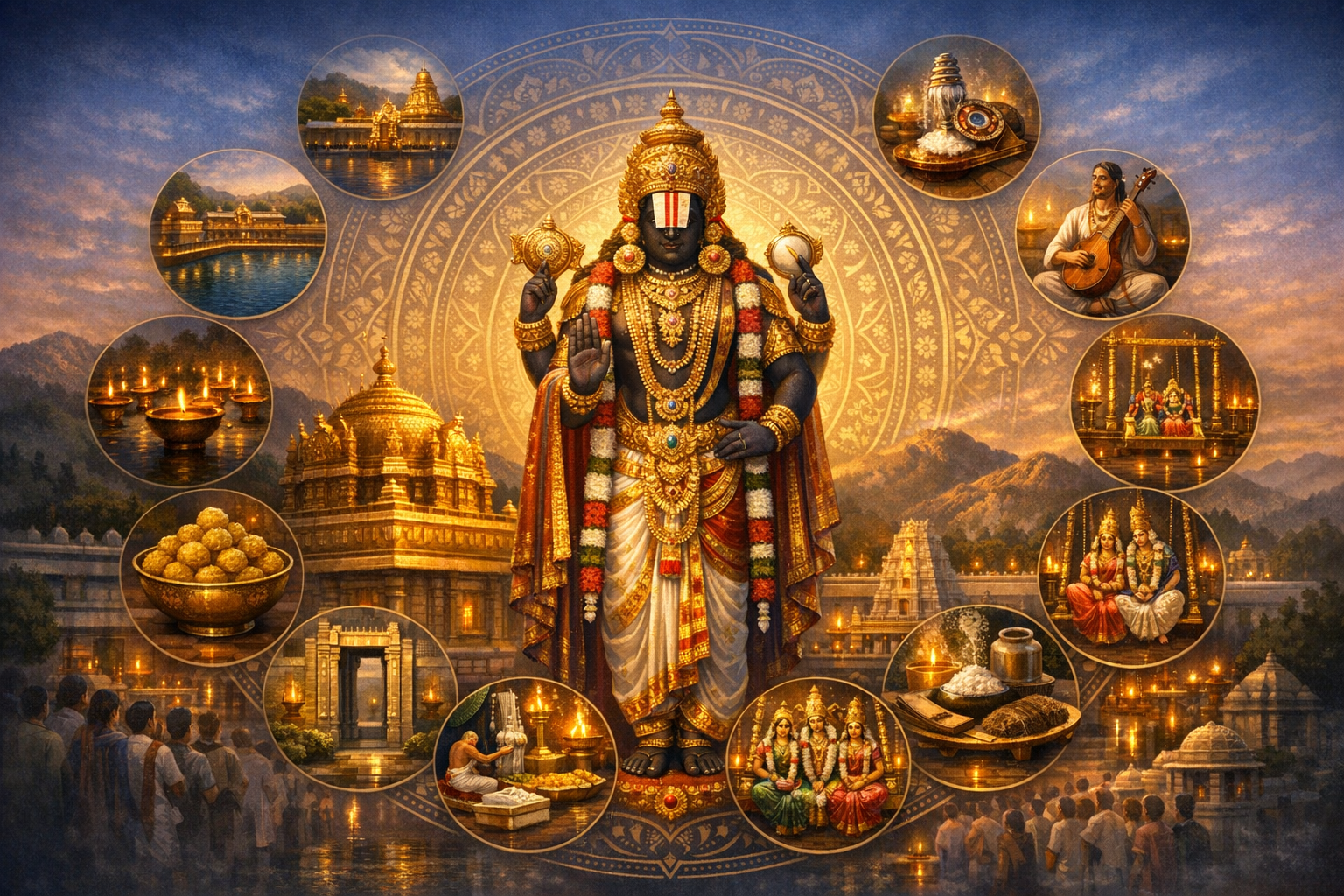
Sri Venkateshwara Swamy of Tirumalaalso known as Srinivasa, Balaji, Venkatachalapati, and Govindais presented here through 29 scholar-verified facts that unite theology, ritual practice, architecture, and living tradition. Readers discover how Vaikhanasa Agama worship structures daily sevas, why the Laddu prasadam holds a GI tag, how Brahmotsavam and Vaikuntha Ekadashi shape the festival calendar, and what…
-
Kumbhakarna’s Vision of Oneness: Ramayana’s Battlefield as a Revelation of Non-Dual Truth

Kumbhakarna’s encounter with Rama in the Ramayana is more than a dramatic duel; it is a philosophical disclosure that reframes war as a revelation of oneness. Grounded in Yuddha Kanda and illuminated by Vaishnava doctrine on Jaya–Vijaya, the episode supports a Vedantic reading in which multiplicity is undergirded by a single reality. Advaita, Vishishtadvaita, and…
-
From Flower to Faith: Uncovering Puja’s Roots, Vedic Evolution, and Sacred Simplicity

This essay explores the timeless essence of puja by tracing its etymology, ritual history, and lived practice, from the Dravidian echo of ‘pu’ (flower) to Sanskrit notions of honor and reverence. It clarifies how Vedic, Purāṇic, and Agamic sources shaped today’s home and temple worship, including pañcopacāra and śoḍaśopacāra frameworks. Readers gain practical guidance for…
-
Nyaya Darshana’s Four Pramanas: A Practical Guide to Valid Knowledge and Clear Reasoning

Nyaya Darshana locates the pursuit of truth in four reliable pramanasperception, inference, analogy, and trustworthy testimonyoffering a rigorous, practical method for valid knowledge. It clarifies how accurate observation is secured, how reasons genuinely support conclusions, how analogies bridge the known and the unfamiliar, and how credible sources can be identified without cynicism. The framework diagnoses…
-
Earth-born Sita Devi: A Scholarly, Soul-Stirring Portrait of Dharma in the Valmiki Ramayana
Sita Devi’s Earth-born manifestation, celebrated in Valmiki’s “Sita-ayah Charitam Mahat,” anchors the Ramayana’s ethical vision around truth, compassion, and the Sacred Feminine. Drawing on King Janaka’s testimony, the narrative affirms Sita as āyonijādiscovered in a furrow while preparing a yajnathereby linking her to Bhumi Devi and an ecological ethic of reverence for the Earth. Her…
-
Beyond the Frame: Why Hindu Deity Images Seem IncompleteRevealing Infinity and Dharmic Unity

Many observers assume Hindu deity images are incomplete because they appear stylized, aniconic, or schematic. In classical Hindu thought, however, every sacred image is complete in essence (tattva) and intentionally incomplete in form (rupa), a design that honors the Upanishadic insight that the infinite cannot be fully pictured. Shilpa Shastras, temple architecture, and ritual consecration…
-
Kalyana Varada Shasta: Revealing Lord Ayyappa’s Compassionate Ten-Armed Power
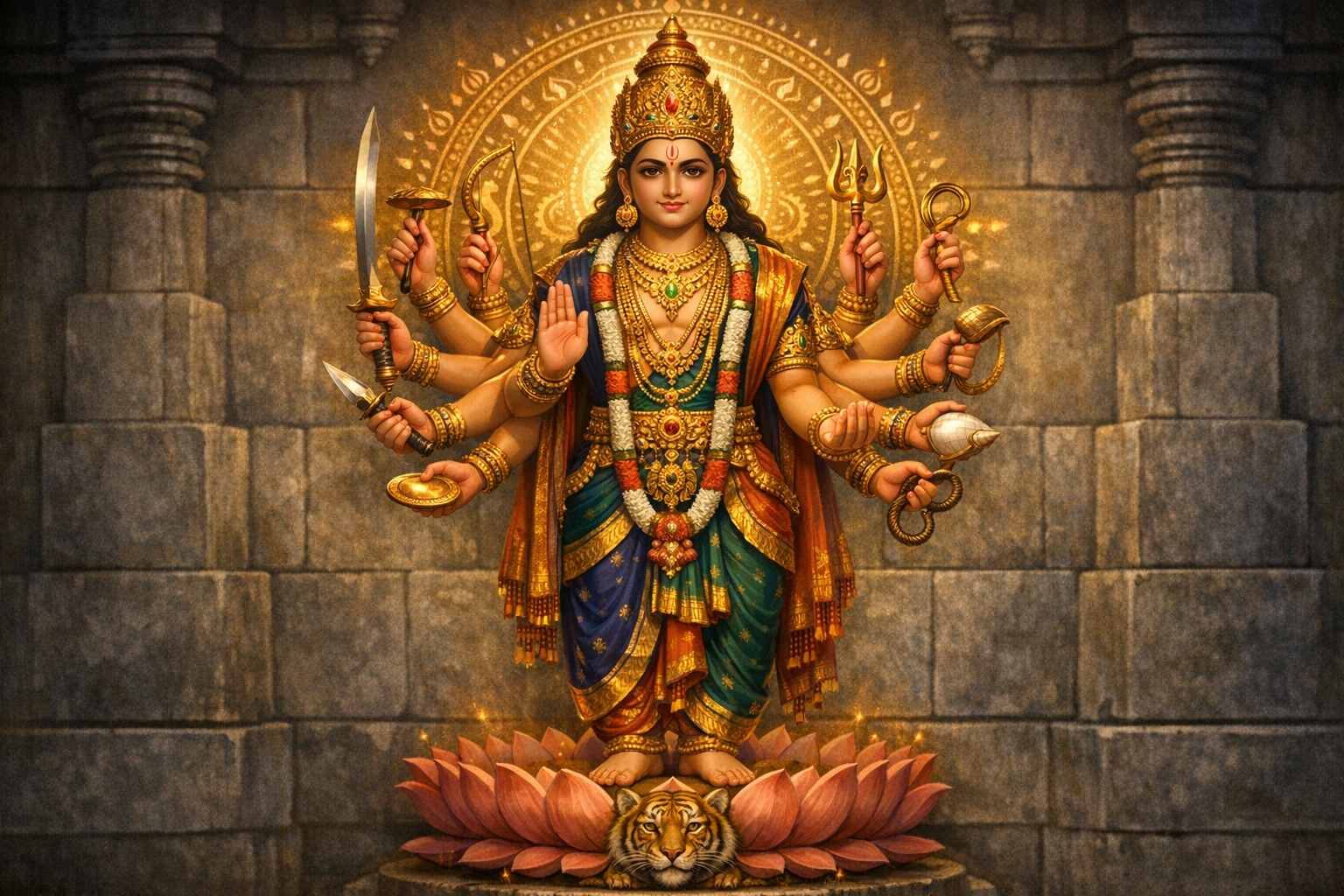
Kalyana Varada Shasta presents a rare and benevolent ten-armed manifestation of Lord Ayyappa (Dharma Shasta, Hariharaputra), uniting compassionate grace with vigilant protection. This iconographic form emphasizes auspicious well-being through the varada mudra and fearlessness through the abhaya mudra, while its attributessuch as sword, shield, bow, noose, goad, conch, discus, and tridentteach an ethic of responsible…