
-
June 20, 2026 Panchang: Exact Tithi Shift, Auspicious Windows, Nakshatra & Rashi Guide

Saturday, June 20, 2026 carries Shukla Paksha Sashti until 8:40 PM, after which Shukla Paksha Saptami begins. This Panchang guide explains how to align worship, planning, and daily tasks with precise tithi timing while using Abhijit Muhurta and other good-time anchors effectively. It shows how to compute Rahu Kaal, Gulika Kaal, and Yamaganda from local…
-
Mahabhisha’s Fall to Shantanu’s Destiny: The Divine Curse That Set the Mahabharata in Motion

This article examines the sacred prelude to the Mahabharata: King Mahabhisha’s lapse in Brahma’s court, the ensuing curse, and the earthbound destinies of Shantanu, Ganga, and Bhishma. It maps the narrative from Adi Parva sources through the Vasu curse and the Bhishma Pratigya to the dynastic conditions that precipitated the Kurukshetra War. Readers gain a…
-
When a Wife Stilled the Sun: Shilavati’s Astonishing Pativrata in Brahmanda Purana

This study examines the Brahmanda Purana’s account of Shilavati (Sheelavati), the pativrata whose vow arrests the ascent of Surya, to illuminate the Dharmic logic of vow-power (vrata-shakti). It situates the episode within puranic cosmology and ethics, where truth-aligned resolve temporarily overrides causal sequence and is then responsibly relinquished. The analysis clarifies why the narrative is…
-
Yajigrama Yatra: Tracing the Living Sacred Geography of Gaudiya Vaishnavism near Katwa
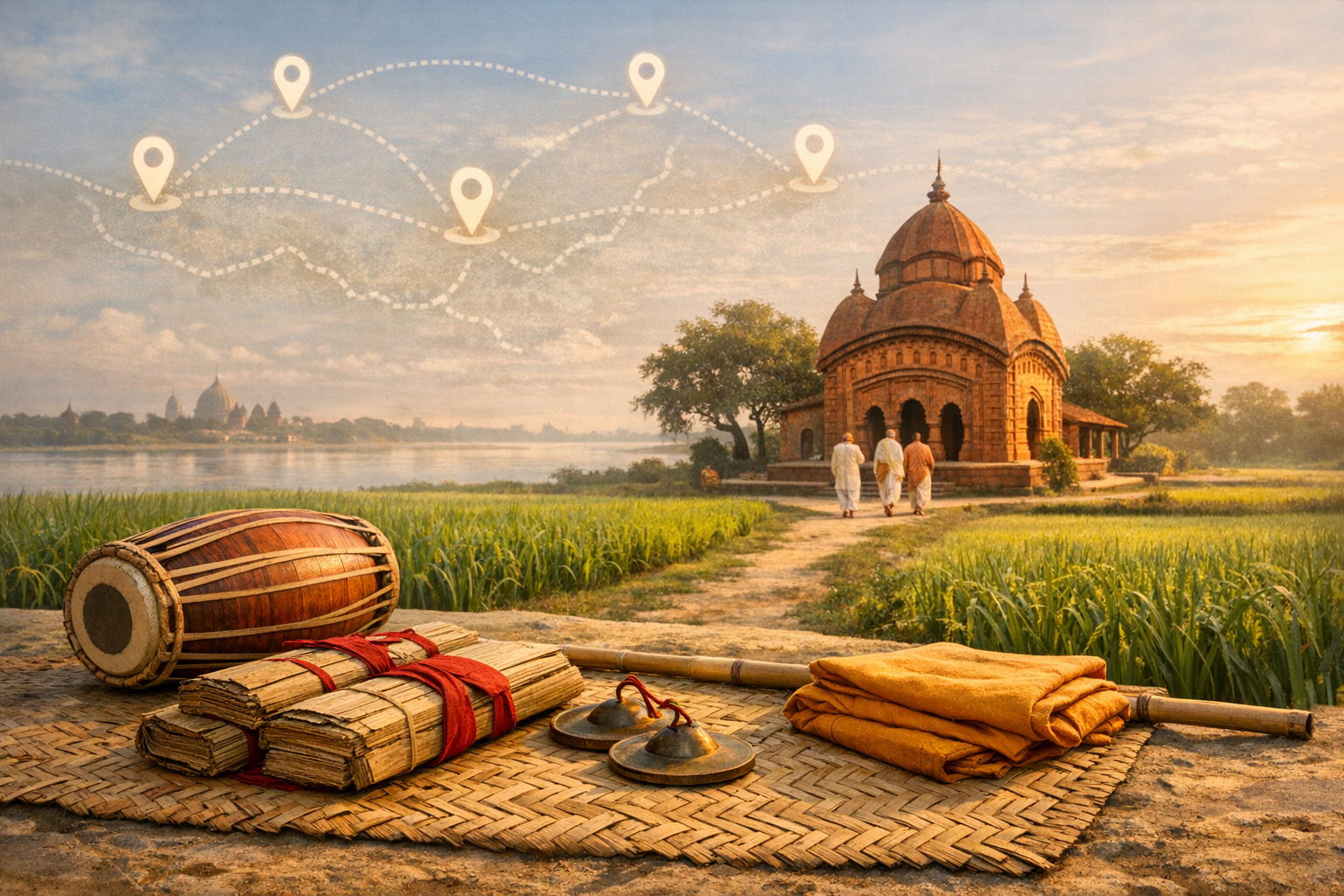
Yajigrama, just 4 km from Katwa and within day-trip reach of Navadvipa and Mayapur, anchors a compact pilgrimage that illuminates the living sacred geography of Gaudiya Vaishnavism. The site connects directly with Sri Caitanya Mahaprabhu’s sannyasa at Katwa and with the lives of Srila Shrinivasa Acharya, Srila Narottama Das Thakura, and Srila Ramachandra Kaviraj. This…
-
Stepwells of India: Stone-Carved Science, Sacred Water Wisdom, and Climate-Smart Design
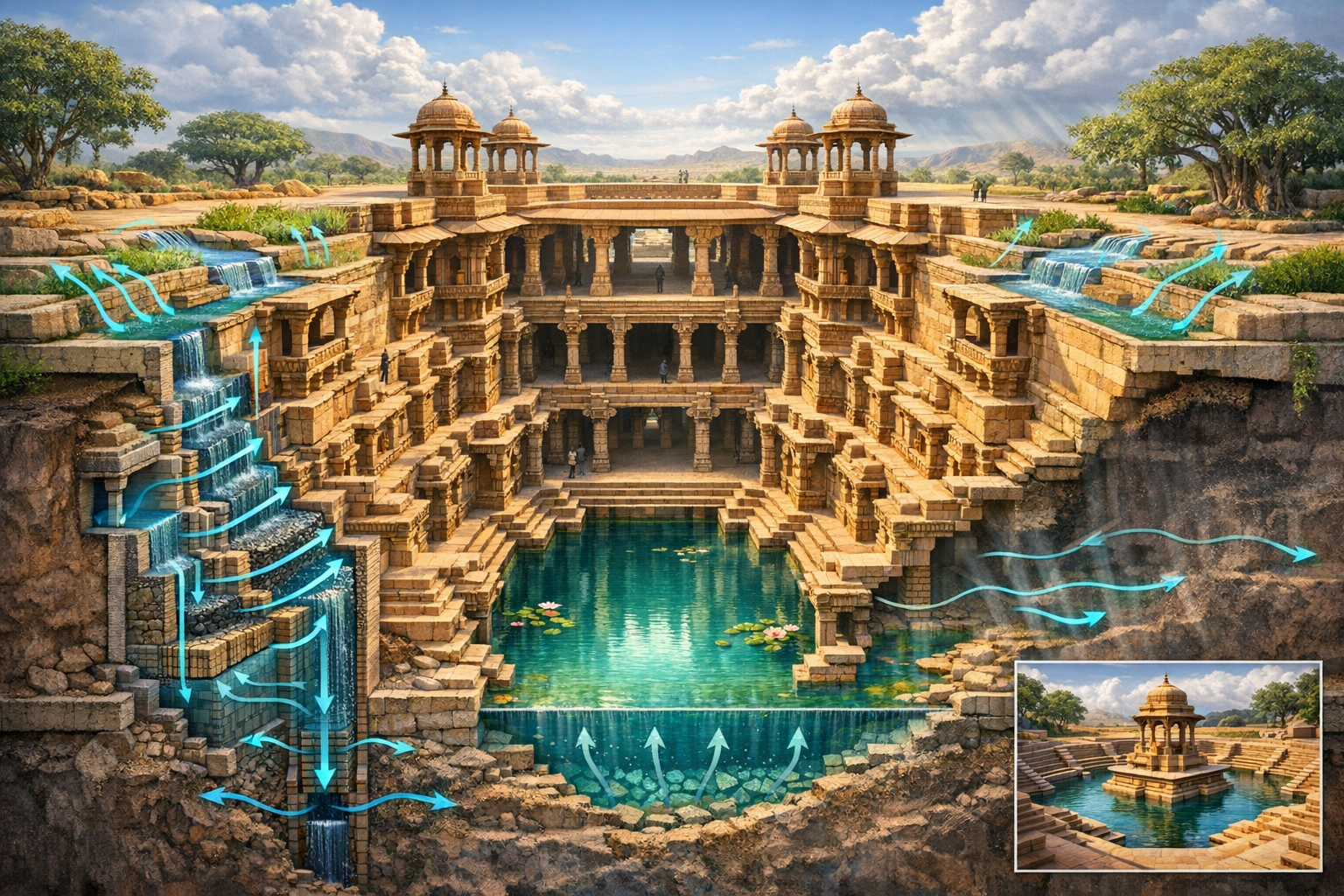
Stepwellsvavs, baolis, and pushkarinisunite ancient architecture, hydrogeology, and dharmic ethics into a single climate-smart system. This article traces their evolution across Ancient India, explains the science of infiltration, evaporative cooling, and passive microclimate control, and profiles exemplars such as Rani ki Vav, Chand Baori, Adalaj ni Vav, Agrasen ki Baoli, the Hampi stepped tank, and…
-
Thirumazhisai Alvar: Chakra‑Incarnate Sage of KanchiLife, Hymns, and Legacy

Thirumazhisai Alvar, the fourth of the twelve Alvars and revered as the Sudarshana Chakra-incarnate, shaped Sri Vaishnava thought through two canonical Tamil worksNaanmugan Tiruvandadi and Tiruchanda Viruttam. Born in Thirumazhisai under the Thai–Magam star, he journeyed through the rich religious milieu of Pallava-era Kanchipuram, engaging Shaiva, Buddhist, and Jain interlocutors before arriving at a luminous…
-
Mastering the Big Four C’s: Commitment, Connectivity, Compassion, Creativity for Dharmic Unity

The Big Four C’sCommitment, Connectivity, Compassion, and Creativityform a rigorous, Dharma-aligned framework for building capable, caring, and future-ready communities. By assuming good intent while clarifying agreements, commitment becomes reliable and humane. Through layered Satsang and Sangha-inspired networks, connectivity reduces silos and elevates collaboration across Hindu, Buddhist, Jain, and Sikh traditions. Compassion is operationalized through Nonviolent…
-
Stop Chasing Birthplaces: Honor Guru-Bhakti by Living the Teaching, Not Worshiping Soil

This essay clarifies a core paradox in dharmic spirituality: gurus teach transcendence of body and place, yet communities often fixate on birthplaces and relics. It reframes sacred geography as a valid but secondary aid to sadhana, drawing on the Bhagavad Gita, the Upanishads, and the Guru-Shishya Tradition. Case studies from Hinduism, Buddhism, Jainism, and Sikhism…
-
Definitive Shubh Muhurat Guide for June 2026: Auspicious Days and Precise Timings

This definitive guide explains how to find Shubh Muhurat in June 2026 for everyday actionswithout relying on guesswork. It clarifies how to combine Tithi, Nakshatra, weekday, Karana, and sunrise to identify clean, general auspicious timings. It highlights robust daily windows such as Brahma Muhurta and Abhijit Muhurat, and shows how to avoid Rahu Kalam, Yamaganda,…
-
Seeing the Divine in Everyone: Bhagavatam 3.29 and Timeless Dharmic Ethics for Peers
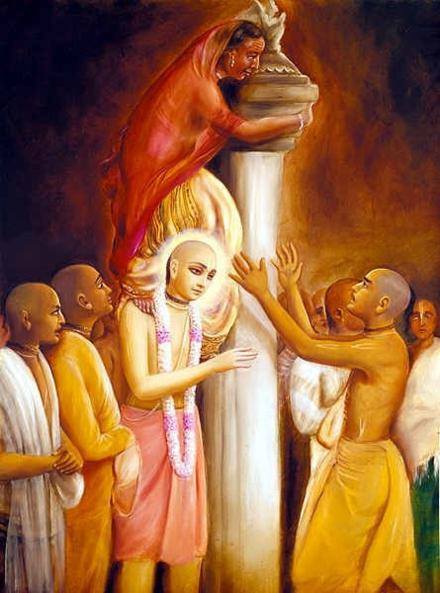
Srimad Bhagavatam 3.29 sets a precise ethic for peer relationships in devotional life: disrespect, disregard, hatred, and criticism are forbidden. Grounded in the vision of Paramatma within all beings, this teaching links authentic Deity worship to universal respect, warning that ritual without compassion is imitation worship. Classical commentaries by Vishvanatha Cakravarti Thakura and Sridhara Svami…
-
Dhumavati Jayanti 2026: Auspicious Date, Puja Vidhi, Mantras, and Deep Tantric Significance
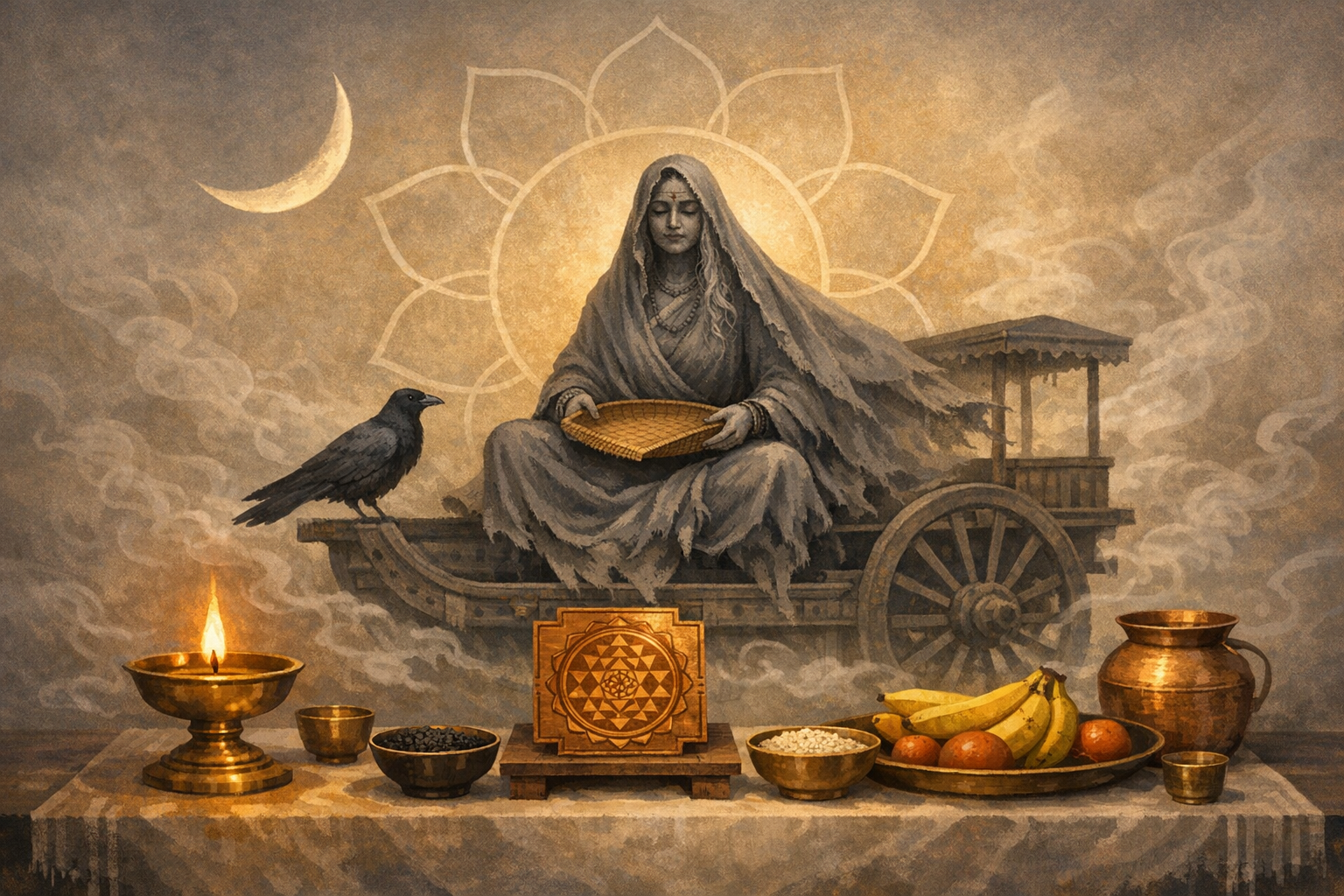
Dhumavati Jayanti 2026 falls on 22 June (Jyeshta Shukla Ashtami), honoring one of the Dus Mahavidyas whose symbolism illuminates resilience, clarity, and the wisdom of non-attachment. Observers can keep a sattvik fast, light a mustard oil lamp, offer sesame and simple naivedya, and recite mantras such as Dhoom Dhoom Dhumavati Swaha with reverence. The festival’s…
-
How to Stay Light‑Hearted in Bleak Times: Evidence‑Based Dharmic Strategies for Resilience

This essay examines how to remain light‑hearted when life feels bleak by integrating dharmic wisdom with contemporary psychology. It reframes a childhood vignetteeating ice cream under sodium lightsas a practical method for values‑aligned action in the presence of difficult emotions. Drawing on Hindu concepts like aparigraha, Buddhist mindfulness and equanimity, Jain Anekantavada, and Sikh chardi…
-
London’s 2026 Rathayatra: An Immersive Walking Tour of Devotion, Culture, and Unity

London’s 57th Rathayatra on 24 May 2026 transformed Park Lane, Piccadilly, and Trafalgar Square into a vibrant corridor of devotion and community from 2:00 pm to 5:00 pm. This immersive, one-take, 1 hour 13 minute walking tour documents how kirtan, hand-pulled chariots, and public darshan reconfigured central London’s iconic spaces. Rooted in the Jagannath tradition…
-
Bhai Kanhaiya Ji: Sevapanthi Saint Who Healed Friend and Foe, Inspiring Interfaith Unity
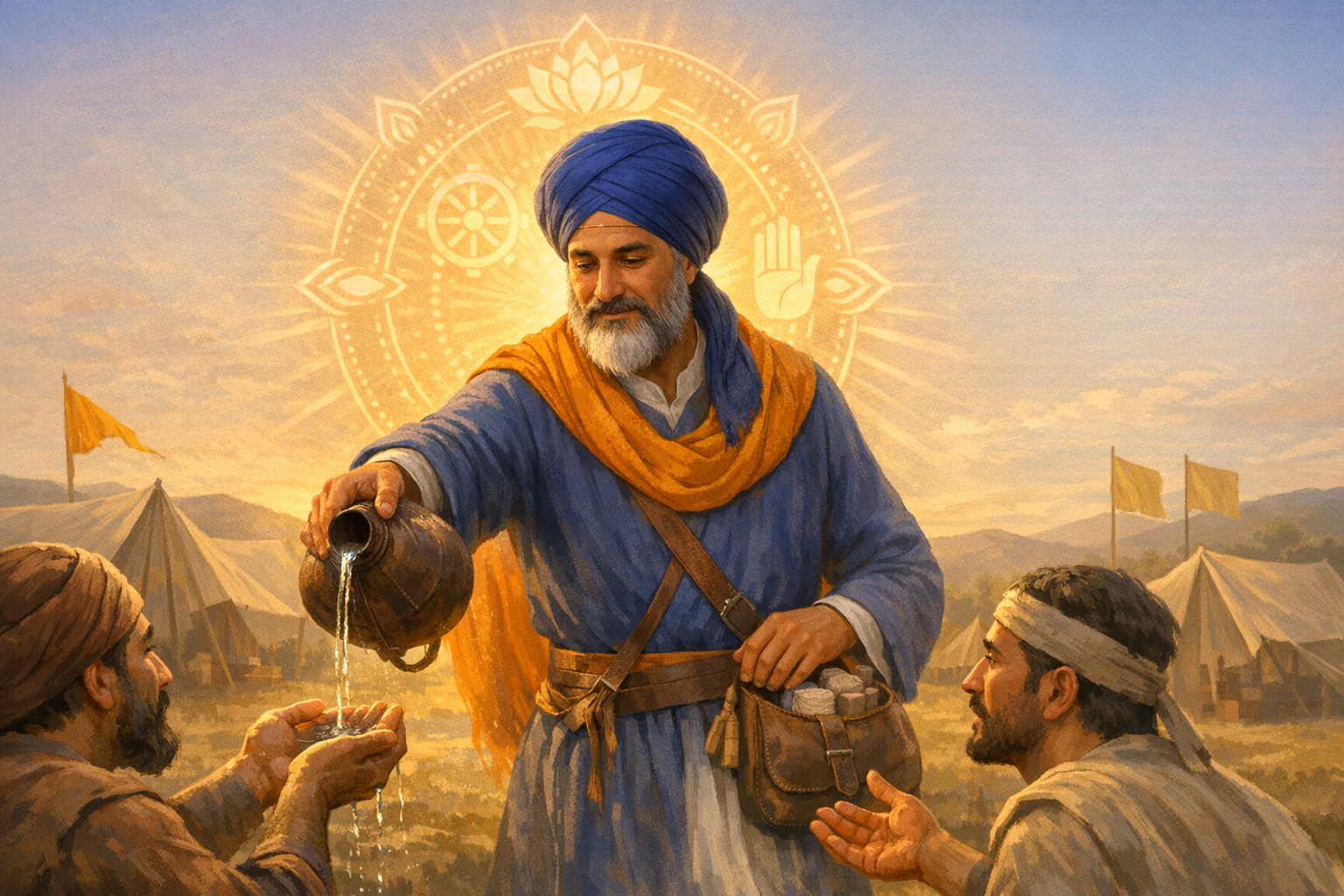
Bhai Kanhaiya Ji (1648–1718) is revered in Sikh history for serving water and aid to all the woundedfriend and foeduring the battles around Anandpur Sahib, earning explicit endorsement from Guru Gobind Singh. His example seeded the Sevapanthi tradition, which institutionalized non-sectarian seva through hospices, piyaus, and relief networks. This essay situates his life within the…
-
Swarnakarshana Bhairava: Guardian of Gold, Prosperity, and Dharma in Kali Yuga
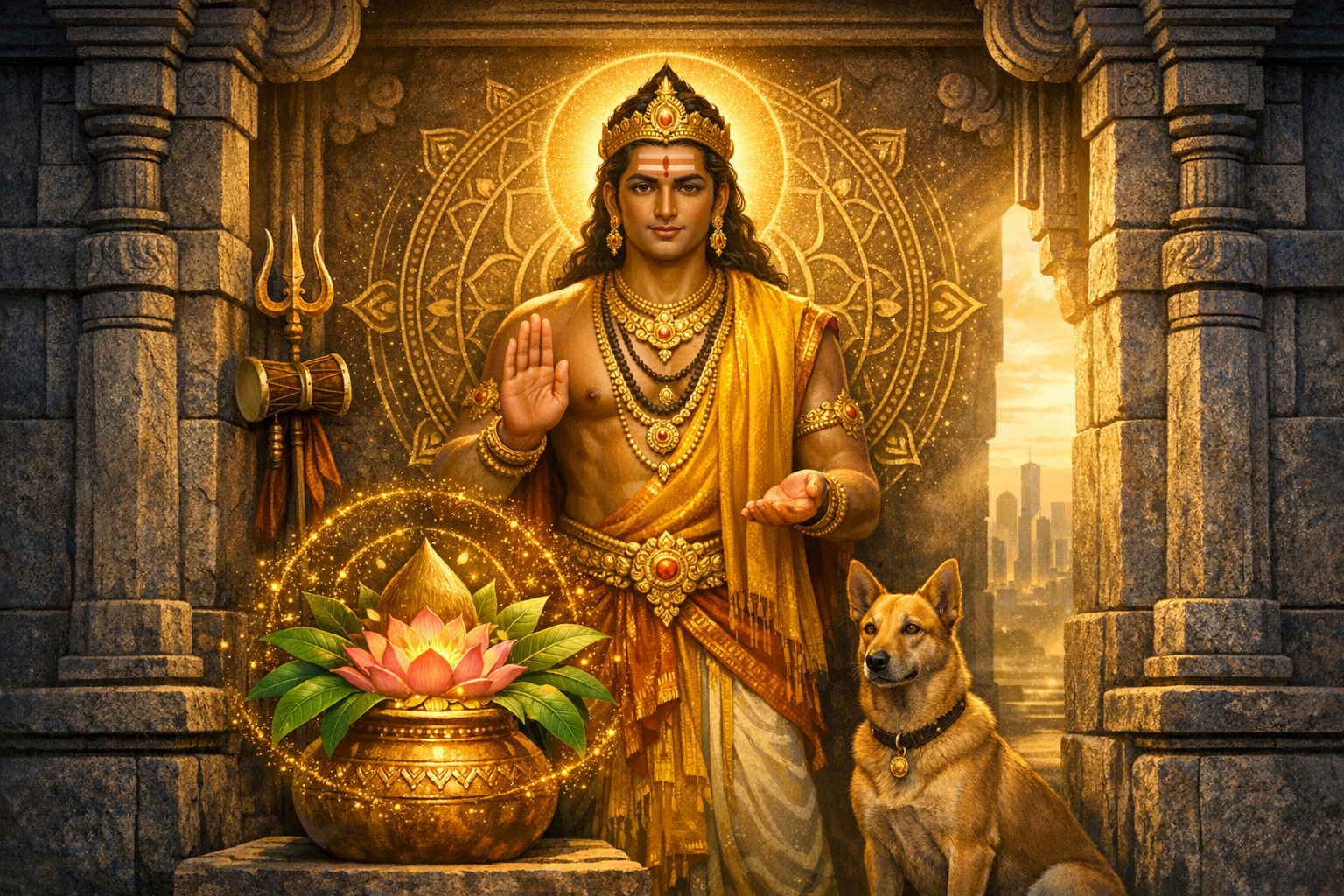
Swarnakarshana Bhairava“the one who draws gold”is a Shaiva Tantric form that links prosperity to disciplined guardianship, especially relevant in Kali Yuga. The iconography, often golden and protective, signals plenitude anchored in vigilance and ethics rather than greed. Textual and ritual traditions frame this Bhairava as a kṣetrapāla of resources, aligning wealth with dharma, responsibility, and…
-
Decoding Srimad Bhagavatam 3.26.9: Sankhya, Consciousness, and a Roadmap to Dharmic Unity

This in-depth exploration of Srimad Bhagavatam 3.26.9, inspired by H.H Subhag Swami Maharaj’s discourse at ISKCON Mayapur, unpacks Kapila’s Sankhya as a precise map of consciousness, causality, and liberation. It clarifies how purusha, prakriti, time, and the three gunas co-operate to shape experience, and why that structure makes ethical effort and devotion both meaningful and…
-
Unlocking the Power of Prayer: Vandanam in Daily Sadhana and Dharmic Unity Practices
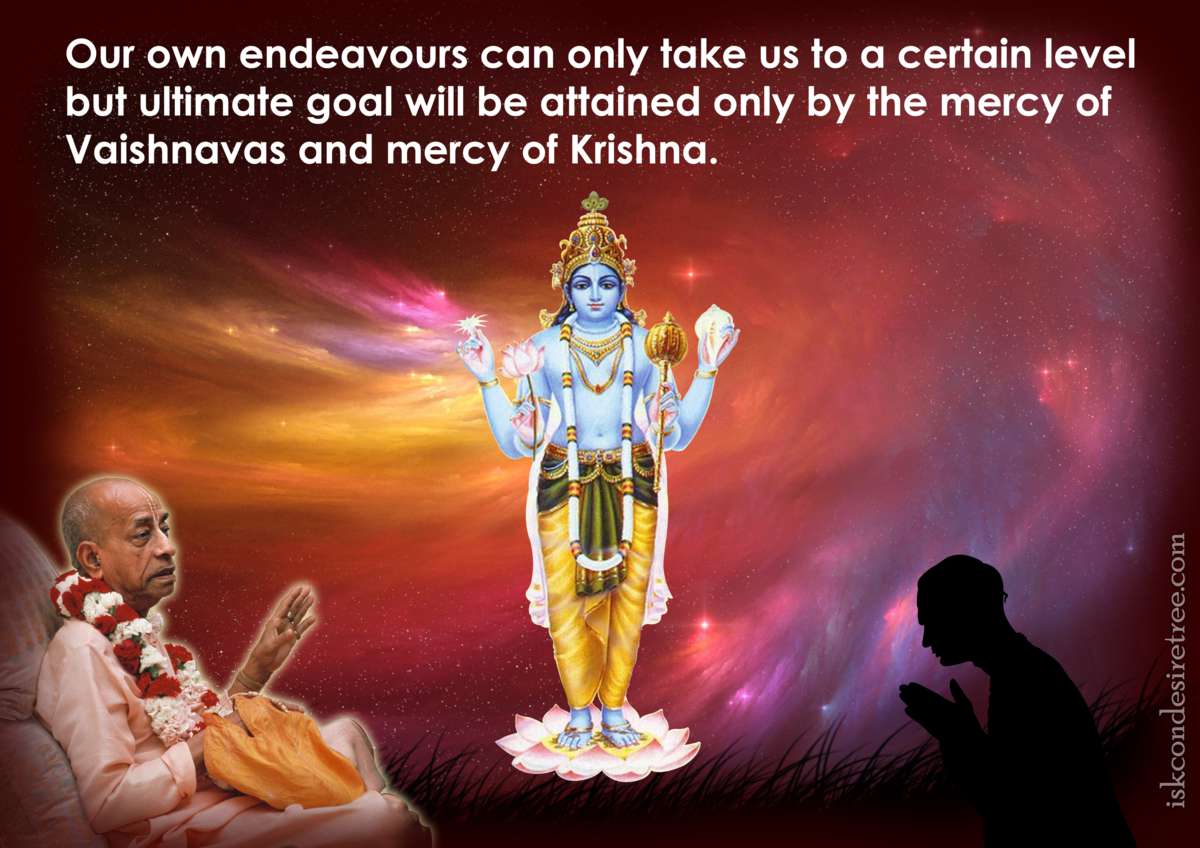
Prayer in the bhakti tradition, known as vandanam, is a core best practice of daily sadhana rather than an optional sentiment. Classical sources present it as one of the nine limbs of bhakti, with the capacitywhen practiced deeplyto orient the whole of spiritual life. Pranama-mantras address Bhagavan, the Deity, the Ācārya, and the Guru, cultivating…
-
Bantwal Adhiveshan ignites Dharmic unity and values-driven vision for Constitutional Hindu Rashtra
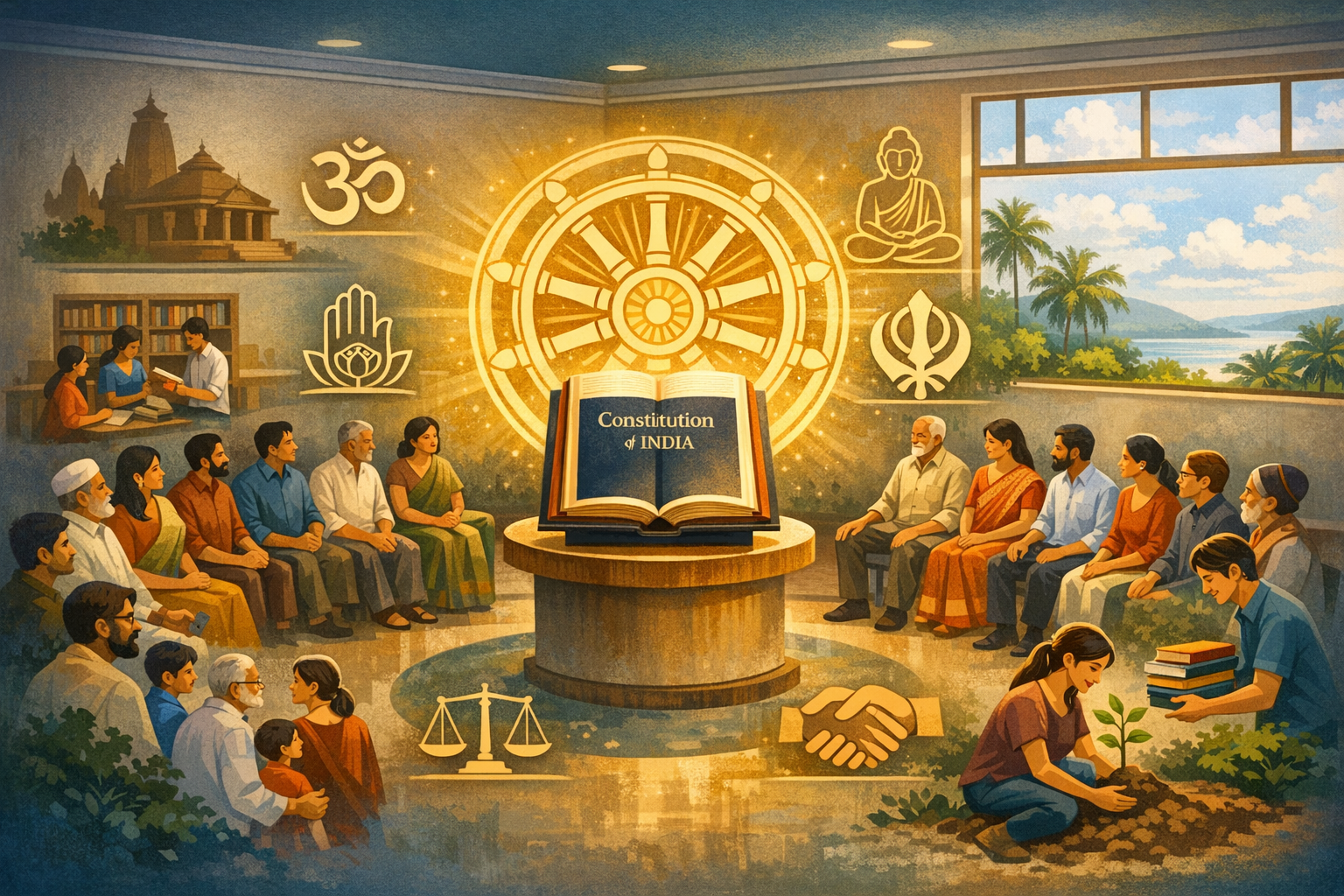
The Bantwal district-level Hindu Rashtra Adhiveshan, organized by Hindu Janajagruti Samiti (HJS), concluded with a values-driven call to strengthen Hindu unity, safeguard Sanatan Dharma, and cultivate value-based families. Discussions framed a Constitutional Hindu Rashtra as a pluralistic, dharma-anchored civic vision aligned with Articles 25–28 of the Indian Constitution and the spirit of fundamental duties. On…
-
SB 4.9.37–53 Decoded: Dhruva’s Unshakable Devotion, Cosmic Boons, and Inner Renewal
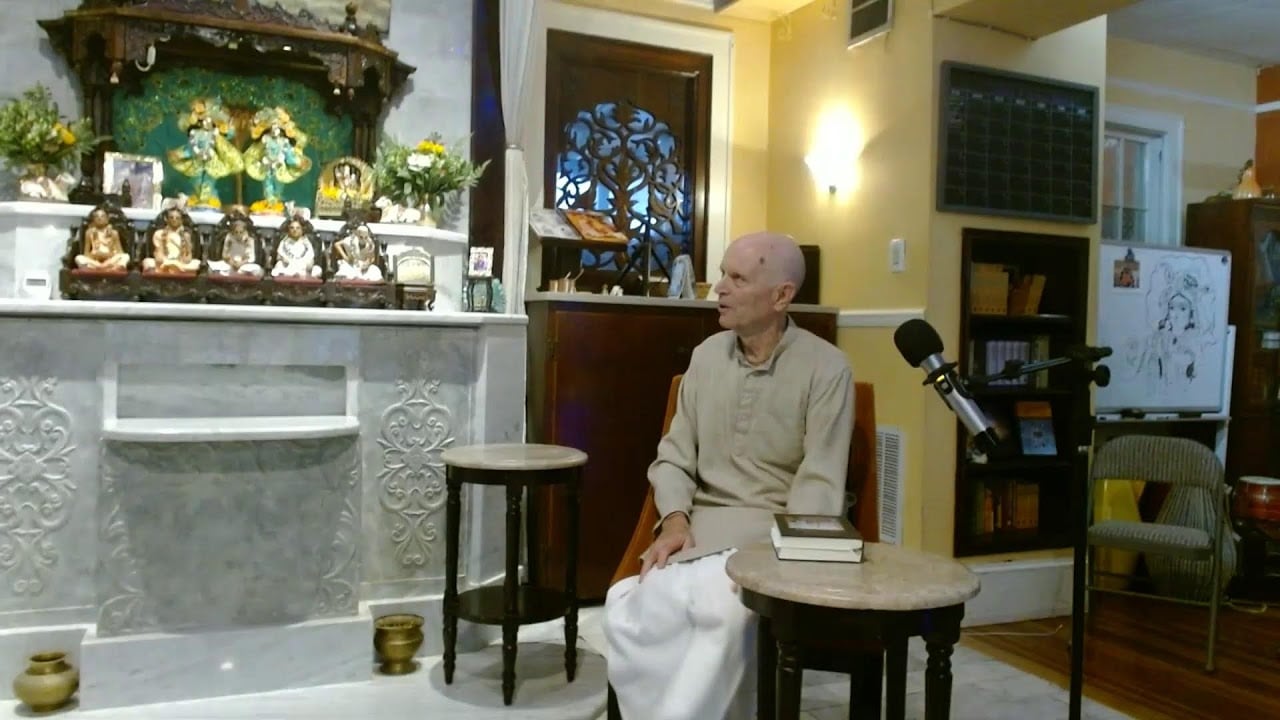
Srimad-Bhagavatam Canto 4, Chapter 9, verses 37–53 narrate how Dhruva Maharaja’s devotion matures from personal austerity to public responsibility. The passage culminates in Dhruvalokasymbolizing unwavering devotionand a restored social order that validates rajadharma as service. Drawing on themes often highlighted by Kalakantha Prabhu, the analysis explains how bhakti integrates knowledge and action while transmuting anger…
-
Unlocking the Mātuluṅga Mystique: Why a Giant Citron Graces Lakulisha and Kolhapur Mahalakshmi

The large citrus fruit called mātuluṅga (mahalunga) appears prominently in Hindu iconography, most notably in the lower right hand of Kolhapur Mahalakshmi and the upper left hand of Lakulisha of Pāśupata Shaivism. Identified primarily as Citrus medica (citron), the fruit symbolizes abundance, purity, and the ripened results (phala) of righteous action and disciplined practice. In…