Month: March 2026

  • Sri Rama’s Virtue and Valor: A Timeless Dharma Blueprint for Courageous, Just Leadership

    Sri Rama’s Virtue and Valor: A Timeless Dharma Blueprint for Courageous, Just Leadership

    Sri Rama’s portrayal in the Ramayana unites virtue (dharma) with valor (kshatra), forming the ideal of Maryada Purushottama. This synthesis grounds strength in compassion and binds power to law, offering a reliable template for just leadership and community protection. The epic narratively encodes principles akin to just war ethics: just cause, right intention, last resort,…

  • VHP FIR against WB CM Mamata Banerjee sparks political storm, raises stakes for communal peace

    VHP FIR against WB CM Mamata Banerjee sparks political storm, raises stakes for communal peace

    VHP has filed an FIR against West Bengal Chief Minister Mamata Banerjee over alleged remarks said to create fear of targeted attacks on Hindus, intensifying a high-stakes political debate in Rampurhat. The report explains how an FIR under CrPC Section 154 triggers investigation while preserving the presumption of innocence. It outlines the legal architecture frequently…

  • April 3, 2026 Panchang: Pratipada to Dwitiya, Shubh Muhurat, Nakshatra & Rashi

    April 3, 2026 Panchang: Pratipada to Dwitiya, Shubh Muhurat, Nakshatra & Rashi

    Friday, April 3, 2026 observes Krishna Paksha Pratipada until 7:16 AM, then Krishna Paksha Dwitiya for the remainder of the day. The post explains what a tithi is in precise astronomical terms and clarifies why tithi boundaries seldom match clock hours. It outlines practical, research-backed guidance for identifying Shubh Muhurat, including Abhijit Muhurta near local…

  • Hik Sathi Laddham: The Timeless Companion Uniting Dharmic Wisdom and Sindhi Sufi Song

    Hik Sathi Laddham: The Timeless Companion Uniting Dharmic Wisdom and Sindhi Sufi Song

    Anchoring on the Sindhi phrase “Hik Sathi Laddham” (“The Companion”), this essay maps a unifying motif across Hinduism, Buddhism, Jainism, and Sikhism, in dialogue with Sufi song. It clarifies the companion as inner witness and outer guide through Upanishadic sakshi, Buddhist kalyāṇa-mitra, Jain śuddhātman and the Three Jewels, and the Sikh Satguru and Śabad. Readers…

  • Mahabrahmana’s Monumental Preface: Viswamitra, Gayatri, and the Atma of Bharatavarsha

    Mahabrahmana’s Monumental Preface: Viswamitra, Gayatri, and the Atma of Bharatavarsha

    This long-form exploration examines the preface to Devudu Narasimha Sastri’s Mahabrahmana as a self-standing literary and philosophical achievement. It situates the preface within the broader history of prefaces, from Sanskritic invocations to modern print culture, and reads it as a Vedantic manual for attentive reading. Drawing on references to the Rg Veda, Brahmanas, Upanishads, the…

  • From Escape to Empowerment: Evidence-Based Lessons on Healing After Abuse and Compassionate Parenting

    From Escape to Empowerment: Evidence-Based Lessons on Healing After Abuse and Compassionate Parenting

    A rigorously trauma-informed narrative traces how a mother of four left an abusive relationship, navigated complex post-separation dynamics, and transformed pain into durable wisdom. The analysis integrates evidence-based insights on coercive control, adolescent autonomy, grief processing, and autonomy-supportive parenting. It demonstrates why attempts to control outcomes often backfire and how steady, compassionate presence promotes intrinsic…

  • Shiva’s Playful Forms (lilamurtis): Deep Symbolism, Agamic Iconography, Living Tradition

    Shiva’s Playful Forms (lilamurtis): Deep Symbolism, Agamic Iconography, Living Tradition

    This essay decodes Shiva’s lilamurtis—playful sacred forms that translate the formless into transformative encounter—through the lenses of Agamic iconography, Purāṇic narrative, and living ritual. It explains the aniconic meaning of the Linga and shows how iconic forms like Nataraja, Ardhanarishvara, and Dakshinamurti encode philosophy as gesture and posture. Readers learn how temple architecture and ritual…

  • Hanuman Jayanti 2026: ‘Gada Pujan’ for Courage, Seva, and Dharmic Unity in Communities

    Hanuman Jayanti 2026: ‘Gada Pujan’ for Courage, Seva, and Dharmic Unity in Communities

    Hanuman Jayanti 2026 (2 April) offers communities a meaningful opportunity to observe ‘gada pujan’—a symbolic rite that honors courage, discipline, and seva. Rooted in Hindu iconography yet resonant across Buddhism, Jainism, and Sikhism, the mace signifies strength guided by compassion and responsibility. A clear, minimal Panchopachara sequence keeps the rite accessible while anchoring it in…

  • Bhopal Turns Saffron: Bhagwa Shaurya Padyatra Unites Thousands on Hindu New Year

    Bhopal Turns Saffron: Bhagwa Shaurya Padyatra Unites Thousands on Hindu New Year

    Bhopal’s Bhagwa Shaurya Padyatra gathered thousands of Dharmarakshaks on Chaitra Shukla Pratipada, aligning the city’s celebrations with Hindu New Year and the opening of Chaitra Navratri. Organized by the Dharmarakshak Sanghatana, the procession emphasized Sanatan values—seva, discipline, and harmony—through dignified conduct and well-planned civic management. The prominent Bhagwa Dhwaj and saffron aesthetics were interpreted through…

  • Nalakubera’s Curse on Ravana: The Fatal Restraint That Foretold Lanka’s Fall

    Nalakubera’s Curse on Ravana: The Fatal Restraint That Foretold Lanka’s Fall

    Nalakubera’s curse on Ravana is a decisive ethical and narrative pivot in the Ramayana. It prohibits sexual coercion, preserves Sita’s inviolability, and funnels Ravana’s unchecked desire into strategic hubris that precipitates Lanka’s fall. Grounded in late recensions of the Uttara Kanda and echoed across regional tellings, the episode articulates a consent-centered ethic that subordinates kama…

  • Pranavopasana: Mastering Om for Self‑Realization, Inner Calm, and Dharmic Unity

    Pranavopasana: Mastering Om for Self‑Realization, Inner Calm, and Dharmic Unity

    Pranavopasana—meditation on the Pranava (ॐ)—is a disciplined path in Hinduism and Advaita Vedanta that moves attention from sound to silence and from symbol to the Ultimate Reality. Drawing on the Upanishads, Bhagavad Gita, and Patanjali, it unites devotion, meditation, and inquiry into a coherent practice for Self-realization. The article explains the A–U–M arc, the turiya…

  • ISKCON’s Ramayana at Prabhupada’s Palace of Gold: An Immersive 78‑Minute Devotional Epic

    ISKCON’s Ramayana at Prabhupada’s Palace of Gold: An Immersive 78‑Minute Devotional Epic

    Captured inside Prabhupada’s Palace of Gold, this 78‑minute ISKCON Ramayana offers a lucid, devotional retelling of the epic in a single sitting. The performance blends narrative clarity with bhakti aesthetics—kirtan, traditional instrumentation, and expressive movement—to make the ethical architecture of the Ramayana emotionally intelligible. Staged within an iconic Gaudiya Vaishnava shrine, it functions as cultural…

  • Timeless Life Lessons from the Ramayana: Integrity in Action and Devotion with Patience

    Timeless Life Lessons from the Ramayana: Integrity in Action and Devotion with Patience

    The Ramayana offers enduring guidance on ethics and spiritual discipline through two luminous episodes: Jatayu’s defense of Sita and Shabari’s patient, joyful preparation for Sri Rama. Read as a practical framework, Jatayu models courage that privileges dharma over short-term gain, while Shabari models disciplined readiness that turns daily tasks into sacred practice. Together, they show…

  • Rama Navami 2026 at Bhaktivedanta Manor: A Transformative Celebration of Dharma and Unity

    Rama Navami 2026 at Bhaktivedanta Manor: A Transformative Celebration of Dharma and Unity

    Bhaktivedanta Manor will celebrate Sri Rama Navami on 25 March 2026, honoring Lord Rama as Maryada Purushottama through ritual, kirtan, and scriptural reflection. The article explains Rama’s six opulences from Vaishnava theology, showing how sravana, kirtana, and smarana elevate consciousness and orient practitioners toward liberation. It outlines customary observances such as fasting through the Navami…

  • NHRC seeks urgent J&K Police report on alleged targeted Hindu killings, demands safeguards

    NHRC seeks urgent J&K Police report on alleged targeted Hindu killings, demands safeguards

    The National Human Rights Commission has sought an urgent report from the Jammu & Kashmir Police on alleged targeted killings of Hindus, placing a premium on timely accountability, survivor support, and due process. This analysis explains what an NHRC “urgent report” entails under the Protection of Human Rights Act, 1993, and how such oversight advances…

  • Manomayakosha Decoded: The Mind’s Sheath in Hindu Philosophy and Modern Life

    Manomayakosha Decoded: The Mind’s Sheath in Hindu Philosophy and Modern Life

    Manomayakosha—the mind-sheath of Vedanta—explains how sensations, emotions, and thoughts organize experience between breath (prana) and discernment (buddhi). Rooted in the Taittiriya Upanishad’s Panchakosha model, it clarifies why attention, ethics, and breath regulate mental clarity. The piece distinguishes Manomayakosha from vijnanamaya-kosha and shows how the gunas (sattva, rajas, tamas) color mental states. It highlights dharmic consonance…

  • Saptatori on Kojagari: Bengal’s Banana-Boat (Kolar Nouko) Ritual to Honor Lakshmi

    Saptatori on Kojagari: Bengal’s Banana-Boat (Kolar Nouko) Ritual to Honor Lakshmi

    Kojagari Lakshmi Puja in Bengal features the Saptatori tradition—seven miniature Kolar Nouko (banana-boats) floated under the Sharad Purnima moon as offerings to Goddess Lakshmi. Each eco-friendly boat, crafted from banana trunk and leaves, carries grains, turmeric, vermilion, a coin, and a diya, symbolizing ethical prosperity and household well-being. The ritual’s timing aligns with cultural astronomy…

  • Matrisadbhava of Kerala: Authoritative Guide to Shakta Tantra and Bhadrakali (Rurujit)

    Matrisadbhava of Kerala: Authoritative Guide to Shakta Tantra and Bhadrakali (Rurujit)

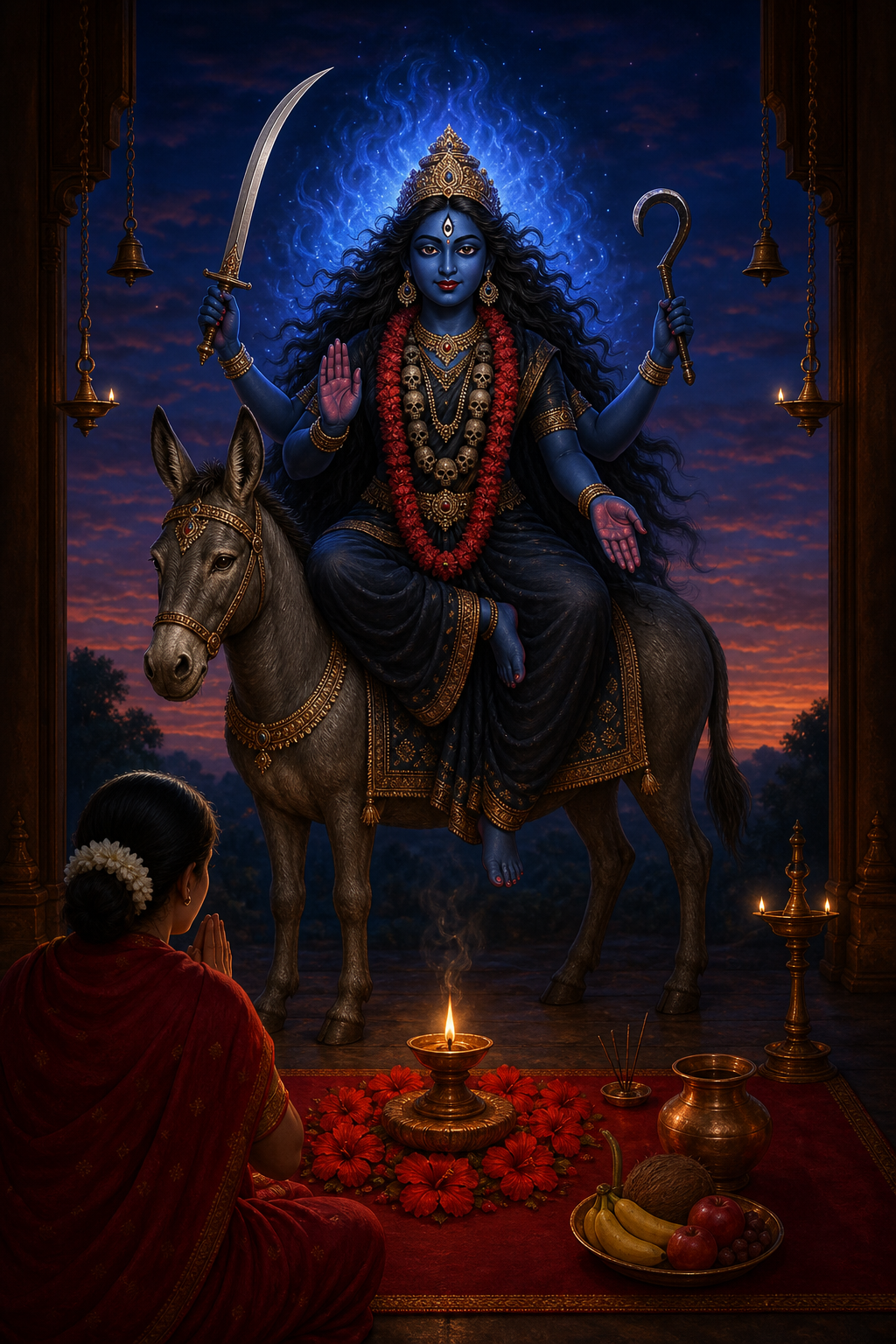
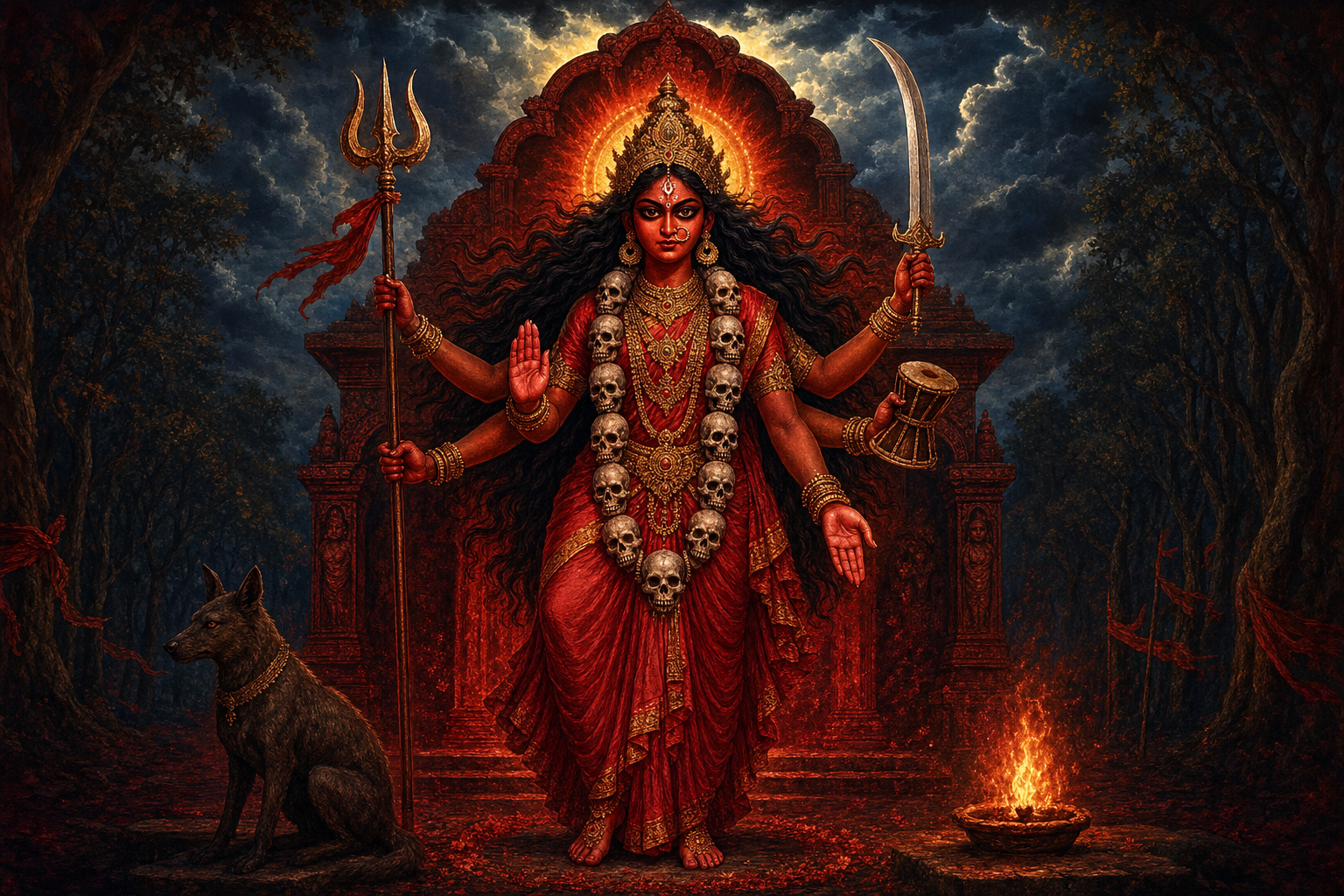
    Matrisadbhava stands out in Hindu scriptures as a Kerala-centered Shakta Tantra that systematically encodes the worship of Goddess Bhadrakali, also revered as Rurujit. It unites doctrinal depth with Kerala’s temple pragmatics—nyāsa, mantra, yantra, homa, and bali—while foregrounding an ethic of care and precision. The text’s maternal vision affirms unity in diversity across Dharmic traditions, highlighting…

  • Eternal Paradox of Being: Nothing Is Lost, Yet Everything Changes in Hindu-Dharmic Thought

    Eternal Paradox of Being: Nothing Is Lost, Yet Everything Changes in Hindu-Dharmic Thought

    This essay decodes the paradox “Nothing can be wiped out; but nothing remains same” through the lens of Hindu philosophy and the wider dharmic traditions. It shows how the Upanishads, the Bhagavad Gita, Advaita, Samkhya, Nyaya-Vaisheshika, Buddhism, Jainism, and Sikhism converge on a coherent view: being persists while forms transform. Readers gain clear definitions (sat,…

  • Desire Beyond Need: Dharmic Strategies to Transform Craving into Clarity and Freedom

    Desire Beyond Need: Dharmic Strategies to Transform Craving into Clarity and Freedom

    This article clarifies why, in Hindu thought, desire is not a need but a demand that reaches beyond need—and how that demand can be guided rather than suppressed. It maps desire across the puruṣārthas and pañca-kośa models, showing when desire serves dharma and when it becomes compulsion. It integrates insights from the Bhagavad Gita, Yoga…